Happy Place

Last week I finished reading Emily Henry’s Happy Place. If you’re an Emily Henry fan, then you know Happy Place was last year’s book. (Emily Henry’s newest novel is called Funny Story.)

Generally, I don’t read books immediately upon publication. I like to read books on my own timetable, and enjoy (or not) a book without feeling like I was influenced by any of the surrounding buzz.

Emily Henry’s Happy Place was a delightful read. Like all fine novels, it did allow me to temporarily escape my life and spend some time with other people in other places dealing with other things.

Which is one of the reasons I read. I read to take a break and get away from my life and learn about someone else’s life. And lately, my life has been — challenging. 

I hesitate to write that word, challenging. I do not want to come across as a whiny, complaining, ungrateful woman. Because I know I am very lucky. I know I have many blessings in my life. I am grateful — every minute of every day. 

But the truth is, I can be fortunate and still struggling at the same time.  

And while I won’t go into the struggles in this post, I will share one of my favorite passages from Happy Place:

“ ‘What if I’m bad at it?’ I ask. ‘Being a parent.’
He sweeps my hair back from my neck. ‘You won’t be.’
‘You don’t know that,’ I say.
‘I do,’ he says.
‘How?’ I say.
‘Because you’re good at loving,’ he says. ‘And that’s all you have to do.’ ”

Readers, have you read any of Emily Henry’s novels? Do you have a favorite? So far, my favorite is Book Lovers, which I wrote about in this post from November 2022. 

Please note: I am including a link to buy the book that I’m highlighting this week. If you use my link, I do make a small commission on your purchase at no additional cost to you. I am working with Bookshop.org which also sends a portion of the profit to support local, independent bookstores.
Stick-To-It-Ness

Image credit: Wishbone Words

“I am no longer an educator, and haven’t been a kindergarten teacher in many years. For the last seven years of my career I taught fourth and fifth graders. I no longer think of perseverance in quite the same way as I once did. However, more than ever, I feel like my daily life requires a lot of perseverance. I’m not relying on perseverance because I’m learning a new skill or am faced with one specific event that requires more ‘stick-to-it-ness.’ It is not at all like the period of time when my eighteen-year-old self was learning to drive a stick shift — without popping the clutch or grinding the gears or stalling and having the line of cars behind me start honking when I didn’t immediately get going on a green light. Back then, each practice session ended with me in tears. I remember looking over at my mom in the passenger seat, telling her it was hopeless and we should just stop now, because I would never master driving a stick shift. I was convinced there was something fundamentally wrong with me, since my parents could drive a manual transmission, and I obviously couldn’t. My mom patiently reminded me that driving a stick shift wasn’t easy, and I would definitely learn how, if I kept at it. It was a skill which required time and patience and lots of practice. Perseverance. She was right, as moms tend to be. 
“But that was then.”

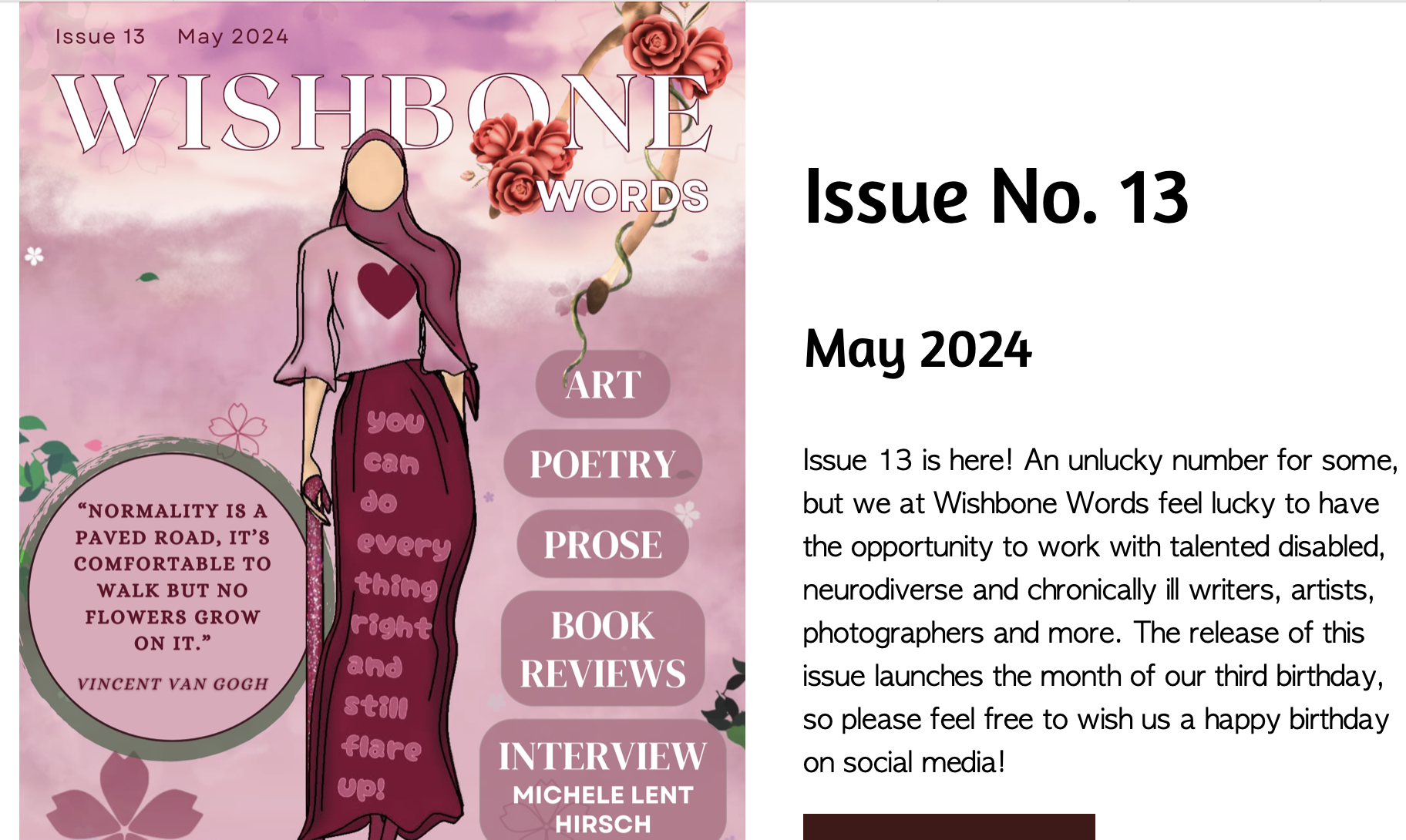
This excerpt was taken from my recently published personal essay, Stick-To-It-Ness, which has to do with daily perseverance as it pertains to living with a chronic illness. However, a high level of stick-to-it-ness is also required when you’re writing for publication. This personal essay was rejected by two other online literary journals before finding a home at Wishbone Words, Issue 13

You can click here to find out more information about Wishbone Words

The Power of Little Words

For my birthday (a couple of months ago), one of my closest friends gave me four bracelets. 

Not just any bracelets. 

Bracelets from Little Words Project

I didn’t initially realize the connection between Taylor Swift, Swifties, and friendship bracelets. So while my right wrist may look like I’m part of a trend, that’s not the reason for my bracelets.

My friend knew things have been hard for me lately. Actually, things have been hard for a while now. She also knew I’m quick to offer encouragement and words of praise to others, less quick to show myself the same support.  

That’s where the bracelets come into play. They are a daily reminder — of who I am and how I choose to live my life.

J chose four words for me. 

Teacher. I taught for twelve years. I’ve been retired for eleven years now. And I still miss teaching. (A portion of the proceeds from this bracelet go to AdoptAClassroom.org)

Breathe. Because sometimes I need that reminder to slow down and take a deep breath. 

Resilience. When you’re saddled with a chronic illness, there isn’t much choice. You have to demonstrate a combination of toughness, adaptability, and strength. 

And my favorite word — Badass

“I know it’s not usually a word you use, but you are a badass,” she said.

She’s right — I wouldn’t ordinarily think to describe myself as a badass. I am generally inclined to think of myself in other terms — such as polite, punctual, organized, neat. If you’ve been reading my blog for a while, you may remember a post I wrote last year about  how difficult it was for me to think of three adjectives to describe myself. (In case you missed it or have forgotten it, you can click here to read the post.)

But it means so much to me that J sees me in this way. She not only sees my spirit, she celebrates my spirit. And she wants me to do the same. 

Which is why you’ll find me wearing these four bracelets each day on my right wrist.

Readers, do any of you wear friendship bracelets? What words are on your bracelets? Or, if you don’t wear them, take a look at the Little Words Project website. What words would you choose for yourself?

Chronically Parenting

I don’t listen to many podcasts, but I do make a point to listen to Jean Meltzer’s monthly podcast, Chronically Fabulous. (I wrote about her podcast back in January. If you missed that blog post, you can read it here.)

Her third episode featured special guest, Heidi Shertok. Like Jean, Heidi is also a Jewish author, writing rom-coms, and living with chronic illness. Their conversation focused on parenting when you’re chronically ill. 

Jean, Heidi, and I all have different perspectives based on our different life experiences when it comes to parenting. Jean and her husband made the decision not to have children. Heidi entered into marriage and parenthood as a chronically ill woman. And I become ill when my son was two years old. 

There were several moments when I paused the podcast so I could jot down a note, because I knew I would want to write about their conversation and share it with you, readers. Because finding your community is so important, especially when your body doesn’t behave the way you’d like it to. And when I come across something — a podcast, a book, a line in an article — that allows me to feel seen and understood, it’s something I want to share with you as well. 

With that in mind, here are just a few of the highlights from their podcast conversation: 

– Jean and Heidi spoke of the idea of “masking.” I’ve always referred to it as putting on my game face, others might say it’s like having your poker face on and not letting your true emotions out. It’s the idea that on the surface no one can tell how you’re really feeling inside. You keep your pain, your discomfort, your worry out of sight. You present as healthy — because, at least for me, sometimes it’s just easier. It’s easier not to have to explain why I can’t sit on a tall bar stool, for example. (It’s really painful for me.)

– Something Heidi said really stood out to me. She said she believed her kids were lucky, growing up with a mom who is chronically ill. Her kids have learned/are learning there are all sorts of “normals” within families. There is not one right way for a family to be. Likewise, I hope that by growing up with a mom who has an invisible disability, my son has learned that you often can’t tell what someone is going through just by looking at them; that many people are out and about in the world, dealing with pain we can’t see. 

– Heidi also shared something her rheumatologist told her when she was young: A lot of people are like most flowers, you can put them anywhere and they’ll thrive. While people like Jean, Heidi, and myself, and others with chronic illness, are like orchids; we can only thrive in very specific environments. I love that analogy. 

Dear readers, any podcast recommendations you’d like to share? I also sometimes listen to The Shit No One Tells You About Writing (such a great title!) or an episode of Moms Don’t Have Time to Read Books when I’m doing my daily physical therapy exercises/stretches at home.

Flowering

Image Credit: Coin-Operated Press

I am pleased to share more publication news with you!

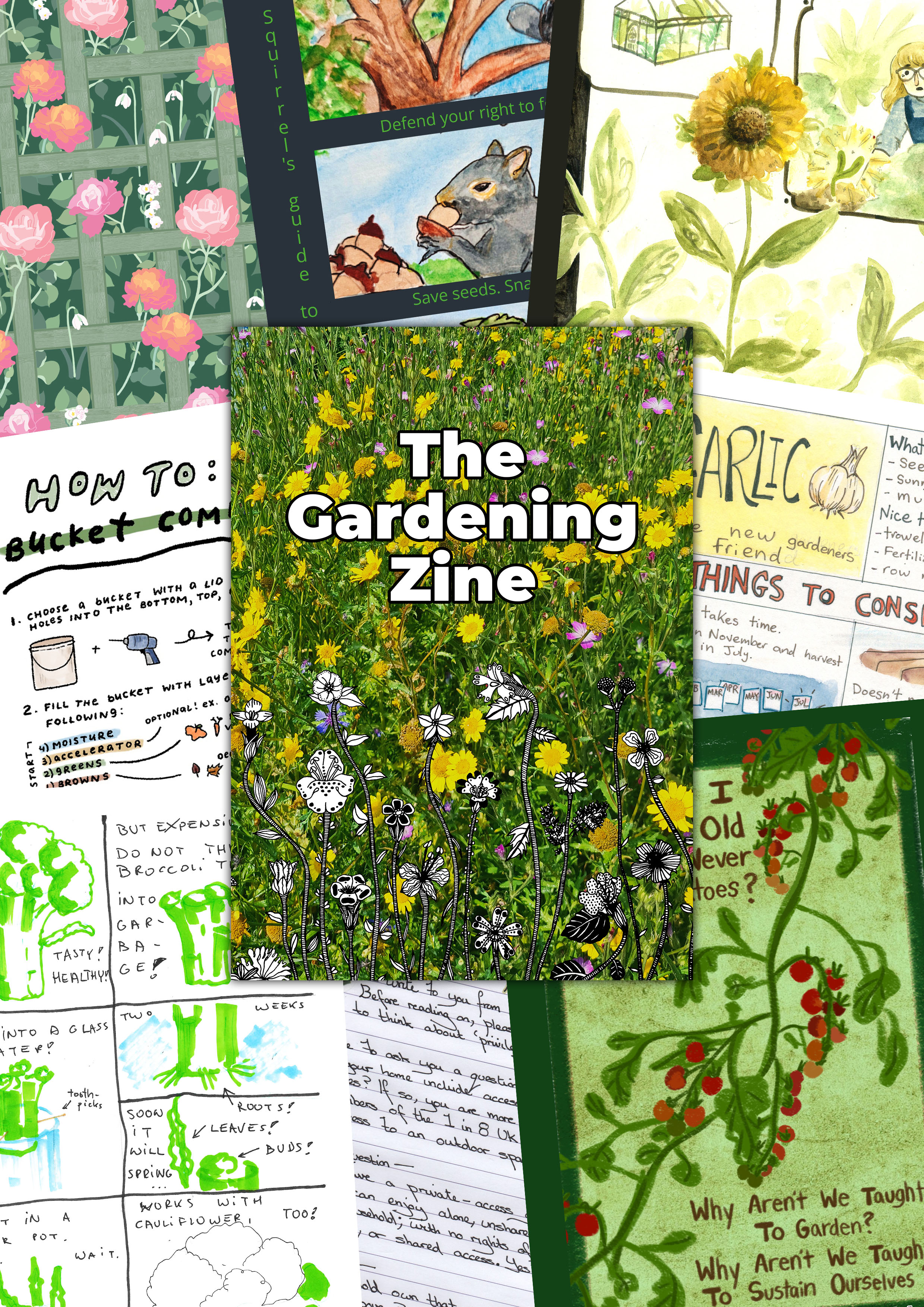
My personal essay, Flowering, has been included in the Gardening Zine produced by Coin-Operated Press. 

Here’s a snippet:

“Gardening is a part of who I am. The person who will always save the slices of avocado in a salad to eat after the rest of the salad, believing the best part has been saved for last. The person who will always describe a body lotion in terms of a “flavor” rather than a “scent.” The person who will yell at Rosemary Clooney’s Betty in White Christmas, urging her to talk to Bob, before she leaves Vermont for New York.
“I don’t know where my love of plants and flowers came from. Growing up, flowers were only in our house when my dad bought them for my mom on special occasions. Small houseplants died off, one-by-one, and were replaced with artificial flowers. Maybe this love I have for gardens is a result of the years I spent working in a high-end flower shop during my last year of high school and first few years of college. Or maybe there is no explaining it, and I can enjoy gardening without figuring out how it all started.” 

Click here to be re-directed to Coin-Operated Press where you can purchase a copy of the Zine.