Friends, in this week’s blog post I’m pleased to share some writing-related news.
But first — Sunday, May 10th is Mother’s Day, and I understand that it can be a day of difficult emotions for some. If this applies to you, please feel free to skip over the next two paragraphs. I don’t want anything I write to add to your discomfort.
In case you’re looking for a gift for a special grandmother in your life, may I suggest Chicken Soup for the Soul: Being Grandma? You may remember back in March, I shared the good news that my personal essay, Birthday Buddies, is one of the 101 stories included in this heartfelt collection.
In addition, did you know there is a Chicken Soup for the Soul podcast? I’m so pleased to share that my story, Birthday Buddies, was recently featured on the Chicken Soup for the Soul podcast, in the episode titled, “Two Stories about Play Dates with Grandchildren.” The entire episode is about fifteen minutes long, and my story begins at about 7:05 into the podcast. (You can access the podcast on Apple Podcasts, Google Play, or wherever you get your podcasts. And, please feel free to post a review!)
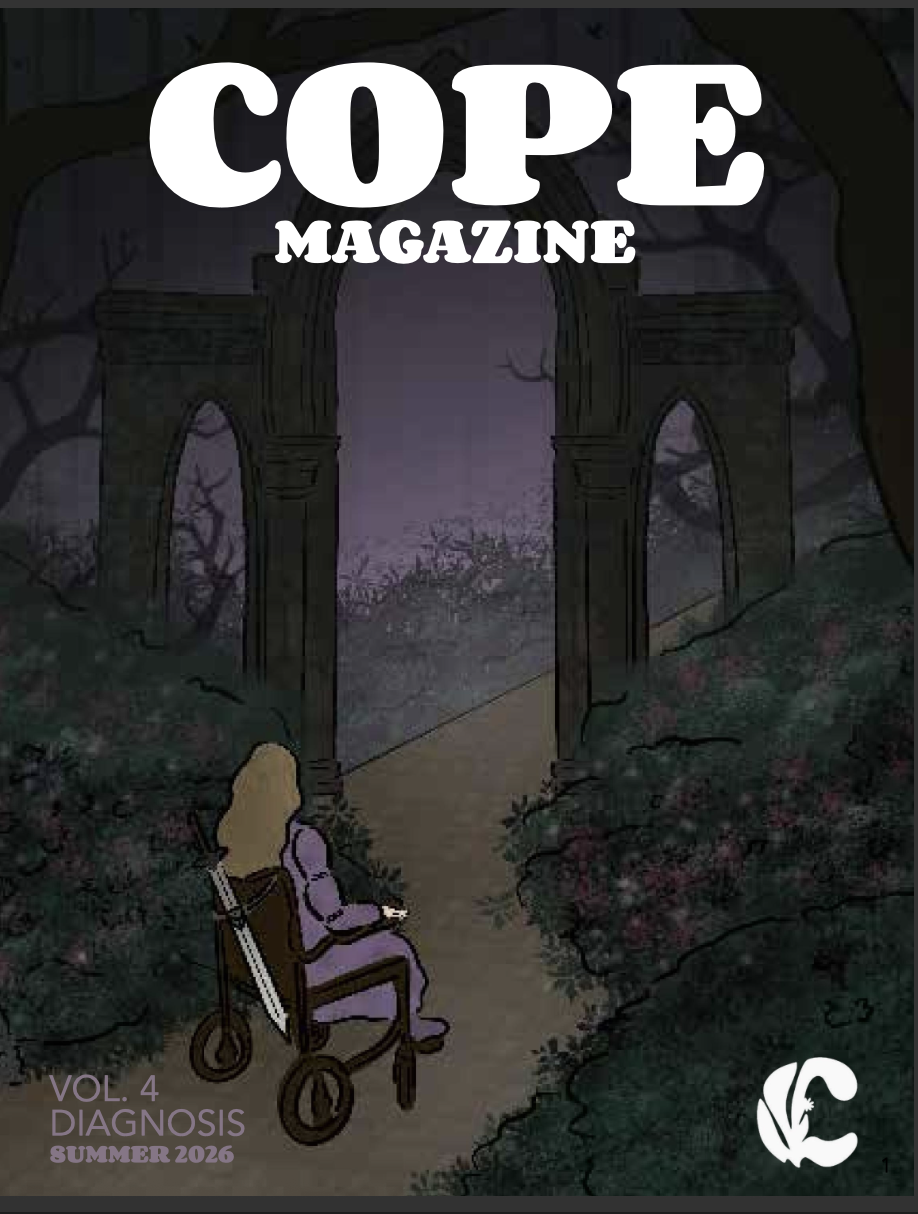
And, I have one more writing-related bit of news to share! I am so delighted and proud to tell you my personal essay, “On a Scale Of…”, has won first place in the 2026 Streetlight Essay/Memoir Contest. My essay, along with the second and third place essays, will be published in the 2026 Summer Issue of Streetlight. I’ll let you know when it’s available.
Just the other day, I had told my mom I was getting one rejection after the other. Because that’s how it works in the writing-world, at least this is how it generally works for me.
A partial screenshot of my Submittable page.
I write. I submit. And usually I get rejected.
Last week, I received an email stating, “Unfortunately, this piece is not the right fit for the anthology at this time,” and three days later another email (for a different submission) telling me, “Unfortunately, the other nonfiction editors and I have decided not to accept your piece for our upcoming issue.” (These are actual quotes I pulled from two different email rejections.)
So writer friends, keep at it. Keep writing. Keep submitting.
Honestly, I almost didn’t enter the Streetlight contest. But then again, there is no chance of me winning anything or getting published unless I submit.
Please note: I am including a link to buy the book that I’m highlighting this week. If you use my link, I do make a small commission on your purchase at no additional cost to you. I am working with Bookshop.org which also sends a portion of the profit to support local, independent bookstores.
Back in June of last year, I — along with one of my closest friends — attended an in-person event featuring Taylor Jenkins Reid and her just-published (at that time) novel,Atmosphere: A Love Story.
Friends, I have been waiting to read this novel. Waiting because a novel set in the 1980s, the early days of NASA’s space shuttle program, the time when NASA finally decided that astronauts need not only be white men, is a novel I really, really want to read. And love.
So I waited until the hoopla quieted down.
I started this book during our spring break trip. And while I didn’t get nearly as much reading time as I had hoped for on that trip, I started the novel and didn’t want to put it down.
From attending that author talk last year, I know the author did her research. You can tell. While much of the story is based on fact, the individual characters, the love story, and the space mission at the heart of the novel are all fiction.
Friends, I finished reading this book and immediately wanted to start to read it again. That’s how good it was. It is.
This week, I’ll try not to include too many favorite passages. It might be hard to do. My copy of the book has many red sticky notes.
Such pretty endpapers!
“It would be easy to make the case that humans are ill-equipped to be in space. Whatever led to our design, it was not meant for this. But Joan sees it as the exact opposite. “Human intelligence and curiosity, our persistence and resilience, our capacity for long-term planning, and our ability to collaborate have led the human race here.”
“Astronomy was history. Because space was time. And that was the thing she loved most about the universe itself. When you look at the red star Antares in the southern sky, you are looking over thirty-three hundred trillion miles away. But you are also looking more than five hundred and fifty years into the past. Antares is so far away that its light takes five hundred and fifty years to reach your eye on Earth. Five hundred and fifty light-years away. So when you look out at the sky, the farther you can see, the further back you are looking in time. The space between you and the star is time.”
“Being human was such a lonely endeavor. We alone have consciousness; we are the only intelligent life force that we know of in the galaxy. We have no one but one another. Joan was always moved by the fact that everything — all matter on Earth and beyond, up past the atmosphere, going as far as the edges of the universe, as it expands farther and farther away from us — is made from the same elements. We are made of the same things as the stars and the planets. Remembering that connection brought Joan comfort. It also brought her some sense of responsibility. And what was kinship but that? Comfort and responsibility.”
“Because the world had decided that to be soft was to be weak, even though in Joan’s experience being soft and flexible was always more durable than being hard and brittle. Admitting you were afraid always took more guts than pretending you weren’t. Being willing to make a mistake got you further than never trying. The world had decided that to be fallible was weak. But we are all fallible. The strong ones are the ones who accept it.”
“‘I’m excited,’ Vanessa said, closing the gap between them. ‘I want to take you everywhere. And do everything with you. And ask you every single question that’s been on my mind for months. And I want to know when you knew what was happening between us and I want to tell you when I knew. And I want to hold your hand in a quiet corner and I want to lie in bed and hear your heartbeat through your chest. I want to bring you coffee in bed. And I want to hear you tell me anything you’ve always wanted to tell someone. Because you know that you’ve met someone who desperately wants to listen.’”
“Later, before they fell asleep, Joan said, ‘Happiness is so hard to come by. I don’t understand why anyone would begrudge anyone else for managing to find some of it.’ “‘That’s because you’re too good for the world you love so much,’ Vanessa said.”
“‘I can wake up every single day and choose you, over and over and over again. If you’re in bed next to me, I will take your hand. If you are not, I will go find you. I will spend the rest of my life, if I get that lucky, seeking you out. Not because I promised you or because you’re there. But because I will want to. I will want to be beside you. Every day. Forever.’”
“Space belonged to no one, but Earth belonged to all of them.”
Oh friends, there is so much more I could include. The passages about Joan’s niece, Frances, and the special relationship they share. The passages about the way Joan loves her niece — “Every day, you can wake up and go to bed knowing there is someone whose heart is bursting, barely able to contain how much they love you.”
Which is all to say I loved this book.
Friends, have you read Atmosphere? Do we share any favorite passages?
And if you haven’t yet read it, is Atmosphere on your want-to-read list?
Please note: I am including a link to buy the book that I’m highlighting this week. If you use my link, I do make a small commission on your purchase at no additional cost to you. I am working with Bookshop.org which also sends a portion of the profit to support local, independent bookstores.
It’s not easy living with an invisible disability.
That’s an understatement, for sure.
At the same time, it is also a sentence with multiple meanings.
For example, if I had to rely on a walker or a wheelchair all the time, it would be easier in the sense that what I could and could not physically do would be a lot more obvious to, not just those around me, but myself.
I became sick in 2010. I received my diagnosis in late 2011. (Which is actually kind of fast for autoimmune diseases, but I didn’t know that then.)
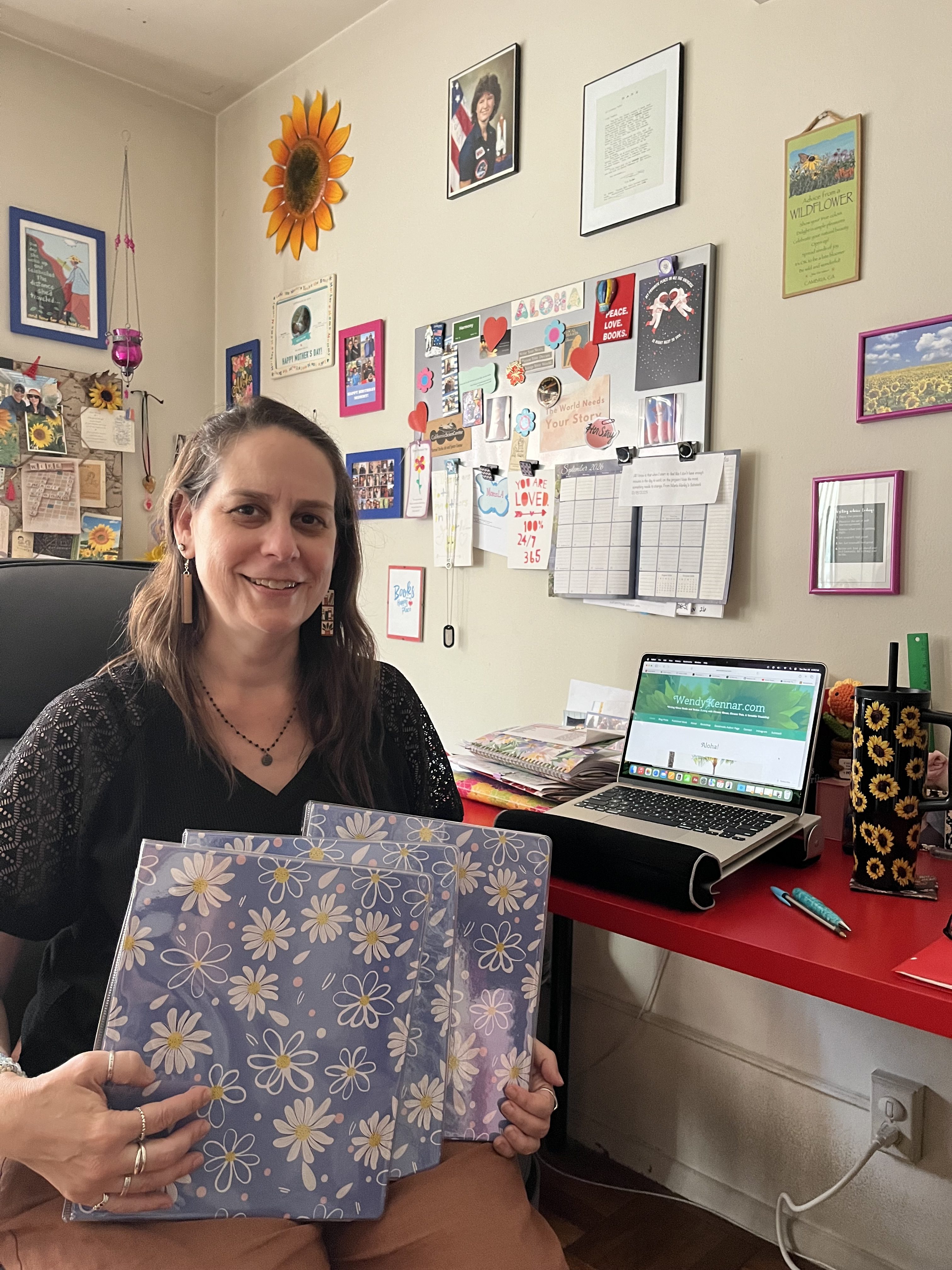
In the years since, I have retired from teaching, and have begun a new career as a writer.
But, I still haven’t figured out how to do this — how to be in the world as a woman who lives with a chronic illness causing chronic pain. I don’t always know how to make decisions about my activities. When do I push myself? When do I admit something is just too hard? And not just too hard in that moment, but usually, physically taxing activities can wipe me out for days after the event.
This was the situation I found myself in recently.
If you follow me on Instagram (and if you’re on Instagram, I hope you do follow me. I’ll follow you back, and it will be another way we can support each other!) you saw my posts from my Saturday adventure. I attended the annual Los Angeles Times Festival of Books on the campus of USC.
I wanted to attend because I’m a reader and a writer. Because I am actively seeking publication of my memoir. Because I want to connect with other readers and writers.
So here are a few things you should know about Saturday:
– Parking is an issue. There were very few handicap parking spots in the parking structure I used. I ended up parking on level 5 and then had to decide if I wanted to use the elevator or take the stairs. It wasn’t an obvious decision, because I have used this elevator before, in previous visits to the Book Festival. It’s a small elevator, and it makes me nervous. I opted to take the stairs.
– The walk from the parking structure to the exhibit area is quite substantial. With each step I took, my frustration grew. I felt like I was wasting my energy, wasting my legs, before I even reached the main event.
– I wanted to see and do as much as I could. I had a list of certain exhibitors I wanted to visit (including Village Well Books and Coffee, She Writes Press, and the opening-in-September Lucas Museum of Narrative Art, to name a few). They weren’t all near each other, which meant I had to walk to different “zones,” spread out throughout the Festival.
– My work, the writing I do for MomsLA.com , made me eligible for a Media Pass, which was easy enough to apply for, and not so easy to actually pick up. I asked Festival volunteers and security guards for guidance about where I could find the Media Center and no one I asked could help me. (Because it’s been a couple of years since I’ve attended the Festival, I didn’t remember where this mystery room was. Hence the need for me to ask others.) More walking, more wandering, until I eventually found it. Not that I minded, necessarily, because I got to explore some more, but it was additional walking that would contribute to my fatigue. (I wound up not really needing the Media Pass since I did not attend any ticketed events or panel discussions; however, it makes a nice souvenir.)
– I stayed at the Festival for a few hours. The walk back to the parking structure was slower and harder for me. And once I reached it, I had another difficult decision to make — take the elevator or climb the stairs to reach my car on level 5. By this time, I had finished up my water bottle, and all I could think about was the possibility of getting stuck in the elevator, feeling hot and sweaty, and having no water with me. My heart started beating faster, and my fear of getting stuck in the elevator won out. (This isn’t a completely irrational fear — before I left teaching, I spent almost an hour stuck in our school’s elevator early one morning.) I climbed the stairs to level 5. Slowly. Gripping the handrail. Pausing for a few minutes on level 3, before continuing and eventually making my way to my car on level 5.
On my slow walk back to the parking garage, I stopped to pose with this sculpture of astronaut Neil Armstrong, the first human to walk on the moon. He received his Master's degree in aerospace engineering from USC.
So I did it. I drove myself to the Festival. I wandered and chatted and took photos and purchased books. I loved being among the positive energy from other book lovers. (I have found the writing community and fellow readers to be generous, uplifting folks. I felt that on Saturday.)
However, if I absolutely needed a wheelchair, climbing the five flights wouldn’t have been an option for me. And even now, days later, I’m still not certain I made the right decision. My knees are in bad shape. Doctors agree my left leg is weaker than my right. And I think it’s fair to say that climbing five flights of stairs, twice, isn’t easy for many people.
But for me, a girl with an invisible disability, who could “kind-of do it” (there’s a wishy-washy phrase for you), it was another example of me not knowing, still not knowing, when to push and when to ease up. When to acknowledge my physical limitations and when to seize an opportunity.
Spoonie friends, does this resonate with you? Anyone else struggle in a similar way?
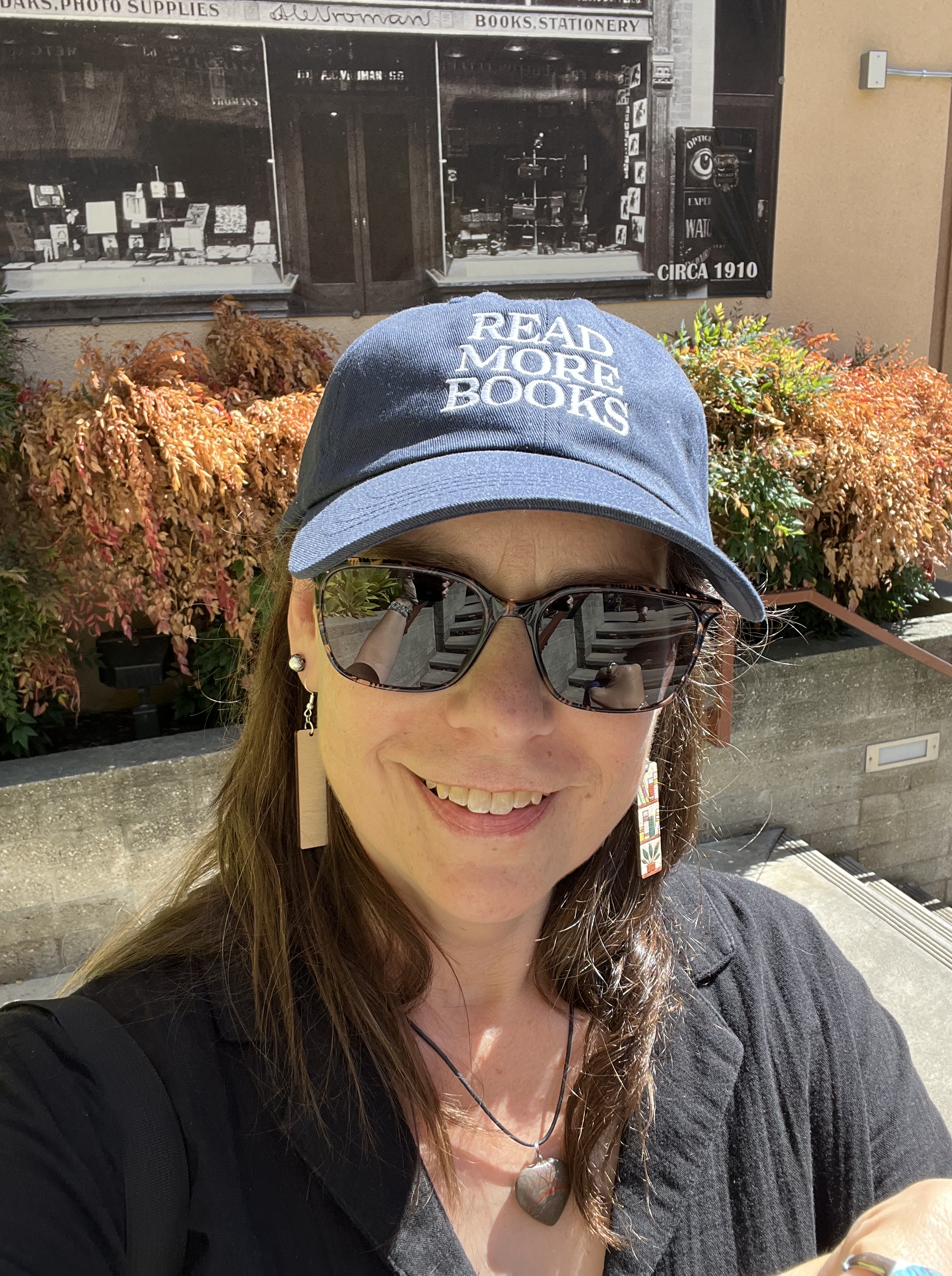
Friends, a reminder that author Joanna Monahan is generously offering a giveaway to my Substack subscribers. All you have to do is subscribe to my Substack no later than Thursday, April 23rd. Then on Friday the 24th, I’ll pull a name from my sun hat (the same hat you see here), and one lucky subscriber will win a signed copy of Joanna’s just-published novel, WELCOME TO BLOOMS!! 🌸🌺🌼 I can’t wait to read it— the book features a main character named Daisy whose family owns a flower shop! Be sure you have subscribed to my Substack so you can participate in this special giveaway opportunity.
Recently I used some of my birthday gift money to buy myself a couple more bracelets to add to my wrist. (I was going to write “to add to my collection,” but that doesn’t feel right. These bracelets don’t just sit on display, like the glass hearts I have in my writing room. These bracelets are worn on my right wrist every day.)
My collection of hearts
I have written about these bracelets before, two years ago, when one of my closest friends gave me my first four bracelets. (In case you missed it, or just want a reminder, click here to read “The Power of Little Words,” written in May 2024.)
This week, I’d like to share with you one of the bracelets I bought from the Little Words Project. (I also bought myself one custom bracelet, which I’ll write about another time.)
The bracelet reads: STRONG AF.
Now, I don’t curse a whole lot. I think it’s because I’ve always either worked with kids or the public and cursing on the job was never an option. As a result, the “F word” doesn’t leave my lips very often.
So, why did I buy myself a bracelet that means, “Strong As F*ck”?
For a couple of reasons.
First, my mom’s initials are AF. Wearing this bracelet is a tribute to her, and a way of carrying our love with me all the time.
Secondly, my mom is a strong woman. Even when she doesn’t think so. Even when she’s frustrated that her 81-year-old body doesn’t always move or feel the way it used to. (Though, her hair is still brown and no one believes my mom is her age. People always guess younger.)
I understand those feelings of frustration. I deal with them all the time. Sometimes I move beyond frustration, and I go down that slippery path of feeling weak and/or incompetent.
Because the reality is, my body isn’t always reliable. I can’t always depend on it to behave the way I want it to, to be able to do the things I want to do. And that makes me sad. And scared. And worried about the future.
My mom is dealing with these feelings now, in her early 80s.
What will it be like for me by the time I’m that age? I turned 50 this year. (I’m still not used to writing that/saying that/knowing that.) I have a handicap placard in my car’s glove compartment and a wheelchair in our downstairs closet. And if I need these things now (and the truth is, I started using these things in my late 30s), I’m scared of what my body will be like by the time I’m in my senior years, when things are expected to slow down and function differently.
That’s where “Strong As F*ck” comes in.
Because I am continuing to learn that strength takes many forms. It’s a lesson I’ve been working on for many years, in fact. But sometimes students need reminders.
Strong AF is my reminder.
What’s yours? I’d love to know. Do you have a word, a phrase, a mantra that helps you when you’re feeling down, when your body refuses to cooperate, when your mind plays tricks on you? If you feel comfortable, please share in the comments.
“To all the women in this new era of life: It’s an unexpected, scary, emotional, bittersweet time — and yet also refreshingly beautiful and exciting. Please give yourself room for mistakes, successes, and joy. Don’t be afraid. Be excited for what’s to come. And guess what? No matter what happens, you’ll figure it out. You always have!”
Here’s my big confession — the book was better than I thought it would be. I definitely wasn’t expecting footnotes and studies being cited. The author did such a good job of being honest and authentic when writing about the period of time when a woman’s life drastically changes; a time which can include menopause, children leaving home, career pivots, and body changes. I thought the book would mostly be centered on the author’s own experiences. And while she does include that here, there really is so much in this book that applies to all women.
Here are a few of my favorite passages:
“We are always chasing, never appreciating, and what runs through my mind is, Ugh, where is the justice?? Why are we forever criticizing ourselves and our bodies while seeking ridiculous perfection? Why do we never see how unique and special we are? And why, when we finally take the pressure off or count our blessings or just enjoy who we are, is it practically too late?”
“There came a day when I was simply tired of judging myself and feeling like I wasn’t enough. I was over the angst. I didn’t want to be mean to myself anymore, and I started to wonder where I got the idea that I needed to be perfect at everything anyway. What would it feel like in my body if I told myself I’m smart, I’m talented, I’m strong, I’m beautiful, I’m a good person and friend? I asked myself. What if I just assumed I was good enough as is? Turns out, it’s liberating!”
“Just because you think about death occasionally or recognize its inevitability — it doesn’t mean you’re close to death. It means you appreciate life. You live more thoughtfully, more fully. You approach relationships with more gratitude. You use your body a bit more intentionally.“
“Sometimes shit just happens. It’s hard to accept that, because it feels like chaos, but it’s the truth. It doesn’t mean you aren’t thankful enough or that you’re moving too fast or your priorities are out of whack. Sometimes there is no rhyme or reason.”
“I look at what my body has done for me — bearing and nourishing children, surviving trauma, healing from harm — and I have such appreciation for it. The entirety of what my body is capable of makes me proud, and recognizing its wisdom and resilience allows me to see it beyond the limitations of body image. But that’s a perspective that comes with age. And experience.”
“… I’m a work in progress just like anyone else. And thank God for that. It’s far more fun than thinking you have it all figured out.”
“Still, I try to treat my daughters like adults these days, because they are adults. They are my babies, but they are adults, and I want to be their ally. I want them to always trust me.”
“Do I want to do this? If I had to boil down the joy and freedom of aging to one question, that would be it. The fact that I’m finally at a place where I can ask myself if I want something, answer honestly, and act accordingly— that’s the joy of this time.”
Friends, have any of you read Brooke Shields is Not Allowed to Get Old? What did you think of it? I’d love to chat about our experiences reading this book. Any thoughts about getting older? Have you learned something new? Adapted a new outlook? If you’re comfortable, please share.
Please note: I am including a link to buy the book that I’m highlighting this week. If you use my link, I do make a small commission on your purchase at no additional cost to you. I am working with Bookshop.org which also sends a portion of the profit to support local, independent bookstores.
A few weeks ago, I had a hard/frustrating/exasperating day.
You know – one of those days that feels like the laws of physics should make it impossible for so many events to happen in such a short span of time. Without going into details, I’ll just say there was lots to do (too much to even attempt in one day); multiple phone calls, texts, and emails (mostly from my son’s school and the school district in general); drivers that must have forgotten how to properly behave at a four-way stop sign; and pain that made me bite my lip, ball up my fists, and rub my leg in a pointless attempt at alleviating just a little bit of the invisible vice around my left calf.
But before all that, I had a couple of hours where I felt like I was in a magical, in-between space — where reality didn’t fully exist in this sacred space and where I could escape much of the outside world.
Where was this “magical, in-between space”?
A neighborhood independent bookstore.
I went to this bookstore with plans to read, and write, and browse, and shop.
While I have visited this bookstore many times for different reasons (celebrating a book launch, meeting an author, participating in a writing group, getting coffee and chatting with a friend), I had never visited the bookstore’s in-store cafe for some dedicated writing time. And the idea of some Wendy-writing-time away from a ringing phone, or sounds of the neighbor’s back door slamming, or the incessant barking of a different neighbor’s dog, sounded blissful.
However, my writing time didn’t go quite as I had planned, because there wasn’t enough writing space for me. Although this bookstore has an in-store cafe, some of the tables are designated as “no laptop zones,” encouraging analog activities such as reading and socializing.
In case you don’t know, I am an analog person. I have old-fashioned clocks at home, a small red boombox in my kitchen (it plays CDs and the radio), a monthly/weekly organizer on my desk, handwritten lists when I go grocery shopping — you get the idea.
On the other hand, I use my computer every day. I’m almost always working on a piece of writing, and my MomsLA.com work requires internet access. And, on this particular morning, I had planned on working on my upcoming Substack post. (If you haven’t yet signed up, you can check out any of my Substack posts you may have missed and sign up here so you won’t miss any future posts.)
So while I was at the bookstore with my cafe mocha and unable to use my laptop, I read a book. I jotted down ideas for a new personal essay. I read some more.
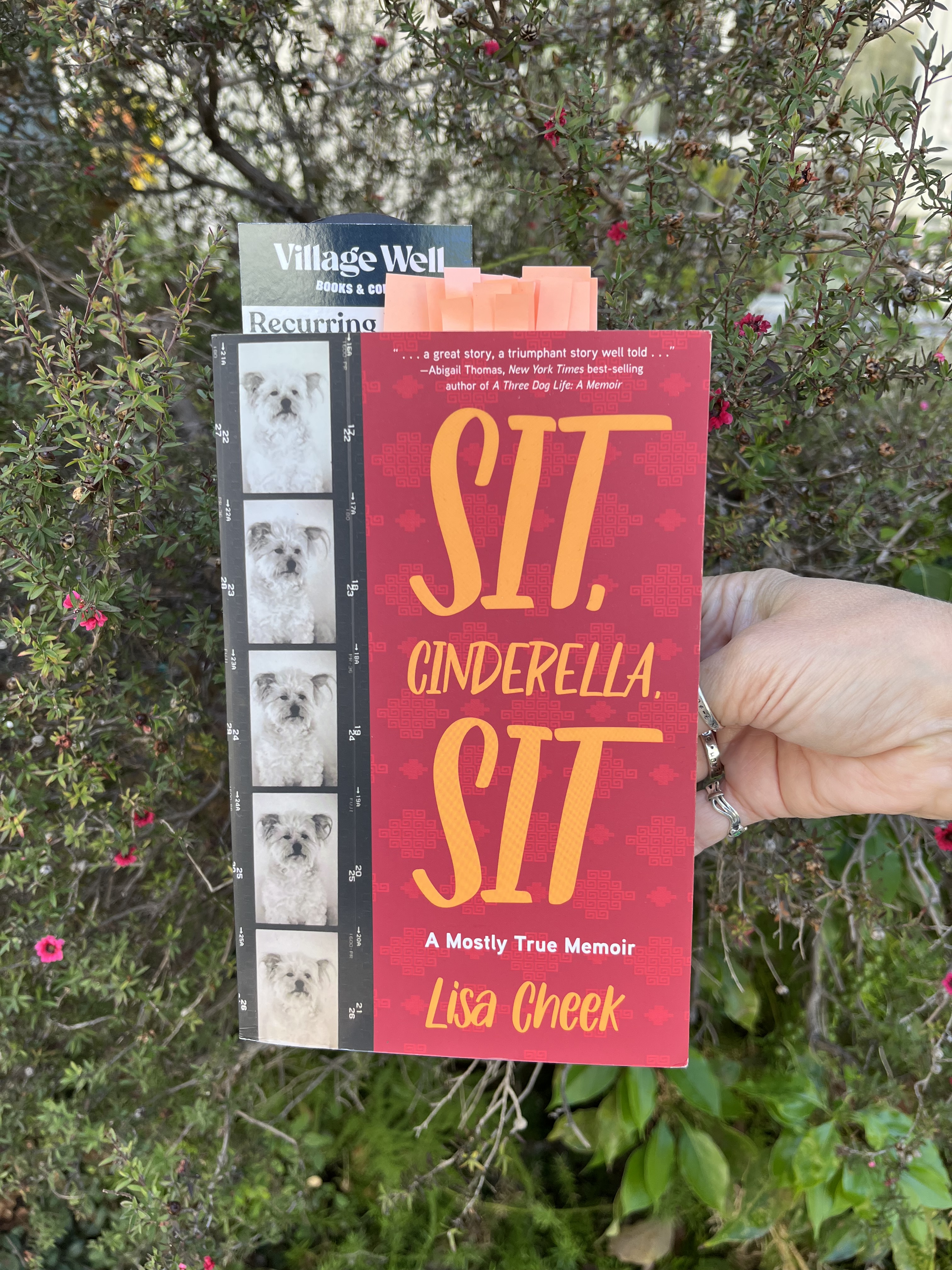
And before I left, I bought a book.
While I enjoyed the escape this bookstore offered, I admit I felt a bit overwhelmed when I got home and spent the rest of the day trying to “catch up” and get work done.
I understand bookstores and cafes don’t want one customer to sit and occupy a table for hours. These small businesses need a steady stream of paying customers coming in throughout the day.
But, I also needed an out-of-the-house spot to get some work done.
Friends, have you had any similar experiences where you couldn’t use your technology? What do you think of no-laptop zones?
Ms. Robinson’s book is definitely one I would have read with my son when he was a little guy. A book that may have helped him understand his Mommy’s invisible illness and the boo-boos inside my leg.
The book is written for children, and features a relatively large font, easy-to-understand vocabulary, and definitions for a few words (including “symptom” and “advocate” that may be new or unfamiliar to young readers). And, as stated on the author’s website: “This book teaches kids how to speak up, build confidence, and embrace their journey with chronic illness.”
The book has a positive tone, is written in an easy-to-understand format, and manages to take a complex, could-be-scary-and-overwhelming topic like chronic illness and make it relatable by including the author’s own experiences with chronic illness.
“You have the power to choose how you respond to the things you go through.”
“Your chronic illness is a part of you, and it’s one you may always have. “But it’s not the only thing about you.”
And with all that, the book doesn’t shy away from the truth:
“Living with a chronic illness means how you feel can change day by day, both physically and emotionally.”
“I had no control over what my body did, and I felt mad and frustrated (and I still do).”
I love this message which shows up near the end of the book:
“But I’ve learned… Something invisible can become more visible the more you talk about it.”
The book description says the target age is 5-9, but I’m a big believer that books don’t need to have age limits. For my spoonie friends, I highly recommend sharing this book with young ones in your life. For my teacher friends, this book should be a part of every classroom, and school, library because even if you don’t have a student living with chronic illness, chances are you do have a student who knows someone/lives with someone/is related to someone who does have a chronic illness.
Please note: I am including a link to buy the book that I’m highlighting this week. If you use my link, I do make a small commission on your purchase at no additional cost to you. I am working with Bookshop.org which also sends a portion of the profit to support local, independent bookstores.
Though the truth is, when you live with autoimmune disease (or multiple – as tends to happen), every month feels like Autoimmune Disease Awareness Month.
In my experience, I have found that the sadness, the frustration, the worry don’t get any easier the longer you live with a chronic illness.
But, in my life there are two things that do help:
1. Connecting with others who “get it.” Whether it’s in-person or over Zoom, these relationships are essential in navigating a life with chronic illness.
2. Books.
Along those lines, I’m excited to share I have curated a special booklist on Bookshop.org titled, “Books for Spoonies: Chronic Illness, Chronic Pain, & Invisible Disability.” These are all books I own. Books that have provided me with comfort and knowledge. Books that have made me feel seen and understood.
If you’re looking to add any of these books to your own personal library, now is a good time to do it. Bookshop.org is offering 15% OFF* these select titles when you enter BSO15 at checkout, valid until April 1, 2026. *Discount off list prices, and excludes Ebooks.
I don’t have a magic wand to ease the pain, to gift you a restful night’s sleep, or to lessen the persistent symptoms. But know that I’m here, thinking of you, thinking of us. We’re in this together.
And, please let me know if I have missed any titles you think should be on my Books for Spoonies List. (Also, full disclosure, my writing does appear in two of these books — Accessing Parenthood: Stories By and About Parents with Disabilities and The Things We Don’t Say: An Anthology of Chronic Illness Truths.)
Please note: Just a reminder that if you do use my link to purchase any of these books, I do make a small commission on your purchase at no additional cost to you. And, for every commission I earn, Bookshop.org will match it and donate it to their indie bookstore pool.
“From the very beginning, my mom and son shared a special connection. After all, they were Birthday Buddies.”
Friends, I’m so happy to share my personal essay “Birthday Buddies,” (which includes the sentence above), has been included inChicken Soup for the Soul: Being Grandma. The book features 101 “heartwarming, amusing, and inspirational stories” written by “grandmothers, grandchildren, and everyone in between.”
The book is a tribute to grandmothers and the special love grandmothers share with their families, and I’m very proud to be a part of it.
It’s always exciting to have my writing selected for publication.
But to be honest, having my writing published in a book brings those exciting feelings to a higher level.
And having this particular story published in this particular ChickenSoup for the Soul edition is meaningful and thrilling and special on a whole other level.
You see, my mom and my son are Birthday Buddies. And later this month, my mom will turn 81 the same day my son will turn 18!
And if I may suggest — Mother’s Day isn’t too far away. Start your shopping early and purchase a copy of ChickenSoup for the Soul: Being Grandma for the special grandmothers in your life.
Friends, do you have a special memory or anecdote about your grandmother? Feel free to share in the comments.
Please note: I am including a link to buy the book that I’m highlighting this week. If you use my link, I do make a small commission on your purchase at no additional cost to you. I am working with Bookshop.org which also sends a portion of the profit to support local, independent bookstores.
Question — Do you limit your holiday reading? Do you read Christmas and Chanukkah-themed romances only during the month of December? Or, maybe starting in November? Or, do you consider holiday rom-coms worthwhile reading material all year long?
When it comes to decorations, I have a very “don’t rush it” outlook. (For instance, in our house, Easter decorations won’t be put out until April. Now it’s March, so I have a decorative shamrock hanging on our front and back doors.)
However, when it comes to books (and movies) I think you should read (and watch) what you want, when you want, even if it’s not the season for it.
I bought this book before I read the blurb. I bought this book simply because Etta Easton wrote it. (You may remember I read, loved, and wrote about Ms. Easton’s debut novel, The Kiss Countdownand her second novel, The Love Simulation.)
The book is definitely a fast read. There are some super-sweet moments and some really touching moments. And lots of Christmas charm. However, for all its lightness, the book does include heavy topics including grief and labor complications.
Here are just a few passages that had me pause and savor the writing:
“The carolers knock again and Grant catches my hand. ‘Not everything requires you to give something back, Eve. Sometimes, just letting people bring you joy is enough.’ He looks from me to the door and patiently waits for me to make the decision.”
“This time I tried to perfect Christmas, hoping that if everything was just right, Ivy would come home. “Maybe the problem isn’t that I keep losing things. Maybe it’s that I keep hoping I won’t.”
“Ms. Thomas studies me for a long moment, then quietly says, ‘You remind me of your father.’ “I smile weakly. ‘Because I’m a control freak?’ “‘Because you love so fiercely,’ she says gently. ‘He did too. But he gave so much of himself to others that he forgot to leave anything for his own happiness.’”
This was a sweet novella, though I must admit I preferred Ms. Easton’s full-length, space-themed romance novels. And, my copy had many typos which really did interrupt my reading flow. However, I am still glad I bought, and read, this book and am always happy when I can share books with my reader friends!
Dear readers, what is the most recent holiday romance you read? And, did you read it during the holiday season or at another time?
Please note: I am including a link to buy the book that I’m highlighting this week. If you use my link, I do make a small commission on your purchase at no additional cost to you. I am working with Bookshop.org which also sends a portion of the profit to support local, independent bookstores.