Those three “why” questions are commonly asked of authors. They may be asked before the book is published, such as when querying agents or speaking with editors. They may also be asked during a panel discussion or special event celebrating the book’s publication.
Basically, an author is making the argument that: their book is needed in the world, at this time, and that the author is the best person to write this book.
This week, as I think ahead to my memoir’s publication (Spring 2028!!!) and my own author career, I wanted to share my answers to these questions with you, my readers. Because you all have been reading my words here each week, and you all are an important part of my author journey.
“Why this book?”
This is the book I needed to read when I became ill. Except I couldn’t find anything like it. The same thing happened once I received my diagnosis, and again when I retired from my teaching career. I searched for the stories of others experiencing similar situations of invisible disability and chronic pain. Except I couldn’t find any such stories. I wanted to know it wasn’t just me who struggled to explain outwardly-invisible pain to a young child. I wanted to know how other chronic illness patients adapted when their dream career was no longer possible because of poor health.
“Why you?”
My memoir could only be told by me. However, though the specifics are mine, the themes of my book are universal. It may take different forms, but we all live with hidden pain. Scars not immediately visible. Loss and grief when the life we thought we would be living is no longer possible in the same way. It feels like I have always considered myself a writer. I have always found solace and clarity in getting my thoughts down on paper. And, I use my writing as a way for me to teach. I may no longer be able to teach children in a classroom, but I can teach readers that not all disabilities look the same.
“Why now?”
My book is scheduled to be published in 2028, but I have been writing about my invisible disability for well over a decade now. I didn’t realize that as I wrote one essay, then another, and yet another, I was also writing a book — a cohesive collection of my experiences as a mom, a wife, a teacher, a woman living with a chronic illness causing chronic pain. And the older I get, the more I realize that we are all dealing with something. We’re all carrying around pain of some sort, scars and wounds that might not be evident at first glance but are still very much a part of us. And that’s only going to increase as humans are living longer, which means more of us will likely be dealing with health issues as we age.
In Spring 2028, I may be asked these very questions. It feels only right to first share my answers here, with you.
But what the heck does that even mean? Because when you live with chronic pain, you’re managing it and trying to handle it 24 hours a day/7 days a week/365 days a year.
Pain is complicated, because no one can ever truly know someone else’s pain. Plus, there’s this inclination to compare pain, to determine if someone else “has it worse” or someone else’s pain “isn’t as bad” which is all pointless. Pain is pain.
Many years ago, I participated in a very small (three patients including myself) chronic pain support group. I remember something the therapist said at the time, something that I often need to remind myself of — there could be a terrible, horrific natural disaster somewhere on the planet. Mass destruction. Severe injuries. (Which, as I write this, I can think of several instances from just the last week alone.) And, at the same time, if I fell and broke my leg, for example, I would absolutely be in pain. This therapist helped me see that my pain is no less valid simply because my situation and circumstances are different from someone else’s. I shouldn’t try to hide my pain or discount my pain because I think someone else’s pain is more intense than mine.
Maybe that’s also the point of Pain Awareness Month.
In the past, I’ve written blog posts suggesting Pain Awareness Month is for the general population of folks who don’t live with everyday pain. This year, however, I’m thinking I am also the target audience of Pain Awareness Month. Because I’ve gotten so used to being in pain, I don’t take the time to acknowledge my own efforts. I don’t just sweep the patio and water the plants, for instance. I sweep the patio and water the plants while my left calf feels like it’s stuck in a perpetual charley horse. I don’t just stand at the stove preparing dinner. I’m standing at the stove while my thigh aches, a painful sensation that has been with me since I woke up that morning.
Yes, we need to practice kindness towards others, because you never really know what someone else is going through, and let’s face it, everyone is going through something.
But also, I need to practice some kindness towards myself.
“The appointment was set for early morning so I could make it to my fourth grade classroom before the school bell. I took this as a good sign. No doctor would deliver heartbreaking news and then expect me to go teach a roomful of nine and ten-year olds. Whatever Dr. W had to tell me couldn’t be that bad. “That’s what I kept telling myself, because that’s what I needed to believe.”
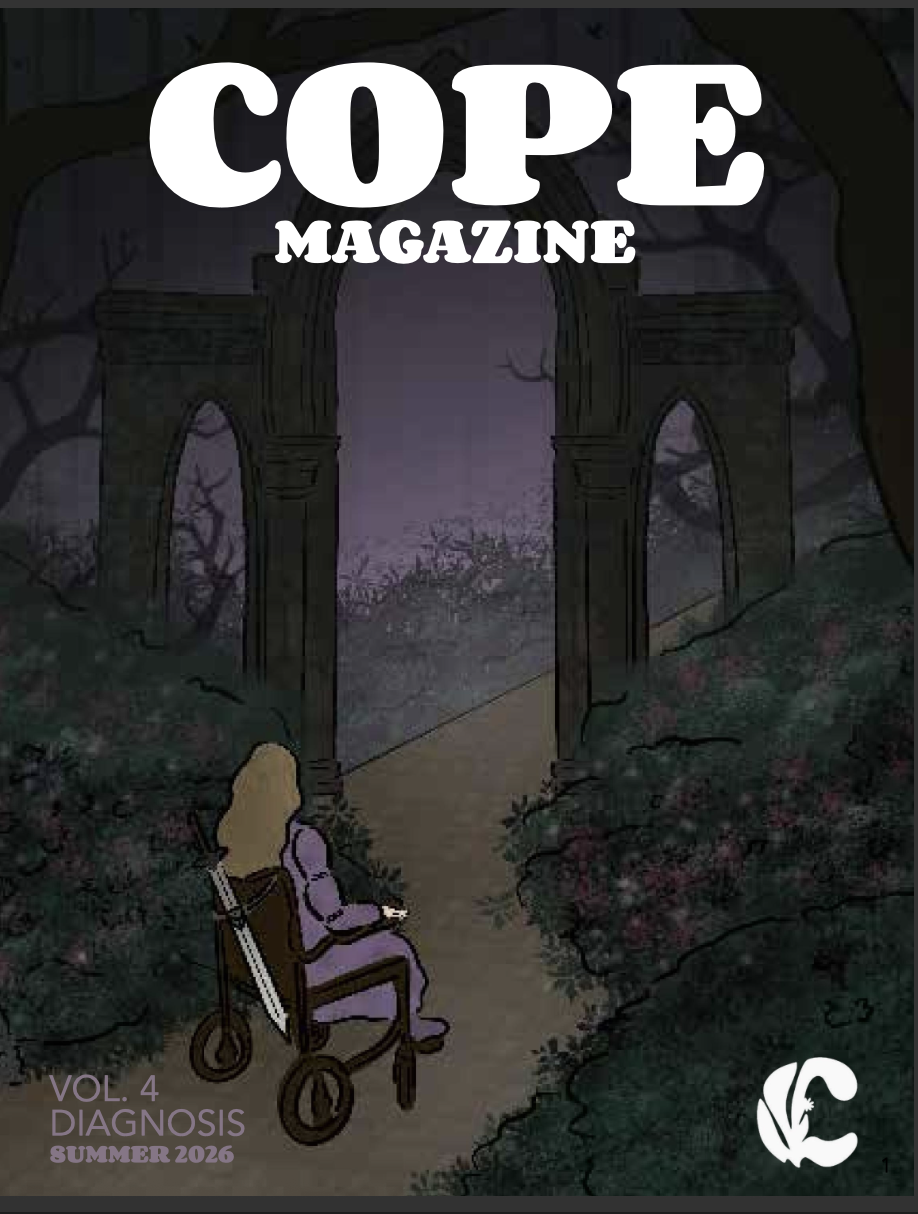
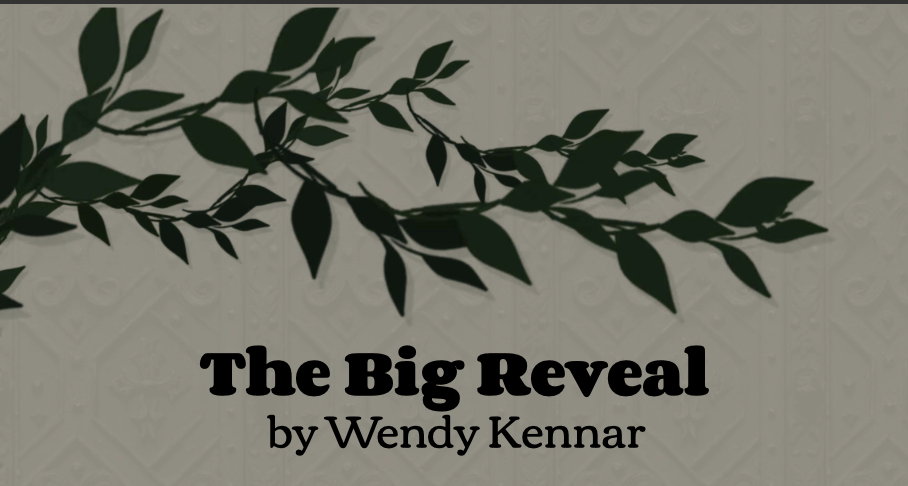
The words above are taken from my personal essay, “The Big Reveal,” which I’m pleased to share has been published in COPE Magazine, Issue 4. The theme for Issue 4 is Diagnosis.
In its current form, “The Big Reveal” is the first essay in my memoir — I can’t believe I get to write this, but here it goes — which will be published in Spring 2028!!
The morning I received my diagnosis is one of those days that got filed into my memory, and not until many years later, was I more fully able to process what it meant then, and what it means now, to be diagnosed with an incurable chronic condition.
Screenshot - Image courtesy of COPE Magazine
I hope you’ll read my essay, and also take time to read the other published pieces and marvel at the artwork that together make up COPE Magazine, Issue 4. (You can access the issue online and/or order print copies.)
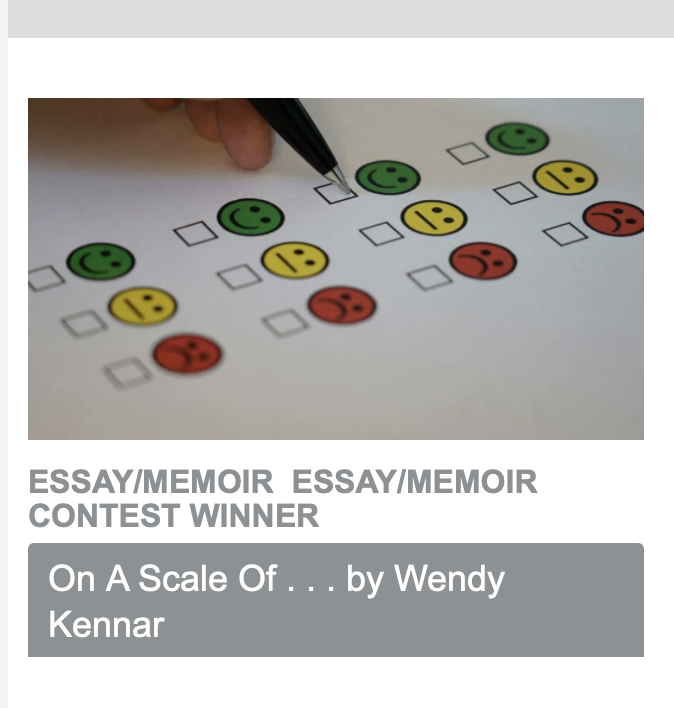
Back in May, I had shared the good news that my personal essay, “On a Scale Of…” had won first place in the 2026 Streetlight Essay/Memoir Contest. (In case you missed it, you can read that blog post here.)
This week, friends, I’m pleased to share Streetlight’s 2026 Summer Issue is now available online. And, included in the Summer Issue is my award-winning essay.
Here’s an excerpt:
“I do not like that pain scale. I like it even less than I liked the 4, 3, 2, 1 grading scale. “I think most people living with chronic pain feel the same way I do and regard that chart as an incomplete and inaccurate way to describe pain. That scale does not take into account the pain tolerance many chronic illness patients naturally develop over time. I have lived with regular pain for over a decade. I’m certain that to an extent I have grown numb to some minor pains, and I have grown more tolerant of other pains. I have to, if I’m going to get out of bed and do anything during the day.”
You can click here to read my essay in its entirety.
Spoonie Friends, I’m curious. How do you handle the pain scale when you’re at one of your doctor’s appointments? Let me know in the comments.
It’s not easy living with an invisible disability.
That’s an understatement, for sure.
At the same time, it is also a sentence with multiple meanings.
For example, if I had to rely on a walker or a wheelchair all the time, it would be easier in the sense that what I could and could not physically do would be a lot more obvious to, not just those around me, but myself.
I became sick in 2010. I received my diagnosis in late 2011. (Which is actually kind of fast for autoimmune diseases, but I didn’t know that then.)
In the years since, I have retired from teaching, and have begun a new career as a writer.
But, I still haven’t figured out how to do this — how to be in the world as a woman who lives with a chronic illness causing chronic pain. I don’t always know how to make decisions about my activities. When do I push myself? When do I admit something is just too hard? And not just too hard in that moment, but usually, physically taxing activities can wipe me out for days after the event.
This was the situation I found myself in recently.
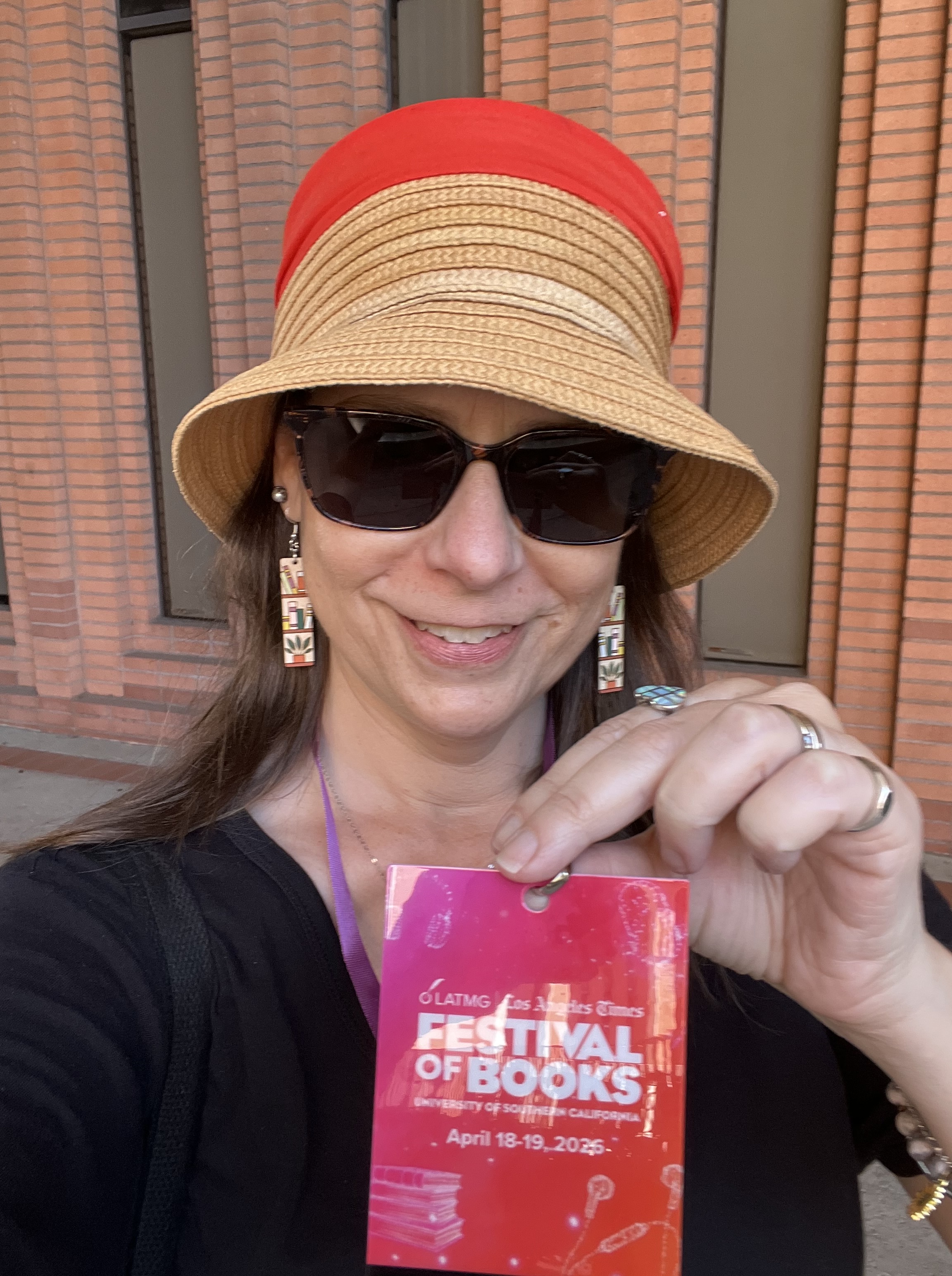
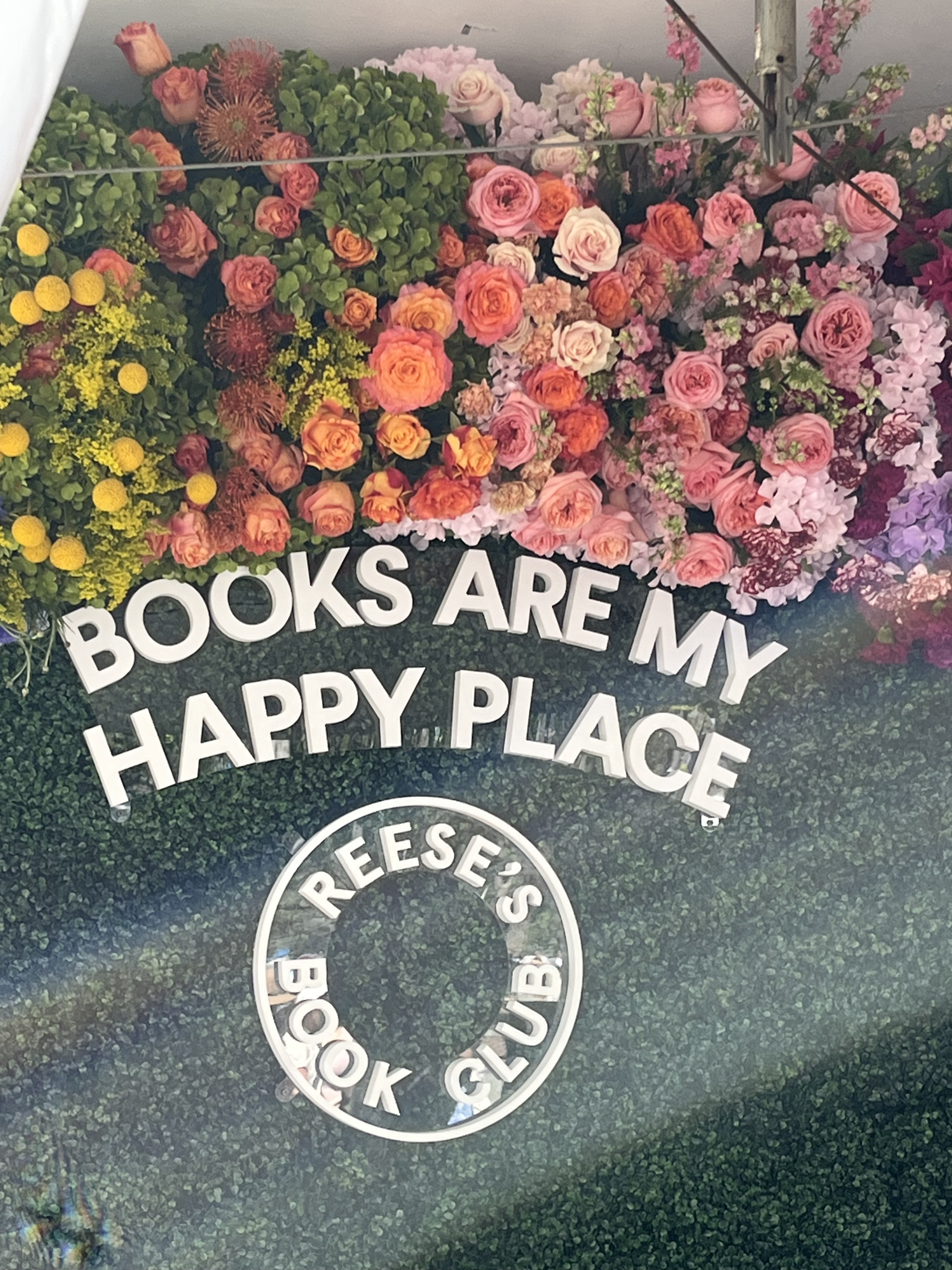
If you follow me on Instagram (and if you’re on Instagram, I hope you do follow me. I’ll follow you back, and it will be another way we can support each other!) you saw my posts from my Saturday adventure. I attended the annual Los Angeles Times Festival of Books on the campus of USC.
I wanted to attend because I’m a reader and a writer. Because I am actively seeking publication of my memoir. Because I want to connect with other readers and writers.
So here are a few things you should know about Saturday:
– Parking is an issue. There were very few handicap parking spots in the parking structure I used. I ended up parking on level 5 and then had to decide if I wanted to use the elevator or take the stairs. It wasn’t an obvious decision, because I have used this elevator before, in previous visits to the Book Festival. It’s a small elevator, and it makes me nervous. I opted to take the stairs.
– The walk from the parking structure to the exhibit area is quite substantial. With each step I took, my frustration grew. I felt like I was wasting my energy, wasting my legs, before I even reached the main event.
– I wanted to see and do as much as I could. I had a list of certain exhibitors I wanted to visit (including Village Well Books and Coffee, She Writes Press, and the opening-in-September Lucas Museum of Narrative Art, to name a few). They weren’t all near each other, which meant I had to walk to different “zones,” spread out throughout the Festival.
– My work, the writing I do for MomsLA.com , made me eligible for a Media Pass, which was easy enough to apply for, and not so easy to actually pick up. I asked Festival volunteers and security guards for guidance about where I could find the Media Center and no one I asked could help me. (Because it’s been a couple of years since I’ve attended the Festival, I didn’t remember where this mystery room was. Hence the need for me to ask others.) More walking, more wandering, until I eventually found it. Not that I minded, necessarily, because I got to explore some more, but it was additional walking that would contribute to my fatigue. (I wound up not really needing the Media Pass since I did not attend any ticketed events or panel discussions; however, it makes a nice souvenir.)
– I stayed at the Festival for a few hours. The walk back to the parking structure was slower and harder for me. And once I reached it, I had another difficult decision to make — take the elevator or climb the stairs to reach my car on level 5. By this time, I had finished up my water bottle, and all I could think about was the possibility of getting stuck in the elevator, feeling hot and sweaty, and having no water with me. My heart started beating faster, and my fear of getting stuck in the elevator won out. (This isn’t a completely irrational fear — before I left teaching, I spent almost an hour stuck in our school’s elevator early one morning.) I climbed the stairs to level 5. Slowly. Gripping the handrail. Pausing for a few minutes on level 3, before continuing and eventually making my way to my car on level 5.
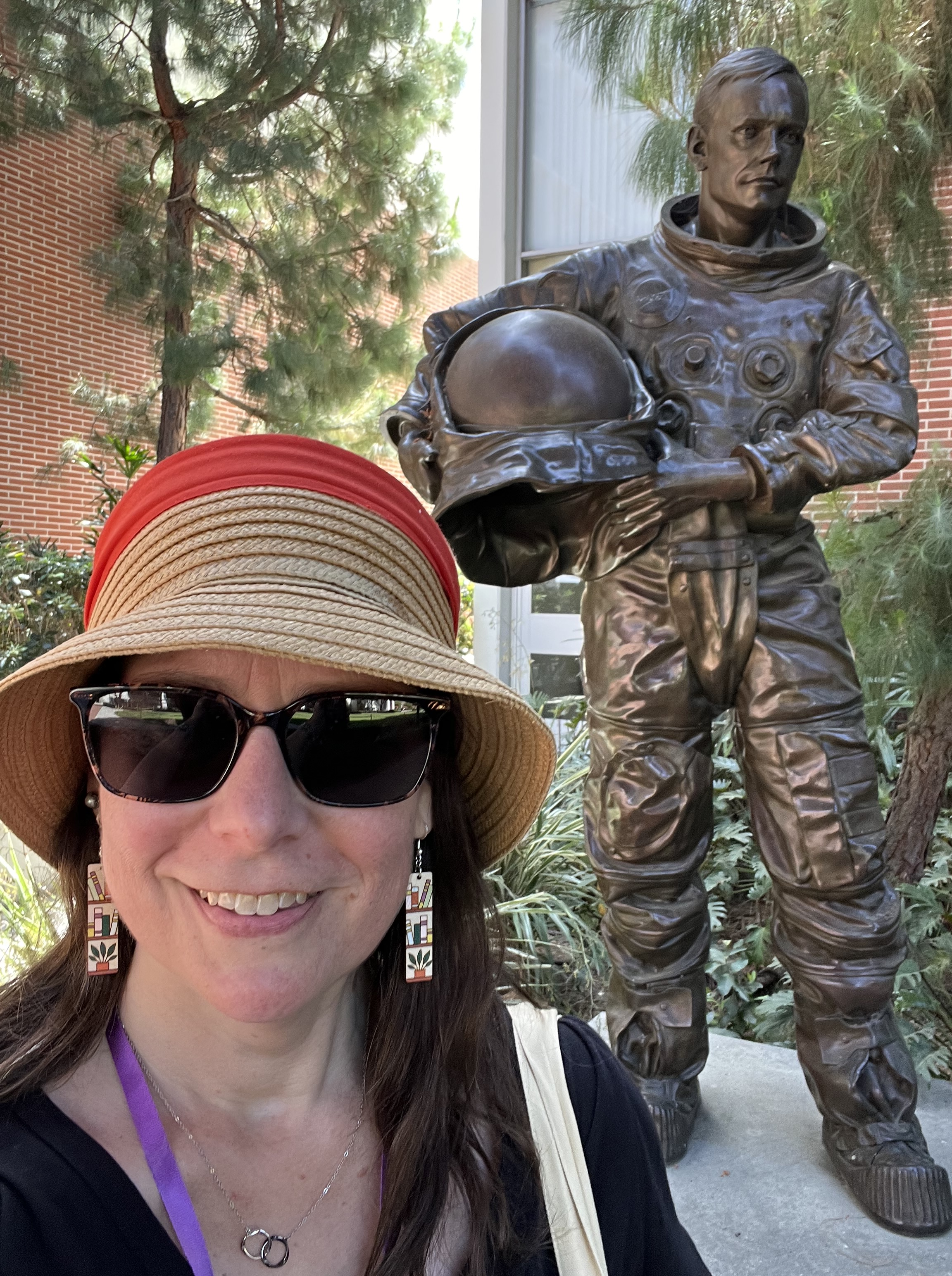
On my slow walk back to the parking garage, I stopped to pose with this sculpture of astronaut Neil Armstrong, the first human to walk on the moon. He received his Master's degree in aerospace engineering from USC.
So I did it. I drove myself to the Festival. I wandered and chatted and took photos and purchased books. I loved being among the positive energy from other book lovers. (I have found the writing community and fellow readers to be generous, uplifting folks. I felt that on Saturday.)
However, if I absolutely needed a wheelchair, climbing the five flights wouldn’t have been an option for me. And even now, days later, I’m still not certain I made the right decision. My knees are in bad shape. Doctors agree my left leg is weaker than my right. And I think it’s fair to say that climbing five flights of stairs, twice, isn’t easy for many people.
But for me, a girl with an invisible disability, who could “kind-of do it” (there’s a wishy-washy phrase for you), it was another example of me not knowing, still not knowing, when to push and when to ease up. When to acknowledge my physical limitations and when to seize an opportunity.
Spoonie friends, does this resonate with you? Anyone else struggle in a similar way?
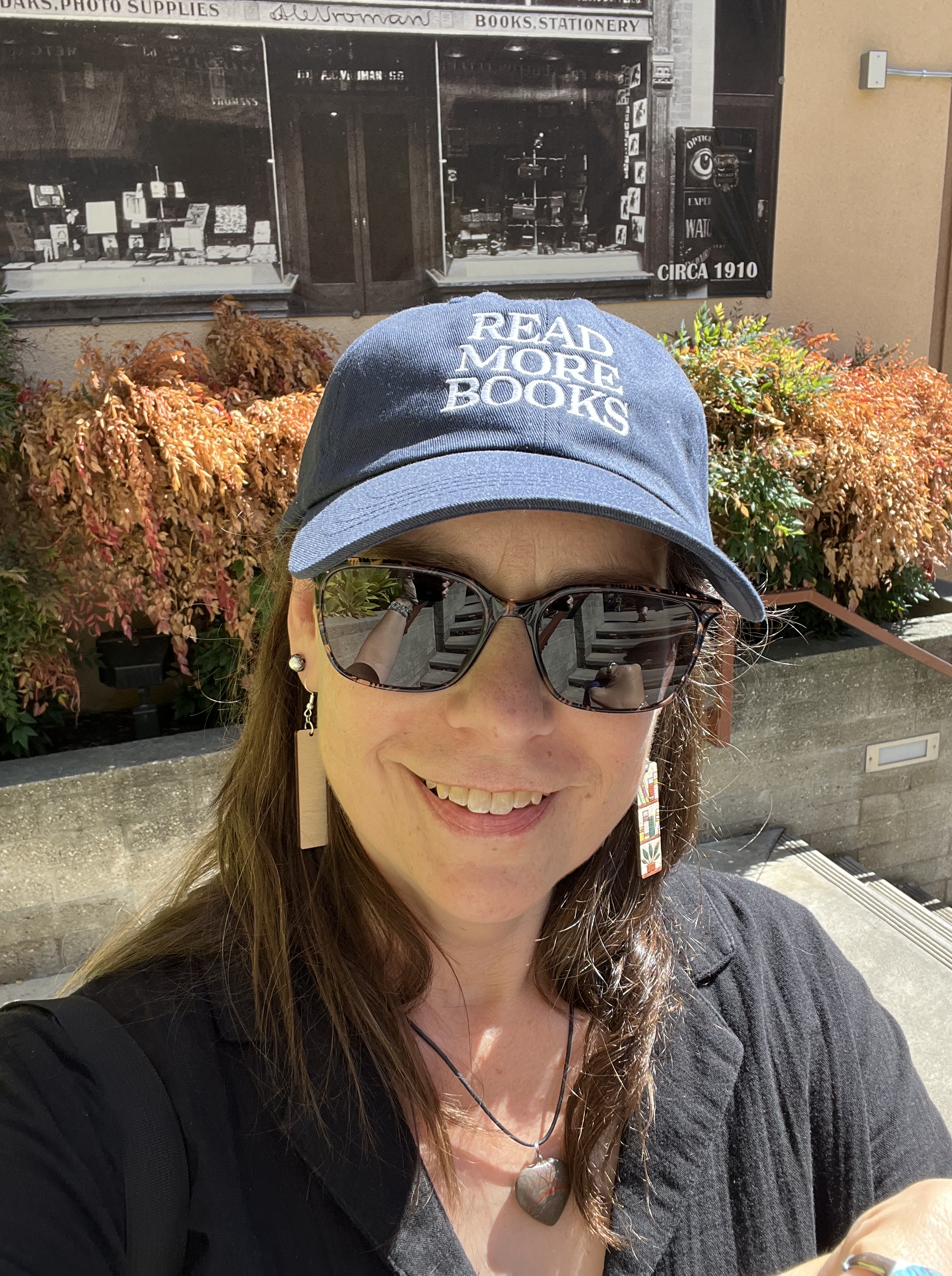
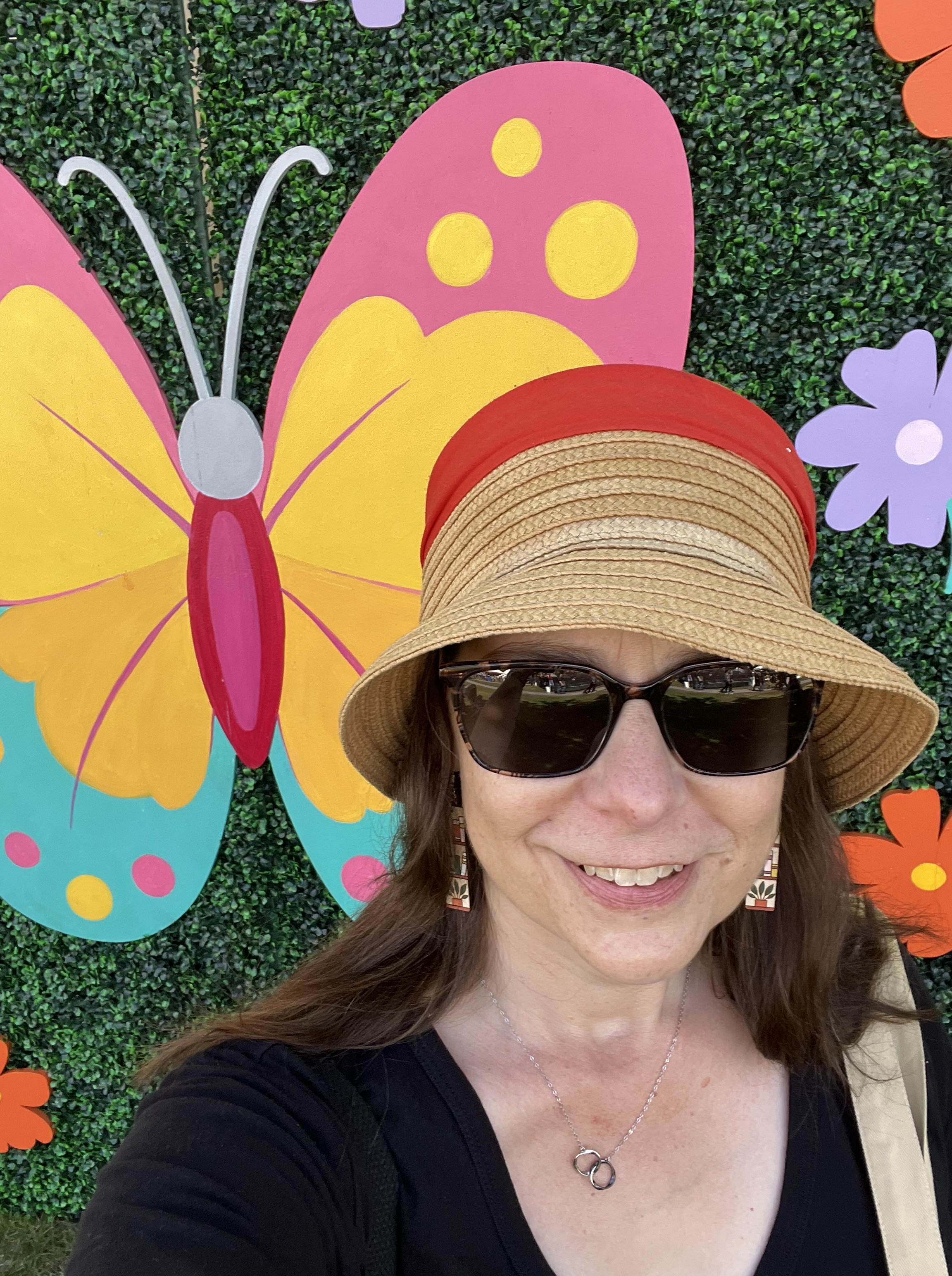
Friends, a reminder that author Joanna Monahan is generously offering a giveaway to my Substack subscribers. All you have to do is subscribe to my Substack no later than Thursday, April 23rd. Then on Friday the 24th, I’ll pull a name from my sun hat (the same hat you see here), and one lucky subscriber will win a signed copy of Joanna’s just-published novel, WELCOME TO BLOOMS!! 🌸🌺🌼 I can’t wait to read it— the book features a main character named Daisy whose family owns a flower shop! Be sure you have subscribed to my Substack so you can participate in this special giveaway opportunity.
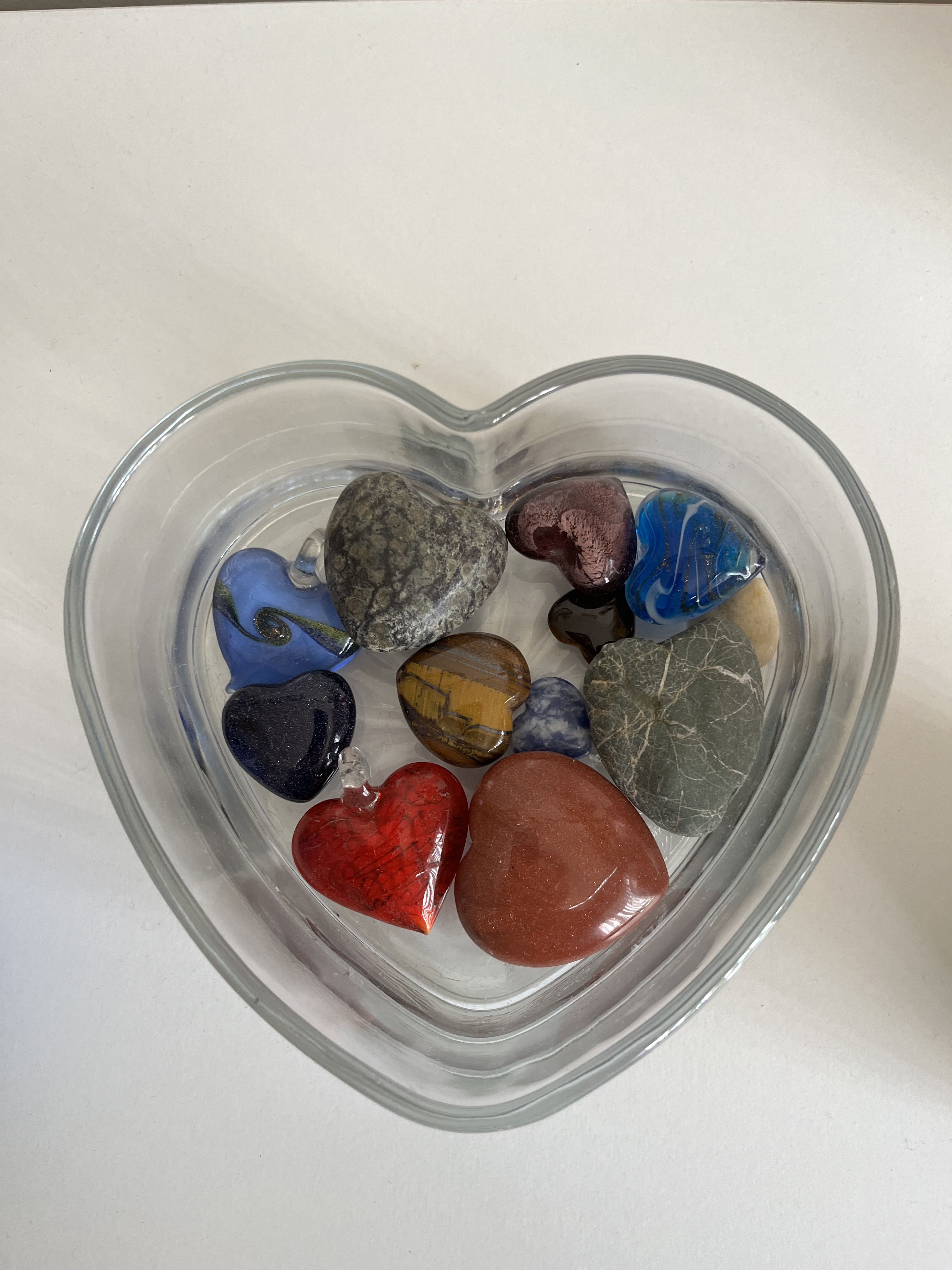
Recently I used some of my birthday gift money to buy myself a couple more bracelets to add to my wrist. (I was going to write “to add to my collection,” but that doesn’t feel right. These bracelets don’t just sit on display, like the glass hearts I have in my writing room. These bracelets are worn on my right wrist every day.)
My collection of hearts
I have written about these bracelets before, two years ago, when one of my closest friends gave me my first four bracelets. (In case you missed it, or just want a reminder, click here to read “The Power of Little Words,” written in May 2024.)
This week, I’d like to share with you one of the bracelets I bought from the Little Words Project. (I also bought myself one custom bracelet, which I’ll write about another time.)
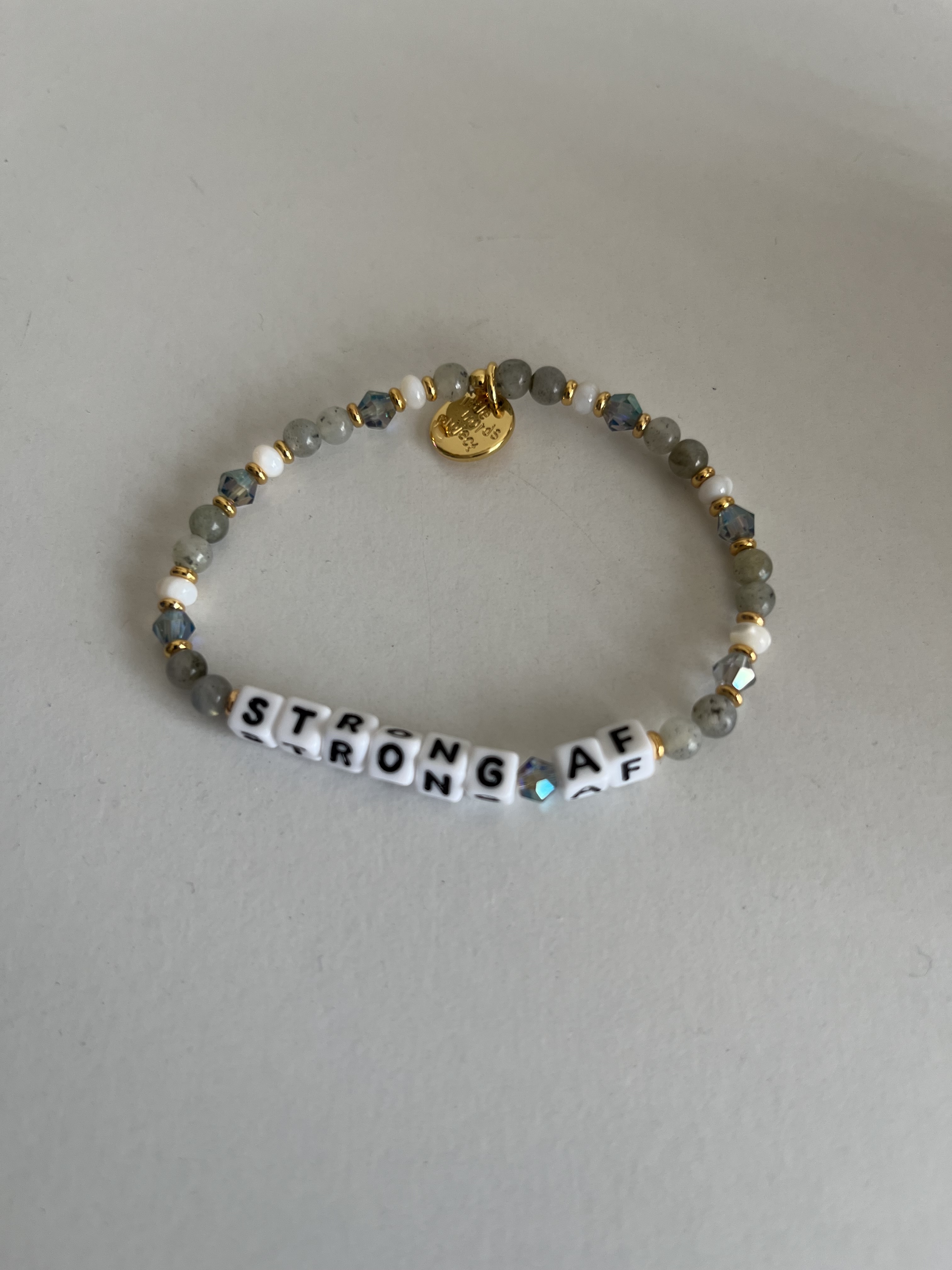
The bracelet reads: STRONG AF.
Now, I don’t curse a whole lot. I think it’s because I’ve always either worked with kids or the public and cursing on the job was never an option. As a result, the “F word” doesn’t leave my lips very often.
So, why did I buy myself a bracelet that means, “Strong As F*ck”?
For a couple of reasons.
First, my mom’s initials are AF. Wearing this bracelet is a tribute to her, and a way of carrying our love with me all the time.
Secondly, my mom is a strong woman. Even when she doesn’t think so. Even when she’s frustrated that her 81-year-old body doesn’t always move or feel the way it used to. (Though, her hair is still brown and no one believes my mom is her age. People always guess younger.)
I understand those feelings of frustration. I deal with them all the time. Sometimes I move beyond frustration, and I go down that slippery path of feeling weak and/or incompetent.
Because the reality is, my body isn’t always reliable. I can’t always depend on it to behave the way I want it to, to be able to do the things I want to do. And that makes me sad. And scared. And worried about the future.
My mom is dealing with these feelings now, in her early 80s.
What will it be like for me by the time I’m that age? I turned 50 this year. (I’m still not used to writing that/saying that/knowing that.) I have a handicap placard in my car’s glove compartment and a wheelchair in our downstairs closet. And if I need these things now (and the truth is, I started using these things in my late 30s), I’m scared of what my body will be like by the time I’m in my senior years, when things are expected to slow down and function differently.
That’s where “Strong As F*ck” comes in.
Because I am continuing to learn that strength takes many forms. It’s a lesson I’ve been working on for many years, in fact. But sometimes students need reminders.
Strong AF is my reminder.
What’s yours? I’d love to know. Do you have a word, a phrase, a mantra that helps you when you’re feeling down, when your body refuses to cooperate, when your mind plays tricks on you? If you feel comfortable, please share in the comments.
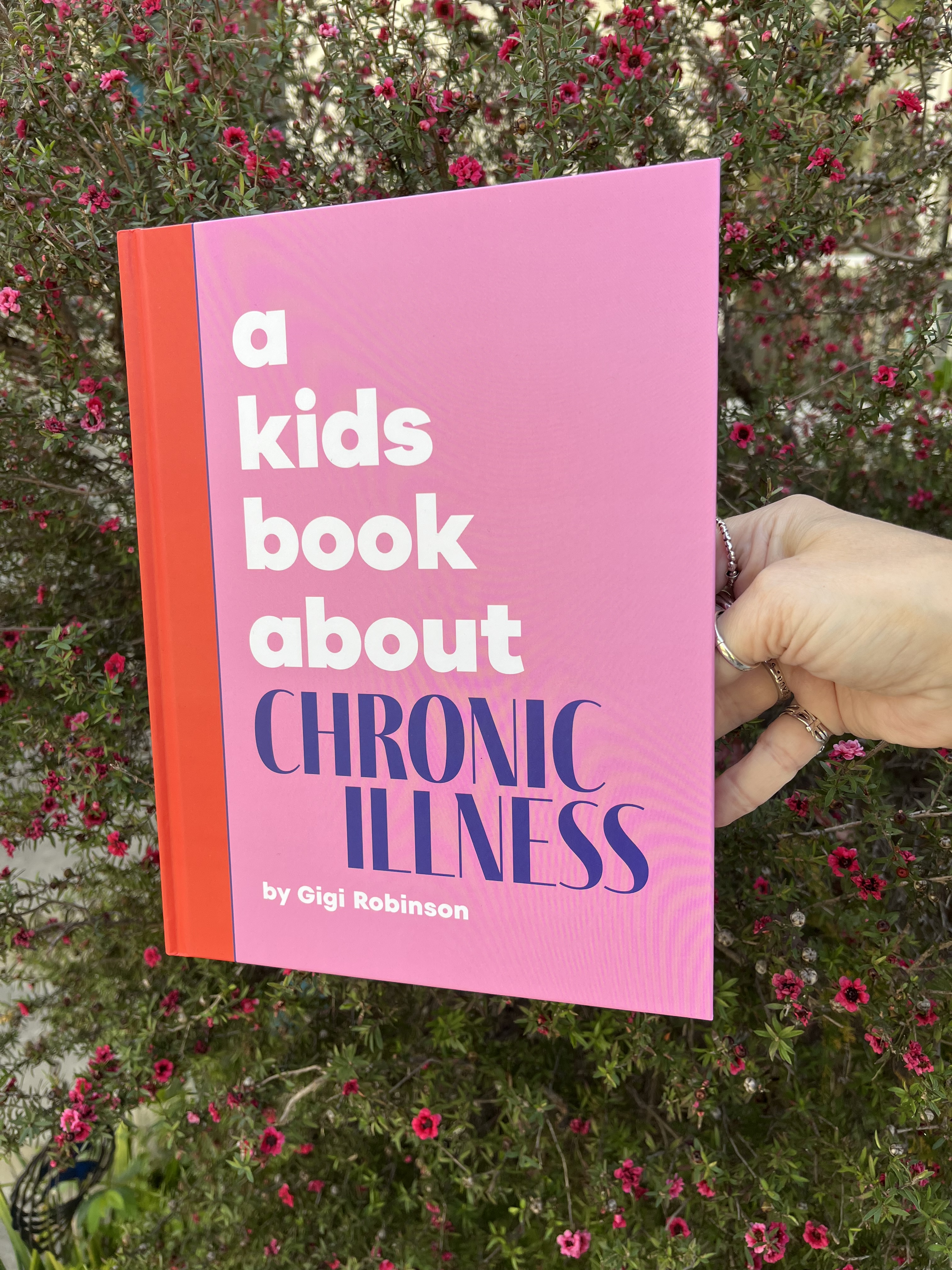
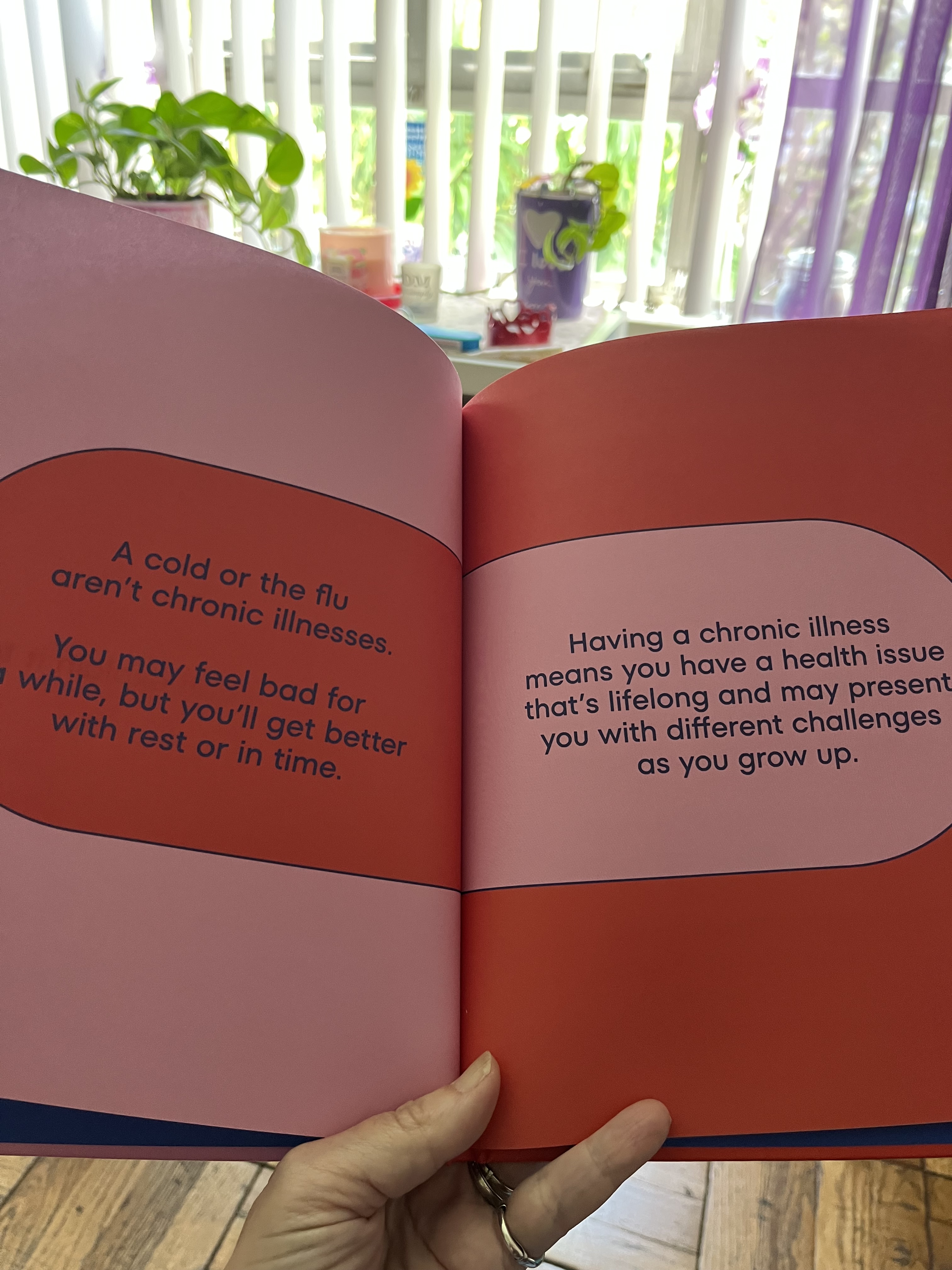
Ms. Robinson’s book is definitely one I would have read with my son when he was a little guy. A book that may have helped him understand his Mommy’s invisible illness and the boo-boos inside my leg.
The book is written for children, and features a relatively large font, easy-to-understand vocabulary, and definitions for a few words (including “symptom” and “advocate” that may be new or unfamiliar to young readers). And, as stated on the author’s website: “This book teaches kids how to speak up, build confidence, and embrace their journey with chronic illness.”
The book has a positive tone, is written in an easy-to-understand format, and manages to take a complex, could-be-scary-and-overwhelming topic like chronic illness and make it relatable by including the author’s own experiences with chronic illness.
“You have the power to choose how you respond to the things you go through.”
“Your chronic illness is a part of you, and it’s one you may always have. “But it’s not the only thing about you.”
And with all that, the book doesn’t shy away from the truth:
“Living with a chronic illness means how you feel can change day by day, both physically and emotionally.”
“I had no control over what my body did, and I felt mad and frustrated (and I still do).”
I love this message which shows up near the end of the book:
“But I’ve learned… Something invisible can become more visible the more you talk about it.”
The book description says the target age is 5-9, but I’m a big believer that books don’t need to have age limits. For my spoonie friends, I highly recommend sharing this book with young ones in your life. For my teacher friends, this book should be a part of every classroom, and school, library because even if you don’t have a student living with chronic illness, chances are you do have a student who knows someone/lives with someone/is related to someone who does have a chronic illness.
Please note: I am including a link to buy the book that I’m highlighting this week. If you use my link, I do make a small commission on your purchase at no additional cost to you. I am working with Bookshop.org which also sends a portion of the profit to support local, independent bookstores.
I’ve written about being a “spoonie.” And the difficulty I had in referring to myself as a “spoonie.” (You can read more about ithere.)
Whether or not I describe myself as a spoonie, certain facts remain:
– I live with a chronic illness causing chronic pain.
– I have limited amounts of energy each day.
– I cannot always rely on my body to do what I would like it to do.
– There is no denying all the ways illness has changed my life, and all these years later I still feel sad/angry/frustrated for all the “little” ways my daily life has been made harder since becoming chronically ill.
These feelings are not unique to me. Which is one of the reasons I wanted to read A Spoonie’s Guide to Self-Acceptance, a poetry chapbook written by Kelly Esparza. (Kelly serves as the Editor-in-Chief of FLARE Magazine, an online journal where my personal essay, “Am I a Spoonie?”, was published.)
Ms. Esparza’s collection is an honest, tender, thoughtful look at a spoonie’s life.
There were many times I read a poem and felt myself nodding in agreement. Because, unfortunately, Ms. Esparza “gets it.”
Here are just a few phrases that really made an impression on me:
“rashes snake up your legs, a butterfly blush kisses your cheeks,” from “Blame It on the Sun”
“You get wheeled around in a wheelchair sometimes, because you’re Fatigue’s next victim, and you’re stuck in Inflammation’s sticky spider web of deceit” from “Invisible Illness”
And the final poem in the collection may be my favorite. It’s titled, “Welcome to the Spoonie Club,” and includes these phrases:
“I’ve got a bouquet of spoonie problems, but I’m not letting that stop me.”
And
“Knives cut where it hurts, forks, are pitchforks for the hunted, yet spoons scoop and uplift.”
One last thing, friends. Wishing you Merry, Happy Days. May you feel cozy and comfortable. And may you enjoy lots of reading time!
When this blog post publishes on Wednesday, December 17th, we will be a week away from Christmas Eve, a week and two days away from Kwanzaa, and at about the halfway point in terms of celebrating Chanukah. And I have a gift recommendation to share with you!
Author, coach, speaker, and friend, Sandra Postma, has written Surviving the Holiday Season with Invisible Illness. This e-book is under-60 pages, with large font and lots of white space. After purchase, you can access it on your phone or your computer monitor or print it out to have a physical copy nearby. All these options exist, all these thoughtful touches were put into place, because Sandra is herself a spoonie and she “gets it.”
This book is a gift.
A gift for someone living with an invisible illness. A gift that says, “I know. The holidays can be so tough. I’ve been there. Let’s see if I can help.”
A gift for someone living with an invisible illness to give to friends and families. A gift that says, “Here. Please read this. This is how I feel but didn’t know quite how to express.”
A gift for the friends and family of someone living with an invisible illness. A gift that says, “I wanted to learn more about how I can help you and support you during the holidays so I bought, and read, this book. This is what I learned. Now, let’s apply it.”
Sandra has really thought of it all. Her book offers:
– Suggested scripts for when you have to decline an invitation (and a reminder that “you cannot control how others react, and saying no respectfully is a personal boundary; not a failure.”)
– Virtual pats-on-the-back for the work you’re doing living with a chronic illness and also trying to navigate the holidays, families, and different routines and activities in ways best suited for your individual situation
– Reminders to be gentle with ourselves. Our lives will look a lot different than others who are not chronically ill.
– Encouragement in the truth we sometimes overlook. As Sandra writes, “Wherever you are in bed, on the sofa, or somewhere in between, there is one certainty in life and that is change.” Spoonies know that change isn’t always positive, but what if it is? “What if things will become amazing? I want to be here to see it.”
– Planning pages to help you intentionally create your own Survival Kit, so it will be ready when you need it
– Collection of Affirmations, when you just need a little burst of a pep talk
– A change in perspective. Sometimes it’s so easy to just keep going, telling ourselves the same thing over and over, behaving in the same way. Sometimes it really does take someone else to shine a light and help us see things differently. I keep returning to these statements: “We don’t always have to fix a negative emotion, distract ourselves from it or turn it around. We feel stuff for a reason and it doesn’t appear so we can then push it back down.”
Thank you, Sandra, for taking the time and energy to put this e-book out into the world.
I don’t one-hundred percent know what I’m doing in terms of my writing career. (To be honest, I never dreamed I would even have a “writing career.”) I do know that I’m always learning, I’m always trying to improve — in terms of my writing craft, the way in which I share my writing, and the ways I connect with readers and other writers.
I have written a weekly blog for over a decade. In those very early years, before I invested in my website (www.wendykennar.com), each week’s post was written about any and all subjects. Anything I felt like writing and sharing I did. It was random, and because of the lack of cohesiveness, I think it was harder to find readers who would subscribe and regularly read my posts. It was much more difficult to form a community back then.
Then, I re-organized my blog and wrote about one of three B’s in my life — Books (because writers are also readers), Boys (I’m the mother of a son and a former elementary school teacher), and Bodies (I live with an invisible disability).
I have since deleted the “Boys” section, because my son is almost an adult. I don’t write about him and our interactions and relationship in the same way. Plus, I haven’t been a teacher now for twelve years.
And, in another move that is also related to learning and growing, I have started a Substack account. Some of my blog subscribers have signed up for my Substack, currently known as “Wendy’s Weekly Words.” (wendykennar.substack.com) But for the most part, my Substack subscribers and my blog subscribers function as two distinct groups.
I would like to change that. Here’s how:
I will continue posting my weekly blog here at www.wendykennar.com . My blog posts will generally be focused on books and bodies. Each week, I’ll continue writing about something I have read or my experiences with a chronic illness, life with chronic pain, and/or living with an invisible disability.
And, I will be writing a bi-weekly Substack (wendykennar.substack.com), which will not just be a copy of what I have up on my blog. (Which is the way my relatively young Substack has been used up to this point.)
My bi-weekly Substack will now include:
– links to my recent blog posts in case you missed them
– a writing prompt
– a wondering (something I’m confused about or have questions about. Maybe you have the answers.)
– a recommendation (something I read or watched or listened to)
– and when I can, a couple of famous dates in history that are somehow relevant to my writing and what I share.
That’s what I’m planning to do.
Here’s what I’m asking of you, please:
If you haven’t already done so, please subscribe to both my Substack (wendykennar.substack.com) and Blog (www.wendykennar.com). If you already are subscribed at both places, please just let me know in the comments section on one of my sites. (It would be great if you also followed me on Instagram @wendykennar. That way you’re sure not to miss out on anything I write or share.)
Those of you who subscribe to both my Substack and Blog, will then have a chance to win a book in a drawing. Names will be placed into a hat and I will randomly draw one reader’s name. As a thank you, I will mail you a personalized copy of Chicken Soup For the Soul: It’s Beginning to Look a Lot like Christmas. (My story, “A Timeless Gift,” is included in this collection.)
October 2019
This is all new to me. I’ve never done anything like this before. Maybe I’ll need to make some changes down the road. But for now, we’re going to give this a try. I hope you will continue being with me on this journey. Living with a chronic illness and writing can both be pretty isolating. I hope you know how much I value your support, how much your being here with me really does help!
Sign up by next week’s blog post on Wednesday, December 17th. That way I can have the drawing on Thursday, December 18th, and I can get your book out in the mail on Friday, December 19th.
After that you can expect regular blog posts each Wednesday morning.
And the first issue of my bi-weekly Substack will go out on Sunday, December 28th. (And the next Substack will be in your inbox on Sunday, January 11th, 2026.)
Thank you, friends. Thank you for reading. Thank you for supporting my writing. Thank you for supporting me.