Wendy’s Words on Substack

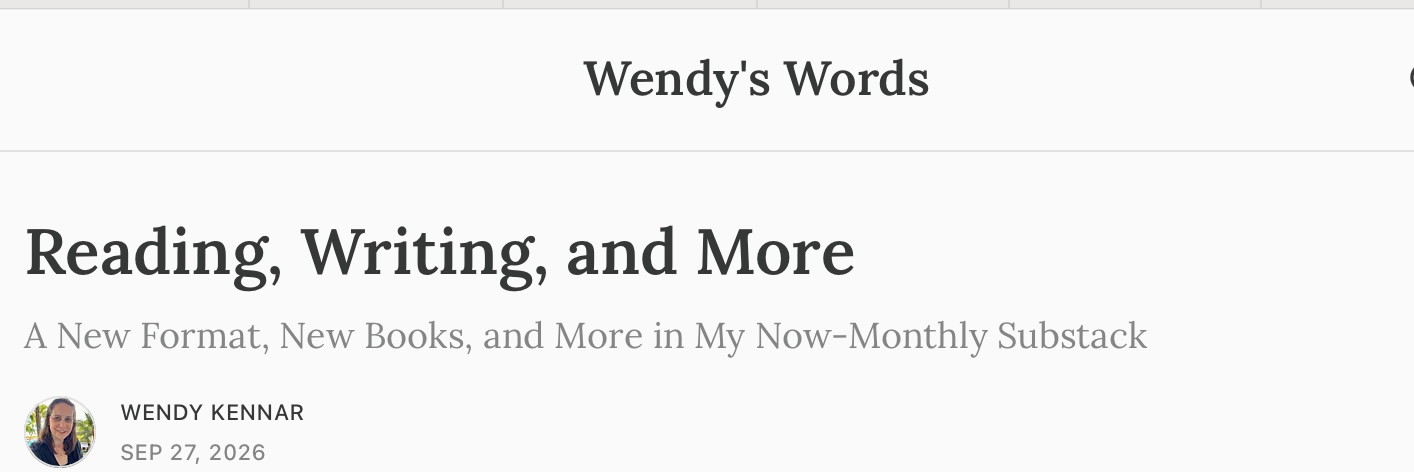
A screenshot of my Substack

For about a year now, in addition to writing my weekly blog, I have also written a Substack. If you’re a Substack subscriber, you know my Substack would arrive in your inbox every other Sunday. I called it Substack Sunday. 

This week, I’m using this blog post to tell you about some of the changes I’ve made to my Substack. 

My Substack is called “Wendy’s Words,” and I will now publish it on the last Sunday of each month. Think of my Substack as my author newsletter, a format that will allow me to share more widely than I share here on my weekly blog. 

This past Sunday, September 27th was the first re-imagined issue of “Wendy’s Words.” 

But there’s something missing — many of you, my blog readers. 

I invite you, my blog readers, to subscribe and also become my Substack readers.

All you have to do is sign up with your email address, and once a month you’ll receive Wendy’s Words in your inbox. 

In each monthly Substack, I’ll be sharing:

– Links to my last four blog posts

– Book-related news (which may include information about my memoir-in-essays and/or book events I went to/watched/am looking forward to)

– A writing prompt

– A peek into Wendy’s World (which may be something chronic illness-related, something writing-related, and/or something just Wendy-related)

– Something to watch (such as a video or interview that caught my attention)

Friends, I appreciate your support here on my blog. Please join me on Substack — it will be another way we can connect and share. 

Thank you!

I almost forgot — I like to do book giveaways for my Substack subscribers. I will now be doing at least one giveaway a month. To celebrate the new format of my monthly Substack, I will randomly draw a subscriber’s name on Sunday, October 4th. Be sure to subscribe so you’ll have a chance to win a free book — The Taste of Anger, a memoir by my friend Diane Vonglis Parnell.

Please note: I am including a link to buy the book that I’m mentioning this week. If you use my link, I do make a small commission on your purchase at no additional cost to you. I am working with Bookshop.org which also sends a portion of the profit to support local, independent bookstores.
The “Why” Behind My Book

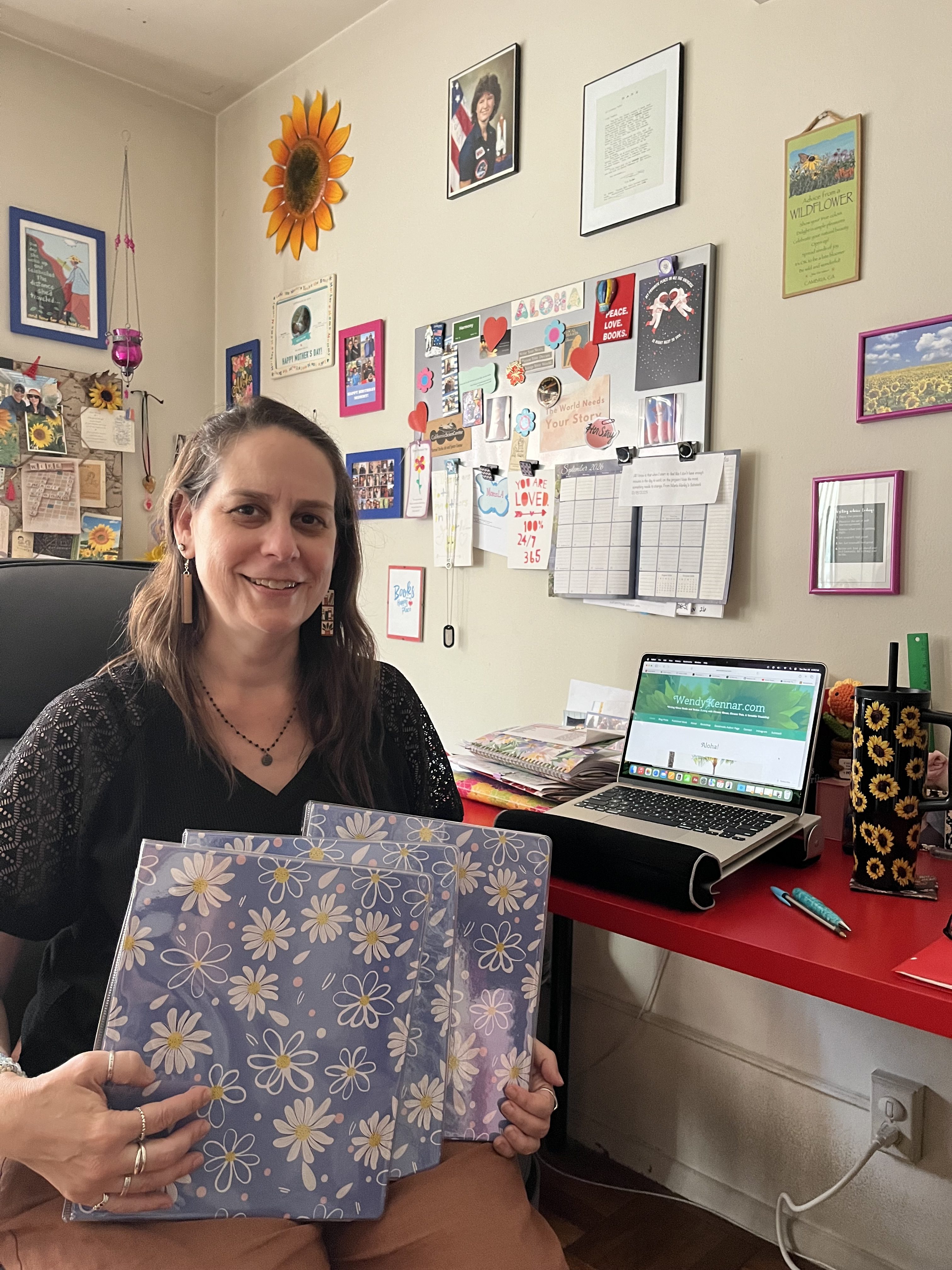
A Woman holding three binders in her lap sits at a desk, laptop open on the desk.

“Why this book?”

“Why you?”

“Why now?”

Those three “why” questions are commonly asked of authors. They may be asked before the book is published, such as when querying agents or speaking with editors. They may also be asked during a panel discussion or special event celebrating the book’s publication.

Basically, an author is making the argument that: their book is needed in the world, at this time, and that the author is the best person to write this book. 

This week, as I think ahead to my memoir’s publication (Spring 2028!!!) and my own author career, I wanted to share my answers to these questions with you, my readers. Because you all have been reading my words here each week, and you all are an important part of my author journey. 

“Why this book?”

This is the book I needed to read when I became ill. Except I couldn’t find anything like it. The same thing happened once I received my diagnosis, and again when I retired from my teaching career. I searched for the stories of others experiencing similar situations of invisible disability and chronic pain. Except I couldn’t find any such stories. I wanted to know it wasn’t just me who struggled to explain outwardly-invisible pain to a young child. I wanted to know how other chronic illness patients adapted when their dream career was no longer possible because of poor health. 

“Why you?”

My memoir could only be told by me. However, though the specifics are mine, the themes of my book are universal. It may take different forms, but we all live with hidden pain. Scars not immediately visible. Loss and grief when the life we thought we would be living is no longer possible in the same way. It feels like I have always considered myself a writer. I have always found solace and clarity in getting my thoughts down on paper. And, I use my writing as a way for me to teach. I may no longer be able to teach children in a classroom, but I can teach readers that not all disabilities look the same. 

“Why now?”

My book is scheduled to be published in 2028, but I have been writing about my invisible disability for well over a decade now. I didn’t realize that as I wrote one essay, then another, and yet another, I was also writing a book — a cohesive collection of my experiences as a mom, a wife, a teacher, a woman living with a chronic illness causing chronic pain. And the older I get, the more I realize that we are all dealing with something. We’re all carrying around pain of some sort, scars and wounds that might not be evident at first glance but are still very much a part of us. And that’s only going to increase as humans are living longer, which means more of us will likely be dealing with health issues as we age.

In Spring 2028, I may be asked these very questions. It feels only right to first share my answers here, with you. 

Sit, Cinderella, Sit

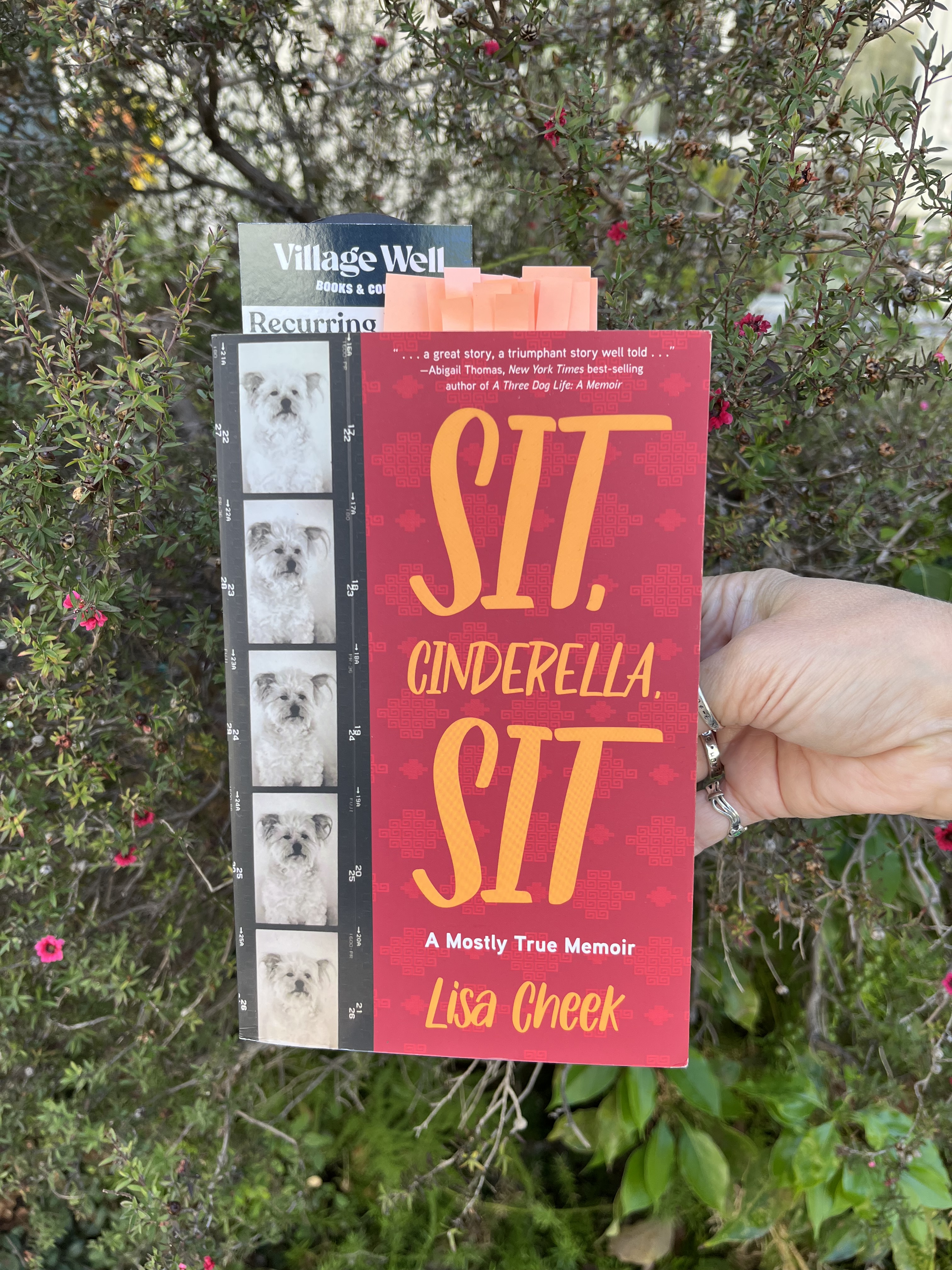
Paperback book with red background, yellow letters, and photos of a dog

I enjoy reading memoir. Not only because I write memoir and personal essay, but because I’m curious, and I enjoy learning about someone else’s life story. 

And I’m lucky because, through the gift of a memoir, I get that front-row seat to someone else’s lived experience. The author generously shares a moment (or several moments) in their life with me, the reader. Maybe they hope their story will resonate with me. Maybe they’re hoping their story will contribute an additional perspective to a conversation already happening in society. Maybe they hope their memoir will serve as a bridge, connecting readers and the author to each other. 

As a reader of memoir, I gain insight into the emotions and experiences of other human beings. And I like to think those insights make me a more compassionate member of the human race. 

Which brings me to the topic of this week’s blog post — Sit, Cinderella, Sit: A Mostly True Memoir written by Lisa Cheek. 

Ms. Cheek’s memoir really did give me an awareness of a career, a trip, a life that I may never have otherwise learned about. 

Sit, Cinderella, Sit is the story of an editor (of television commercials and films).

Sit, Cinderella, Sit is the story of a dog owner and dog lover.

Sit, Cinderella, Sit is the story of a woman who doesn’t speak Chinese spending several months in China for work. 

Allow me to share some of my favorite passages:

“For me, coffee was a necessary luxury. It was how I spoiled myself. Between the anticipation, the event, and the enjoyment, it was life at its finest. Coffee was the most important ritual of the day. It was like prayer. It brought me back to life each morning. Got the juices flowing. Made me take a second, third, and fourth look at things. I felt like I could do anything after a really good cup of coffee.”

I loved the author’s unique descriptions: 

“His tail wagged like a windshield wiper in a rainstorm.”

“I stepped over an overflowing trash can. A black banana peel thrown over the top, looking like a dead octopus in a sea of trash, stared back at me.”

“Mounds of clementine oranges in bright, wrinkly skins with stems and leaves still attached appeared just picked.”

“She had a square face and two triangle ears, which folded over like a pita bread sandwich that matched the color of her heart marking.”

“With the calmness of a bomb expert and the focus of a tightrope walker, Vin rode the edge of that cliff with the speed of a race car driver.”

“…I took in the lush colors — a masterpiece in nature. Saturated in mist, the mountains became a deep velvety brown, less jagged and harsh, soft like a watercolor. Terraced lime-green rice fields bathed in drizzle with golden yellow flowers sprinkled throughout. Far below, the swirling blueish-green Yangtze rushed along the banks, forceful and impatient, on its way to its next destination.”

“I’d lived alone my whole adult life, until Ron Howard moved in, so sharing a house with thirteen men who didn’t speak English was something I never even knew one could do. But here I was — in the middle of Shaxi, in a guesthouse just off the main square, living with a baker’s dozen.” (Note – Ron Howard is the author’s dog.)

“Soon the song changed to ‘Thriller,’ which brought the whole party out to the sunken garden. Everyone knew all the dance moves — each movement made with the exactness of Jackson himself. No one missed a beat. Not a limb was out of place. It was a performance the icon himself would have been proud of.” 

“Here, in a tiny village thousands of years old in the middle of nowhere, Michael Jackson’s music and dance was the language we all knew. It connected us in a way that no spoken word ever could or would.”

“… I thought about all the people who had loved and cared for me, who didn’t speak a word of English, yet there was so much deep communication — heartfelt communication. Kindness is the universal language and can be spoken anywhere without uttering a word. It’s the magic in our lives.”

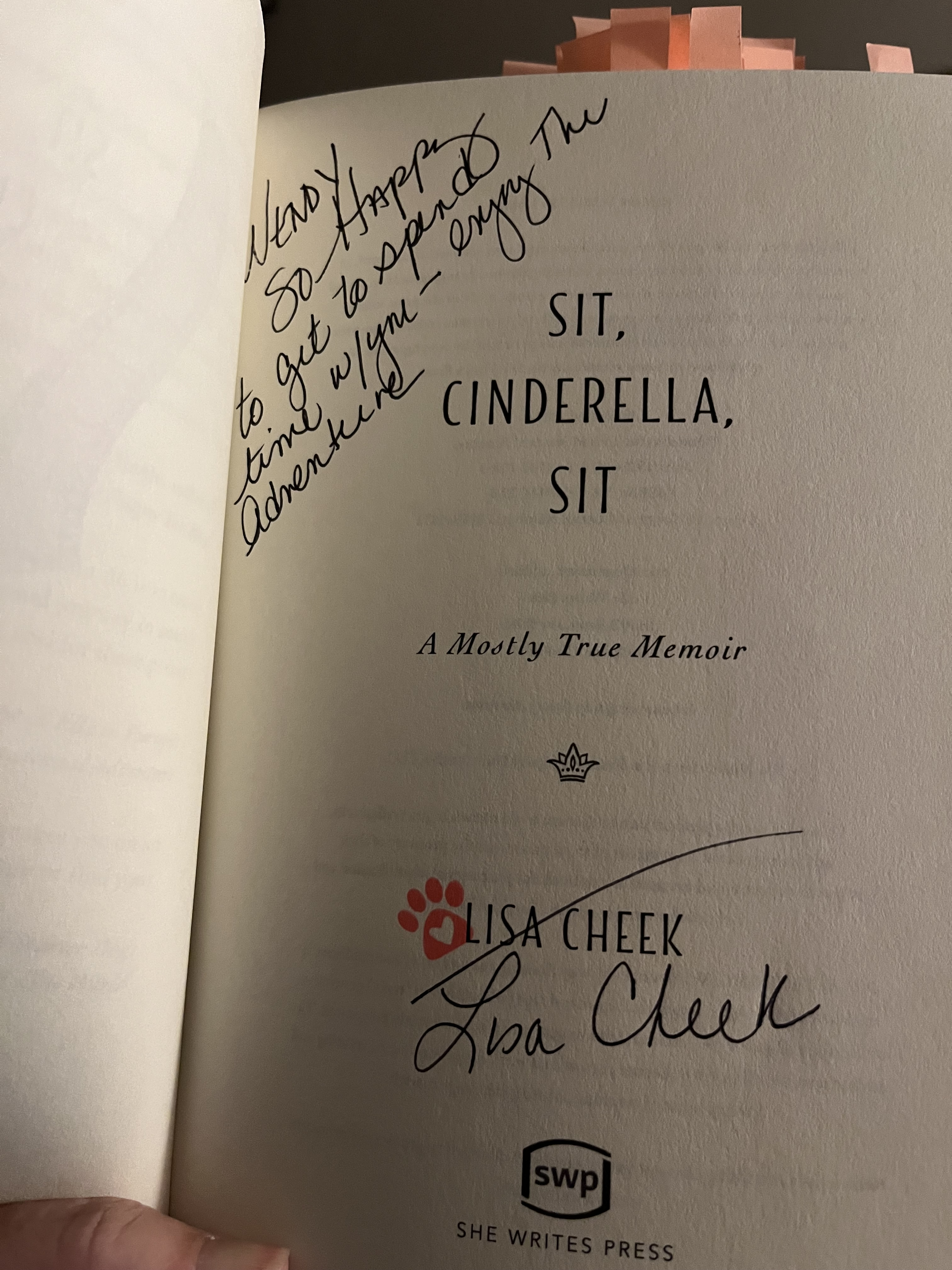
Title page of a book, with a personalized message to me, signed by the author

Note — this memoir was published in 2025. Ms. Cheek’s second memoir, The Big Day: Saying “I Do” Only to Discover I Didn’t will be published next week and is available for pre-order now. 

Please note: I am including a link to buy the book that I’m highlighting this week. If you use my link, I do make a small commission on your purchase at no additional cost to you. I am working with Bookshop.org which also sends a portion of the profit to support local, independent bookstores.


My Worst Qualities

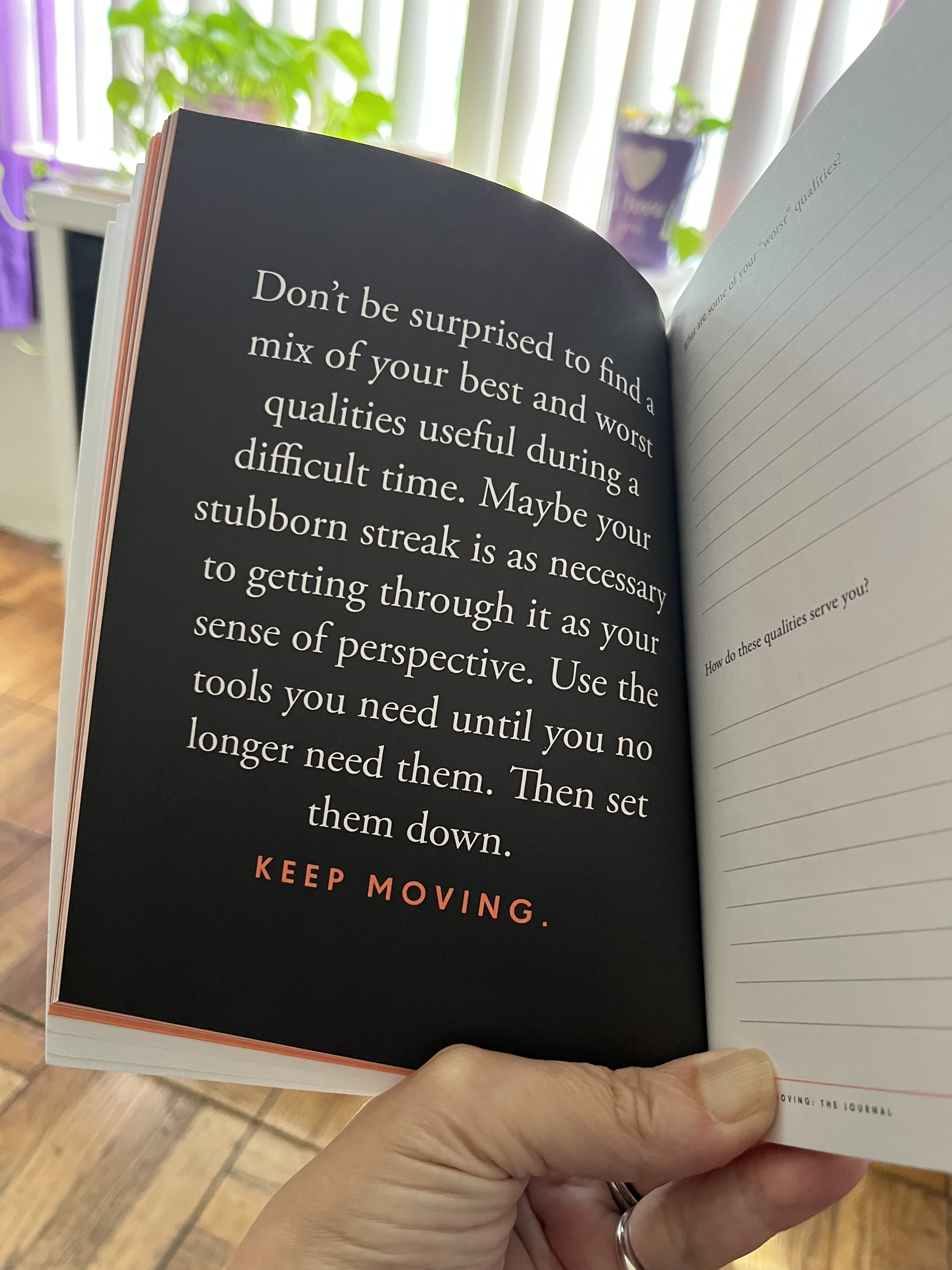
Black page with white letters, ending with orange letters and the words "Keep Moving."

Since June, my life has been full and busy. Filled with devastating lows and incredible highs. 

In the midst of all of it, though, I feel like I’m losing part of myself. 

So when I turned the calendar page to September, I set a goal for myself: to complete thirty five-minute writing exercises, one for each day of September. 

(Note – This isn’t the first time I have written blog posts about five-minute writing exercises. Here’s a link to a post I wrote about them back in August of 2025.)

While my goal seemed completely doable, I’ve already missed some days. 

And you know what? I did something I rarely do. 

I cut myself some slack. I didn’t make myself write at 11:00 pm, when I struggled just to keep my eyes open. 

I just accepted it — I missed a few days. 

But, I’ve also written a few days. 

I’ve been using some of the prompts from Keep Moving – The Journal by Maggie Smith as my starting-off point for these writing exercises.

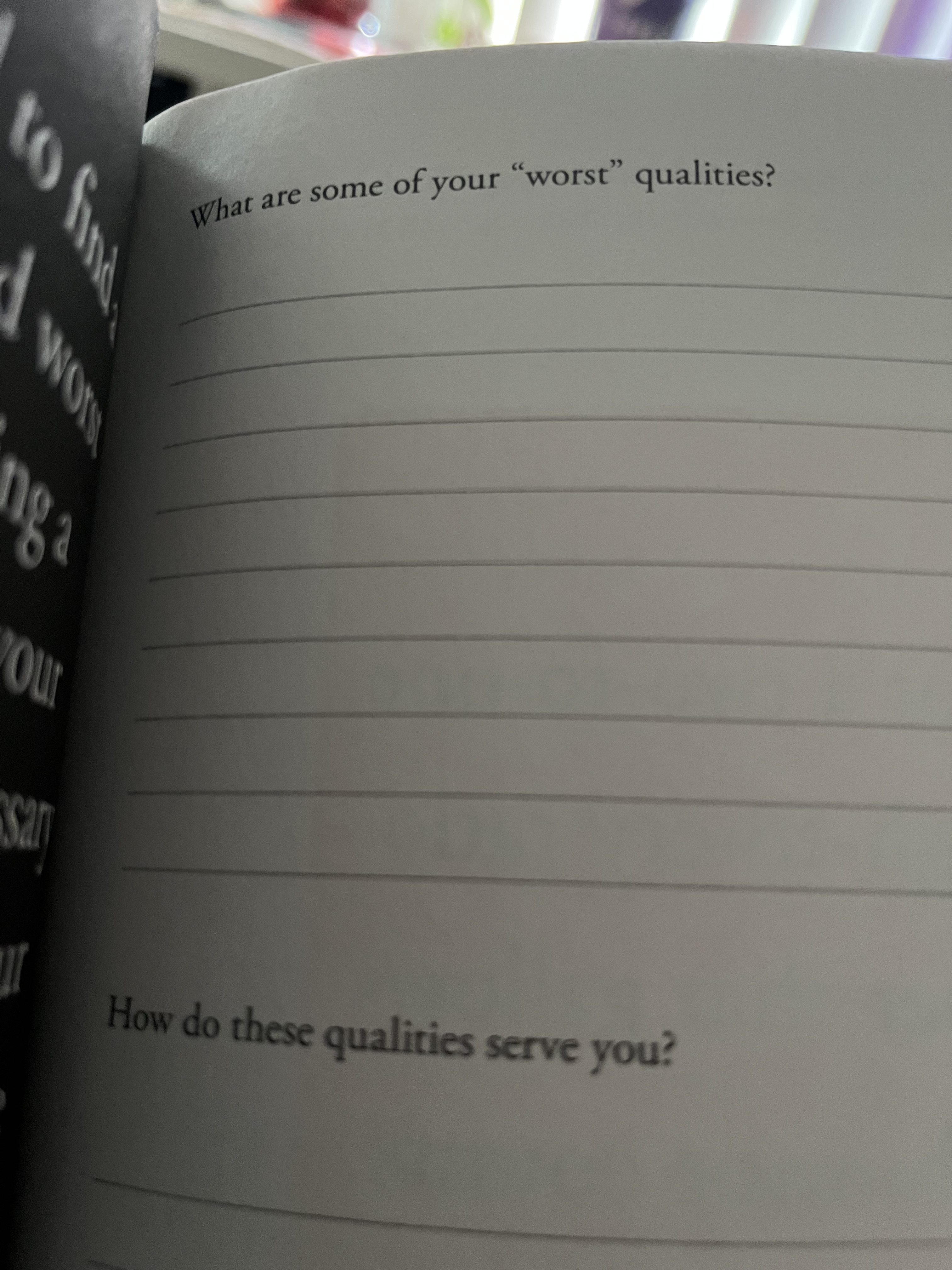
The prompt I wrote to the other day has stayed with me: “What are some of your ‘worst’ qualities?”

Since I’m publishing my memoir in Spring 2028, I started thinking about what you’ll learn about me from my book. And, what you won’t learn about me. 

This week, I wanted to share with you a more complete idea of who I am, beyond the identities of former teacher, mother, wife, and current chronic illness patient. 

One paper with black letters with the writing prompt: What are some of your 'worst' qualities?

Here then is my response to “What are some of your ‘worst’ qualities?”:

– I find it difficult to say No.

– I am always trying to please those closest to me.

– I do not put my own needs, my own self-care, at the top of any of my to-do lists.

– My Monica Geller-like ways. (In case you don’t know, Monica Geller was the fictional character on Friends portrayed by Courteney Cox.) For example, the way I load the dishwasher. Then, the way I empty the dishwasher and attempt to circulate our dishes, so the just-washed plates go at the bottom of the stack of dishes.

– My aversion to conflict. Which means I don’t always express my anger, my frustration, and/or my disappointment in the moment.

– My tendency to over-apologize, especially for things I have no control over. (Like apologizing for all the traffic when our family is headed out somewhere.)

– The way I’m always focused on work before pleasure. 

– My inclination to wait around for someone to offer me and give me what I’d like, instead of me having to come out and ask for it. (And I don’t mean giving me a physical item, but giving me a break from making dinner, for instance.)

Thank you, friends, for reading. 

I’d love to know more about you — what do you consider to be one of your “worst” qualities? Feel free to share in the comments, if you feel comfortable doing so. 

Please note: I am including a link to buy the book that I’m highlighting this week. If you use my link, I do make a small commission on your purchase at no additional cost to you. I am working with Bookshop.org which also sends a portion of the profit to support local, independent bookstores.

It’s Pain Awareness Month

Can you tell I'm in pain?

September is Pain Awareness Month. 

But what the heck does that even mean? Because when you live with chronic pain, you’re managing it and trying to handle it 24 hours a day/7 days a week/365 days a year.  

Pain is complicated, because no one can ever truly know someone else’s pain. Plus, there’s this inclination to compare pain, to determine if someone else “has it worse” or someone else’s pain “isn’t as bad” which is all pointless. Pain is pain.

Many years ago, I participated in a very small (three patients including myself) chronic pain support group. I remember something the therapist said at the time, something that I often need to remind myself of — there could be a terrible, horrific natural disaster somewhere on the planet. Mass destruction. Severe injuries. (Which, as I write this, I can think of several instances from just the last week alone.) And, at the same time, if I fell and broke my leg, for example, I would absolutely be in pain. This therapist helped me see that my pain is no less valid simply because my situation and circumstances are different from someone else’s. I shouldn’t try to hide my pain or discount my pain because I think someone else’s pain is more intense than mine. 

Maybe that’s also the point of Pain Awareness Month. 

In the past, I’ve written blog posts suggesting Pain Awareness Month is for the general population of folks who don’t live with everyday pain. This year, however, I’m thinking I am also the target audience of Pain Awareness Month. Because I’ve gotten so used to being in pain, I don’t take the time to acknowledge my own efforts. I don’t just sweep the patio and water the plants, for instance. I sweep the patio and water the plants while my left calf feels like it’s stuck in a perpetual charley horse. I don’t just stand at the stove preparing dinner. I’m standing at the stove while my thigh aches, a painful sensation that has been with me since I woke up that morning. 

Yes, we need to practice kindness towards others, because you never really know what someone else is going through, and let’s face it, everyone is going through something. 

But also, I need to practice some kindness towards myself. 

I’m working on it.