I enjoy reading memoir. Not only because I write memoir and personal essay, but because I’m curious, and I enjoy learning about someone else’s life story.
And I’m lucky because, through the gift of a memoir, I get that front-row seat to someone else’s lived experience. The author generously shares a moment (or several moments) in their life with me, the reader. Maybe they hope their story will resonate with me. Maybe they’re hoping their story will contribute an additional perspective to a conversation already happening in society. Maybe they hope their memoir will serve as a bridge, connecting readers and the author to each other.
As a reader of memoir, I gain insight into the emotions and experiences of other human beings. And I like to think those insights make me a more compassionate member of the human race.
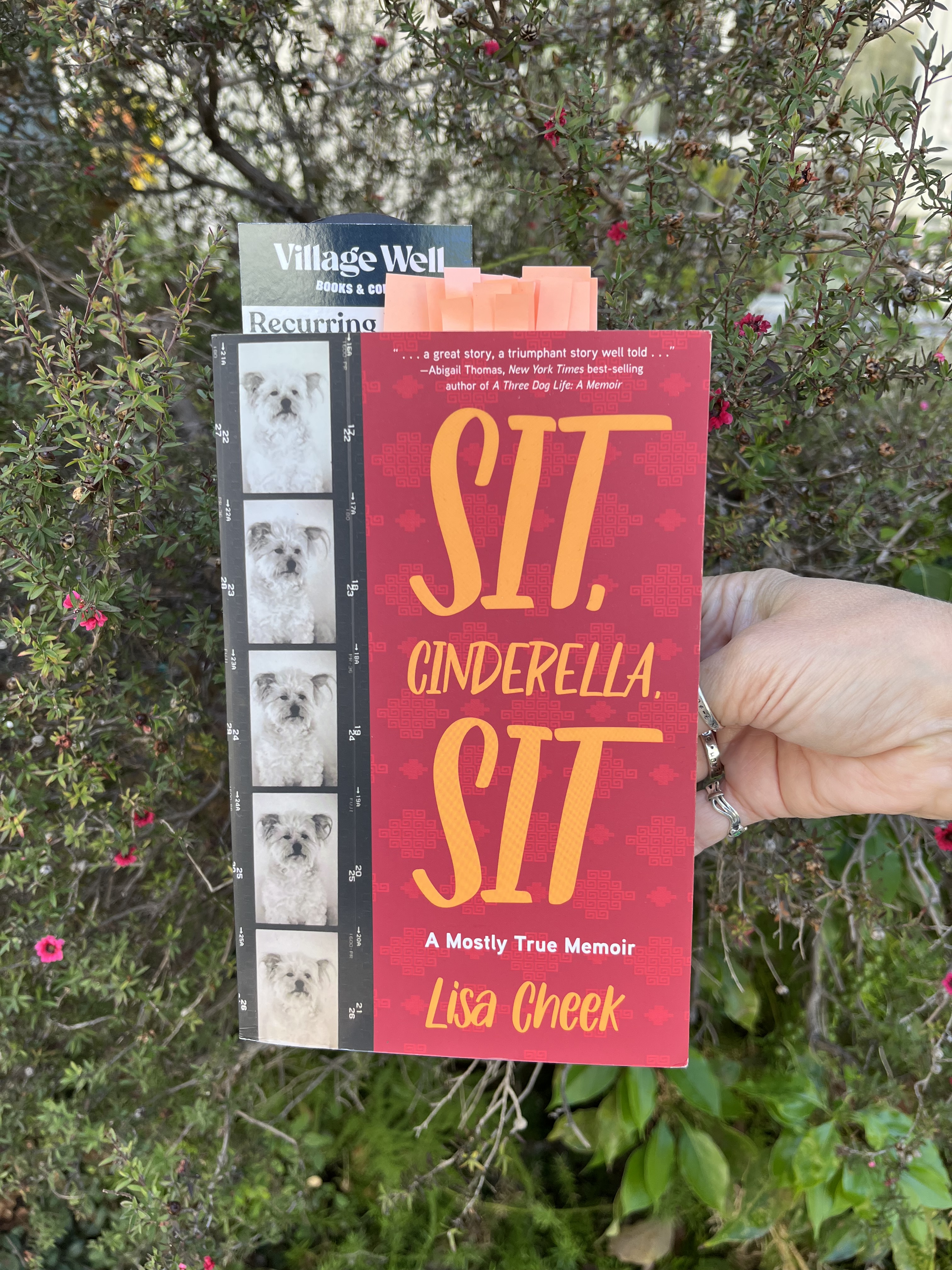
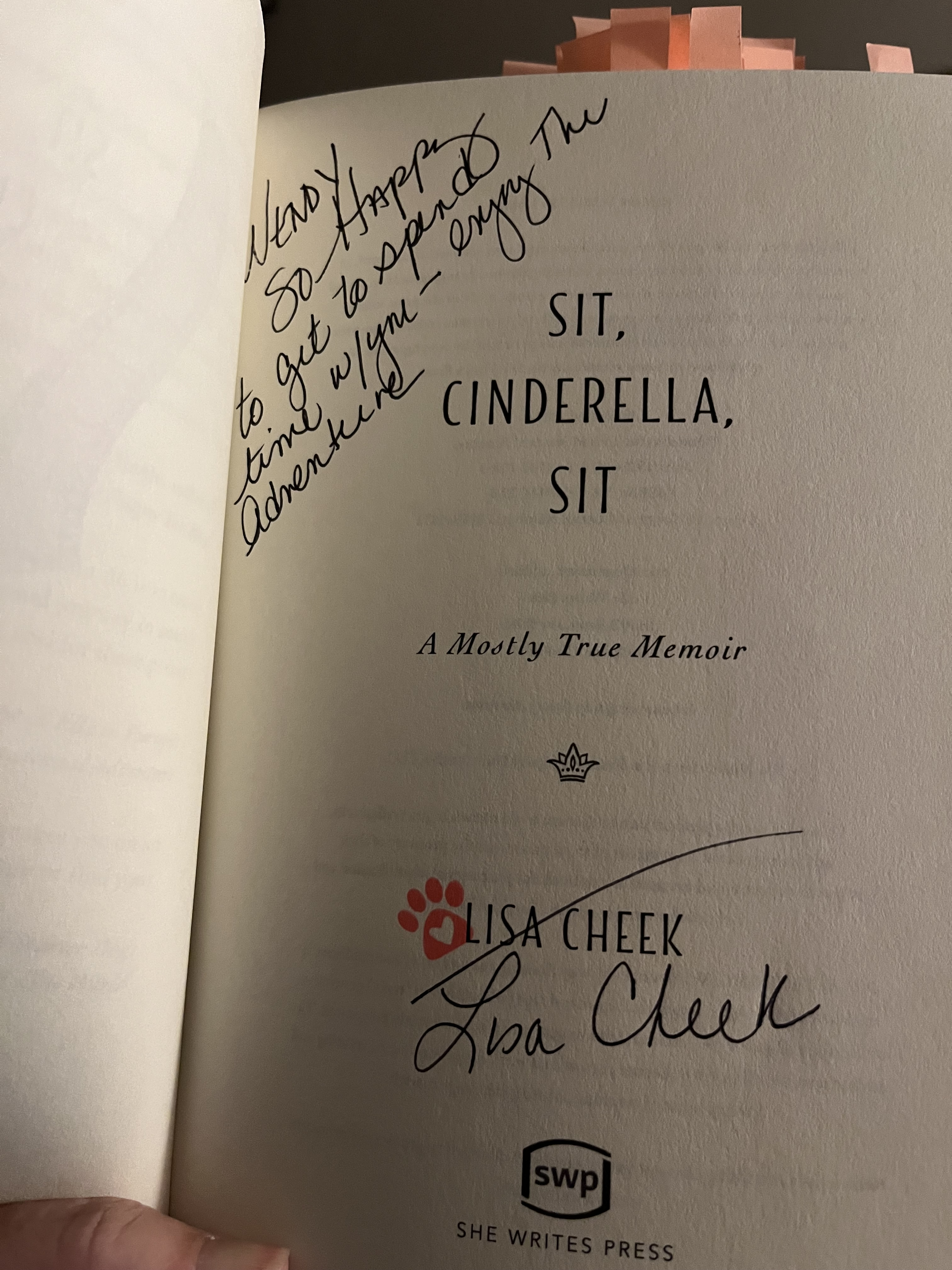
Which brings me to the topic of this week’s blog post — Sit, Cinderella, Sit: A Mostly True Memoir written by Lisa Cheek.
Ms. Cheek’s memoir really did give me an awareness of a career, a trip, a life that I may never have otherwise learned about.
Sit, Cinderella, Sit is the story of an editor (of television commercials and films).
Sit, Cinderella, Sit is the story of a dog owner and dog lover.
Sit, Cinderella, Sit is the story of a woman who doesn’t speak Chinese spending several months in China for work.
Allow me to share some of my favorite passages:
“For me, coffee was a necessary luxury. It was how I spoiled myself. Between the anticipation, the event, and the enjoyment, it was life at its finest. Coffee was the most important ritual of the day. It was like prayer. It brought me back to life each morning. Got the juices flowing. Made me take a second, third, and fourth look at things. I felt like I could do anything after a really good cup of coffee.”
I loved the author’s unique descriptions:
“His tail wagged like a windshield wiper in a rainstorm.”
“I stepped over an overflowing trash can. A black banana peel thrown over the top, looking like a dead octopus in a sea of trash, stared back at me.”
“Mounds of clementine oranges in bright, wrinkly skins with stems and leaves still attached appeared just picked.”
“She had a square face and two triangle ears, which folded over like a pita bread sandwich that matched the color of her heart marking.”
“With the calmness of a bomb expert and the focus of a tightrope walker, Vin rode the edge of that cliff with the speed of a race car driver.”
“…I took in the lush colors — a masterpiece in nature. Saturated in mist, the mountains became a deep velvety brown, less jagged and harsh, soft like a watercolor. Terraced lime-green rice fields bathed in drizzle with golden yellow flowers sprinkled throughout. Far below, the swirling blueish-green Yangtze rushed along the banks, forceful and impatient, on its way to its next destination.”
“I’d lived alone my whole adult life, until Ron Howard moved in, so sharing a house with thirteen men who didn’t speak English was something I never even knew one could do. But here I was — in the middle of Shaxi, in a guesthouse just off the main square, living with a baker’s dozen.” (Note – Ron Howard is the author’s dog.)
“Soon the song changed to ‘Thriller,’ which brought the whole party out to the sunken garden. Everyone knew all the dance moves — each movement made with the exactness of Jackson himself. No one missed a beat. Not a limb was out of place. It was a performance the icon himself would have been proud of.”
“Here, in a tiny village thousands of years old in the middle of nowhere, Michael Jackson’s music and dance was the language we all knew. It connected us in a way that no spoken word ever could or would.”
“… I thought about all the people who had loved and cared for me, who didn’t speak a word of English, yet there was so much deep communication — heartfelt communication. Kindness is the universal language and can be spoken anywhere without uttering a word. It’s the magic in our lives.”
Note — this memoir was published in 2025. Ms. Cheek’s second memoir, The Big Day: Saying “I Do” Only to Discover I Didn’t will be published next week and is available for pre-order now.
Please note: I am including a link to buy the book that I’m highlighting this week. If you use my link, I do make a small commission on your purchase at no additional cost to you. I am working with Bookshop.org which also sends a portion of the profit to support local, independent bookstores.