Atmosphere

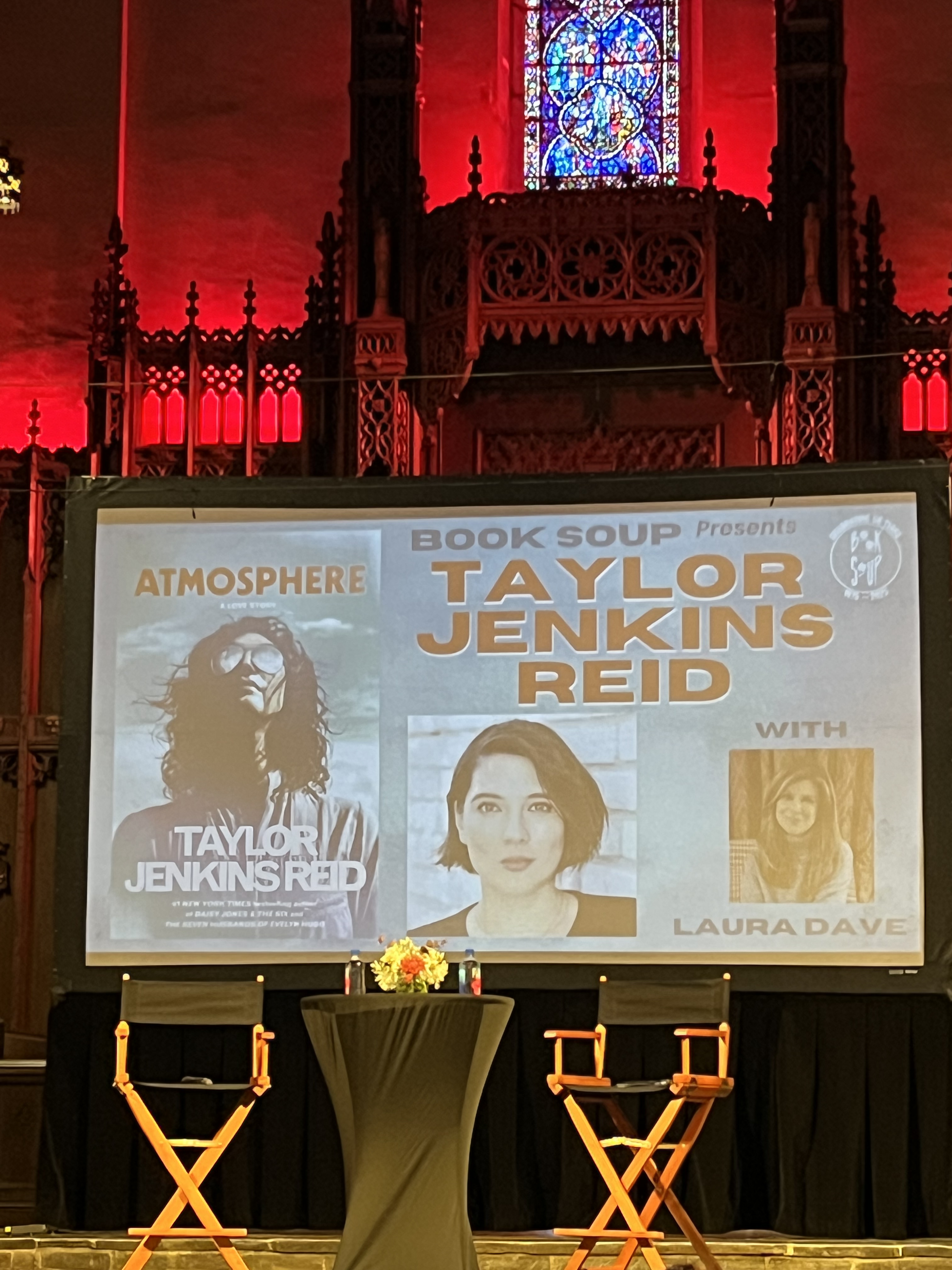
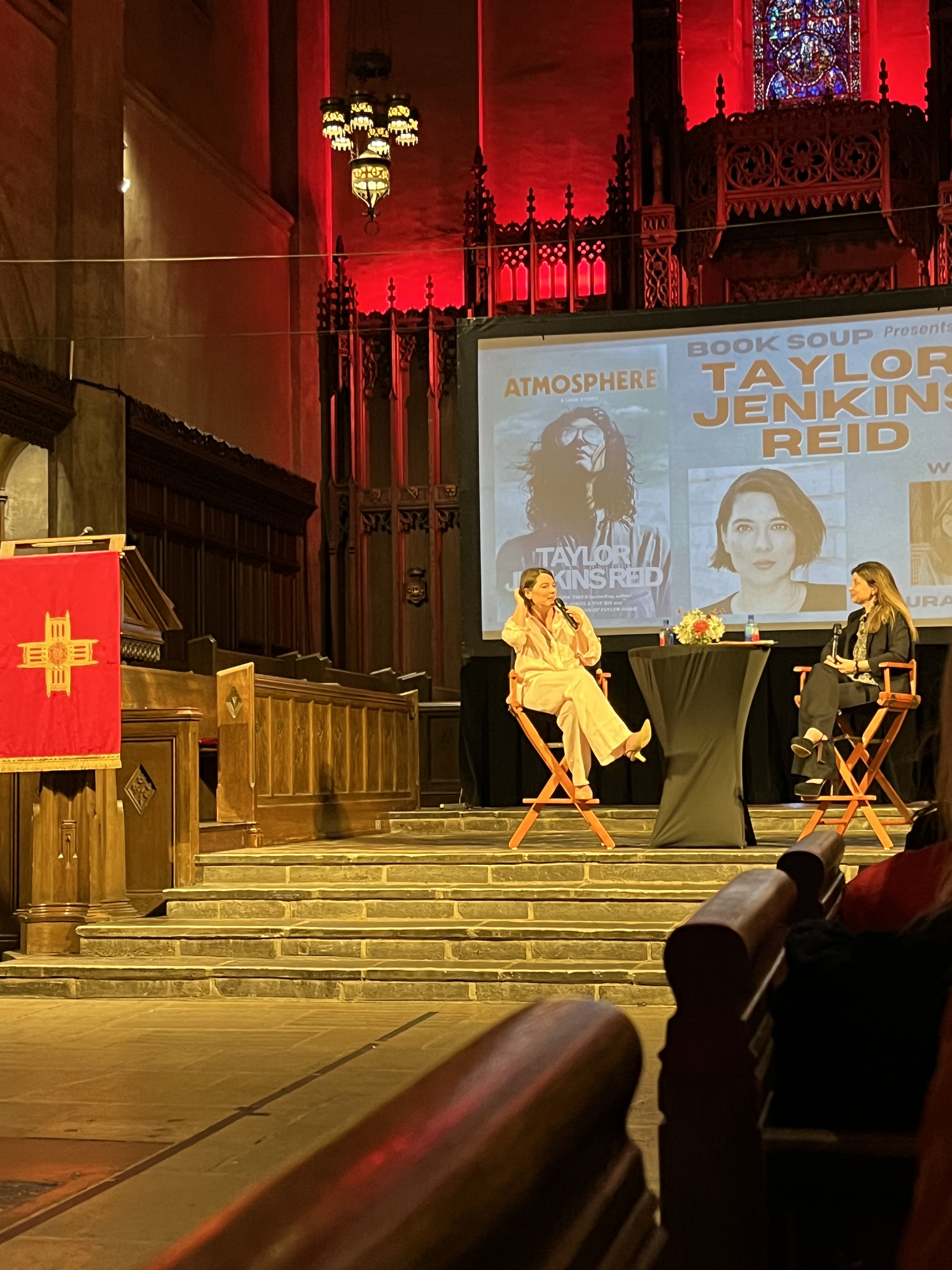
Back in June of last year, I — along with one of my closest friends — attended an in-person event featuring Taylor Jenkins Reid and her just-published (at that time) novel, Atmosphere: A Love Story

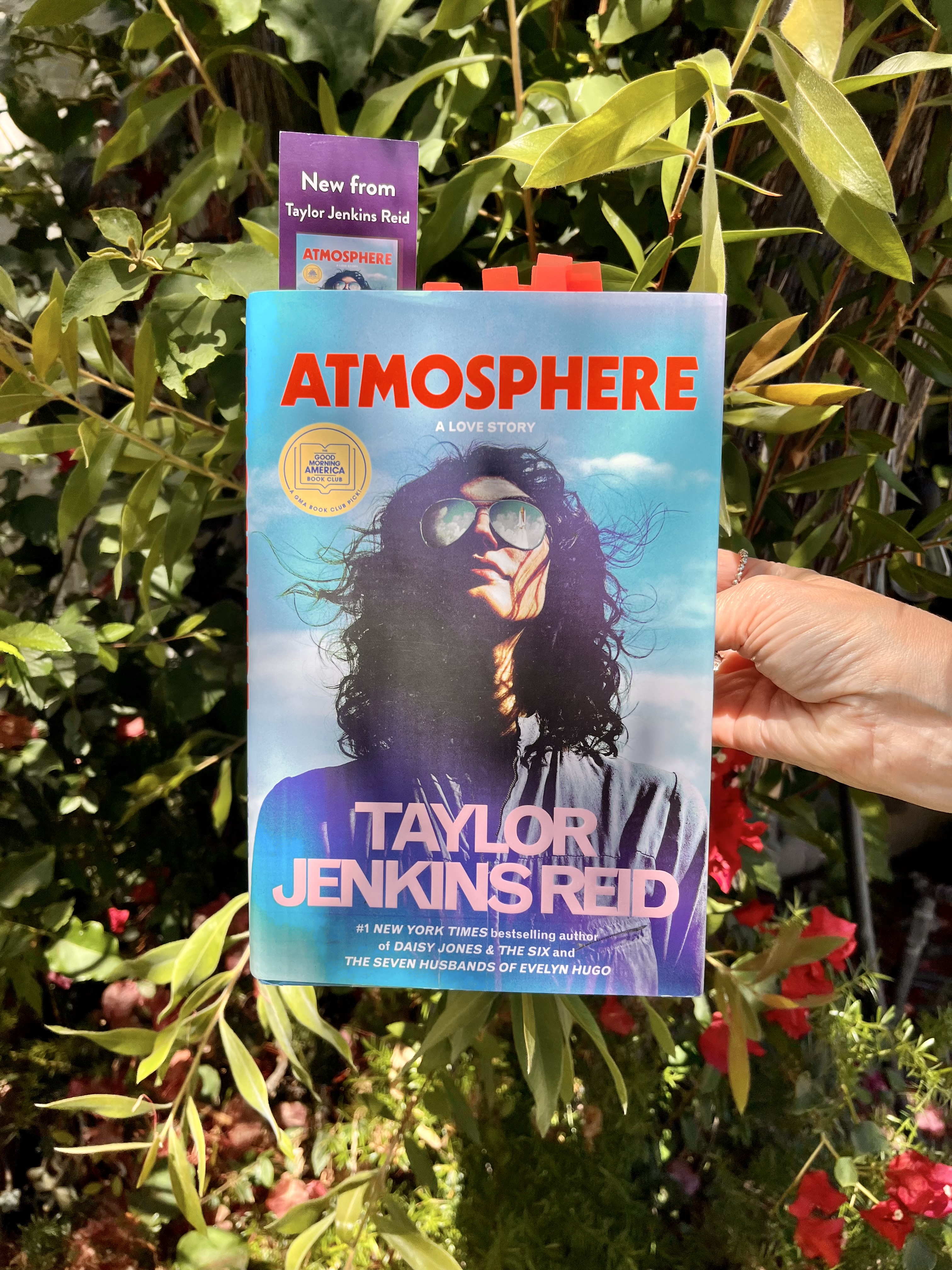
Friends, I have been waiting to read this novel. Waiting because a novel set in the 1980s, the early days of NASA’s space shuttle program, the time when NASA finally decided that astronauts need not only be white men, is a novel I really, really want to read. And love. 

So I waited until the hoopla quieted down. 

I started this book during our spring break trip. And while I didn’t get nearly as much reading time as I had hoped for on that trip, I started the novel and didn’t want to put it down. 

From attending that author talk last year, I know the author did her research. You can tell. While much of the story is based on fact, the individual characters, the love story, and the space mission at the heart of the novel are all fiction. 

Friends, I finished reading this book and immediately wanted to start to read it again. That’s how good it was. It is. 

This week, I’ll try not to include too many favorite passages. It might be hard to do. My copy of the book has many red sticky notes.  
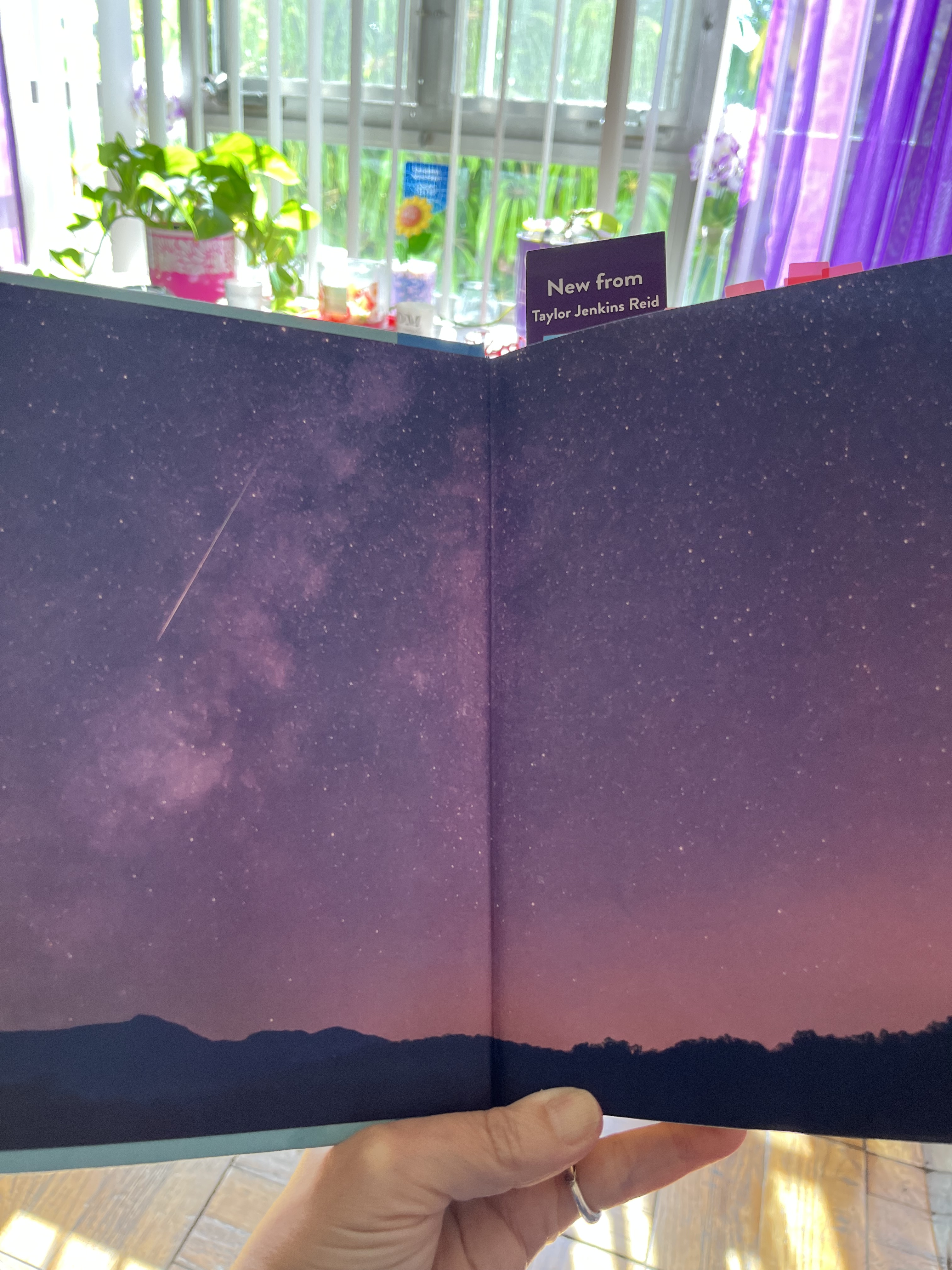
Such pretty endpapers!

“It would be easy to make the case that humans are ill-equipped to be in space. Whatever led to our design, it was not meant for this. But Joan sees it as the exact opposite.
“Human intelligence and curiosity, our persistence and resilience, our capacity for long-term planning, and our ability to collaborate have led the human race here.”

“Astronomy was history. Because space was time. And that was the thing she loved most about the universe itself. When you look at the red star Antares in the southern sky, you are looking over thirty-three hundred trillion miles away. But you are also looking more than five hundred and fifty years into the past. Antares is so far away that its light takes five hundred and fifty years to reach your eye on Earth. Five hundred and fifty light-years away. So when you look out at the sky, the farther you can see, the further back you are looking in time. The space between you and the star is time.”

“Being human was such a lonely endeavor. We alone have consciousness; we are the only intelligent life force that we know of in the galaxy. We have no one but one another. Joan was always moved by the fact that everything — all matter on Earth and beyond, up past the atmosphere, going as far as the edges of the universe, as it expands farther and farther away from us — is made from the same elements. We are made of the same things as the stars and the planets. Remembering that connection brought Joan comfort. It also brought her some sense of responsibility. And what was kinship but that? Comfort and responsibility.”

“Because the world had decided that to be soft was to be weak, even though in Joan’s experience being soft and flexible was always more durable than being hard and brittle. Admitting you were afraid always took more guts than pretending you weren’t. Being willing to make a mistake got you further than never trying. The world had decided that to be fallible was weak. But we are all fallible. The strong ones are the ones who accept it.” 

“‘I’m excited,’ Vanessa said, closing the gap between them. ‘I want to take you everywhere. And do everything with you. And ask you every single question that’s been on my mind for months. And I want to know when you knew what was happening between us and I want to tell you when I knew. And I want to hold your hand in a quiet corner and I want to lie in bed and hear your heartbeat through your chest. I want to bring you coffee in bed. And I want to hear you tell me anything you’ve always wanted to tell someone. Because you know that you’ve met someone who desperately wants to listen.’”

“Later, before they fell asleep, Joan said, ‘Happiness is so hard to come by. I don’t understand why anyone would begrudge anyone else for managing to find some of it.’
“‘That’s because you’re too good for the world you love so much,’ Vanessa said.” 

“‘I can wake up every single day and choose you, over and over and over again. If you’re in bed next to me, I will take your hand. If you are not, I will go find you. I will spend the rest of my life, if I get that lucky, seeking you out. Not because I promised you or because you’re there. But because I will want to. I will want to be beside you. Every day. Forever.’”

“Space belonged to no one, but Earth belonged to all of them.” 
Oh friends, there is so much more I could include. The passages about Joan’s niece, Frances, and the special relationship they share. The passages about the way Joan loves her niece — “Every day, you can wake up and go to bed knowing there is someone whose heart is bursting, barely able to contain how much they love you.” 

Which is all to say I loved this book.

Friends, have you read Atmosphere? Do we share any favorite passages?

And if you haven’t yet read it, is Atmosphere on your want-to-read list?

Please note: I am including a link to buy the book that I’m highlighting this week. If you use my link, I do make a small commission on your purchase at no additional cost to you. I am working with Bookshop.org which also sends a portion of the profit to support local, independent bookstores.

Reaching For the Stars

Months ago, I listened to a virtual author talk sponsored by the Los Angeles Public Library System. As a bonus, everyone in attendance was eligible to enter a raffle to receive a free copy of one of the author’s books. 

You probably guessed by now that I was lucky enough to win a copy — José M. Hernández’s Reaching For the Stars: The Inspiring Story of a Migrant Farmworker Turned Astronaut

For most of my childhood (fourth grade to eleventh grade), my dream was to become an astronaut. And today I am just as curious, just as awe-struck of those individuals who do become astronauts. 

This week, I’d like to share a few passages that stood out to me during my reading. What really struck me were the supportive words and encouragement the author received from so many members of his family as well as several of his teachers. 

“That is why the individuals who are named José are known as creators. You have the power to create a reality out of your dreams and shape your life accordingly.” Encouraging words spoken by Mr. Hernández’s abuelo. 

I loved reading about Mr. Hernández watching Neil Armstrong on the moon and deciding he wanted to be an astronaut:

“When I heard these words, I felt indescribably shocked. I was captivated by this man, by this science, which left me in awe. Absorbed in the broadcast, I got up abruptly to get closer to the television screen. I had an epiphany. During that exact moment, I discovered what I wanted to be when I grew up: an astronaut, or un astronauta. And from that moment on, I was determined that absolutely nothing would get in the way of my dream.”

And while strapped in and waiting for space shuttle Discovery to launch, Mr. Hernández thought:

“La magia, or magic, is hard to discover, but I believe that passion in the heart and positive thinking in the mind are the two ingredients for achieving something extraordinary. Just ask a scientist, an inventor, or an artist — a simple idea or dream has given birth to some of our history’s greatest inventions.”

You can also learn more about Mr. Hernández and his Reaching for the Stars Foundation by clicking here. A Netflix film is being planned about Mr. Hernández’s life and journey into space. 

An Astronaut’s Perspective

From the time I was in fourth grade until the time I was in eleventh grade, I had one career goal – to become an astronaut.

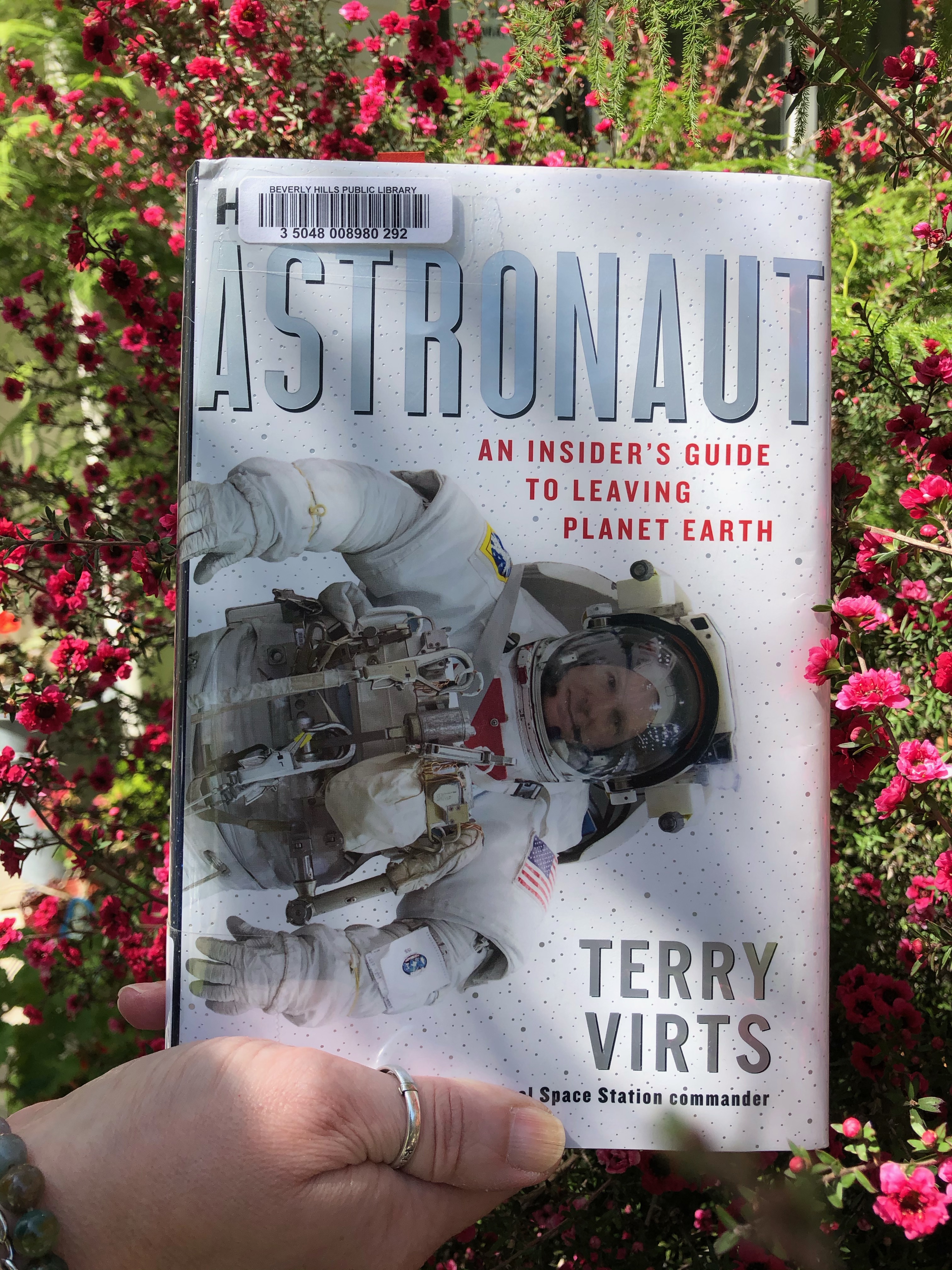
If you’ve been reading my work for a while, you know I never became an astronaut.  And while I loved my teaching career, I never stopped being interested in manned space exploration. So of course, I was eager to read How to Astronaut: An Insider’s Guide to Leaving Planet Earth by Terry Virts.

Mr. Virts tells the story of traveling into space, from training, to launch, to orbit, and re-entry.

The book is organized into fifty-one short chapters and includes not only one-of-a-kind observations but funny anecdotes as well.

“The space station is, in many ways, a thirteen-year-old boy’s dream. You can float around like Superman. You can eat whatever you want and your parents aren’t there to nag you. You have your own room and you close the door and nobody tells you to clean it. Best of all – no showers! For 200 days in a row!”

“It was the example of how people should work together to solve important problems, leaving petty political bickering behind. That is exactly what we did and what the space program in general has done for many decades. The vacuum of space is a harsh and unforgiving environment, and it does’t care what country you are from or what your ideology is. Unless you approach spaceflight focused only on getting the job done and working as a team, you risk dying. 

And that, my friends, is a lesson that we would do well to learn down here on our home planet.”

“I think that attitude is the key to many of our situations in life. Make the most out of your circumstances. Enjoy what you can. Learn from what you can. Suffer through what you must. And learn from it. What doesn’t kill you should make you better. If you go through life with that attitude, you will be happier and more successful than by complaining.”

“…the universe is inhospitable and cold and dark and wholly incompatible with life, with the exception of our blue planet, as far as we know. I had a new sense of thankfulness and appreciation for our home, drifting through space like a giant spaceship carrying the entirety of our species on a timeless journey. We should take care of it. There is no plan B; there is only plan A.”

And, I found it absolutely wonderful to get to the acknowledgement section at the back of the book, and find that the first people Mr. Virts chose to acknowledge were his high school English teachers! 

Why a Roundabout Path Is More Than Okay

From fourth grade until about my junior year of high school, if someone asked me what I wanted to be when I grew up, I proudly answered “Astronaut.” 

My goal changed. During high school, I took a class called World of Education. We spent four days a week, about two hours a day, assisting in a local elementary school classroom. That’s when I fell in love with teaching. And that’s when I changed my career goal.

That’s not how it worked for Leland Melvin. 

Leland Melvin isn’t like most astronauts. 

He didn’t grow up wanting to be an astronaut.

In fact, he’s the only astronaut who was also drafted by the NFL. 

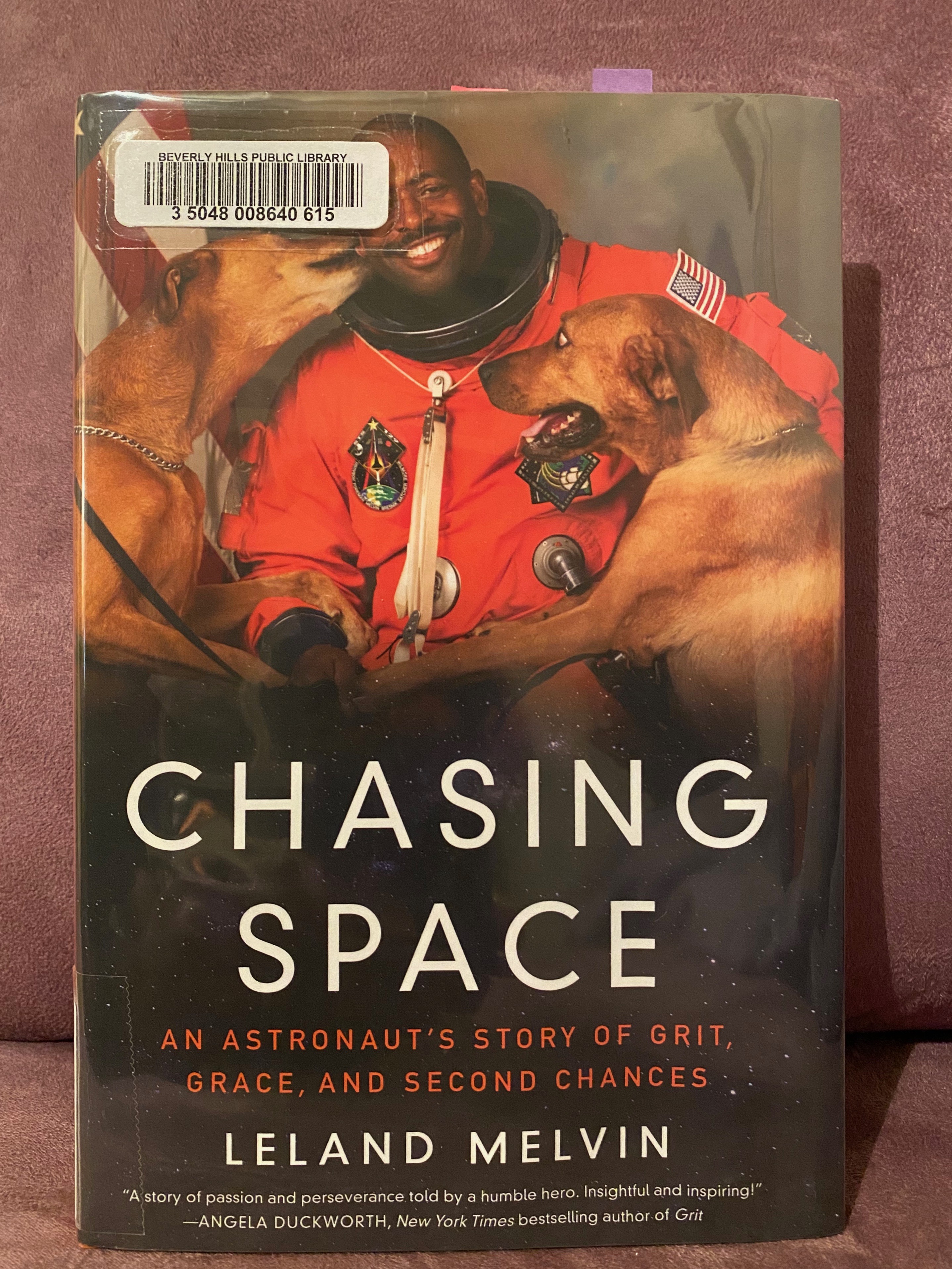
He has had a variety of different experiences, and set-backs along the way, but still maintains a positive attitude and a desire to encourage others to reach for their dreams. You can read more about him in his memoir Chasing Space: An Astronaut’s Story of Grit, Grace, and Second Chances. 

From a writer’s perspective, I didn’t particularly enjoy the book. Certain parts felt like they were missing something – a lack of introspection, personal reaction, and depth. 

From a reader’s perspective, the part of the story that stands out most to me is the circuitous path Mr. Melvin took to becoming an astronaut. In fact, he had never really thought of “astronaut” as a career possibility. 

It’s an important reminder, for me, and an important lesson to share with my son.

We don’t always know what path our lives will take. 

You don’t have to travel straight from point A to point B. It’s okay to take detours, to go in circles, to lose your place and start again.

Because you just may wind up among the stars.

An Inspiring Life

I recently completed reading John Glenn: A Memoir.  This hardcover book has sat on my bookcase since I bought it and read it when it was published in 1999.  I re-read it now because, twenty years later, I didn’t remember much of what I had read the first time around, and I wanted to see if this book should continue to remain a part of my permanent library taking up valuable shelf space.

From a reader’s/writer’s perspective, the book showed me what not-to-do.  I found myself skimming through parts that contained too many details, felt like too much information, and only served to delay the story.

But I’m still glad I read it. 

John Glenn, one of the original Mercury 7 astronauts, could have easily lived his life resting on his laurels, boasting of his accomplishment as the first American to orbit the earth.  But he didn’t.  He continued living and learning.  He served as an executive for RC Soda, and later, served more than twenty years as a United Sates Senator.  And then at the age of 77, returned to space as a member of the crew of STS-95 onboard the shuttle Discovery.

I think the biggest takeaway I got from reading the story of this special man’s life is that you don’t have to let one thing define you.

That’s the message I want my son to know and truly believe in his heart.  That he doesn’t have to choose just one thing to be “when he grows up.”  There aren’t limits to what he can achieve and there should be no limits to what he aspires to try.