Surviving the Holiday Season with Invisible Illness

When this blog post publishes on Wednesday, December 17th, we will be a week away from Christmas Eve, a week and two days away from Kwanzaa, and at about the halfway point in terms of celebrating Chanukah. And I have a gift recommendation to share with you!

Author, coach, speaker, and friend, Sandra Postma, has written Surviving the Holiday Season with Invisible Illness. This e-book is under-60 pages, with large font and lots of white space. After purchase, you can access it on your phone or your computer monitor or print it out to have a physical copy nearby. All these options exist, all these thoughtful touches were put into place, because Sandra is herself a spoonie and she “gets it.” 

This book is a gift. 

A gift for someone living with an invisible illness. A gift that says, “I know. The holidays can be so tough. I’ve been there. Let’s see if I can help.”

A gift for someone living with an invisible illness to give to friends and families. A gift that says, “Here. Please read this. This is how I feel but didn’t know quite how to express.”

A gift for the friends and family of someone living with an invisible illness. A gift that says, “I wanted to learn more about how I can help you and support you during the holidays so I bought, and read, this book. This is what I learned. Now, let’s apply it.” 

Sandra has really thought of it all. Her book offers:

– Suggested scripts for when you have to decline an invitation (and a reminder that “you cannot control how others react, and saying no respectfully is a personal boundary; not a failure.”)

– Virtual pats-on-the-back for the work you’re doing living with a chronic illness and also trying to navigate the holidays, families, and different routines and activities in ways best suited for your individual situation

– Reminders to be gentle with ourselves. Our lives will look a lot different than others who are not chronically ill. 

– Encouragement in the truth we sometimes overlook. As Sandra writes, “Wherever you are in bed, on the sofa, or somewhere in between, there is one certainty in life and that is change.” Spoonies know that change isn’t always positive, but what if it is? “What if things will become amazing? I want to be here to see it.”

– Planning pages to help you intentionally create your own Survival Kit, so it will be ready when you need it

– Collection of Affirmations, when you just need a little burst of a pep talk

– A change in perspective. Sometimes it’s so easy to just keep going, telling ourselves the same thing over and over, behaving in the same way. Sometimes it really does take someone else to shine a light and help us see things differently. I keep returning to these statements: “We don’t always have to fix a negative emotion, distract ourselves from it or turn it around. We feel stuff for a reason and it doesn’t appear so we can then push it back down.” 

Thank you, Sandra, for taking the time and energy to put this e-book out into the world.

Will You Join Me, Please?

Hi Friends,

I don’t one-hundred percent know what I’m doing in terms of my writing career. (To be honest, I never dreamed I would even have a “writing career.”) I do know that I’m always learning, I’m always trying to improve — in terms of my writing craft, the way in which I share my writing, and the ways I connect with readers and other writers.

I have written a weekly blog for over a decade. In those very early years, before I invested in my website (www.wendykennar.com), each week’s post was written about any and all subjects. Anything I felt like writing and sharing I did. It was random, and because of the lack of cohesiveness, I think it was harder to find readers who would subscribe and regularly read my posts. It was much more difficult to form a community back then. 

Then, I re-organized my blog and wrote about one of three B’s in my life — Books (because writers are also readers), Boys (I’m the mother of a son and a former elementary school teacher), and Bodies (I live with an invisible disability). 

I have since deleted the “Boys” section, because my son is almost an adult. I don’t write about him and our interactions and relationship in the same way. Plus, I haven’t been a teacher now for twelve years. 

And, in another move that is also related to learning and growing, I have started a Substack account. Some of my blog subscribers have signed up for my Substack, currently known as “Wendy’s Weekly Words.” (wendykennar.substack.com) But for the most part, my Substack subscribers and my blog subscribers function as two distinct groups. 

I would like to change that. Here’s how:

I will continue posting my weekly blog here at www.wendykennar.com . My blog posts will generally be focused on books and bodies. Each week, I’ll continue writing about something I have read or my experiences with a chronic illness, life with chronic pain, and/or living with an invisible disability. 

And, I will be writing a bi-weekly Substack (wendykennar.substack.com), which will not just be a copy of what I have up on my blog. (Which is the way my relatively young Substack has been used up to this point.) 

My bi-weekly Substack will now include:

–  links to my recent blog posts in case you missed them 

– a writing prompt

– a wondering (something I’m confused about or have questions about. Maybe you have the answers.)

– a recommendation (something I read or watched or listened to)

– and when I can, a couple of famous dates in history that are somehow relevant to my writing and what I share. 

That’s what I’m planning to do. 

Here’s what I’m asking of you, please:

If you haven’t already done so, please subscribe to both my Substack (wendykennar.substack.com) and Blog (www.wendykennar.com). If you already are subscribed at both places, please just let me know in the comments section on one of my sites. (It would be great if you also followed me on Instagram @wendykennar. That way you’re sure not to miss out on anything I write or share.)

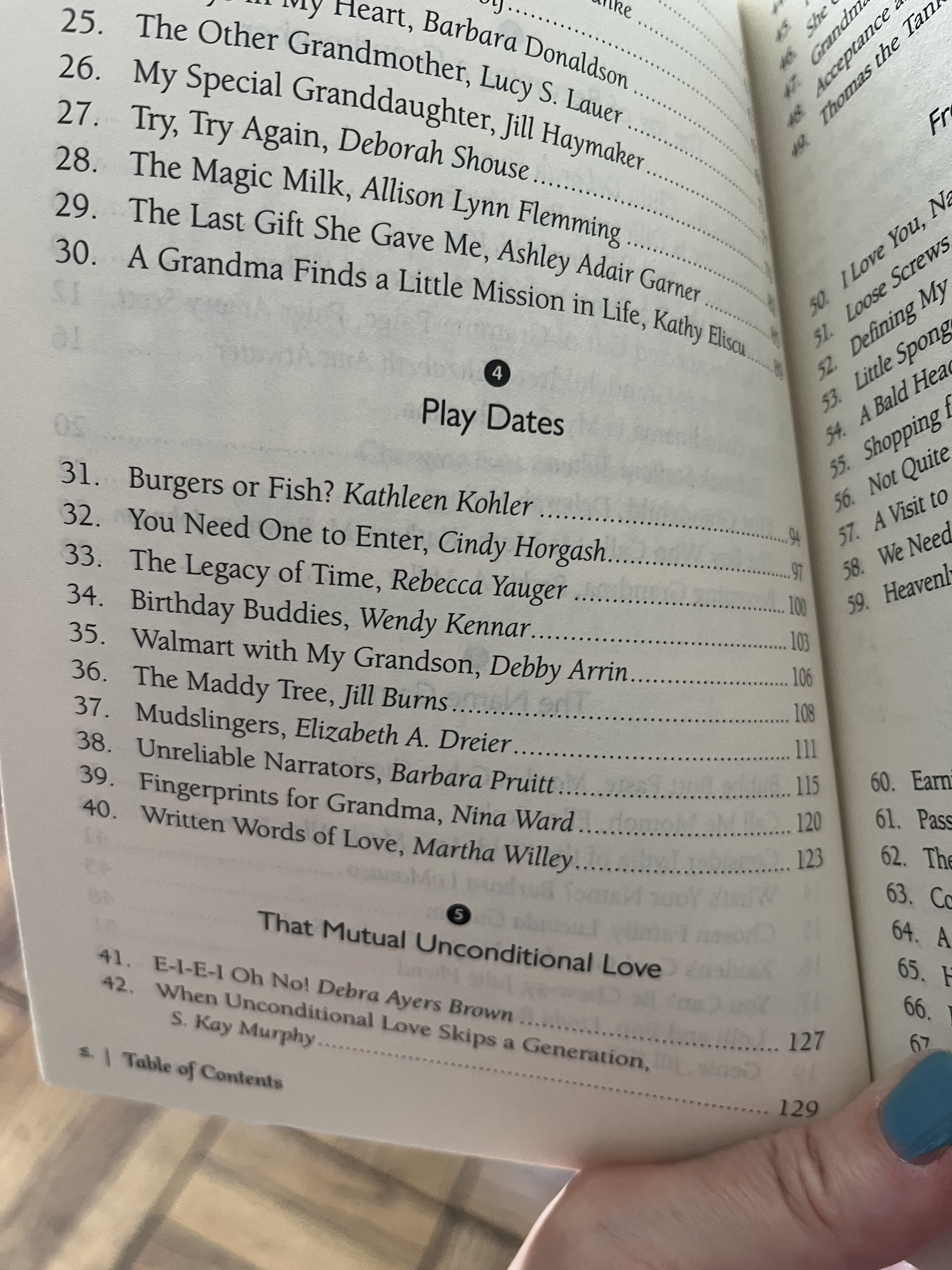
Those of you who subscribe to both my Substack and Blog, will then have a chance to win a book in a drawing. Names will be placed into a hat and I will randomly draw one reader’s name. As a thank you, I will mail you a personalized copy of Chicken Soup For the Soul: It’s Beginning to Look a Lot like Christmas. (My story, “A Timeless Gift,” is included in this collection.)

October 2019

This is all new to me. I’ve never done anything like this before. Maybe I’ll need to make some changes down the road. But for now, we’re going to give this a try. I hope you will continue being with me on this journey. Living with a chronic illness and writing can both be pretty isolating. I hope you know how much I value your support, how much your being here with me really does help!

Sign up by next week’s blog post on Wednesday, December 17th. That way I can have the drawing on Thursday, December 18th, and I can get your book out in the mail on Friday, December 19th. 

After that you can expect regular blog posts each Wednesday morning. 

And the first issue of my bi-weekly Substack will go out on Sunday, December 28th. (And the next Substack will be in your inbox on Sunday, January 11th, 2026.)

Thank you, friends. Thank you for reading. Thank you for supporting my writing. Thank you for supporting me.

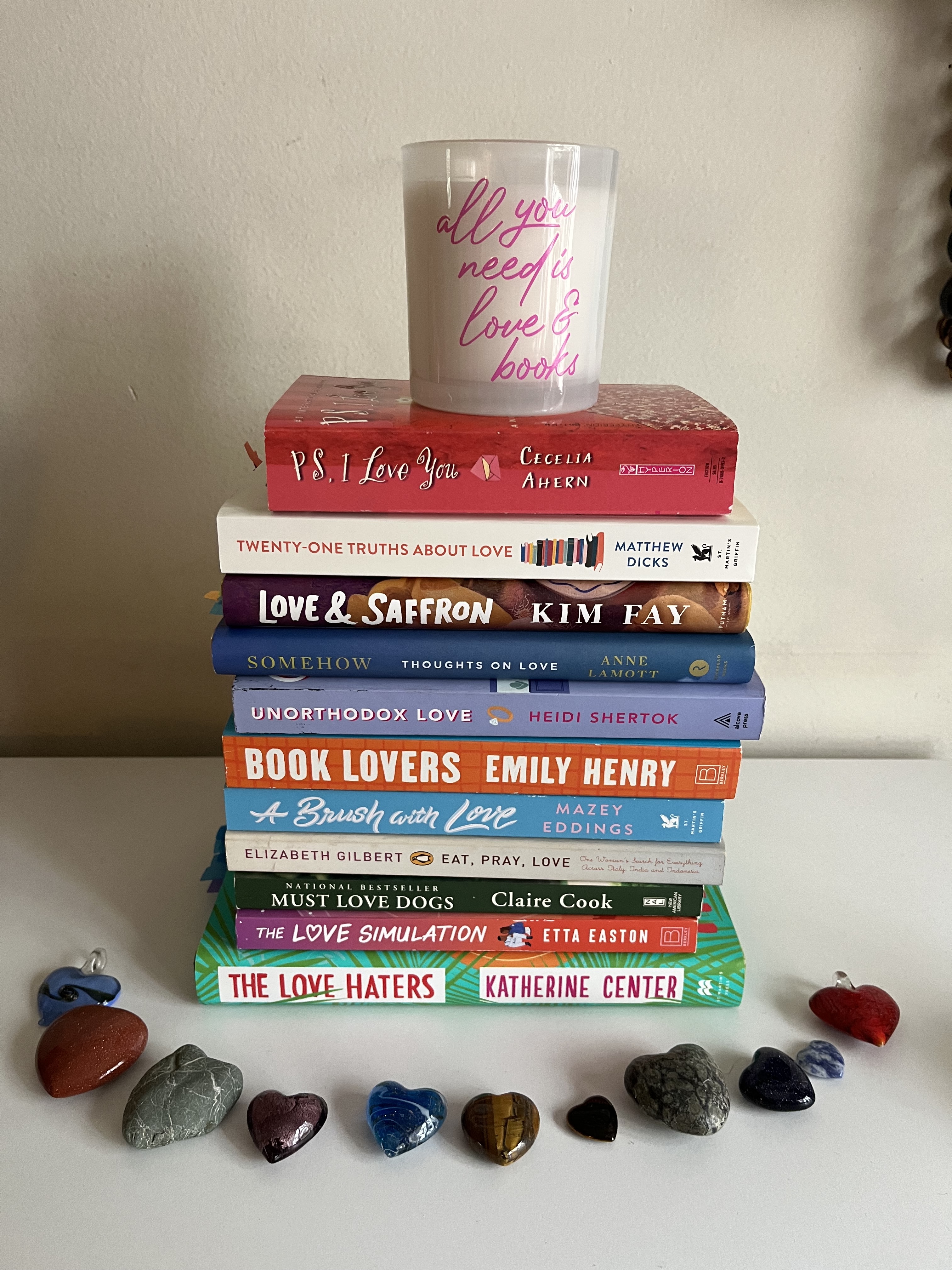
Unorthodox Love

When book mail arrived, containing Heidi Shertok’s recently-published novel, Match Me If You Can, I was super excited. (I think book mail is the second-best kind of mail to receive. What’s better than book mail? Mail from my pen pal, my dear friend, Aya!) 

Then I realized I had Ms. Shertok’s first novel, Unorthodox Love, waiting for me on one of my overflowing, want-to-read shelves.

What a delight! Unorthodox Love is a rom-com, featuring a main character who is an Orthodox Jewish woman. Not only was I a fan of Penina, I liked her spunk and her originality, I also learned quite a bit about traditions and rituals within the Orthodox Jewish community. 

Here are a few of my favorite passages:

“‘What’s so bad about helping people?’
“He stops moving and turns to face me. ‘You do realize that there are millions and millions of people in the world suffering right now, and there’s absolutely nothing you or I can do to stop it?’
“‘I’m three for three so far,’ I say, lifting my shoulders. ‘And the day is still young.’” 

“I close my eyes, breathing in the familiar newborn scent, and focus on the feel of the baby’s heart beating against mine. I wish I could suspend this moment in time, where I can pretend, even briefly, that this child belongs to me instead of someone else. Sometimes, the yearning to be a mother is so strong that it literally steals my breath away, and I have to remind myself to breathe.” (Just for context, Penina volunteers in the NICU of the local hospital.)

“‘And the dessert is from the kosher bakery,’ he adds with a crooked smile, ‘so you’re covered there too.’
“My stomach somersaults. Everyone says that the way to a man’s heart is through his stomach, but apparently it works for me too — maybe because I can barely manage to feed myself, unless frozen microwave dinners count.
“For a moment, time seems to stand still as his eyes hover on my face, then run over my dress, as though it’s the sexiest thing he’s ever seen. His gaze is scorching hot, and I feel myself melting, but I force myself to tear my eyes off his. Everyone at the table has stopped talking and is glancing between the two of us with undisguised interest. Sam either doesn’t notice or doesn’t care, made further evident when he bends down to whisper in my ear, ‘Green is my new favorite color.’” 

“Sam was right when he said that I’m more than just a woman who can’t have kids. I’m a daughter, a sister, aunt, and friend, and a very fine sales associate. Peoples’ lives are messy and complicated, and even though we don’t always see it, everyone has struggles. You can’t be human and go through life without some kind of trauma or pain, but those experiences don’t define who we are.”

“I can’t even begin to encapsulate how much this experience has meant to me. How do I explain that meeting him was a turning point in my life? That because of this fake engagement, I’ve learned to trust that my family will take care of their problems. That I’ve realized it’s okay — no, it’s essential to focus on my own needs.”

Friends, do you enjoy reading romance novels? What was the last romance novel you read and loved?

Please note: I am including a link to buy the book that I’m highlighting this week. If you use my link, I do make a small commission on your purchase at no additional cost to you. I am working with Bookshop.org which also sends a portion of the profit to support local, independent bookstores.
 

Thankful for Memoirs

Because November is National Memoir Writing Month and since tomorrow is Thanksgiving, this week’s blog post is dedicated to some of the memoirs I proudly count as part of my personal library. I think memoirs are vital to humankind. And I’m not just saying this because I write memoir and personal essay.

Memoirs are more than books — they are lenses, they are keys, they are light. They help us see, they open doors, they make visible what we didn’t notice and/or understand.

Readers of memoir gain insights and knowledge about situations and experiences they otherwise may never have known about. 

Memoirs promote empathy, allowing readers to get a closer look at diverse author backgrounds and life situations. 

Memoirs can inspire and motivate, comfort and reassure. Within its pages, a memoir speaks to a reader of shared challenges and journeys — you are not alone.

Consider this post, my heartfelt thank you note to the talented authors who bravely shared their stories with the world. 

Some of the memoirs I read this year include:

You Could Make This Place Beautiful by Maggie Smith

Your True Self is Enough by Susanna Peace Lovell

Glow in the F*cking Dark by Tara Schuster 

Suddenly Silent and Still by Nin Mok

In the photograph above, there are a couple of memoirs I purchased earlier this year but have not yet read:

26 Seconds: Grief and Blame in the Aftermath of Losing My Brother in a Plane Crash by Rossana D’Antonio and

Sit, Cinderella, Sit: A Mostly True Memoir by Lisa Cheek.

 And one memoir, The Taste of Anger by Diane Vonglis Parnell, I read last year when it was published. But, I remember reading early pages of Diane’s manuscript and am so very proud of Diane for getting her story out into the world, that I wanted to include her memoir in this list.

Friends, have you read any memoirs this year? I invite you to share the memoirs you keep thinking about, the memoirs you recommend to readers on a regular basis. I’m always adding to my want-to-read list and would love recommendations.

Please note: I am including a link to buy the books that I’m highlighting this week. If you use my link, I do make a small commission on your purchase at no additional cost to you. I am working with Bookshop.org which also sends a portion of the profit to support local, independent bookstores.

A Couple of Girls on a Mission

“We knew what we had to do. We had planned it out at home. We had set our alarm and woken up earlier than I usually did for school. We arrived at the store before their doors were open, when the streets of Los Angeles weren’t yet busy with cars. We reviewed our game plan while waiting in line, noticing that with every minute, more shoppers joined the line. As soon as the doors opened, we planned to split up (I was faster back then) and would meet in the men’s department.”

The paragraph above is an excerpt from my recently published personal essay, “A Couple of Girls on a Mission.” 

The essay tells a story I have never written about; it’s a tender memory from many years ago. And I’m so pleased to share that it has been included in the November issue of Sasee Magazine. You can click here to read the article in its entirety. 

Dear readers, do you have any Black Friday stories to share? Feel free to share in the comments. I always read my comments and reply to each one.


Sandwich

Recently, I had quite a reading experience. I read a book that made me laugh out loud. This same book also touched me with its tenderness and familial love evident on every page. And, this book put into words emotions I had felt but never quite articulated.


The book is Sandwich by Catherine Newman. I picked it up at one of the Little Free Libraries near my home. And I enjoyed the book so much, I’ll be buying my own copy, and returning this copy to the Little Free Library so another reader can experience the gift that is to be found in this novel.


Here are a few of my favorite passages:

“ ‘Oh, honey,’ I say. ‘I’m sorry. Don’t worry about me! I’m totally good. I’m so, so happy to be here with you.’
“This is how it is to love somebody. You tell them the truth. You lie a little.
“And sometimes you don’t say anything at all.” 

Menopause feels like a slow leak: thoughts leaking out of your head; flesh leaking out of your skin; fluid leaking out of your joints. You need a lube job, is how you feel. Bodywork. Whatever you need, it sounds like a mechanic might be required, since something is seriously amiss with your head gasket.
You finally understand the word crepey as it applies to skin — although you could actually apply this word to your ass as well, less in the crepe-paper sense than the flat-pancake one. Activities that might injure you include ping-pong, napping, and opening a tub of Greek yogurt. Your hairline is receding in such a way that, in certain cropped photographs, you look like somebody’s cute, balding uncle. You eat pepperoni pizza and, a half hour later, put a hand to your chest, grimacing like a person in an Alka-Seltzer commercial.” 

“ ‘ I think,’ I say, and then stop. I’m so sad and angry that I feel like my sweating skull is going to break open like a grief piñata, my terrible feelings raining down on everyone.”

“ ‘I know,’ my father says. ‘It is a privilege to grow old. We are lucky to be here.’
“ ‘We really are,’ my mother says. I cry a little then, because of the conversation and the wine and this absolute devastation and blessedness, rolled up into a lump in my own throat that I have been trying to swallow for my whole life.” 

“Life is a seesaw, and I am standing dead center, still and balanced: living kids on one side, living parents on the other. Nicky here with me at the fulcrum. Don’t move a muscle, I think. But I will, of course. You have to.”

“He was studying me with his big brown eyes. Eyes, nose, mouth. The children’s features shattered me a little bit — as if someone had siphoned love out of me and tattooed it onto someone else’s face.”

“The adrenaline is wearing off a little now. I rest my forehead on the metal bars of the gurney. She is going to be okay (knock wood). But also? She is going to die. Not now (knock wood). But eventually. I mean, obvs, as the kids would text. But I am struck by this fact. I am stricken. Willa always says she can’t spare anybody, and I’m thinking, Me either, baby girl. What, exactly, are we doing here? Why do we love everyone so recklessly and then break our own hearts? And they don’t even break. They just swell, impossibly, with more love.” 

“And this may be the only reason we were put on this earth. To say to each other, I know how you feel. To say, Same. To say, I understand how hard it is to be a parent, a kid. To say, Your shell stank and you’re sad. I’ve been there.”

“Back in the cottage, all the windows are wide open, and a breeze is blowing through, bringing with it the pink smell of phlox and roses. I’m sad and relieved about my parents leaving. I’m furious with and crazy about Nick. I’m remorseful. Grateful. I’m excited for Maya and Jamie, and worried about them. I am amazed by Willa. I am drowning in love. My great-grandparents were murdered by Nazis. The world is achingly beautiful. I am fifty-four years old, and I know better, finally, than to think you have to pick. That you even could. It’s just everything, all the time. EVERYTHING. Put it on my tombstone! EVERYTHING!

“So much of privileged adulthood seems to take place here, in the space between the soaring highs and the killing disasters. It’s just plain life, beautiful in its familiar subtlety, its decency and dailiness.” 

“I’ve heard grief described as love with nowhere to go. To be honest, though, I sometimes feel like love is that already.” 

Friends, have you read Sandwich or any of Catherine Newman’s books? (She writes fiction and nonfiction. In fact, her latest novel, Wreck, is somewhat of a continuation of Sandwich. It features the same family, two years after the events of Sandwich.) 

Please note: I am including a link to buy the book that I’m highlighting this week. If you use my link, I do make a small commission on your purchase at no additional cost to you. I am working with Bookshop.org which also sends a portion of the profit to support local, independent bookstores.


Publication News!

“Mother, wife, daughter, friend. My most important roles. My most meaningful roles. And fifteen years ago, I added ‘spoonie’ to the list when I removed ‘teacher.’ It is a role I didn’t choose, a role I still don’t want, but one that is with me always, lurking like a shadow. Sometimes the spoonie version of me feels larger than all the other parts of my identity, overriding all other aspects of my life, screaming for attention, and unwilling to settle into the background. Sometimes the spoonie me is behind me or next to me, living alongside all my other roles, allowing me to live my life alongside my chronic illness. Rarely the spoonie shadow is not visible at all, and I am gifted precious reminders of the me that used to be — pain-free, illness-free, and free to do what I want, secure in the knowledge that my body would behave as I expected it to.”

The paragraph above is an excerpt from my recently published personal essay, “Attempting to Soar as a Spoonie.”

I’m pleased to share my essay was selected for publication in Issue 17 of Please See Me. The Issue’s theme is “Free,” and the prompts included:

– What does it mean to you to be truly Free – to live your best life no matter your health, life, or caregiving challenges? 

– What does it look like for you when you do not feel free?

The prompts allowed me to write an entirely new piece and include images and feelings I don’t think I’ve shared anywhere else in quite this way. I hope you’ll read it (by clicking here), and while you’re on the website, be sure to check out the other published pieces, including fiction, nonfiction, and poetry. 

Funny Story

Emily Henry has become one of my auto-buy authors. Meaning, when Emily Henry publishes a book, I’m going to buy it. Sometimes I wait a bit, for the paperback edition or for the hardcover to be on sale. Or I wait for a promotion or sale like those periodic free shipping days offered by Bookshop.org

But, even though I buy Emily Henry’s novels I don’t read them right away. It’s kind of like saving the best for last. (Am I the only one who eats the cake part of a cake first and then eats the frosting part last?) 

So although I know Funny Story was published last year, and I still have to buy Ms. Henry’s most recent novel (Great Big Beautiful Life), I just finished reading it. And this week, I wanted to share some of my favorite parts with you. 

“Still, a chorus of ridiculous little voices rises as I approach, cries of ‘Miss Daffy!’ and other adorable mispronunciations of my name. In my heart, it feels like little kernels are bursting into fluffy blossoms of popcorn.”

“It’s funny: As a kid, I had no idea how to interact with other kids. I felt most at home with Mom and her friends. But as an adult, I find kids so much easier to understand.
“They say how they feel, and they show it too. There are fewer ulterior motives and written rules. Silences aren’t unbearably awkward, and abrupt segues to different subjects are the norm. If you want to be friends with someone, you just ask, and if they don’t want, to, they’ll probably just tell you.”

“ ‘ How did it start?’ he asks. ‘The library thing.’
“ I cast my mind back, to before grad school, before undergrad even, all the way to the first moment I remember loving a story. Feeling like I was living it. Being, even as a child, bowled over by how something imaginary could become real, could wring every emotion from me or make me homesick for places I’d never been.”

“ ‘I have noticed you tend to do well with the over-seventy set,’ I allow. ‘Then again, you’re not so bad with the under-seventy set.’

“He rolls his eyes, but he’s smiling. ‘I guess it’s nice being around people who’ve made it through shit, you know?’ He shrugs. ‘Like probably all their worst mistakes are behind them, and they know who they are now, and how to be who they want to be.” 

“’The library is, like, the single best cross section of humanity,’ I tell him. ‘You meet all kinds of interesting people.’”

“All those moments throughout the days, weeks, months that don’t get marked on calendars with hand-drawn stars or little stickers.
“Those are the moments that make a life.
“Not grand gestures, but mundane details that, over time, accumulate until you have a home, instead of a house.

“The things that matter.
“The things I can’t stop longing for.
“There’s only one place that feeling exists for me, only one person with whom I belong.” 

“ ‘You?’ she says. ‘You, my girl, are whoever you decide to be. But I hope you always keep some piece of that girl who sat by the window, hoping for the best. Life’s short enough without us talking ourselves out of hope and trying to dodge every bad feeling. Sometimes you have to push through the discomfort, instead of running.’”

“… I’d wanted so badly to escape myself, my life, that I forgot about all the beautiful little pieces of it I’ve been acquiring like sea glass these last few months.” 

“But if I’ve learned anything from parenting, it’s that it matters way more that you’re present than that you’re perfect. Just be here, really be here, and the kids will love it.” 

“… sometimes the unexpected is better than what you plan.
“The same universe that dispassionately takes things away can bring you things you weren’t imaginative enough to dream up.”

Please note: I am including a link to buy the book that I’m highlighting this week. If you use my link, I do make a small commission on your purchase at no additional cost to you. I am working with Bookshop.org which also sends a portion of the profit to support local, independent bookstores.

An Acrostic Poem for Invisible Disabilities Week

Not all disabilities are immediately visible

Invisible Disabilities Week started on Sunday, October 19th and continues through Saturday, October 25th. 

The goal behind Invisible Disabilities Week is to raise awareness, because not all disabilities are easily recognizable or easily seen. Not all disabilities look the same. Not all people living with disability behave in the same way.

But just because you don’t see it doesn’t mean it’s not there. 

Just because I “look fine,” doesn’t mean I feel fine.

This week, I borrowed an activity from my teaching days — I created an acrostic poem as a way of raising awareness and sharing a bit of my personal experience. (In an acrostic poem, the first letter of each line spells out a word or phrase. I used the word Disability.)

Dinner time is generally hard for me. My family doesn’t know this, but many times I cry while I’m in the kitchen preparing dinner. Sometimes I think it’s because my body is tired after all day. Sometimes it all just feels like too much; I’m hurting so much I don’t know how I’ll keep standing, let alone wash the pot in the sink or cook the rice on the stove. 

Invisible disability means I don’t regularly use an assistive device. So at first glance you may think I’m “fine.” But if you pay attention you’ll notice that instead of climbing the five stairs out front, I walk up the ramp to get into the building where I go for my physical therapy. You may notice I limp sometimes when going for a walk in the neighborhood. Look carefully, and you may see me pause after crossing the street and stepping up onto the sidewalk. (Some of those curbs seem so high!) 

Symptoms vary and are not always a direct result of anything I did or didn’t do. Sometimes I experience a heaviness in my leg, as if I’m walking through mud and just can’t get my feet to move any quicker. Sometimes my left calf feels hard and tight, as if it’s stuck in a charley horse. Sometimes my left leg feels like it’s being squeezed, as if someone has strapped a blood pressure cuff around my leg. 

Ableism is discrimination in favor of non-disabled people. Like when my son’s high school expects all parents to navigate the stairs and hallways during Back to School Night. (You can read about my experience in this blog post.) Or when I used to see someone park their car in a handicap parking spot and exit their car looking “fine,” and I immediately thought they must be faking, using someone else’s placard. It’s embarrassing to admit, but it’s the truth.

Books. After receiving my diagnosis, I went searching for books on the subject. Then I looked for books written by authors on parallel paths, maybe their diagnosis was different than mine, but the emotions would be similar. I really couldn’t find much. Which is why I’m always recommending The Things We Don’t Say: An Anthology of Chronic Illness Truths. Full disclosure, one of my essays is included in this anthology. (Side note – this is why I believe there is an audience for my as-yet-unpublished memoir.)

Ironic. When I was in high school, I had such a hard time learning to swallow pills. I gagged. I coughed and sputtered, certain I would choke. Yet, here I am all these years later, and I take almost 20 pills a day (both prescription medication and over-the-counter supplements/vitamins). 

Live the life you’ve dreamed of. We had a plaque with that expression hanging on the wall by the staircase. It didn’t happen right after I became ill, but sometime later I came to  realize I no longer liked that wall hanging and I no longer wanted it in our home. In some respects, this is absolutely not the life I dreamed of. I didn’t dream of retiring from teaching because I was physically unable to continue. I didn’t dream of qualifying for a disabled parking placard before my parents. It happened. Period. But I definitely didn’t dream it.

Individual experiences do vary. Each chronically ill patient is dealing with a different set of variables, including different symptoms and different treatments. Which means it’s not helpful when someone (who knows very little of my medical history) makes a general statement trying to convince me that the solution is yoga/green smoothies/becoming gluten-free/fill-in-the-blank because it worked for their friend/neighbor/coworker/relative.

Treatment is challenging. Because what worked for a while (meaning, what kept my inflammation under control) can suddenly stop working. There are so many variables at play, including physical movement, mental health, stress, menopause, and sleep it’s hard to really know which one is the biggest factor in how I feel. 

Yearning to feel like my “old self.” The Wendy who woke up feeling rested. The Wendy who didn’t dread that first walk downstairs. The Wendy who didn’t have to think about her pain and her knees and her sensitive calf. The Wendy who could walk for an hour. The Wendy who could walk to the nearby shopping center without thinking twice about how I’d feel during and after the walk. The Wendy who trusted her body would always work the way I expected it to. 

Please note: I am including a link to buy the book that I’m highlighting this week. If you use my link, I do make a small commission on your purchase at no additional cost to you. I am working with Bookshop.org which also sends a portion of the profit to support local, independent bookstores.

Sunflowers

Summer 2021

I don’t remember when I decided sunflowers were my favorite flower. 

Was it before or after I started working part-time in a flower shop? (I started working there during my last semester of high school and continued working there during the years I spent at community college before transferring to a four-year university.)

I do know that a year after I graduated high school, my mom gave me a large tote bag, with sunflowers on both sides.

Spring 1995. This is a photo of the photo.

It was a perfect gift then, but I’m pretty sure neither one of us imagined I would still be using that bag today, thirty years later.

Why do I like sunflowers? Or should I say, why do I like sunflowers more than other flowers? Several reasons:

In my eyes, they’re bright and happy flowers. Cheerful. 

As flowers go, they’re pretty low maintenance — no thorns or excessive leaves to remove before snipping off the bottom of the stem and putting them into a vase full of water. 

I always felt good about selling sunflowers because they’re long-lasting, unlike other flowers, like irises for example, which only last a day or two, maybe three if you’re lucky. 

Yet, the older I get, and the more my body changes, the more it makes sense that I would find myself identifying with sunflowers. As in, maybe I liked sunflowers for more superficial reasons, and now I regard them as a sort of symbol of my life. 

I like to think I share some of the characteristics that make sunflowers the special flowers they are. 

Sunflowers, with their bright yellow color, are said to symbolize positivity and optimism. Generally speaking I try to go through life looking for the good. Hoping for the good. Spreading good by complimenting a stranger’s pretty pink nail polish. Sweeping my neighbor’s back patio. Picking up the package of cookies that fell off the shelf at the market (even though some days it really hurts to bend and pick anything up).   

Sunflowers are resilient. They are known for their ability to turn towards the sunlight and to thrive in what many would consider to be impossible-to-thrive conditions. And let’s just say that becoming chronically ill at age 34 left me no choice but to develop my resilience and create this whole other career and identity for myself as a writer. 

Sunflowers are hardy. Tough. Because when you live with chronic pain you don’t have a choice. You have to be strong.  

Some of the sunflowers in my writing room.

And, sunflowers are also a symbol for the chronic illness community. 

“The Hidden Disabilities Sunflower is a simple tool for you to voluntarily share that you have a disability or condition that may not be immediately apparent – and that you may need a helping hand, understanding, or more time in shops, at work, on transport, or in public spaces.”

That’s why you’ll find sunflowers on my website (in the header).

And when I dream of my book and the cover for my memoir-in-essays, I imagine sunflowers on it in some way. 

Dear Readers, that’s the story behind my favorite flower. May I ask, what’s your favorite flower? And, is there a particular reason why you chose that flower? Feel free to share in the comments. Let’s create a virtual bouquet of all our favorite flowers!

More sunflowers in my writing room.