Because of Ryan

Ryan, age 8. Strong enough to lift the truck that towed the space shuttle Endeavour. California Science Center, July 2016

I first became ill when Ryan was just two years old. He has grown up knowing me like “this.” “This” meaning pain in my legs, prescription bottles on the counter, doctors appointments written on the kitchen calendar.

It breaks my heart that Ryan has learned a powerful lesson at such a young age. People get sick. All different kinds of sick. Through no fault of their own. And sometimes there’s nothing you can do to make the illness go away. The only thing you can do is learn to live with it as best you can. 

But there is a flip side to all this. 

There has to be.” 

Those lines were taken from one of my personal essays, “Because of Ryan” which was recently included in the fourth issue of Please See Me. 

Click here to read the full essay. 


Dressing Up During the Shut Down

How are you handling the world-wide shutdown?

Are you starting a new project? 

Cleaning? Organizing? Cooking? Painting? Reading?

I’m doing a bit of everything.

Teaching – while my son now completes the rest of his sixth grade year through online assignments.

Cooking. Every day. 

Reading. Nothing has changed there.

And there’s one other thing I’m doing. 

“I’m getting dressed each day. And for me, dressed doesn’t merely mean clothes. Getting dressed also includes my jewelry.”

The quote above was taken from my most recently published personal essay, “Why I’m Dressing Up While the World Is Shut Down.” You can read it on The Mighty by clicking here. 

And, readers, I’d love to know how you’re handling the shutdown. Feel free to leave a comment below.


A Shout-Out to Classroom Teachers

The library corner in my fourth grade classroom, September 2010. (The cozy rug hadn’t yet arrived.)

Our family’s world changed on Friday, the 13th. March 13th, when the Los Angeles Unified School District (LAUSD) announced that all schools would close for two weeks due to the spread of the COVID-19. 

My son was supposed to return to school on Monday, March 30th. 

Since then, LAUSD has amended its original plan and called for all schools to remain closed until May 1st. But even that date is tentative. Rumors are swirling that our children will not return to a classroom for the remainder of this school year.

In the meanwhile, teachers scramble to put together lesson plans and instructional programs that children can access online. Which means parents are now being called upon to serve in the roles previously held by the schoolteacher – taskmaster, cheerleader, supervisor, tutor, coach.

Now, many parents are taking to social media, claiming “that being with their child day-after-day helping them with assignments is giving them a taste of what it’s like to be a teacher.

“And to those parents, I want to say, ‘No it’s not.’ “

Those words begin a personal essay I wrote  and that was published last week at Motherwell Magazine. You can click here to read the essay in its entirety.


What Do You See When You Look in the Mirror?

The many family photos on our refrigerator. There is a reference to these photos in my essay.

How would you complete this prompt:  “When I look in the mirror, I see…”?

My latest publication is a personal essay answering that question. As I wrote in my short biography for Ailment – Chronicles of Narrative Illness, “My personal essay describes all the different “Wendy’s” I see when I look in the mirror. Living with an invisible disability, an autoimmune disease called Undifferentiated Connective Tissue Disease, has changed the way I look at myself and changed the way I see myself.” 

Click here to be re-directed to Ailment – Chronicles of Narrative Illness to read the essay as well as other pieces exploring lives with chronic mental and physical illness.


Who Else Needs Some Encouraging Words?

“Unprecedented” is the big word in our house. It perfectly describes what our city, our state, our country, our world is going through. 

As I tell my almost-twelve-year-old son, no one really knows. Everyone is making it up as we go. Trying to figure out what needs to be done to keep people healthy and safe.

I recently read Michael J. Fox’s slim memoir A Funny Thing Happened On the Way to the Future…

They say that sometimes books come into your lives when you most need them. Well, there was one part I most definitely needed to read. It helped me, and I share it with you this week in hopes that it will also help you during these uncertain times.

“Don’t spend a lot of time imagining the worst-case scenario. It rarely goes down as you imagine it will, and if by some fluke it does, you will have lived it twice. When things go bad, don’t run, don’t hide. Stick it out, and be scrupulous in facing every part of your fear. Try to be still. It will take time, but you’ll find that even the gravest problems are finite — and that your choices are infinite.”

Worries and Promises

Now is a time for art projects, reading, and homework. My little artist when he was just 2 years old.

It’s a difficult time in our world right now.

It’s scary. And unpredictable. And more scary.

And in the midst of all this uncertainty, all this toilet-paper-buying, all this hand-washing, I’m trying to remain calm and reassuring, both for my son and myself.

No one prepares you for difficult conversations with kids.

I remember when I was still teaching. Having to talk to my fourth graders the day after the Sandy Hook tragedy. They were scared. They wanted reassurances and promises. And I could only promise them so much. I promised them that my number one job each day is to keep them healthy and safe. And I promised them that everyone at our elementary school felt the same way.

Now I’m having to talk to my almost-twelve-year-old son about a virus I have difficulty spelling. 

For my son, the coronavirus became more real when the NBA cancelled games and suspended the season. And on the same night we got that information, we found out one of our favorite actors, Tom Hanks, had contracted the illness. 

Though Los Angeles schools are now shut-down for at least two weeks, our family is managing. We’re lucky. I write from home, and thankfully, we’re not reliant on the meals provided by my son’s school. We’ll get through this, because really, what other choice is there.

But what do I tell my son? What can I promise him during these unprecedented times?

The same thing I told my students. My number one job is to keep him healthy and safe.

Wishing you all health and safety and hope you surround yourselves with things that make you feel good and cozy. For us, it’s hot chocolate, good books, microwave popcorn, and the reassurance that we have plenty of toilet paper stashed away.


Connecting With ‘The Pretty One’

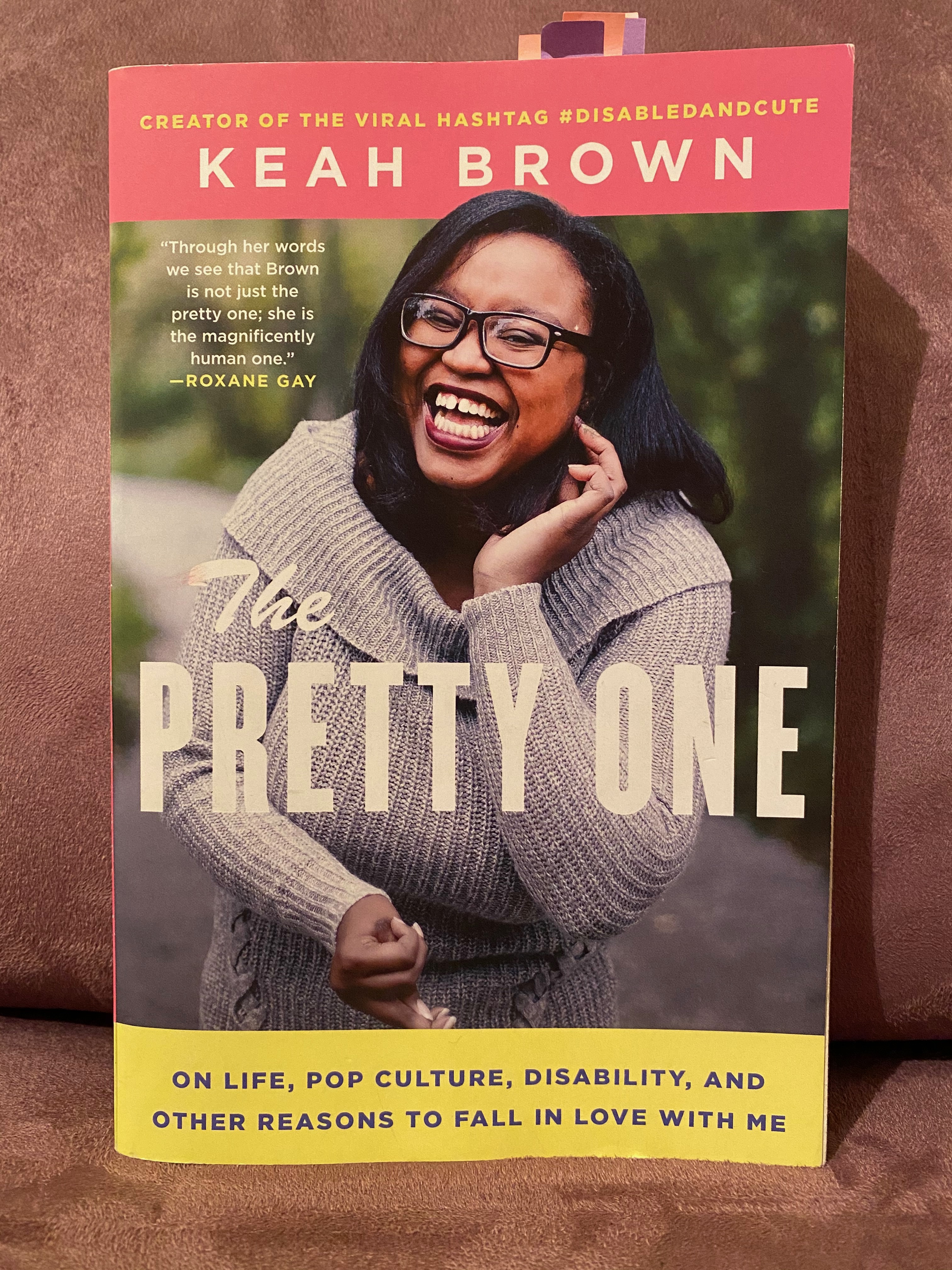
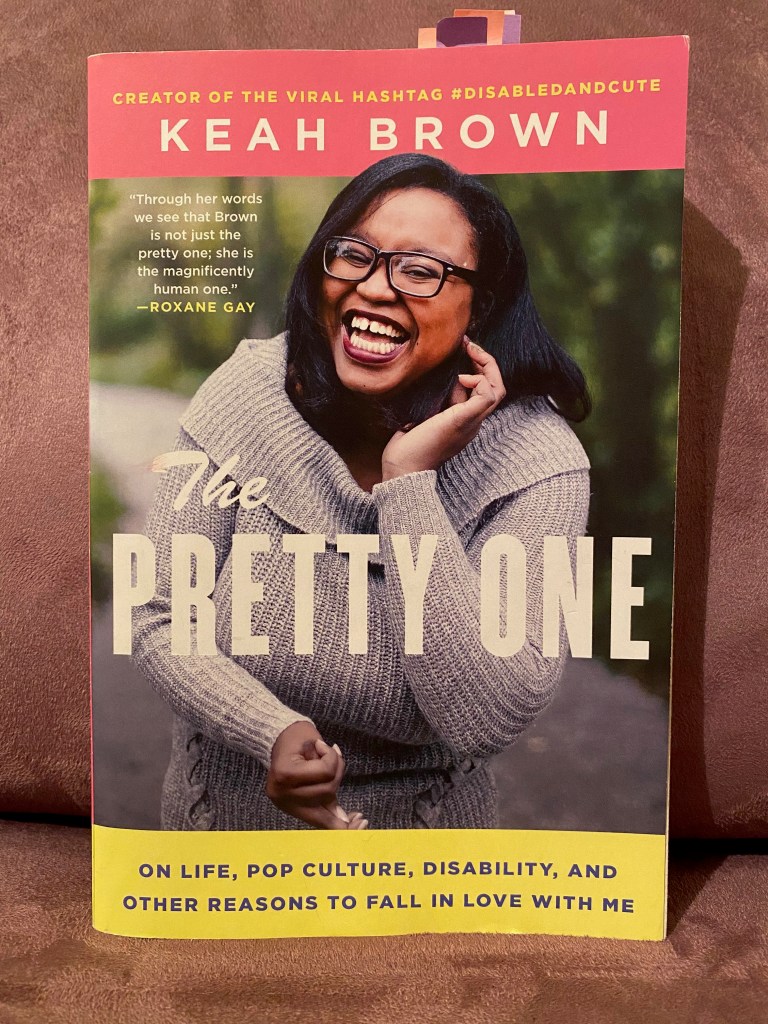
The latest book on my “just read” list is Keah Brown’s The Pretty One. 

I first saw the book at Target and was immediately intrigued by the author’s smile and subtitle – “On Life, Pop Culture, Disability, and Other Reasons To Fall In Love With Me.”

Keah Brown and I are different.

She is in her twenties; I am in my forties.

She is black; I am white.

Her disability is visible; mine is invisible.

However, her book proves a very common theme – the more specific you can get in your writing, the more you’ll find it relates to so many different people. You don’t have to be like Keah Brown to read this book. In fact, maybe it’s better if you’re not. Because then you’re forced to go along with Ms. Brown for this ride; to get a sense of what it is like when most of the movies you enjoy watching don’t feature a character that looks like you. (Although, like Ms. Brown and her sister, many of my friends did refer to my younger sister as the “pretty one.”)

Here are a few takeaways I’d like to share with you this week:

“The loss of control is where the true manifestation of my anxiety begins: the fact that you’re put under and you have no idea what is being done to your body, but you lead with the hope that it is the right thing, as strangers cut into your body in an effort to make it better. The reality is that I frequently cut myself open in the figurative sense when I share bits of myself with readers and audiences, but the idea of being cut open in real life will never not worry me despite the many experiences I have had.” 

“The pain is still there when it wants to be. The pain is one of the factors of disability that I cannot control. All I can do is try my best to take back the narrative about what living with disabilities is like.”  

“I like that my journey has not been easy, because then I would not have my stories to tell. Getting to that place of thought was hard, but so much of my life makes sense in these terms.”

“Imagine if we gave ourselves the same sort of love, attention, and understanding we give the people we love. If we allowed our vulnerability to fuel us to be better people, to say and do more, to feel in and navigate a world that champions tears as much as it does strength, to see tears and crying as signs of strength, even.” 

“I have always believed it is imperative that we learn from the experiences and histories of other people to better understand each other and ourselves.”


Just Because You Can’t See It, Doesn’t Make It Less Real

You don’t see the wind. But you know it’s there when you hear the wind chime.

“The battles that count aren’t the ones for gold medals. 

The struggles within yourself – 

the invisible, inevitable battles inside all of us – 

that’s where it’s at.”

– Jesse Owens

I had an experience that made me think of this quote. 

Many times over the years I’ve been told I don’t look sick.

And I don’t feel sick. 

I think of sick as throwing up, coughing, fever. I’m not sick. (Thankfully).

I am uncomfortable. In pain. 

And the worst part is when the pain just randomly hits out of nowhere. Sometimes the pain makes sense. I spend 30 minutes pulling weeds and gardening, my legs hurt. My son and I go shopping at Target (such a huge store), and I’m hurting.

But a couple of weeks ago, my husband and I went out to lunch. I was ok. We were walking to our car in the adjoining parking lot, and all of a sudden I clutched my husband’s hand. An intense pain gripped my left thigh. We found a ledge to sit down on. And while I tried to take deep breaths, I quietly cried behind my sunglasses.

I cried because of the pain.

And, I cried because I was out with my husband, celebrating his birthday, and I couldn’t even walk to our car. 

The pain subsided enough for me to get up and keep walking. But for the rest of the day my thigh hurt. The kind of lingering hurt you get after you’ve clumsily walked into the corner of a table or something. 

Except I hadn’t walked into anything. I had simply walked.

And some days, it’s harder than others.

Maybe Daring to Be Different Isn’t Always a Good Thing

Painting your hand is just one way to show support of Rare Disease Day

Saturday, February 29th is Rare Disease Day. “The main objective of Rare Disease Day is to raise awareness among the general public and decision-makers about rare diseases and their impact on patients’ lives.” 

I became ill in July 2010 but wasn’t diagnosed with Undifferentiated Connective Tissue Disease until November 2011. When my rheumatologist finally put a name to my symptoms, he told me UCTD is rare and that if I wanted to walk around and call it “the Kennar,” I could.  

At the time, I joked with my doctor, telling him I had always “dared to be different,” so why should this be any different.

But since that morning, I’ve changed my mind. 

I don’t want a rare condition most people have never heard of. I’d much rather live with a more common, even ordinary, chronic medical condition.

A disease doctors understand and can easily treat.  

Maybe even a disease with its own awareness month or magnetic ribbon I can attach to my car.  

My Ongoing Quest For Heroism

It hurt to get up on that fence, but I was determined to do it and have this special, silly moment with my son.

“Above all, be the heroine of your life, not the victim.”

– Nora Ephron


I am trying very hard to be the heroine of my life. 

In the beginning of this medical odyssey (which began almost ten years ago), no one knew what was going on inside my body. Which meant no one knew how to help. 

I did everything every doctor suggested. Went to every appointment. Met with every specialist I was sent to. Did every test doctors recommended. 

For my readers who don’t know, I first became ill in July 2010. I didn’t receive my diagnosis until November 2011. During that time, I met with a neurologist, geneticist, rheumatologist, vascular surgeon, and ophthalmologist (did you know certain cancers reveal themselves through your eyes?).

Back then, I automatically said yes to everything. My body felt out of my control. I was scared. My son was  two years old when I became sick. I needed answers, and I needed help.

Now, almost ten years later, I know I’m dealing with a chronic illness, and nothing fatal (thank goodness), and I’m not so quick to readily agree to a doctor’s “recommendation.” I probe for further information. I email my doctor and ask for clarification on something he said during my appointment. And I ask a lot of questions. 

Why are you recommending this procedure?

What are you looking for?

What are the side-effects?

I didn’t “do” anything to get sick. And there’s really nothing I can do to make it go completely away.

In that sense, I am a victim. 

But, I can exercise some control over how I choose to live with my autoimmune disease. Which means asking questions, taking my time to make a decision about a procedure, and gathering as much information as I can.

And in that sense, I am a heroine.