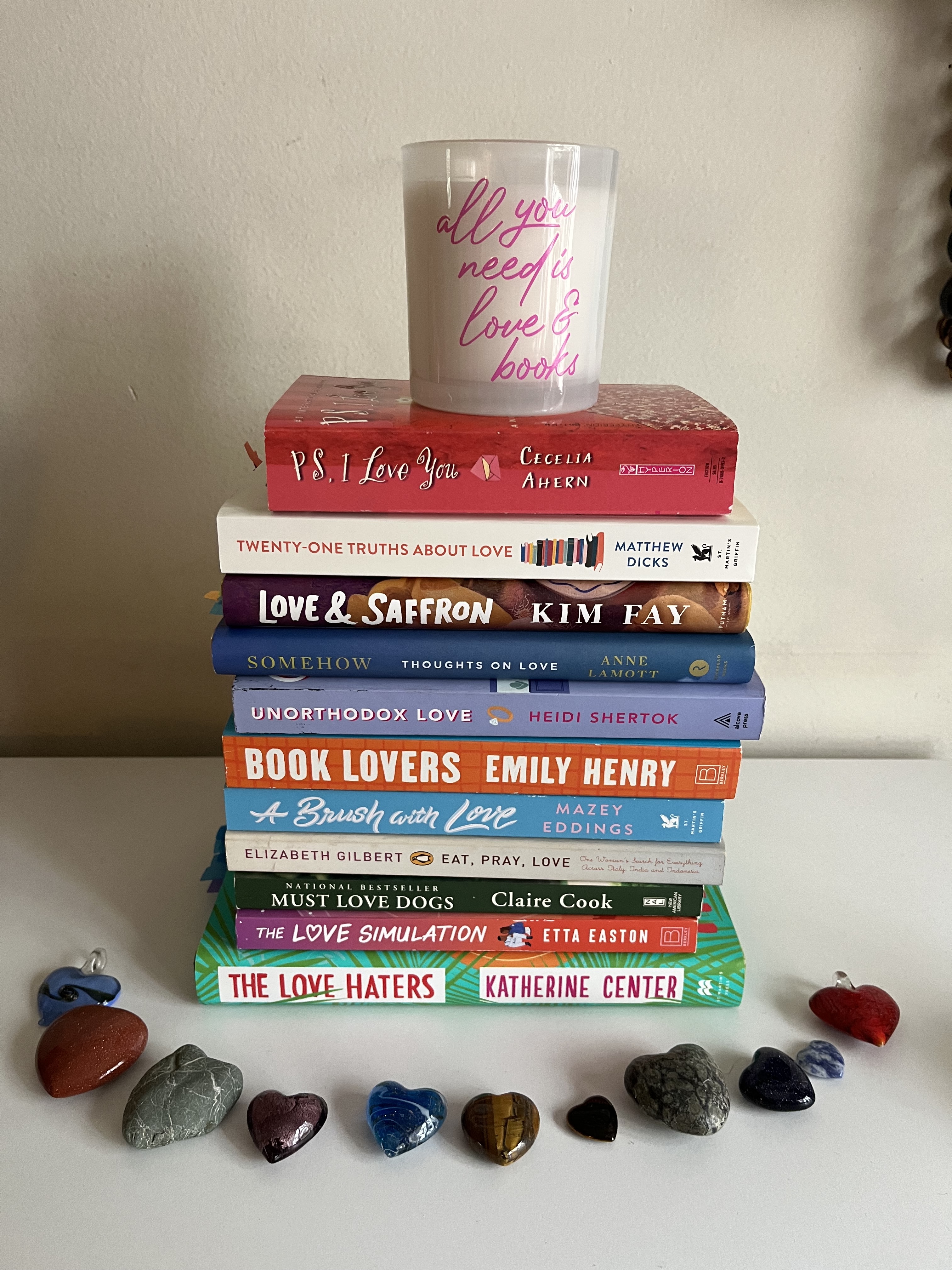
Since Valentine’s Day is only a few days away, I thought I would use this week’s blog post to share books in my collection that contain the word “Love” somewhere in the title.
I believe the world desperately needs more love. So, with that, I present to you this week’s blog post — a sort of Bookish Valentine to readers and writers.
Friends, which books would you add to this list? Within your own collection, do you have any books that have the word “Love” in the title? Feel free to list them in the comments.
Wishing you a day of love and friendship and enjoyable reading time — on Valentine’s Day and every day!
Please note: I am including a link to buy the books that I’m highlighting this week. If you use my link, I do make a small commission on your purchase at no additional cost to you. I am working with Bookshop.org which also sends a portion of the profit to support local, independent bookstores.
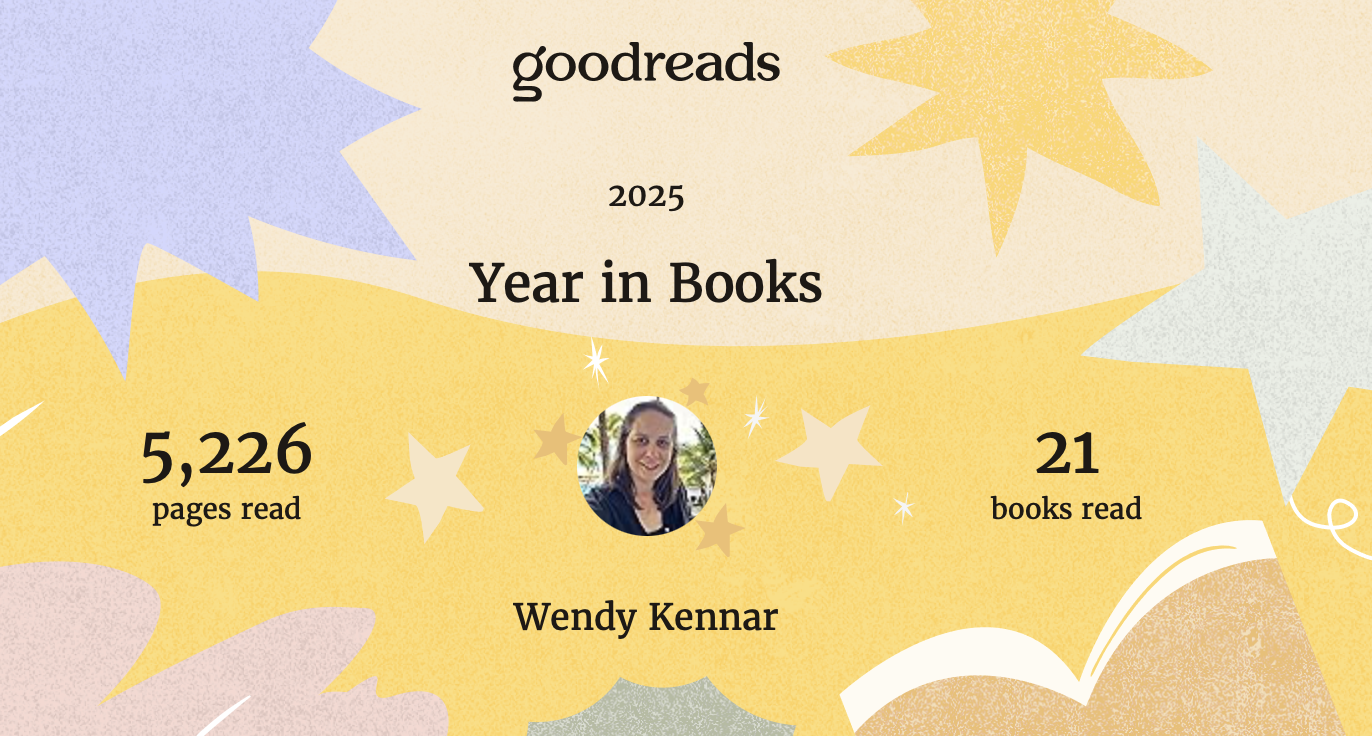
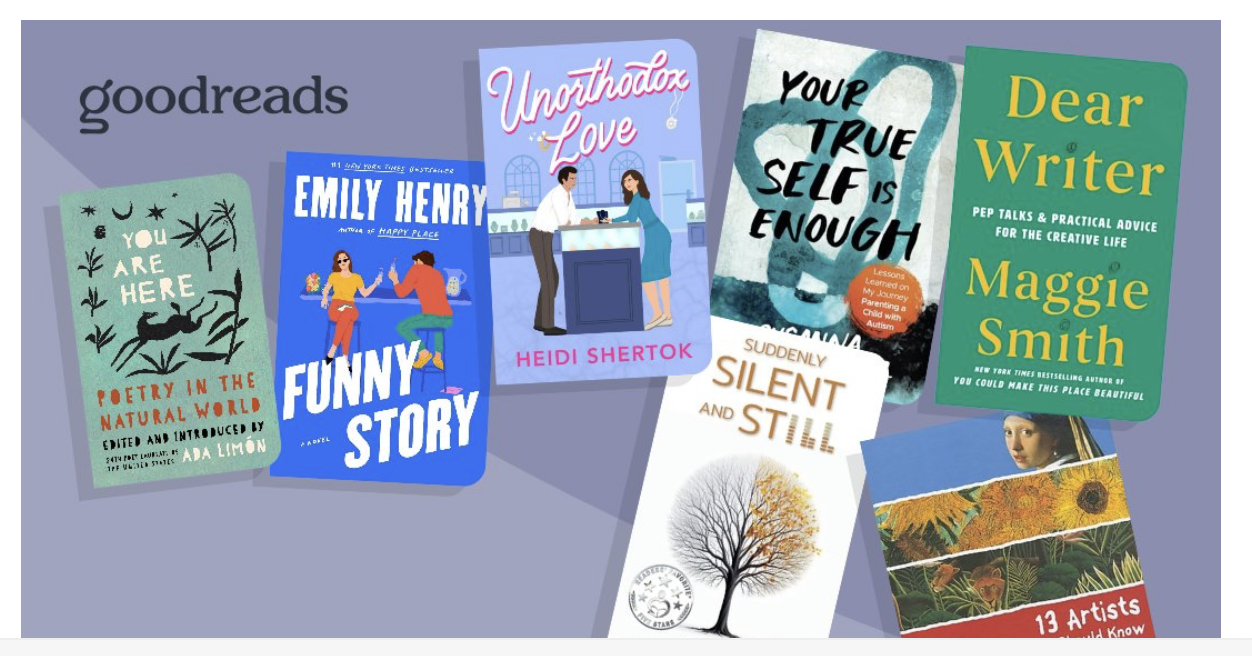
I didn’t achieve my Goodreads Reading Challenge for 2025.
Actually, I didn’t achieve my Goodreads Reading Challenge for 2024, either. When I realized how far off the mark I was (in terms of the number of books I had hoped to read and the number of books I actually read), I lowered my goal for 2025. Lowered it a lot.
The goal for 2025 was to read 24 books. And I missed it by 3 books.
I admit – on December 31st, I did think of going into my almost-eighteen-year-old son’s closet and finding some of our favorite picture books from when he was a little guy. I could have easily read three more books. I know I would have liked reading those books.
I could have read the 24 books and achieved my goal. But that felt like cheating.
All this made me pause and wonder if I should bother signing up for the 2026 Goodreads Reading Challenge. Why did I voluntarily sign up for the Goodreads challenge each year? What did I hope to gain from it?
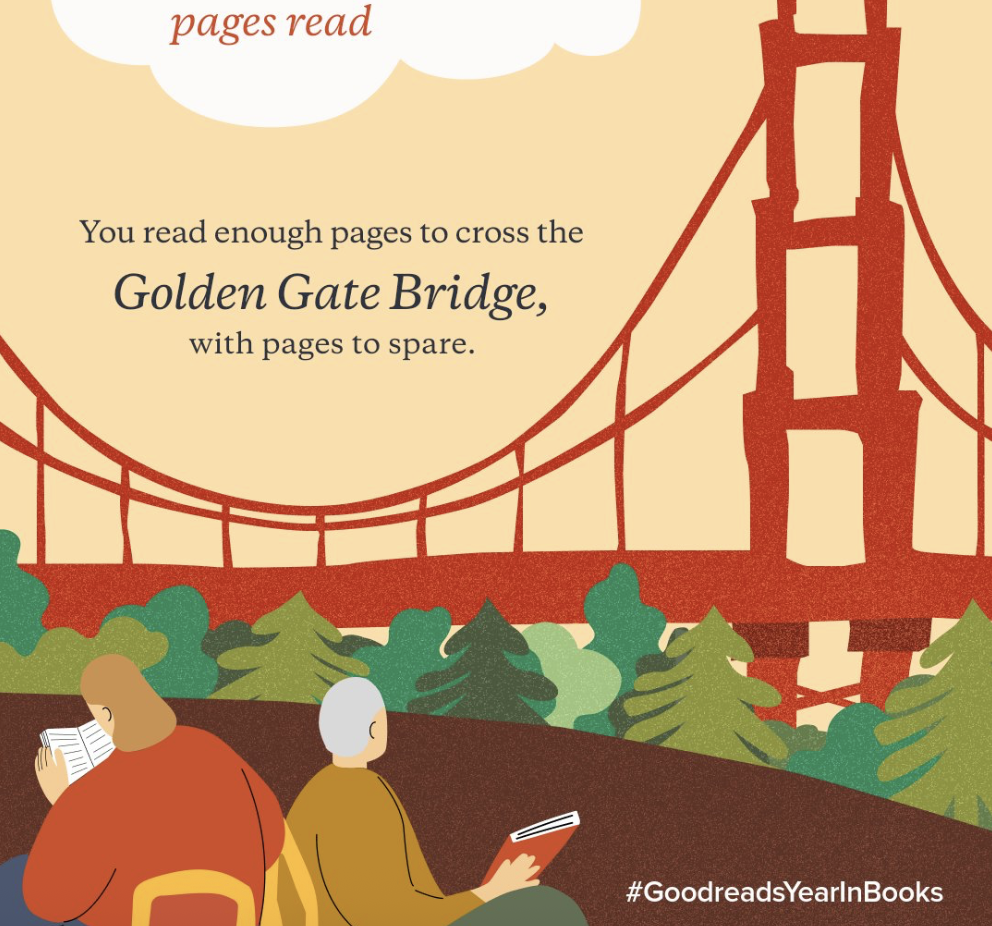
Part of me really likes the end-of-the-year statistics, and the fact that I don’t have to keep track of the numbers. Goodreads does that for me.
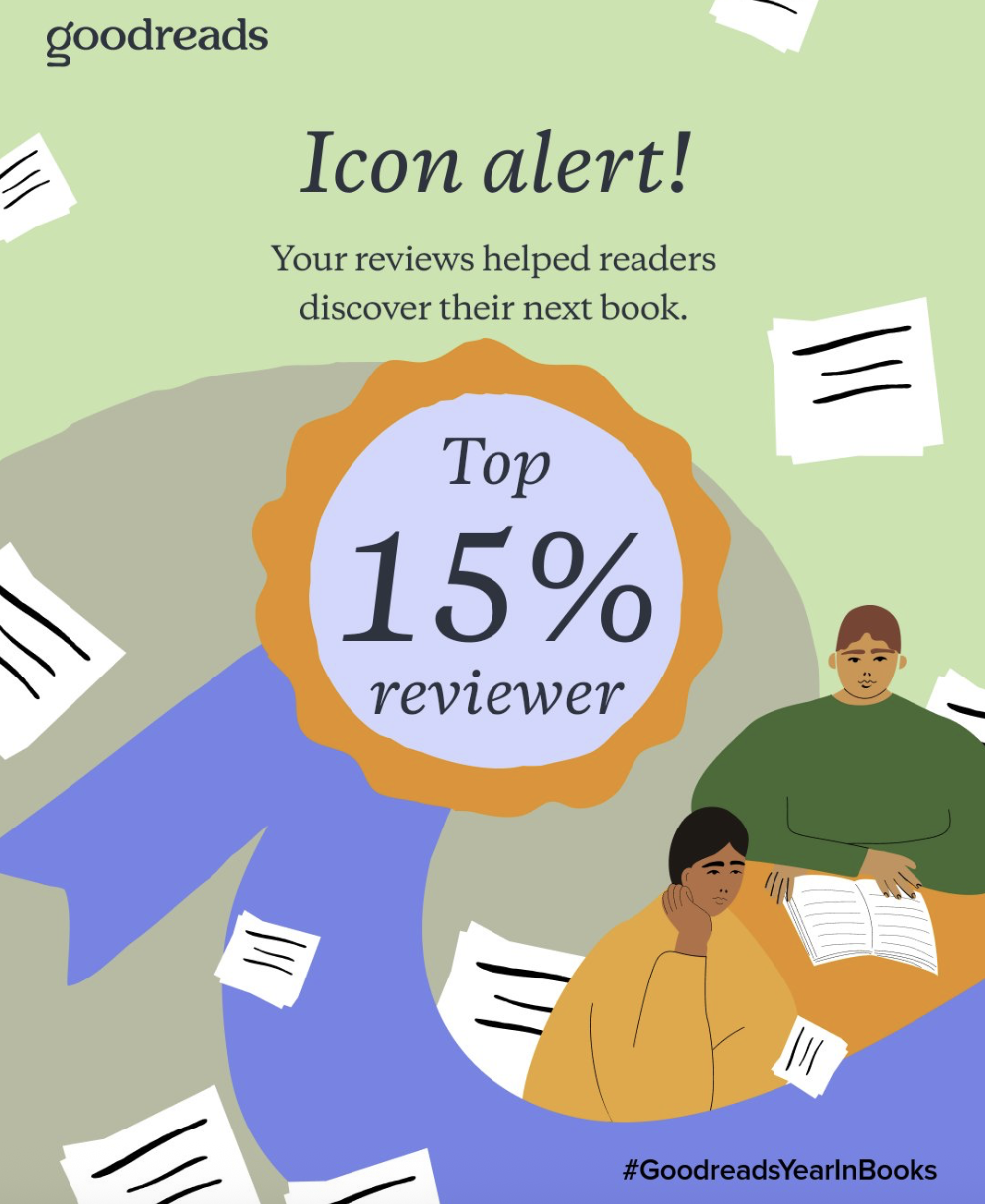
– I reviewed more books, recognizing me as a Top 15% Reviewer.
– My top genres included romance and memoir.
And I realized something. With or without the Goodreads Reading Challenge, I would continue to buy and read books. I would enjoy talking with friends about books. I would continue to blog about the books I read.
Because that’s who I am. I’m a reader.
Which is also the reason why I didn’t achieve my goal. I read much more than the books listed on Goodreads. I have three magazine subscriptions (Writer’s Digest, Poets & Writers, and Real Simple. My mom and I share the Real Simple). I have subscribed to many blogs and Substacks, and do my best to read and like and comment. And I actually read the books; I don’t listen to audio books.
So this year, I have once again set my goal for 24 books.
And whether or not I achieve my goal isn’t the point. For me, it’s the feeling of being in community with other booklovers. It’s the opportunity to discover new books and new authors. It’s the excitement that comes from finally reading a book I’ve been eagerly anticipating. And, it’s the belief that every book I read brings me a little bit closer to achieving my ultimate goal — being the author of my own book and getting my book into the hands of readers.
Please note: I am including a link to buy the books mentioned this week. If you use my link, I do make a small commission on your purchase at no additional cost to you. I am working with Bookshop.org which also sends a portion of the profit to support local, independent bookstores.
I’ve been packing up a bag of children’s books to donate. (In case you’re wondering, we usually donate our books to the public library, little free libraries, and Big Sunday, a wonderful organization here in Los Angeles.)
That’s how I came across my son’s copy of 13 Artists Children Should Know by Angela Wenzel. We bought this book many years ago during one of our visits to the Getty Center. And rather than immediately place the book in the donation bag, I decided to read it. It had been years since we had gone through it, and I had forgotten which artists had made the cut and were included in the book.
Vincent van Gogh is one of the artists featured in the book. Our family likes van Gogh. He painted a series of sunflower pictures, which happen to be my favorite flower. Plus, my son not only shares his birthday with his Grandma, my mom, but also Vincent van Gogh.
Claude Monet is included. (I love his Water Lilies and have a framed print hanging in our bedroom. We also have a framed print of Impression: Sunrise, 1872; both prints were bought in Paris twenty years ago.)
Other artists included in the book are Andy Warhol, Pablo Picasso, Leonardo da Vinci. Names we all recognize.
Among the thirteen, only two were women — Mary Cassatt and Frida Kahlo.
(If you’re curious, the rest of the list includes: Marc Chagall, Franz Marc, Paul Klee, Henri Matisse, Jan Vermeer, and Henri Rousseau.)
And as I read through the book, I wondered — who decided which artists to include. Why these twelve?
Likewise, why during his high school years, did my son read The Catcher in the Rye? The Great Gatsby? Romeo and Juliet?
I’m not saying these literary pieces aren’t worthy of being read.
But I am saying I read these same pieces of literature, in the same high school, thirty years ago.
We really need to expand the lists of artists, authors, and musicians young people “should” know.
Do you agree? If you were putting together a book of artists, or writing a list of books to be taught in a public high school, who or what would you include? I’m really curious; feel free to share your thoughts in the comments.
This is elementary-school-me holding the certificate I earned for all my reading during the library's Summer Reading Club.
Saturday, August 9th is Book Lovers Day.
I am a book lover, but I don’t think of Book Lovers Day as a special day just for me. Instead, I think of Book Lovers Day kind of like Earth Day. We should respect, care for, learn about, and protect our planet every day of every month of every year. Earth Day is one big extra-celebratory day when a whole lot of people focus on the same thing — our Earth.
Just like Book Lovers Day. Readers, book lovers, writers, booksellers — in one way or another, we all respect, care for, learn about, and protect our books every day of every month of every year. At the same time, it can be fun to organize a special day when people come together and talk about books, celebrate books, give books, buy books, and read books.
I have always been a book lover, even when I didn’t have the words for it. Growing up, I participated in our public library’s annual summer reading program. I visited the library each week, filling up my canvas tote bag, dutifully writing down the titles of the books I read on the library’s record sheet.
I grew up reading about Jessica and Elizabeth Wakefield. (If you don’t recognize those names, then I guess you didn’t grow up reading Sweet Valley High.) I saved my money to buy big, heavy, hardcover books about NASA and America’s Space Program.
When I was in high school, I spent some of my lunches and after-school time volunteering in our school’s library. I liked books, and I knew our school library was understaffed and underfunded. (And, let’s be honest, I also knew that volunteering would look good on my college applications.)
And when I was a college student, I worked in a public library for a few years. I enjoyed seeing how all our different departments (including Circulation, Support Services, Reference) contributed to the end result — the book on the shelf. I remember the days of card catalogs, and if you don’t know what a card catalog is then yes, if you were wondering, chances are I’m much older than you are. (And you can click here to learn more about a library’s card catalog.)
As an elementary school teacher, I made sure each of my classrooms had a colorful, cozy, well-stocked library. Colorful as in big blue and pink storage bins from Ikea. Cozy as in pillows and stuffed animals. And well-stocked meaning fiction and nonfiction. Chapter books and picture books. An old set of encyclopedias. Guinness World Records books. A set of Little House on the Prairie books. Diary of a Wimpy Kidbooks. Books by Roald Dahl and Kate DiCamillo.
September 2010. I had to move classrooms so I started the school year with an incomplete library corner - we had to wait a bit for our new rug.
And as a parent, I started building my son’s library before he was born, filling the shelves with books that celebrate diverse families (Todd Parr’s The Family Book, Shades of Blackby Sandra L. Pinkney, Sesame Street’s We’re Different, We’re the Same). Books were a part of my son’s childhood — in the diaper bag, in the car, read at night, read during bath time, and read at a restaurant while waiting for his chicken nuggets and fries. Books were given as gifts for every birthday and every holiday. Our son knew there was always money for books — whether they were bought at a bookstore, or Target, or through the Scholastic order form sent home by his second grade teacher.
My son at age 6, during one of our weekly visits to the library.
Nowadays, I go into an independent bookstore knowing I won’t leave without buying at least one book. I have run out of shelf space and started a pile of yet-to-be-read-books on the floor near one of my smaller bookcases. I regularly add titles to my list of want-to-read books. And, I continue to research publishing paths for my memoir-in-essays.
I did all that, I do all that, because I’m a Book Lover.
Every day.
Please note: I am including a link to buy the book that I’m highlighting this week. If you use my link, I do make a small commission on your purchase at no additional cost to you. I am working with Bookshop.org which also sends a portion of the profit to support local, independent bookstores.
And with the publication of Blankin 2024, we add novelist to the list.
I found myself quickly turning pages, not at all able to predict how things were (or weren’t) going to work out for our protagonist Pippa Jones. Plus, I was delighted to find many real life, book-related references throughout the novel, including the mention of the memoir My What-If Year (a memoir written by Alisha Fernandez Miranda, which was the first book published by Zibby Books) as well as a nod to real-life “Goodreads.com,” named “FabulousReads.com” in the novel.
The novel has a lot going on, tackling a range of topics including the publishing industry, female friendships, marriage and adultery, social media, and anti-Semitism.
Honestly, my favorite parts were those that were clearly written as a celebration and tribute to the magic of books. Allow me to share a few passages:
“Publishing a blank novel would be a commentary on the literary world. I could say that I was addressing the reader’s almost nonexistent attention span. To keep the reader’s attention, they’d have to be able to read the words in, well, no time. To read this book, they wouldn’t have to do anything.”
“Imagine someone just came up with the idea of reading. Like, ‘Hey, let’s launch a product with no pictures, just words and letters. To enjoy it, you have to sit in one place and stare at it for hours, and then the whole story will slowly unfold just to you inside your brain. It might take you months to find out what happens in the end. It’s a completely solitary endeavor and you can’t do anything else at the same time. Oh, and you need to purchase it up front, hoping you’ll like it. But if you don’t, there’s no refund. Sorry! And there are literally millions of other products that look basically identical — some are great and some are terrible, and there’s almost no way to know ahead of time. Good luck. Go spend thirty dollars.’”
“That’s what books are supposed to do: connect readers to authors. Readers to each other. That’s why book clubs are so popular! It’s like that mural on Montana: ‘Stories are best when shared.’” (This is a nod to the mural outside of Zibby’s Bookshop, located on Montana Avenue in Santa Monica, California.)
This photo was taken back in January 2024
Friends — one more thing to share this week. If you didn’t see my Instagram post from a few days ago, I made some changes to the home page of my website. I’d love to know what you think. And, if you know of a reader, writer, and/or someone living with a chronic illness who might enjoy my weekly content, please let them know about my blog.
Please note: I am including a link to buy the book that I’m highlighting this week. If you use my link, I do make a small commission on your purchase at no additional cost to you. I am working with Bookshop.org which also sends a portion of the profit to support local, independent bookstores.
We’ve all heard that bit of advice. (And if you’re interested, when I Googled it, I learned the origin of this expression is credited to a longer statement that conveyed the same meaning in George Eliot’s The Mill on the Floss.)
Nowadays, the adage is used broadly and is applied to many things beyond books. For instance, you can’t know a person’s true heart or friendliness by simply looking at them. You don’t always know if you’ll enjoy a meal simply based on how it looks on the plate.
While I absolutely agree that you can never know someone’s full story or what they’re going through simply based on appearances (including my own invisible disability), when it comes to books, I think you absolutely can, and should, judge a book by its cover.
When I scroll through books offered in a Goodreads Giveaway, I have limited information available to me. I have the title, a small photo of the book’s cover, and the first few lines of a short summary of each book. And I absolutely look at that cover image first.
A book’s cover is an advertisement and a promise for what is included within the pages of that book.
A dark cover featuring a sharp knife? I’ll skip that one, thank you.
A pink cover with a woman and man facing each other? I’ll stop my scrolling to read the blurb.
A green cover with holiday decorations? I’ll read that blurb also.
A black and gray cover with a set of eyes peering back at me? That’s one to skip.
While I’m not at that stage yet, I do sometimes think ahead and try to envision the cover of my memoir. I picture lavender or some other shade of purple. I think of sunflowers, my favorite flower, and a symbol for the chronic illness community — something I didn’t know until fairly recently.
“The Hidden Disabilities Sunflower is a simple tool for you to voluntarily share that you have a disability or condition that may not be immediately apparent – and that you may need a helping hand, understanding, or more time in shops, at work, on transport, or in public spaces.”
I’m curious, readers. How do you decide which book to pick up at the bookstore? To check out at the library? To enter a giveaway for? Does a book’s cover play a part in influencing your decision at all? Let me know in the comments.
And, if you have any thoughts regarding my own future book cover, feel free to leave those in the comments section, too.
I’m even one of the lucky ones — during college I worked in a public library for several years. I only left that job because I graduated with my Bachelor of Arts degree and had secured a teaching position. (And a huge, life-changing bonus — one of my closest friends is a woman I met at the library. She still works there, and we’re still friends.)
So, naturally I had been wanting to visit The American Library by Yinka Shonibare CBE RA at the Skirball Cultural Center in Los Angeles. (If you’re in L.A., the exhibit closes on Sunday, September 1st, so don’t delay.)
From the Skirball’s website:
“This exhibition creates a library setting where the shelves are filled with more than six thousand books individually wrapped in Shonibare’s signature Dutch wax-printed cotton textiles. Each book bears a name on its spine of a notable American individual. First- and second-generation immigrants and Black Americans affected by the Great Migration are featured alongside one another.”
Six thousand books, wrapped in colorful, eye-catching textiles. It’s rather stunning — the bold colors, the row after row after row of books.
Also from the website:
“An imaginative portrait of a nation, The American Library by internationally recognized artist Yinka Shonibare explores how ideas of citizenship, home, and nationalism hold complex meanings.”
The exhibition is meant to spark a conversation about immigration, about culture, about a sense of belonging.
And while all that is quite powerful, I found myself scanning the shelves, imagining what it would look like, and what it would feel like, to see my name on the spine of a book (though not a book wrapped in vivid textiles) .
Years ago, when my high-school-aged son was a little guy, a package arrived containing an anthology which included one of my personal essays. I was quite excited for the book to arrive, and I remember my son helping me carefully open the package and remove the book.
He looked at the front cover, flipped it around to check out the back cover, looked at the spine, and told me he couldn’t find my name. I explained the book was an anthology, a collection of many stories and poems written by many different people, and my name was inside. We looked at the Table of Contents and found my name. We turned to the page where my essay began and found my name under the title. We found my name in the back of the book, where each contributor’s biography was listed. And I remember telling my son that for now my name was on the inside of books, but that one day my name would be on the outside — on the spine and on the front cover as the sole author of the book.
I’m still working to achieve that goal.
I continue to query agents. I continue to search for that one person who will grant me that one “yes,” that will be the gatekeeper to help me move along to the next stage of my writing journey — the publication of my memoir-in-essays.
Maybe all this sounds selfish. My husband and I went to the Museum, stood among this striking, immersive art installation, and my thoughts turned to my own future book.
Then again, that’s the power of art — the way it can touch each individual in such a personal way.
“The cracking open of a book’s spine has always been an exercise in self-discovery, healing, and fortification. That subtle whoosh when words spill out makes me salivate. Then the feel of the coarse pages under my fingertips delights my consciousness, the sudden sprinkling of syllables, the black-and-white letters in various patterns, coalescing to find their way directly to my heart. It’s magic.”
The Book of Hope by Jane Goodall and Douglas Abrams is a powerful read with many passages that really stood out.
Dear Readers, have you read any of these books? What book(s) would you add to this list? Let me know in the comments.
Please note: I am including links to buy the books that I’m highlighting this week. If you use my link, I do make a small commission on your purchase at no additional cost to you. I am working with Bookshop.org which also sends a portion of the profit to support local, independent bookstores.
I read for many reasons. To be entertained and inspired. To learn and grow and find comfort in someone else’s words.
I write for many reasons, too. Which is why I was curious to read Write For Your Life by Anna Quindlen.
While many people might not consider themselves writers, Ms. Quindlen believes everyone has a story worth writing down. I agree.
In addition to Ms. Quindlen’s words, the book also has some writing-related quotes as well as some prompts for writing exercises. Here are some of my favorite bits from Write For Your Life:
“We write to taste life twice, in the moment and in retrospect.” — Anaïs Nin
“While you have to mentally re-create what happened on a phone call — ‘Did she really say that?’ — you can actually reread a text. But much of that tech prose online felt so spontaneous as to be slapdash, unexamined. It’s why people will often say, when reminded of an email or an online post, that they can’t really recall writing it. Every day, unthinkingly, our lives can slip through our fingers in a cascade of computer code. Texts are like footprints in sand. By evening the tide has come in, and we are left alone.”
“The urge to get it exactly right often stands between you and beginning. ‘Don’t get it right, get it written’ demands composition first, cleanup later. The paralysis of perfectionism is a terrible ailment that can seep into so much of our daily lives. In writing, what it leads to is an empty page, and an empty page is neither good nor bad. It’s nothing. Honestly, if the choice is between an imperfect something and nothing — well, that’s easy, isn’t it? Get it written. You can get it right later.”
“Something written by hand brings a singular human presence that the typewriter or the computer cannot confer. There’s plenty of good writing done that way, but when you simply glance at the page, it could be the work of anyone. But when you’ve written something by hand, the only person who could have done it is you. It’s unmistakable you wrote this, touched it, laid hands and eyes upon it. Something written by hand is a piece of your personality on paper. Typed words are not a fair swap for handwriting, for what is, in a way, a little relic of you.”
“I’m not sure writing about things always makes us feel better, but perhaps it sometimes does make loss, tragedies, disappointments more actual. It can turn them into something with a clearer shape and form, and therefore make it possible to see them more deeply and clearly, and more usefully turn confusion and pain into understanding and perhaps reconciliation. On paper our greatest challenges become A Real Thing, in a world in which so much seems ephemeral and transitory.”
“Butt in chair. That’s the piece of direction I give to anyone and everyone who wants to write, who is thinking about writing, who is asking how it’s done, who is fearful of and intimidated by the act. It’s not poetic, and it doesn’t bespeak inspiration. What it does suggest is a way into what is not a mystery but a process, a way into the story of yourself.”
Please note: I am including a link to buy the book that I’m highlighting this week. If you use my link, I do make a small commission on your purchase at no additional cost to you. I am working with Bookshop.org which also sends a portion of the profit to support local, independent bookstores.
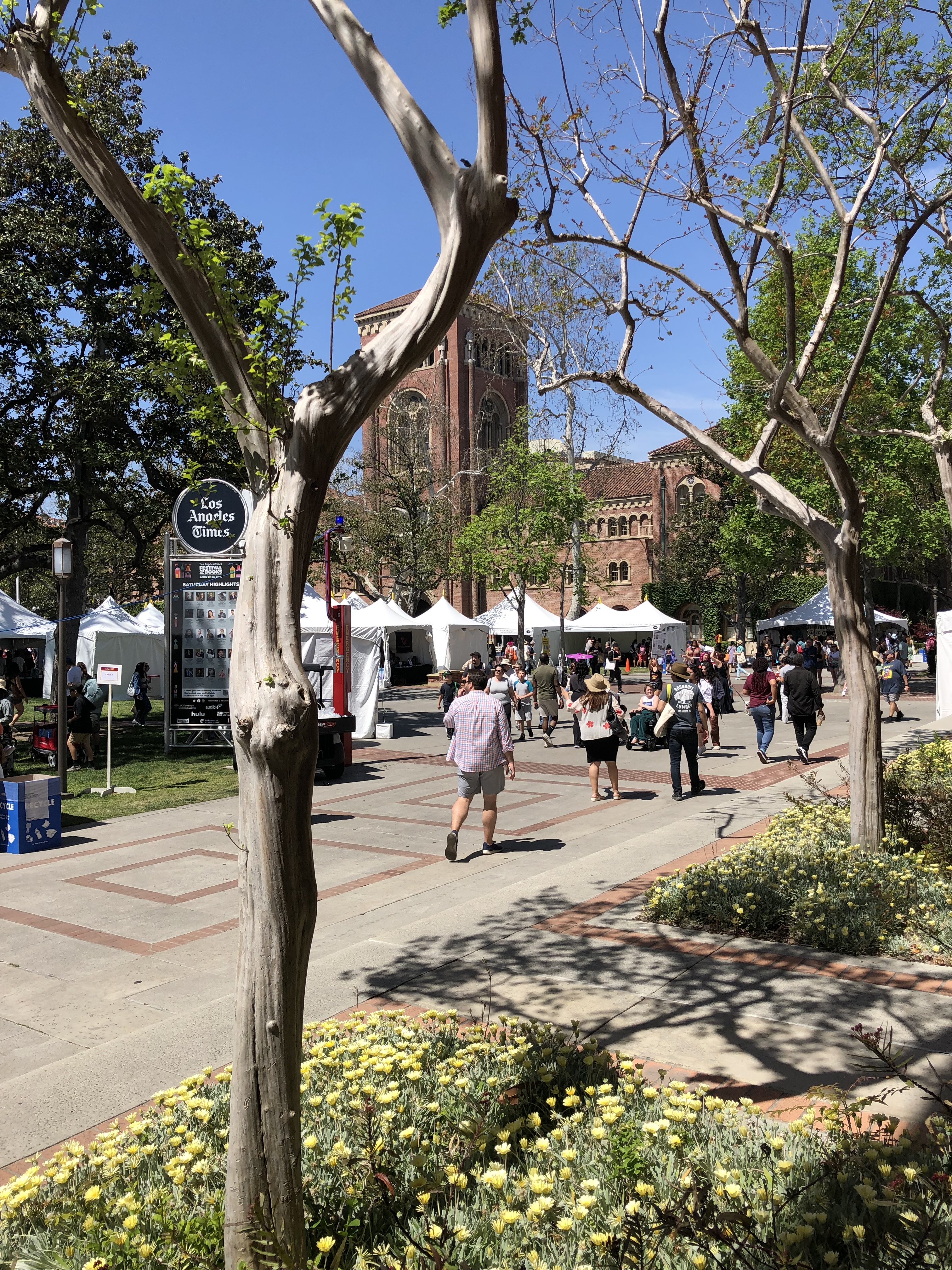
This past weekend, I attended the Los Angeles Times Festival of Books. For those who aren’t familiar with it, the Festival of Books is a huge, two-day, annual event held on the campus of USC (University of Southern California).
Years ago, before my son was born, I went to the Festival every year. Back then it was held on the campus of UCLA (University of California Los Angeles.)
I attended the Festival last year for the first time in many years. There was a certain thrill and energy that came with being surrounded by all things book-related, at attending an event that is a true celebration of books and authors.
This year, though, I really wasn’t sure if I should go or not. Because I haven’t been feeling well lately. Because my pain level has been high and my energy level has been low.
That’s the hard part for me — deciding when to push myself and when to hold back and admit that my body needs rest.
The truth was, I really wanted to go. I didn’t want to stay home because I was worried about my pain or the heat. I wanted to prove that I’m still capable of being out in the world, doing things I feel passionately about, not letting my illness completely dictate my life.
I tried to make it as easy and stress-free as possible for myself by not attending any panel discussions or book signings. I didn’t want to have to worry about being in a particular place at a particular time.
I simply strolled around the Festival, wearing my mask and sunhat, and doing my best to be present and enjoy the experience.
I admit — I did start to daydream about what it would be like to be an author with my own exhibition area, selling copies of my memoir. Immediately I thought of giving out small, wrapped candies to those who stopped at my table. (Starburst and Hershey’s Kisses came to mind, though the Kisses might melt in the heat. Jolly Ranchers could be another possibility.)
I walked around, I took pictures, I picked up books, chatted with some authors, and bought three books, even though I have more than a dozen books at home, just waiting for me to read them.
I loved being there. But, (you knew there was a but coming) it was incredibly hard on my body. It took me about 15 minutes to walk from the parking structure to the exhibition area. Plus, I had parked on level 5 which meant I would ordinarily take the elevator down to the ground level. However, eager attendees were crowding onto the elevator each time it stopped at 5, and I will not ride in a super-crowded elevator. (During my teaching years, I once was stuck in the school elevator for 55 minutes one morning.) So I walked down five flights of stairs. (Thankfully when it was time for me to leave, no one else was waiting for the elevator so I rode it up to parking level 5.)
When I felt my speed decreasing, when I found myself searching for a place to sit and rest in the shade, I knew it was time to go. That’s when the mask comes in handy. No one can see me talking to myself as I retraced my steps back to the parking area. One step at a time. Okay, you can do this.
Am I glad I went? Yes.
But I’m also sad. Because I miss the old days, the years I could just go out and do something without weighing all the possible risks. When I didn’t have to worry about having a pain-hangover the day (or days) after a particularly strenuous activity.


 WendyKennar.com