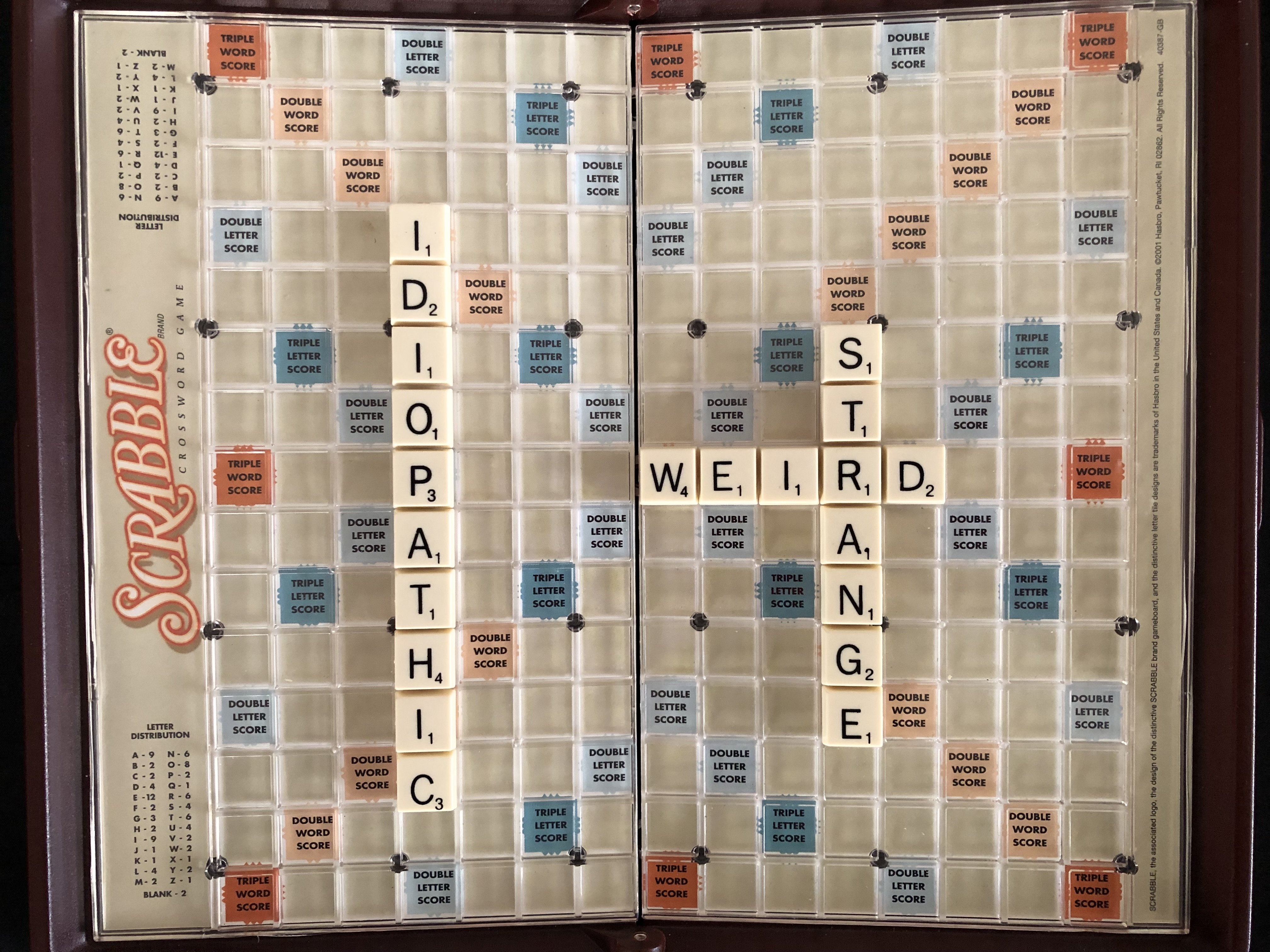
Idiopathic

Add idiopathic to the list.

The list of words doctors and nurses have used to define me and my health.

Idiopathic is a new one.I give the doctor bonus points for using a synonym, and one that is much more professional-sounding than the other words I usually get:

Weird.  (You can read a blog post from 2019 titled “Stop Calling Me Weird.”)

Unusual.

Mysterious.

Atypical.

Strange. (Click here to read my blog post from 2020 titled “Weird? Strange? No. It’s My Reality”)

Unique.

At last week’s appointment, the doctor told me the new symptom we were concerned about, the reason behind the additional lab tests, could very well wind up being idiopathic.

We’ll see. We’re waiting for additional lab results. 

And therein lies one of the great dilemmas I live with — do I want “something” to show up on a test? Something that might shed some light on why my body is behaving the way it is. A surefire sign that would explain why something is happening within my body and how we best go about treating it. 

Or, would I rather be told the tests were inconclusive? Indeterminate? Ambiguous? Unresolved?

Because I’ve heard those words, too. That just means nothing of red-flag magnitude showed up on my tests, which rules out quite a bit. However, it does not provide my doctors and me with any information about where we go from here. 

And therein lies the big conundrum in my life with a chronic illness. 

(Another word a doctor has used in the past.)

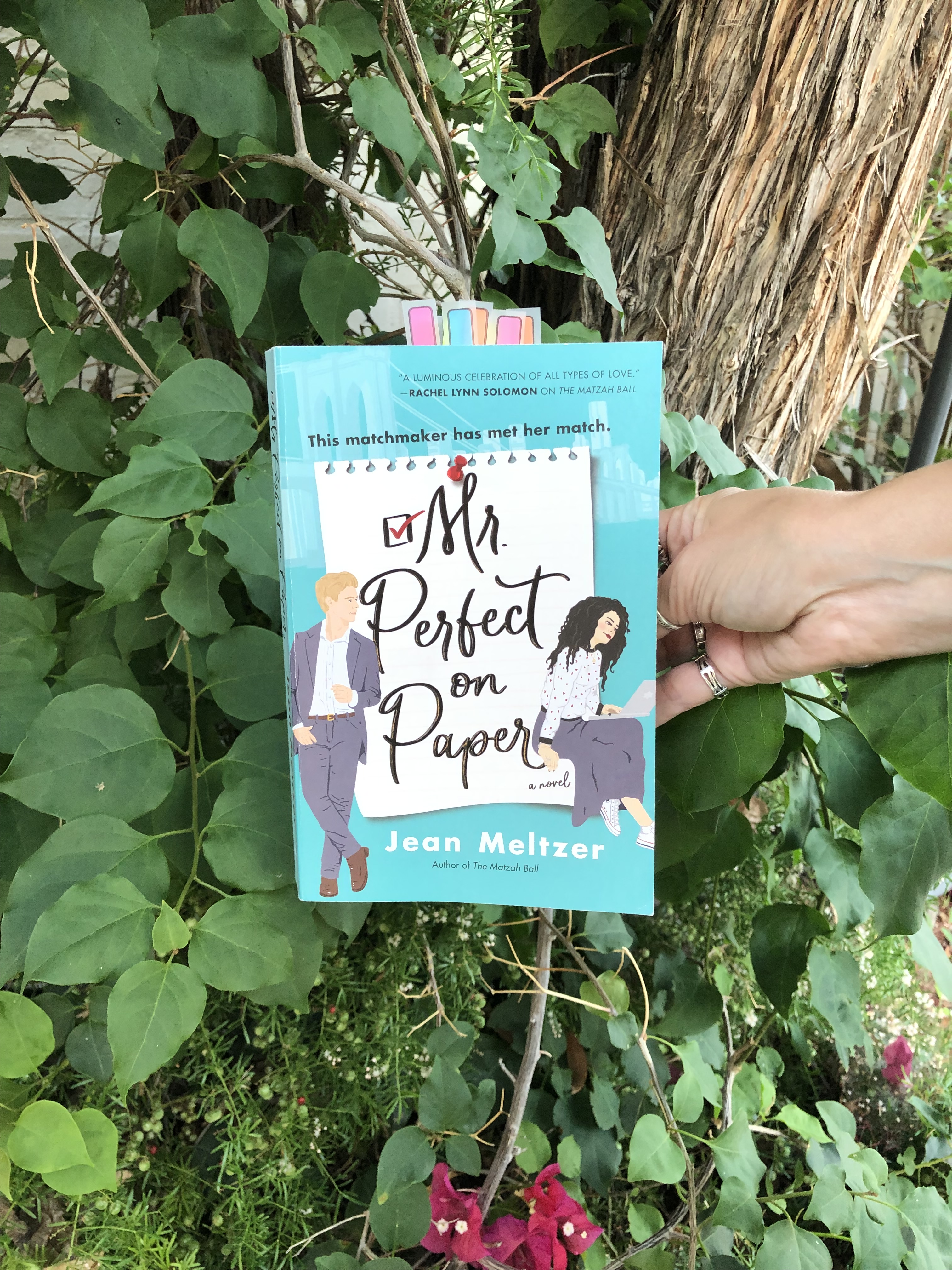
Mr. Perfect on Paper

There aren’t many books written by an author who has earned a daytime Emmy, “and spent five years in rabbinical school before her chronic illness forced her to withdraw.” 

That author is Jean Meltzer.

(You might remember I raved about Ms. Meltzer’s first novel, The Matzah Ball, in a blog post from several months ago. Click here if you missed it.)

And as was the case in her first novel, Ms. Meltzer’s second book also features a main character who is a Jewish woman living with an invisible chronic illness. 

The book is Mr. Perfect on Paper. The character is Dara Rabinowtiz.  

Mr. Perfect on Paper was such an enjoyable read. Smart, funny, heartfelt. Plus, it gave readers a chance to learn about Jewish holidays in an easy-to-understand manner. Most of all, it gave us characters we cared about.

Here are a few of the passages I marked during my reading:

“He beamed as he entered, a bounce in his step, offering a hearty good morning to each person he passed. He was a champ at this. Faking it. Looking happy. Smiling through whatever pain was threatening to drown him.”

“There were days when Dara was so exhausted from her struggles that she could barely find the courage to get out of bed. It was then that her mother would show up, standing over her — and sometimes tearing off her covers — demanding that she fight. Fight, Dara. Her mother would repeat it like a mantra on her bad days. You’re allowed to be afraid, you’re allowed to be anxious, but you have to fight.” 

“There isn’t one way to be Jewish,” she said, finally. “Some people are very observant. Some people aren’t. Some people fall in the middle of the spectrum, or have different philosophies behind the reasons for their observance. Some people don’t do anything. When two Jews marry, they have to negotiate these religious choices. For example, will they keep a kosher home? Will they observe Shabbat? Will you cover your hair, or go to mikvah? Those are some of the big ones…”

“But,” Dara said thoughtfully, “you learn to live with it. The sadness never goes away. Maybe it never gets smaller, either. But after a time, you learn to hold both. You learn that joy still exists … there’s still laughter, and falling in love, and —“ she smiled, glancing down at the crumbs of her pizza “—there’s still jalapeño-and-pineapple pizza. You learn that good things still happen. You meet someone. You fall in love. Maybe you even get married. And when you walk down that aisle, you hold both. You hold the joy of the moment alongside your sadness for the one who can’t be there.” 

“But what I learned from this journey, from finding my real-life Mr. Perfect on Paper, is that love isn’t something that can be quantified on a list. Love is messy. And terrifying. It shows up when you least expect it, and complicates your life in every way. But it’s also … safe. And comforting. It allows you to be yourself completely, without judgment or fear, and it feels right. I don’t know how something so incredibly scary can also feel right, but I need to give this inkling in my heart —in my soul—a chance.”

“I know you think…because you have anxiety, that you’re not brave. But that’s not true. I’ve been thinking about it a lot, actually, and here’s what I want to tell you. Courage ins’t about jumping out of airplanes or building businesses from scratch. Real courage is showing up, even when you’re afraid. Real courage is putting yourself out there, even when you fail — especially when you fail. Courage is saying, this is who I am, standing up, allowing yourself to be vulnerable. And you are brave, Dara. You’re the bravest person I have ever met.”

Pain Awareness Month

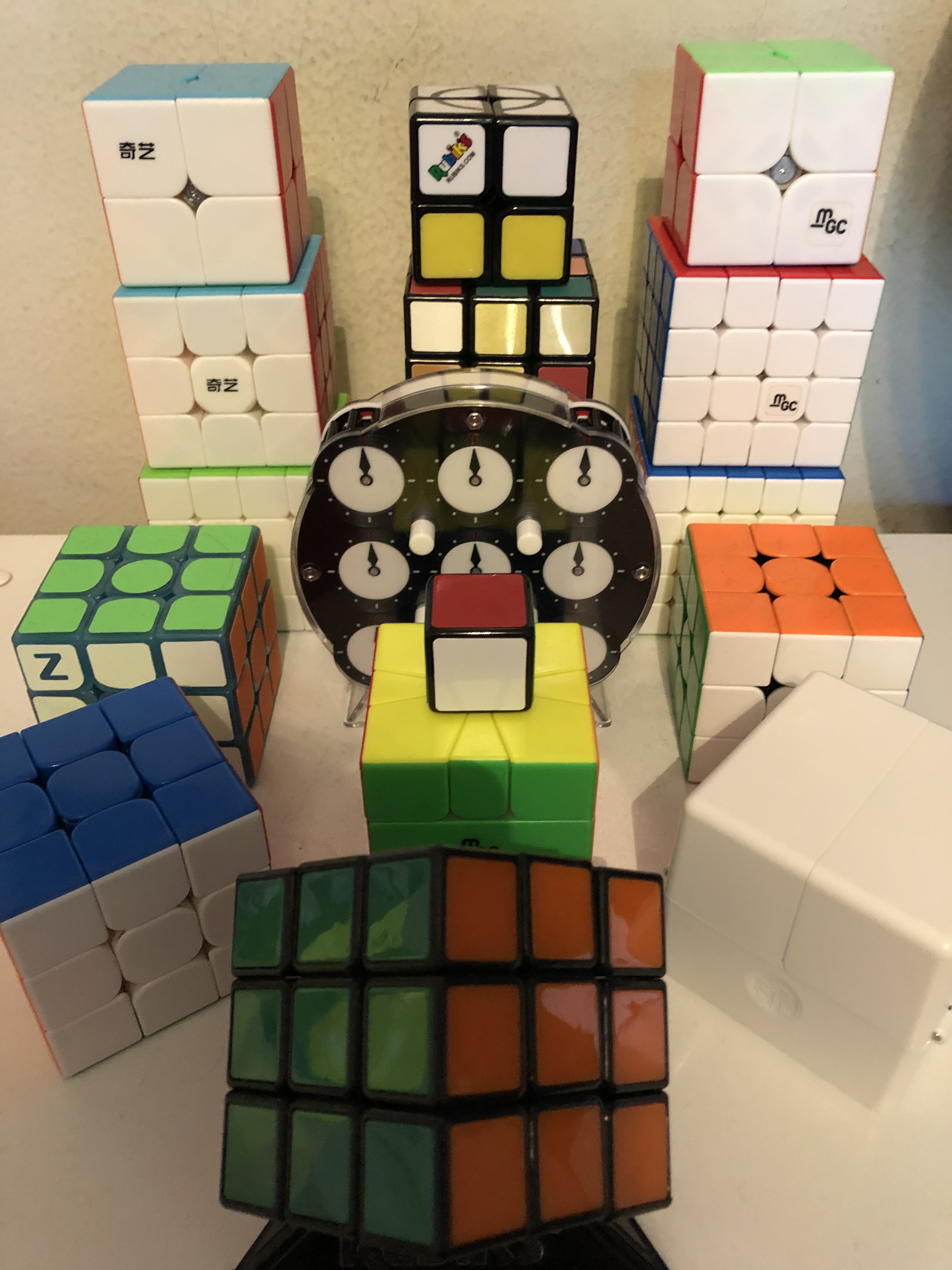
(Just a few of my son’s cubes)

September is Pain Awareness Month.

Which kind of feels like a joke. Because, I have a close-and-personal relationship with pain. I am very aware of pain — every month of the year. 

Pain is a part of me — night and day. Weekdays and weekends. It doesn’t even take major holidays off. 

My pain is commanding and assertive. It does what it wants to do, and it doesn’t care if I’m in the privacy of my home or walking to my neighborhood Coffee Bean. 

Or at my son’s Cubing Competition. 

About a year ago, my son became interested in Rubik’s Cubes after watching one of his very good friends solve them. (Who knew there were so many cubes? Some of them aren’t even cube shaped!) This past Saturday, my son participated in his first Cubing Competition which involved five different events. 

The competition was held in a high school gymnasium about an hour away from home. Our family didn’t know exactly what to expect, because since this was our son’s first experience competing, it was the first time my husband and I were spectators at such an event.

There’s a lot of sitting around — on bleachers.

Then there’s a lot of standing and moving around so we could get a good view of our son cubing which would then make for good photos and good videos. 

And that’s when my pain decided to make a grand entrance. During one round, and thankfully my son wasn’t competing at the time, I felt like my leg was about to buckle under me. A strong muscle cramp gripped my left thigh. 

This was new for me. Usually cramps hit me in my left calf. And usually they happen at home. Just a few weeks ago, I had a cramp in my calf during my virtual appointment with my therapist. Sometimes cramps wake me from sleep. At home, I can cry and bang the mattress, bite on the blanket in an attempt not to wake my son. 

But we were at a high school gymnasium, with about 100 participants and their families. My husband and I went outside and found a bench. I couldn’t sit without excruciating pain, I couldn’t stand and stretch without feeling like I was going to fall. I couldn’t walk it off or massage it away. And I couldn’t cry or make a scene, because there were a few other parents outside on their phones and dealing with younger siblings. And, most importantly, my son was inside waiting for us. 

I was very aware of the time, knowing my son’s next round was happening very soon, and I certainly wasn’t going to miss it because of a cramp. 

My husband and I went back inside. Underneath my double masks, I pursed my lips. I tried to take deep breaths and tried to calm myself down. 

I tried to focus on the moment and watch nearby competitors as my son waited his turn. But I had a hard time standing and had to lean heavily on my husband. 

I was aware of my pain. Very aware of my pain. 

And that’s probably one of the hardest things about my Undifferentiated Connective Tissue Disease. The randomness of it. The fact that I never quite know how I’ll be feeling from one day to another. Or in Saturday’s case, from one hour to another. 

As my therapist and I have talked about, the only thing predictable about my autoimmune disease is its unpredictability. 

In my life, Every Month is Pain Awareness Month.

Words Have Power

Words are powerful. What you say, and how you say it, have lingering effects. And I’m not just talking about words spoken to someone else. Also included in this list are the words we speak out loud to ourselves (I’m not the only one who talks to herself, am I?) and the words we think to ourselves. 

We know this. 

But sometimes, something happens that serves as a flashing-light reminder of just how true that is.

Last week, I had two such incidents.

My neighbor and I were chatting and catching up. She’s almost forty years older than me and was talking about some new pain she’s experiencing in her lower back/side area. Thankfully, all x-rays came back fine, no problems identified. She found herself in a situation that I know all too well. Tests are negative, big problems ruled out, but still no answers about what’s causing the pain and no clear direction given on how to alleviate the pain. 

“I tell you, living with chronic pain is no fun,” she said. 

I know.

“I don’t know how you do it,” she said.

I bit my tongue.

She went on a bit, describing the discomfort, and again said, “I really don’t know how you do it.”

I looked at her and said, “I don’t have a choice.”

I do it, I live with chronic pain, because I have to. Because there is no alternative.

And though not her intention at all, and though I’m not fully sure why, her words got under my skin and bothered me. 

The second conversation occurred the next day, during a telehealth appointment with my rheumatologist. Near the end of our conversation, I asked her about a trip my family and I are thinking of taking. 

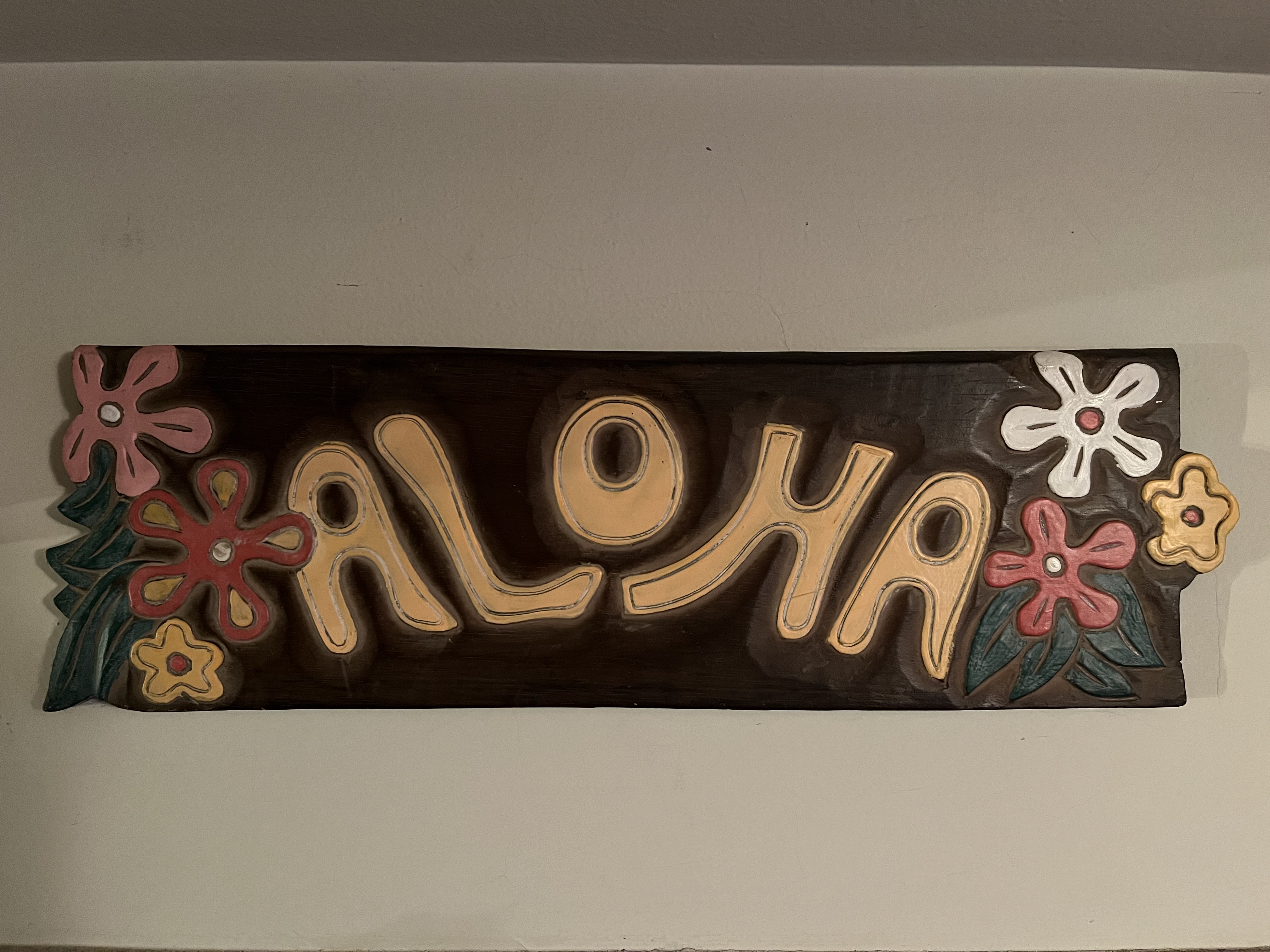
“We’re thinking about going to Hawaii,” I said. “But I haven’t flown since before my son was born, and he’s 14. I haven’t flown since I have this condition. And I’m worried, because of the blood clot I had after my biopsy.”

(In case you missed it, I had a second biopsy in September 2020. A “routine” procedure that was supposed to provide some answers to my rheumatology team. No answers, and I developed a “very rare” blood clot in my left calf. You can read about it here.)

She answered my questions, told me some things I could do before, during, and after flying. And then she said something that has been on repeat in my head since she said it.

“Oh, go, you need to have some fun.”

And that advice, given with a smile through a screen, was encouragement and validation I hadn’t realized I needed. 

Waves, Walking, and Pain

The boardwalk along Moonstone Beach – Cambria, California

Spring break.

My husband, my son, and me.

A road trip to one of our favorite spots on the California coast.

4 days, 3 nights.  

And pain. Lots and lots of pain.

I started the week with high hopes and lots of gratitude. Last year’s spring break was spent at home. This year, fully vaccinated and boosted, it was possible for us to spend time in one of my favorite places — Cambria, California.

Being in Cambria is good for my soul. Away from my daily responsibilities, away from the noise of the big city (no helicopters, no sirens, no car alarms), I feel calm. Serene.  

The whole time we were there, I kept waiting for the good vibes to kick in. I was waiting for the pain to decrease and fade into the background all together. 

It never happened.

By the time we got home, I was in agony. My legs were beyond hurting. My legs felt weak, as if any moment I might topple over or my knees might suddenly decide to buckle.

Almost 500 miles roundtrip with me as the driver.

Walks and hikes, up to 5 miles each day.

Back at home, back to the responsibilities of bills, laundry, and watering my plants, I felt so disappointed. 

Why can’t my body just work the way I want it to? 

That question came to mind on our first night home, as I stood under our shower, thankful I no longer had to make due with the barely-there water pressure of our hotel. 

A few days later, the answer came to me.

My body did do everything I wanted it to do.

I planned and packed.

I drove and sang. (It doesn’t get any better than driving along a stretch of the 101 while my husband, my fourteen-year-old son, and I all sang along to Hey Jude.

I walked and watched. (We saw elephant seals up close and dolphins from a distance.)

My body did do everything I wanted it to do. 

I have to keep repeating that to myself. 

It might not have been easy or pain-free, and it might never again be. That’s the big difference when you live with a chronic illness and chronic pain. 

But, you make the decision to do it anyway. 

The Matzah Ball

Sometimes you find a book, or a book finds you, and you just want to tell everyone about it. You want to grab the pom-poms you never owned and create a cheer for this book. Then you want to place the book into the hands of readers everywhere. 

That’s how I feel about The Matzah Ball by Jean Meltzer.

The Matzah Ball is a holiday romance with a twist. It’s a Hanukkah romance, and our main character, Rachel, lives with a chronic illness. Right away I was intrigued, and the book did not disappoint. (Additionally, the author is a Jewish woman living with a chronic illness — myalgic encephalomyelitis.)

I loved getting a glimpse into some of the Jewish traditions I’m less familiar with. I loved seeing Rachel and all the messiness that comes with a chronic illness depicted on the page. And, I loved that this book gave Rachel, and by extension – me as the reader, the happy ending I was hoping for. 

I read a library copy which I tagged with many sticky notes, which means I now need to buy my own copy at my next bookstore visit. 

This week, I’m excited to share just a few of the passages that stood out to me:

“Turning beneath the covers, she blinked and took a careful accounting of how she was feeling. Would it be a good day or a bad day? She could never be certain.
Some mornings she woke up feeling well, only to find herself completely depleted two hours later. Sometimes it was the opposite. She would crash for days at a time, with no ability to do even the most menial tasks. Her disease was constant but fluid. It peaked and ebbed with only one discernible pattern. Everything she did, everything, from writing two pages to carrying the groceries one block to her apartment, came with a kickback.
It was her normal.”

“There was no way to know how long these crashes would last. It could be hours, days, weeks…or even years. The only way to avoid the flare-ups was through a very unscientific method of pacing oneself and rest.
The problem was, of course, that Rachel was awful at pacing herself or resting.
On good days, she pushed even harder. On bad days, she still pushed…usually making herself way worse in the process.”

“She wasn’t ‘out’ about her disease. She wasn’t out about …anything. Sitting in a wheelchair meant accepting you were disabled and dealing with awkward stares from healthy people.
Most of all, and because she had a disease with a name like chronic fatigue syndrome, there was always a fear tucked away inside of her that someone would look at her and say she was doing this for attention. That she really wasn’t that sick. And so, though a wheelchair would certainly make her more mobile and give her a higher quality of life, she often chose to stay home.”

It’s Stressful

There’s been a lot going on these last few weeks. And I’m not even talking about the big scary stuff such as the heartbreaking devastation in Ukraine. 

I’m talking about things in my own little corner of the world. 

I had some medical tests done recently. Here’s the thing about that — it’s stressful. It’s stressful knowing you need the tests in the first place, it’s stressful waiting for the tests (because for me, it took several weeks to get the appointment), and then it’s stressful waiting for the results.

I was very glass-is-half-empty about it.

I was sure these tests would not come back with good news.

I tried to explain my reasoning to my therapist. 

For years now, I’ve had many symptoms that aren’t quite “right.” Not red-flag wrong, but enough to cause a doctor to pause and order more tests, just to be sure, just to rule out something else.

For years now, those tests have all come back fine, or at least, okay-enough. But as I told my therapist, I feel like there are only so many “get out of jail free” cards a person gets. I felt I must have used up my limit by now.

There’s the other part of me that feels as if I’m waiting to be further punished. As if some higher force is looking down at me thinking, “Ha. You’re talking about pain in your leg. You’re saying it’s harder to sit, to stand, to walk, to drive. You think this is bad now. I’ll show you bad.”

But then a friend of mine gave me another way to look at it. 

She told me that the higher power up there figures I have enough going on. This higher power knows I’m dealing with crap (aka pain and the complications that come with chronic pain) every day. So they’re not going to give me something else to deal with. My plate is already full.  

My friend used a few curse words in our conversation that I will leave out of this blog, but she made me laugh, and helped me see things in an entirely different way. 

It’s true. I am dealing with “crap” every single day. Some degree of pain. There are medications to take. Medications to try. Appointments, consultations, labs, scans. Heat, ice. Rest, exercise. It doesn’t stop.

And in case you were wondering, my tests came back with good news. 

13 Ways Writing Is Easier Than My Autoimmune Disease

It all started from a 5-minute writing exercise. I used a prompt from Barbara Abercrombie’s A Year of Writing Dangerously: 365 Days of Inspiration and Encouragement (great book!), and when my timer went off five minutes later, I knew I had written the beginning of something. That first draft went through some significant changes.

13 Ways Writing Is Easier Than My Autoimmune Disease is the final result. 

I’m happy to say it was recently published at The Mighty. You can click here to read the essay in its entirety.

Dismissals and Rejections – of Symptoms and Submissions

“It’s not a realization that came to me easily or early on in my life as a chronic illness patient. It took me several years to finally recognize it and to see what had been in front of me all along.

Not until I marked my submission tracker with that most depressing word, “Declined,” did I make the connection. I realized that having a piece of writing declined and leaving a doctor’s appointment without any answers share many of the same emotions.” 

Those paragraphs are taken from my personal essay, “Dismissals and Rejections — of Symptoms and Submissions,” recently published at Spoonie Authors Network. You can click here to read the essay in its entirety.

4 Reasons Why Chronic Pain Sucks

(This magnet hangs on a board near my desk.)

I’ve been told I have a positive attitude. I’ve been praised for not letting my autoimmune disease take control of my life.

I try. I try very hard to look at the bright side, to acknowledge that things could always be worse, to do the things I want to do pain or no pain.

But, in all honesty, the last couple of weeks have been really bad. Like trying-not-to-cry-as-I-walk-back-to-the-car-after-taking-my-son-to-school bad. 

In our home, we don’t curse. Even words that other families might use, like “sucks,” isn’t a word we use. Except, occasionally. 

Today is one of those occasions.

Chronic illness sucks. Chronic illness that causes chronic pain really sucks. There’s no rhyme or reason to it. For example:

  1. Sleep does not equal less pain.  I rarely sleep through the night. If I only wake up once, that’s a good night’s sleep for me. But the other night I did something I hadn’t done in a long time — I slept through the night. My body had a full night of uninterrupted sleep. I woke up, amazed to realize it was morning. I got out of bed and felt … lousy. Terrible pain. From the moment I woke up until I went to bed again that night.
  2. Muscle spasms worsen everything.  I was sitting at my desk, with the dull pain I’m used to in my left leg. As my son was showering, my left calf began to twitch. And not in its usual twitching spot — more on the inside of my leg. This was the outer side of my calf. My muscle twitched, and I tried to rub my leg. My muscle continued twitching, and I bit my finger. It finally stopped twitching and I had a really hard time getting up from my desk chair. I had an even harder time stepping into my own shower. My leg was tight when I went to bed that night and no different when I woke up with the alarm the next morning.
  3. Rest doesn’t automatically mean relief.  I have been making an effort to take time for myself. To rest. Not in the form of a nap, but sitting outside on our patio, reading a book. I usually spend my days taking care of household chores, dealing with appointments, and writing. But I have been making a conscious decision to set aside some time during the week — when my husband is at work and my son is at school — just for me. To sit in one of my favorite places, doing one of my favorite things. I hoped to notice an improvement — an increase in relaxation, a decrease in discomfort. Nope. Maybe it’s too soon. Maybe I need to do this more often, more consistently. In any event, I got in some extra reading time. 
  4. Pain levels fluctuate.  When I spoke to my husband on one of his breaks, my pain wasn’t bad. It felt so good to be able to say that to him. By the time he called on his next break, about three hours later, it was bad. Pain-pill bad. I hadn’t done anything physically strenuous or anything I could see as a possible trigger (like gardening or standing on a step-stool to reach something on a high shelf in the closet). The pain shifted — from not bad to real bad. And for no apparent reason.