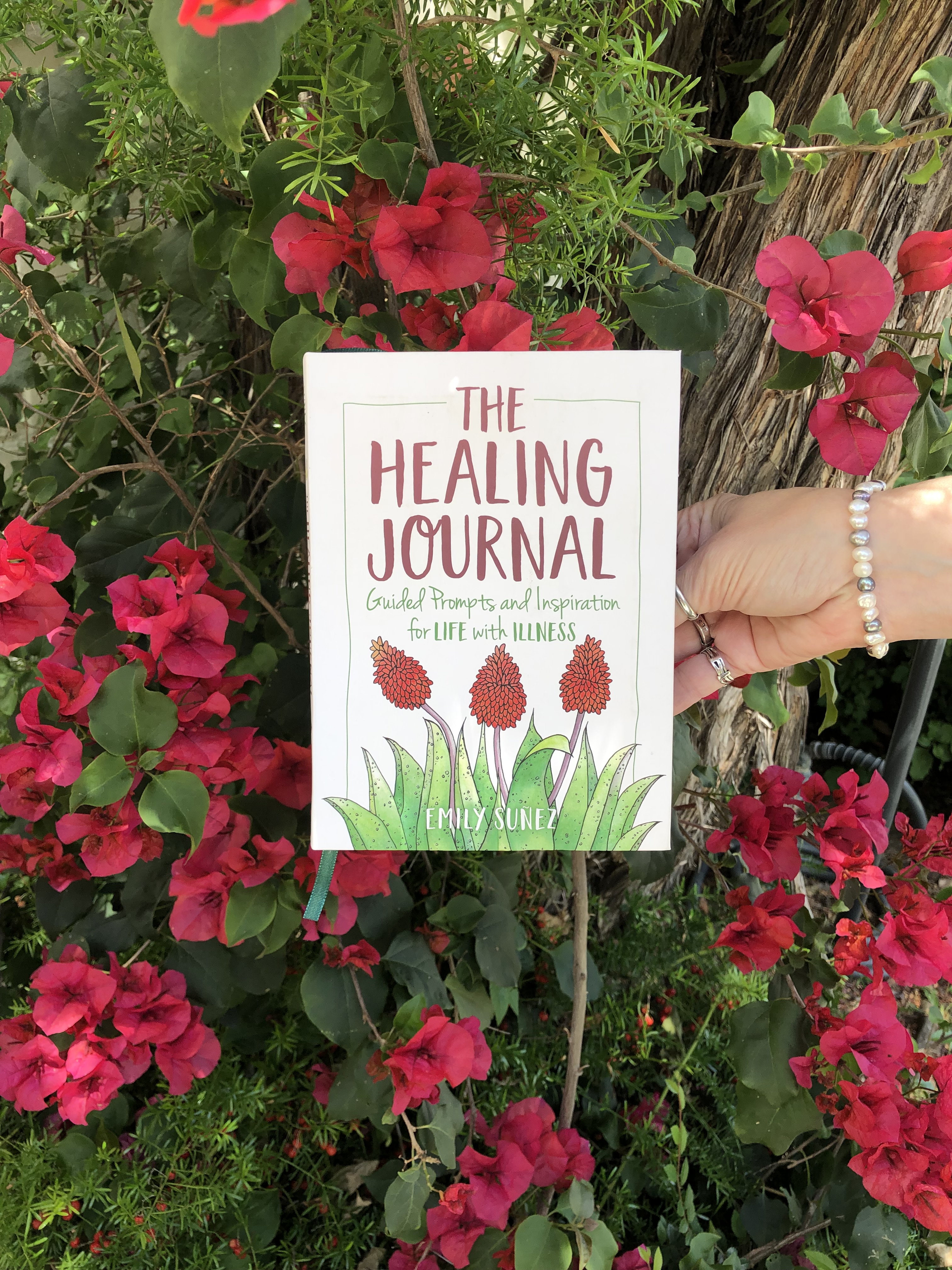
I recently finished working my way through Emily Suñez’s beautiful book The Healing Journal: Guided Prompts and Inspiration for Life with Illness.
If you read my blog on a regular basis, you might remember that twice before my blog posts were inspired by prompts in this lovely book. (You can read “I Am Alive With Creativity” by clicking here, and “My Illness Does Not Define Me” by clicking here.)
I finished reading the book and answering the writing prompts, but I haven’t finished healing. And that’s part of what makes life with a chronic illness so complicated. You never really completely heal from a chronic illness.
There is no finish line. No specific treatment plan in place, that once you work through all the steps you’re “better.” It doesn’t work that way for me. It doesn’t work that way for a lot of people. There is no ideal world of “fully healed” to strive for.
What I have found in the more than-a-decade that I have lived with my autoimmune disease, is that healing is a continuous process. Just as my symptoms go through periods of flares and remission, my feelings about my invisible disability ebb and flow as well.
My illness, and my healing, will forever be a part of me.
 WendyKennar.com