The Last Time

My son helped me out by editing this photo. For privacy reasons, the teacher's name has been blurred.

Somewhere, I once read about a sneaky fact of parenting; the one you didn’t realize happened, until after it happened — the phenomenon known as “The Last Time.”

For instance, the last time I held my son’s hand as we crossed the street.

Or, the last time I helped my son wiggle his feet into his socks and shoes. 

Just a few days ago, there was a last time. Though this “last time” was different because I knew it was coming. More than that, I looked forward to it. 

Last Thursday evening was the last time I will attend a Back-to-School Night. 

As a former teacher and parent, I always appreciated a parent’s attendance at school functions. At the same time, I completely understand why parents can’t always attend these important school events. (In fact, when I was teaching, if a parent missed Back-to-School Night and/or Open House, I always saved any handouts I distributed that evening, and the following day I sent them home with the student whose parents weren’t in attendance.)

So even though my son is a senior and is a strong student and there were no concerns we needed to discuss with his teachers, last Thursday evening, my husband and I attended Back-to-School Night and met seven of my son’s eight teachers. (One was absent.) We briefly chatted with each teacher and thanked them for all they do. In many instances, we were the only parents in the room. 

But oh-my-goodness I am so relieved I won’t have to do that again. Because at my son’s high school, parents follow a very strict schedule during Back-to-School Night. We spend ten minutes in each classroom and have only five minutes to get from one classroom to another. 

This means we went to our son’s first period class for ten minutes (4:00 pm – 4:10 pm) and then had only five minutes to get to my son’s second period class — located on the second floor in a different building. Now, I know I’m not going to get penalized for not being in class before the bell rings. (And yes, bells ring throughout Back-to-School Night.) But I consider it a courtesy and obligation for me to try, as hard as I can, not to be late. (You can imagine our frustration when we made it to our son’s second period class, a minute late, and found a note on the door stating the teacher’s absence.)

Which is a long-winded way of saying our son’s high school operates on an ableist mentality when it comes to Back-to-School Night. Parents are expected to be physically able to navigate the stairs, both inside and outside the buildings. 

For those who don’t know, school elevators are not easily accessible. You don’t just push the up button like you do in an office building. School elevators require a key to operate, which means you have to get in touch with a school staff member who has the key. (Only a select few have the coveted elevator key. I did have an elevator key the last few years of my teaching career.)

Remember, Back-to-School Night operates on a very tight timetable. There is no extra time built in for navigating the elevator situation. Plus, I never wanted to be a distraction, or make more work for anyone else — things I think about, things I know logically aren’t true, but they feel true to me. I wanted Back-to-School Night to be about my son and his experiences in school, not on my weak left leg and my bad knees and my invisible disability. 

Plus, I always feared someone would accuse me of not really needing an elevator. Let’s face it, I don’t look like I “need” an elevator. How best do I explain my invisible-to-others physical limitations?

Now, all that’s behind me. I made it to the finish line — The Last Time I Attended My Son’s Back to School Night. 

Singing Out Loud Helps Ease My Chronic Pain (At the Risk of Embarrassing My Son)

“Little does Ryan know that when I drive to school to pick him up, I’m usually rocking out. If I can’t find a good song on the radio (I like the spontaneity), I’ll play one of our mixed CDs. Ryan says the fact that our car plays CDs and doesn’t have an auxiliary jack for my phone makes it old – another faux pas.”

The paragraph above is taken from my most recently published personal essay, “Singing Out Loud Helps Ease My Chronic Pain (At the Risk of Embarrassing My Son)” which was published at Moms Don’t Have Time to Write.

Click here to read the entire essay.

Because of Ryan

Ryan, age 8. Strong enough to lift the truck that towed the space shuttle Endeavour. California Science Center, July 2016

I first became ill when Ryan was just two years old. He has grown up knowing me like “this.” “This” meaning pain in my legs, prescription bottles on the counter, doctors appointments written on the kitchen calendar.

It breaks my heart that Ryan has learned a powerful lesson at such a young age. People get sick. All different kinds of sick. Through no fault of their own. And sometimes there’s nothing you can do to make the illness go away. The only thing you can do is learn to live with it as best you can. 

But there is a flip side to all this. 

There has to be.” 

Those lines were taken from one of my personal essays, “Because of Ryan” which was recently included in the fourth issue of Please See Me. 

Click here to read the full essay. 


Why I Feel Guilty About My Autoimmune Disease

I live with an invisible disability. A chronic medical condition causing chronic pain. An autoimmune disease called Undifferentiated Connective Tissue Disease. My rheumatologist described it as having overlapping symptoms of lupus, myositis, and rheumatoid arthritis.

On any given day, at any given time, I feel exhausted. Depressed. Angry. Confused. Vulnerable. Fatigued. Pissed. Worn-down. Less-than. Weak.

The emotions fluctuate on my day – my activity, my energy, my pain. 

But there is one underlying emotion that’s always there. One emotion that serves as the shaky foundation for all the rest. 


That is the beginning of my most recently published personal essay. Click here to be-directed to The Mighty to read “What It’s Like To Feel Constant Guilt With an Invisible Disability.”

Announcing My Motto for Life

July 2019 – A memorable morning; a perfect example of “stubborn gladness”

I think I’ve discovered my mantra, or as close as I’ll get to having a mantra.  

Maybe mantra isn’t the right word.  

My motto. 

My slogan.

My maxim. 

Stubborn gladness.”

I discovered this delightful phrase while re-reading Elizabeth Gilbert’s Big Magic: Creative Living Beyond Fear. 

This was my second read of Ms. Gilbert’s book.  The first time was three years ago.  That time, I read the book, used my highlighter to mark “stubborn gladness,” and that was the end of it.

This time, “stubborn gladness” grabbed me.  It stopped me from reading.  I attached a purple Post-It to the page.  And, surprisingly, it’s been my biggest takeaway from this read.

Ms. Gilbert explains that it is her destiny to be a writer.  “I’ve decided to meet that destiny with as much good cheer and as little drama as I can – because how I choose to handle myself as a writer is entirely my own choice.” 

She goes on:  “My ultimate choice, then, is to always approach my work from a place of stubborn gladness.” 

This time, when I read that passage I immediately saw its relevance to my life with an invisible disability.

I certainly don’t approach doctors’ appointments, lab work, and MRIs with “stubborn gladness.”  

And there’s nothing “glad” about daily pain.

But I most definitely, absolutely, positively approach my day-to-day life with “stubborn gladness.”

That’s the reason why I do the things I do.

The reason why I bought myself a new bike.

The reason why I go for neighborhood walks with my son and coffee walks with my husband.

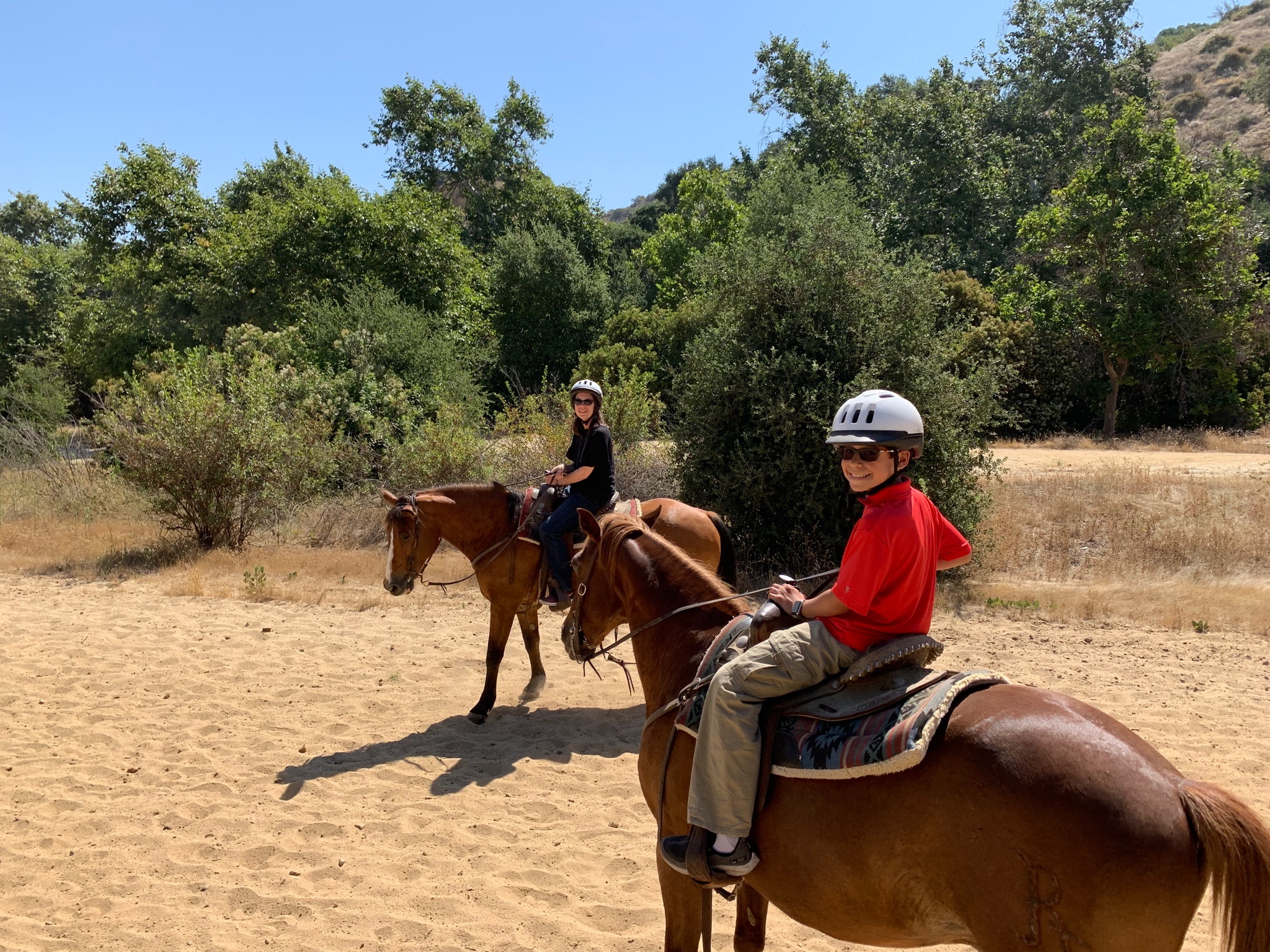
The reason why I went horseback riding this summer.  (Before he started preschool, we took Ryan to Disneyland for a “big adventure.”  It’s the one and only time he’s been.  The summer before he started kindergarten, we took Ryan on his first hotel trip, spending a few days in Cambria, California.  This summer, before starting middle school, Ryan chose horseback riding as his big adventure.)

I do these things, big things and little things and everything-in-between-things with “stubborn gladness.”

Because I can’t change my health.  I can’t make my autoimmune disease go away.  I have to learn to live with it, to handle it, to live with my life as fully as I can – with “stubborn gladness.”

10 Tips and Tricks for Parents With Invisible Disabilities

Don’t forget to take care of yourself and show yourself some love!


I’m the proud mother of an 11-year-old son. I’m quick to boast, and tell you about Ryan’s curiosity (he asked me what the nurse does with his blood after a blood test.  In all my years, I had never thought to wonder). I’m quick to brag about his kind heart (without prompting, the way Ryan holds Grandpa’s hand while walking through a museum, and slows his steps down to match Grandpa’s). I’ll smile and tell you how Ryan loves to dance and sing and is equally entertained by the Beatles, Stevie Wonder, Justin Timberlake, and Prince.

But I’m not as quick to talk about myself. I don’t immediately tell people about my invisible disability, the rare autoimmune disease coursing through my body (and on bad days, I think it’s cursing my body). It’s called Undifferentiated Connective Tissue Disease and has overlapping symptoms of lupus, myositis, and rheumatoid arthritis.

Those words begin an essay recently published at Mother’s Day Magazine.  I have been living with my autoimmune disease for nine years.  There are moments when I think I’ve figured things out, I’ve got a handle on things.  And then there are the moments when I feel so confused, so sad, so frightened, so much pain that I just want to sink to the floor and cry. 

But I can’t.  

Because I have an 11-year-old son who needs to be fed; who needs to be taken to school, the library, and the dentist; who needs me.

So, I have developed a few “tricks and tips” that help me get through the day.  Click here to read “10 Tips and Tricks for Moms Living with Invisible Disabilities.”  (Here’s one I’ll share right now – Eggo Waffles count as dinner.)


How Much Is Too Much?

Ryan and I at The Huntington’s Lily Ponds


9 years.  

Next week, marks the ninth anniversary of my life with an autoimmune disease.

Although at the time, we didn’t realize we were dealing with a permanent situation.  My left calf was swollen.  We thought a visit to the emergency room would make it somehow become un-swollen, and that would be that.

How wrong we were.

9 years later, a lot has changed.  I’m no longer a classroom teacher.

But the part that hasn’t changed is my desire to be an active, engaged, loving mother.  For me, that means I make chocolate chip cookies for dessert a few times a week.  (Disclaimer – they’re the Pillsbury, pull-apart-and-bake-kind.)  And for me, that means every summer is full of what a friend of mine refers to as “field trips.”

My son and I (sometimes with my husband, sometimes with my dad, and oftentimes just the two of us), venture around the city exploring different venues and museums.

My son graduated from elementary school three weeks ago, and since then we have been to:  the GRAMMY Museum, the Getty Center, the Aquarium of the Pacific, Discovery Cube Los Angeles, miniature golfing, the library, and the beach (twice).  

The one that did me in, that almost brought me to tears (of pain and sadness and frustration) was our visit to The Huntington Library, Art Collections, and Botanical Gardens. 

We hadn’t been there in many years.  So many years, in fact, that Ryan had no memory of having been there before.  My husband, son, and I explored for about two-and-a-half hours.  That’s all my legs could do, and that’s all Ryan could do before his energy decreased and his appetite increased, and he was ready to leave. 

I loved being there.  Marveling at one of my favorite paintings, Pinkie, enjoying the colorful sight of the rose garden, thinking of my pen pal while in the Japanese Garden, smiling as we stood beside the lily ponds.  

But we didn’t see all the Huntington has to offer.  

We couldn’t.

I couldn’t walk any more.  The pain was intense.  My knees felt as if someone had whacked them with hammers.  My legs felt weighted down.  My shoes felt like they had magnets attaching me to the ground, making it hard for me to lift my foot and take a step.  

And yet, I had wanted to go there.

I had wanted our family to have this special day’s experience.

But I felt awful, until I went to sleep that night.

Was I glad I went?  Yes.  

Do I want to go back?  Yes and no.  

How much pain do I put myself in, how much do I push myself to see, to smell, to touch, to hear all that I wish to experience even when I know that it is physically difficult for me to do?

Nine years, and I still don’t have the answer to that question.


I Don’t Have to Worry

Ryan and I as Marvin and Tammi

I worry about my son because that’s what moms do.  

But my worries extend beyond the usual parenting worries.  I worry about how my son is being impacted and affected by my invisible disability.

I struggle each day with being honest about my levels of pain and fatigue, because I also don’t want to shortchange Ryan or frighten him in any way.  It’s not his fault that I hurt.  But “this” (my medical condition) is a part of our life.  And most likely always will be.

Ryan often reaches out a hand to help me when he sees me struggling to stand up.  He knows, and has known for years, about the bottles of medication on the kitchen counter.  In fact, when he was just a toddler he popped a small piece of cucumber in his mouth and chewed and swallowed it with a glass of milk, telling me he was taking his medicine just like mommy.  It broke my heart.  

But I’d like to think that my son is also being raised to look at people with increased levels of compassion, patience, and acceptance.  I hope that my struggles show Ryan that all people struggle with something, even if it isn’t initially apparent.  At the same time, I hope I’m also teaching Ryan resilience and tenacity, and that there are many different ways of demonstrating bravery, courage, and strength.

Still I worry.

And then my son will do something that will totally blow me away, will fill my heart with love and pride.  And I’ll breathe a little easier, knowing that Ryan is alright; in fact, that he’s more than alright.

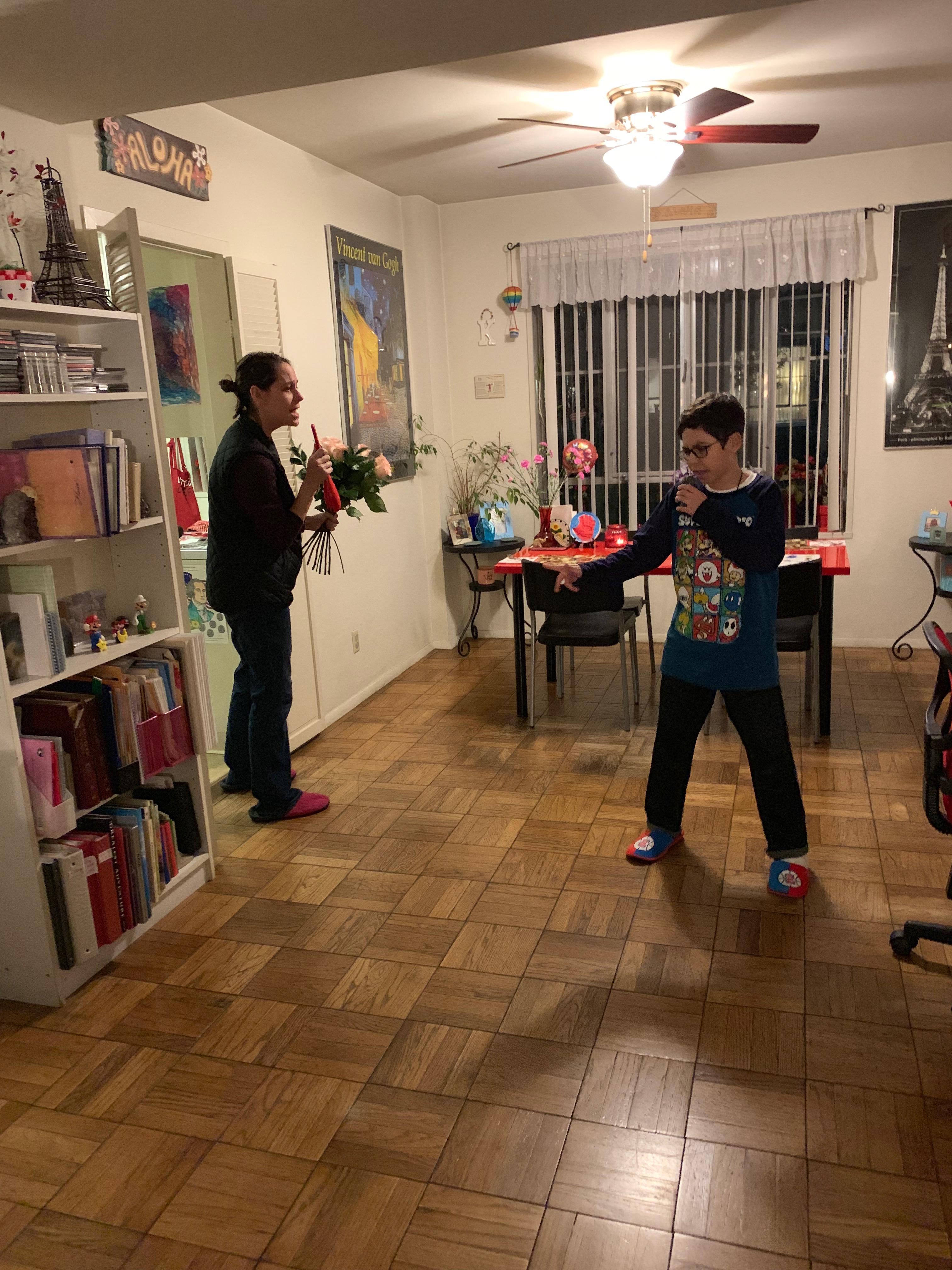
When Ryan was a little guy, we would often sing along to songs on my computer, using kitchen utensils as “microphones.”  We still sing all the time.  In the car, in the house, in the market.  But for the last month or so, Ryan and I have again been regularly performing one of our favorite duets, “Ain’t No Mountain High Enough.” I love that it’s still fun for my almost-11-year-old to sing with his mom.  And I love that this is one of our favorite songs to sing together.

Because really that is the message I want Ryan to grow up learning.  That we are a family.  We’re in this together.  

“If you need me, call me 

No matter where you are

No matter how far don’t worry, baby

Just call my name 

I’ll be there in a hurry

You don’t have to worry

‘Cause baby there 

Ain’t no mountain high enough

Ain’t no valley low enough

Ain’t no river wide enough

To keep me from getting to you, babe.”

And, if you haven’t seen the 1998 film Stepmom with Susan Sarandon and Julia Roberts, click here to see a fun scene featuring a family sing-along of “Ain’t No Mountain High Enough.” 


Mommy Has a ‘Boo-Boo Leg’

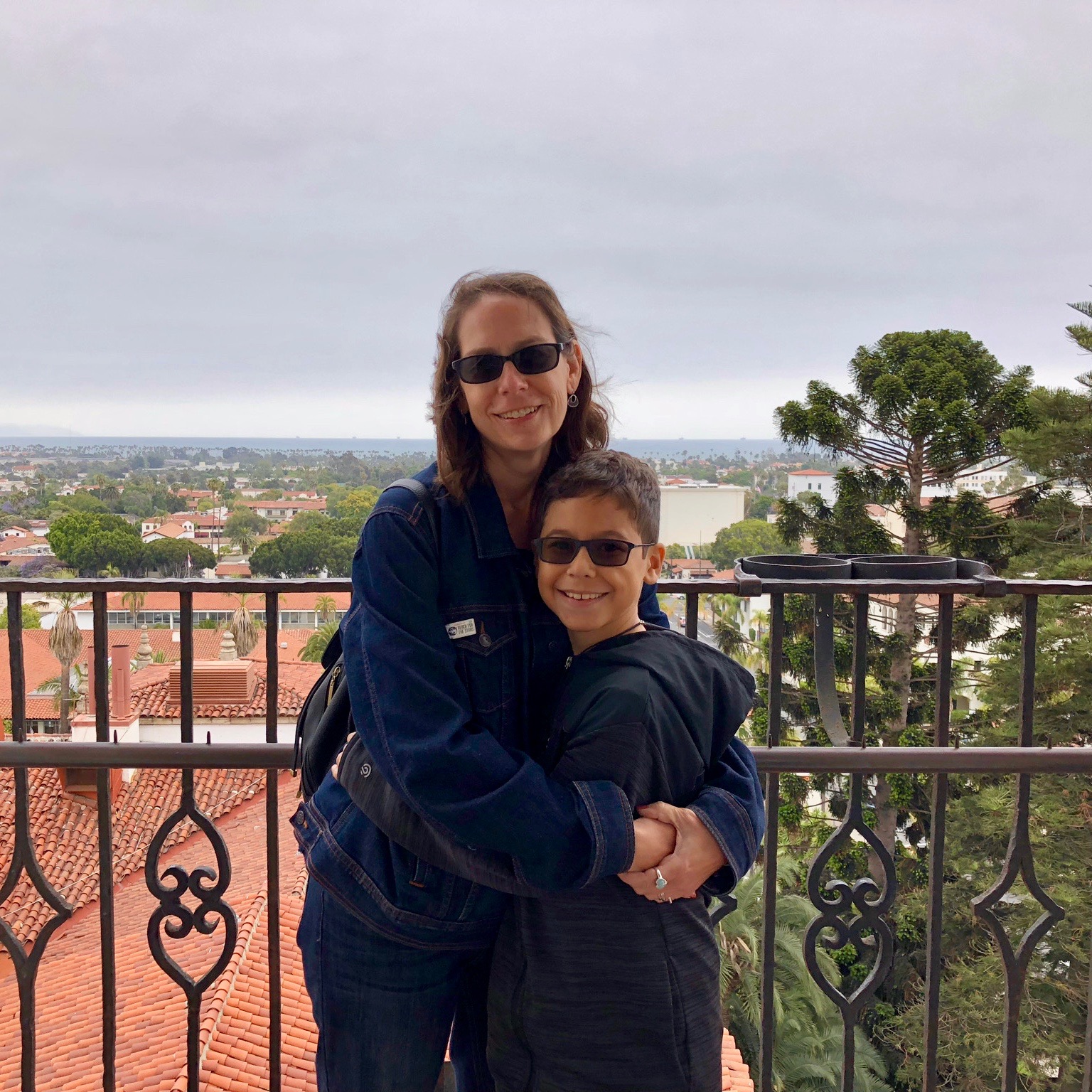
My curious son and I, on the observation area of the Santa Barbara Courthouse. June 2018 (I climbed all the stairs!)

“What does the doctor do with all the blood after they check it?”

My son once asked me that question.  It took me by surprise and caught me off guard, because it was something I had never considered.  

It’s not the only good question Ryan has asked me over the years.  There have been so many I wrote a personal essay about them.  And I’m proud to say that “Mommy Has a ‘Boo-Boo Leg’: Talking to My Son About My Autoimmune Disease” is now a non-fiction finalist in the Pen 2 Paper Disability-Focused Creative Writing Contest.

Click here to read my essay, and this year, readers may vote for their “audience favorite.” (You must have a free Submittable account to vote).  

Thank you in advance for reading and spreading the word!


My Confession About Being a Stay-at-Home Mom

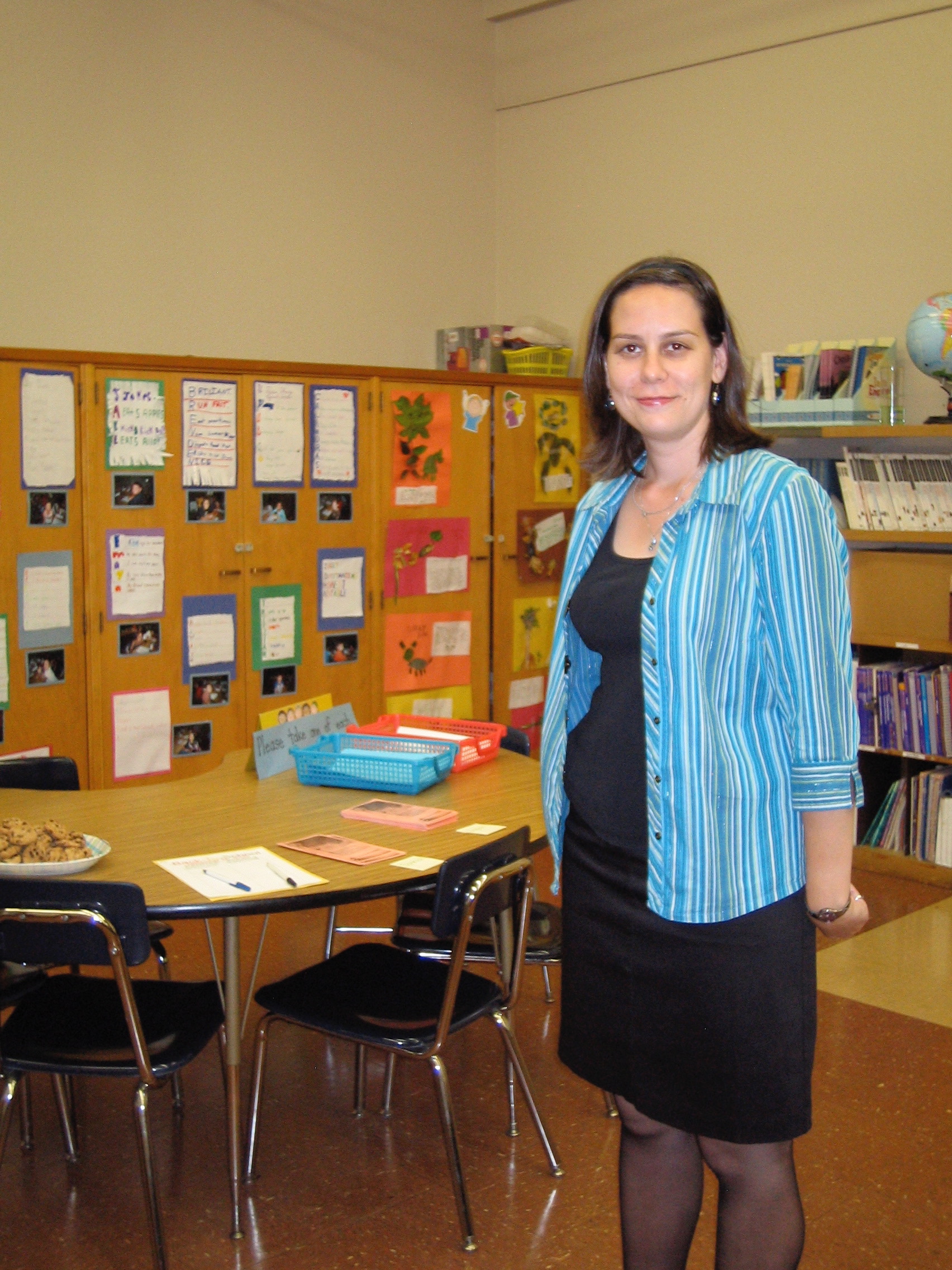
In my 4th grade classroom, preparing for Back-to-School Night. 2006

I have a confession to make.  I never planned on being a stay-at-home mom.  I was a teacher before my son was born, and I planned on being a teacher after my son was born.

At least, that was my plan.

But for those of you who read my blog and know me, plans started to change in 2010 when I became ill.  They really changed in 2013 when I retired from my twelve-year teaching career. 

There is a lot to read about the difficult decision to become a stay-at-home mom or the equally-difficult decision to return to the workplace.  But I didn’t find a lot to read about moms who become stay-at-home moms when it wasn’t their choice.  And as much as I love my son, as much as I feel lucky to take him to school each day and pick him up each afternoon, being a stay-at-home mom wasn’t my choice.

You can click here to be re-directed to mother.ly and read my recently published essay, “I Never Planned To Be a SAHM – To Be Honest, I’m Still Adjusting.”