A Bit of Serendipity

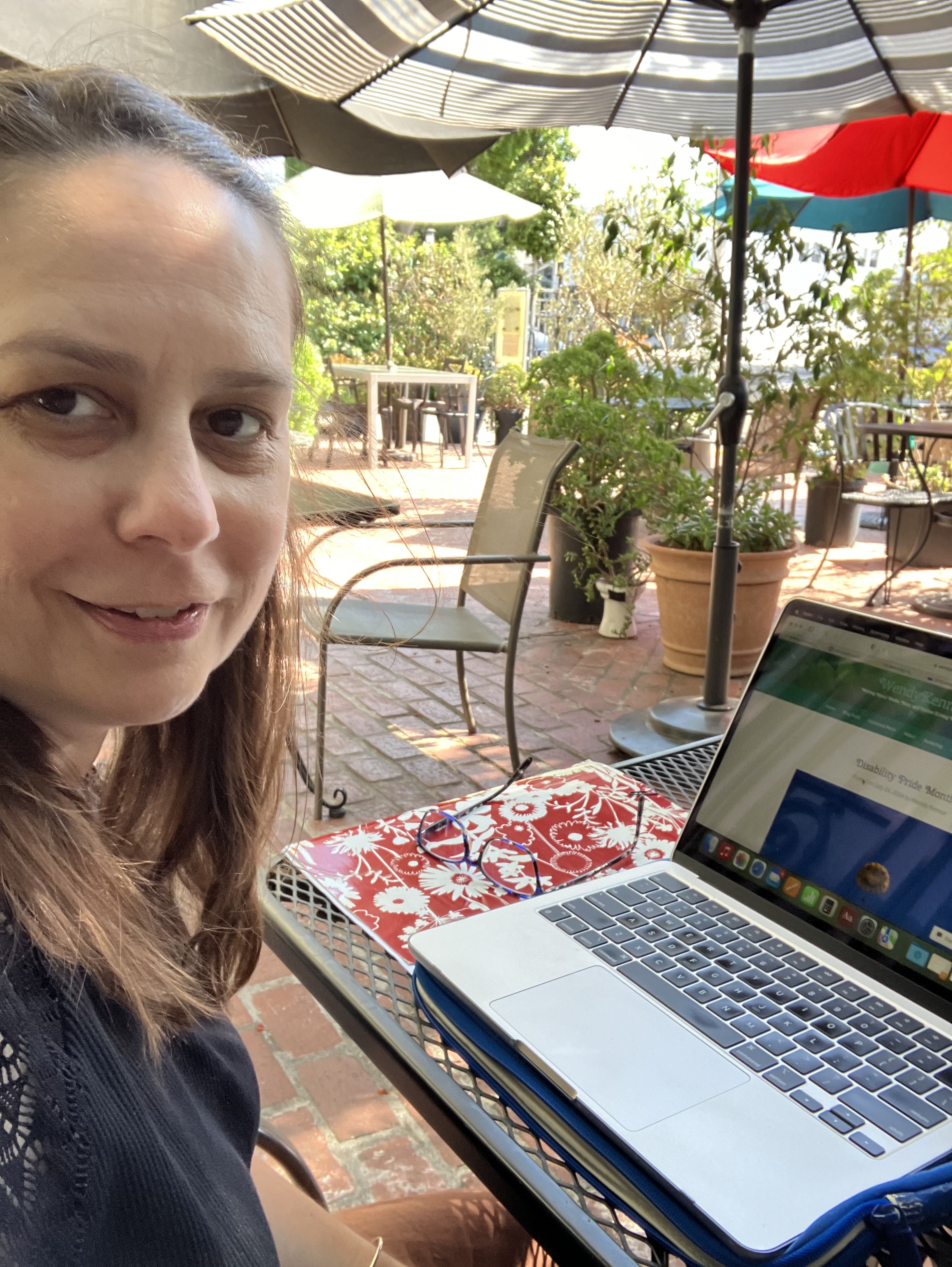
I took this photo during last week's writing session.

Last week I spent time at one of my favorite not-at-home writing spaces; a cafe serving a yummy ice blended mocha, and providing many tables and chairs on a large patio with plenty of shade. 

This week, I wanted to share something that happened during last week’s visit.

Two women sat at a table close enough to me that I could overhear bits and pieces of their conversation without even trying. It felt serendipitous that of all the available tables, these two women sat near me. After all, I was sitting off to the side, near a wall, trying to distance myself from any loud chatter and distractions. 

Within a few minutes, I learned the two women were middle school science teachers. I heard them talking about sixth grade, about sedimentary rocks and fossils, about a project requiring a long roll of adding machine paper. (And I admit to feeling old when one of the teachers had no idea what adding machine paper even was.)

These two teachers spent their own time lesson planning. These were “off-the-clock” conversations. Because that’s what teachers who are passionate about teaching do. Your teacher brain is never really off, and teachers don’t actually get “the whole summer off,” as many non-teachers believe. Teachers are always working in some shape or form. It brought back memories of my own lesson planning days and the blended mochas my closest teacher friend and I used to enjoy while brainstorming and planning for our fourth graders. (I’m thinking of you, Nance!)

As if that wasn’t enough, after a bit of quiet individual work time, the two teachers began chatting again. I heard different phrases this time — it’s so lonely, I look fine on the outside, many people don’t get it.  

I learned that one of the teachers lives with an invisible illness. The other teacher’s partner lives with an invisible illness and was asking questions about how to best support a chronically ill loved one. 

I momentarily sat there in shock. 

What were the odds? 

Not only were these two women teachers, they were also among the target audience for my memoir! (My target audience includes those living with chronic illness, especially invisible illnesses, both physical and mental, as well as friends and families of those living with chronic illness.)

That day at that cafe, I had spent a portion of my writing time researching literary agents to query my memoir-in-essays. 

And then these two women entered the outer edges of the writing cocoon I create for myself at this cafe. 

I took it as a sign.

Working Towards That One Yes

Twenty years ago this month, I earned my first byline

And not just any byline, but a byline in the Los Angeles Times

It all felt so easy. I wrote a personal essay. I submitted it to the Times. They published it soon after. 

The publication happened not too long after I had taken a weekend course about writing the personal essay through the UCLA Extension Writers’ Program

That class was the first of many I would take in the Writers’ Program. I got incredibly lucky, because Barbara Abercrombie was the instructor for that class. (If you’ve read my blog for a while, you know I have written about Barbara and credit her with helping me find my way as a writer. You can click here to read the tribute post I wrote after learning of Barbara’s death.)

Since that first publication, I have learned that writing and publishing aren’t often that easy. In reality, I may have to submit a piece to several different websites and/or print journals, before it finds a home. Sometimes I don’t find a home for a particular essay, and I have to put it away for a bit and move on with writing something new.

Now twenty years later, I am having a whole new writing experience. While I continue to write for MomsLA.com, and write these weekly blog posts, and write personal essays to answer a variety of submission calls for both print and online publications, I am also querying literary agents. 

Querying requires a whole different type of focus and time commitment. After all, I am searching for the person who will not only be an advocate for my memoir, but also an advocate and supporter for my writing career. 

So far, I have queried 58 agents.

So far, I have received 15 rejections — which does not include those agents who state on their website something along the lines of, “If you haven’t heard from us in 10-12 weeks, consider it a pass.”

It’s just a part of the process. Because it really doesn’t matter how many no’s I receive. 

All it takes is one yes

Be the Gateway

Over the years, my writing goals have changed. At first, I just wanted to write. Back in elementary school I wrote short stories with girls named Jill and Amy. Names that weren’t also shared with a character in Peter Pan or a fast-food hamburger place.

A bit older, and I experimented with poetry and found myself trying to write poems about the moon, like a giant silver dollar so bright, up in the sky.

Then I moved on to nonfiction, writing pieces about things that happened to me. I discovered the personal essay before I learned its name, and since college, I have only written personal essays. 

Once I knew what I wanted to write, I wanted to be published which isn’t unique to me. Publication is a worthy goal, shared by many writers. 

However, I soon learned publication isn’t enough. I wanted my published personal essays to be read. I wanted to reach readers — to make them smile, or pause and reflect. To touch a reader with my words was, is, a gift. 

But that connection with a reader can only happen if I identify my intended audience, my ideal readers, and they have access to my writing.

Be the Gateway: A Practical Guide to Sharing Your Creative Work and Engaging an Audience by Dan Blank is exactly what it sounds like. A book whose purpose is to provide steps and suggestions for sharing your creative work and having a meaningful connection with your audience. 

Mr. Blank’s book isn’t just for writers. It’s for artists and creators of any kind who are looking to share their art and creations.

Mr. Blank and his company, We Grow Media, are all about human-centered marketing. I have taken a few of his webinars and found them to be quite helpful. 

I won’t go into the specifics, but I would like to share a few of the passages that spoke to me, passages that I think are broad and general enough to speak to many of my readers as well:

“Instead of framing the value of your work by how it performs in the market, you define it by how other people experience the world through your creative work — the stories and experiences you share, and the topics you talk about.”

“It is about understanding the connection between what you create, why you create it, and how it will engage others.”

“When you share your journey, you are building advocates in the process; those who aren’t just aware of what you are doing, but feel connected to it in a personal way.”

“So much of success is about sheer persistence, and believing in yourself and your work.”

“Tennis legend Arthur Ashe once said, ‘To achieve greatness, start where you are, use what you have, do what you can.’ “

Please note: I am including a link to buy the book that I’m highlighting this week. If you use my link, I do make a small commission on your purchase at no additional cost to you. I am working with Bookshop.org which also sends a portion of the profit to support local, independent bookstores.

Before and After the Book Deal

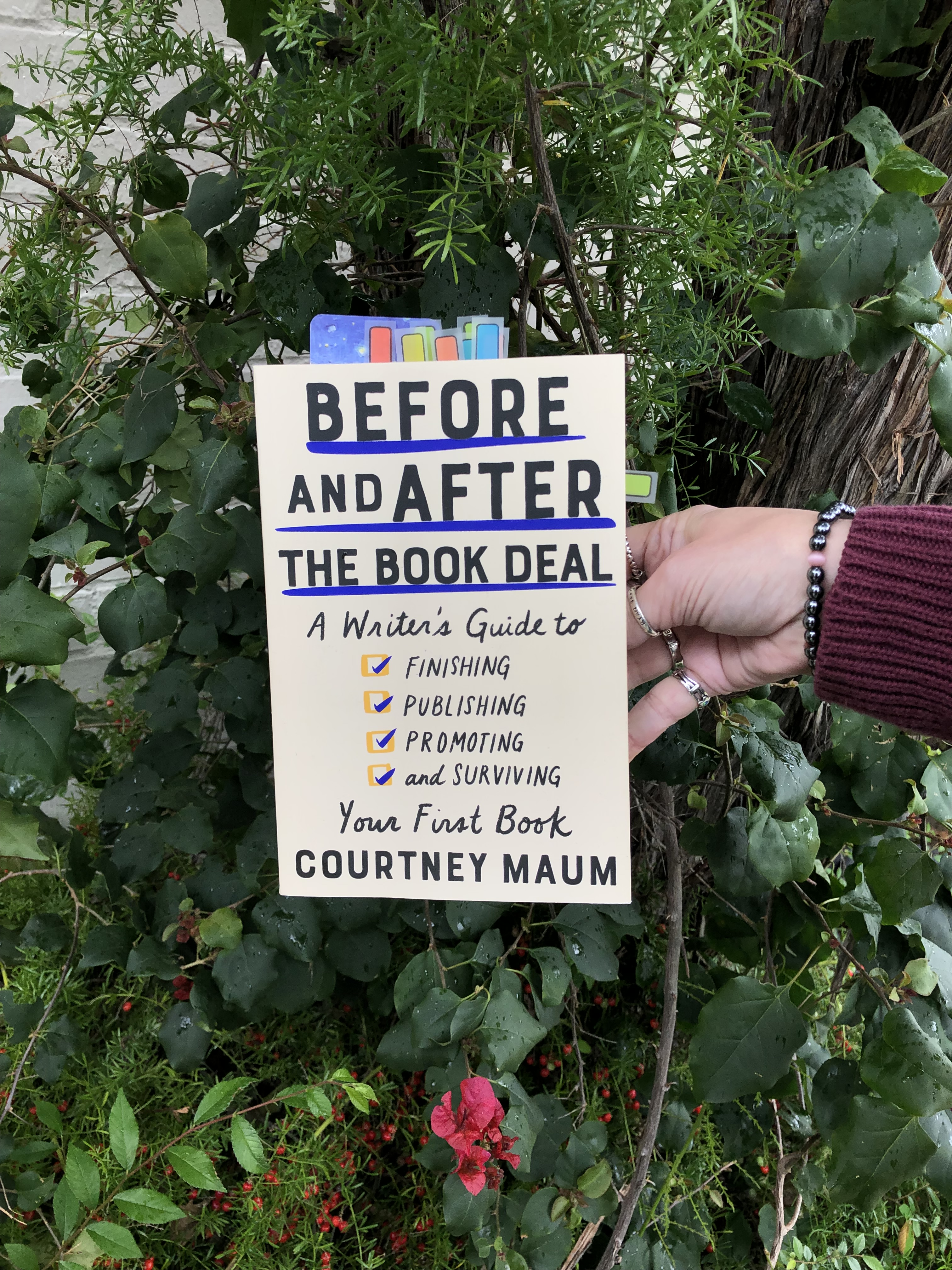
Before and After the Book Deal: A Writer’s Guide to Finishing, Publishing, Promoting, and Surviving Your First Book by Courtney Maum is one of those books you don’t necessarily read from start to finish. It’s a book that has been on my bedside table for a while now. I pick it up and read a few pages, mark meaningful paragraphs with a yellow highlighter and sticky notes, and then put the book down again until the next time.

Ms. Maum has crafted a well-written and, at-times, humorous book. It is an incredibly valuable resource for writers who are looking to “finish, publish, promote and survive” their first book. Which I am.

Yet, even if you’re not a writer, if you create in a different medium, there are useful tidbits for all artists and creators. Here are just a few:

“Narrative voice is your literary aura, your essence, the thing that allows writers the world over to write about the same topics in thrillingly different ways. Even though it’s yours, your voice can take a long, long time to find.”

“Get excited by your rejections. They are road maps toward the kind of work that you were born to write.”  (It’s a good reminder. Although they are a part of the writing process, some rejections sting more than others.)

In addition to writer-specific advice, I love these reminders about the power of expressing gratitude:

“Set some money aside for thank-you tokens for your editorial team and agents at pub time. (A heartfelt, handwritten card is thoughtful, but some authors also send on gifts, flowers, alcohol [when appropriate], or something handmade.)”

“At some point after the book contract is finalized, if you live close enough to your publishing house to make this happy event possible, you will meet the people who are going to publish your first book.
“Within twenty-four hours, send a group email to everyone you met expressing how great it was to meet them, how lucky you are to be working with them, and why [enter name of publisher] is simply the best house for your book. Then send a handwritten note to your editor, reiterating the same.” 

Dear readers-who-are-also-writers, have you read this book? Do you have paragraphs or pages you have marked with your own sticky notes? 

Breaking Down Walls, 5 Minutes at a Time

Back in March (doesn’t that feel like so long ago?), I was set to begin a class offered through the UCLA Extension Writers’ Program. When everything shut down, my class switched from in-person to virtual. 

At the same time, we were figuring out how to best help our son with distance-learning because Los Angeles Unified schools had shut down as well. So I dropped my writing course before it began. 

Since March, I have been writing. Sometimes more than others. 

And since March, I’ve been published. Again, sometimes more than others. (You can check my Published Work page for a complete listing.)

But lately I have felt like something was missing. 

And I realized what it was – being around other writers.

Most writing classes begin with a general introduction of who you are and why you’re there, what your goal is, what you hope to accomplish by being in that particular class. My introduction doesn’t vary a whole lot. I have a pretty consistent writing practice and know how to meet deadlines. (In case you didn’t know, I’m a regular contributor at MomsLA.com.) 

I enroll in writing classes for the people. The energy that comes from surrounding yourself with other writers. Writers who are readers. Writers who read my work, and offer honest feedback, who push me with questions to go deeper and explore further. They let me know what works and what doesn’t work. 

Often, there’s a mix of workshopping and writing in class; short exercises that sometimes develop into longer pieces.

In-person classes aren’t an option right now. And while virtual classes are being offered through UCLA Extension, I haven’t enrolled in any.

But I continue to write.

As an added stimulus, I have begun re-reading Kicking in the Wall: A Year of Writing Exercises, Prompts, and Quotes to Help You Break Through Your Blocks and Reach Your Writing Goals written by Barbara Abercrombie (my favorite instructor in the UCLA Extension Writers’ Program).

If you’re a writer (and as Barbara says, “Writing is a verb. A writer is one who writes”), I recommend this book. It’s gotten me writing – not an assignment for MomsLA or to answer a submissions call I learned about on duotrope.com, but writing not knowing exactly what it may lead to.

May it help you kick in your own wall.


Writing As My Way of Teaching

I didn’t start writing as a way to “heal.” 

In fact, my earliest memory of myself as a writer goes back to second grade. I had written a story and showed it to my teacher, Mrs. Jones. In all fairness, in my memory, my story wasn’t entirely my own, but was “borrowed” from something I had seen on Sesame Street. 

In any event, Mrs. Jones made me a “book” with yellow construction paper for the front and back covers and the “good paper” inside – the white paper with blue lines that was always reserved for our final drafts. She told me to write my stories down in my book. 

I don’t know what happened to that book, but I do know that I’ve been writing ever since.

I got lucky. My very first publication was in the Los Angeles Times. 

After that, most of my published personal essays were inspired by my teaching career and my interactions with my students. (You can check out a list of my published work here.)

But that was before 2010. For the past ten years, I have written more and more about my life with an autoimmune disease. In fact, I am working on a memoir-in-essays as a mother, wife, and former teacher living with this invisible disability.

And that’s why I recently read Louise DeSalvo’s Writing as a Way of Healing – How Telling Our Stories Transforms Our Lives.

While I don’t know if writing is “transforming” my life, I do believe writing provides me with a different opportunity to teach.

This week, I’d like to share a few of the passages that I marked with my pinkish/purplish highlighter.

“… writing that springs from intensely personal motives can be useful to others. For loss is a universal human experience, something we all must learn to deal with.”

“Through reading, our imaginative faculties are nourished, enriched, expanded. This is why, for writers and would-be writers, reading is not a luxury but a necessity.”

“One reason, then, to write as we face these critical junctures in our lives is that illness and disability necessitate that we think differently about ourselves, about everything. We can write a new story for ourselves, to discover who we are now – what we’re feeling and thinking and what we desire. We can learn, too, what our bodies are like now, and we can imagine what will become of us.”

“Writing gives us back the voices we seem to lose when our bodies become ill or disabled. We want to speak for ourselves and our particular experience of illness and disability rather than have someone else speak for us. Writing helps us assert our individuality, our authority, our own particular style. All are seriously compromised by medical treatment and hospitalizations …”

“For illness often confers a wisdom about how to make ordinary life deeply and transcendentally meaningful.” 


A Promise To Myself

Today is generally the day when many people state their new year’s resolutions. Grand plans for dreams, goals, and aspirations.

I’m not going to do that.

Instead, I’m going to state my intention to continue working on my memoir. I’m going to promise myself that I will not give up on sharing my story. 

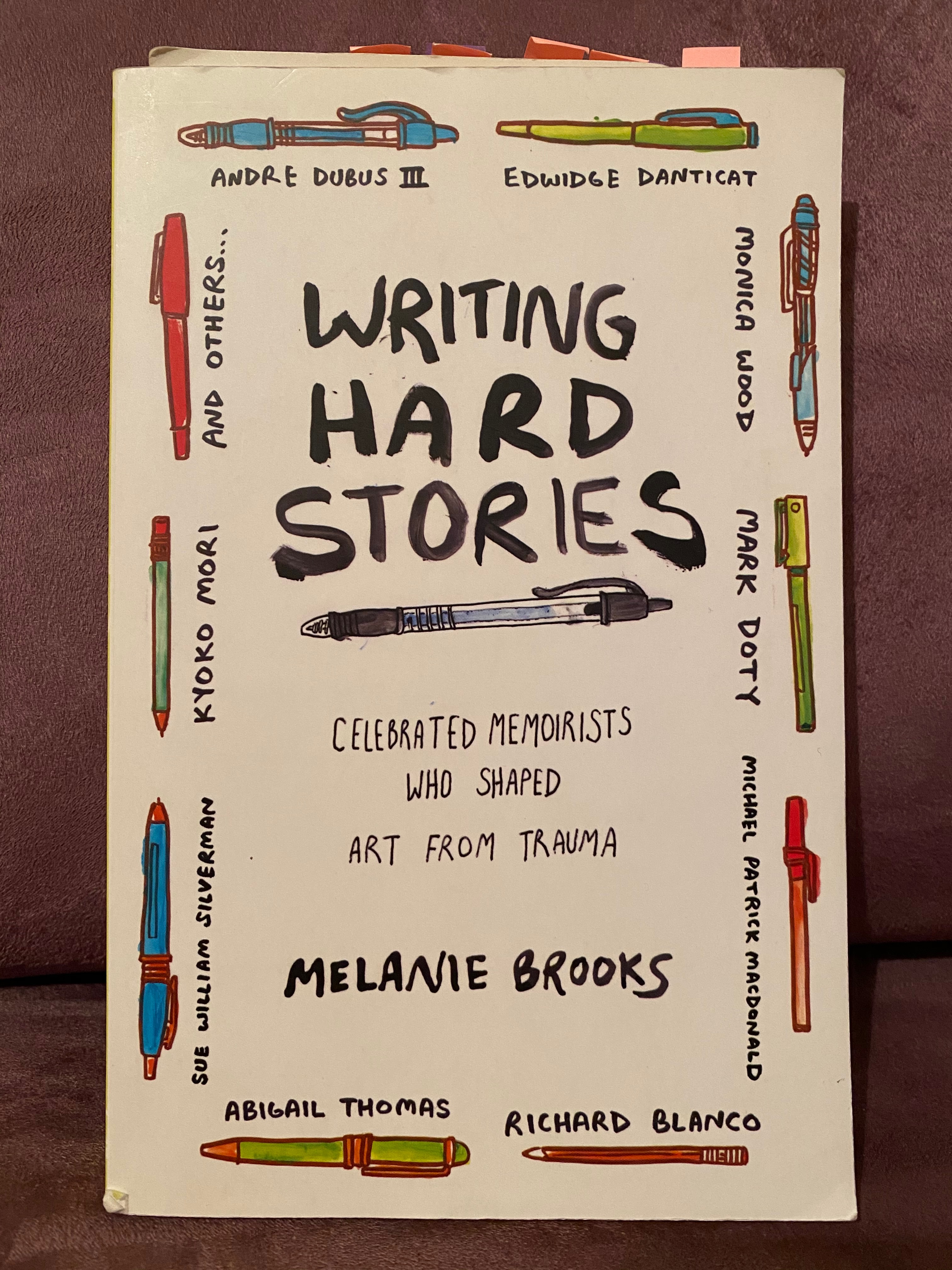
For my fellow writers out there, I highly recommend Writing Hard Stories: Celebrated Memoirists Who Shaped Art From Trauma by Melanie Brooks. This collection is such an inspiration, providing insight into how different writers took something hard/terrible/horrific and used it to create something beautiful/meaningful/relevant.

Here are a few passages I’d like to share with you:

“The reason I write memoir is to be able to see the experience itself in a new way. I hardly know what I think until I write. The therapy is one way of sort of processing things. But it’s only in writing about some of these things that we discover and understand the metaphors of our experience that give our life meaning. Writing is a way to organize your life, give it a frame, give it a structure, so that you can really see what it was that happened.” – Sue William Silverman

“I was a writer, and then this big thing happened in my family. And the way that I tend to try to understand things is through stories – both things that I write and things that I read. That’s the deepest way I know of expressing something inexpressible.” – Joan Wickersham

“You take what you’ve been through, and if you are a writer, you have to write about it.” – Suszanne Strempek Shea

“It really becomes memoir, though, when you open up space for others to enter – when it becomes about more than you, or your family, or your own personal feelings.” – Edwidge Danticat

“Don’t forget, it’s scarier not to do it than to do it.” – Abigail Thomas


My Job

As I tell my son, one day my name will be on the spine of a book. For now, my name is inside -these anthologies each include a personal essay I have written.

My now-eleven-year-old son gave me the biggest boost the other day, and he doesn’t even realize it.

Ryan told me that during lunch the other day, kids were talking about their parents’ jobs and some of his friends asked what my job was.  It’s a fair question.  After all, I take my son to school each morning, and I’m there each afternoon to pick him up.  I’ve accompanied his class on a field trip to The Getty Center, and I attend all his class performances.  

“I told them you’re a writer,” Ryan told me.

And I smiled.  A writer is, by definition, one who writes.  And I do.  Nearly every day.  My writing time is divided between assigned posts for MomsLA.com and personal essays for my memoir-in-progress and those I submit for publication. (Update –  I have received word that two of my essays have been accepted and will be publishing sometime in the future.  I’ll keep you posted).

“I told them you’re writing a book,” he continued.

Ryan knows that I have a collection of “stories” (his word for my personal essays) that I am working on compiling into a book.  

“And one of my friends said she’ll buy your book when it comes out,” he said.

I smiled.  

“So, what’s your book going to be about again?”

I told Ryan, “It’s about living with an invisible illness.  What it’s like to do all the things I do but having an illness people can’t see.”

He was satisfied with that answer, but I was curious about something else.

“Ryan, did you tell them I used to be a teacher?”

“No.  Because that was before.  And now you write.”

“Do you even remember when I was a teacher?” I asked him.

“No,” he said.  (I left teaching in March 2013.  Ryan was almost 5 at the time.) 

It’s important to remind myself that if I hadn’t left my teaching career, there’s no way I would be writing as much as I am now.  And I certainly wouldn’t have published as much as I have. 

And my son wouldn’t be telling his friends his mom is a writer.


Just Keep Writing

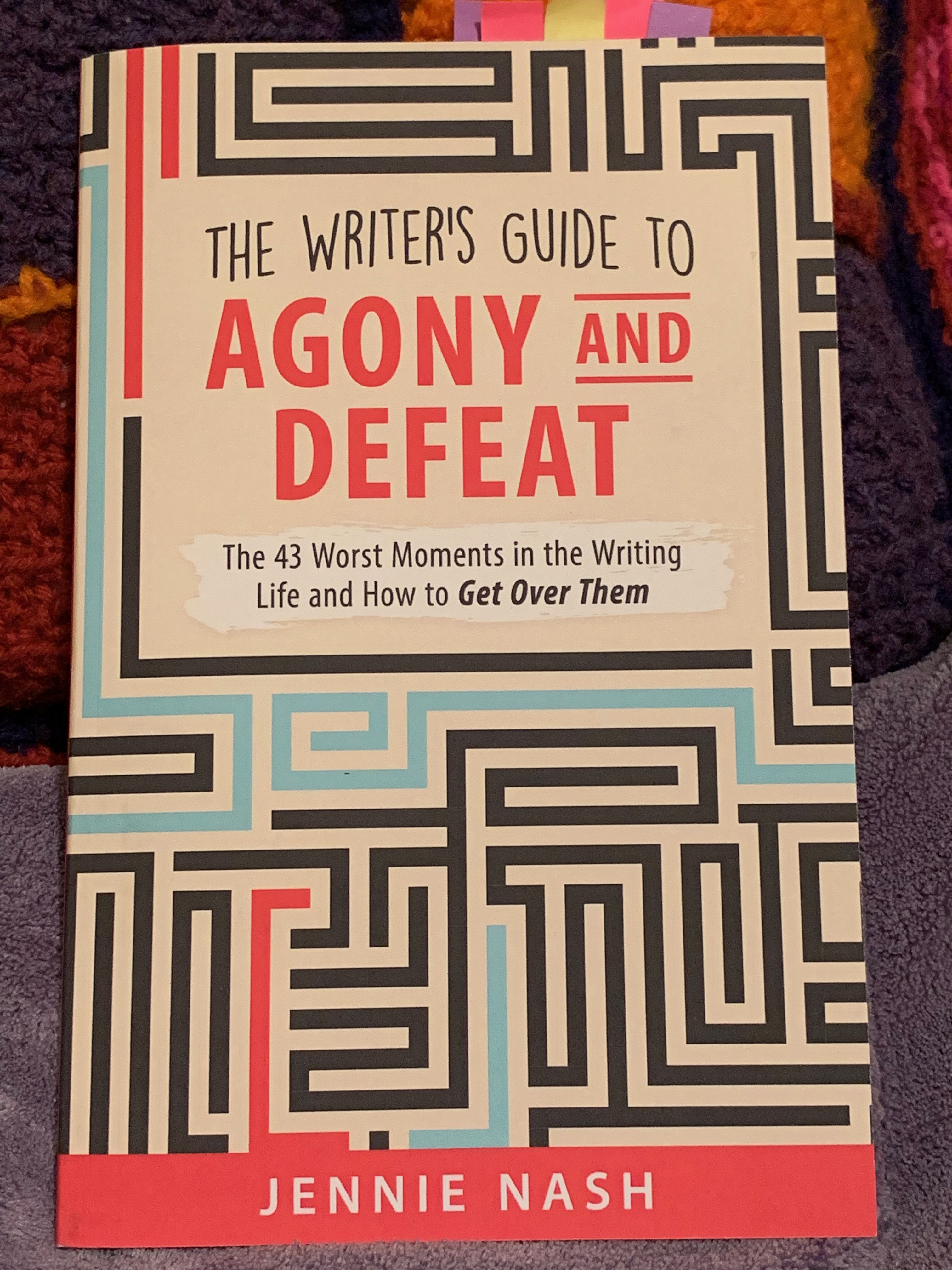
For my birthday, a good friend gave me a book from my wish list – Jennie Nash’s The Writer’s Guide to Agony and Defeat – The 43 Worst Moments in the Writing Life and How to Get Over Them.

Having just turned 43, I thought it would be a good time to read this book.  And,  having an increased blog readership and a growing collection of essays I hope to publish as a memoir, I thought it would be a good time to read this book.

While I didn’t agree with everything Ms. Nash wrote (and felt some of her jokes weren’t that funny), there were a number of takeaways I’d love to share with you.  I think you’ll find they’re insightful and valuable even if you aren’t a writer.

Talent is helpful in writing, but guts are absolutely essential.”  – Jessamyn Wes

This manuscript of yours that has just come back from another editor is a precious package.  Don’t consider it rejected.  Consider that you’ve addressed it ‘to the editor who can appreciate my work’ and it has simply come back stamped ‘not at this address.’  Just keep looking for the right address.  – Barbara Kingsolver

What we do might be done in solitude and with great desperation, but it tends to produce exactly the opposite.  It tends to produce community and in many people hope and joy.” – Junot Díaz

Ones best success comes after their greatest disappointments.” – Harriet Ward Beecher