Super Bloom

I recently finished reading Megan Tady’s novel Super Bloom.

It’s a novel about friendship and reinventing yourself when life doesn’t follow the path you thought it would. 

It’s a novel about writers and romance books. 

It’s a novel that offers a behind-the-curtains look at the massage industry as told from the point of view of our main character, Joan, a massage therapist.

It’s one of those novels that keeps you turning pages, because you just have to find out what happens next. And for me, it started with the first sentence — “I harbor a secret fantasy to go apeshit at work.” 

Here are a few of the passages that caused me to pause and mark the page with a sticky note and a yellow highlighter:

“…I love that muscles speak their own language and I can spend hours coaxing them to reveal themselves to me.”

“Instead, I imagine my clients’ private lives and then write down the stories, envisioning their secrets and passions and hurts based on the slope of the lower back, the elasticity of skin, the rigidity of muscles. My hands pass over bodies as if I’m reading braille, and their worlds unfold.”

“My smile is my best asset, looks-wise, though it’s as shy as a shadow-spooked groundhog. When my full smile emerges, it reveals one crooked tooth that appears to be leaning out of a Rockets chorus line to see what everyone else is doing.”

“It’s been sixteen years, but I still remember writing this thing at my parents’ kitchen table. They were both at work, and the house was quiet. As the words flew out of me, I experienced an oncoming rush, as if I were on a roller coaster inching to its highest peak, the noise of the wheels grinding against steel, wind whipping my hair, until I crested, and from there, for a split second, I could see for miles, a perspective where everything made sense, the entire story coming together before I plummeted back toward Earth, my stomach in my chest, my chest in my throat, my thrilled yell not audible from below.”

“I’m fighting for my livelihood by working on The Project — paying off my debt, keeping my day job. But when I write for myself, I’m fighting for my life, because remaining debilitated, angry, or bowled over without a moment’s notice by sadness is no way to exist.”

“Maybe, just maybe, I can still be a writer. Maybe it’s not too late for me. Don’t we all have dormant potential coiled up inside of us? Greatness lying within, waiting to be tapped?
“Just like Samuel’s super blooms. Seeds holding out for perfect conditions: soil, sun, rain.
What I need is a hefty dose of willpower. A readiness to try my hardest and possibly fail. That’s the only way to bloom.”

“Was it the writing?
“Or was it simply that the forces of nature couldn’t destroy me? That nothing could stop me from pushing up to the surface, because something innate in me wanted to survive. Not only survive but transform, so that I was a better copy of my original self.”

Dear Readers, Has anyone else read Super Bloom? Were any of my favorite lines also your favorite lines? Feel free to share passages that you loved!

Please note: I am including a link to buy the book that I’m highlighting this week. If you use my link, I do make a small commission on your purchase at no additional cost to you. I am working with Bookshop.org which also sends a portion of the profit to support local, independent bookstores.
A Small, Attainable Luxury

I’ve written before about one of my favorite not-at-home writing spots. (If you missed it, you can click here to read my post, “A Bit of Serendipity.”)

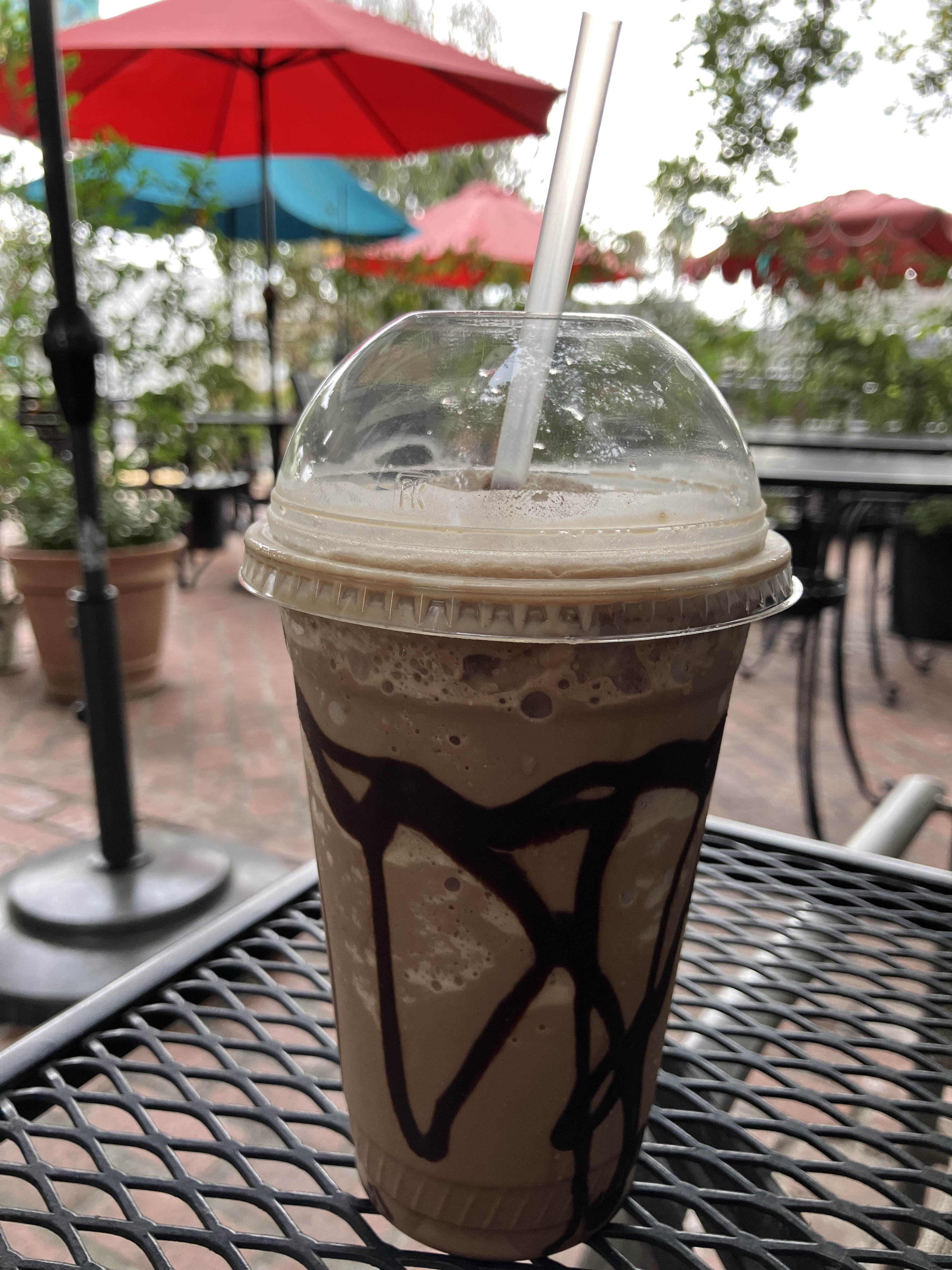
This week, I have a confession to make regarding this cafe: It is here, that I order the most expensive blended mochas I have ever had. 

I’m not sure why these drinks are so expensive, or why they cost more than their counterparts at Starbucks, Coffee Bean, or my local neighborhood indie coffee spot. The price of the beverage is high enough that it initially gave me reason to pause and wonder if I should keep spending my time, and my money, here. 

And the answer is yes

Yes, I most definitely should keep spending my time and money here at this cafe. 

Here’s why:

First off, I enjoy the blended mocha. I like that I can drink it slowly, throughout my writing time, and savor the yumminess. I like the chocolate swirls on the inside of the cup. It makes the drink look fancy, and not like your standard blended mocha. 

I appreciate the “writing cocoon” I create for myself at this cafe. Unlike my local neighborhood cafe, I don’t run into neighbors here. I don’t spend any of my writing time chit-chatting with others. I come here to read and write, and that’s what I do. Distractions are minimal and are generally limited to occasional loud talkers. 

I’m productive at this cafe. I set up my writing space, and I get to work. And by the time I pack up to go home, I am so pleased with my output. 

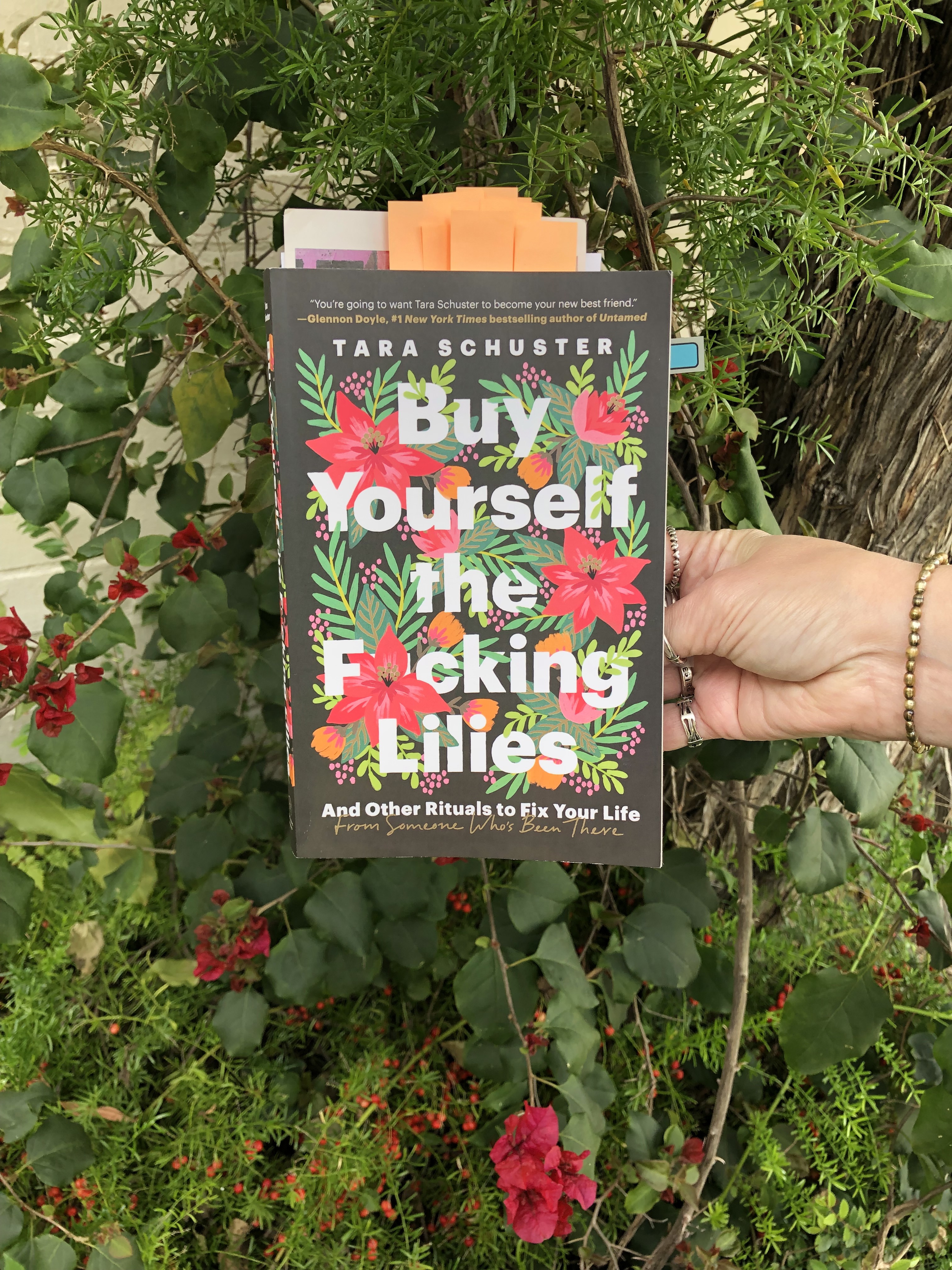
And, there’s something else. Something I read in Tara Schuster’s Buy Yourself the F*cking Lilies

Buy the fucking lilies.  You are worth seven-dollar lilies. You are worth the thing that instantly makes your life better. I’ve heard people talk about their favorite exercise class this way. I’ve heard people talk about an order of guacamole with their tacos this way. I’ve heard people talk about the ten-dollar, ten-minute massage at the nail salon this way. That small, pleasurable thing that makes you feel like you are treating yourself — do not deprive yourself of this. Buy the fucking lilies, take the class, order the guac, get the massage.”

“Above all else: You are worth the lilies. The small, attainable luxury of lilies is not something to stress about, it is not something to deny yourself, it is something to make plans for and embrace. Small things that make you happy ARE a part of taking care of yourself.”

“Seven-dollar lilies won’t ruin you and they won’t make you poor; they will make you stronger. You are stronger when you treat yourself well.”

Readers, what are your “lilies”? In addition to blended mochas, I would add flowers (usually from Trader Joe’s), candles, and books as other “small things” that make me happy. I’d love to know what your “small, attainable luxuries” are. Feel free to share in the comments. 

Please note: I am including a link to buy the book that I’m highlighting this week. If you use my link, I do make a small commission on your purchase at no additional cost to you. I am working with Bookshop.org which also sends a portion of the profit to support local, independent bookstores.
The F Word

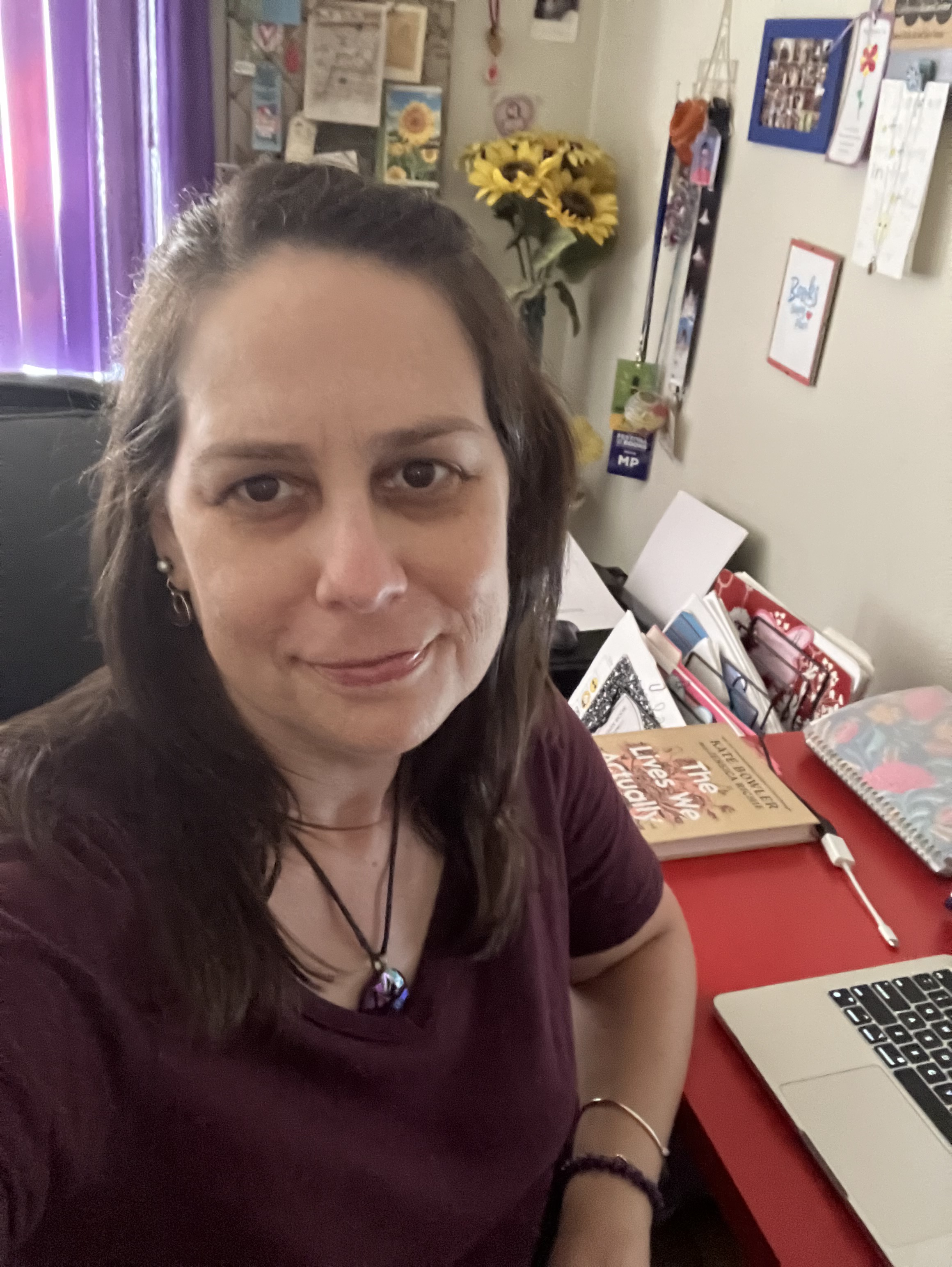
I took this picture a few days ago, late afternoon, after doing some of my physical therapy stretches on the bed.

I don’t usually have a problem falling asleep. 

Quite the opposite, actually.

As soon as I turn off the lamp on my bedside table, after another unsuccessful attempt to read a few pages before bedtime (I tend to either drop the book and lose my place or read a bit but then the next day have no memory of what I had read), I fall asleep. 

Usually, I wake up at least a couple of times each night. Though lately, I have experienced a few nights when I only woke up once. And there were even a few nights that I slept straight through. 

Yet, regardless of how many wake-ups I have each night, I am not waking up feeling rested. 

Again, it’s quite the opposite.

I wake up feeling drained. I’m not recharged and ready to take on the day at all. But, I don’t have a choice. The alarm goes off, and it’s time to get going. I need to get up and get dressed and get the show on the road, because my son needs to get to school. I have work to do. Which means I’m forced to function on a blend of automatic pilot and a fight-through, keep-going-no-matter-what, high level of perseverance.

Plus, I have also noticed this unrested feeling isn’t just happening during the week, when wake-ups are earlier and days are busier. Even on a random Sunday, when we have nothing planned and no alarm waking anyone up, I don’t naturally wake up feeling oh-so-rested. 

Doctors don’t often ask about my sleep; however, during my last several follow-up appointments, I have mentioned it to them. I do my best to describe the overall slowness I often feel upon waking. The way my eyelids feel heavy. The feeling of starting the day at a deficit. And because my labs are coming back pretty consistent, because there are no red flag markers, no medical professional seems overly concerned about my tiredness. 

The other day, when I stood in front of the mirror and stared at the dark circles under my eyes, I had an aha moment. 

It seems so obvious, now, but it really didn’t occur to me that this extreme tiredness, this fatigue, is a part of life with chronic pain. This is not unique to me and my UCTD (undifferentiated connective tissue disease). In fact, in terms of my inflammation markers, my numbers have been down. My autoimmune disease is somewhat stabilized, you might say. Which means my medications are working and doing what they’re supposed to do. And yet, I feel awful — every single day.

Because this is not tiredness that goes away with a couple of nights of eight hours of sleep. 

Because this is fatigue, a whole different level of extreme tiredness. 

I don’t usually talk about my exhaustion, and I certainly haven’t written about it. But, I know how important it is to share our authentic experiences, to connect with others who, unfortunately, “get it,” and understand exactly the situation I’m describing.

The other night at dinner, after it was my turn to share some of the highlights from my day, my husband commented that I had gotten a lot done. 

“You’re right,” I said. “Imagine what I could do if I felt rested?”

Pain Awareness Month

You can't see my pain, but it's there.

September is Pain Awareness Month. It’s a topic I have written about before: 

In 2020, I wrote about how common it is for my pain to fluctuate, which is why I so dislike the traditional 1-10 pain scale.

In 2021, I again wrote about the difficulties in using a traditional pain scale to describe my chronic pain. (Plus, this post has one of my favorite pictures of myself – because I’m holding a bunch of bright, beautiful sunflowers – my favorite flower, and because that photo makes me think back to that fun family day.)

In 2022, I wrote about the randomness of my pain; the fact that I can sit and watch my son at his first Rubik’s Cube Competition and out-of-nowhere suddenly need to step outside because of an intense leg cramp.

In 2023, my son inspired my Pain Awareness Month blog post (as he’s inspired many of my blog posts and personal essays over the years).

Which brings us to this year’s post:

For the last year or two, each time I see my rheumatologist I have told him how much I struggle to get through my day. I have given him concrete examples to demonstrate that my chronic pain has worsened, my energy levels have lowered, and my fatigue has increased. I have told him that my current pain medications were not enough, yet he refused to alter my dosage or prescribe anything else. Finally, he referred me to a pain management doctor. (This isn’t the first time I’ve seen a pain management doctor, but it is the first time I have been seen by this particular doctor.)

At the first appointment with the pain doctor, back in April of this year, I walked in with a fair amount of skepticism. How many times have I had to share my story over the years? How many times have I tried to convince doctors that regardless of how I look or how much I tell you I still do each day, I am in considerable pain every single day? I didn’t want to have to sell myself, convince this new doctor that my pain was worsening, that my list of activities I could no longer do was growing, and I was scared because I truly didn’t think my current lifestyle was sustainable.

Something completely unexpected happened during that April appointment — after reviewing my in-take forms and my current medications, the doctor looked up from my chart and looked right at me. 

“You’re not on the right medication. What you’re taking now isn’t going to help with the kind of pain you’re describing. You definitely need something stronger,” he said. 

I was momentarily shocked. Cue the party favors and the large round of applause. The doctor’s statements, his belief in me and my pain, were huge. My chronic illness friends reading this know that this is not always the way a doctor’s visit goes. 

Since that first appointment, we’ve tried different medications and different dosages, and I think we’re getting closer to finding the right combination for me. 

At the same time, the doctor has been honest with me. 

“Nothing is going to completely get rid of your pain. The goal is to bring your pain levels down. Way down,” he said.

We’re working on it. 

So this year during Pain Awareness Month, if I may, I offer this suggestion — believe someone when they tell you about their pain. You cannot always see pain. You don’t always know what someone is going through or dealing with simply by looking at them. So give them the benefit of the doubt. Treat everyone with a bit more patience and care. Because whether it’s physical pain or mental pain, chronic pain or temporary pain, everyone is dealing with something.