My Word for the Year

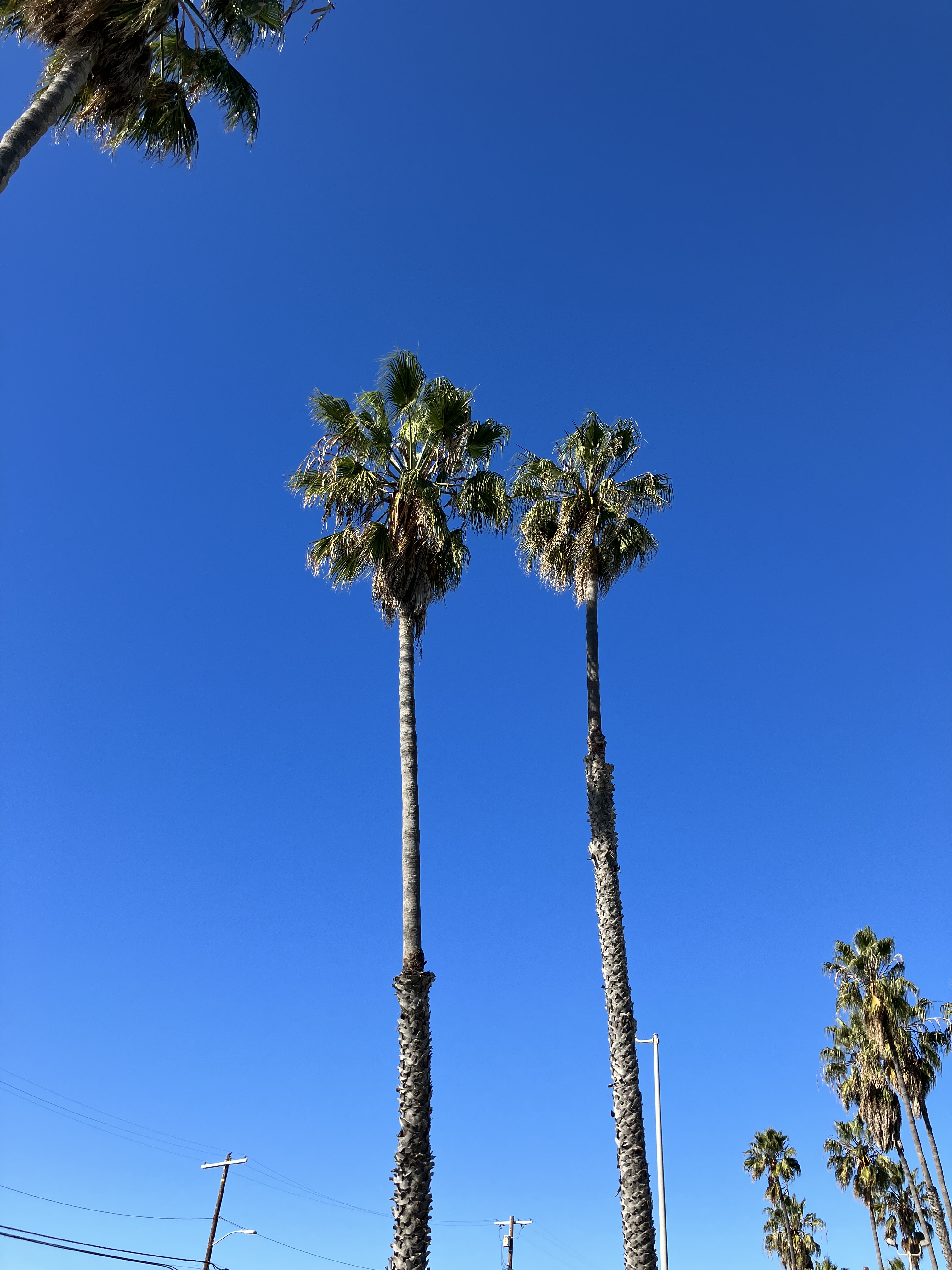
Photo of bright blue sky and two palm trees
Photo taken at the beach on New Year's Day 2024

Last week, I read a blog post written by writer and book coach Monica Cox. She wrote about picking a word for 2024, a word that is in sync with her goals for this year.

It got me thinking. I’ve never chosen a word for the year. Yet, as I was about to do my daily five-minute writing exercise, a word suddenly popped into my mind. A word that perfectly matches with my goals for the year — writing-related goals as well as life-related goals.

My word is Share

2024 is the year I will query agents, the first step in sharing my memoir-in-essays. 

An agent will then help my manuscript reach publication, which will allow my story of living with an invisible disability to be shared with readers. 

I am ready to share my story, ready to make the invisible visible.

And, there’s another way I hope to share this year. 

I am working on more openly sharing my feelings. Instead of biting my tongue and holding things in, I will try to honestly share what I’m really thinking and how I’m really feeling. 

My tendency to not always share is a result of my inclination to keep the peace, to not upset anyone. I keep so much inside, trying to pretend I’m feeling better than I am, trying my best to take care of those around me.

But, in 2024 I aim to share — my pain, my feelings, my story.

Dear Readers, do you select a word for the year? If you feel comfortable, you can “share” your word in the comments. Thank you!

Chronically Fabulous

Chronically Fabulous is the name of author Jean Meltzer’s new podcast. It’s an interesting combination of words. (And if you’re not familiar with Jean Meltzer’s books, be sure to check out my posts about her first novel The Matzah Ball, her second novel Mr. Perfect on Paper, and her third novel Kissing Kosher. They all feature main characters who are Jewish women living with chronic illnesses and chronic pain.)

The podcast aims to be a safe space for listeners, and function like a conversation with your chronically ill friends. 

While I acknowledge my chronic illness, I don’t think it’s fabulous in any way. Actually I don’t even use the word “fabulous” all that much.

But, put together – Chronically Fabulous. I kind of like the idea. 

2023 was one of my toughest health years in terms of intense pain. It was the year of admitting it’s too hard to grocery shop by myself. The year we rented a wheelchair for our family summer trip to Washington, D.C. The year I bought a wheelchair to have for those special occasions when I’ll need it (such as attending a performance at the Hollywood Bowl). 

And while those were all super tough things, they’re also things I’m proud of. I didn’t cancel our summer trip after I began researching museums and monuments in D.C., knowing I wouldn’t be strong enough to walk them all. I found a way for our family to take the trip and that, I think, is an example of being chronically fabulous.

So far, Ms. Meltzer has released one episode of her podcast, and the part that most stood out to me was the discussion regarding “pacing.” No doctor has ever spoken to me about pacing — the idea that certain activities are more energy-intensive, so a person living with chronic pain has to figure out rest days (usually before and after the event). Pacing is a tool; a tool I haven’t regularly used. But it’s time. Because I simply can’t keep up anymore. Listening to the podcast, I realized I don’t do what Ms. Meltzer spoke of — creating boundaries and making myself, my health the priority. She wants listeners to “live your best, most valuable life.” 

And I want that too. 

Something I came to acknowledge this past year was my tendency to do everything possible to fight my pain; trying to pretend like there’s nothing wrong. Trying to act as if I can keep up with my same-age-as-me husband and high-school-age son. I have kept up the act for years, because I didn’t want to miss out on any shared family experiences. Because I didn’t want my illness to hold me back, or take any more from me than it already had, most heart-breaking of all being my teaching career. 

But 2023 was the year I saw I just can’t keep doing it. Something shifted. I am not waiting for some cure or major fix. It’s not coming. Instead, I’m searching for small, but mighty, tweaks. “Little” things that make a big difference in how I get through my days. And something I need to consciously work on is pacing. Learning to give myself permission to sit and read. Not pushing myself to plan big outings both weekend days. Trying to build in rest times the day before and the day after a big event. Trying to treat myself with the same compassion and kindness I so easily share with those I love.

The Light We Carry, Part Three

This is my third and final post about Michelle Obama’s book The Light We Carry: Overcoming in Uncertain Times.

(You can read my post about part one by clicking here.)

(And part two is here.)

There were parts of this book that read so smooth and easy, as if I was fortunate enough to sit down and have a conversation with Mrs. Obama. And there were parts that just stopped me in my reading, passages I re-read and marked with a highlighter because they really resonated with me.

Here are just some of those passages:

“When someone chooses to lift the curtain on a perceived imperfection in her story, on a circumstance or condition that traditionally might be considered to be a weakness, what she’s often actually revealing is the source code for her steadiness and strength.”

“When we share our stories with fullness and honesty, we often discover that we’re less alone and more connected than we might ever have believed.” 

“All I can do is try to draw closer to your uniqueness, to feel linked by the small overlaps between us. This is how empathy works. It’s how differentness starts to weave itself into togetherness. Empathy fills the gaps between us, but never closes them entirely. We get pulled into the lives of others by virtue of what they feel safe and able to show us, and the generosity with which we are able to meet them. Piece by piece, person by person, we begin to apprehend the world in more fullness.”

“For me, the process of writing can be an incredibly helpful tool when it comes to going high. It’s a means through which I am able to move through my emotions, filtering them into useful form.”

“Joy and pain often live in close proximity; they intermingle. Most of us exist in the in-between, following that most innate of human impulses, which is to hang on to hope. Don’t give up, we tell one another. Keep working.
“This matters, too.”

“Kids, for me, are always a reminder that we are all born loving and open-minded, free of hate. They are the reason the rest of us maintain a thick skin and keep trying to clear the path. Watching a child grow into an adult, you understand both how mundane and profound the process can be, how it happens slowly and quickly all at once, in steps and also in strides.”

Please note: I am including a link to buy the book that I’m highlighting this week. If you use my link, I do make a small commission on your purchase at no additional cost to you. I am working with Bookshop.org which also sends a portion of the profit to support local, independent bookstores.  

Why Not Me?

Before I became ill, I saw my primary care physician once a year for an annual check-up. Illness, especially long-term illness, seemed like a vague idea way out into the future, nothing I needed to worry about in my early thirties. 

Except that’s not the way it works. 

And by it I mean life, the future, my body. 

Since becoming ill with a chronic illness, it really does feel like there is always something — some lab result that seems a bit off and needs further testing, some symptom that isn’t easily explained and requires a meeting with a specialist, some worrisome finding that requires additional scans. 

So last week, when I texted one of my closest friends and told her about my health scare and upcoming appointment, her reply was spot-on.

“It never stops.” (She also texted me loving, supportive words, too.)

The waiting, the worry. The appointment, the apprehension. 

All of it — it never stops.

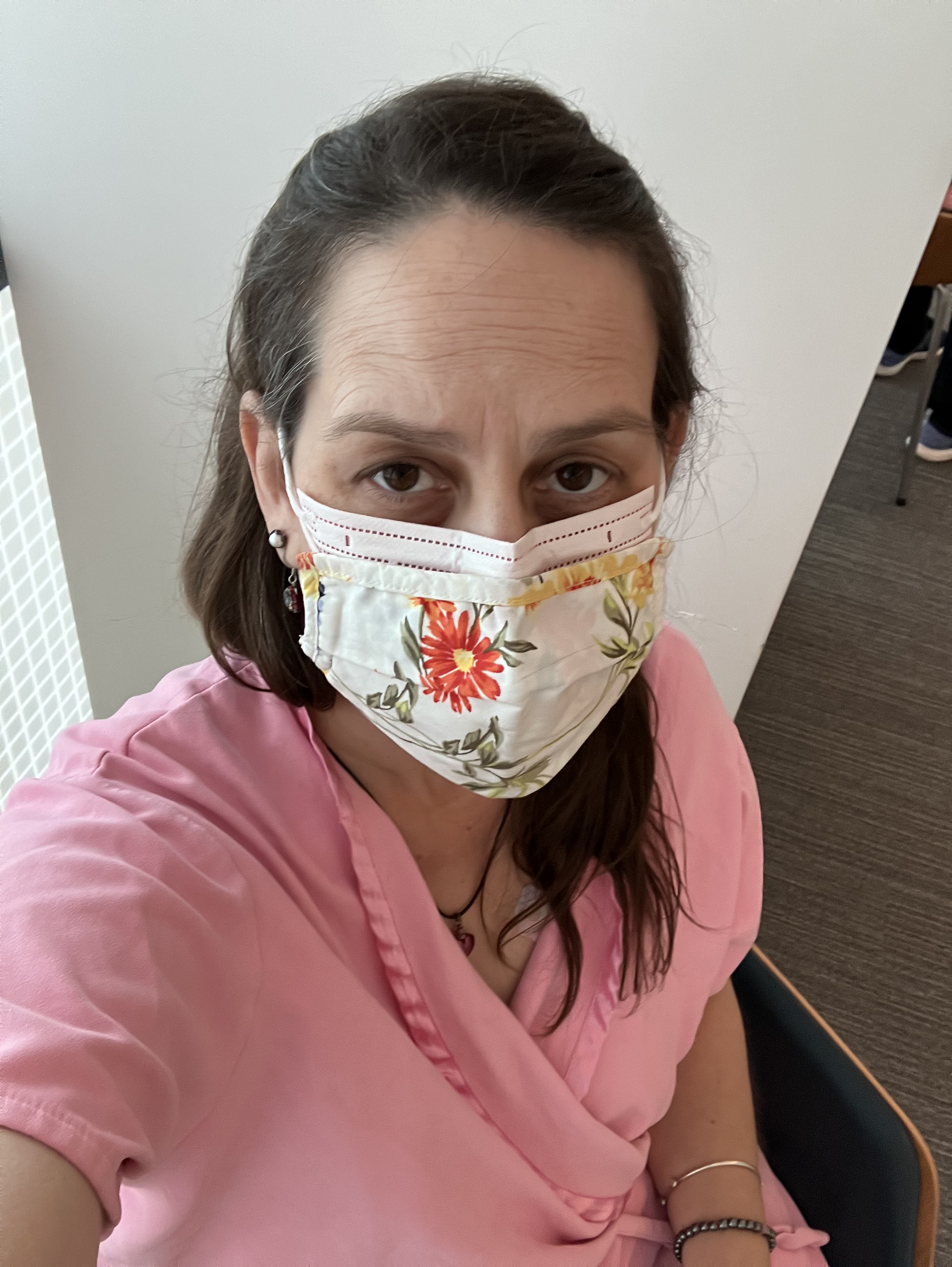
Last week’s appointment was one of the scariest I have experienced. Questions to answer, and three different sets of pictures and scans. And lots of waiting. I sat there, terrified, in my pink gown and tried to distract myself with a Christmas-themed novel (The Christmas Bookshop by Jenny Colgan). But the longer I was there (almost three hours), the more convinced I became that bad news was imminent. 

Except I got lucky. 

Very lucky. 

When the nurse came and told me it was all okay, I asked her to repeat herself, because I was afraid I had misheard. 

Why me? Why did I get an all-clear, while I’m sure other women that day heard different news? 

I don’t know.

Except it makes me think of something I read quite a while ago, something I have written about before. When it comes to chronic illness, there’s no point in asking Why me? Everyone is dealing with something, whether we can see it or not. The question really should be why not me?

So, why did I get really, really lucky last week? Why me?

Why not me?

Please note: I am including a link to buy the book that I’m highlighting this week. If you use my link, I do make a small commission on your purchase at no additional cost to you. I am working with Bookshop.org which also sends a portion of the profit to support local, independent bookstores.

The Light We Carry, Part Two

This week’s blog post features some of the oh-yes-passages from part two of The Light We Carry by Former First Lady Michelle Obama. What do I mean by oh-yes-passages? Passages that resonated with me. Passages that made me pause and reflect. Passages that touched me in some way. 

(If you missed the blog post about part one, you can click here to read it.)

“I’m not sure how friendship, or even just engaging with another person in the three minutes it takes to buy your morning cup of coffee, has come to feel like a small act of bravery. But increasingly it seems that way. Perhaps, as I mentioned earlier, it’s because we now carry with us little rectangular shields against face-to-face sociability — our phones — which I think also shield us from serendipity. Any time we avoid even a small real-life connection, we are to some extent avoiding possibility.”

“When we drop our fears about newness and open ourselves to others, even through quick and casual interactions, even while masked — saying hello to someone in the elevator, for example, or chatting in a grocery line — we are practicing an important form of micro-connection. We’re signaling a general okayness between us, adding just a drop of social glue to a world that desperately needs it.”

“The best way to be a friend to someone, as I see it, is to revel in their uniqueness, to appreciate each person for what they bring, receiving them simply as themselves.”

“Over the course of my adult life, I’ve lived in a number of places, but as far as I’m concerned, I’ve only ever had one real home. My home is my family. My home is Barack.”

“Like a lot of people, I had ideas about what marriage would be like, and few of them turned out to be right.”

“Much as it is with marriage and partnership, the fantasy versions of being a parent sit at the forefront of our cultural imagination, whereas the reality is way, way, way less perfect.”

“Caring for your kids and watching them grow is one of the most rewarding endeavors on earth, and at the same time it can drive you nuts.”

Please note: I am including a link to buy the book that I’m highlighting this week. If you use my link, I do make a small commission on your purchase at no additional cost to you. I am working with Bookshop.org which also sends a portion of the profit to support local, independent bookstores.     

My Spoonie NaNoWriMo

If you’re a fiction writer, or live with a fiction writer, you’re most likely familiar with NaNoWriMo, which is the abbreviation for National Novel Writing Month. NaNoWriMo takes place each November, with writers committing to work towards the goal of writing the draft of an entire novel (50,000 words) in one month. 

NaNoWriMo started back in 1999, and since then it has become a worldwide phenomenon. Writers find community, encouragement, resources, and support by participating and connecting with other writers going through the same process.

I don’t write fiction, and the sheer number of daily words required (50,000 words over 30 days works out to about 1,667 words a day) didn’t feel attainable for me, so I never participated in NaNoWriMo.

Until this year.

And it’s all because of Sandra Postma. (You may remember I wrote about Sandra and the incredible work she does as a Book and Spoonie Coach  in a blog post back in October. In case you missed it, you can click here to read the post.)

On her Instagram, Sandra encouraged spoonie writers to participate in NaNoWriMo in a way that worked for each of us. She pointed out that as people who live with chronic illness, we’re accustomed to modifying a variety of activities. Why should NaNoWriMo be any different? Sandra encouraged us to participate in a Spoonie NaNoWriMo — one with individual goals that work for each writer. That I could do. 

Being a former teacher, I printed out the goals I set for my NaNoWriMo, as well as a November calendar. Each day I met my goal, I put a sticker in the calendar box. (Again, former teacher. Plus I had all these cute stickers on-hand.)

My Spoonie NaNoWriMo Goals, as I printed them out:

Each day in November I will:

Complete a 5-minute writing exercise.

Write down one statement, acknowledging something I did, 

something my body was strong enough to do.

And I did it! (Note all the stickers!)

It certainly wasn’t easy. There were days I was tempted to skip the whole thing, but I’m glad I didn’t. The hardest part was the daily statement, a note of appreciation and gratitude for things my body is still strong enough to do, because I’m not used to highlighting myself in this way.

My statements tended to acknowledge a “bigger” outing or activity — taking down and putting away our Halloween decorations, decorating for Thanksgiving, grocery shopping (though I no longer do that by myself), a longer walk in the neighborhood. 

While those “bigger” activities were worth documenting, writing this list helped me see how hard I work each day, how much I continue to do each and every day, and all while my pain has consistently been more and more intense.

For instance: I make the bed each morning. I pick up my own prescriptions at CVS. I shower each night. I never skip brushing my teeth. I get dressed each day, complete with my daily jewelry (nine rings on eight fingers, bracelets, earrings, necklace). 

The unexpected result of my Spoonie NaNoWriMo is the feeling of achievement and pride — in my writing, yes, but also in myself! 

Dear Readers, anyone else participate in a version of NaNoWriMo? How did it go for you? Let me know in the comments.

Chronic Illness at Midlife

“I’m in my forties, yet when I climb the stairs to our bedroom each night my knees creak as if I’m walking on the hardwood floors in my parents’ nearly-hundred-year-old house. I have a disabled parking placard in the car, something my dad didn’t qualify for until he was seventy-five. Acquaintances may tell me I look fine, but I don’t feel fine. I feel worn-out and weary.

“It’s hard to know which parts of my life are impacted by natural aging and which parts have been impacted by my autoimmune disease. Is my lack of energy and lack of flexibility a result of my body simply not being twenty-one anymore? Or have all these changes somehow been sped up, as if I’m rolling along downhill, the brakes have gone out, and not only can’t I stop, I can’t even slow it down?

“I don’t know. I’ll never know. Because there’s no way to separate the naturally-aging me from the chronic patient me.”

I’m pleased to share that the paragraphs above are an excerpt from my recently published essay “Prime Time or Off-Peak? LIfe with Chronic Illness at Midlife.” You can click here to be re-directed to Midstory Magazine to read the essay in its entirety.

(By the way, long-time readers may recognize this essay. It had been published on a different site quite some time ago. That site is no longer active, which is why I chose to lightly edit and re-submit the essay.)

Inspiring Words From Inspiring Women

I have taken my time, reading and appreciating Words to Live By: 50 Inspiring Quotes by 50 Inspiring Women illustrated by Jade Purple Brown. (I first wrote about this book, and specifically one quote, a month ago. If you missed that post, you can read it here.)

I have now completed the book, and this week, I am sharing a few of my favorite quotes with you:

“Figure out what you need to do to be the heroine of your own story.” – Ava DuVernay

“Do ordinary things with extraordinary love.” – Mother Teresa

“What you do makes a difference, and you have to decide what kind of difference you want to make.” – Jane Goodall

“Real change, enduring change, happens one step at a time.” – Ruth Bader Ginsburg 

“You are powerful and your voice matters.” – Kamala Harris

“It is never too late to be what you might have been.” – George Eliot

Dear Readers, do any of these quotes resonate with you? Or, do you have a favorite quote? Feel free to share in the comments.

Please note: I am including a link to buy the book that I’m highlighting this week. If you use my link, I do make a small commission on your purchase at no additional cost to you. I am working with Bookshop.org which also sends a portion of the profit to support local, independent bookstores.

Hiding My Realness

This photo was taken a few years ago in Cambria, CA.

Last week I highlighted some of my favorite passages from part one of Michelle Obama’s The Light We Carry.

This week, it’s one sentence I want to highlight. One sentence I cannot stop thinking about.

“We only hurt ourselves when we hide our realness away.”

In many areas of my life, I am unapologetically real. I don’t color my hair. I allow my definitely-non-brown strands to commingle with my very-brown strands.

I don’t wear make-up. What you see is what you get.

If my purse ever matches my shoes, it was purely coincidental. I don’t have enough purses, or shoes for that matter, to make that particular accessory match happen on a regular basis.

I do, however, change my necklace and earrings each day, and do my best to match those with the top I’m wearing. 

I realize most people don’t wear nine rings on eight fingers. But I do. And I’m okay with not being like everyone else.

Aside from all that; however, I do hide my realness away. 

Often. 

And, if you’re chronically ill, a.k.a a “spoonie,” you probably do, too.

(If you missed it, you can click here to read my blog, “Trying to Figure Out This Spoonie Life.”)

Because when you’re chronically ill and experiencing chronic pain, you have learned to put on, what I call, your “game-face.” Living with a chronic illness is sometimes like being in a high-stakes poker game that doesn’t end. You can’t let on how bad the pain is. For a number of reasons you mask your pain so you look “fine.”

Sometimes I do that because I don’t want any more suggestions about medicinal cannabis or green smoothies or compression socks. 

Sometimes I wear my game face because it’s just easier. Showing my pain often makes those around me uncomfortable. And if I’m already feeling bad, I don’t need to add to the situation by making those around me feel bad, too. 

There are more reasons. But I’ll stop there, because it brings me back to Mrs. Obama’s statement:  “We only hurt ourselves when we hide our realness away.”

That’s the part I haven’t completely figured out. I’m certainly not trying to hurt myself. Yet I am very much trying to protect my near and dear ones. 

The work on myself continues.

Please note: I am including a link to buy the book that I’m highlighting this week. If you use my link, I do make a small commission on your purchase at no additional cost to you. I am working with Bookshop.org which also sends a portion of the profit to support local, independent bookstores.

The Light We Carry, Part One

I am currently reading Michelle Obama’s The Light We Carry: Overcoming In Uncertain Times. And let me say, I am about halfway through the book and have many pages flagged with sticky notes. 

So rather than have one super-long post, I decided to share some of my favorite passages one part at a time. (The book is split into three parts.)

(Last week I wrote about buying a wheelchair and referenced a little bit from Mrs. Obama’s book. If you missed last week’s post, you can read it here.)

This week, allow me to share some of my favorites from Part One:

“That’s what tools are for. They help keep us upright and balanced, better able to coexist with uncertainty. They help us deal with flux, to manage when life feels out of control.” 

“What does it mean to be comfortably afraid? For me, the idea is simple. It’s about learning to deal wisely with fear, finding a way to let your nerves guide you rather than stop you. It’s settling yourself in the presence of life’s inevitable zombies and monsters so that you may contend with them more rationally, and trusting your own assessment of what’s harmful and what’s not. When you live this way, you are neither fully comfortable nor fully afraid. You accept that there’s a middle zone and learn to operate inside of it, awake and aware, but not held back.”

“Our hurts become our fears. Our fears become our limits.”

“Because what my mother showed me is that if you try to keep your children from feeling fear, you’re essentially keeping them from feeling competence, too.”

“The unknown is where possibility glitters. If you don’t take the risk, if you don’t ride out a few jolts, you are taking away your opportunities to transform.”

“What [Toni] Morrison was doing for her kids is what my own parents did for me: She was giving them a simple message of enoughness. She was validating their light, that unique bit of brightness inside each of them — literally showing them it was there and it belonged to them, a power they could carry for themselves.”

“My father, whose shaky demeanor and foot-dragging limp sometimes caused people to stop and stare at him on the street, used to tell us, with a smile and a shrug, ‘No one can make you feel bad if you feel good about yourself.’ “

Please note: I am including a link to buy the book that I’m highlighting this week. If you use my link, I do make a small commission on your purchase at no additional cost to you. I am working with Bookshop.org which also sends a portion of the profit to support local, independent bookstores.