One Step At a Time, One Book At a Time

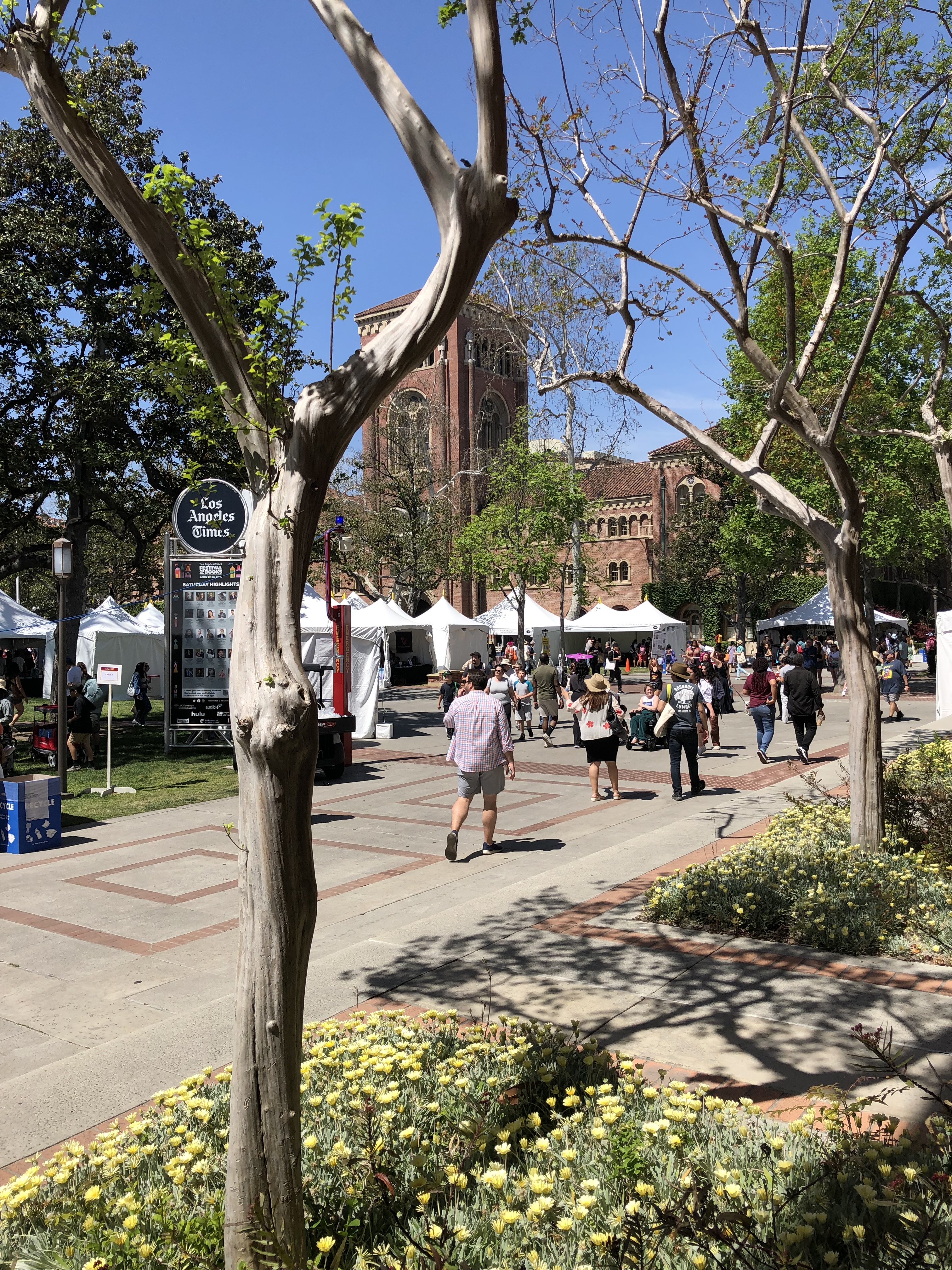
This past weekend, I attended the Los Angeles Times Festival of Books. For those who aren’t familiar with it, the Festival of Books is a huge, two-day, annual event held on the campus of USC (University of Southern California). 

Years ago, before my son was born, I went to the Festival every year. Back then it was held on the campus of UCLA (University of California Los Angeles.) 

I attended the Festival last year for the first time in many years. There was a certain thrill and energy that came with being surrounded by all things book-related, at attending an event that is a true celebration of books and authors. 

This year, though, I really wasn’t sure if I should go or not. Because I haven’t been feeling well lately. Because my pain level has been high and my energy level has been low. 

That’s the hard part for me — deciding when to push myself and when to hold back and admit that my body needs rest.

The truth was, I really wanted to go. I didn’t want to stay home because I was worried about my pain or the heat. I wanted to prove that I’m still capable of being out in the world, doing things I feel passionately about, not letting my illness completely dictate my life. 

I tried to make it as easy and stress-free as possible for myself by not attending any panel discussions or book signings. I didn’t want to have to worry about being in a particular place at a particular time. 

I simply strolled around the Festival, wearing my mask and sunhat, and doing my best to be present and enjoy the experience.  

I admit — I did start to daydream about what it would be like to be an author with my own exhibition area, selling copies of my memoir. Immediately I thought of giving out small, wrapped candies to those who stopped at my table. (Starburst and Hershey’s Kisses came to mind, though the Kisses might melt in the heat. Jolly Ranchers could be another possibility.)

I walked around, I took pictures, I picked up books, chatted with some authors, and bought three books, even though I have more than a dozen books at home, just waiting for me to read them. 

I loved being there. But, (you knew there was a but coming) it was incredibly hard on my body. It took me about 15 minutes to walk from the parking structure to the exhibition area. Plus, I had parked on level 5 which meant I would ordinarily take the elevator down to the ground level. However, eager attendees were crowding onto the elevator each time it stopped at 5, and I will not ride in a super-crowded elevator. (During my teaching years, I once was stuck in the school elevator for 55 minutes one morning.) So I walked down five flights of stairs. (Thankfully when it was time for me to leave, no one else was waiting for the elevator so I rode it up to parking level 5.)

When I felt my speed decreasing, when I found myself searching for a place to sit and rest in the shade, I knew it was time to go. That’s when the mask comes in handy. No one can see me talking to myself as I retraced my steps back to the parking area. One step at a time. Okay, you can do this. 

Am I glad I went? Yes. 

But I’m also sad. Because I miss the old days, the years I could just go out and do something without weighing all the possible risks. When I didn’t have to worry about having a pain-hangover the day (or days) after a particularly strenuous activity. 

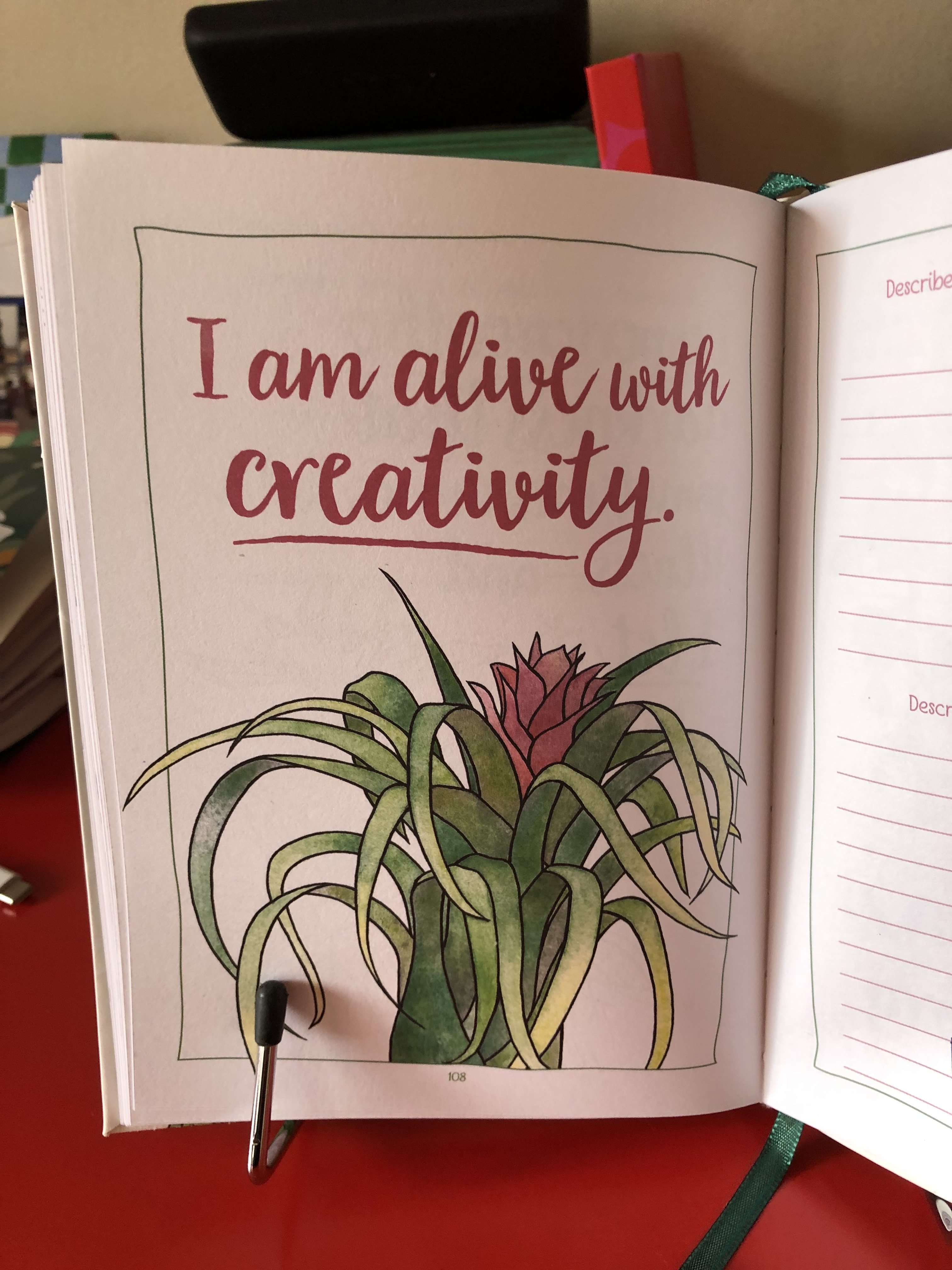
I Am Alive With Creativity

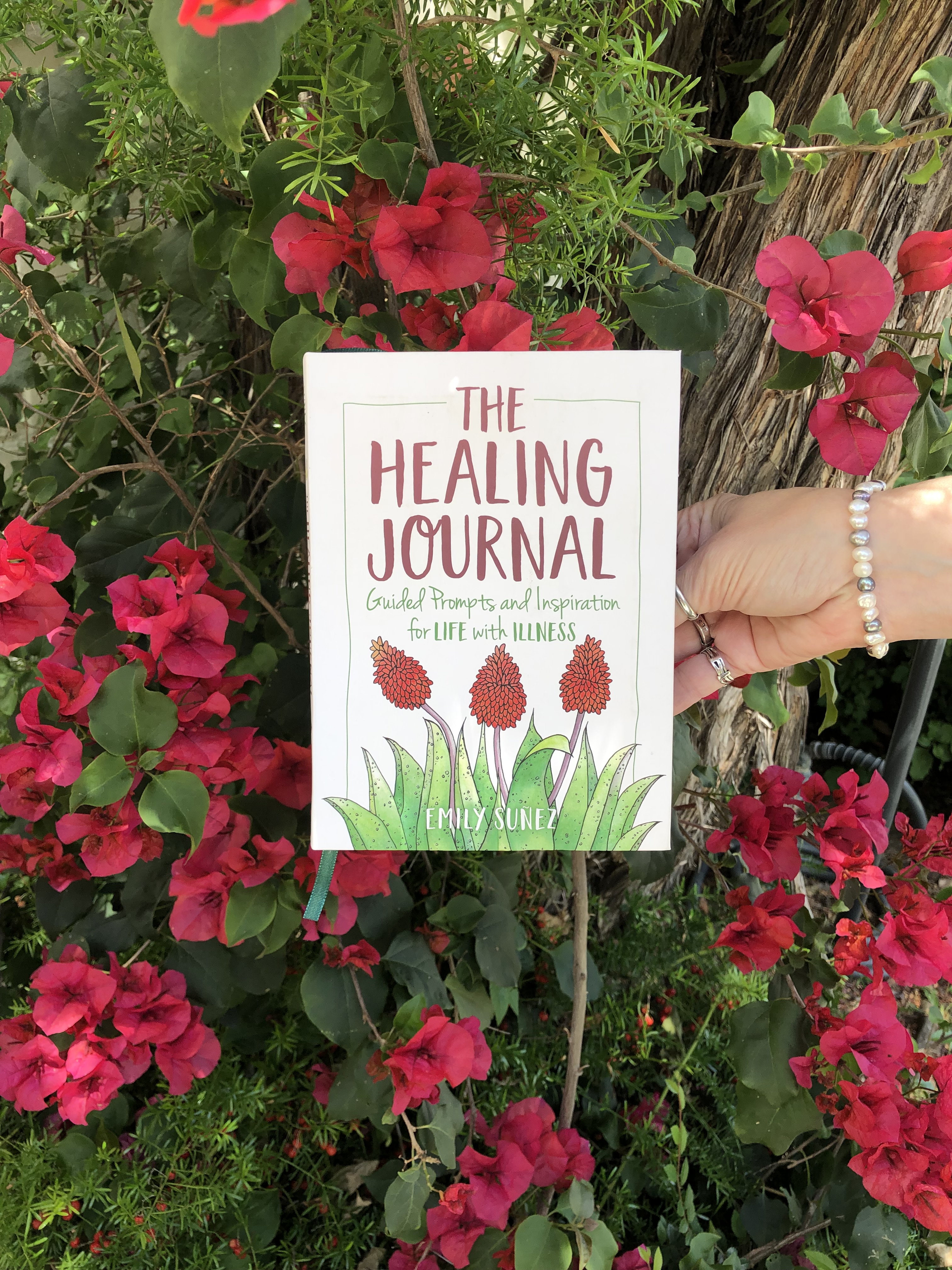
I have slowly been making my way through The Healing Journal: Guided Prompts and Inspiration for Life with Illness by Emily Suñez.

This is a book that you don’t read all at once. You “savor the flavor,” as we say in our family. You pay attention to each beautiful illustration and each writing prompt. (I last wrote about The Healing Journal in a December blog post. You can click here to read it.)

The book is much too pretty for me to write in. Instead, I use the statements in the book as prompts for my daily five-minute writing exercise. 

If you’re not familiar with it, my five-minute writing time is exactly what it sounds like. You set a timer and you write for five minutes. That’s it. Sometimes I am surprised by what I write during those five minutes. Something comes out on the paper that astonishes me, delights me, saddens me. 

Sometimes I know those five-minutes were just the beginning of something more to come. I feel as if there is more to explore and so I do. Several of my published personal essays were born from my five-minute writing exercises. But sometimes, the five-minutes were just that. Five minutes that are done and over with, that produced writing I won’t ever return to.

Last week, it was a case of me wanting to further explore what I began in my son’s partially-used composition book from last year that I now use for my five minute exercises. It was this statement:

“I am alive with creativity.”

I am alive with creativity. I write — in some way, shape, or form — each day. Sometimes it’s a blog post, sometimes it’s an article for MomsLA.com, sometimes it’s just my five-minute writing exercise. 

What I realized as my timer counted backwards was that my definition of creativity has changed over time. It has broadened and expanded in ways I didn’t realize, until I answered this prompt.

I surprised myself by listing all the ways I am creative, all the ways I demonstrate my creativity. My garden. The way I display the books on my bookcase. The way I use stickers to decorate the envelopes for the letters I mail to my pen pal. The flowers on my dining table and the candles in my writing room. The earrings and necklace I select to wear each day. 

Many days, lately in particular, it’s easy to think of the glass-half-empty parts of my life — the unsatisfying physical therapy appointments, the prescription medications, the pain that leaves me crying when I step out of the shower. 

But my life is more than that. I am more than that. 

Dear Readers, I’d love to know about your creativity. Tell me about it in the comments! 

Describe Yourself — Easier Said than Done, At Least for Me

The other night at dinner, I asked my fifteen-year-old son a question.

What three adjectives would you use to describe yourself?

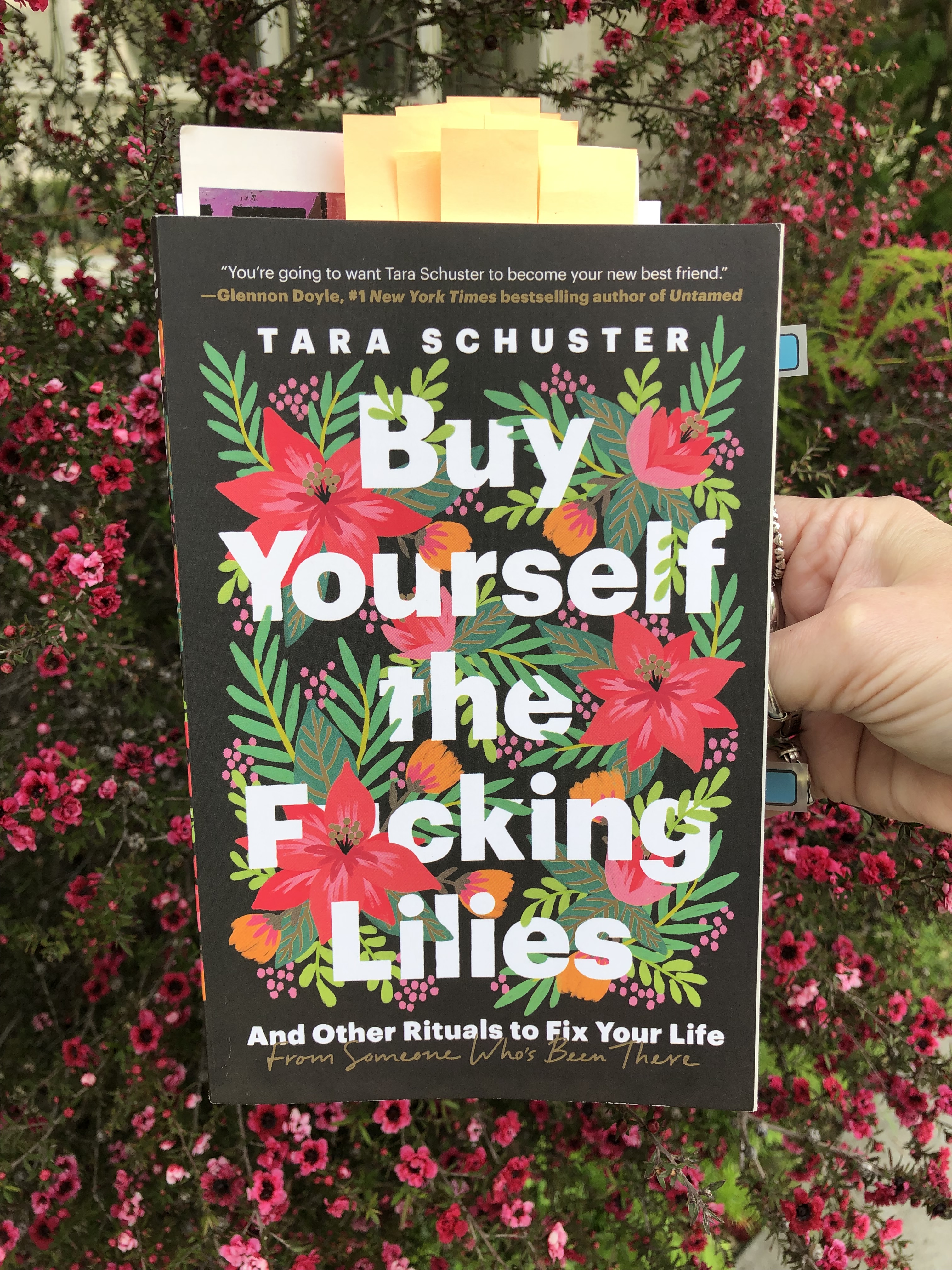
I was inspired to ask, because I’m reading Tara Schuster’s book Buy Yourself the F*cking Lilies: And Other Rituals to Fix Your Life, From Someone Who’s Been There and earlier that day had read the chapter titled “If You Can Play Nice with Others, Play Nice with Yourself: Do One King Thing for Yourself on the Daily.” (By the way, I’m loving this book; more to come on this book in a future blog post or two.)

In the first paragraph of that chapter, Ms. Schuster tests her readers:

How nice are you to yourself? Don’t know? Let’s try a test. Right now, write down ten things you like about yourself. Go ahead and use the margins of the book.” 

I didn’t write in the margins of the book, though plenty of pages are marked with sticky notes and yellow highlighter. But I did pause in my reading and try to mentally list ten things I like about myself. It’s a hard thing to do.

So at dinner that night, I decided to try out an easier version on my son. 

What three adjectives would you use to describe yourself?

Of course, he first wanted to know why I was asking, and I told him I was just curious, based on something I had read in my book.

My high school-freshman-son took a few seconds before replying.

“Creative. Unique. Likable.” 

It was quick and easy for him. And I love the three adjectives he chose! It just made me feel like that was one of those moments when my husband and I each earned a little pat on the back, an acknowledgement from the universe that we’re doing a good job as parents. 

I’ve been trying to think of my three adjectives. It’s definitely harder for me to do, than it was for my son. 

So far I’ve got, “neat, kind, punctual.” 

Another time I came up with, “passionate, friendly, literary.”

How about you, dear readers? Feel free to share your three adjectives in the comments.

No Rest for the Weary

I stood in my hallway the other afternoon, leaning against the wall, doing my physical therapy homework.

And I started crying. 

Not because of pain. Not because the stretch was overly difficult. 

I started crying because sometimes I’m just so tired of it all.

I’m tired of the bottles of prescription medication and supplements.

I’m tired of the doctors’ appointments written on our family calendar hanging in the kitchen.

I’m tired of watching a basketball game on television with a heating pad on my left leg.

I’m tired of waking up each morning and having my first footsteps feel and sound more like shuffles — heavy and slow and laborious.

I’m tired of lifting up my pant leg, trying to see if my leg looks different. Or swollen. Or bruised. 

It all feels like so much work. 

Living with a chronic disability is — a lot. Life-changing. Expensive. Anxiety-provoking. Wearing. Uncertain. Scary. 

My son is on his spring break this week. A week off from early morning alarms, five-minute passing periods, morning announcements, dismissal bells, crowded hallways, and nightly homework. 

But when you live with a chronic disability there is never time off.

Walk the Talk, part 2

A couple of weeks ago, I wrote about a passage from Claire Cook’s book Walk the Talk that really resonated with me. (If you missed it, you can read it by clicking here.)

Since that post, I have finished the book and have a few more passages I’d like to share with you.

While pages 146-147 concerned a mother of two young children and her own landscape design business, I could completely understand the situation she was describing and the emotions involved:

“ ‘I put everybody else’s wants about my actual professional need to focus on my landscape designs. And if I don’t put their needs first, there’s this unevolved ruffly apron-wearing part of me that feels like I’m a bad mother.’
“ ‘We often do things ourselves because it’s faster and more efficient,’ I said. ‘But there’s a learning curve to everything. And that means doing things imperfectly is a part of the process, an experience your kids, and even your husband, actually need to have in order to learn how to do something well. And the reality is that every time you step in, you’re not just taking away their opportunity for growth, you’re also literally stealing time from yourself.’

And while I definitely don’t always hit 10,000 steps each day, I did love this:

“In a way, walking had become my North Star. Whatever was or wasn’t happening in my life, if I set my sights on those 10,000 steps and just kept putting one foot in front of the other, eventually I’d work it out. Because it can take a long time to find the courage to say no to the stupid stuff and take steps toward the things that will make your life soar. And more and more I was realizing that courage doesn’t mean you lose the fear. It means you keep walking anyway.”

Then there’s this hopeful bit near the end:

“I let my mind wander wherever it wanted to go. And I started thinking that life might really be like that cinematic box of chocolates — you know, full of surprises and you can’t predict which one you’ll get next.
“But a relationship — romance, friendship, partnership, walkingship or a hybrid of some or all of them — is more like an iris rhizome, with roots spread out in random directions, often chaotic, sometimes dramatic, occasionally crazy, but always still connected by the sheer beauty and complexity of this lumpy bumpy thing that holds you together and keeps growing if you water it.”

Have you read any of Claire Cook’s books? Do you have a favorite?

Before and After the Book Deal

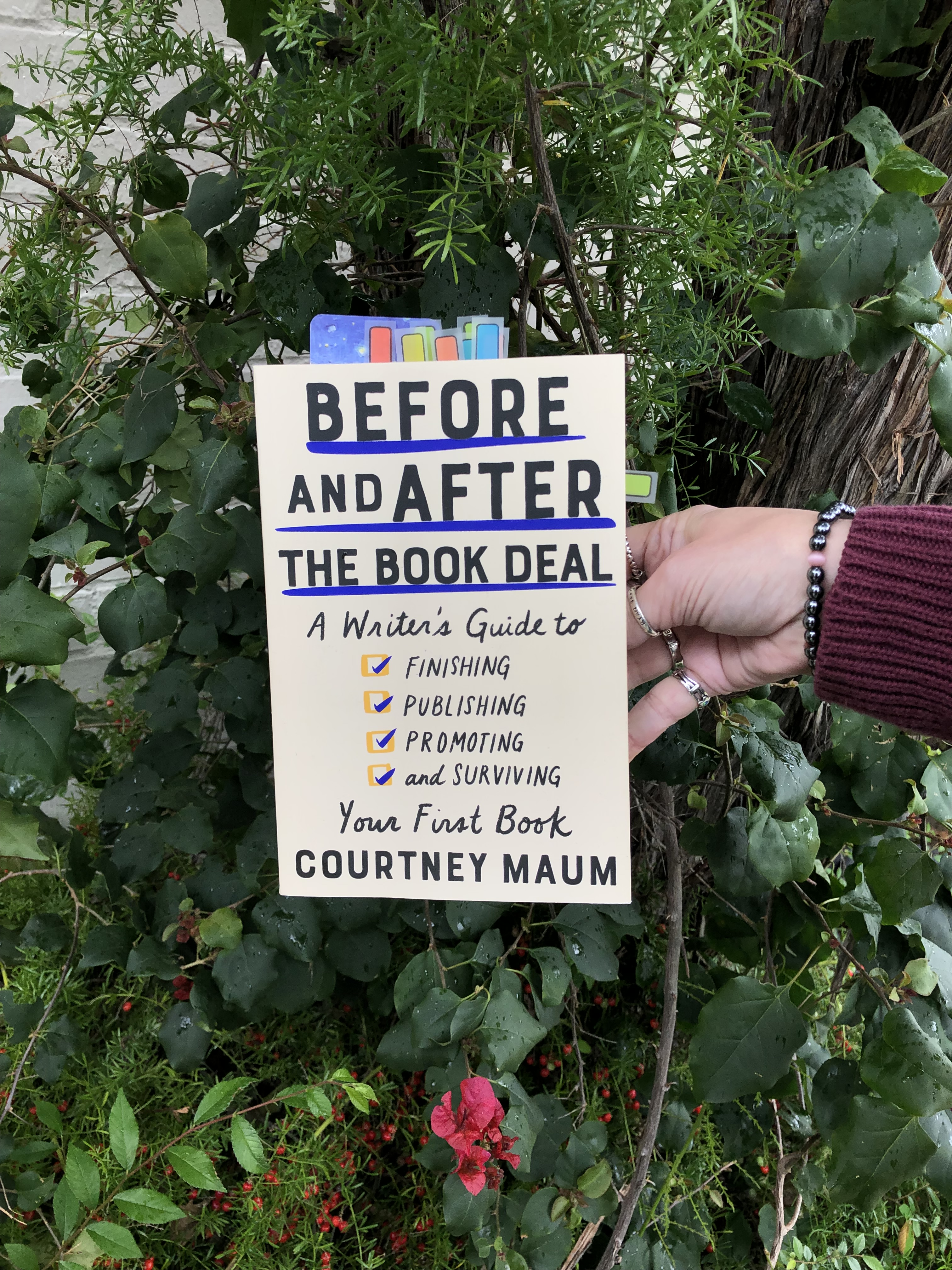
Before and After the Book Deal: A Writer’s Guide to Finishing, Publishing, Promoting, and Surviving Your First Book by Courtney Maum is one of those books you don’t necessarily read from start to finish. It’s a book that has been on my bedside table for a while now. I pick it up and read a few pages, mark meaningful paragraphs with a yellow highlighter and sticky notes, and then put the book down again until the next time.

Ms. Maum has crafted a well-written and, at-times, humorous book. It is an incredibly valuable resource for writers who are looking to “finish, publish, promote and survive” their first book. Which I am.

Yet, even if you’re not a writer, if you create in a different medium, there are useful tidbits for all artists and creators. Here are just a few:

“Narrative voice is your literary aura, your essence, the thing that allows writers the world over to write about the same topics in thrillingly different ways. Even though it’s yours, your voice can take a long, long time to find.”

“Get excited by your rejections. They are road maps toward the kind of work that you were born to write.”  (It’s a good reminder. Although they are a part of the writing process, some rejections sting more than others.)

In addition to writer-specific advice, I love these reminders about the power of expressing gratitude:

“Set some money aside for thank-you tokens for your editorial team and agents at pub time. (A heartfelt, handwritten card is thoughtful, but some authors also send on gifts, flowers, alcohol [when appropriate], or something handmade.)”

“At some point after the book contract is finalized, if you live close enough to your publishing house to make this happy event possible, you will meet the people who are going to publish your first book.
“Within twenty-four hours, send a group email to everyone you met expressing how great it was to meet them, how lucky you are to be working with them, and why [enter name of publisher] is simply the best house for your book. Then send a handwritten note to your editor, reiterating the same.” 

Dear readers-who-are-also-writers, have you read this book? Do you have paragraphs or pages you have marked with your own sticky notes? 

Walk the Talk

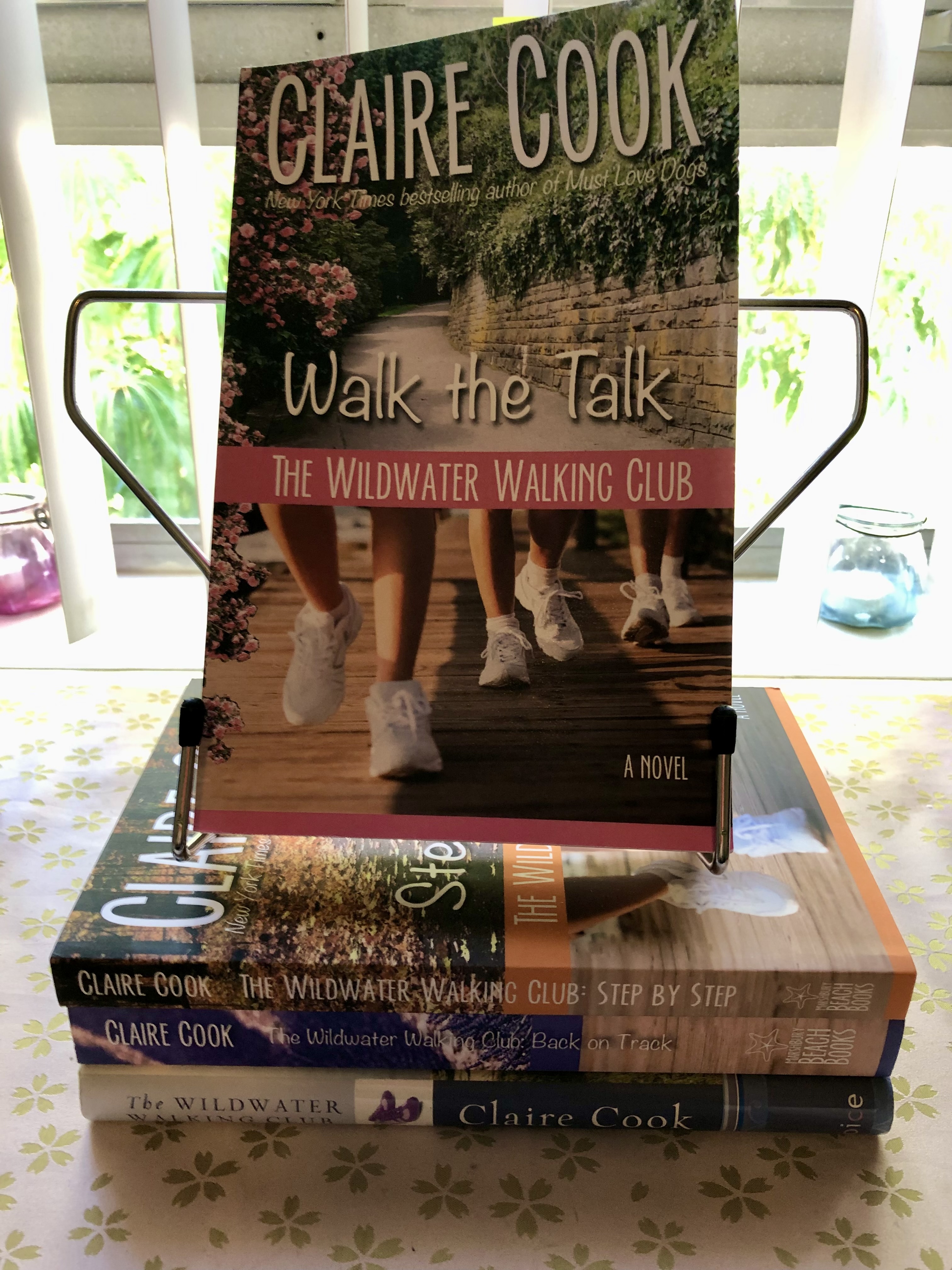
I recently started reading Claire Cook’s novel Walk the Talk, the fourth book in her Wildwater Walking Club series. (I have read and enjoyed them all.)

Page 20 stopped me, though. Because page 20 made me realize I had become a bit of a hypocrite. 

Let me explain.

From the novel:

The dictionary, or at least Wiktionary, definition of walk the talk is to perform actions consistent with one’s claims. Walking the talk is all about doing what you said you would do, not just making empty promises to someone, especially to yourself.
“Walk the talk is a kind of condensed version of if you’re going to talk the talk, you’ve got to walk the walk. Which is kind of a modern version of old sayings like practice what you preach or actions speak louder than words.
However you decided to phrase it, for most of us, walking the talk was way easier said than done.”

Reading is always one of my top answers when I’m asked about my hobbies and ways I like to spend my time. 

Reading Walk the Talk made me realize I talk, and write, a lot about books and reading. Yet lately I have not devoted a lot of time to reading. It’s so easy to push reading off my daily to-do list, to make room for chores like “shred old papers,” “pick up prescriptions at CVS,” or “return library books.” 

They say a big first step in solving a problem is acknowledging there is a problem. This week’s blog post serves as my acknowledgment. I want to read more. Specifically, I want to read more during the day and not just save my reading for the last few minutes before I fall asleep at night. 

Now I just need to walk the talk.

How about you, dear readers? Do you make a lot of time each day to read? Or is there another goal you have in mind when thinking about “walking the talk”? Let me know in the comments.

Everything Happens For a Reason

Back in April 2022, I wrote a blog post about Kate Bowler’s book No Cure For Being Human (And Other Truths I Need to Hear). If you missed it, you can click here to read it. 

I recently finished reading Ms. Bowler’s other book Everything Happens For a Reason (And Other Lies I’ve Loved)

(Just so you know – this book was published in 2018, before No Cure For Being Human.) 

I am in awe of Ms. Bowler — the way she blends truth and humor, tenderness and rawness. 

Let me share just some of the passages that earned sticky notes in my copy:

“I have had two perfect moments in my life. The first was running down the aisle with Toban on our wedding day, and we burst through the church doors and stood, breathless, alone as husband and wife, gazing at each other like complete idiots. And the other was when they put Zach in my arms for the first time and we looked at each other like it was a conspiracy of mutual adoration. These are my Impossible Thoughts. These are my Can’t-Live-Withouts. I cannot picture a world where I am not theirs. Where I am simply gone.”

“When we arrived at the hospital, a day into hard labor that wouldn’t progress, the doctor looked me up and down and suggested that we return home again.
“ ‘You don’t have the look of someone in labor,’ she said matter-of-factly.
“  ‘Yeah, well, you’re going to want to check me. I am, unfortunately, amazing at being miserable.’”

“Infertility and disability should have taught me how to surrender, taught me how little I can control the conditions of my own happiness. Instead, that helplessness has only thickened my resolve to salvage what I can from the wreckage.”

“If I never nap. If I never complain. If I stifle my sharp intake of breath when I feel the pain. If I hide the reality, then maybe I’m not sick. So I continue to work full days. I get up at 6:30 am every day — no matter what — so I won’t miss a moment with my son. When I stop taking the medication that minimizes the numb feeling in my hands and feet, because I want to feel every shred of what is happening to me, my friends practically stage an intervention. When will I realize that surrender is not weakness?”

“But most everyone I meet is dying to make me certain. They want me to know, without a doubt, that there is a hidden logic to this seeming chaos. Even when I was still in the hospital, a neighbor came to the door and told my husband that everything happens for a reason.
“ ‘I’d love to hear it,’ he replied.
“ ‘Pardon?’ she said, startled.
“ ‘The reason my wife is dying,’ he said in that sweet and sour way he has, effectively ending the conversation as the neighbor stammered something and handed him a casserole.”

“There is no life in general. Each day has been a collection of trivial details — little intimacies and jokes and screw-ups and realizations. My problems can’t be solved by those formulas — those clichés — when my life was never generic to begin with. God may be universal, but I am not.”

What do I want to give them? I have taken the notebook back out and scribbled a couple of words.
Compassion.
That one is for Zach. I have always wanted to raise a boy who loves the underdog, who stops for snails, who wants to know why the man outside the car window says he will work for food. I want to raise a tough softy. He will know the pain of the world but all will be better for it. He will be brave in the face of heartbreak.”

And Appendix I, titled “Absolutely Never Say This to People Experiencing Terrible Times: A Short List,” is quite wonderful all on its own. Here are a few gems:

“ ‘Well, at least…’
“Whoa. Hold up there. Were you about to make a comparison? At least it’s not … what? Stage V cancer? Don’t minimize.”

“ ‘God needed an angel.’
“This one takes the cake because (a) it makes God look sadistic and needy and (b) angels are, according to Christian tradition, created from scratch. Not dead people looking for a cameo in Ghost. You see how confusing it is when we just pretend that the deceased return to help you find your car keys or make pottery?”

An Anniversary

Room 7, shortly before I turned in my keys. March 1, 2013

Yesterday, February 28th, was Rare Disease Day.

Today, March 1st, is the start of Autoimmune Disease Awareness Month. It is also an anniversary for me. Ten years ago, March 1st, 2013, was my last day of teaching.

It’s a day with a lot of emotions for me, and the way I try to make sense of my emotions is by writing about them. 

Many of you, my dear readers, may not know that I am writing a memoir-in-essays about my experiences living with an invisible disability. One of my first essays is titled, “The Big Reveal,” and recounts the morning when my husband and I met with my rheumatologist. 

The appointment was set for early morning so I could make it to my fourth grade classroom before the school bell. I took this as a good sign. No doctor would deliver heartbreaking news and then expect me to go teach a roomful of nine and ten-year olds. Whatever he had to tell me couldn’t be that bad.
“That’s what I kept telling myself because that’s what I needed to believe.”

When my rheumatologist finally put a name to my symptoms — Undifferentiated Connective Tissue Disease (UCTD) — my husband and I felt it was the first time we could truly exhale. 

My rheumatologist said something else that morning, something that didn’t quite register at the time. 

It’s rare. No one will know what you’re talking about if you say you have UCTD. So, if you want to walk around and call it ‘The Kennar,’ you can.
“I chuckled. ‘I’ve always dared to be different, so I guess this fits.’
“But since then, I’ve changed my mind. I don’t want a rare condition most people have never heard of. If I’m destined to live with a chronic medical condition, then I’d prefer it to be familiar; a disease doctors understand and know how to treat. Maybe even a disease with its own awareness month or magnetic ribbon I can attach to my car. I didn’t know it at the time, but different, at least when it comes to the world of medicine, isn’t always better.”

You might not see it on any calendar, but Strong Woman Day? 

That’s every day.

Sometimes I Cry

(The tears mean it’s essential to find moments of joy; like this family outing last month to the South Coast Botanic Garden.)

It surprises me, sometimes, the “little” things that make me cry.

Just the other day it was the discovery of a package of panty hose in the back of my dresser drawer. I’m not necessarily sad that I can no longer wear panty hose. (My calf is super sensitive; I can’t wear anything tight around it.) In fact, many women choose not to wear panty hose. But for me, it was more than the panty hose; it was what that panty hose represented — my teaching days. When I was teaching, I either wore slacks or skirts to school, except for field trips and School Spirit Fridays. I found that package of panty hose, and after my initial surprise wore off, I felt the tears running quietly down my face. 

A couple of weeks ago I heard Colbie Caillat’s “Bubbly” on the radio. It’s a fun, definitely-not-sad song. But, it’s also the song I remember describing to my husband as he stood next to my hospital bed. This was back in 2010, when I had been admitted into the hospital after spending hours in the Emergency Room with a swollen left calf and without the ability to stand or walk. My husband was trying to distract me with music, and I asked him about the song that had something to do with “toes and nose.” It was a challenge to find the song, but it was a task he could complete. Something we could have an answer to, in terms of the name of the song and the artist, when so much of our life as a family was without answers the longer I stayed in that hospital bed. So while it is a fun song, it has some powerful memories attached to it.

And sometimes it’s the not-so-little things. Like my nightly showers that seem to make me increasingly weak. Or the trips to the grocery store that most times feel more like an endurance test than a regular chore. Or emptying the dishwasher. Or watering my outside plants. Or getting in and out of the car.

Which is all to say that I have been living with this autoimmune disease of mine for almost 13 years. 

And it hasn’t gotten any easier.