Family Field Trips Re-Imagined

Will Rogers Park – one of our summer “field trips”

Each summer since 2007, our family visits the Aquarium of the Pacific. (In fact, this yearly tradition began the day I took my home pregnancy test and learned I was expecting!)

“But this hasn’t been a typical summer. We had to alter the ‘what’ and ‘where’ of our days, yet I’m proud to say, we’re still acting as tourists in our city. We’re just exploring, observing, and visiting outdoor spaces this time.”

The paragraph above is from my recently published personal essay, “Our End-of-Summer L.A. Field Trips” which was recently published at L.A. Parent. You can read it here.

And no, we didn’t visit the Aquarium this year. (Though the Aquarium does now offer outdoor admission.)


Grateful for Ordinary Days

These days, it’s all about perspective. 

Looking at things in a “glass-half-full” mindset.

We’re not “stuck at home.” 

We’re “safe at home.”

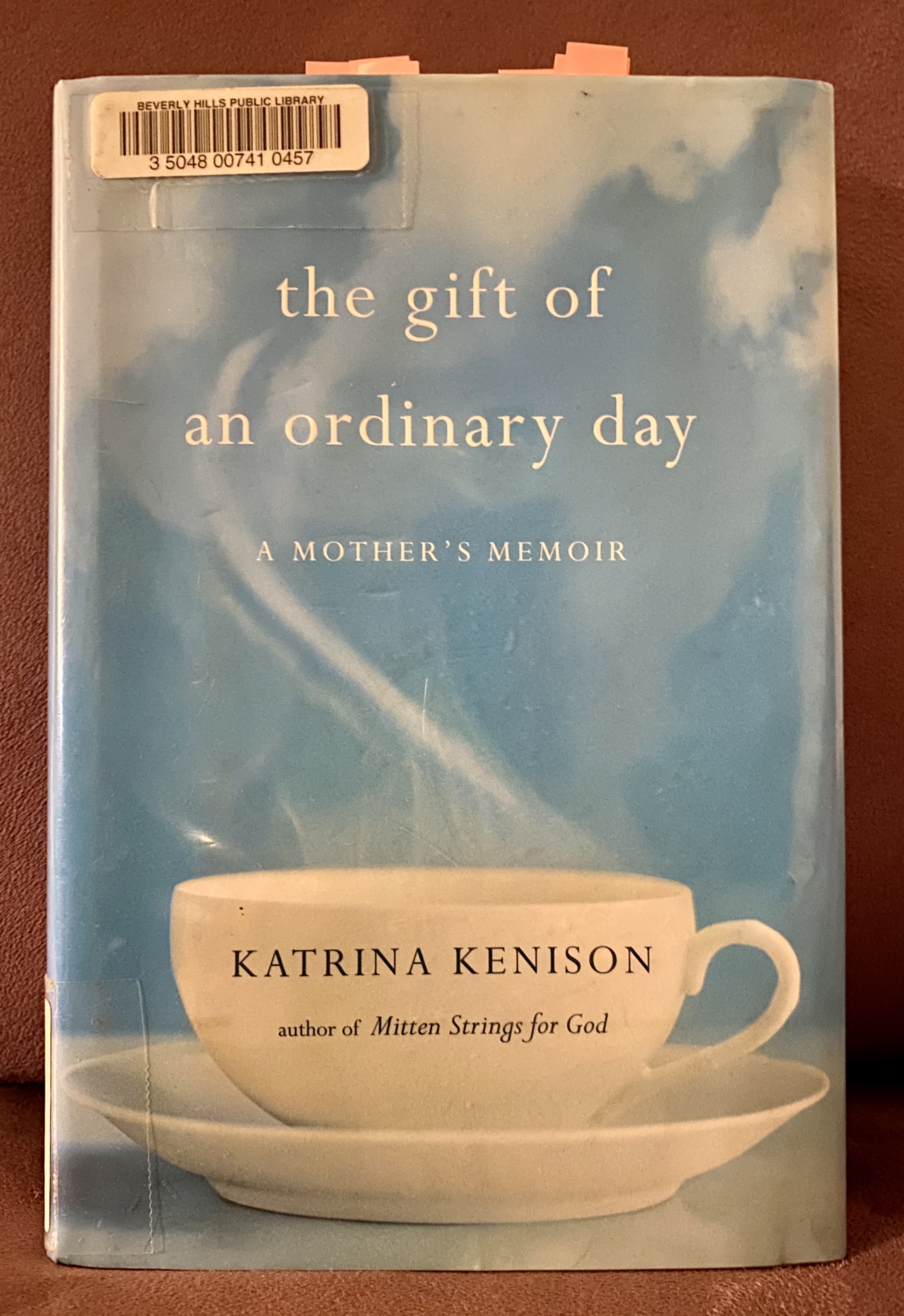
Which brings me to Katrina Kenison’s memoir The Gift of an Ordinary Day.

Because as much as I’d like things to be different, there is also much to celebrate and rejoice in these “ordinary days.” I don’t take for granted our family’s good fortune and good health.

This week, I’d like to share with you some of my favorite takeaways from Ms. Kenison’s memoir:

“Immersed in the physical and emotional realm of parenthood, we develop reserves of patience, imagination, and fortitude we never dreamed possible. At times, the hard work of being a mother seems in itself a spiritual practice, an opportunity for growth and self-exploration in an extraordinarily intimate world, a world in which hands are for holding, bodies for snuggling, laps for sitting.”

“How in fact life is not all about planning and shaping, but about not knowing, and being okay with that. It’s about learning to take the moment that comes and make the best of it, without any idea of what’s going to happen next.”

“Learning well doesn’t always mean scoring high. It also means acquiring the tools necessary to take on the most challenging work of all – becoming the person you are meant to be.”

“It may well be that success lies as much in our ability to behold the world before us in gratitude and wonder as it does in owning things and doing things. And it may be, too, that happiness really is a state of mind we choose for ourselves, a way of being that we cultivate from one moment to the next, rather than the result of realizing our ambitions or acquiring whatever it is we think we most desire.”

“That we can’t always choose what happens to us, can’t always pick the hand we’re dealt – but we can choose our response and decide how to play the hand we have.”

“None of this was ever part of the plan, but life so rarely unfolds according to plan. Real life is just where we are, in this moment, and the only mistake we’ve made so far has been not to pause long enough or often enough to realize that even this odd in-between time is precious, fleeting, and worthy of our attention.”

“That there is no such thing as a charmed life, not for any of us, no matter where we live or how mindfully we attend to the tasks at hand. But there are charmed moments, all the time, in every life and in every day, if we are only awake enough to appreciate them.”

“Ordinary days. The days in which nothing momentous happens, no great victories are won, no huge disappointments suffered, no milestones achieved. Most of our lives are made up of days just like this – if we’re lucky, that is, and the seas of fate are calm. Days that are not particularly memorable, but that are nonetheless the only days we have.”


A Bit of Perfection

My favorite part of last week was a completely unplanned activity.

A spontaneous way for my son and I to spend a part of our afternoon.

My twelve-year-old son, a week away from entering the 7th grade, allowed me to paint his hands and feet.

The last time we made his hand and footprints was two years ago. I’ve asked on-and-off during these past two years, and Ryan usually declines.

But this particular afternoon he agreed.

And I was delighted.

I’ve been painting Ryan’s hands and feet since he was a baby. I used to press his little palm into a large ink pad and that’s how he would “sign” greeting cards for family members. 

And don’t forget, I’m a former teacher. I loved painting my students’ hands for all sorts of fun activities. Hands make great leaves for flowers, reindeer antlers, and turkeys! (My first year of teaching, another kindergarten teacher shared with me a valuable tip – add some dish soap to the paint. It makes it so much easier for kids to clean their hands and for the paint to come out of any clothes it may accidentally get on.)

Others might see our painting time as a rather simple activity, but it felt magical.

I was in awe. 

I marveled at the size of Ryan’s hands and feet. The way the human body just knows how to do things – like grow. Bones and skin and muscles. It’s amazing.

The world outside our home is scary right now. But for those precious moments when we sat on the floor making handprints and footprints, everything felt perfect. 

Why Do You Enjoy Reading?

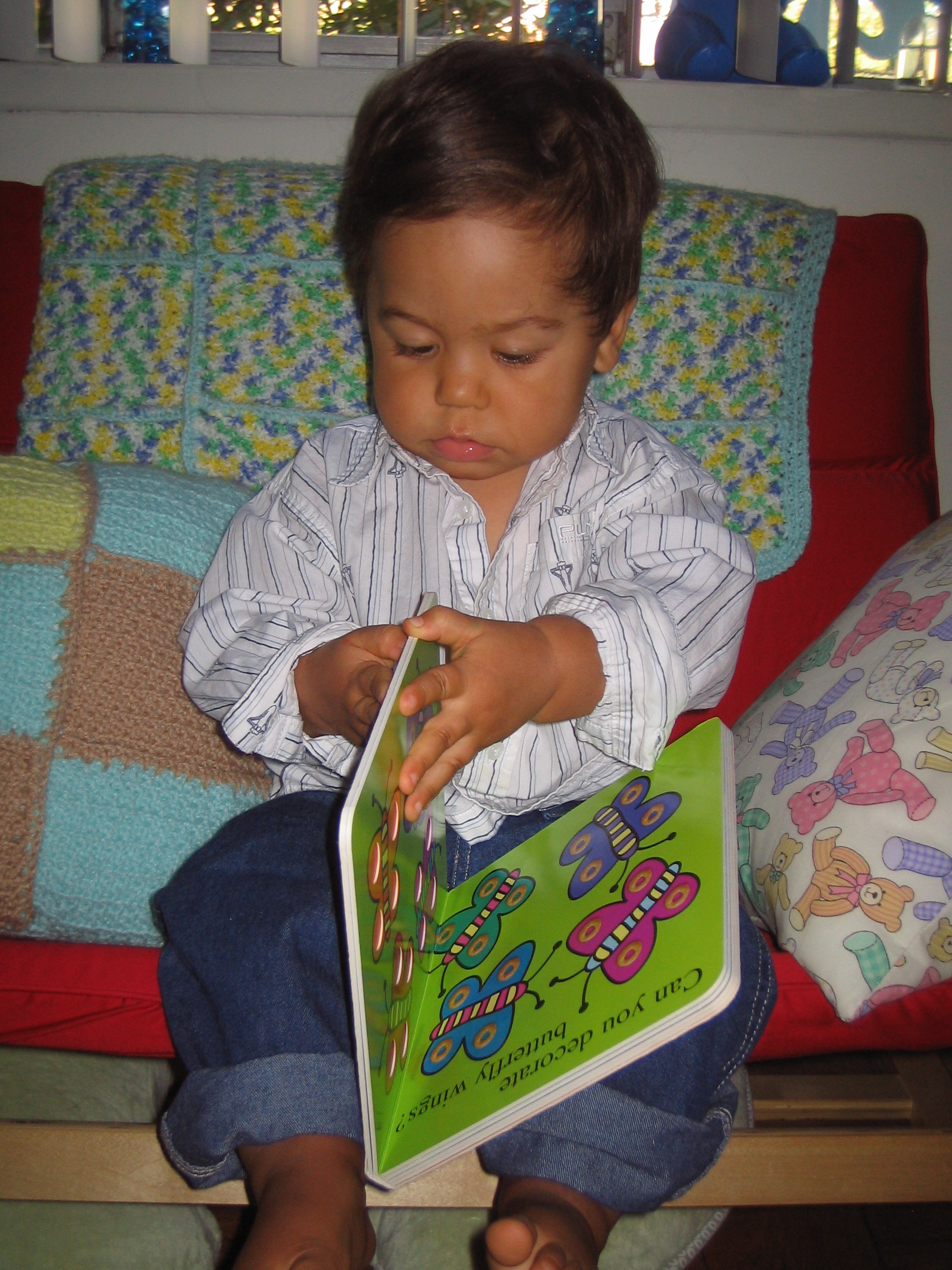
A born reader! Ryan at 18 months old!

Recently, while on a walk with my twelve-year-old son, I asked Ryan what he would say if someone asked him why he enjoys reading.

(By the way, click here to read a recently published essay about our walks called “Yes, Walking Is Exercise.”)

Ryan took a second and then answered, “Because it’s fun. And it’s interesting.”

He continued, “It depends what I’m reading. Like Diary of a Wimpy Kid is fun. And biographies are interesting. I learn new things.”

I smiled. 

“Great answer,” I proudly replied.

I share this story with you in honor of National Book Lovers Day coming up on Sunday, August 9th.

Keep reading. And wearing those masks!


Writing As My Way of Teaching

I didn’t start writing as a way to “heal.” 

In fact, my earliest memory of myself as a writer goes back to second grade. I had written a story and showed it to my teacher, Mrs. Jones. In all fairness, in my memory, my story wasn’t entirely my own, but was “borrowed” from something I had seen on Sesame Street. 

In any event, Mrs. Jones made me a “book” with yellow construction paper for the front and back covers and the “good paper” inside – the white paper with blue lines that was always reserved for our final drafts. She told me to write my stories down in my book. 

I don’t know what happened to that book, but I do know that I’ve been writing ever since.

I got lucky. My very first publication was in the Los Angeles Times. 

After that, most of my published personal essays were inspired by my teaching career and my interactions with my students. (You can check out a list of my published work here.)

But that was before 2010. For the past ten years, I have written more and more about my life with an autoimmune disease. In fact, I am working on a memoir-in-essays as a mother, wife, and former teacher living with this invisible disability.

And that’s why I recently read Louise DeSalvo’s Writing as a Way of Healing – How Telling Our Stories Transforms Our Lives.

While I don’t know if writing is “transforming” my life, I do believe writing provides me with a different opportunity to teach.

This week, I’d like to share a few of the passages that I marked with my pinkish/purplish highlighter.

“… writing that springs from intensely personal motives can be useful to others. For loss is a universal human experience, something we all must learn to deal with.”

“Through reading, our imaginative faculties are nourished, enriched, expanded. This is why, for writers and would-be writers, reading is not a luxury but a necessity.”

“One reason, then, to write as we face these critical junctures in our lives is that illness and disability necessitate that we think differently about ourselves, about everything. We can write a new story for ourselves, to discover who we are now – what we’re feeling and thinking and what we desire. We can learn, too, what our bodies are like now, and we can imagine what will become of us.”

“Writing gives us back the voices we seem to lose when our bodies become ill or disabled. We want to speak for ourselves and our particular experience of illness and disability rather than have someone else speak for us. Writing helps us assert our individuality, our authority, our own particular style. All are seriously compromised by medical treatment and hospitalizations …”

“For illness often confers a wisdom about how to make ordinary life deeply and transcendentally meaningful.” 


10 Years (and Counting) of Chronic Contradictions

This month is a 10th anniversary for me.

An anniversary that isn’t cause for celebration.

But is cause for acknowledgement and reflection.

10 years ago this month, I woke up on a Sunday morning and couldn’t stand. For a few days, my left calf had felt sore and tight – the leftover feeling you get after a muscle cramp.

But on this particular Sunday morning, my calf wasn’t just sore and tight. It was red. Elmo-red. And swollen. And I couldn’t stand up. 

I knew something was wrong when the emergency room nurse admitted me as quickly as she did.

My prior emergency room experience was more than five years earlier when I cut the palm of my left hand while trying to cut open an avocado. I remember sitting in the waiting area that evening, my arm raised, my hand wrapped in dishtowels waiting to see a doctor. Waiting for stitches. 

This time I was immediately admitted.

I knew that wasn’t a good sign.

But never could I have imagined that my left calf’s “issues” weren’t a temporary problem. Never could I have imagined that Sunday in July was just the beginning. 

And never could I have imagined that my life would forever be changed.

“Even though my disease has been a part of my life for several years now, I don’t feel as if I’ve reached a level of total acceptance and understanding. I am more and more convinced that living with a chronic illness is synonymous with living a life full of contradictions.” 

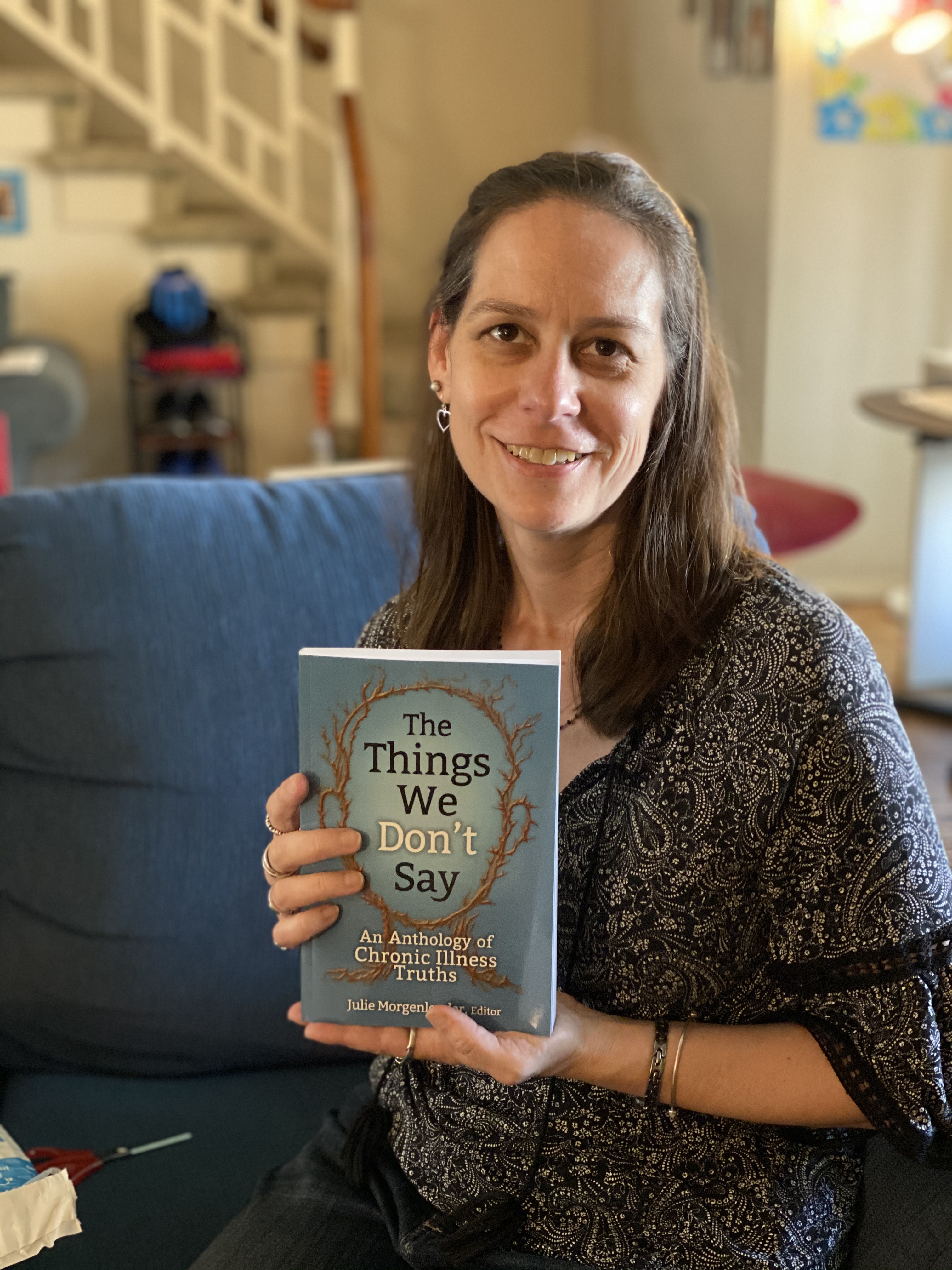
That passage is from my essay, “Chronic Contradictions,” which is included in the recently published anthology, The Things We Don’t Say – An Anthology of Chronic Illness Truths.

Though I wrote those words about three years ago, they’re just as true today.


Wendy and the So-So, Not Great, Very Painful Day


Do you remember the children’s book Alexander and the Terrible, Horrible, No Good, Very Bad Day by Judith Viorst?

It’s such a fun read. 

And even though my son is twelve now, it still sits on his bookcase. (So does The Cat in the Hat. Some books are timeless classics, after all.)

Alexander is having a tough day. It started when he woke up with gum in his hair. Throughout his day, one bad thing after another keeps happening to poor Alexander. He’s convinced life would be better if he moved to Australia.

His mother reminds him that “some days are like that. Even in Australia.”

Lately, I’ve been borrowing Alexander’s words, telling my family that I’m moving to Australia. Here’s why:

– I woke up before my husband’s alarm, after a fitful night’s sleep. My calf felt tight and it hurt just to lie in bed, just to have my calf resting against the mattress.

– I kept dropping things on the floor as I prepared breakfast. The chocolate chips for my son’s Eggo Waffle. My Cheerios.

– I couldn’t decide what to wear. All my usual jeans felt as if they had transformed into Skinny Jeans overnight. They seemed to grip my leg, like plastic wrap covering a plate of leftovers. 

– I went for a neighborhood walk with my son. I felt okay when we left the house. Somewhere, somehow while we were out, the pain came back. It didn’t creep back in either. It barged in. I limped home.

– I went upstairs to get my book, and as I did my knees creaked and groaned. It was painful to listen to and painful to climb the stairs.

– I went to sit out on our patio, to enjoy the sunshine and the colorful sight of my blooming plants, only to discover one of the neighbor’s dogs had pooped on my patio.

– I watered my plants after reading and somehow spilled water onto my feet instead.

– I spent time in the kitchen, boiling water for pasta, hand washing my son’s favorite popcorn bowl, and had to lean against the kitchen counter. My thigh began to hurt. Hurt like someone or something had hit it. Hard.

– I gingerly touched my leg, trying to find out why it felt different. The back of my left knee was puffy, swollen, and tender.

– I dealt with the pain all day long. 

– It wasn’t a terrible, horrible, no good, very bad day.

– But it wasn’t a wonderful, fantastic, great, very good day either. 

But I think even in Australia my leg would hurt, my socks would get wet if water spilled on them, and I’d be annoyed and disgusted to find dog poop on my patio.


Reasons To Still Be Happy

Sometimes I need to read to escape. 

Not for information. Not for facts. But to step into a world other than my own.

Sometimes I read for hope. 

For reassurance. 

For that soothing feeling you get when you drink a really good mug-full of hot chocolate on a cold day.

That’s how I felt when I read Elizabeth Berg’s Still Happy.

The book is a collection of Ms. Berg’s Facebook posts, and since I am not on Facebook, this book was the only way for me to read her delightful observations. (By the way, if you’re curious you can click here to read my article “Why I’m Not on Facebook” on Role Reboot.)

This week I’d like to share some delightful passages with you.

“I want to be a responsible citizen. I don’t want to bury my head in the sand. I want to work hard to try to make a better world not just for our beautiful children and grandchildren but for our beautiful old people and our beautiful selves. We live in such hard times. We need to take care of ourselves so that we can take care of others. Therefore the onus is as much on us to seek out and bask in little pleasures (or big ones), to relish or become demonstrations of love and content, to celebrate nature’s beauty and humanity’s worth – as it is to read the newspaper and write our congress people and vote in November.”

“I write because I need to. I write to get things from the inside, out. But I publish to try to connect.”

“I believe there are times in our lives that are little emergencies, when we see that the balance has shifted too far in one direction or the other, and parts of ourselves need more care and feeding than we’ve been willing to give.”

“I feel that we are living in times that assault us every day. I feel that the national mood is dark and despairing. But I also still believe that most people are basically good. We get lost sometimes, we get confused, we get combative, but at heart we are basically good.” 

“I have to hope that the biggest part of human nature is ever on the side of life and love, and that any day now, we will see the evidence of that. It will never be perfect, I know, but surely we can do better than this.” 

Note to my readers – Elizabeth Berg published this book in 2017, but many of her passages sound as if they are written for our current trying times. 


An Expression of ‘Me-Ness’

One of my bad habits is collecting paper – articles, advertisements, clippings. I cut them out, sometimes tear them out, and stash them away – in folders, in a wicker basket on the shelf under my coffee table, in an accordion folder. 

One of my projects in recent weeks has been to sort through these papers, to re-read the articles and decide if I want to keep them or recycle them.

That’s how I came upon this ad for Pandora jewelry.

On eight of my ten fingers, I wear nine rings. And while only one of my rings is a Pandora ring, I love the ad. 

Because my rings are an extension of my personality. 

To quote the ad: 

“Your rings aren’t just rings. They’re a punch of style. A bold expression of you-ness.”

Which is why it was devastating when I could no longer wear my rings. 

You can click here to read a personal essay (“How My Identity Has Been Affected by the Changes in My Hands Due to Illness”) I wrote a few years ago. My autoimmune disease may manifest itself as pain and weakness in my legs, but that doesn’t mean my hands, and my rings, haven’t also been affected. 

Readers, I’m curious. Do you wear any jewelry that you consider to be an “expression of you-ness”? Feel free to share in the comments section.


A Title for the Times

The problem with being a reader with an insatiable appetite is that I read so much I don’t always remember books I’ve read in the past.

During this shutdown, I’ve been doing the book-version of shopping from my closet. I’m re-reading and re-discovering books I already own and have read in years past. 

My latest “re-read-but-it-felt-like-a-new-read-because-I-read-it-so-long-ago-I-didn’t-remember-it” was Terry McMillan’s The Interruption of Everything. (In my defense, the book was published in 2005.)

Because without even reading the book’s jacket copy, the title was perfect for life right now.

While the protagonist, Marilyn, is the same age as me (44), her kids are in college. My son will be starting the 7th grade this fall.

But how perfect is this paragraph when it comes to describing moms?

“Being a lifetime wife and mother has afforded me the luxury of having multiple and even simultaneous careers: I’ve been a chauffeur. A chef. An interior decorator. A landscape architect, as well as a gardener. I’ve been a painter. A furniture restorer. A personal shopper. A veterinarian’s assistant and sometimes the veterinarian. I’ve been an accountant, a banker, and on occasion, a broker. I’ve been a beautician. A map. A psychic. Santa Claus. The Tooth Fairy. The T.V. Guide. A movie reviewer. An angel. God. A nurse and a nursemaid. A psychiatrist and psychologist. Evangelist.”

And then there’s this paragraph, about acknowledging the need for change:

“It has taken me a long time to recognize that I’ve never put myself first, I’m always on the bottom of my things to do list and I keep getting carried over to the next day/month/year. But not this time. I think I finally get it. You don’t have to give up everything to own your life. And you don’t have to give everything you own to fuel someone else’s.”

That’s the part I’m working on.