Bonus Time

“If you’re lucky enough to get that bonus time, what are you going to do with it?”

That’s the question on the back cover of Bonus Time, the novel I recently read.

Bonus Time by author Claire  Cook tells the story of three  friends — Glenda, Jan, and Harmony.  Women who have reached the ages where their days are not nearly as structured as they used to be, women who don’t have the same daily demands they once had. 

These are three spunky women who are older than I am, figuring out who they are when their days and their identities are not directly related to being someone’s wife or mother or employee. 

I won’t give anything away; I’ll just say that these three women get into all sorts of adventures and “trouble.” 

This week, I’m sharing a few of my favorite lines:

“For the most part, I embraced my wrinkles as the squiggly roadmap of a life well-lived.” 

“I sighed.
“As lives go, it could be worse. I’d been around the sun enough times by now to know that it could always, always be worse.
“And it could always get better. A lot better. And that part was pretty much up to you. You could sit around whining about what wasn’t working, or you could shake things up and reinvent your life one more time. I mean, at this point, who’s counting, right?
“The truth was that life was going to keep getting all lifey on you whether or not you were actively living it, so you might as well slather on some sunscreen and jump back into the fray.”

“ ‘ The focus should be on health-span,’ Harmony said. ‘Not looks-span or age-span or lifespan. Eat healthy. Stay hydrated. Keep moving.’
“ ‘Try new things, Jan said. ‘Keep learning. Use your acquired wisdom to make a difference. Have fun. Connect. Stay current so you don’t turn into a dinosaur. It’s not exactly drone science.’ ”

“ ‘Sometimes,’ I said, ‘I look at old pictures and I think how could I not have known how beautiful I was? I had absolutely no idea at the time. All I could see were an unflat stomach and jiggly thighs. I mean, how old do we have to be to let all that crap go, you know?’ “ 

“We were wearing yoga pants and T-shirts.
“Jan’s T-shirt said LOVE IS LOVE.
“Harmony’s said LITERACY IS NOT A LUXURY.
“Mine said THERE IS NO PLANET B.
“One of the true joys of getting older is not caring what anybody thinks about how you look. Which gives you the freedom to turn yourself into a walking billboard about the things that matter to you if you feel like it. Or not.”

Please note: I am including a link to buy the book that I’m highlighting this week. If you use my link, I do make a small commission on your purchase at no additional cost to you. I am working with Bookshop.org which also sends a portion of the profit to support local, independent bookstores.
Accessing Parenthood

In 2019, I wrote a personal essay titled, “Paying the Price,” and submitted it to the Pen 2 Paper writing contest, a “disability-focused creative writing contest.” That year, in addition to submitting in the Nonfiction category, I also submitted my essay to the Oleb Books Personal Essay category, meaning my essay, if chosen, would be included in an Oleb Books Anthology about parenting and disability. 

Five years later, I am so proud to share my essay, “Growing Up with Me and My Invisible Disability,” has been included in the recently published anthology, Accessing Parenthood: Stories By and About Parents with Disabilities.

During the last five years, my essay has been slightly edited and re-titled. (I admit — titles are not my strength. The editors politely informed me I needed a different title, one that would “add some pizazz that will pull readers in and make them curious enough to read on.”)

A few details are no longer accurate — namely the ages mentioned and the fact that our Los Angeles Clippers now play at Intuit Dome. 

But the emotions and the lessons learned haven’t changed.

Here are just a few passages from my personal essay:

“If I agreed, made the plans, and went horseback riding, would I be demonstrating the valuable life skills of perseverance and resiliency? Was my let’s-do-it attitude fortitude or stubbornness or stupidity? Was my go-getter-ness a refusal to submit to my disease or a life-affirming decision to go out and do things that might seem scary, hard, and uncomfortable?
“I didn’t know.
“I did know I wanted Ryan to grow up believing in himself and believing in the value of trying new things. Many things — food, music, places, experiences. Because they’re new and different. Because he’s curious. Because he wants to find out for himself. 
“I wanted Ryan to grow up living his life.”

“Through my actions and my words, I am trying to teach Ryan the broader definitions of strength, perseverance, and bravery. And along those lines, I’m trying to teach by example broader definitions for disability, pain, and handicap.”

“Maybe I hadn’t planned on being a mother with an inivisible disability, but it doesn’t change the way I love my son. Maybe I am teaching my son lessons I hadn’t expected to teach him. Maybe Ryan’s levels of patience, empathy, and sensitivity have grown exponentially while he’s growing up with me and my invisible disability.”

You can find out more about this unique collection by clicking here

Please note: I am including a link to buy the book that I’m highlighting this week. If you use my link, I do make a small commission on your purchase at no additional cost to you. I am working with Bookshop.org which also sends a portion of the profit to support local, independent bookstores.

My Mind Is Full

I had a “difficult” doctor’s appointment last week. 

Actually, I’m not sure difficult is the right word. 

Let me set the stage:

This was my three-month check-in. Basically, because of the medications I take, I need blood drawn every few months. Though I had a 9:00 am appointment, with an 8:45 check-in, my rheumatologist was running late. 

The doctor asked some general questions, but I had come in with a list of concerns and some questions of my own. 

I told my doctor about my fatigue, about waking up feeling unrested regardless of what time I go to sleep and how many wake-ups I have each night. He told me to go to bed earlier and to keep the same sleep schedule seven days a week. I told him neither one was going to happen. (Why wake up at 6:00 am on a Sunday when we have nowhere we need to be at a specific time?)

I told my doctor about the pain. The pain that I carry around every single day. The pain that slows me down, weighs me down, and often makes me feel like I’ve got a wad of gum stuck to the bottom of my shoe, making it difficult for me to walk as effortlessly or as quickly as I would like. 

I also told my doctor about my physical therapy and the progress my physical therapist says I’m making. 

“He says my endurance has improved since we’ve been working together,” I told my rheumatologist. 

“I go for a daily walk, and I use my pedal machine twice a day now,” I said proudly.

“What are you doing while you’re pedaling?” he asked.

“I read, usually. But sometimes I listen to a podcast or watch something on YouTube,” I said.

“You need to stop multi-tasking,” he said. (You may remember my blog post from January, when I wrote about my doctor’s appointment then and Dr. P’s unhelpful suggestions.)

“You need to really focus in on your leg,” he continued. 

I looked at him. Bit my tongue behind my mask. 

He continued, speaking of the increased benefits I would experience if only I would do less, if only I would really “zero in” on my knee and my calf. 

“I think most families multi-task. I don’t know how to get through my day without multi-tasking,” I said.

I went on. “When I go for my walks, I’m not listening to anything. No AirPods in my ears. I’m just walking and staying focused on my surroundings. But at home, I feel safe in reading or listening or watching something while I pedal,” I said.

“You’re not getting the full benefits you could be getting when you do that,” he said.

“Actually, my physical therapist always talks with me when I’m on the treadmill. He said it helps to be distracted, it makes the time go by faster,” I said.

I tried again. “I am in some level of pain every day, all day. I don’t need to be any more focused in on the pain. In fact, I need a break from it. Reading a book gives me a temporary escape,” I explained.

Ultimately it didn’t matter what I said. Dr. P might be pleasant enough, asking about my family, wishing me a good holiday season. But the fact of the matter is he doesn’t get it. Because he’s not living with pain like I am. 

The appointment left me feeling dismissed and blamed. Like the reason I feel as lousy as I do is because I refuse to go to bed at 9:00 pm, or wake up at 6:00 am, or stop reading my novel while pedaling for nine minutes at a time. 

Even if I did those things, he and I both know my pain wouldn’t magically disappear. 

Daily pain is a fact of life for me. No need to concentrate on that sad fact any more than I already do.

To my chronic illness friends – have any of you had a similar experience? Are your doctors talking to you about multitasking and/or mindfulness? Feel free to share in the comments.

As a side note — the appointment made me think back to an essay I wrote several years ago titled, “This Is What ‘Mindfulness’ Looks Like To Me.” I encourage you to check it out. I’d love to know your thoughts about mindfulness.


About My Memoir-In-Essays

My Memoir-In-Essays is divided into three sections --
The Beginning, After the Very Beginning, and Not the End

This week, I’d like to share a bit about my memoir-in-essays. 

1.  I continue to query literary agents and have not yet had any requests for my manuscript. It’s hard, I admit, not to feel badly about this. At the same time, I know there are multiple ways to get my story out into the world. If it doesn’t work out with an agent, I’ll pursue one of those other possibilities (such as hybrid publishing or publishing with a smaller, independent press). 

2.  I am keeping the title private, for now. Just like when I was pregnant, we announced the gender of our baby, but kept his name private except for family and a few super close friends. So while I’ll tell you I have written a memoir-in-essays, I just don’t feel ready to share the title yet. Though I do realize I shouldn’t get too attached to my working title, because titles are often changed, for many reasons. (This has been the case for many of my personal essays which have been published over the years.) 

3.  Here’s my official pitch:  “… my story of becoming chronically ill, retiring from my teaching career, and living a life I hadn’t planned as a stay-at-home mom. The book is composed of personal essays and micro-essays written as short school assignments.”

One of the things that makes my manuscript unique is the inclusion of these “micro-essays written as short school assignments.” Teaching was a huge part of my life, my identity. And it is because of my chronic illness that I am no longer teaching. Therefore, there’s no way I could write my story about life with an invisible disability without including parts from my teaching life. 

When I taught fourth grade, my students and I completed a getting-to-know you questionnaire during the first week of a new school year. It was a short form that was a quick, fun way to share what made us each unique while also giving students the opportunity to learn about each other, and realize many of them shared common interests. 

I included this questionnaire in my manuscript, and this week I will share a bit of it with you, my readers. 

I Am A Person Who…

By: Mrs. Kennar

Directions: As a way to get to know each other, please fill out this worksheet. By writing honest responses, we will learn about our new classmates. In the process, I think we will come to realize that while we are each unique individuals, we have a lot in common. 

I Am A Person Who…

likes Nutella crepes

dislikes spinach

can recite the Preamble to the Constitution 

cannot throw a spiral

would never watch a horror movie

loves to read

How about you, dear readers? Feel free to leave a comment answering one (or more) of these prompts. 

The Taste of Anger

There are some books that stay with you, long after you finish reading. Books that take up residence in your heart and mind. Books that make you feel, deeply, as if you have been an active participant in the story told on the pages. Books that are so rich with sensory details and vivid images, you did more than read the words; you saw the scenes play out in your mind.

The Taste of Anger: A Memoir by Diane Vonglis Parnell is one such book.

I must be honest. Diane is a friend of mine. We met several years ago at a writer’s retreat. We were classmates in a UCLA Extension Writers’ Program class taught by the late, lovely, Barbara Abercrombie. And after the class ended, Diane and I remained in touch for quite some time, emailing pages to each other, reading the other’s work and offering incredibly valuable insights and feedback and support. 

And now, the hard work, the years of writing and re-writing have culminated in the publication of Diane’s powerful memoir, The Taste of Anger

I must warn you, Diane’s book is not easy to read because of its subject matter — her incredibly abusive childhood. At the same time, Diane’s book is an important read, because it serves as a strong reminder — you never know what someone is dealing with simply by looking at them. You cannot always easily see the scars and pain someone deals with on a regular basis, which is something her book and my future book have in common.

Diane’s memoir is written from the point of view of her childhood self. We see the family, the school, the farm from young Diane’s point of view. And young Diane is observant, vigilant, and on high alert.

I am choosing not to share any passages that depict violence and abuse, because I understand how difficult and painful reading such passages may be for some. Instead, I am sharing a few passages that highlight the masterful descriptions and the sensory details that Diane uses throughout her memoir.

“In the kitchen, she rolls my hair in small silver curlers. They pinch so tight against my scalp that when I lay my head on my pillow, it feels as though I have stones tied all around my head.
“The entire family is up before the sun the next morning, getting ready for 6:30 mass. I ask Kathy to take my curlers out because she is gentler than Mom, unrolling them slowly so they don’t tear my hair out. When she’s done, I shake my head side to side, enjoying the tickle of the curls bouncing lightly against my face.”

“I watch a fly circle and get caught in a spider web in the corner. The fly struggles, making a loud bzzz bzzz bzzz, like an SOS signal, as the spider races across the web, pounces on it, and then rolls it in silk, placing it at the edge of the web next to another cocooned victim. I feel like that fly. If I go bzzz bzzz bzzz, will anyone hear the alarm? Will anyone come to save me?”

“Willy is a farmer from the next town over, jolly in a Santa kind of way, with the stub of a cigar always stuffed between the gap in his gray front teeth. His face is white-whiskered, his glasses held together at the bridge by black tape. He pulls his large body out from behind the steering wheel, steadying himself with a wooden cane. A hairy pink belly hangs visible beneath a tattered, ill-fitted T-shirt.”

“Mrs. Walters brings her chair from behind the desk, and we gather on the floor around her for Reading Time. It is my absolute favorite part of the day, and I sit right next to her, soaking in every word. She reads stories of tiny fairies and giants, a cat with big boots. Today we hear about a talking bear that gets lost in a train station. She turns the book around to show us illustrations of a chubby bear in a floppy hat. These vivid stories open doors to new worlds — happy worlds, magical words — and I fall earnestly into every one of them. Only during Reading Time do I truly forget about my life at home. I fight the urge to wrap my arm around my teacher’s leg, to lean my head against her knee. If she’d let me do that, and if she kept reading, I think I could close my eyes and stay right here for the rest of my life.”

“I am afraid of her, but I also like her orderliness, her clear rules, and the high expectations she sets for each of her new fourth-grade students. She scrutinizes our handwriting and then makes a special ceremony of passing out pens to the students she deems have graduated from the pencil. I am one of the first to get my very own blue pen, and when she calls my name, I blush and beam as I make my way to the front of the classroom where she holds it out to me. A gift to acknowledge my hard work. 
We have spelling bees and write essays. Sister Joan challenges us to think and to express our thoughts, and through her guidance, I am beginning to see that the world is much bigger than just me and my life on the farm. Best of all she reads to us every day, further fueling my love for the subject.”

“At home after supper, I bring my uniform downstairs to show my mother. She purses her lips, holding the jumper out in front of her, scrutinizing the hole. I want to scream at her for letting it get this bad, but we have been conditioned not to speak our thoughts or express our feelings at home, so mine are always clanging around inside of me like a handful of nails tossed in a dryer and set to tumble.”

One last note: I am so honored that Diane included me in the list of friends and supporters she mentions in her Acknowledgements. Thank you, Diane! I am so proud of you!

Please note: I am including a link to buy the book that I’m highlighting this week. If you use my link, I do make a small commission on your purchase at no additional cost to you. I am working with Bookshop.org which also sends a portion of the profit to support local, independent bookstores.

I Am Tired.

Eleven years ago, my personal essay “Do What You Need To Do” was published in the anthology Lessons From My Parents:100 Shared Moments that Changed Our Lives. I wrote about the example my parents set for me, the idea that sometimes you just have to suck it up, do the hard thing, keep going. 

That’s largely how I have lived my life. Doing the hard thing whenever I have to in order to achieve my goal — whether it was commuting on public buses for most of my college years (a roundtrip commute that took 3.5-4 hours a day, on six buses a day) or working as a kindergarten teacher during the day with an emergency teaching credential and taking online classes at night to earn my full teaching credential. 

It’s pretty much how I go about my day. Things need to be done. I just need to do them. 

Except, I’ve come to the slow realization that I just don’t think I can keep doing that. 

Because — I am so tired. 

I am tired of waking up each morning, feeling unrested. Sticking my feet into my slippers as the alarm goes off, wondering how I’m going to do it. How I’m going to wake up, get dressed, make my son his breakfast, take him to school, and function throughout the day.

I am tired of not reading as much as I’d like to each day. Which as I write that sentence, I realize it’s not completely accurate. I do read a lot each day. I read emails and text messages, newsletters and first drafts. I just don’t always take a half hour and sit and read my book. Sometimes it’s because I’m in pain, and I can’t get comfortable to sit for an extended period of time and lose myself in the words on the page. Sometimes it’s because I feel there’s too much work that needs to be done for me to take a break and read. When I read in bed shortly before I turn off my bedside lamp for sleep, I inevitably start to doze, and the paperback book slips from my fingers and startles me as it falls against me. (One of the reasons why I generally prefer paperbacks to hardcovers.)

I am tired of looking at myself in the mirror and not fully recognizing the woman looking back. I take stock of the physical changes — hair loss, weight gain, swollen ankles — and realize I have no idea which of my ailments is contributing to each symptom. For example, the hair loss I’m noticing could be due to one of my medications, or my longer hair, or menopause. 

I am tired of clicking on my inbox and feeling so far behind in reading my emails. How did I become someone with three hundred unread emails? Seemingly overnight, I have multiple Substack notifications, emails asking for donations for Unicef, Save the Children, and Make-a-Wish Foundation, and emails regarding the latest sale at Bath and Body Works. I want to support other writers and read their newsletters, I want to contribute  funds to worthwhile organizations, and I want to buy candles when they’re on sale. But it’s so much. 

I am tired of feeling like I’ll never catch up. The list I keep of podcasts I want to listen to (Moms Don’t Have Time to Read Books with Zibby (Owens), Kate Bowler’s Everything Happens, Write-Minded with Brooke Warner) just keeps growing. I listen to one episode over the course of a couple of days while I do my physical therapy stretches and exercises, but in that time, I have added another two podcasts to the list. I sit on the floor in my writing room, looking at all the un-read books I have, just waiting for me, and realize this cubby of mine is almost completely out of space. And yet, I came home with another novel I picked up at the Little Free Library I passed yesterday.

I am tired of waiting. Waiting in line at CVS, waiting on hold to speak to a representative regarding my medical insurance, waiting to speak with someone in my doctor’s office to schedule my next appointment. 

I am tired of the bottles of pills on my kitchen counter. Lining up the bottles based on when I take them — breakfast, lunch, and/or dinner. Keeping track of refills, making sure I have enough to get me through the next several days until the law says CVS can refill my pain medication. Tilting my head back so the large calcium supplement, the most recent addition to my daily pills, will slip down. 

I am tired of heating pads and ice packs. I am tired of propping my left leg up on a pillow. 

I am tired of being in pain. Every. Single. Day.

I am tired. 

Friends, I know it’s not just me. I know many of you reading this post have your own laundry list of illnesses, daily stressors, work-related tasks that you’re tired of also. 

What do you do when it continues to build and you feel like you’re standing in quicksand and being swallowed up by it all? 

Please note: I am including a link to buy the book that I’m highlighting this week. If you use my link, I do make a small commission on your purchase at no additional cost to you. I am working with Bookshop.org which also sends a portion of the profit to support local, independent bookstores.

A Book and Its Cover

“Don’t judge a book by its cover.”

We’ve all heard that bit of advice. (And if you’re interested, when I Googled it, I learned the origin of this expression is credited to a longer statement that conveyed the same meaning in George Eliot’s The Mill on the Floss.)

Nowadays, the adage is used broadly and is applied to many things beyond books. For instance, you can’t know a person’s true heart or friendliness by simply looking at them. You don’t always know if you’ll enjoy a meal simply based on how it looks on the plate. 

While I absolutely agree that you can never know someone’s full story or what they’re going through simply based on appearances (including my own invisible disability), when it comes to books, I think you absolutely can, and should, judge a book by its cover. 

When I scroll through books offered in a Goodreads Giveaway, I have limited information available to me. I have the title, a small photo of the book’s cover, and the first few lines of a short summary of each book. And I absolutely look at that cover image first. 

A book’s cover is an advertisement and a promise for what is included within the pages of that book. 

A dark cover featuring a sharp knife? I’ll skip that one, thank you. 

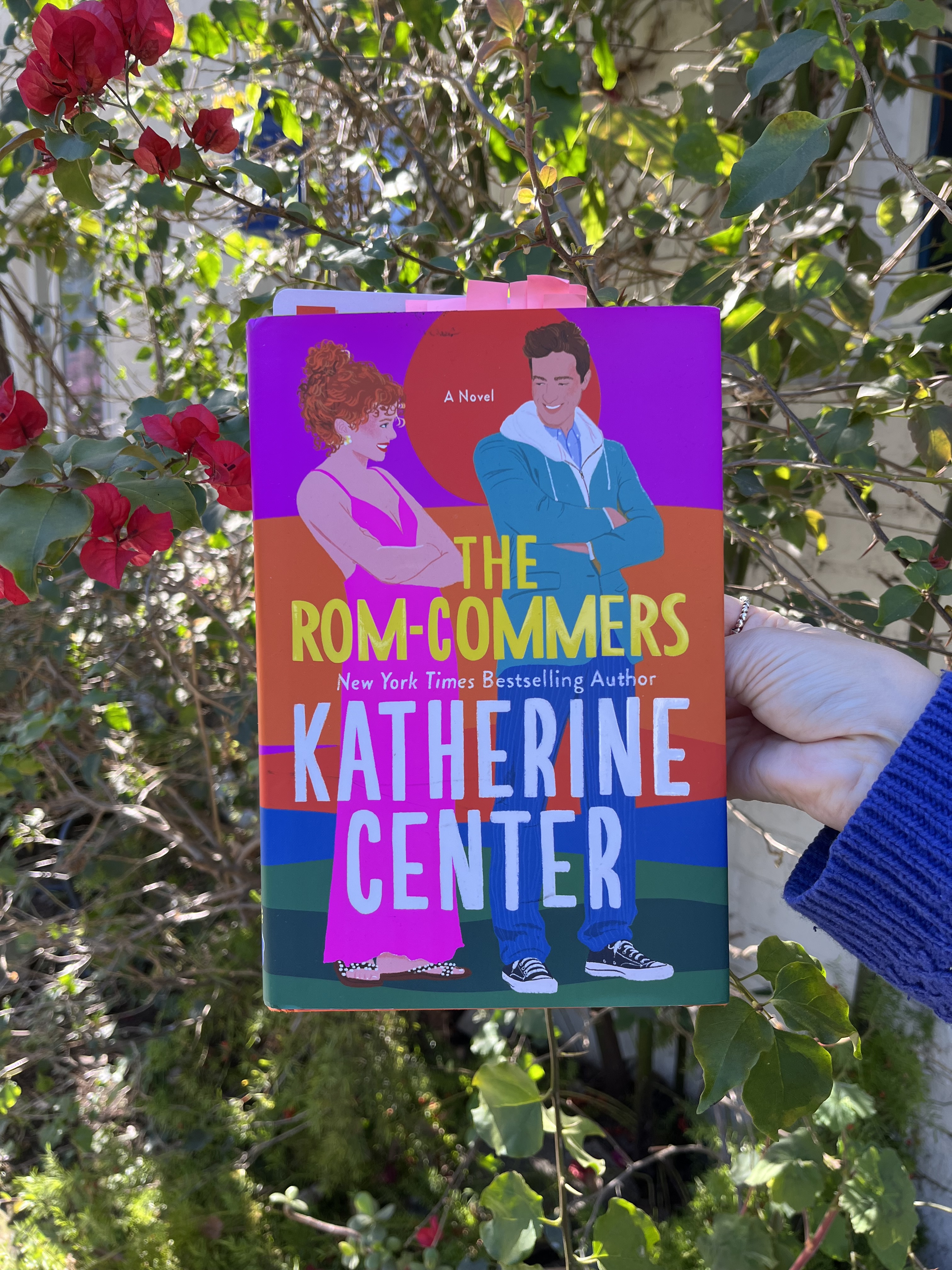
A pink cover with a woman and man facing each other? I’ll stop my scrolling to read the blurb. 

A green cover with holiday decorations? I’ll read that blurb also.

A black and gray cover with a set of eyes peering back at me? That’s one to skip.

While I’m not at that stage yet, I do sometimes think ahead and try to envision the cover of my memoir. I picture lavender or some other shade of purple. I think of sunflowers, my favorite flower, and a symbol for the chronic illness community — something I didn’t know until fairly recently. 

“The Hidden Disabilities Sunflower is a simple tool for you to voluntarily share that you have a disability or condition that may not be immediately apparent – and that you may need a helping hand, understanding, or more time in shops, at work, on transport, or in public spaces.”

I’m curious, readers. How do you decide which book to pick up at the bookstore? To check out at the library? To enter a giveaway for? Does a book’s cover play a part in influencing your decision at all? Let me know in the comments.

And, if you have any thoughts regarding my own future book cover, feel free to leave those in the comments section, too. 

Super Bloom

I recently finished reading Megan Tady’s novel Super Bloom.

It’s a novel about friendship and reinventing yourself when life doesn’t follow the path you thought it would. 

It’s a novel about writers and romance books. 

It’s a novel that offers a behind-the-curtains look at the massage industry as told from the point of view of our main character, Joan, a massage therapist.

It’s one of those novels that keeps you turning pages, because you just have to find out what happens next. And for me, it started with the first sentence — “I harbor a secret fantasy to go apeshit at work.” 

Here are a few of the passages that caused me to pause and mark the page with a sticky note and a yellow highlighter:

“…I love that muscles speak their own language and I can spend hours coaxing them to reveal themselves to me.”

“Instead, I imagine my clients’ private lives and then write down the stories, envisioning their secrets and passions and hurts based on the slope of the lower back, the elasticity of skin, the rigidity of muscles. My hands pass over bodies as if I’m reading braille, and their worlds unfold.”

“My smile is my best asset, looks-wise, though it’s as shy as a shadow-spooked groundhog. When my full smile emerges, it reveals one crooked tooth that appears to be leaning out of a Rockets chorus line to see what everyone else is doing.”

“It’s been sixteen years, but I still remember writing this thing at my parents’ kitchen table. They were both at work, and the house was quiet. As the words flew out of me, I experienced an oncoming rush, as if I were on a roller coaster inching to its highest peak, the noise of the wheels grinding against steel, wind whipping my hair, until I crested, and from there, for a split second, I could see for miles, a perspective where everything made sense, the entire story coming together before I plummeted back toward Earth, my stomach in my chest, my chest in my throat, my thrilled yell not audible from below.”

“I’m fighting for my livelihood by working on The Project — paying off my debt, keeping my day job. But when I write for myself, I’m fighting for my life, because remaining debilitated, angry, or bowled over without a moment’s notice by sadness is no way to exist.”

“Maybe, just maybe, I can still be a writer. Maybe it’s not too late for me. Don’t we all have dormant potential coiled up inside of us? Greatness lying within, waiting to be tapped?
“Just like Samuel’s super blooms. Seeds holding out for perfect conditions: soil, sun, rain.
What I need is a hefty dose of willpower. A readiness to try my hardest and possibly fail. That’s the only way to bloom.”

“Was it the writing?
“Or was it simply that the forces of nature couldn’t destroy me? That nothing could stop me from pushing up to the surface, because something innate in me wanted to survive. Not only survive but transform, so that I was a better copy of my original self.”

Dear Readers, Has anyone else read Super Bloom? Were any of my favorite lines also your favorite lines? Feel free to share passages that you loved!

Please note: I am including a link to buy the book that I’m highlighting this week. If you use my link, I do make a small commission on your purchase at no additional cost to you. I am working with Bookshop.org which also sends a portion of the profit to support local, independent bookstores.


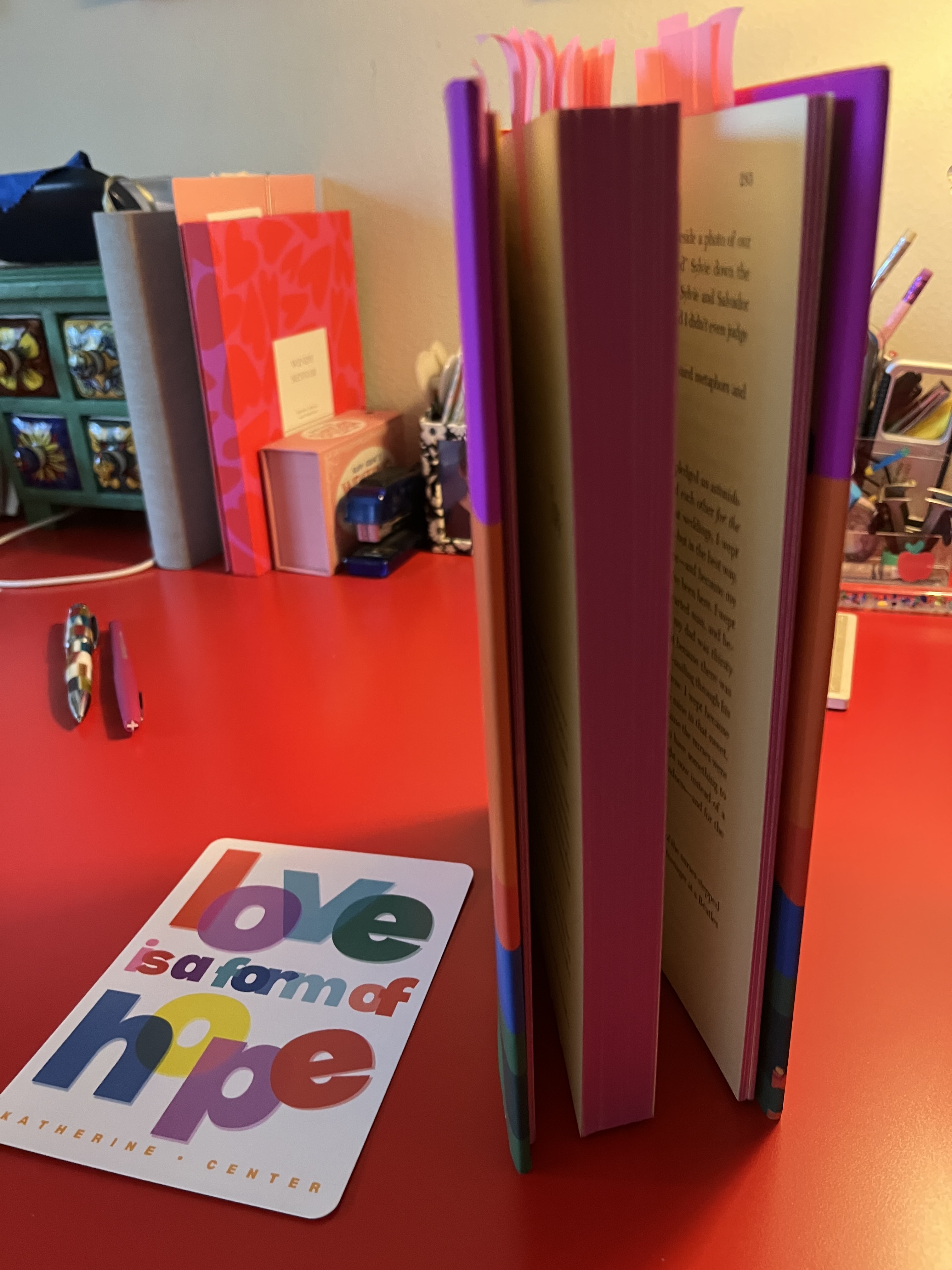
A Small, Attainable Luxury

I’ve written before about one of my favorite not-at-home writing spots. (If you missed it, you can click here to read my post, “A Bit of Serendipity.”)

This week, I have a confession to make regarding this cafe: It is here, that I order the most expensive blended mochas I have ever had. 

I’m not sure why these drinks are so expensive, or why they cost more than their counterparts at Starbucks, Coffee Bean, or my local neighborhood indie coffee spot. The price of the beverage is high enough that it initially gave me reason to pause and wonder if I should keep spending my time, and my money, here. 

And the answer is yes

Yes, I most definitely should keep spending my time and money here at this cafe. 

Here’s why:

First off, I enjoy the blended mocha. I like that I can drink it slowly, throughout my writing time, and savor the yumminess. I like the chocolate swirls on the inside of the cup. It makes the drink look fancy, and not like your standard blended mocha. 

I appreciate the “writing cocoon” I create for myself at this cafe. Unlike my local neighborhood cafe, I don’t run into neighbors here. I don’t spend any of my writing time chit-chatting with others. I come here to read and write, and that’s what I do. Distractions are minimal and are generally limited to occasional loud talkers. 

I’m productive at this cafe. I set up my writing space, and I get to work. And by the time I pack up to go home, I am so pleased with my output. 

And, there’s something else. Something I read in Tara Schuster’s Buy Yourself the F*cking Lilies

Buy the fucking lilies.  You are worth seven-dollar lilies. You are worth the thing that instantly makes your life better. I’ve heard people talk about their favorite exercise class this way. I’ve heard people talk about an order of guacamole with their tacos this way. I’ve heard people talk about the ten-dollar, ten-minute massage at the nail salon this way. That small, pleasurable thing that makes you feel like you are treating yourself — do not deprive yourself of this. Buy the fucking lilies, take the class, order the guac, get the massage.”

“Above all else: You are worth the lilies. The small, attainable luxury of lilies is not something to stress about, it is not something to deny yourself, it is something to make plans for and embrace. Small things that make you happy ARE a part of taking care of yourself.”

“Seven-dollar lilies won’t ruin you and they won’t make you poor; they will make you stronger. You are stronger when you treat yourself well.”

Readers, what are your “lilies”? In addition to blended mochas, I would add flowers (usually from Trader Joe’s), candles, and books as other “small things” that make me happy. I’d love to know what your “small, attainable luxuries” are. Feel free to share in the comments. 

Please note: I am including a link to buy the book that I’m highlighting this week. If you use my link, I do make a small commission on your purchase at no additional cost to you. I am working with Bookshop.org which also sends a portion of the profit to support local, independent bookstores.
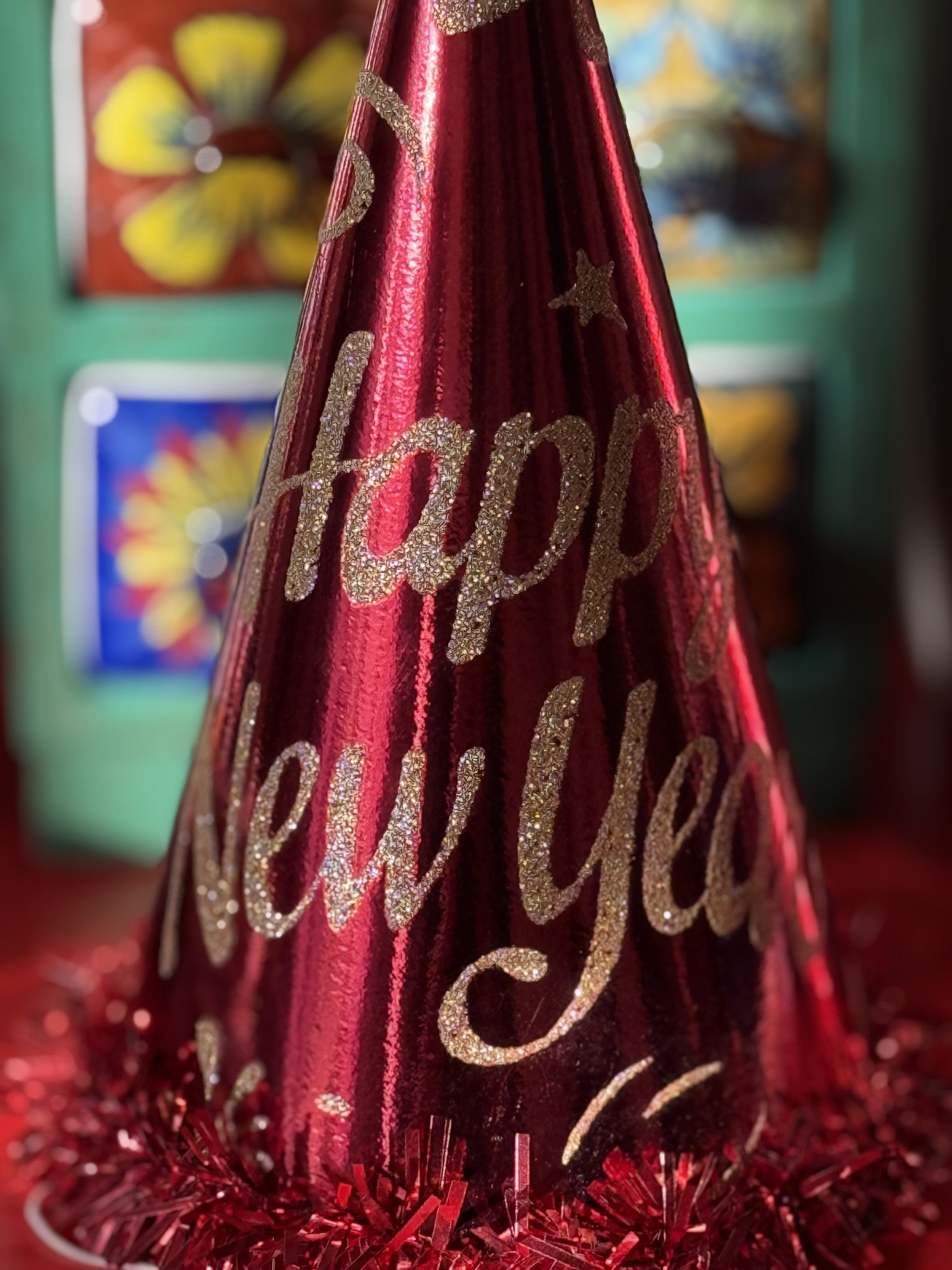
The F Word

I took this picture a few days ago, late afternoon, after doing some of my physical therapy stretches on the bed.

I don’t usually have a problem falling asleep. 

Quite the opposite, actually.

As soon as I turn off the lamp on my bedside table, after another unsuccessful attempt to read a few pages before bedtime (I tend to either drop the book and lose my place or read a bit but then the next day have no memory of what I had read), I fall asleep. 

Usually, I wake up at least a couple of times each night. Though lately, I have experienced a few nights when I only woke up once. And there were even a few nights that I slept straight through. 

Yet, regardless of how many wake-ups I have each night, I am not waking up feeling rested. 

Again, it’s quite the opposite.

I wake up feeling drained. I’m not recharged and ready to take on the day at all. But, I don’t have a choice. The alarm goes off, and it’s time to get going. I need to get up and get dressed and get the show on the road, because my son needs to get to school. I have work to do. Which means I’m forced to function on a blend of automatic pilot and a fight-through, keep-going-no-matter-what, high level of perseverance.

Plus, I have also noticed this unrested feeling isn’t just happening during the week, when wake-ups are earlier and days are busier. Even on a random Sunday, when we have nothing planned and no alarm waking anyone up, I don’t naturally wake up feeling oh-so-rested. 

Doctors don’t often ask about my sleep; however, during my last several follow-up appointments, I have mentioned it to them. I do my best to describe the overall slowness I often feel upon waking. The way my eyelids feel heavy. The feeling of starting the day at a deficit. And because my labs are coming back pretty consistent, because there are no red flag markers, no medical professional seems overly concerned about my tiredness. 

The other day, when I stood in front of the mirror and stared at the dark circles under my eyes, I had an aha moment. 

It seems so obvious, now, but it really didn’t occur to me that this extreme tiredness, this fatigue, is a part of life with chronic pain. This is not unique to me and my UCTD (undifferentiated connective tissue disease). In fact, in terms of my inflammation markers, my numbers have been down. My autoimmune disease is somewhat stabilized, you might say. Which means my medications are working and doing what they’re supposed to do. And yet, I feel awful — every single day.

Because this is not tiredness that goes away with a couple of nights of eight hours of sleep. 

Because this is fatigue, a whole different level of extreme tiredness. 

I don’t usually talk about my exhaustion, and I certainly haven’t written about it. But, I know how important it is to share our authentic experiences, to connect with others who, unfortunately, “get it,” and understand exactly the situation I’m describing.

The other night at dinner, after it was my turn to share some of the highlights from my day, my husband commented that I had gotten a lot done. 

“You’re right,” I said. “Imagine what I could do if I felt rested?”