Book Birthday: The Things We Don’t Say

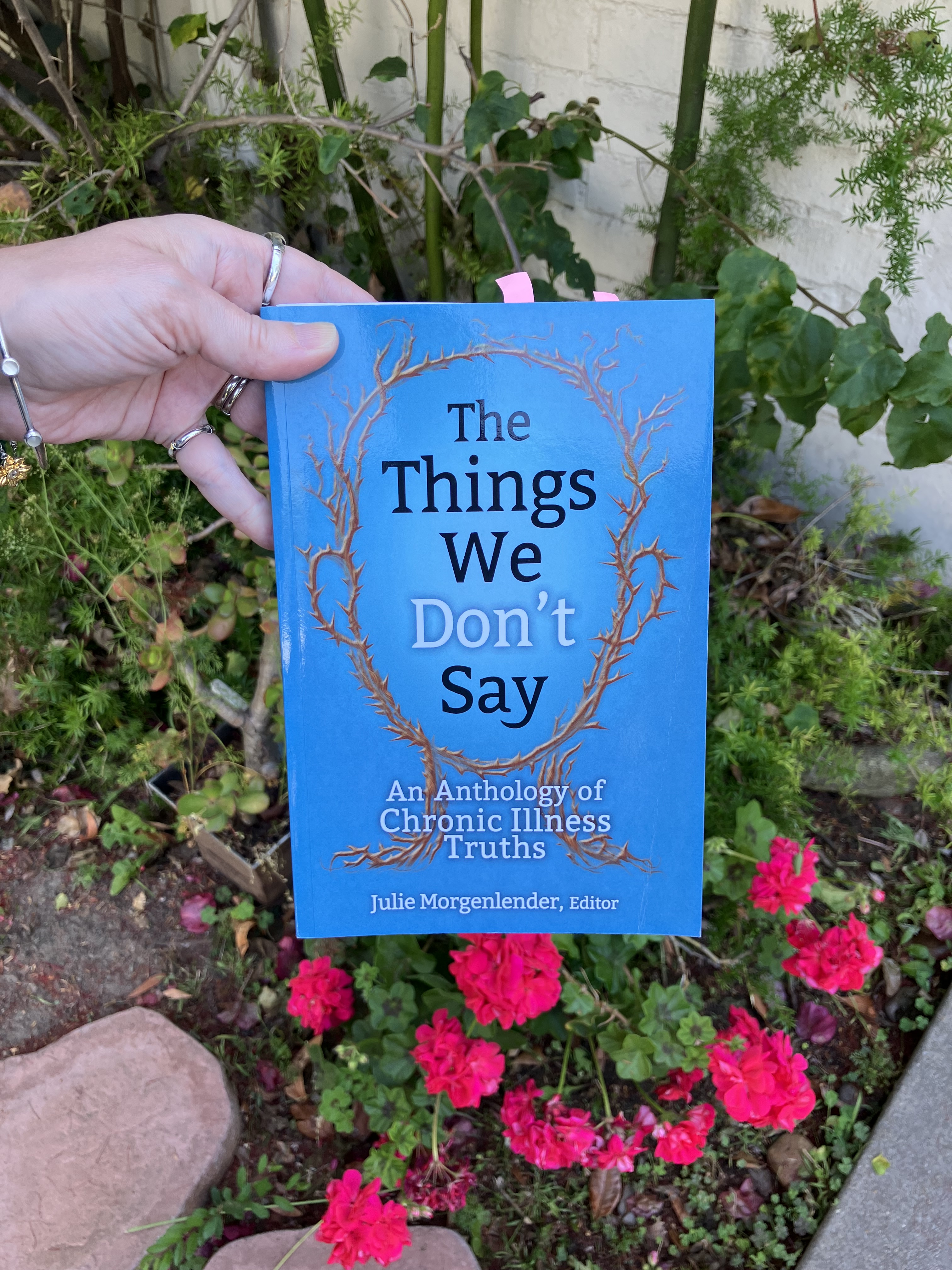
The Things We Don’t Say: An Anthology of Chronic Illness Truths is celebrating its four-year book birthday this month.

This anthology is unlike any other book I have found — and I’m not just saying that because one of my personal essays is included in this collection. (My essay is called “Chronic Contradictions.”)

I’m saying that because it’s true. 

From the back of the book:

“Spanning different ages, ethnicities, genders, sexual orientations, and diagnoses, forty-two authors from around the world open up in fifty true stories about their chronic illnesses and their search for answers, poor treatment by doctors, strained relationships with loved ones, self-doubt, and more.” 

This is the book to turn to when you’re searching for connection. Because though the medical details may vary, many of the emotions and experiences written about are shared by many in the chronic illness world.

This is the book to turn to when you’re trying to help someone else learn a bit about what your chronic illness life is like. This is the book you hand to someone and say, “Here. Please read this story. This is what I mean. This is what it feels like for me. This is what I have been trying to explain to you.”

Readers, have you discovered any other chronic illness-related books that you find helpful and/or resonate with you? Please share! 


Please note: I am including a link to buy the book that I’m highlighting this week. If you use my link, I do make a small commission on your purchase at no additional cost to you. I am working with Bookshop.org which also sends a portion of the profit to support local, independent bookstores.

Chronic Illness, Chronic Pain, and Gold Stars

I am pleased to share that my personal essay, “Chronic Illness, Chronic Pain, and Gold Stars,” has been published in a new anthology, Chronic Poetics. “The book contains artwork, essays and poetry written entirely by people who have experience of chronic pain and chronic illness.” Each piece of writing has been “arranged and visually interpreted,” making it possible to create an anthology that tells a “visual story as well as a literary one.”

I’d like to share two excerpts from a section near the end of my essay:

“I wish someone had handed me a manual of some sort. My car came with one. The new little handheld vacuum I recently bought came with one. (I don’t remember the last time my trunk looked so clean.) But no one told me how to navigate living with a chronic illness. No one pointed out that a chronic illness is one thing. A chronic illness causing chronic pain is something else.”

“There are moments I want to cry. Moments I want to scream. Moments I want to throw things and break things. Because this is hard. And it’s tiring. And it often doesn’t feel like it gets any easier or any better.” 

You can find more information about the anthology here.

The visual interpretation of my personal essay.

Invisible Forces at Work

“It’s the invisible nature of the coronavirus that complicates matters. So many people don’t fear something they can’t see. However, I know how powerful and life-changing invisible forces can be. My autoimmune disease, Undifferentiated Connective Tissue Disease (UCTD), is an invisible disability, causing pain, fatigue, and weakness in my left leg. My rheumatologist described it as sharing overlapping symptoms of lupus, rheumatoid arthritis, and myositis. UCTD is a chronic illness causing chronic pain. 
“A quick glance, and I look ‘fine.’ No assistive walking device needed on a daily basis. No one can see inflammation by looking at me, especially since my legs are always covered by loose-fitting pants or long flowing skirts. No one can see the pain, the crushing sensation I experience in my leg as if my son has placed his heavy backpack on my lap. No one can see the tightness of my calf, as if it is stuck in a perpetual charley horse. However, just because you can’t see my disability, doesn’t make it any less real.”

The paragraphs above are an excerpt taken from my personal essay, “Invisible Forces at Work,” which, I’m pleased to say, has recently been published in an anthology titled The Covid Logs. “The Covid Logs provide a space for the disabled and chronically ill communities to share their experiences of navigating the Covid-19 pandemic.” The anthology is available as a PDF and a full-color zine and includes personal essays, visual art, and poetry. You can click here to learn more about this special collection.  

A Timeless Anthology

I’m not a podcast person. But I am most definitely a book person.

Zibby Owens is a podcast-about-books person. More than that, she is an author, publisher, and CEO. And a mom of four.

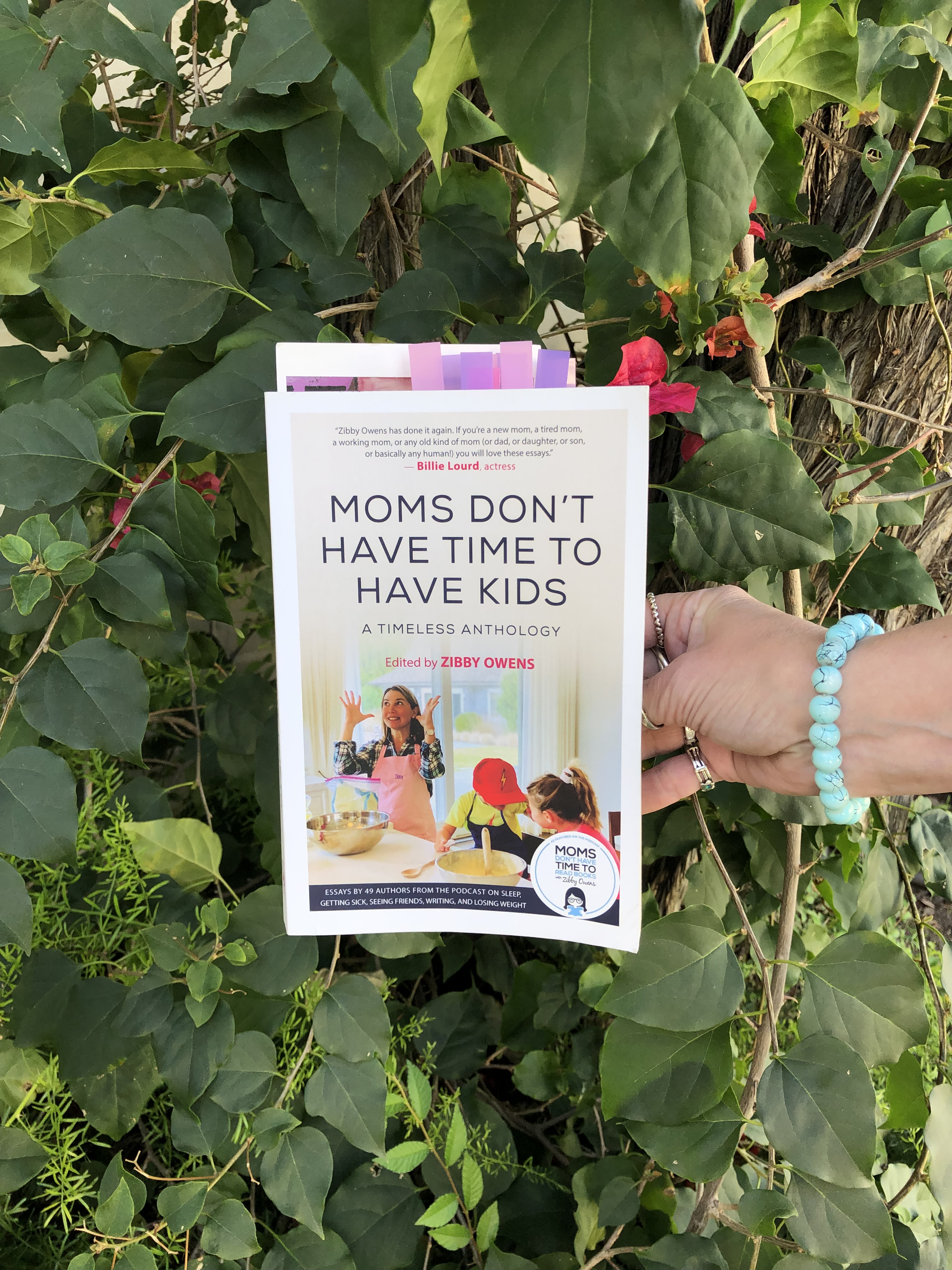
I recently finished reading Moms Don’t Have Time to Have Kids: A Timeless Anthology edited by Zibby Owens. The anthology is a collection of essays written by more than forty authors who have all been featured on the podcast Moms Don’t Have Time to Read Books. The book is divided up into categories, things that moms (and dads) don’t have time to do: Sleep, Get Sick, See Friends, Write, and Lose Weight.

Here’s the incredible part about this book — I found myself relating to so many of the authors. The specifics may differ (where we live, how many kids we have, the ages of our kids) but the emotions are universal. 

Not only did I enjoy reading this anthology, but I have also added to my ever-growing list of “want-to-read” books. Many times, after reading an essay I found myself looking up the writer and then adding their books to my Goodreads “want-to-read” list.

Allow me to share just a few of the book’s gems:

From “Room for One” by Allison Pataki:

“I could read the surprise on my husband’s face. He’d asked me what I wanted for my upcoming birthday and I’d answered quickly and simply: a night away. A night away from him, away from home, away from our daughters, our dog, our laundry — all of it. One glorious night in a hotel room by myself.”

From “While I Was Sleeping” by Camille Pagán: 

“But mostly, I’d been the one to grow. As mothers, we do so very much because we can. Because we think we should. Because who else will do it? The rest of our families will.”

FromThe Little Pink Unicorn” by Heather Land:

“These days, I have a new perspective on self-sacrifice. I will always give my love, my time, and my attention to the ones I care about most. But from now on, that has to include me. I’ll probably never quit tending to the needs of my children (when they have their own), but I will continue to remember that I should love and tend to my own heart as well.” 

A Love Letter

If you could only write one letter to express your love to someone, who would you write it to?

For me, it’s easy to answer – my son, Ryan.

And I’m pleased to say the love letter I wrote to Ryan was included in the anthology A Love Letter (or Poem) To …

Here is the book’s blurb:

Love in its many varieties, expressed in letters and poems from 202 writers worldwide, written to the object or objects of their affection, adoration, romantic passion, esteem and fantasy. Letters and poems to wives, to husbands, to children, to parents, to grandparents, to boyfriends, to girlfriends, to pets, to literary and film idols, and more. This is a book for anyone who loves love.

Just a reminder – the holidays are coming up fast. This anthology could be the gift for the person in your life who loves love.