About My Memoir-In-Essays

My Memoir-In-Essays is divided into three sections --
The Beginning, After the Very Beginning, and Not the End

This week, I’d like to share a bit about my memoir-in-essays. 

1.  I continue to query literary agents and have not yet had any requests for my manuscript. It’s hard, I admit, not to feel badly about this. At the same time, I know there are multiple ways to get my story out into the world. If it doesn’t work out with an agent, I’ll pursue one of those other possibilities (such as hybrid publishing or publishing with a smaller, independent press). 

2.  I am keeping the title private, for now. Just like when I was pregnant, we announced the gender of our baby, but kept his name private except for family and a few super close friends. So while I’ll tell you I have written a memoir-in-essays, I just don’t feel ready to share the title yet. Though I do realize I shouldn’t get too attached to my working title, because titles are often changed, for many reasons. (This has been the case for many of my personal essays which have been published over the years.) 

3.  Here’s my official pitch:  “… my story of becoming chronically ill, retiring from my teaching career, and living a life I hadn’t planned as a stay-at-home mom. The book is composed of personal essays and micro-essays written as short school assignments.”

One of the things that makes my manuscript unique is the inclusion of these “micro-essays written as short school assignments.” Teaching was a huge part of my life, my identity. And it is because of my chronic illness that I am no longer teaching. Therefore, there’s no way I could write my story about life with an invisible disability without including parts from my teaching life. 

When I taught fourth grade, my students and I completed a getting-to-know you questionnaire during the first week of a new school year. It was a short form that was a quick, fun way to share what made us each unique while also giving students the opportunity to learn about each other, and realize many of them shared common interests. 

I included this questionnaire in my manuscript, and this week I will share a bit of it with you, my readers. 

I Am A Person Who…

By: Mrs. Kennar

Directions: As a way to get to know each other, please fill out this worksheet. By writing honest responses, we will learn about our new classmates. In the process, I think we will come to realize that while we are each unique individuals, we have a lot in common. 

I Am A Person Who…

likes Nutella crepes

dislikes spinach

can recite the Preamble to the Constitution 

cannot throw a spiral

would never watch a horror movie

loves to read

How about you, dear readers? Feel free to leave a comment answering one (or more) of these prompts. 

The Taste of Anger

There are some books that stay with you, long after you finish reading. Books that take up residence in your heart and mind. Books that make you feel, deeply, as if you have been an active participant in the story told on the pages. Books that are so rich with sensory details and vivid images, you did more than read the words; you saw the scenes play out in your mind.

The Taste of Anger: A Memoir by Diane Vonglis Parnell is one such book.

I must be honest. Diane is a friend of mine. We met several years ago at a writer’s retreat. We were classmates in a UCLA Extension Writers’ Program class taught by the late, lovely, Barbara Abercrombie. And after the class ended, Diane and I remained in touch for quite some time, emailing pages to each other, reading the other’s work and offering incredibly valuable insights and feedback and support. 

And now, the hard work, the years of writing and re-writing have culminated in the publication of Diane’s powerful memoir, The Taste of Anger

I must warn you, Diane’s book is not easy to read because of its subject matter — her incredibly abusive childhood. At the same time, Diane’s book is an important read, because it serves as a strong reminder — you never know what someone is dealing with simply by looking at them. You cannot always easily see the scars and pain someone deals with on a regular basis, which is something her book and my future book have in common.

Diane’s memoir is written from the point of view of her childhood self. We see the family, the school, the farm from young Diane’s point of view. And young Diane is observant, vigilant, and on high alert.

I am choosing not to share any passages that depict violence and abuse, because I understand how difficult and painful reading such passages may be for some. Instead, I am sharing a few passages that highlight the masterful descriptions and the sensory details that Diane uses throughout her memoir.

“In the kitchen, she rolls my hair in small silver curlers. They pinch so tight against my scalp that when I lay my head on my pillow, it feels as though I have stones tied all around my head.
“The entire family is up before the sun the next morning, getting ready for 6:30 mass. I ask Kathy to take my curlers out because she is gentler than Mom, unrolling them slowly so they don’t tear my hair out. When she’s done, I shake my head side to side, enjoying the tickle of the curls bouncing lightly against my face.”

“I watch a fly circle and get caught in a spider web in the corner. The fly struggles, making a loud bzzz bzzz bzzz, like an SOS signal, as the spider races across the web, pounces on it, and then rolls it in silk, placing it at the edge of the web next to another cocooned victim. I feel like that fly. If I go bzzz bzzz bzzz, will anyone hear the alarm? Will anyone come to save me?”

“Willy is a farmer from the next town over, jolly in a Santa kind of way, with the stub of a cigar always stuffed between the gap in his gray front teeth. His face is white-whiskered, his glasses held together at the bridge by black tape. He pulls his large body out from behind the steering wheel, steadying himself with a wooden cane. A hairy pink belly hangs visible beneath a tattered, ill-fitted T-shirt.”

“Mrs. Walters brings her chair from behind the desk, and we gather on the floor around her for Reading Time. It is my absolute favorite part of the day, and I sit right next to her, soaking in every word. She reads stories of tiny fairies and giants, a cat with big boots. Today we hear about a talking bear that gets lost in a train station. She turns the book around to show us illustrations of a chubby bear in a floppy hat. These vivid stories open doors to new worlds — happy worlds, magical words — and I fall earnestly into every one of them. Only during Reading Time do I truly forget about my life at home. I fight the urge to wrap my arm around my teacher’s leg, to lean my head against her knee. If she’d let me do that, and if she kept reading, I think I could close my eyes and stay right here for the rest of my life.”

“I am afraid of her, but I also like her orderliness, her clear rules, and the high expectations she sets for each of her new fourth-grade students. She scrutinizes our handwriting and then makes a special ceremony of passing out pens to the students she deems have graduated from the pencil. I am one of the first to get my very own blue pen, and when she calls my name, I blush and beam as I make my way to the front of the classroom where she holds it out to me. A gift to acknowledge my hard work. 
We have spelling bees and write essays. Sister Joan challenges us to think and to express our thoughts, and through her guidance, I am beginning to see that the world is much bigger than just me and my life on the farm. Best of all she reads to us every day, further fueling my love for the subject.”

“At home after supper, I bring my uniform downstairs to show my mother. She purses her lips, holding the jumper out in front of her, scrutinizing the hole. I want to scream at her for letting it get this bad, but we have been conditioned not to speak our thoughts or express our feelings at home, so mine are always clanging around inside of me like a handful of nails tossed in a dryer and set to tumble.”

One last note: I am so honored that Diane included me in the list of friends and supporters she mentions in her Acknowledgements. Thank you, Diane! I am so proud of you!

Please note: I am including a link to buy the book that I’m highlighting this week. If you use my link, I do make a small commission on your purchase at no additional cost to you. I am working with Bookshop.org which also sends a portion of the profit to support local, independent bookstores.

Wow, No Thank You.

The older I get, the more I realize how lucky I was to grow up and see myself represented in many of the books I read and movies I watched. (Though the Wakefield twins of Sweet Valley High were blondes and not brunettes.)

On the surface, you might not think author Samantha Irby and I share much in common. She is a Black woman living with her wife in the midwest. Plus, she curses a lot more in her writing than I do. 

Yet, Samantha Irby is a member of the club I belong to. The club, in fact, many people belong to — the chronic illness club. Ms. Irby lives with Crohn’s Disease.  

I recently finished reading my first Samantha Irby book, her essay collection titled Wow, No Thank You. And you’ll notice from the photo that my copy is full of sticky notes. 

Here are just a few of the passages that stood out to me, resonated with me, and/or made me laugh out loud:

Mixtapes were the love language of my youth. If you got one from me, that shit was as serious as a marriage proposal. Maybe because they were so time-consuming to make? I had a painstaking process I went through before I put a mix together.” (Side note – when we were dating, I made my now-husband a mixtape. I agree – it was a big deal to make a tape for someone else.)

“… and I guess what I’m actually saying is that, sure, I move this body around every day but I’m not actually in charge of it, and I have no idea and no control over anything that happens within it.”

Pretty much, the entire chapter titled “hung up” could have sticky notes on each page. Ms. Irby’s observations and comments about the “five-hundred dollar computer in my pocket” were so entertaining and so spot-on.

I also found the entire chapter titled “body negativity” to be amusing and fun to read. 

The chapter starts with: 

“I have been stuck with a smelly, actively decaying body that I never asked for and am constantly on the receiving end of confusing, overwhelming messages for how to properly care for and feed it.”

And there’s this passage:  

“Your neck is supposed to be firm and long, but I thought that was only asked of penises. Why does my neck have to do anything other than hold up my head? I do not, and will never, use any specific treatments for my neck. I cannot be bothered to care about my neck. Of all the things I have to check off this endless list, ‘neck maintenance’ is not going to be one of them.”

“I don’t treat my Crohn’s like it’s an albatross around my neck, like I’m laboring under the weight of this oppressive disease.”

“It’s a serious topic that can be dealt with in a really funny way while also repping for the chronically ill and constantly medicated, like me.”

“… it would mean a lot to me to put chronic illness in people’s faces, especially the silent kind that you might not even know a person is struggling through. I bet if you met me on the street, you wouldn’t automatically think ‘sick,’ but if you looked at my CT scans you would, and I want to represent for all my people taking twelve pills a day with bald joints and intestines lined with scar tissue.”

Readers, have you read any of Samantha Irby’s books? I’d love to know what you thought of them. 

Please note: I am including a link to buy the book that I’m highlighting this week. If you use my link, I do make a small commission on your purchase at no additional cost to you. I am working with Bookshop.org which also sends a portion of the profit to support local, independent bookstores.

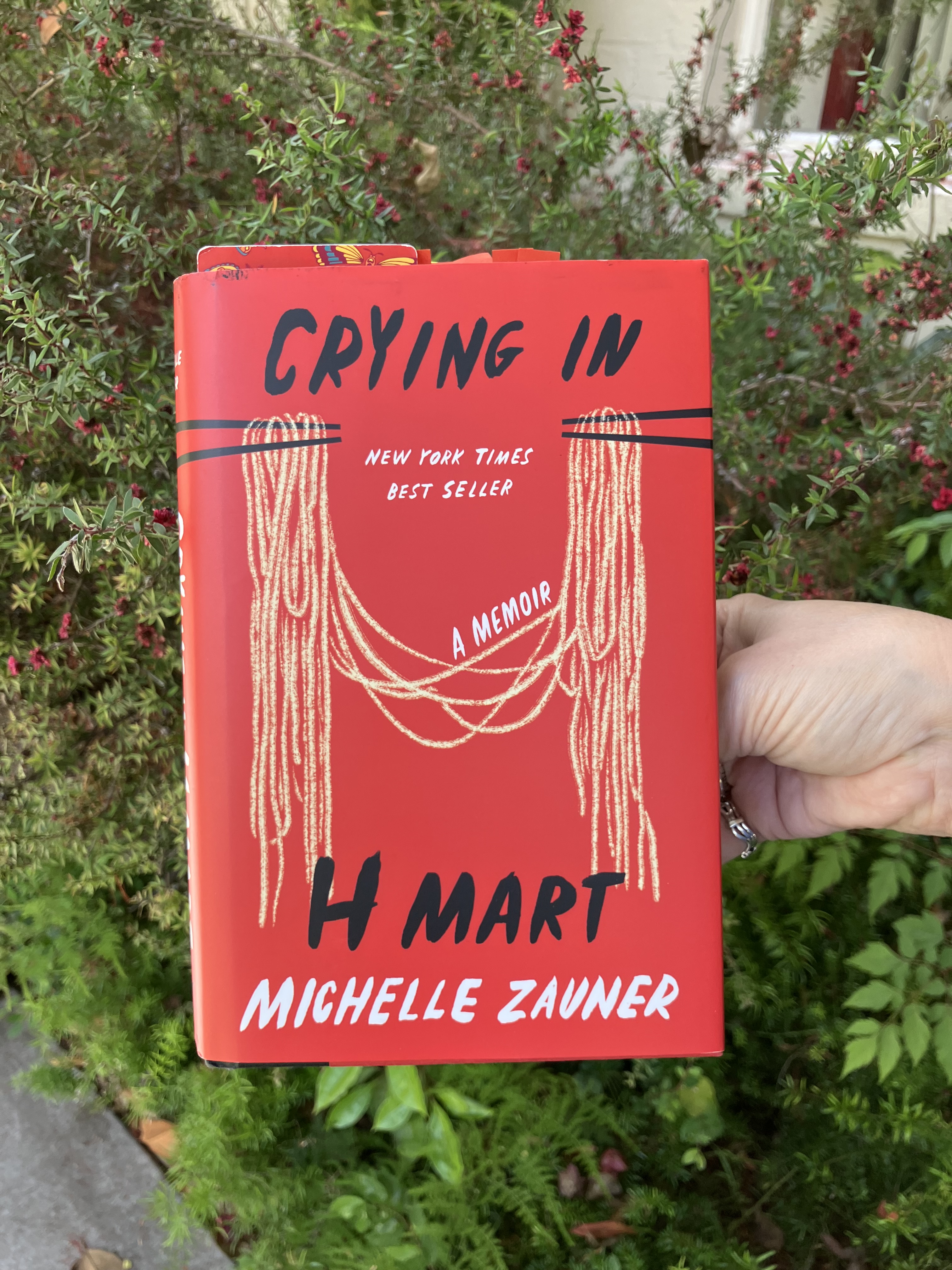
Crying in H Mart

I picked up my copy of Crying in H Mart from a Little Free Library in my neighborhood. I had heard of the book, I knew it was a best seller, and I knew the author was a musician. But I didn’t know much more than that. 

Yet I wanted to read Crying in H Mart by Michelle Zauner for two reasons:

1. As a reader, I believe everyone has a story worth sharing.

2. As a writer, I’m always curious to see how other writers structure their memoirs. 

Here’s what you should know about me:

I am not an adventurous eater. I have a pretty sensitive stomach so most, if not all, the food mentioned in this memoir was unfamiliar to me. 

And here’s what you should know about the book:

It’s beautiful. Quite simply it is a tender love letter from a daughter in honor of her mother. 

Here are just a few of my favorite passages:

“Ever since my mom died, I cry in H Mart.”

“Food was how my mother expressed her love. No matter how critical or cruel she could seem — constantly pushing me to meet her intractable expectations — I could always feel her affection radiating from the lunches she packed and the meals she prepared for me just the way I liked them. I can hardly speak Korean, but in H Mart it feels like I’m fluent.”

“I remember these things clearly because that was how my mother loved you, not through white lies and constant verbal affirmation, but in subtle observations of what brought you joy, pocketed away to make you feel comforted and cared for without even realizing it.”

“The cowboy boots arrived in one of these packages after my parents had vacationed in Mexico. When I slipped them on I discovered they’d already been broken in. My mother had worn them around the house for a week, smoothing the hard edges in two pairs of socks for an hour every day, molding the flat sole with the bottom of her feet, wearing in the stiffness, breaking the tough leather to spare me all discomfort.”

“I wondered if I should try to explain how important it was to me. That cooking my mother’s food had come to represent an absolute role reversal, a role I was meant to fill. That food was an unspoken language between us, that it had come to symbolize our return to each other, our bonding, our common ground.”

“I talked about how love was an action, an instinct, a response roused by unplanned moments and small gestures, an inconvenience in someone else’s favor.”

“She was my champion, she was my archive. She had taken the utmost care to preserve the evidence of my existence and growth, capturing me in images, saving all my documents and possessions. She had all knowledge of my being memorized. The time I was born, my unborn cravings, the first book I read. The formation of every characteristic. Every ailment and little victory. She observed me with unparalleled interest, inexhaustible devotion.”

“The culture we shared was active, effervescent in my gut and in my genes, and I had to seize it, foster it so it did not die in me. So that I could pass it on someday. The lessons she imparted, the proof of her life lived on in me, in my every move and deed. I was what she left behind. If I could not be with my mother, I would be her.”

Readers, have you read Crying in H Mart? What did you think of it?

Please note: I am including a link to buy the book that I’m highlighting this week. If you use my link, I do make a small commission on your purchase at no additional cost to you. I am working with Bookshop.org which also sends a portion of the profit to support local, independent bookstores.

It Feels Like…

“In the beginning, it was easier to describe the pain. Because the pain was new. Because the pain was concentrated in my left calf. And, most importantly, because I truly believed the pain was temporary.”

The paragraph above is taken from my personal essay, “It Feels Like…” And I am so proud to share that my essay has been published in The Mersey Review, Issue 2. 

I have never had so many personal essays published one-after-the-other, like I have recently. (Five of my personal essays have been published between January 2024 and March 2024! My Published Work page has a complete listing.)

You can click here to access the entire issue.

And you can click here to be taken directly to my essay.

Also, be sure to read all the way to the bottom. After my bio, you’ll come to a statement that says: “You can read Wendy Kennar’s Few Words here.” Click on the link and you’ll be taken to another page which includes my answers to a few questions the editor asked me about the writing process. Plus, I answer that “eternal question” — hardback or paperback?

Dear Readers, feel free to share your preference in the comments: hardcover or paperback?

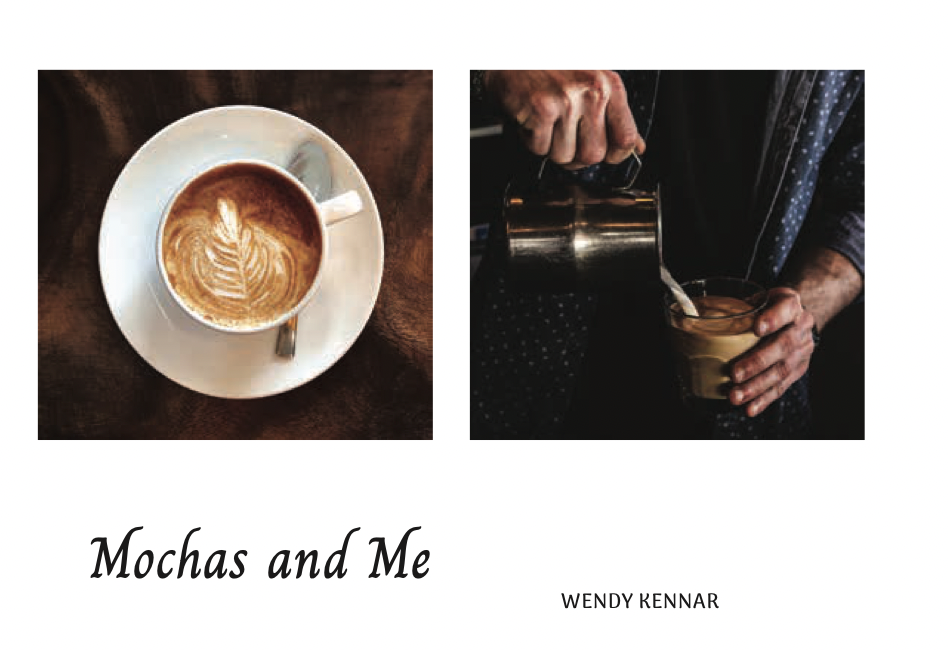
Mochas and Me

Photo credit: Shanti Arts, Still Point Arts Quarterly

My dear readers,

Something has happened that I don’t think has ever happened to me before. For the third consecutive week, I have publication news to share! (In case you missed it, you can read about week one here and last week’s news here.)

This week I’m proud to share my personal essay, “Mochas and Me,” has been included in the Spring 2024 issue of Still Point Arts Quarterly. The issue’s theme is “Coffee, Tea, Cocoa.” You can click here to access the entire issue online or click here to be taken directly to my essay. 

By the way, do you have a favorite coffee, tea, or cocoa beverage? Let me know in the comments!

The Book of Annie

Maybe you’re a Seinfeld fan and you remember Annie Korzen from her role as Doris Klompus. Or, you’re on TikTok and you’ve seen Annie’s humorous videos there.

I know Annie Korzen, but not because of Seinfeld or TikTok. On multiple occasions, we have sat and chatted. And though I knew many things about her, reading her memoir The Book of Annie: Humor, Heart, and Chutzpah from an Accidental Influencer has helped me learn even more about her.

The Book of Annie is described as “wildly funny musings from an 83-year-old TikTok sensation.” 

This week, I’d like to share just a few of my favorite passages:

“I hope these musings will not only make you laugh, but also make you a better human being, because, wonderful as you already are, we can all benefit from an occasional upgrade.” (From the Author’s Note)

“I admit it: I am often guilty of being a nagging wife. I constantly remind Benni to watch his diet and do his exercises. I guess I’d rather be a nag than a widow.”

“Being a parent is a Catch-22. Your main job is to prepare your kids to separate from you, while your main instinct is to keep them as close to you as possible.”

“The great irony is, my first serious love was a Black guy I went to college with. But if I had married Billy, I would have been part of an interracial family, and who needed that challenge? It’s tough enough just dealing with all the Jew crap.
“Isn’t life strange? I thought I didn’t want to be a grandmother, and I thought I didn’t want to be part of an interracial family. But when those things actually happened, everything fell into place. So, just like with that Jewish wedding, maybe what we think we want or don’t want has very little to do with what really makes us happy. And who knows? As the world keeps evolving, maybe by the time my precious Max grows up, he might be able to walk down a dark street without anyone feeling threatened — or anyone threatening him.”

“But my favorite kitchen time-saver is my husband. Several years ago, I announced that I was retiring from all food-preparation duties and that it was now his turn. I’m proud to say that Benni has stepped up to the (dinner) plate. He will throw together some grilled salmon, roasted garlic potatoes, and a tossed salad without complaining, and will even sort of clean up afterward. Sometimes you just get lucky.”

Please note: I am including a link to buy the book that I’m highlighting this week. If you use my link, I do make a small commission on your purchase at no additional cost to you. I am working with Bookshop.org which also sends a portion of the profit to support local, independent bookstores.
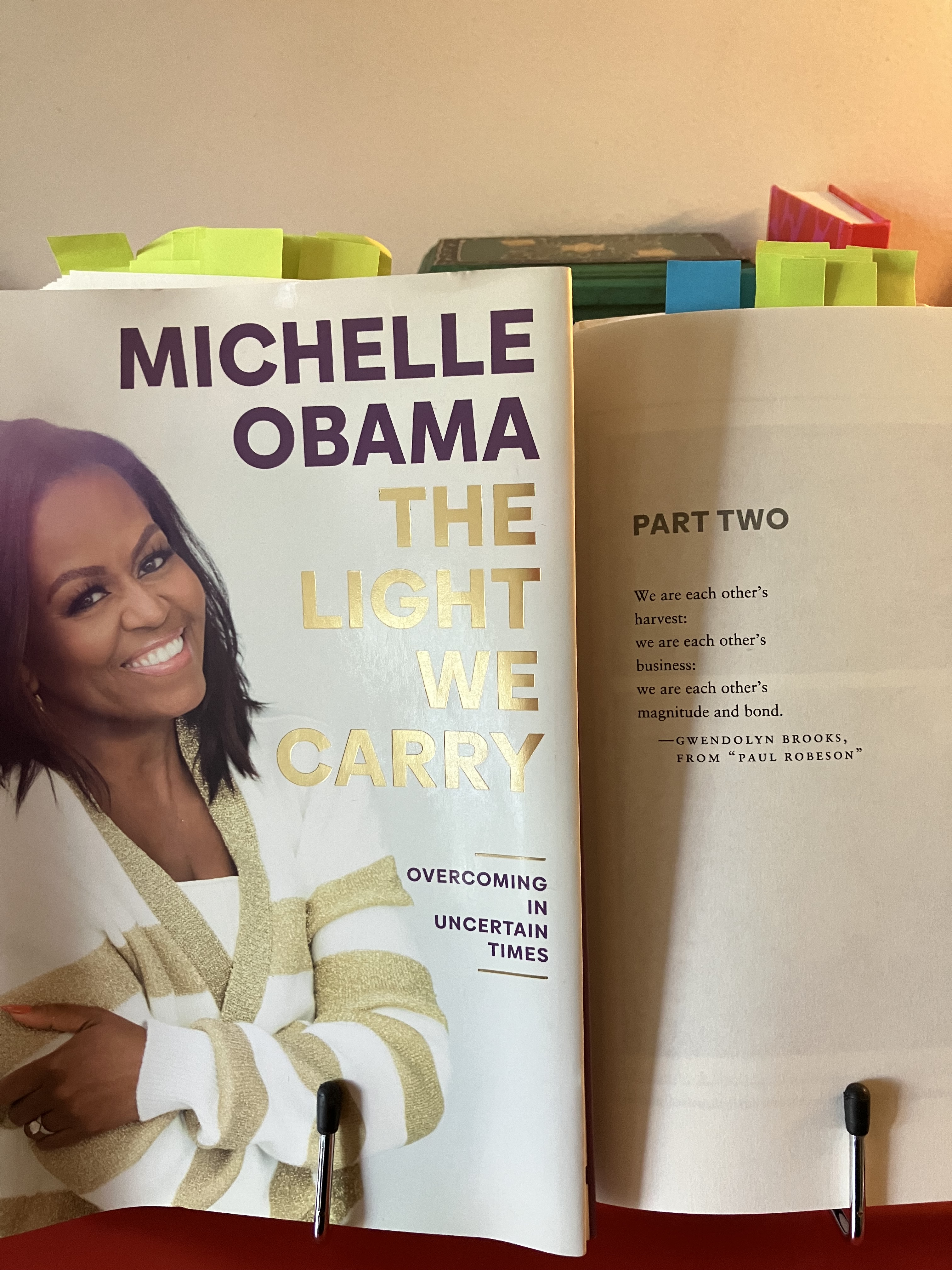
The Light We Carry, Part Three

This is my third and final post about Michelle Obama’s book The Light We Carry: Overcoming in Uncertain Times.

(You can read my post about part one by clicking here.)

(And part two is here.)

There were parts of this book that read so smooth and easy, as if I was fortunate enough to sit down and have a conversation with Mrs. Obama. And there were parts that just stopped me in my reading, passages I re-read and marked with a highlighter because they really resonated with me.

Here are just some of those passages:

“When someone chooses to lift the curtain on a perceived imperfection in her story, on a circumstance or condition that traditionally might be considered to be a weakness, what she’s often actually revealing is the source code for her steadiness and strength.”

“When we share our stories with fullness and honesty, we often discover that we’re less alone and more connected than we might ever have believed.” 

“All I can do is try to draw closer to your uniqueness, to feel linked by the small overlaps between us. This is how empathy works. It’s how differentness starts to weave itself into togetherness. Empathy fills the gaps between us, but never closes them entirely. We get pulled into the lives of others by virtue of what they feel safe and able to show us, and the generosity with which we are able to meet them. Piece by piece, person by person, we begin to apprehend the world in more fullness.”

“For me, the process of writing can be an incredibly helpful tool when it comes to going high. It’s a means through which I am able to move through my emotions, filtering them into useful form.”

“Joy and pain often live in close proximity; they intermingle. Most of us exist in the in-between, following that most innate of human impulses, which is to hang on to hope. Don’t give up, we tell one another. Keep working.
“This matters, too.”

“Kids, for me, are always a reminder that we are all born loving and open-minded, free of hate. They are the reason the rest of us maintain a thick skin and keep trying to clear the path. Watching a child grow into an adult, you understand both how mundane and profound the process can be, how it happens slowly and quickly all at once, in steps and also in strides.”

Please note: I am including a link to buy the book that I’m highlighting this week. If you use my link, I do make a small commission on your purchase at no additional cost to you. I am working with Bookshop.org which also sends a portion of the profit to support local, independent bookstores.  

The Light We Carry, Part Two

This week’s blog post features some of the oh-yes-passages from part two of The Light We Carry by Former First Lady Michelle Obama. What do I mean by oh-yes-passages? Passages that resonated with me. Passages that made me pause and reflect. Passages that touched me in some way. 

(If you missed the blog post about part one, you can click here to read it.)

“I’m not sure how friendship, or even just engaging with another person in the three minutes it takes to buy your morning cup of coffee, has come to feel like a small act of bravery. But increasingly it seems that way. Perhaps, as I mentioned earlier, it’s because we now carry with us little rectangular shields against face-to-face sociability — our phones — which I think also shield us from serendipity. Any time we avoid even a small real-life connection, we are to some extent avoiding possibility.”

“When we drop our fears about newness and open ourselves to others, even through quick and casual interactions, even while masked — saying hello to someone in the elevator, for example, or chatting in a grocery line — we are practicing an important form of micro-connection. We’re signaling a general okayness between us, adding just a drop of social glue to a world that desperately needs it.”

“The best way to be a friend to someone, as I see it, is to revel in their uniqueness, to appreciate each person for what they bring, receiving them simply as themselves.”

“Over the course of my adult life, I’ve lived in a number of places, but as far as I’m concerned, I’ve only ever had one real home. My home is my family. My home is Barack.”

“Like a lot of people, I had ideas about what marriage would be like, and few of them turned out to be right.”

“Much as it is with marriage and partnership, the fantasy versions of being a parent sit at the forefront of our cultural imagination, whereas the reality is way, way, way less perfect.”

“Caring for your kids and watching them grow is one of the most rewarding endeavors on earth, and at the same time it can drive you nuts.”

Please note: I am including a link to buy the book that I’m highlighting this week. If you use my link, I do make a small commission on your purchase at no additional cost to you. I am working with Bookshop.org which also sends a portion of the profit to support local, independent bookstores.     
The Light We Carry, Part One

I am currently reading Michelle Obama’s The Light We Carry: Overcoming In Uncertain Times. And let me say, I am about halfway through the book and have many pages flagged with sticky notes. 

So rather than have one super-long post, I decided to share some of my favorite passages one part at a time. (The book is split into three parts.)

(Last week I wrote about buying a wheelchair and referenced a little bit from Mrs. Obama’s book. If you missed last week’s post, you can read it here.)

This week, allow me to share some of my favorites from Part One:

“That’s what tools are for. They help keep us upright and balanced, better able to coexist with uncertainty. They help us deal with flux, to manage when life feels out of control.” 

“What does it mean to be comfortably afraid? For me, the idea is simple. It’s about learning to deal wisely with fear, finding a way to let your nerves guide you rather than stop you. It’s settling yourself in the presence of life’s inevitable zombies and monsters so that you may contend with them more rationally, and trusting your own assessment of what’s harmful and what’s not. When you live this way, you are neither fully comfortable nor fully afraid. You accept that there’s a middle zone and learn to operate inside of it, awake and aware, but not held back.”

“Our hurts become our fears. Our fears become our limits.”

“Because what my mother showed me is that if you try to keep your children from feeling fear, you’re essentially keeping them from feeling competence, too.”

“The unknown is where possibility glitters. If you don’t take the risk, if you don’t ride out a few jolts, you are taking away your opportunities to transform.”

“What [Toni] Morrison was doing for her kids is what my own parents did for me: She was giving them a simple message of enoughness. She was validating their light, that unique bit of brightness inside each of them — literally showing them it was there and it belonged to them, a power they could carry for themselves.”

“My father, whose shaky demeanor and foot-dragging limp sometimes caused people to stop and stare at him on the street, used to tell us, with a smile and a shrug, ‘No one can make you feel bad if you feel good about yourself.’ “

Please note: I am including a link to buy the book that I’m highlighting this week. If you use my link, I do make a small commission on your purchase at no additional cost to you. I am working with Bookshop.org which also sends a portion of the profit to support local, independent bookstores.