4 Things Everyone Should Know About Living with Chronic Illness(es)

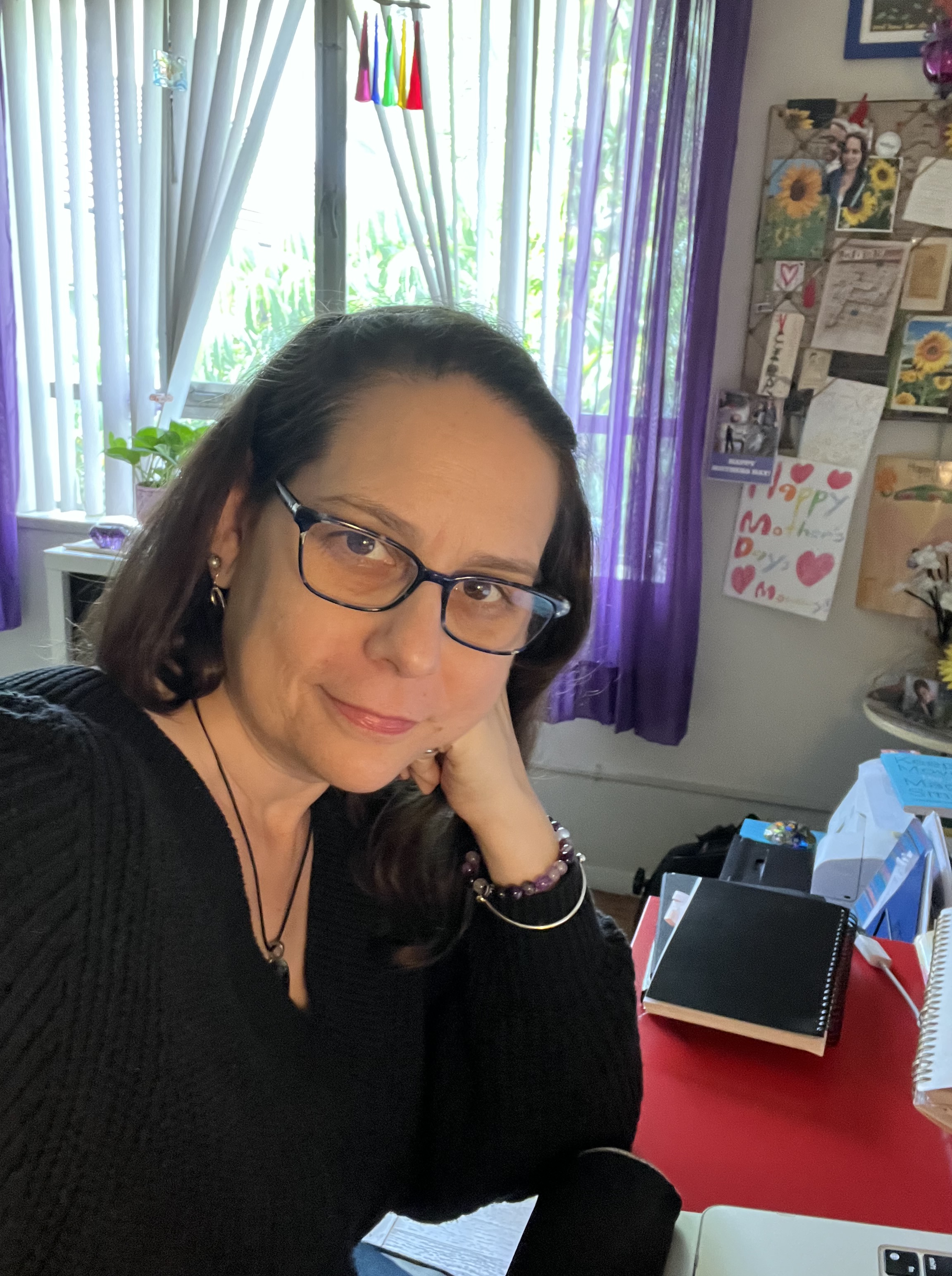
June 2025 - Oahu. The smile is real. And so was the pain.

Some weeks I know exactly what I want to write for my weekly blog post.

Some weeks I have several ideas for my weekly blog post, and it’s just a matter of deciding which one to choose.

And other weeks, I have no idea what to write for my weekly blog post. I thought that was going to be the case for this week’s post.

But I was wrong. 

Because all of a sudden, on Monday evening, the idea for this post came to me. I could see the post, in a sense. I just had to get it down. 

Barbara Abercrombie, who I have written about before, used to tell our classes that writers don’t just wait for “The Muse” to show up. If you do that, you’re waiting most of the time, and writing almost none of the time. But, she did say, that if you put in the work, if you regularly wrote, if you dedicated yourself to a writing practice, every so often The Muse shows up and gifts you a piece of writing. 

This post is that gift. Here I present:

4 Things Everyone Should Know About Living with Chronic Illness(es):

  1. Crying doesn’t always mean the pain is extreme. Sometimes, I cry out of frustration. Exhaustion. Sadness. Fear. Discouragement. Weariness. 
  2. Not crying doesn’t mean the pain isn’t extreme. Sometimes, crying isn’t an option. Standing in line at Trader Joe’s, it’s best if I can hold the tears back until I get into my car, for at least a bit of privacy. Tears out in public lead to questions. And while those questions may all be well-meaning and may come with offers to help, I just don’t always have the bandwidth to start explaining my specific situation, my pain, to strangers.
  3. Chronic illness is not the same as an illness. Yes, everyone has a story — of a bad flu, a broken bone that didn’t heal properly, an unforeseen side effect after a “routine” procedure. But none of that is the same as living with a chronic illness. (And, just to be clear — I’m not saying one is “worse” than the other. I’m saying one is different than the other.) Living with chronic illness involves a different type of “wear and tear” on your body that most people aren’t experiencing. A different type of tiredness. Think of it this way — me telling you I spent time practicing my three-point shooting is much different than Caitlin Clark telling you she spent time practicing her three-point shooting. 
  4. There is no easy fix. Someone lives with a chronic illness for that very reason — it doesn’t eventually “go away.” Chronic illness patients aren’t being difficult. Or stubborn for not trying the thing that worked and helped you/your relative/your coworker. These chronic illnesses are lifelong conditions because they aren’t curable. No amount of green smoothies, yoga, or vegan-only foods will magically change that. 

Note — several years ago I wrote a similar post, 4 Reasons Why Chronic Pain Sucks. Everything I wrote then is still true. Again, that’s the “chronic” part of it. 

Spoonie friends, what would you add to my list? What do you think more people should know about living with a Chronic Illness?

Am I a Spoonie?

“Choosing to define yourself as a spoonie is an individual decision. It is not a medical term bestowed upon you by someone else. Other terms, such as disabled and chronically ill, are assigned to us by those in the medical field. No one will call you a spoonie, until you decide to call yourself one. Being a spoonie was fine for others, but I didn’t think it applied to me. Until there was no denying that it did.”

The paragraph above is excerpted from my personal essay, “Am I a Spoonie?” which I’m proud to share was recently published in FLARE Magazine. From the website: FLARE was named after autoimmune flares one gets when they are chronically ill and a play on the word “flair” for writers to show their “flair” despite the “flares” they encounter.”

Click here to read “Am I a Spoonie?” in its entirety.

For my chronic illness friends, do you consider yourself a spoonie? Or is there another term your prefer? Please share if you’re comfortable!

It’s a 24/7 Job

It's just me - using my (invisible) superpower

My son returned to school on Monday after his week-long spring break. It was nice to have a change in my routine and be able to sleep past 6 am.

But his spring break, along with my husband’s days off work (timed to coincide with our son’s week off), just amplified what I am always aware of but generally don’t call attention to — when you live with a chronic illness, you never get a day off.

This is not to say that things are all the same, across the board, for everyone who lives with a chronic illness. Because that’s not the case at all. Medical conditions and health histories differ from person to person. 

However, I think it is fair to say that, for the most part, all chronically ill folks are dealing with a lot on a daily basis:

– overseeing medication: keeping track of when to take the meds, refilling the prescriptions, making trips to the pharmacy to pick up prescriptions and/or arranging to be at home to sign for and receive mailed prescriptions. 

– keeping track of symptoms: looking for patterns between what we did and how we feel. Or patterns between what we didn’t do and how we feel. Or patterns between how we slept and how we feel. Or patterns between what we ate and how we feel. Or patterns about what we didn’t eat and how we feel. You get the idea.

–  managing finances: writing checks to cover co-payments. Making credit card payments towards the expensive, insurance-didn’t-cover-the-full-amount, most-recent, doctor-recommended scan. 

– scheduling: consultations, evaluations, and follow-up appointments. Figuring out days and times for routine lab work. Keeping track of what you can and can’t do before each appointment or medical test. Fasting before some labs, but not all labs. 

– fatigue: it’s not feeling tired. It’s not even being exhausted. Because those are temporary. With a good night’s sleep, general tiredness and exhaustion disappear. Chronically ill folks live with fatigue that is not related to the amount of sleep you get each night. It’s the awful feeling of waking up feeling absolutely un-rested and completely drained and knowing you still have the whole day ahead of you.  

– dealing with side effects: every medication comes with a long list of potential side effects. Some are common, such as constipation and diarrhea (for which you may need medication to help with those side effects, even though those symptoms were caused by medication in the first place). Generally, any possible, unpleasant side effects are deemed worth it by the prescribing doctor. In other words, the possible good outweighs the possible bad — including weight gain and hair loss.  

And there’s one more thing. Something I think most people aren’t even aware of. 

Everyone I know who lives with a chronic illness, also lives with a superpower.

What’s the superpower? you wonder. I’ll tell you:

Pretending we’re well, when we’re not. 

Someone living with a chronic illness and/or chronic pain is never faking being sick. Instead, they’re actually faking being well. 

Every day.

5 Things I Still Haven’t Learned

A few things you should know:

1.  I became ill in July 2010.
2.  I received my diagnosis in November 2011. (This is considered relatively fast when it comes to autoimmune diseases.)

3.  Certain things don’t get easier the longer you live with a chronic illness. 

It’s the third statement that was the inspiration for my recently published “listicle” —  5 Things I Still Haven’t Learned That Are Amplified by My Chronic Illness.

To read the piece in its entirety, click here to be re-directed to Knee Brace Press.

Friends, do any of you relate? Would you add anything to the list? Let me know in the comments.

Hoping For a Change in the Program

Last week, I saw my rheumatologist for my three-month check-in appointment. 

You’d think by now that I wouldn’t be surprised or disappointed by the way these appointments tend to go. 

But I am.

I’m still holding out hope that one day, at one appointment, a doctor will look me in the eyes and recognize my daily experience and my effort, as I navigate my life with a chronic illness causing chronic pain. 

This fantasy doctor will listen to me, really listen, when I explain that my days are challenging. That my family has noticed changes in me, and the truth is, my physical capabilities are not what they were, even just a couple of years ago. This doctor will acknowledge my tears as I explain how everyday tasks, like getting in and out of the car or going grocery shopping, are no longer things I can easily do.  

This fantasy doctor will look at me and say:

“That sounds really hard.”

“I realize it’s frustrating, not knowing how you’ll feel when you wake up each morning.”

“I know you’re trying to be the best version of yourself for your family.”

“Good for you for keeping up with your physical therapy exercises at home.”

“It’s fantastic that you continue to move your body and go on your daily walks.”

“I can see you’re trying to implement small changes. That’s great.”

But that’s not what happened at last week’s appointment. Instead I sat on the exam table where my doctor proceeded to move and bend my leg in ways it doesn’t usually move or bend. 

I left the office in more pain than I had when I arrived. 

I dealt with high levels of pain for the next two days. 

And in three months, I get to do it all over again.

An Update on My Memoir

I wanted to use this week’s blog post to give you all an update on my memoir.

I have been querying literary agents on-and-off since March. Some agents respond to your query with either a yes or no, while other agents will only respond if they are interested in reading more from you. I have received some form rejections as well as some very nice, encouraging rejections; however, no literary agent has said yes, or even a variation of yes — as in, I’d like to read more before making up my mind

Which means I now go to plan B — researching smaller publishing houses. These independent presses do not require an author to be represented by a literary agent and accept submissions from the writers themselves.

The bottom line is — I’m not giving up. I’m not stopping. I’m just changing course, because I truly believe in my book and I want to get my book into the hands of readers. 

You may remember my October post when I described my memoir and explained that it’s divided into three parts. (If you missed the post, click here to read it.)

The first piece in the first section is a Letter to the Reader. The letter explains why I eventually felt compelled to write my memoir. For several years I refused to write about my “medical condition.” Notice I used the word condition and not illness or disease. I didn’t think my autoimmune disease was important enough to write about. Surely other people dealt with more life-altering, more painful, more scary health issues. And while that’s definitely true, it doesn’t mean my experiences are any less important or any less book-worthy. 

So this week, I’d like to share a portion of my Letter to the Reader with you. You all are on this journey with me, and knowing you’re here, reading my work week after week, liking, commenting, sending me emails, supporting me is something I don’t take for granted. I appreciate you all. I hope you know that. 

From my Letter to the Reader:

“This book is deeply personal to me. It has lived in my head and my heart for years. I have created it with love and respect, for me — and for you. 
“I was thirty-four years old, a wife, a mother, a daughter, and a teacher, when I became ill. I didn’t comprehend what a rare, autoimmune disease diagnosis would mean. I didn’t realize my life would forever be changed.”

“The book you are reading is the book I wish had been available to me. It is the book I needed to read. 
“It is my hope that readers who don’t live with a chronic illness will finish this book with a different perspective, an adjusted way of looking at people. A bit more patience and understanding for others. A realization that you simply can’t know someone’s hurts just by looking at them.
And for my readers who live with chronic illness and/or chronic pain and/or invisible disabilities, I sincerely hope that you read this book and feel a connection with my words. I hope, in these pages, you see a part of yourself, to the point where you can show an essay to a loved one and say, ‘Here, please read this. This is what I mean. This is how it feels.’ I hope, too, that reading this book brings you comfort in knowing you’re not alone. Many of us feel so desperately isolated with our medical struggles. It is an unbelievable comfort to find someone who ‘gets it.’ 
“I get it.”

About My Memoir-In-Essays

My Memoir-In-Essays is divided into three sections --
The Beginning, After the Very Beginning, and Not the End

This week, I’d like to share a bit about my memoir-in-essays. 

1.  I continue to query literary agents and have not yet had any requests for my manuscript. It’s hard, I admit, not to feel badly about this. At the same time, I know there are multiple ways to get my story out into the world. If it doesn’t work out with an agent, I’ll pursue one of those other possibilities (such as hybrid publishing or publishing with a smaller, independent press). 

2.  I am keeping the title private, for now. Just like when I was pregnant, we announced the gender of our baby, but kept his name private except for family and a few super close friends. So while I’ll tell you I have written a memoir-in-essays, I just don’t feel ready to share the title yet. Though I do realize I shouldn’t get too attached to my working title, because titles are often changed, for many reasons. (This has been the case for many of my personal essays which have been published over the years.) 

3.  Here’s my official pitch:  “… my story of becoming chronically ill, retiring from my teaching career, and living a life I hadn’t planned as a stay-at-home mom. The book is composed of personal essays and micro-essays written as short school assignments.”

One of the things that makes my manuscript unique is the inclusion of these “micro-essays written as short school assignments.” Teaching was a huge part of my life, my identity. And it is because of my chronic illness that I am no longer teaching. Therefore, there’s no way I could write my story about life with an invisible disability without including parts from my teaching life. 

When I taught fourth grade, my students and I completed a getting-to-know you questionnaire during the first week of a new school year. It was a short form that was a quick, fun way to share what made us each unique while also giving students the opportunity to learn about each other, and realize many of them shared common interests. 

I included this questionnaire in my manuscript, and this week I will share a bit of it with you, my readers. 

I Am A Person Who…

By: Mrs. Kennar

Directions: As a way to get to know each other, please fill out this worksheet. By writing honest responses, we will learn about our new classmates. In the process, I think we will come to realize that while we are each unique individuals, we have a lot in common. 

I Am A Person Who…

likes Nutella crepes

dislikes spinach

can recite the Preamble to the Constitution 

cannot throw a spiral

would never watch a horror movie

loves to read

How about you, dear readers? Feel free to leave a comment answering one (or more) of these prompts. 

I Am Tired.

Eleven years ago, my personal essay “Do What You Need To Do” was published in the anthology Lessons From My Parents:100 Shared Moments that Changed Our Lives. I wrote about the example my parents set for me, the idea that sometimes you just have to suck it up, do the hard thing, keep going. 

That’s largely how I have lived my life. Doing the hard thing whenever I have to in order to achieve my goal — whether it was commuting on public buses for most of my college years (a roundtrip commute that took 3.5-4 hours a day, on six buses a day) or working as a kindergarten teacher during the day with an emergency teaching credential and taking online classes at night to earn my full teaching credential. 

It’s pretty much how I go about my day. Things need to be done. I just need to do them. 

Except, I’ve come to the slow realization that I just don’t think I can keep doing that. 

Because — I am so tired. 

I am tired of waking up each morning, feeling unrested. Sticking my feet into my slippers as the alarm goes off, wondering how I’m going to do it. How I’m going to wake up, get dressed, make my son his breakfast, take him to school, and function throughout the day.

I am tired of not reading as much as I’d like to each day. Which as I write that sentence, I realize it’s not completely accurate. I do read a lot each day. I read emails and text messages, newsletters and first drafts. I just don’t always take a half hour and sit and read my book. Sometimes it’s because I’m in pain, and I can’t get comfortable to sit for an extended period of time and lose myself in the words on the page. Sometimes it’s because I feel there’s too much work that needs to be done for me to take a break and read. When I read in bed shortly before I turn off my bedside lamp for sleep, I inevitably start to doze, and the paperback book slips from my fingers and startles me as it falls against me. (One of the reasons why I generally prefer paperbacks to hardcovers.)

I am tired of looking at myself in the mirror and not fully recognizing the woman looking back. I take stock of the physical changes — hair loss, weight gain, swollen ankles — and realize I have no idea which of my ailments is contributing to each symptom. For example, the hair loss I’m noticing could be due to one of my medications, or my longer hair, or menopause. 

I am tired of clicking on my inbox and feeling so far behind in reading my emails. How did I become someone with three hundred unread emails? Seemingly overnight, I have multiple Substack notifications, emails asking for donations for Unicef, Save the Children, and Make-a-Wish Foundation, and emails regarding the latest sale at Bath and Body Works. I want to support other writers and read their newsletters, I want to contribute  funds to worthwhile organizations, and I want to buy candles when they’re on sale. But it’s so much. 

I am tired of feeling like I’ll never catch up. The list I keep of podcasts I want to listen to (Moms Don’t Have Time to Read Books with Zibby (Owens), Kate Bowler’s Everything Happens, Write-Minded with Brooke Warner) just keeps growing. I listen to one episode over the course of a couple of days while I do my physical therapy stretches and exercises, but in that time, I have added another two podcasts to the list. I sit on the floor in my writing room, looking at all the un-read books I have, just waiting for me, and realize this cubby of mine is almost completely out of space. And yet, I came home with another novel I picked up at the Little Free Library I passed yesterday.

I am tired of waiting. Waiting in line at CVS, waiting on hold to speak to a representative regarding my medical insurance, waiting to speak with someone in my doctor’s office to schedule my next appointment. 

I am tired of the bottles of pills on my kitchen counter. Lining up the bottles based on when I take them — breakfast, lunch, and/or dinner. Keeping track of refills, making sure I have enough to get me through the next several days until the law says CVS can refill my pain medication. Tilting my head back so the large calcium supplement, the most recent addition to my daily pills, will slip down. 

I am tired of heating pads and ice packs. I am tired of propping my left leg up on a pillow. 

I am tired of being in pain. Every. Single. Day.

I am tired. 

Friends, I know it’s not just me. I know many of you reading this post have your own laundry list of illnesses, daily stressors, work-related tasks that you’re tired of also. 

What do you do when it continues to build and you feel like you’re standing in quicksand and being swallowed up by it all? 

Please note: I am including a link to buy the book that I’m highlighting this week. If you use my link, I do make a small commission on your purchase at no additional cost to you. I am working with Bookshop.org which also sends a portion of the profit to support local, independent bookstores.

The F Word

I took this picture a few days ago, late afternoon, after doing some of my physical therapy stretches on the bed.

I don’t usually have a problem falling asleep. 

Quite the opposite, actually.

As soon as I turn off the lamp on my bedside table, after another unsuccessful attempt to read a few pages before bedtime (I tend to either drop the book and lose my place or read a bit but then the next day have no memory of what I had read), I fall asleep. 

Usually, I wake up at least a couple of times each night. Though lately, I have experienced a few nights when I only woke up once. And there were even a few nights that I slept straight through. 

Yet, regardless of how many wake-ups I have each night, I am not waking up feeling rested. 

Again, it’s quite the opposite.

I wake up feeling drained. I’m not recharged and ready to take on the day at all. But, I don’t have a choice. The alarm goes off, and it’s time to get going. I need to get up and get dressed and get the show on the road, because my son needs to get to school. I have work to do. Which means I’m forced to function on a blend of automatic pilot and a fight-through, keep-going-no-matter-what, high level of perseverance.

Plus, I have also noticed this unrested feeling isn’t just happening during the week, when wake-ups are earlier and days are busier. Even on a random Sunday, when we have nothing planned and no alarm waking anyone up, I don’t naturally wake up feeling oh-so-rested. 

Doctors don’t often ask about my sleep; however, during my last several follow-up appointments, I have mentioned it to them. I do my best to describe the overall slowness I often feel upon waking. The way my eyelids feel heavy. The feeling of starting the day at a deficit. And because my labs are coming back pretty consistent, because there are no red flag markers, no medical professional seems overly concerned about my tiredness. 

The other day, when I stood in front of the mirror and stared at the dark circles under my eyes, I had an aha moment. 

It seems so obvious, now, but it really didn’t occur to me that this extreme tiredness, this fatigue, is a part of life with chronic pain. This is not unique to me and my UCTD (undifferentiated connective tissue disease). In fact, in terms of my inflammation markers, my numbers have been down. My autoimmune disease is somewhat stabilized, you might say. Which means my medications are working and doing what they’re supposed to do. And yet, I feel awful — every single day.

Because this is not tiredness that goes away with a couple of nights of eight hours of sleep. 

Because this is fatigue, a whole different level of extreme tiredness. 

I don’t usually talk about my exhaustion, and I certainly haven’t written about it. But, I know how important it is to share our authentic experiences, to connect with others who, unfortunately, “get it,” and understand exactly the situation I’m describing.

The other night at dinner, after it was my turn to share some of the highlights from my day, my husband commented that I had gotten a lot done. 

“You’re right,” I said. “Imagine what I could do if I felt rested?”

Pain Awareness Month

You can't see my pain, but it's there.

September is Pain Awareness Month. It’s a topic I have written about before: 

In 2020, I wrote about how common it is for my pain to fluctuate, which is why I so dislike the traditional 1-10 pain scale.

In 2021, I again wrote about the difficulties in using a traditional pain scale to describe my chronic pain. (Plus, this post has one of my favorite pictures of myself – because I’m holding a bunch of bright, beautiful sunflowers – my favorite flower, and because that photo makes me think back to that fun family day.)

In 2022, I wrote about the randomness of my pain; the fact that I can sit and watch my son at his first Rubik’s Cube Competition and out-of-nowhere suddenly need to step outside because of an intense leg cramp.

In 2023, my son inspired my Pain Awareness Month blog post (as he’s inspired many of my blog posts and personal essays over the years).

Which brings us to this year’s post:

For the last year or two, each time I see my rheumatologist I have told him how much I struggle to get through my day. I have given him concrete examples to demonstrate that my chronic pain has worsened, my energy levels have lowered, and my fatigue has increased. I have told him that my current pain medications were not enough, yet he refused to alter my dosage or prescribe anything else. Finally, he referred me to a pain management doctor. (This isn’t the first time I’ve seen a pain management doctor, but it is the first time I have been seen by this particular doctor.)

At the first appointment with the pain doctor, back in April of this year, I walked in with a fair amount of skepticism. How many times have I had to share my story over the years? How many times have I tried to convince doctors that regardless of how I look or how much I tell you I still do each day, I am in considerable pain every single day? I didn’t want to have to sell myself, convince this new doctor that my pain was worsening, that my list of activities I could no longer do was growing, and I was scared because I truly didn’t think my current lifestyle was sustainable.

Something completely unexpected happened during that April appointment — after reviewing my in-take forms and my current medications, the doctor looked up from my chart and looked right at me. 

“You’re not on the right medication. What you’re taking now isn’t going to help with the kind of pain you’re describing. You definitely need something stronger,” he said. 

I was momentarily shocked. Cue the party favors and the large round of applause. The doctor’s statements, his belief in me and my pain, were huge. My chronic illness friends reading this know that this is not always the way a doctor’s visit goes. 

Since that first appointment, we’ve tried different medications and different dosages, and I think we’re getting closer to finding the right combination for me. 

At the same time, the doctor has been honest with me. 

“Nothing is going to completely get rid of your pain. The goal is to bring your pain levels down. Way down,” he said.

We’re working on it. 

So this year during Pain Awareness Month, if I may, I offer this suggestion — believe someone when they tell you about their pain. You cannot always see pain. You don’t always know what someone is going through or dealing with simply by looking at them. So give them the benefit of the doubt. Treat everyone with a bit more patience and care. Because whether it’s physical pain or mental pain, chronic pain or temporary pain, everyone is dealing with something.