Teacher: One Who Loves

“The simple definition of teacher is one who teaches. But the reality of what it means to be a teacher is so much more. There was never one typical school day, because what I did or didn’t do in that classroom wasn’t entirely up to me. It involved my students — their participation, their preparation, their personalities. Each student brought a different set of previous experiences, a different set of learning styles, and a different set of challenges.” 

The paragraph above is an excerpt from my personal essay, “Teacher: One Who Loves,” and I’m so pleased to share that my essay was recently published on HerStry as part of their Women at Work series. You can click here to read the essay in its entirety.

And just a friendly reminder — Teacher Appreciation Week is May 8-12, 2023! It’s a great time to get in touch with a former teacher (yours or your child’s) and thank them!

One Step At a Time, One Book At a Time

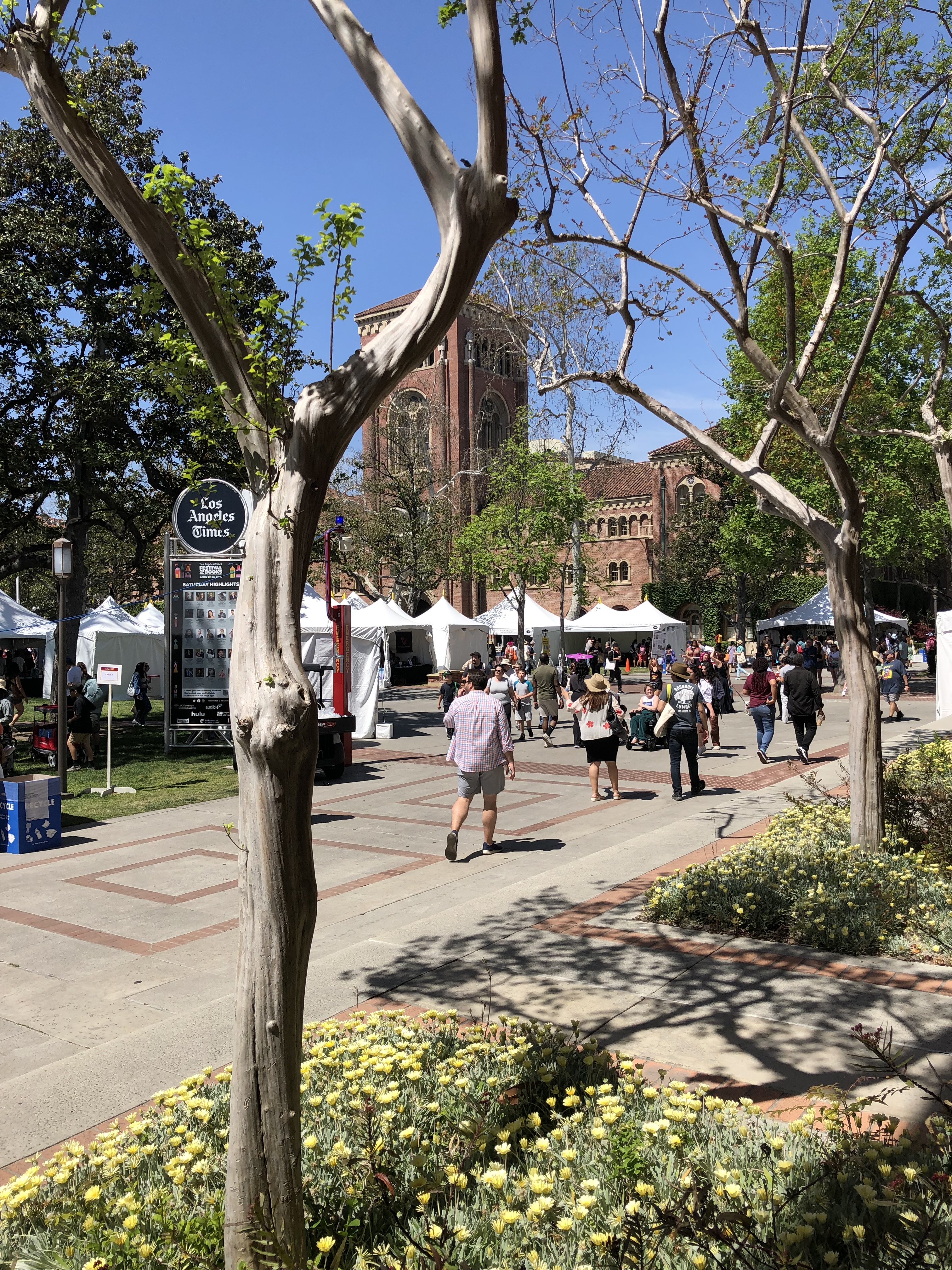
This past weekend, I attended the Los Angeles Times Festival of Books. For those who aren’t familiar with it, the Festival of Books is a huge, two-day, annual event held on the campus of USC (University of Southern California). 

Years ago, before my son was born, I went to the Festival every year. Back then it was held on the campus of UCLA (University of California Los Angeles.) 

I attended the Festival last year for the first time in many years. There was a certain thrill and energy that came with being surrounded by all things book-related, at attending an event that is a true celebration of books and authors. 

This year, though, I really wasn’t sure if I should go or not. Because I haven’t been feeling well lately. Because my pain level has been high and my energy level has been low. 

That’s the hard part for me — deciding when to push myself and when to hold back and admit that my body needs rest.

The truth was, I really wanted to go. I didn’t want to stay home because I was worried about my pain or the heat. I wanted to prove that I’m still capable of being out in the world, doing things I feel passionately about, not letting my illness completely dictate my life. 

I tried to make it as easy and stress-free as possible for myself by not attending any panel discussions or book signings. I didn’t want to have to worry about being in a particular place at a particular time. 

I simply strolled around the Festival, wearing my mask and sunhat, and doing my best to be present and enjoy the experience.  

I admit — I did start to daydream about what it would be like to be an author with my own exhibition area, selling copies of my memoir. Immediately I thought of giving out small, wrapped candies to those who stopped at my table. (Starburst and Hershey’s Kisses came to mind, though the Kisses might melt in the heat. Jolly Ranchers could be another possibility.)

I walked around, I took pictures, I picked up books, chatted with some authors, and bought three books, even though I have more than a dozen books at home, just waiting for me to read them. 

I loved being there. But, (you knew there was a but coming) it was incredibly hard on my body. It took me about 15 minutes to walk from the parking structure to the exhibition area. Plus, I had parked on level 5 which meant I would ordinarily take the elevator down to the ground level. However, eager attendees were crowding onto the elevator each time it stopped at 5, and I will not ride in a super-crowded elevator. (During my teaching years, I once was stuck in the school elevator for 55 minutes one morning.) So I walked down five flights of stairs. (Thankfully when it was time for me to leave, no one else was waiting for the elevator so I rode it up to parking level 5.)

When I felt my speed decreasing, when I found myself searching for a place to sit and rest in the shade, I knew it was time to go. That’s when the mask comes in handy. No one can see me talking to myself as I retraced my steps back to the parking area. One step at a time. Okay, you can do this. 

Am I glad I went? Yes. 

But I’m also sad. Because I miss the old days, the years I could just go out and do something without weighing all the possible risks. When I didn’t have to worry about having a pain-hangover the day (or days) after a particularly strenuous activity. 

I Am Alive With Creativity

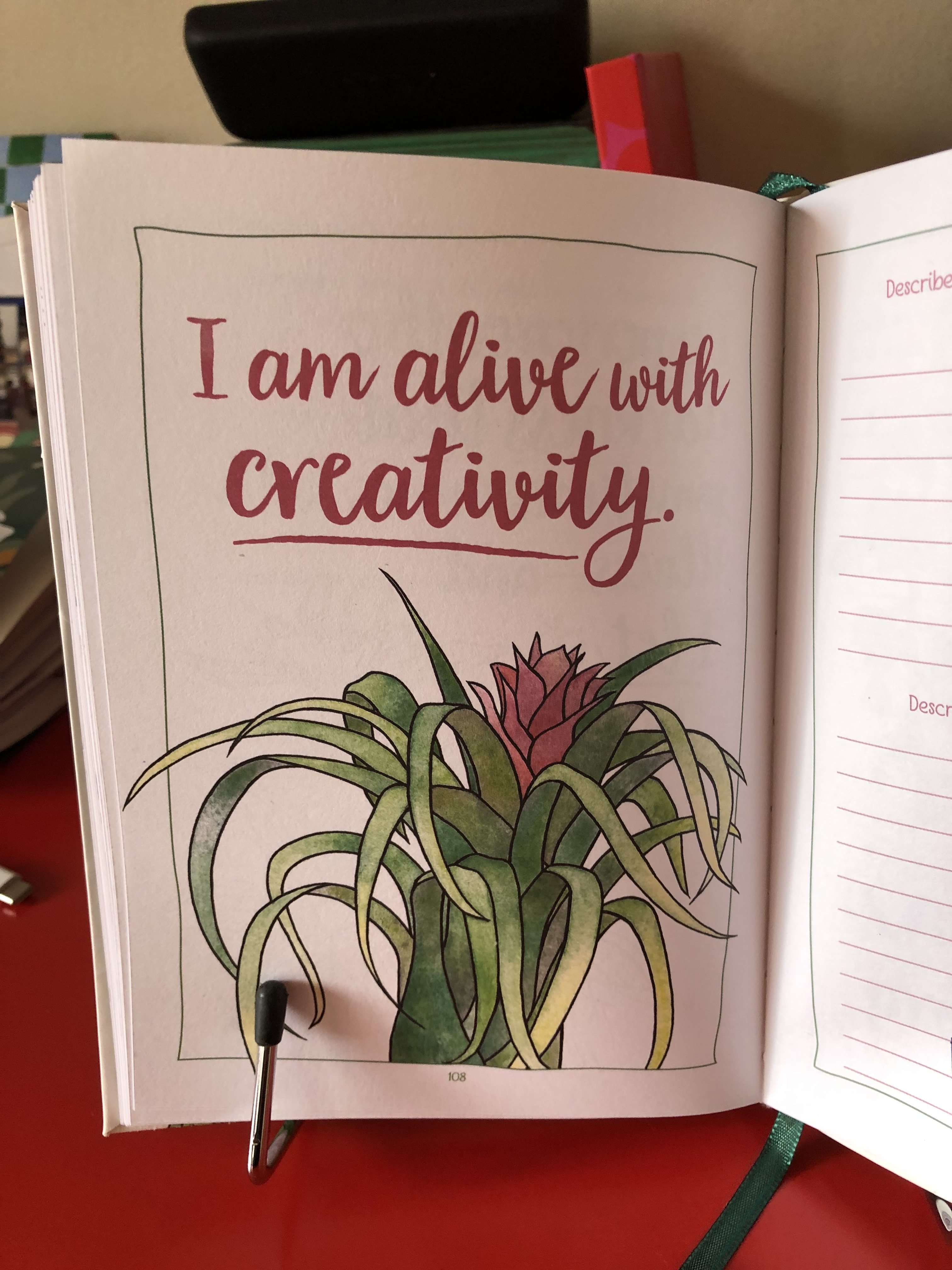
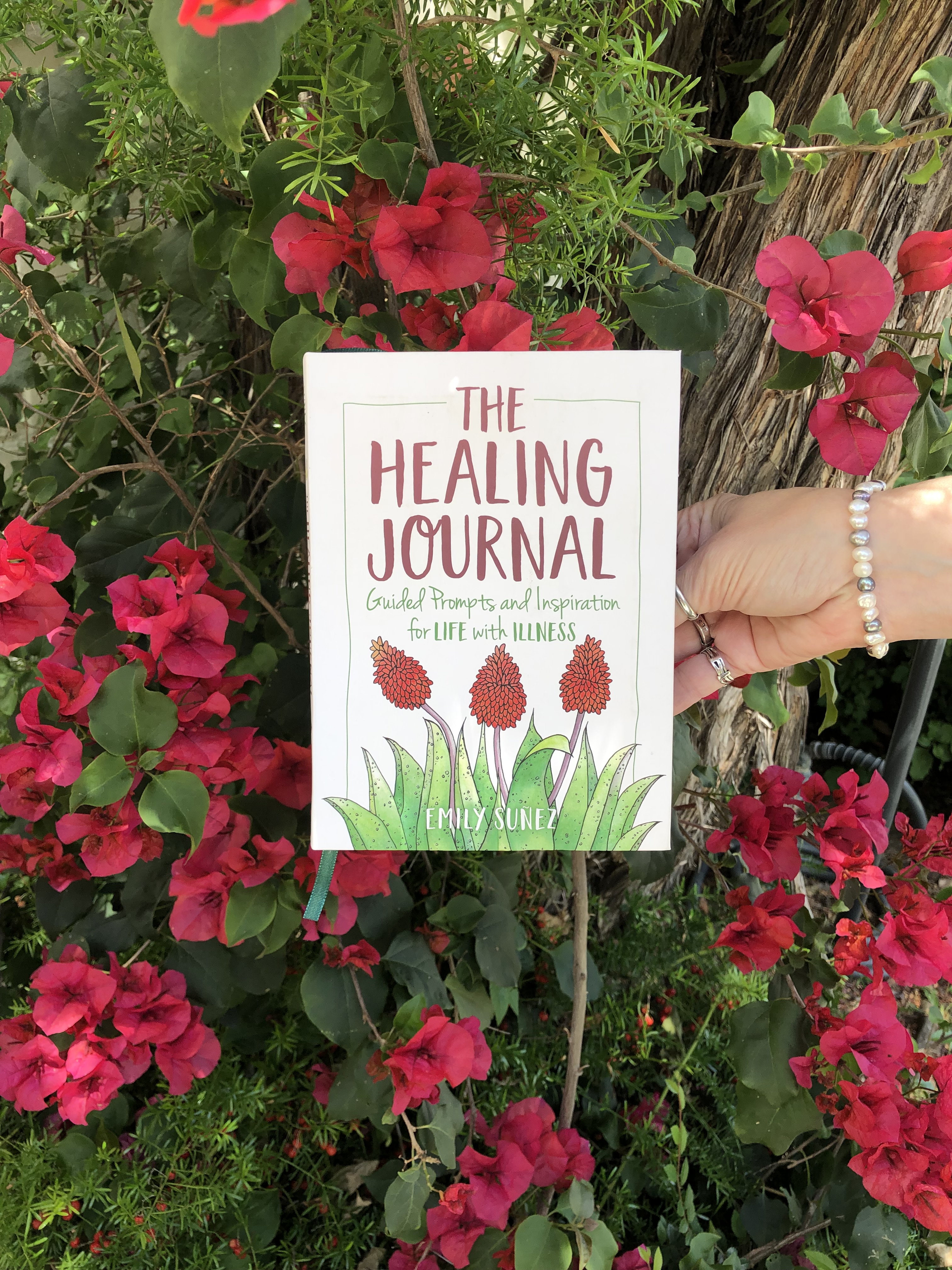
I have slowly been making my way through The Healing Journal: Guided Prompts and Inspiration for Life with Illness by Emily Suñez.

This is a book that you don’t read all at once. You “savor the flavor,” as we say in our family. You pay attention to each beautiful illustration and each writing prompt. (I last wrote about The Healing Journal in a December blog post. You can click here to read it.)

The book is much too pretty for me to write in. Instead, I use the statements in the book as prompts for my daily five-minute writing exercise. 

If you’re not familiar with it, my five-minute writing time is exactly what it sounds like. You set a timer and you write for five minutes. That’s it. Sometimes I am surprised by what I write during those five minutes. Something comes out on the paper that astonishes me, delights me, saddens me. 

Sometimes I know those five-minutes were just the beginning of something more to come. I feel as if there is more to explore and so I do. Several of my published personal essays were born from my five-minute writing exercises. But sometimes, the five-minutes were just that. Five minutes that are done and over with, that produced writing I won’t ever return to.

Last week, it was a case of me wanting to further explore what I began in my son’s partially-used composition book from last year that I now use for my five minute exercises. It was this statement:

“I am alive with creativity.”

I am alive with creativity. I write — in some way, shape, or form — each day. Sometimes it’s a blog post, sometimes it’s an article for MomsLA.com, sometimes it’s just my five-minute writing exercise. 

What I realized as my timer counted backwards was that my definition of creativity has changed over time. It has broadened and expanded in ways I didn’t realize, until I answered this prompt.

I surprised myself by listing all the ways I am creative, all the ways I demonstrate my creativity. My garden. The way I display the books on my bookcase. The way I use stickers to decorate the envelopes for the letters I mail to my pen pal. The flowers on my dining table and the candles in my writing room. The earrings and necklace I select to wear each day. 

Many days, lately in particular, it’s easy to think of the glass-half-empty parts of my life — the unsatisfying physical therapy appointments, the prescription medications, the pain that leaves me crying when I step out of the shower. 

But my life is more than that. I am more than that. 

Dear Readers, I’d love to know about your creativity. Tell me about it in the comments! 

Before and After the Book Deal

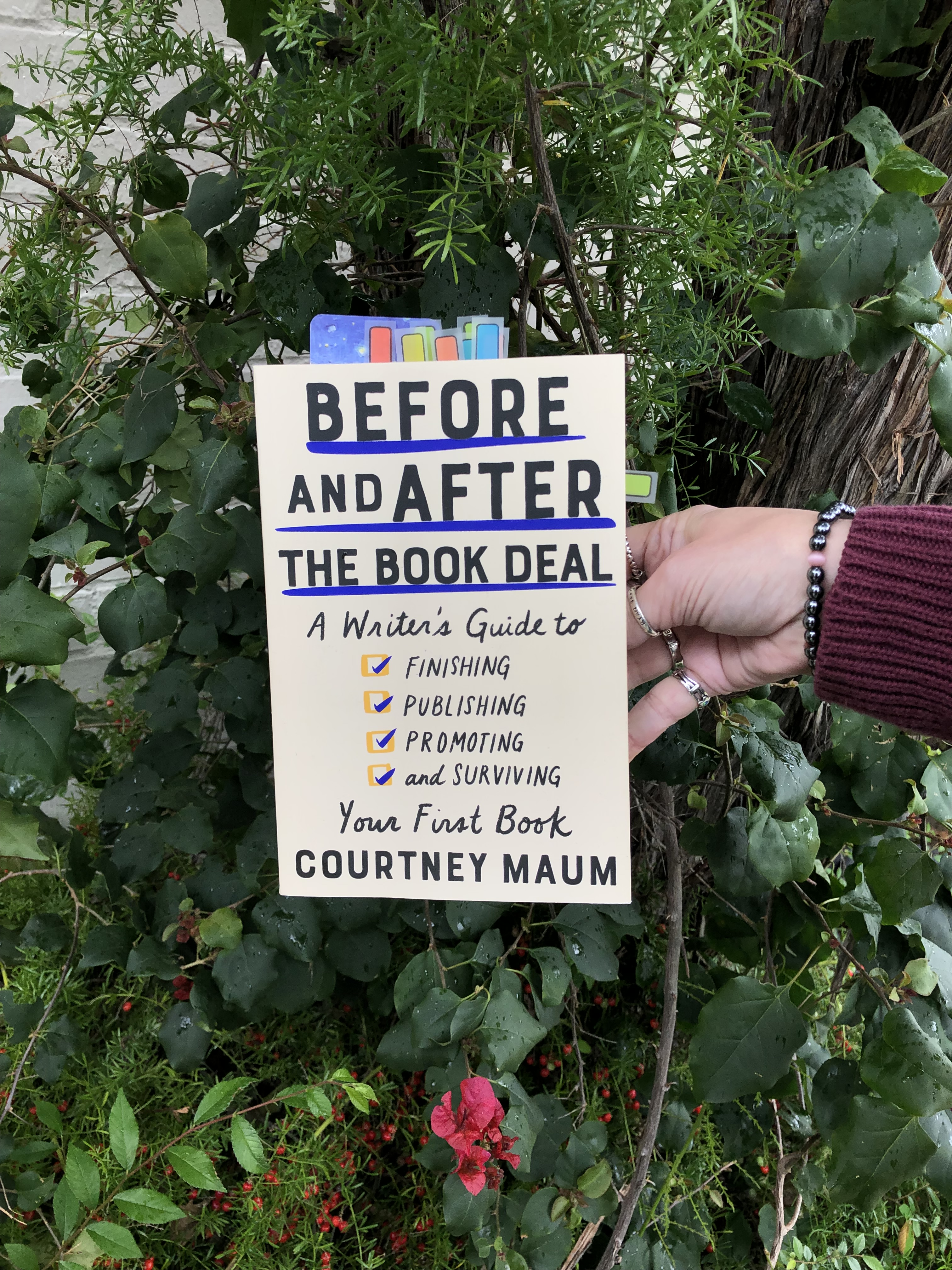
Before and After the Book Deal: A Writer’s Guide to Finishing, Publishing, Promoting, and Surviving Your First Book by Courtney Maum is one of those books you don’t necessarily read from start to finish. It’s a book that has been on my bedside table for a while now. I pick it up and read a few pages, mark meaningful paragraphs with a yellow highlighter and sticky notes, and then put the book down again until the next time.

Ms. Maum has crafted a well-written and, at-times, humorous book. It is an incredibly valuable resource for writers who are looking to “finish, publish, promote and survive” their first book. Which I am.

Yet, even if you’re not a writer, if you create in a different medium, there are useful tidbits for all artists and creators. Here are just a few:

“Narrative voice is your literary aura, your essence, the thing that allows writers the world over to write about the same topics in thrillingly different ways. Even though it’s yours, your voice can take a long, long time to find.”

“Get excited by your rejections. They are road maps toward the kind of work that you were born to write.”  (It’s a good reminder. Although they are a part of the writing process, some rejections sting more than others.)

In addition to writer-specific advice, I love these reminders about the power of expressing gratitude:

“Set some money aside for thank-you tokens for your editorial team and agents at pub time. (A heartfelt, handwritten card is thoughtful, but some authors also send on gifts, flowers, alcohol [when appropriate], or something handmade.)”

“At some point after the book contract is finalized, if you live close enough to your publishing house to make this happy event possible, you will meet the people who are going to publish your first book.
“Within twenty-four hours, send a group email to everyone you met expressing how great it was to meet them, how lucky you are to be working with them, and why [enter name of publisher] is simply the best house for your book. Then send a handwritten note to your editor, reiterating the same.” 

Dear readers-who-are-also-writers, have you read this book? Do you have paragraphs or pages you have marked with your own sticky notes? 

Gardening and Writing

The other day, I spent an hour working in my garden. Pruning, plucking, and even pleading. (Me: “Please don’t eat the plant. It’s not food.” Squirrel: No comment. But it did stop eating and stare at me for a long moment before scampering away.)

While I was marveling at the many plants that are getting closer to blooming, I realized something — gardening and writing have a lot in common.

They both offer the promise of something different — something more, something bigger, something more colorful — than what you started with.

A small green plant with a card sticking out of its moist soil labeling it a kalanchoe. A stack of white printer paper, standing at attention, just waiting for me to type some words on the computer and press print. 

I turn to both of these endeavors with hope and optimism. I water my plants, doing my best to make sure I’m watering a Goldilocks-not-too-much, not-too-little amount. I strive to find just the right spot, with just the right amount of sunlight, for each plant. I trust in the process and hope I’ve done all I can so my kalanchoe will bloom its yellow flowers. Likewise, I open up a new Pages document on my computer and begin. I only have twenty-six letters to work with, but, again, I trust in the process. I’ve done this before. Just get something down — a word, a vague idea, a quote. Something to get me writing, and keep me writing.

And then you see it start to happen. The plant looks a little taller, a bit fuller with more leaves. A tiny bud appears. The screen on the computer is no longer full of ramblings. I’ve found the line that I was writing my way to. The line that leads to a paragraph, which leads to multiple paragraphs and multiple pages.

But it’s not done yet. My kalanchoe does bloom its small, happy yellow flowers. And I continue showing my plants love, in the form of my pruning and plucking. So, too, it is with writing. After I have printed several pages of my personal essay, I know I’m not done. My pages need some love, too. I review, revise, and rewrite.

Of course there are others involved. All the people responsible for getting my plants to the garden store. My husband for being my personal I.T. person. 

But in the end, I did it. 

I pause and savor and appreciate. 

Then I do it all again. 

Lollipop Trees

“I had painted ‘lollipop trees.’ At least that’s what my elementary school teacher said.

“Our assignment was to paint watercolor landscapes. I painted trees with round tops, modeled after the pruned trees I saw as I walked to school each morning. I liked my painting; my teacher did not. She said my trees looked like lollipop trees; that they didn’t look like real trees, although they looked like the trees I knew.

“Mrs. E picked up a paintbrush and painted over my trees to make them look the way she thought trees should look.

“For the rest of my school years, I never voluntarily took an art class.” 

Those words are taken from a piece I wrote that was published in the Christian Science Monitor back in 2004. 

I thought of that essay the other day while on a walk. I am supposed to keep moving and not let my pain stop me from walking each day. So I try. I park the car near my son’s high school with plenty of time before the dismissal bell rings, so I can take a leisurely walk in the surrounding neighborhood. 

The other day I noticed the tree in the photograph above. And that’s when I thought back to my “lollipop trees” and this essay.

You can read my essay, “Too often, teachers extinguish a student’s spark,” by clicking here.

Write On, Sisters!

Write On, Sisters!: Voice, Courage, and Claiming Your Place at the Table by Brooke Warner is more than a writing book. It’s also a look into the uneven playing field that women encounter in most careers and fields. It’s a close-up look at the ways in which women often hold themselves back, and not just when it comes to writing. 

I’ll be honest — the first half of the book has a lot of statistics and was rather slow reading for me. But the second half of the book has quite a few nuggets that were worthy of my sticky notes.

Here are a few:

“Writing is self-expression, and as such, when we write we give voice to what we think, what we care about, and who we are. When we read a book —or even a post —we take a walk inside the innermost recesses of the author’s mind, welcomed into a place so private that the words we read on the page may be words the author has never uttered aloud. How powerful — and intimate — is that?”

“To put your voice out into the world is to both believe and demand that what you have to say matters. We are our best selves when we assert our independence and self-reliance, our strength and toughness. The very qualities our culture values least in women are the ones women need to succeed.”

“… you don’t need to heed warnings from the jaded that failure is imminent or inevitable. It is. The work is in getting back up on the horse, rising from the fall, and the way you handle the fall.”

“Few events are more life-changing and soul-affirming than offering up your work in the form of a published book. The act of creating a story, honing your words into a message that matters to readers, or honoring your truth by recording your experience in memoir form is a way of telling the world, I am here. I have something to say. I have something to impart. I want to share with you a story, a message, a truth. You are passing feelings from one human heart to another.”

Writing Out the Storm

There are some people who see little value in re-reading a book. After all, the world is full of books. There will never be time to read them all.

I am not one of those people.

One of my most re-read books is Barbara Abercrombie’s Writing Out the Storm: Reading and Writing Your Way Through Serious Illness or Injury. (Barbara holds a special place in my heart. You can read my tribute post, For Barbara, by clicking here.) 

Inside my copy of the book, is a print-out of a short email exchange between Barbara and me. I had written Barbara, thanking her for writing the book, and letting her know it had helped me put my thoughts on paper. That email was dated 2012.

This paragraph is taken from the back of the book:

This powerful and deeply inspirational handbook is for anyone coping with serious illness or injury — be it theirs or that of a loved one — who wants and needs to help themselves through the healing process. Offering her own experiences with breast cancer, as well as stories from other authors who have suffered from illnesses or severe injuries…

Though I have read this book several times, highlighting passages, marking pages with sticky notes, each read feels like a slightly new read. Each time I turn to this book, I’m surprised when a passage sticks out, a passage that in all my other reads had never really stood out to me before. 

That’s because I’m different. The book doesn’t change. But I do. Each time I read this book, I am a slightly different version of myself. And each time I read this book, I find writing prompts and quotes that speak to me and serve as inspiration in my writing. 

This time around, these are just a few of the sentences that jumped out at me.

Once you’ve heard the unthinkable, you know it’s possible to hear it again, or worse.”

“I’ve stopped fighting the diagnosis. I now fight the disease.”  

“I suppose it’s easy to be courageous when you don’t know you are doing so.”

Readers, I’m curious. Do you ever re-read books? Let me know in the comments. 

For Barbara

This is a difficult blog post to write. 

My heart is heavy. Which in turn makes my fingers feel heavy to write what I need to write.

You know when people ask Which teacher most impacted you? I never had a really good answer to that question. I always thought the question referred to teachers you had before college, either the teachers that told you the play area for the week was kickball, or the teachers who helped you navigate the confusion of changing classrooms for each class period, or the teachers who wrote you the recommendation letters you needed for college.

I had gotten it wrong. 

A teacher is one who teaches. At any level.

Now I know my answer to that question.

Which teacher most impacted you?

Barbara Abercrombie.

And with a heavy heart and my heavy fingers I must add may she rest in peace

Barbara Abercrombie recently passed away. I learned of her death through an email newsletter I received from Jennie Nash, current CEO of Author Accelerator, former instructor in the Writers’ Program at UCLA Extension.

About twenty years ago, I took my first class in the Writers’ Program at UCLA Extension. A weekend course about Writing the Personal Essay taught by Barbara Abercrombie. I remember writing a somewhat humorous post about the women’s restrooms not having toilet seat covers. I remember hearing Barbara Abercrombie tell me she could hear my voice coming through. At the time, I didn’t realize what a huge compliment that was.

 It was shortly after that course that I became a published writer with a piece I wrote being published in the Los Angeles Times. (You can read it by clicking here.)

Barbara was a cool lady. She was honest and calm. She encouraged everyone, believing everyone could write — and publish — a personal essay. She was the only teacher I knew who wore a lot of jewelry like I do. Silver jewelry like I do. 

Occasionally over the years I enrolled in Barbara’s classes when they aligned with my teaching schedule. Back in 2005, I was fortunate enough to miss two days of teaching to enroll in UCLA Extension’s intensive four-day Writers Studio Barbara taught.

When I retired from teaching, I was then free to take Barbara’s weekday, daytime classes. And it was in one of those classes that I met one of my closest friends. 

Barbara also offered four day writing retreats up in Lake Arrowhead. I used to wistfully read her emails and think someday. Someday became two different occasions. Each time, I left my family for four days and three nights to go read and write and talk about reading and writing up in Lake Arrowhead with a group of writers.

It was Barbara who told me the essays I was writing could be — should be — a book. 

March of 2020. We all remember it as the month and year when our world ceased to be as we had known it. Originally I was enrolled in one of Barbara’s classes which would have started at the end of March. The class, of course, switched to a virtual format. With my husband working from home, and my son doing his schooling from home, I had to drop out of Barbara’s writing class. 

I hadn’t spoken to Barbara for quite some time though I followed her on Instagram and always liked and commented on the photos she shared of her grandchildren. 

But I know Barbara knows how much I appreciated her, how fond of her I was. Because I always told her — through a letter. At the end of each class, Barbara told her students to write a letter explaining what grade they deserved. You wanted an A, you wrote and asked for one. I always wanted the A. In these end-of-course letters, I didn’t just reflect on my writing during the class, but also on Barbara’s teaching methods. Barbara created a safe space for writers. Writers, who often didn’t know each other well, came together and created a supportive environment to write and share aloud some of the most personal, intimate parts of our lives. 

It always worked, because of Barbara.
13 Ways Writing Is Easier Than My Autoimmune Disease

It all started from a 5-minute writing exercise. I used a prompt from Barbara Abercrombie’s A Year of Writing Dangerously: 365 Days of Inspiration and Encouragement (great book!), and when my timer went off five minutes later, I knew I had written the beginning of something. That first draft went through some significant changes.

13 Ways Writing Is Easier Than My Autoimmune Disease is the final result. 

I’m happy to say it was recently published at The Mighty. You can click here to read the essay in its entirety.