Five-Minute Writing Exercises

This week’s blog post is related to the week-long project I started on Instagram. If you’re not on Instagram or just haven’t checked it for a while, let me briefly explain.

Life has gotten busy and full, and one of the things I have let slip is my daily five-minute writing practice. (I’ve written about my five-minute writing exercises before. Here’s a link to one such post.)

Since the new school year starts on Thursday, August 14th (at least, schools in the Los Angeles Unified School District begin then, other schools in other districts may have different start dates), I thought this week would be the perfect time for me to begin doing my five-minute writing exercises again. 

Except, I needed some help, some way to be held accountable so I wouldn’t brush it off when I felt too tired or felt like I had “more important” things to do. So here’s the plan — Monday, August 11th through Friday, August 15th I am posting a reel a day on my Instagram account. In that reel, I read aloud a writing prompt — either one from Kicking in the Wall by Barbara Abercrombie or Rupi Kaur’s Writing Prompts – Self Love

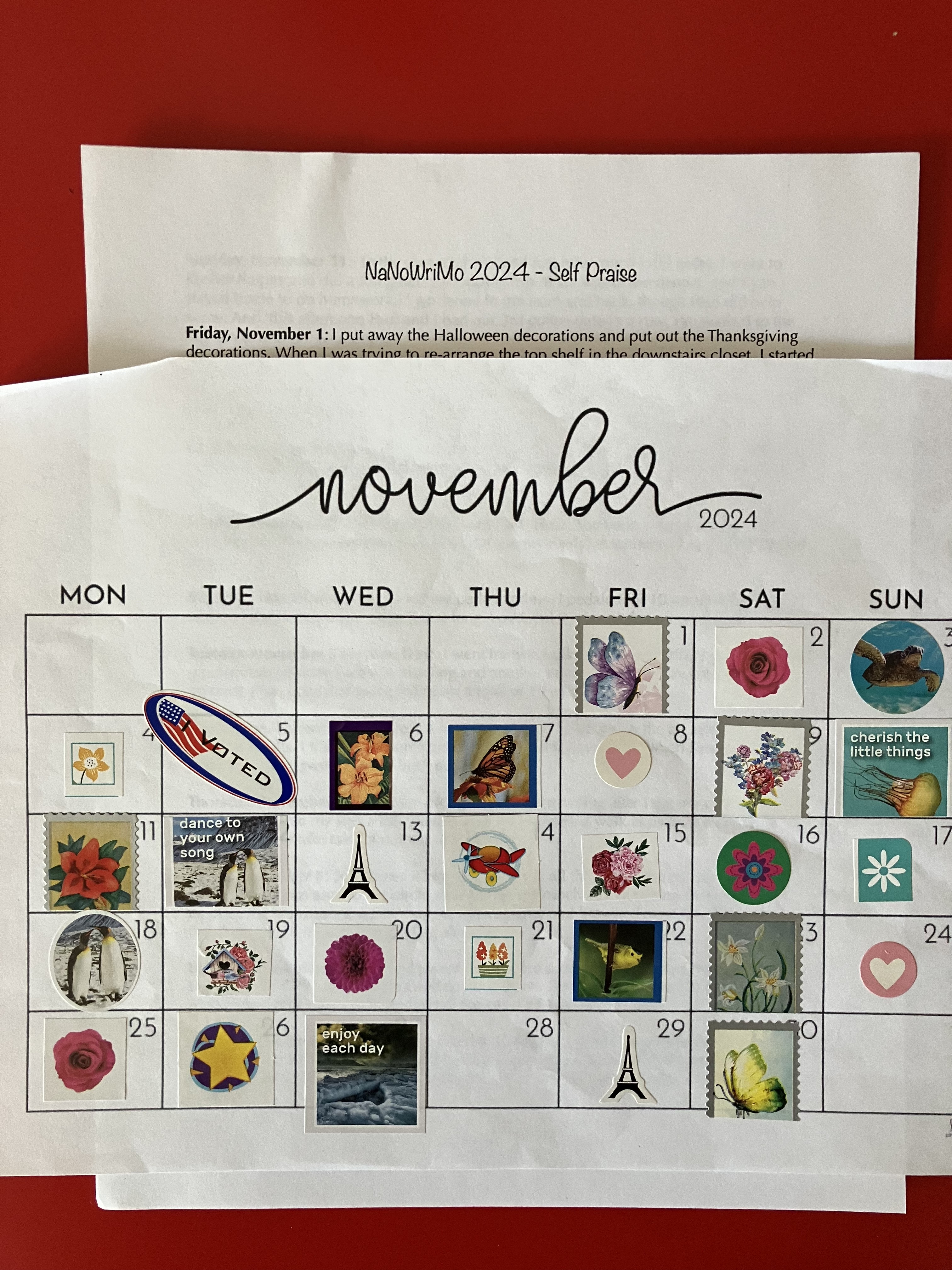
And me, being a former teacher, decided to keep track of my progress by placing a sticker on the calendar for each day I completed my five-minute writing exercise. 

Today, I am sharing with you what I wrote in response to Tuesday’s prompt — Write about a name that creeps into your heart. The name of someone or something you love — an animal, a place, weather, a song

Growing up, my mom’s family called her Honey. In a family of five children, she was the only girl. They called her Honey, even into adulthood, but everything I know about my mom’s childhood doesn’t match with the way they treated her. It doesn’t seem like she was ever treated like a Honey. In the stories she tells and the memories she shares it feels as if her years at home were missing a sweetness and tenderness and love, both explicitly expressed and implicitly felt. 

My mom, now 80 years old, has always spoken fondly of her maternal grandmother. A woman who wore lots of jewelry (like me). A woman who, when visiting California from New York, would ask my mom to polish her nails for her. A woman who called my mom Honeycakes.

Honeycakes. I love that name. It sounds like a delightful dessert. Like something you eat with your fingers and when you’re done eating, you lick your fingers clean, one-by-one, because you’re trying to savor every little bit of the sweetness. It warms my heart,  knowing my mom’s grandma spent time with my mom — hugging, being affectionate, letting my mom know she was a special girl.  

After 50 years of marriage, my 79-year-old dad, still calls my mom Honey. The red heart tattoo on his right arm has the name Honey written inside. 

My mom is Honey

And because it’s my mom’s name, I don’t call my husband Honey

He’s Honeypie

Readers, please let me know if you’re completing these five-minute writing exercises. I’d love to cheer you on!

Please note: I am including a link to buy the book that I’m highlighting this week. If you use my link, I do make a small commission on your purchase at no additional cost to you. I am working with Bookshop.org which also sends a portion of the profit to support local, independent bookstores.


Heart. Soul. Pen.

I don’t think I’ll ever “finish” learning about writing. The longer I write, the more certain I am that there is always something new to discover— about the process and the craft, but also, about myself. 

Which is why I enjoy reading craft books.

I recently finished reading Heart. Soul. Pen.: Find Your Voice on the Page and in Your Life by Robin Finn. It’s a great title, because for me, that is what writing comes down to — parts of my heart and soul transcribed onto paper.  

Whether you are a writer looking to get your super personal words out and onto the page, or you are a woman searching for the confidence to speak your truth, Ms. Finn’s book is for you. 

From the Introduction: “Every part of you is invited — the pretty parts and the ugly parts, the happy parts and the painful parts, the noisy parts, and the quiet parts. You are invited regardless of your age, stage, marital status, or any other status. You get an A+ in this class just for showing up. Your writing is welcome here, whether it spills out loud and shouted, or tiptoes forward soft and coaxed. Together, we are entering a safe space where we can fully and radically express ourselves.”

This week, I share with you some highlights from the book:

“The messages we receive as kids get lodged inside of us and become lifelong, limiting beliefs that impact how we live, work, write, create, show up in our lives, and relate to ourselves and others. These beliefs limit us from experiencing who we truly are. They keep us small. They keep us from sharing our full expression in the world.”  (Sound familiar? It did for me.)

“HEART. SOUL. PEN. is a step-by-step process designed to help you reclaim your voice, tell your story, and embrace the indisputable value of your life experience and creative self-expression.” 

“Writing at its best helps us connect to each other and feel less isolated in our individual lives.” (I love this!)

“If you are waiting for someone else to offer you time to write, you may be waiting a long time. Taking time for yourself is not selfish. It is self-honoring. You are worthy of your own time to connect to your voice, express yourself, and process your world through writing.” (I love that term — “self-honoring.”)

“… the success of a regular writing practice is less about how much writing you get done, and more about how you approach your commitment to writing.”

Writing is a process that takes time and effort. It is important to find moments to acknowledge yourself and celebrate your effort. You can celebrate making time for self-expression when you sit down to write in your journal. You can acknowledge that writing is a form of self-care and a gift you give to yourself. Recognizing your hard work and your commitment may sound easy. But, for many women, it is outside their comfort zone.”

And perhaps my favorite section of the book, something I will return to over and over, are Ms. Finn’s “Ten Truths You Need to Know about Yourself as a Writer.”

A question for my writer-friends — Do you enjoy reading craft books? What was the last writing-related book you read? Please share!

Please note: I am including a link to buy the book that I’m highlighting this week. If you use my link, I do make a small commission on your purchase at no additional cost to you. I am working with Bookshop.org which also sends a portion of the profit to support local, independent bookstores.

I Believe

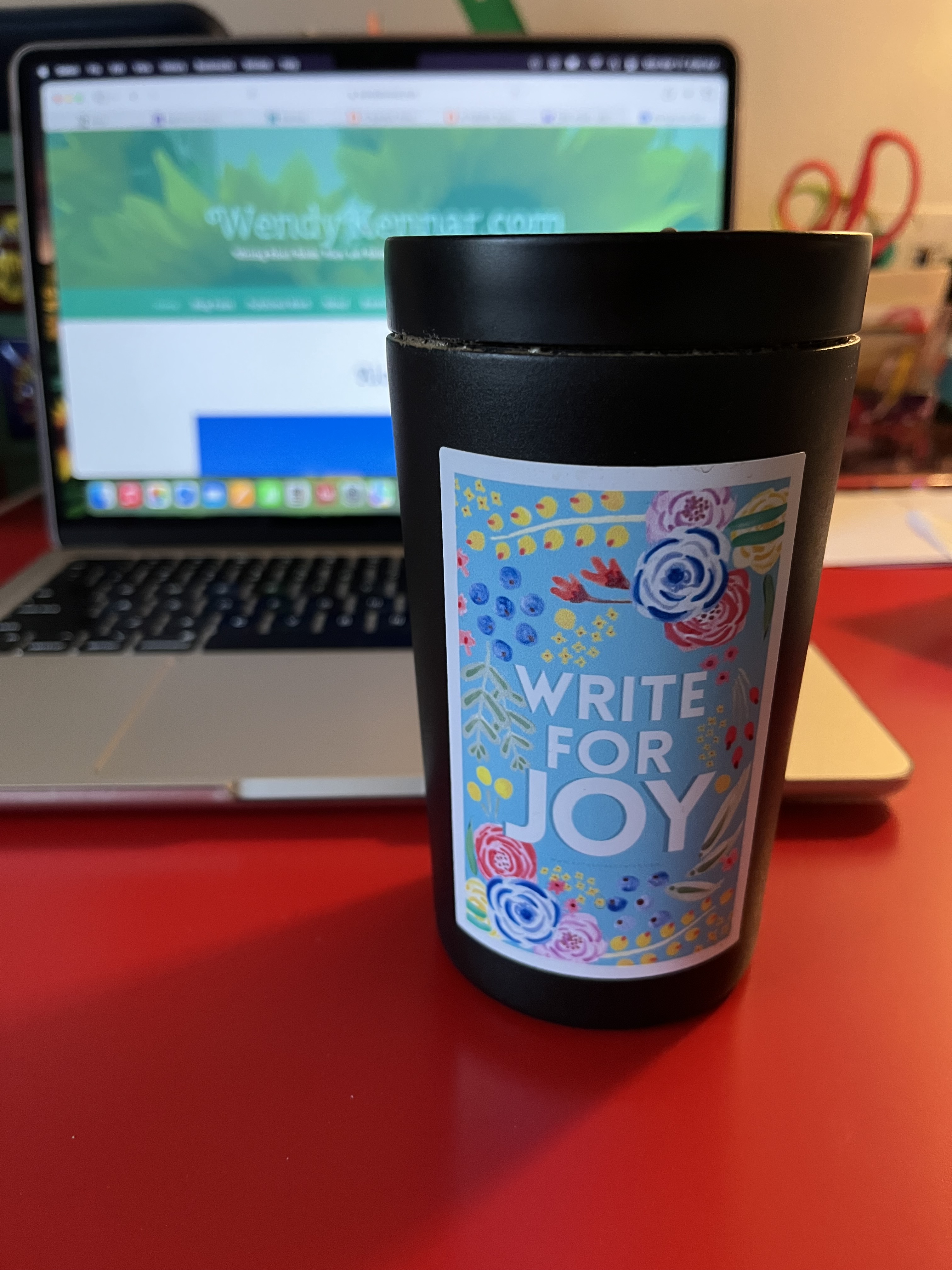
My reusable coffee tumbler is decorated with stickers designed by Katherine Center.

I am in the middle of a three-month online program called The Creative Shift Mastermind with Dan Blank. (I have taken several webinars with Dan and always come away having learned something new to apply to my writing and how I share my writing.)

Each week throughout The Mastermind, we focus on a different aspect of our creative life. Recently, our activities centered on our “Creative Identity.” 

Taken from our syllabus:

Define Your Creative Identity. Have confidence in your creative identity, and know how to talk about what you create and why. The result of this is your ability to share more frequently and authentically, and greater ability to engage others.” 

During one of my daily five-minute writing exercises, I wrote a series of “I believe…” statements that all had something to do with what I write, why I write, and why I share what I write. 

My dear readers, you are an important part of my writing. Therefore, for this week’s blog post, I would like to share my “I believe” statements with you. Thank you for your support and being with me on my writing journey.

I believe… (as it pertains to my writing):

I believe everyone is walking around with pain of some sort.

I believe everyone has scars, whether we can see them or not.

I believe writing is another way of teaching.

I believe writing is one way to help make the invisible visible.

I believe chronic illness can be lonely and isolating.

I believe writing is one way to find connection with others who “get it.”

I believe writing is a way to share our stories and our hearts and realize that we’re not alone.

I believe my story is worthy of sharing.

I believe I continue to teach through my writing.

I believe I have much to learn and writing helps me make sense of things.

I believe one way I sort things out, one way I figure out how I feel about things is by writing about it.

I believe my book is a book I would have loved to read when I first became ill.

I believe I don’t talk about my writing enough.

I believe kindness and compassion and patience are so very important.

I believe I have always been a writer.

I believe I will always be a writer.

An Update on My Memoir

I wanted to use this week’s blog post to give you all an update on my memoir.

I have been querying literary agents on-and-off since March. Some agents respond to your query with either a yes or no, while other agents will only respond if they are interested in reading more from you. I have received some form rejections as well as some very nice, encouraging rejections; however, no literary agent has said yes, or even a variation of yes — as in, I’d like to read more before making up my mind

Which means I now go to plan B — researching smaller publishing houses. These independent presses do not require an author to be represented by a literary agent and accept submissions from the writers themselves.

The bottom line is — I’m not giving up. I’m not stopping. I’m just changing course, because I truly believe in my book and I want to get my book into the hands of readers. 

You may remember my October post when I described my memoir and explained that it’s divided into three parts. (If you missed the post, click here to read it.)

The first piece in the first section is a Letter to the Reader. The letter explains why I eventually felt compelled to write my memoir. For several years I refused to write about my “medical condition.” Notice I used the word condition and not illness or disease. I didn’t think my autoimmune disease was important enough to write about. Surely other people dealt with more life-altering, more painful, more scary health issues. And while that’s definitely true, it doesn’t mean my experiences are any less important or any less book-worthy. 

So this week, I’d like to share a portion of my Letter to the Reader with you. You all are on this journey with me, and knowing you’re here, reading my work week after week, liking, commenting, sending me emails, supporting me is something I don’t take for granted. I appreciate you all. I hope you know that. 

From my Letter to the Reader:

“This book is deeply personal to me. It has lived in my head and my heart for years. I have created it with love and respect, for me — and for you. 
“I was thirty-four years old, a wife, a mother, a daughter, and a teacher, when I became ill. I didn’t comprehend what a rare, autoimmune disease diagnosis would mean. I didn’t realize my life would forever be changed.”

“The book you are reading is the book I wish had been available to me. It is the book I needed to read. 
“It is my hope that readers who don’t live with a chronic illness will finish this book with a different perspective, an adjusted way of looking at people. A bit more patience and understanding for others. A realization that you simply can’t know someone’s hurts just by looking at them.
And for my readers who live with chronic illness and/or chronic pain and/or invisible disabilities, I sincerely hope that you read this book and feel a connection with my words. I hope, in these pages, you see a part of yourself, to the point where you can show an essay to a loved one and say, ‘Here, please read this. This is what I mean. This is how it feels.’ I hope, too, that reading this book brings you comfort in knowing you’re not alone. Many of us feel so desperately isolated with our medical struggles. It is an unbelievable comfort to find someone who ‘gets it.’ 
“I get it.”

My 2nd Spoonie NaNoWriMo

Last year, I wrote about my experience completing a very personalized Spoonie NaNoWriMo. (You can read the post by clicking here.)

Here I must pause to give credit to my friend, Sandra Postma. It was because of Sandra’s Instagram posts that I created my own version of NaNoWriMo last year. I never would have done it without Sandra’s encouragement and her advice that as spoonies we needed to create our own personal versions of NaNoWriMo that work for us.   

So this year, when October wrapped up and we made it through a relatively quiet Halloween (only one trick-or-treater this year), I knew I wanted to do my Spoonie NaNoWriMo this year, too. 

I followed the same format as last year. 

I completed a five-minute writing exercise each day. Sometimes that meant I used the time to generate ideas for an upcoming submissions call. Other days it meant I used a writing prompt to jumpstart my writing. And other days I used my five minutes of writing time like a journal, to record what I was thinking and/or doing that day. 

And maybe, even more importantly, was the self-praise component. I took a few minutes each day to reflect on my physical strength and all my body continues to do, even though my levels of pain and fatigue are higher than last year. 

But, if you look closely at the photo of my sticker-decorated November calendar, you’ll notice I missed one day — Thursday, November 28th. Thanksgiving.

I didn’t notice my mistake until the following day, and I must admit, I was disappointed and upset with myself for “messing up.” But it was done. I could have cheated, I guess, and done an extra 5-minutes of writing on Friday, November 29th and written down something my body had done on Thanksgiving Day. Then I could have placed a sticker in that empty calendar box. 

But that wouldn’t have been right. The truth was, in addition to being busy cooking with my family, Thanksgiving was a day of complicated emotions. And painful knees. And somehow I had gotten distracted and forgotten to do my NaNoWriMo activities. 

  And that’s okay. Because I did my best. 

And when I read over the self-praise log I kept throughout the month, there’s no denying I’m doing a lot and trying my best. Every single day. 


About My Memoir-In-Essays

My Memoir-In-Essays is divided into three sections --
The Beginning, After the Very Beginning, and Not the End

This week, I’d like to share a bit about my memoir-in-essays. 

1.  I continue to query literary agents and have not yet had any requests for my manuscript. It’s hard, I admit, not to feel badly about this. At the same time, I know there are multiple ways to get my story out into the world. If it doesn’t work out with an agent, I’ll pursue one of those other possibilities (such as hybrid publishing or publishing with a smaller, independent press). 

2.  I am keeping the title private, for now. Just like when I was pregnant, we announced the gender of our baby, but kept his name private except for family and a few super close friends. So while I’ll tell you I have written a memoir-in-essays, I just don’t feel ready to share the title yet. Though I do realize I shouldn’t get too attached to my working title, because titles are often changed, for many reasons. (This has been the case for many of my personal essays which have been published over the years.) 

3.  Here’s my official pitch:  “… my story of becoming chronically ill, retiring from my teaching career, and living a life I hadn’t planned as a stay-at-home mom. The book is composed of personal essays and micro-essays written as short school assignments.”

One of the things that makes my manuscript unique is the inclusion of these “micro-essays written as short school assignments.” Teaching was a huge part of my life, my identity. And it is because of my chronic illness that I am no longer teaching. Therefore, there’s no way I could write my story about life with an invisible disability without including parts from my teaching life. 

When I taught fourth grade, my students and I completed a getting-to-know you questionnaire during the first week of a new school year. It was a short form that was a quick, fun way to share what made us each unique while also giving students the opportunity to learn about each other, and realize many of them shared common interests. 

I included this questionnaire in my manuscript, and this week I will share a bit of it with you, my readers. 

I Am A Person Who…

By: Mrs. Kennar

Directions: As a way to get to know each other, please fill out this worksheet. By writing honest responses, we will learn about our new classmates. In the process, I think we will come to realize that while we are each unique individuals, we have a lot in common. 

I Am A Person Who…

likes Nutella crepes

dislikes spinach

can recite the Preamble to the Constitution 

cannot throw a spiral

would never watch a horror movie

loves to read

How about you, dear readers? Feel free to leave a comment answering one (or more) of these prompts. 

A Small, Attainable Luxury

I’ve written before about one of my favorite not-at-home writing spots. (If you missed it, you can click here to read my post, “A Bit of Serendipity.”)

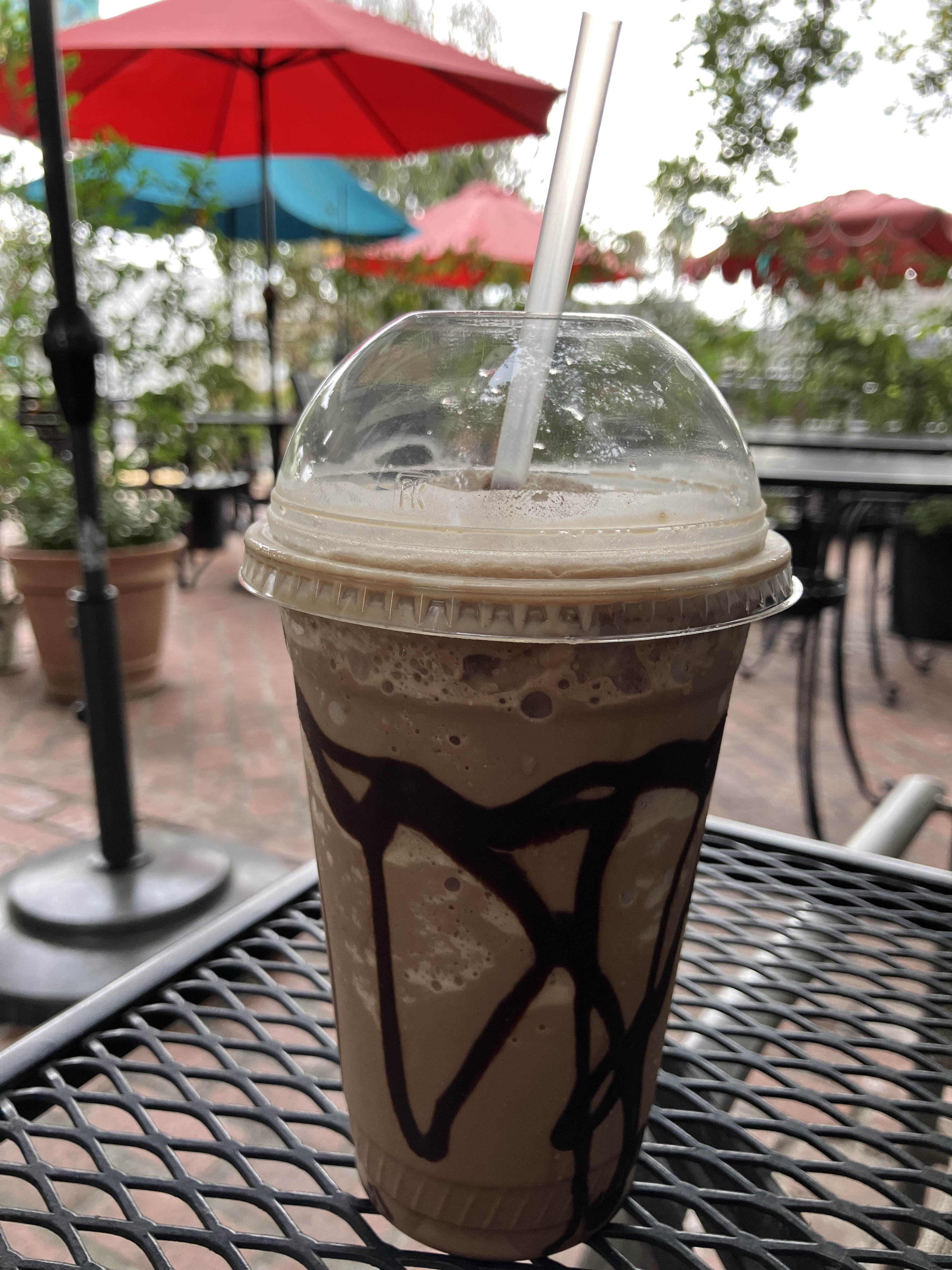
This week, I have a confession to make regarding this cafe: It is here, that I order the most expensive blended mochas I have ever had. 

I’m not sure why these drinks are so expensive, or why they cost more than their counterparts at Starbucks, Coffee Bean, or my local neighborhood indie coffee spot. The price of the beverage is high enough that it initially gave me reason to pause and wonder if I should keep spending my time, and my money, here. 

And the answer is yes

Yes, I most definitely should keep spending my time and money here at this cafe. 

Here’s why:

First off, I enjoy the blended mocha. I like that I can drink it slowly, throughout my writing time, and savor the yumminess. I like the chocolate swirls on the inside of the cup. It makes the drink look fancy, and not like your standard blended mocha. 

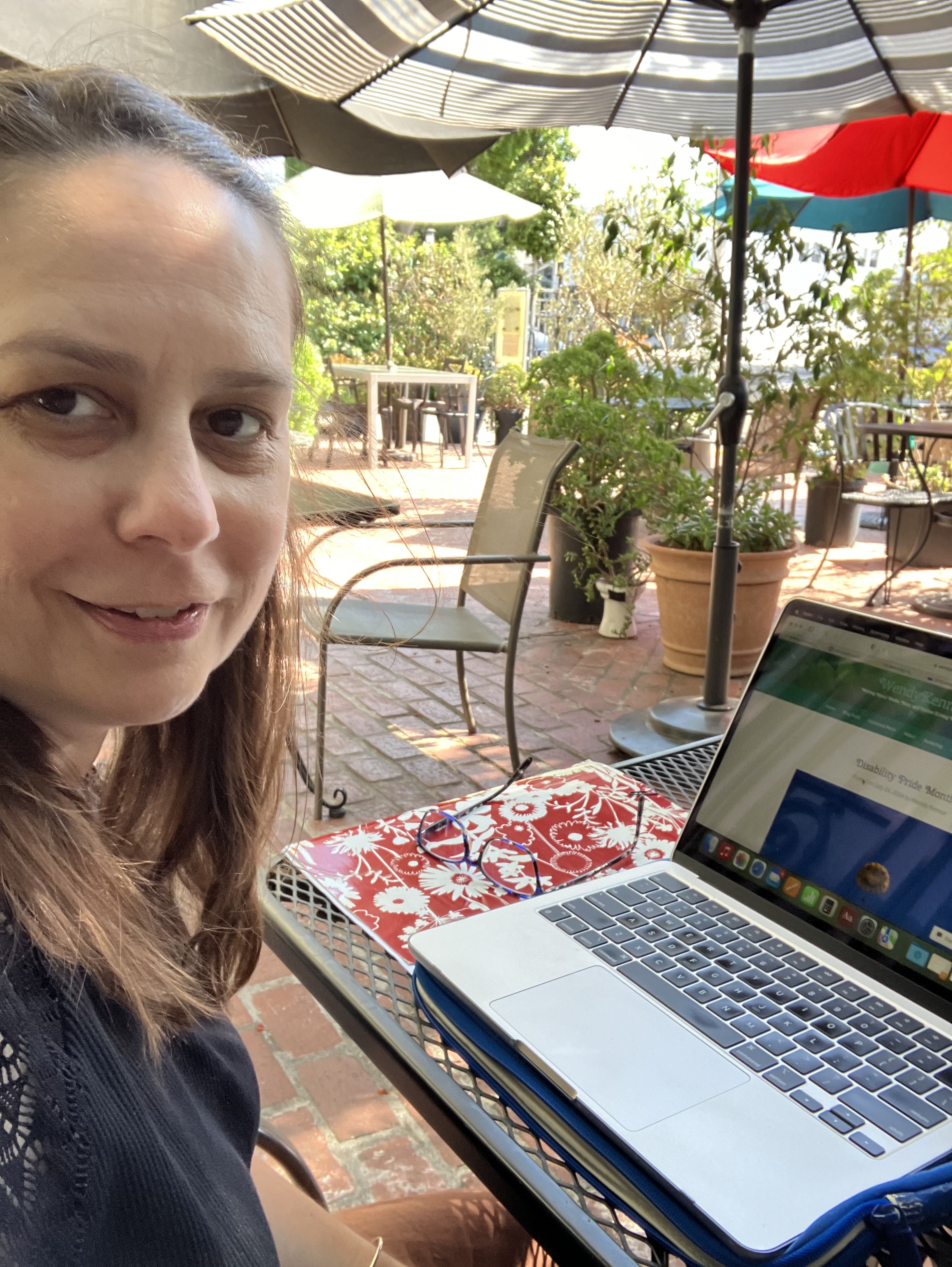
I appreciate the “writing cocoon” I create for myself at this cafe. Unlike my local neighborhood cafe, I don’t run into neighbors here. I don’t spend any of my writing time chit-chatting with others. I come here to read and write, and that’s what I do. Distractions are minimal and are generally limited to occasional loud talkers. 

I’m productive at this cafe. I set up my writing space, and I get to work. And by the time I pack up to go home, I am so pleased with my output. 

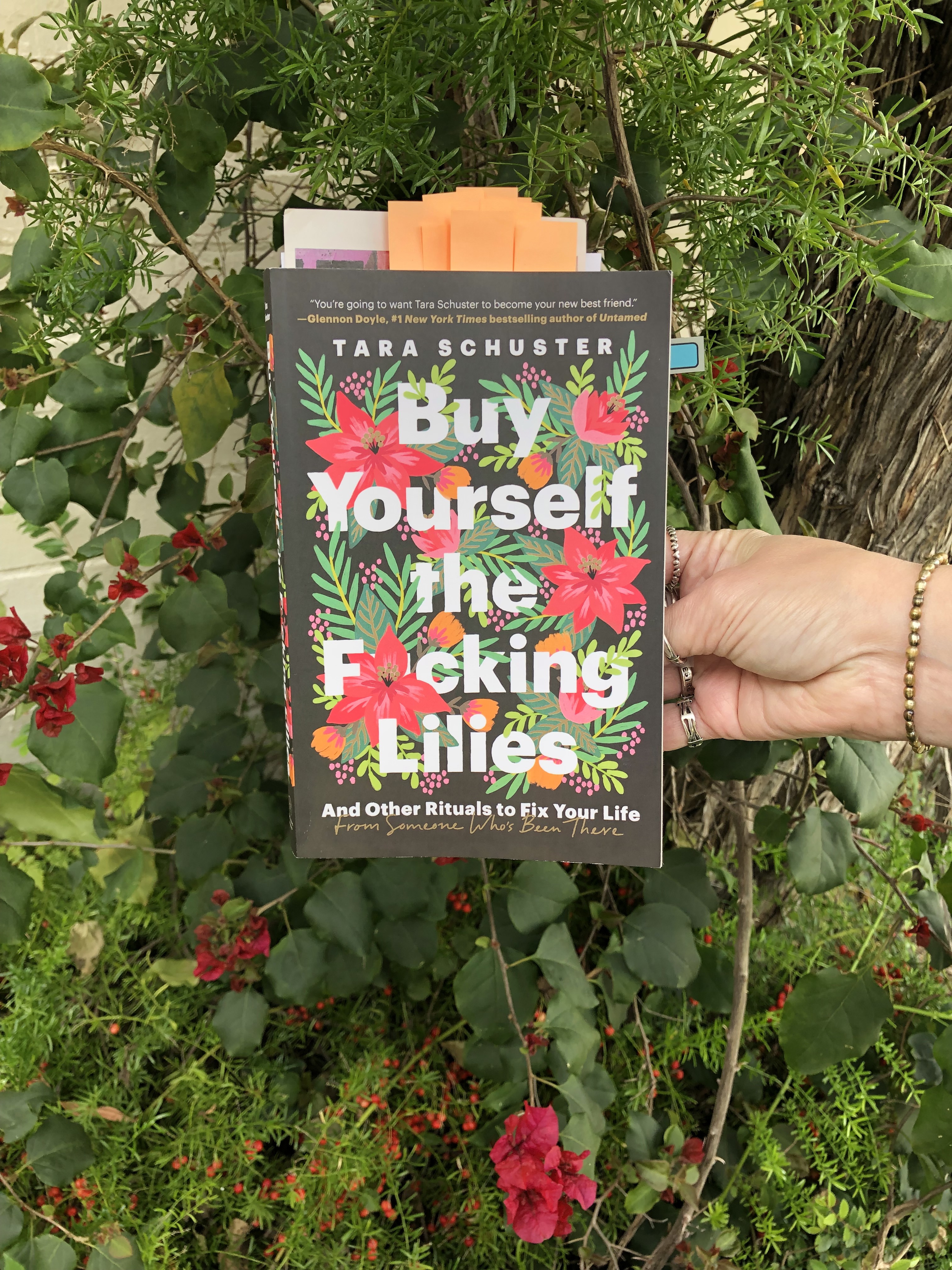
And, there’s something else. Something I read in Tara Schuster’s Buy Yourself the F*cking Lilies

Buy the fucking lilies.  You are worth seven-dollar lilies. You are worth the thing that instantly makes your life better. I’ve heard people talk about their favorite exercise class this way. I’ve heard people talk about an order of guacamole with their tacos this way. I’ve heard people talk about the ten-dollar, ten-minute massage at the nail salon this way. That small, pleasurable thing that makes you feel like you are treating yourself — do not deprive yourself of this. Buy the fucking lilies, take the class, order the guac, get the massage.”

“Above all else: You are worth the lilies. The small, attainable luxury of lilies is not something to stress about, it is not something to deny yourself, it is something to make plans for and embrace. Small things that make you happy ARE a part of taking care of yourself.”

“Seven-dollar lilies won’t ruin you and they won’t make you poor; they will make you stronger. You are stronger when you treat yourself well.”

Readers, what are your “lilies”? In addition to blended mochas, I would add flowers (usually from Trader Joe’s), candles, and books as other “small things” that make me happy. I’d love to know what your “small, attainable luxuries” are. Feel free to share in the comments. 

Please note: I am including a link to buy the book that I’m highlighting this week. If you use my link, I do make a small commission on your purchase at no additional cost to you. I am working with Bookshop.org which also sends a portion of the profit to support local, independent bookstores.
Questions and Clues

I sign up for many writing-related webinars (mostly free, though some are fee-based), and I like to watch interviews with authors on YouTube. I consider myself a life-long student, and have found the writing community to be very generous when it comes to sharing information and advice and encouraging other writers. 

I attend these webinars and watch these videos in my quest to learn more about building a writing career. As I continue to query literary agents, I have been learning about establishing and maintaining an author newsletter (something I plan to do in the future, so stay tuned!), creating a readership, and the different types of marketing options available for writers. 

A couple of weeks ago, I watched two different writing-related videos, featuring two different authors, and both videos left me with questions I haven’t been able to stop thinking about.

One author was asked how she shows herself self-compassion. I thought it was an interesting question for an interview. The memoir author spoke first of acknowledging the difficulty in writing about painful experiences. Writing memoir, particularly writing about a traumatic experience, requires a very different mindset than writing a scene in a romantic-comedy, for example. The author spoke of giving herself breaks, and being very intentional when it came to planning her writing time. She knew she would need to strategically plan when and where she’d engage in this writing, and then give herself the space and time needed to rest afterward. 

In another interview, a different author was asked what she does to nurture her resilience.

The questions stumped me. Me, who is seemingly always writing or thinking about writing, was at a loss for words. 

Do I show myself self-compassion? Probably not nearly as much as I should. 

Do I nurture my resilience? Honestly, I’m not a hundred percent certain what that means or how that would look. 

But that’s what I’ve been thinking about. Those are questions that I can’t seem to let go.

Then over the weekend, as I tried to make my way through a full inbox, I read agent Kate McKean’s latest Substack post titled, “Compulsory Rest.” This sentence stood out to me: “The universe is going to do what it’s going to do—and all you can do is make sure you’re taking care of yourself the best you can.”

She’s completely right. I like to think I’m in control, with my lists and schedules and dinner meals planned out a week in advance. But really, the truth is, I’m not at all. There is actually little I can control, and when it comes to my own body, there’s really very little I have control over. 

It’s been hard. “It” meaning life, though I hesitate to put that in writing. Thankfully, my family is healthy and safe. We are not worried about having enough food in the fridge or a roof over our heads. We are lucky, fortunate, blessed in so many ways. 

And yet, life has been hard.

I feel like these interview questions and this Substack statement are like clues. Clues from multiple sources and multiple people. Clues I am paying attention to. 

But, also, clues I’m not  entirely sure what to do with or how to use them as a springboard for changes in my daily life.

Anyone else feel that way?

A Bit of Serendipity

I took this photo during last week's writing session.

Last week I spent time at one of my favorite not-at-home writing spaces; a cafe serving a yummy ice blended mocha, and providing many tables and chairs on a large patio with plenty of shade. 

This week, I wanted to share something that happened during last week’s visit.

Two women sat at a table close enough to me that I could overhear bits and pieces of their conversation without even trying. It felt serendipitous that of all the available tables, these two women sat near me. After all, I was sitting off to the side, near a wall, trying to distance myself from any loud chatter and distractions. 

Within a few minutes, I learned the two women were middle school science teachers. I heard them talking about sixth grade, about sedimentary rocks and fossils, about a project requiring a long roll of adding machine paper. (And I admit to feeling old when one of the teachers had no idea what adding machine paper even was.)

These two teachers spent their own time lesson planning. These were “off-the-clock” conversations. Because that’s what teachers who are passionate about teaching do. Your teacher brain is never really off, and teachers don’t actually get “the whole summer off,” as many non-teachers believe. Teachers are always working in some shape or form. It brought back memories of my own lesson planning days and the blended mochas my closest teacher friend and I used to enjoy while brainstorming and planning for our fourth graders. (I’m thinking of you, Nance!)

As if that wasn’t enough, after a bit of quiet individual work time, the two teachers began chatting again. I heard different phrases this time — it’s so lonely, I look fine on the outside, many people don’t get it.  

I learned that one of the teachers lives with an invisible illness. The other teacher’s partner lives with an invisible illness and was asking questions about how to best support a chronically ill loved one. 

I momentarily sat there in shock. 

What were the odds? 

Not only were these two women teachers, they were also among the target audience for my memoir! (My target audience includes those living with chronic illness, especially invisible illnesses, both physical and mental, as well as friends and families of those living with chronic illness.)

That day at that cafe, I had spent a portion of my writing time researching literary agents to query my memoir-in-essays. 

And then these two women entered the outer edges of the writing cocoon I create for myself at this cafe. 

I took it as a sign.

Working Towards That One Yes

Twenty years ago this month, I earned my first byline

And not just any byline, but a byline in the Los Angeles Times

It all felt so easy. I wrote a personal essay. I submitted it to the Times. They published it soon after. 

The publication happened not too long after I had taken a weekend course about writing the personal essay through the UCLA Extension Writers’ Program

That class was the first of many I would take in the Writers’ Program. I got incredibly lucky, because Barbara Abercrombie was the instructor for that class. (If you’ve read my blog for a while, you know I have written about Barbara and credit her with helping me find my way as a writer. You can click here to read the tribute post I wrote after learning of Barbara’s death.)

Since that first publication, I have learned that writing and publishing aren’t often that easy. In reality, I may have to submit a piece to several different websites and/or print journals, before it finds a home. Sometimes I don’t find a home for a particular essay, and I have to put it away for a bit and move on with writing something new.

Now twenty years later, I am having a whole new writing experience. While I continue to write for MomsLA.com, and write these weekly blog posts, and write personal essays to answer a variety of submission calls for both print and online publications, I am also querying literary agents. 

Querying requires a whole different type of focus and time commitment. After all, I am searching for the person who will not only be an advocate for my memoir, but also an advocate and supporter for my writing career. 

So far, I have queried 58 agents.

So far, I have received 15 rejections — which does not include those agents who state on their website something along the lines of, “If you haven’t heard from us in 10-12 weeks, consider it a pass.”

It’s just a part of the process. Because it really doesn’t matter how many no’s I receive. 

All it takes is one yes