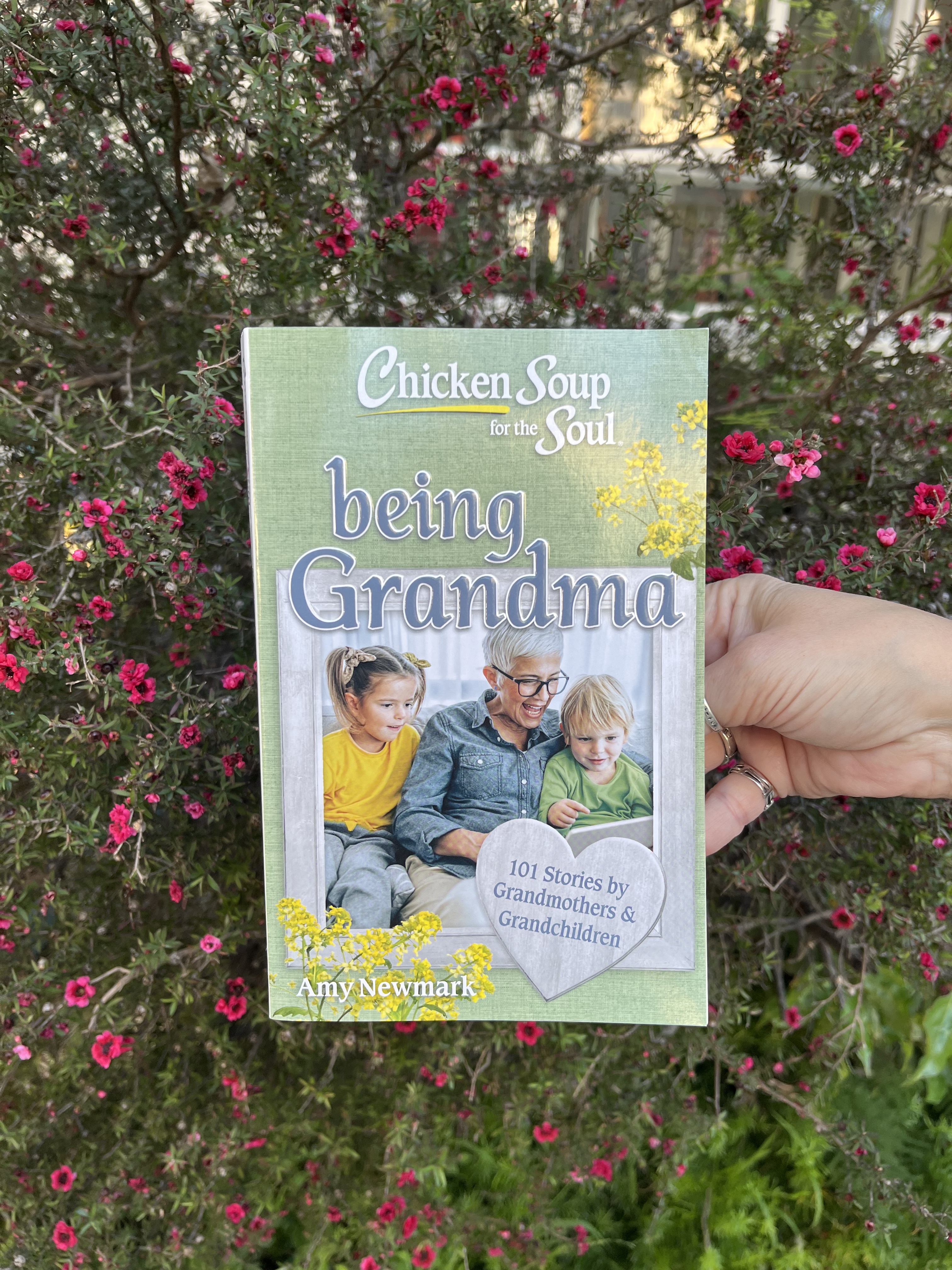
Chicken Soup for the Soul: Being Grandma

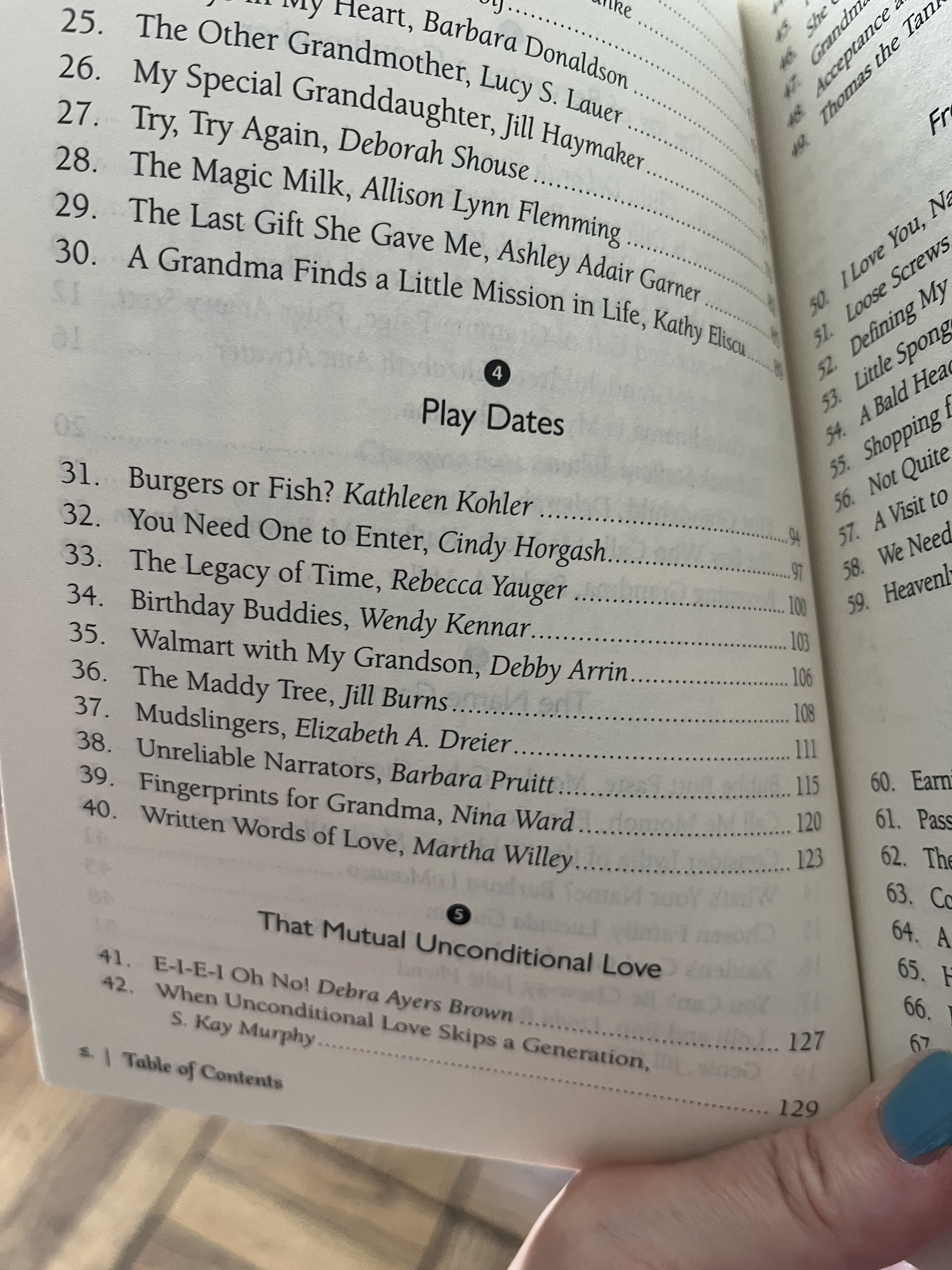
“From the very beginning, my mom and son shared a special connection. After all, they were Birthday Buddies.”

Friends, I’m so happy to share my personal essay “Birthday Buddies,” (which includes the sentence above), has been included in Chicken Soup for the Soul: Being Grandma. The book features 101 “heartwarming, amusing, and inspirational stories” written by “grandmothers, grandchildren, and everyone in between.” 

The book is a tribute to grandmothers and the special love grandmothers share with their families, and I’m very proud to be a part of it. 

It’s always exciting to have my writing selected for publication.

But to be honest, having my writing published in a book brings those exciting feelings to a higher level. 

And having this particular story published in this particular Chicken Soup for the Soul edition is meaningful and thrilling and special on a whole other level.

You see, my mom and my son are Birthday Buddies. And later this month, my mom will turn 81 the same day my son will turn 18! 

And if I may suggest — Mother’s Day isn’t too far away. Start your shopping early and purchase a copy of Chicken Soup for the Soul: Being Grandma for the special grandmothers in your life. 

Friends, do you have a special memory or anecdote about your grandmother? Feel free to share in the comments. 

Please note: I am including a link to buy the book that I’m highlighting this week. If you use my link, I do make a small commission on your purchase at no additional cost to you. I am working with Bookshop.org which also sends a portion of the profit to support local, independent bookstores.

Not in the Christmas Plan

Question — Do you limit your holiday reading? Do you read Christmas and Chanukkah-themed romances only during the month of December? Or, maybe starting in November? Or, do you consider holiday rom-coms worthwhile reading material all year long?

When it comes to decorations, I have a very “don’t rush it” outlook. (For instance, in our house, Easter decorations won’t be put out until April. Now it’s March, so I have a decorative shamrock hanging on our front and back doors.)

However, when it comes to books (and movies) I think you should read (and watch) what you want, when you want, even if it’s not the season for it.

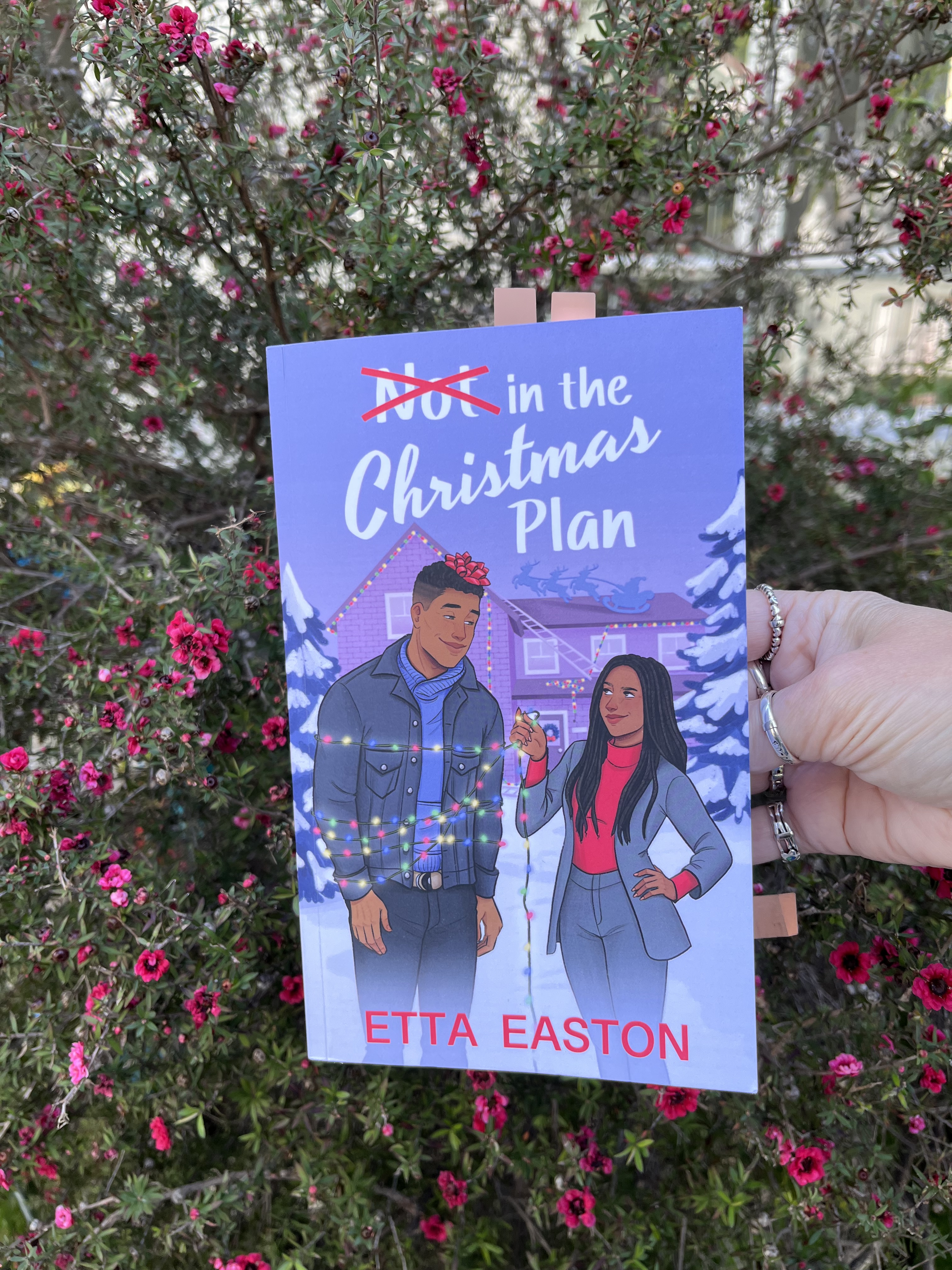
Along those lines, I recently read Etta Easton’s holiday novella Not in the Christmas Plan.

I bought this book before I read the blurb. I bought this book simply because Etta Easton wrote it. (You may remember I read, loved, and wrote about Ms. Easton’s debut novel, The Kiss Countdown and her second novel, The Love Simulation.)

The book is definitely a fast read. There are some super-sweet moments and some really touching moments. And lots of Christmas charm. However, for all its lightness, the book does include heavy topics including grief and labor complications. 

Here are just a few passages that had me pause and savor the writing:

“The carolers knock again and Grant catches my hand. ‘Not everything requires you to give something back, Eve. Sometimes, just letting people bring you joy is enough.’ He looks from me to the door and patiently waits for me to make the decision.”

“This time I tried to perfect Christmas, hoping that if everything was just right, Ivy would come home.
“Maybe the problem isn’t that I keep losing things. Maybe it’s that I keep hoping I won’t.” 

“Ms. Thomas studies me for a long moment, then quietly says, ‘You remind me of your father.’
“I smile weakly. ‘Because I’m a control freak?’
“‘Because you love so fiercely,’ she says gently. ‘He did too. But he gave so much of himself to others that he forgot to leave anything for his own happiness.’”

This was a sweet novella, though I must admit I preferred Ms. Easton’s full-length, space-themed romance novels. And, my copy had many typos which really did interrupt my reading flow. However, I am still glad I bought, and read, this book and am always happy when I can share books with my reader friends!

Dear readers, what is the most recent holiday romance you read? And, did you read it during the holiday season or at another time?

Please note: I am including a link to buy the book that I’m highlighting this week. If you use my link, I do make a small commission on your purchase at no additional cost to you. I am working with Bookshop.org which also sends a portion of the profit to support local, independent bookstores.

It’s a Pain

The nurse called my name and walked with me from the waiting room to the exam room. In the exam room, she had me step on the scale, and she checked my temperature and blood pressure. And while she stood at the computer, inputing the numbers, she asked me what my pain was like today.

This was about 9:30 am Tuesday morning. My pain was bad. But, the day before had been worse. After waking up to my 6:00 am alarm, I had made the bed, brushed my teeth and washed my face, gotten dressed, and come downstairs. Moving around I felt stiff. Standing up brushing my teeth, I put my weight on my right leg and foot. My left side felt weak, like it might give out. I knew it would be hard to walk down the flight of stairs to our living room and kitchen. I hadn’t expected to be crying before I reached the final step. 

Tuesday morning, appointment morning, there were no tears. Grimaces. Limps. Slow, laborious movements. But no tears. So technically I guess the pain was better, but it was still friggin awful. 

“It’s a hard question to answer when you live with chronic pain,” I told her. 

She didn’t look up.

I tried waiting her out. 

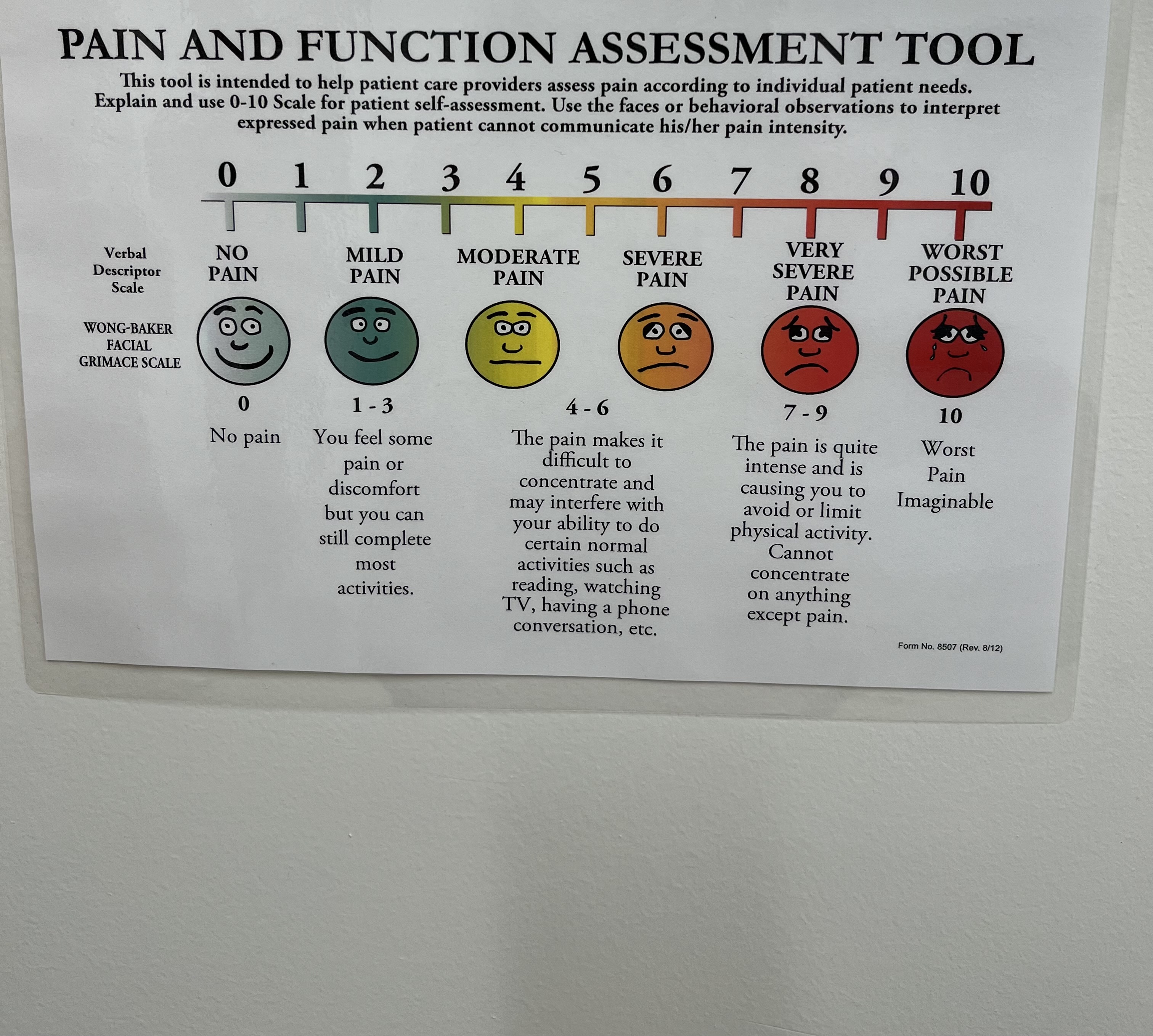
She wanted a number. I finally told her 7.

Was it a 7? I don’t know. I know my left leg felt pressure, as if something heavy was placed on my lap. My left calf felt tight, like it was stuck in almost-muscle cramp. I know getting in and out of my car wasn’t all quick, graceful moments but more like slow, intentional movements. 

When I met with the doctor, we reviewed all my medication, pain-related and otherwise. He told me the goal is to get me functional, so I don’t let the pain stop me from doing things in my life. 

Um, hello? 

What?

“To get me functional?” 

“So pain doesn’t stop me?” Most people who know me know that isn’t the case. 

Perhaps my favorite question was, “when did the pain start?”

I told him the truth. “2010.”

And, as if all that wasn’t bad enough, the doctor asked me his own pain-rating question. Except he didn’t want to know my current pain. Instead he asked, “What would you say was the average for the pain you experienced last week?”

A whole week? I have no idea, and that’s what I told him. My pain fluctuates. Pain can start off feeling incredibly intense and gradually ease up as the day goes on. And the flip side of that is also true — pain can be moderate and then, while doing one of my physical therapy exercises at home for example, something gets triggered and I need an ice pack on my knee, and I’m feeling much worse than I was.

Most frustrating was that my appointment was with a pain management group. These are healthcare providers who work with patients who live with chronic pain. And they should know that if you suffer from chronic pain, you’re looking at that pain scale very differently than someone who is dealing with acute pain. 

Acute pain is temporary. It’s pain that is caused by the result of something specific — an accident or injury of some kind, like falling down or getting hurt while playing a sport. But the key word is temporary. Acute pain won’t last. It will impact your daily life, but not forever.

Chronic pain, however, is long-lasting and difficult to treat. What works for one person might not work for another. And what worked for me three years ago may not work for me now.  

The doctor told me that no pain medication is going to make the pain go away completely. But the goal is for the pain medication to make a significant difference in my life so that my pain doesn’t stop me from doing what I want and/or need to do. 

“We don’t want your pain to stop you from being functional,” the doctor said.

I looked at the doctor in dismay. Shock. Disgust. Impatience. Probably a combination of all of those. 

I told him what I have told other doctors — I think when you live with pain for a long time, you get good at pushing through. You have to learn to live with the pain, alongside the pain, if you’re planning on living your life as fully as you can. 

The truth is no one can really know what my pain feels like. We each experience pain in our own way. However, I am convinced that those of us living with chronic pain, exercise a specific set of muscles. My pain level 6 would be someone else’s level 9. 

Those of us living with chronic pain have more than enough to deal with. I think we deserve a great deal of respect for all we do, including going in to see a doctor. That by itself is a big deal. 

And if I could ask healthcare providers for one change:

Please oh please, stop making patients use an emoji-like pain scale to describe our pain. 

I Don’t Know What You Know Me From

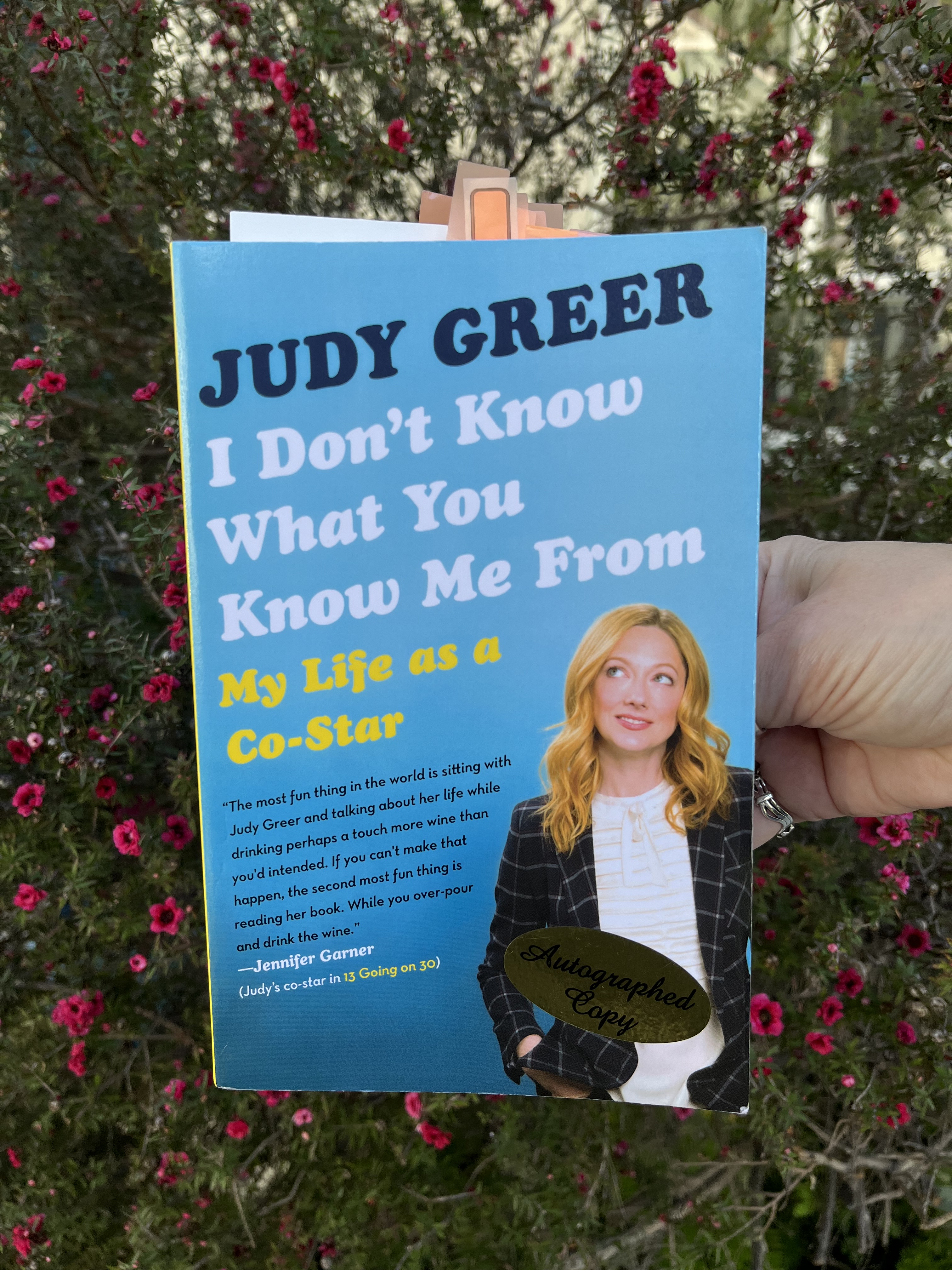
The book is called, I Don’t Know Where You Know Me From: My Life as a Co-Star. But I know exactly where I know Judy Greer from. The Wedding Planner. 27 Dresses. 13 Going on 30. What Women Want

Obviously you know I’m not an actress and I have no immediate connection to the world of movies. So why did I pick up this memoir?

Many reasons:

1 – Because I browsed in a local independent bookshop and since the #22in22 challenge, I don’t visit an indie bookshop without buying something. 

2- It’s signed by the author.

3 – I did like Judy Greer’s characters in the movies I listed above.

4-  I’m a memoir-writer and am curious about other memoirs. How do authors structure their books? (In this case, the book is organized into three sections: Part 1 – Early Life; Part 2 – Hollywood Life, Part 3 – Real Life.)

5 –  As someone who has had difficulty in deciding where my memoir ends, I’m always interested in reading how someone made the “where-to-end-the-book decision. (Lliving with an invisible disability doesn’t have a clear-cut ending point. It’s not like I start and then finish treatment as is often the case with other illness stories.)

6 –  I’m curious about other people. I truly believe everyone has a story.

The memoir is a fast and fun read. And surprisingly, quite relatable. Which is actually reason number 7 why I purchased this memoir — Human beings are so much more alike than we often think we are. I have never peed in a stall next to a star. (At least, I don’t think I have. In Part 2, there is actually a chapter called, “Celebrities I’ve Peed Next To.”) Yet, I did find myself nodding, smiling, laughing because a lot of what Ms. Greer writes about is quite relatable. 

“And I am the John Hughes generation. I was waiting for my Blane, my Jake Ryan, and I am not a saint, I’m sorry, but I was a little jealous when Nicole got to go to a dance while I stayed home, wrote in my diary, and watched my VHS tape of Pretty in Pink again.” 

Pretty much all of Ms. Greer’s second chapter, “I Used to Be More Ugly,” resonated with me. In fact, there is one photo that reminds me of a Halloween costume I wore many years ago, when I was trying to dress like Madonna and Cyndi Lauper. 

“My mom told me when I was little that I needed to toughen up, but I didn’t think I would have to rely on that advice as an adult. Shouldn’t I be tough by now? I want to be beef jerky, not whipped cream.”

“… it made me nostalgic for those times, when we were all on a more even playing field. I want to go back to simpler times, when people were famous for their specific talent, when actresses looked more natural, when their faces moved, when I knew the names of the people in the magazines.”
Ms. Greer goes on: “I guess I just miss the times when people could just look how they looked and it was personality, talent, and charisma that mattered most, not who wore it best, …” 

Also highly recommend the chapter, “Ashton Kutcher Gave My Dad a Harley.” It will renew your faith that there are good people out in the world and that wonderful surprises can, and do, happen. As Ms. Greer writes, “Sometimes for no reason at all, someone does something unbelievable, unselfish, and generous.”

I enjoyed reading about Ms. Greer’s idea for a perfume named, “‘Intolerance, for the woman who just can’t take it anymore.’ It’s inspired by bad drivers, people who don’t use their left-hand turn signal, people who don’t use their right-hand turn signal, tardy friends, line cutters, slow (or worse, chatty) checkout clerks, music playing while on hold, faulty DVRs, airplane seat kickers, airplane seat headrest grabbers, loud cell-phone talkers, text-and-walkers, people who don’t silence their phone in the theater, and L.A. traffic.” 

Also highly recommend the “Drugstore Therapy” chapter. “I’ve yet to have a problem so huge that a midnight trip to a twenty-four-hour drugstore couldn’t give me at least a few moments of calm and clarity.” She goes on, “… but there is something about a late-night drugstore run that promises change, and in these moments, all I really want is change. I want to not have the problem I am having.” 

“Sometimes I do wish I could just have the same job every day; it seems comforting to me — to work with the same people all the time, know your salary every year, know when you can take a vacation and plan it. I think I could get used to that. A little stability would be so different, and I find myself daydreaming about it, especially now that I’m married and have stepkids.”

I also recommend Ms. Greer’s Manifesto. “There’s a lot of peaks and valleys in the life I’ve chosen, but my mission statement reminds me to focus on what matters most. When life is awesome, it keeps my head from getting too big, and when things are shitty, it reminds me that my life is still pretty awesome.”

Friends, have you read Ms. Greer’s memoir? What movie have you seen that included Judy Greer in its cast? Let me know in the comments.  

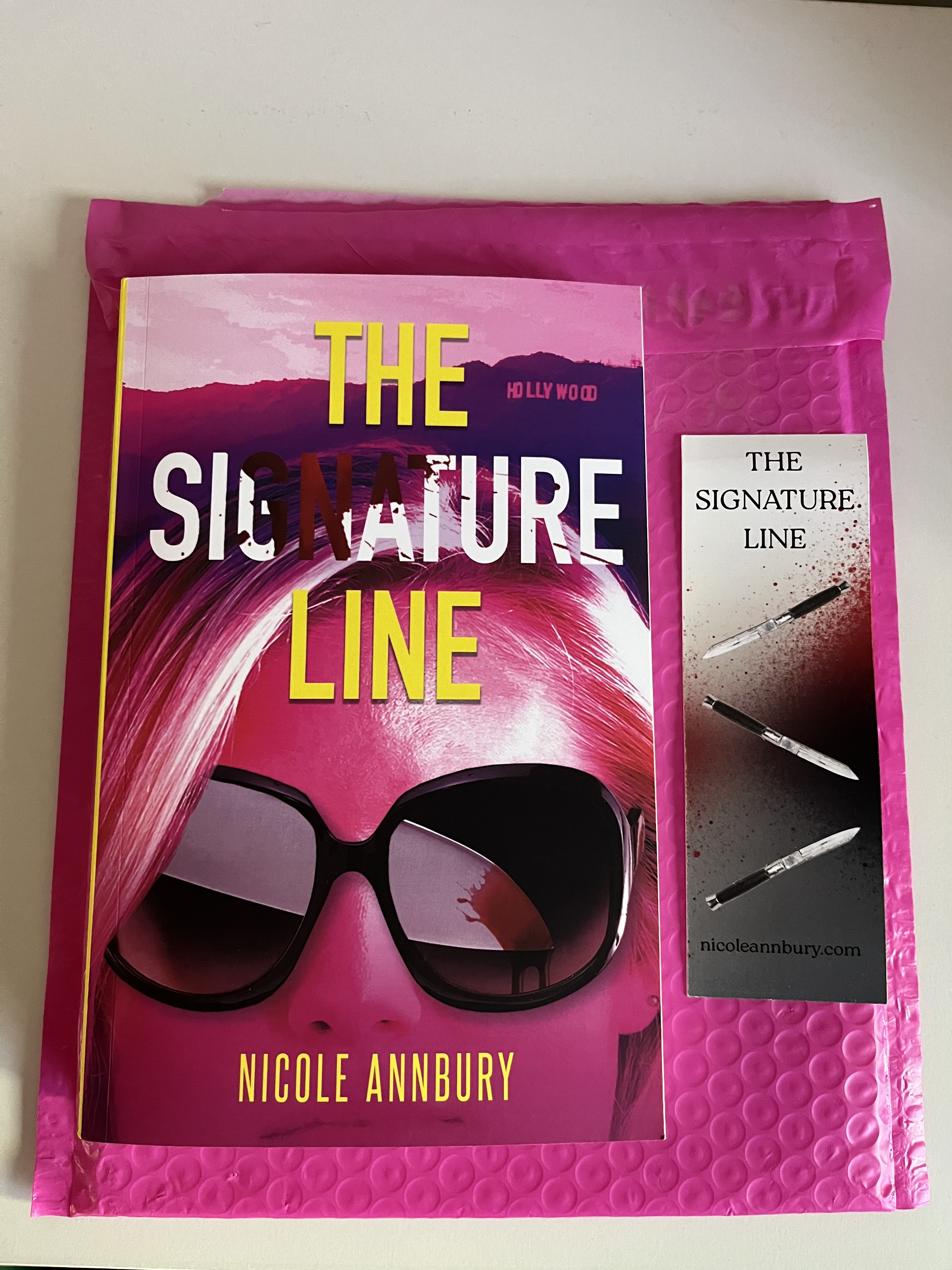
Also, I announced this on Instagram but allow me to share it here: my friend, author Nicole Annbury, recently published her second novel, The Signature Line. If you subscribe to my Substack, you will be entered into a drawing to win a signed copy of The Signature Line. The drawing will take place on Friday, February 20th. So be sure to subscribe!


Please note: I am including a link to buy the book that I’m highlighting this week. If you use my link, I do make a small commission on your purchase at no additional cost to you. I am working with Bookshop.org which also sends a portion of the profit to support local, independent bookstores.

A Bit of Book Love

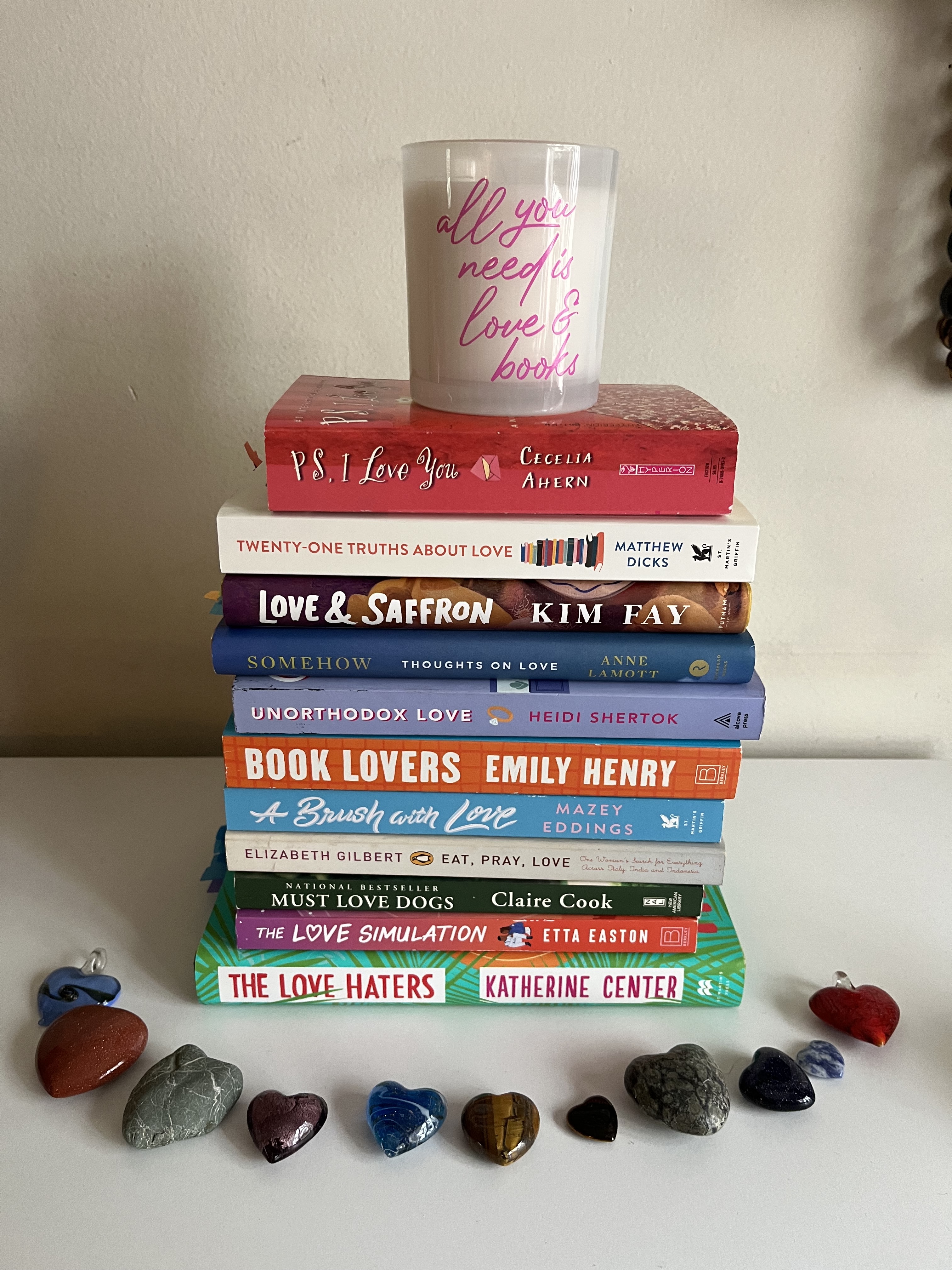
Since Valentine’s Day is only a few days away, I thought I would use this week’s blog post to share books in my collection that contain the word “Love” somewhere in the title.

I believe the world desperately needs more love. So, with that, I present to you this week’s blog post — a sort of Bookish Valentine to readers and writers. 

This photo features:

P.S. I Love You by Cecelia Ahern

Twenty-One Truths About Love by Matthew Dicks

Love & Saffron by Kim Fay

Somehow: Thoughts on Love by Anne Lamott

Unorthodox Love by Heidi Shertok

Book Lovers by Emily Henry

A Brush with Love by Mazey Eddings

Eat Pray Love by Elizabeth Gilbert

Must Love Dogs by Claire Cook

The Love Simulation by Etta Easton

The Love Haters by Katherine Center

Friends, which books would you add to this list? Within your own collection, do you have any books that have the word “Love” in the title? Feel free to list them in the comments.

Wishing you a day of love and friendship and enjoyable reading time — on Valentine’s Day and every day!

Please note: I am including a link to buy the books that I’m highlighting this week. If you use my link, I do make a small commission on your purchase at no additional cost to you. I am working with Bookshop.org which also sends a portion of the profit to support local, independent bookstores.


It’s Hard Work

Each afternoon, I park the car near my son's high school and go for a walk in the neighborhood, before the dismissal bell rings. I usually walk for about ten minutes.

Last week was a “hard” week. 

I added quotation marks because I’m not certain that hard is the most accurate word to use to describe last week’s experiences. 

Let me tell you about it:

On Monday, I went in for my three-month follow-up with my rheumatologist. These appointments are rather brief, mainly because my doctor feels like things are “under control.” My current medication is “working” in that my inflammation levels have stayed more-or-less steady for the last year or two. (Again, the quotation marks because working doesn’t exactly represent my daily experiences.) From the doctor’s perspective, everything is going well. 

But it’s not.

Before he hurried out my exam room and into the room next door, I told Dr. P that I understand my labs look good in his eyes. But, I told him, I feel awful. Every. Single. Day. “So even though it looks like I’m doing great, I’m not,” I told him. 

He nodded. He told me all he can do is go by the numbers.    

On Tuesday, I had an appointment with my physical therapist, C. I haven’t been to physical therapy in over a month, because C had been on vacation for a while. However, I have been consistently doing my PT homework — daily walk(s), using my pedal machine twice a day, and working through my stretches/exercises every other day. 

C and I chatted while I used the armless-elliptical machine. He asked about my walking — the distance covered, the amount of time it takes. And I told him that my son told me it looks like I’m limping more than I ever have before. We talked about my treatment plan for the next few months. 

Because the reality is I am not an “easy” patient. (Again, easy may not be the right word.)

Doctors, in my experience, tend to focus on the labels — the diagnosis, the medication, the numbers. So my rheumatologist reviews labs and on his end, things are going well. Yet, each time I see him, I try to explain just how hard things have gotten. He knows I own a wheelchair. He knows how hard grocery shopping has become. He knows I wake up, every morning, already in pain. 

Likewise, as great as C is — I have worked with several physical therapists over the years and have never worked with anyone like C before! — I’m not the type of patient he is used to working with. I don’t have an injury that twelve weeks of physical therapy will help heal, for example. I don’t always experience pain in the same spot or in the same way. Some days are better than others. And perhaps most “challenging” is the reality —I will not get better.

Over the years, I have observed doctors and physical therapists become “frustrated” with me — through no fault of my own. The fact is I don’t have an easy-to-understand or easy-to-treat diagnosis. I don’t have a chronic illness that has a well-established prognosis. 

I get it. But that’s all out of my control. 

The goal, as I have told both Dr. P and C, is to work on strengthening my left leg and to maintain that strength as much as I can. Because ultimately I am trying to remain as mobile and independent as I can, for as long as I can.

It isn’t easy. 

But I’m working hard at it.

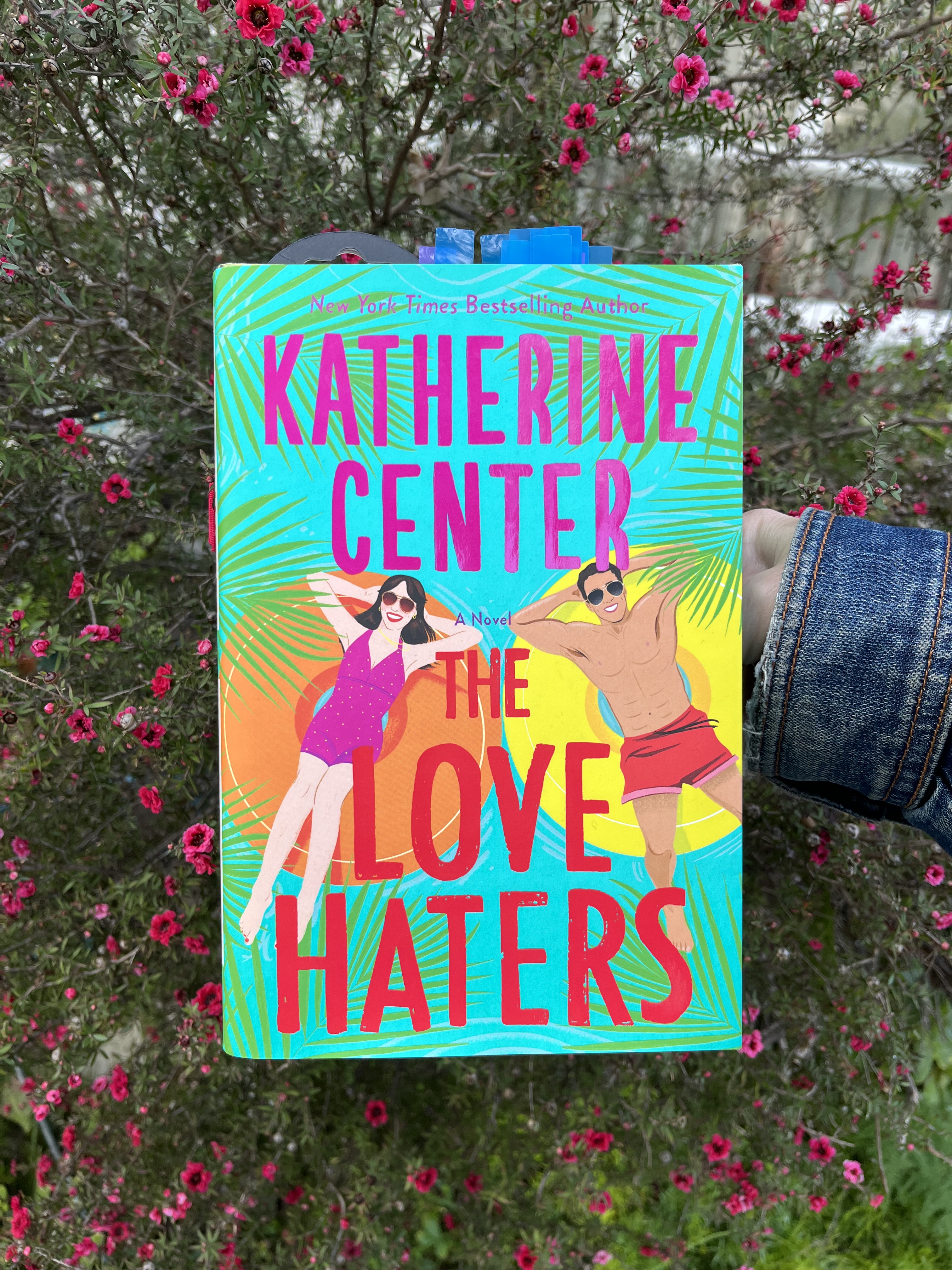
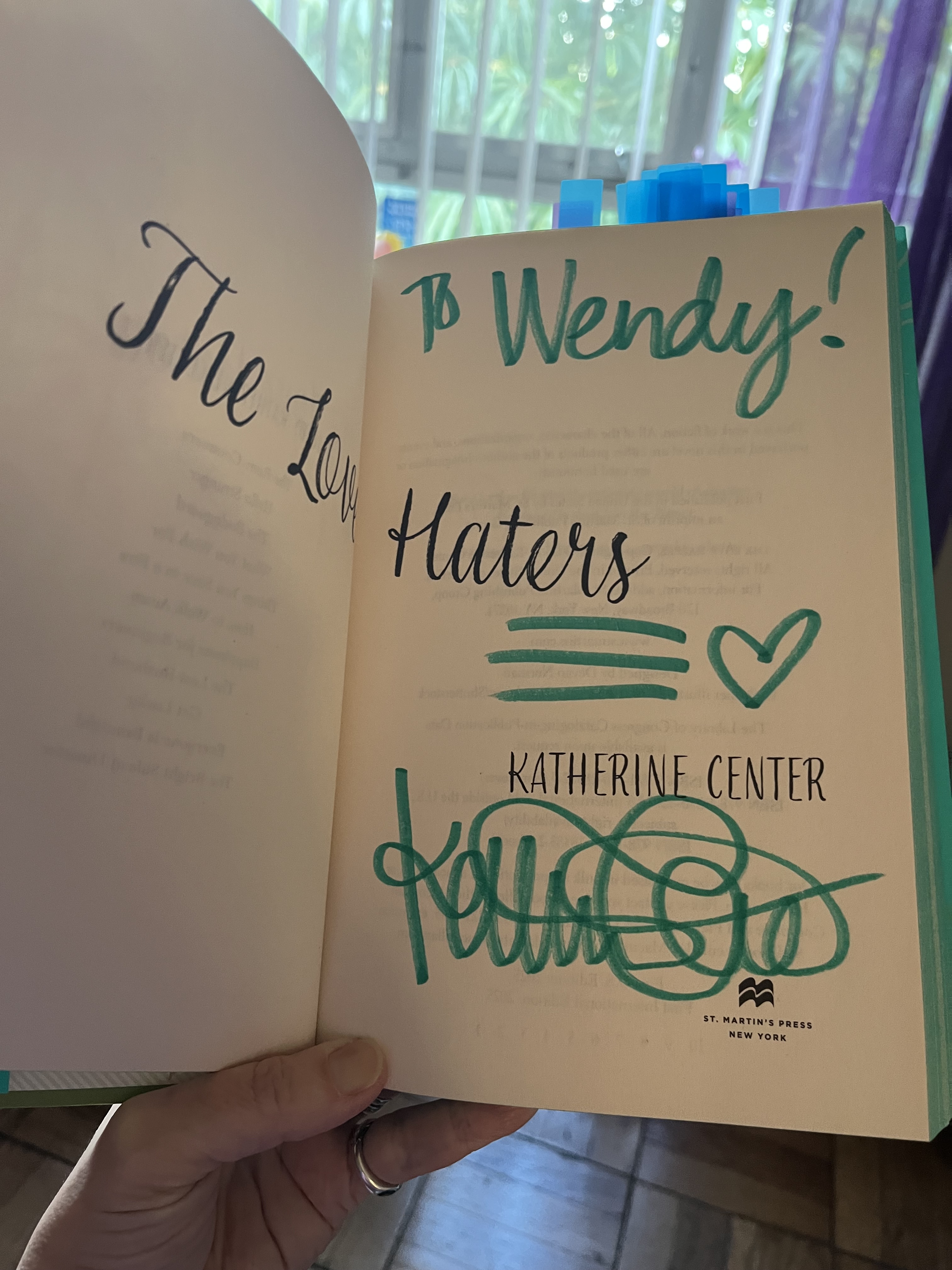
The Love Haters

I am a Katherine Center fan.

(In case you missed any of them, I’m including links to the posts I have written, featuring some of her other novels including The Rom-Commers, Hello Stranger, The Bodyguard, and What You Wish For.)

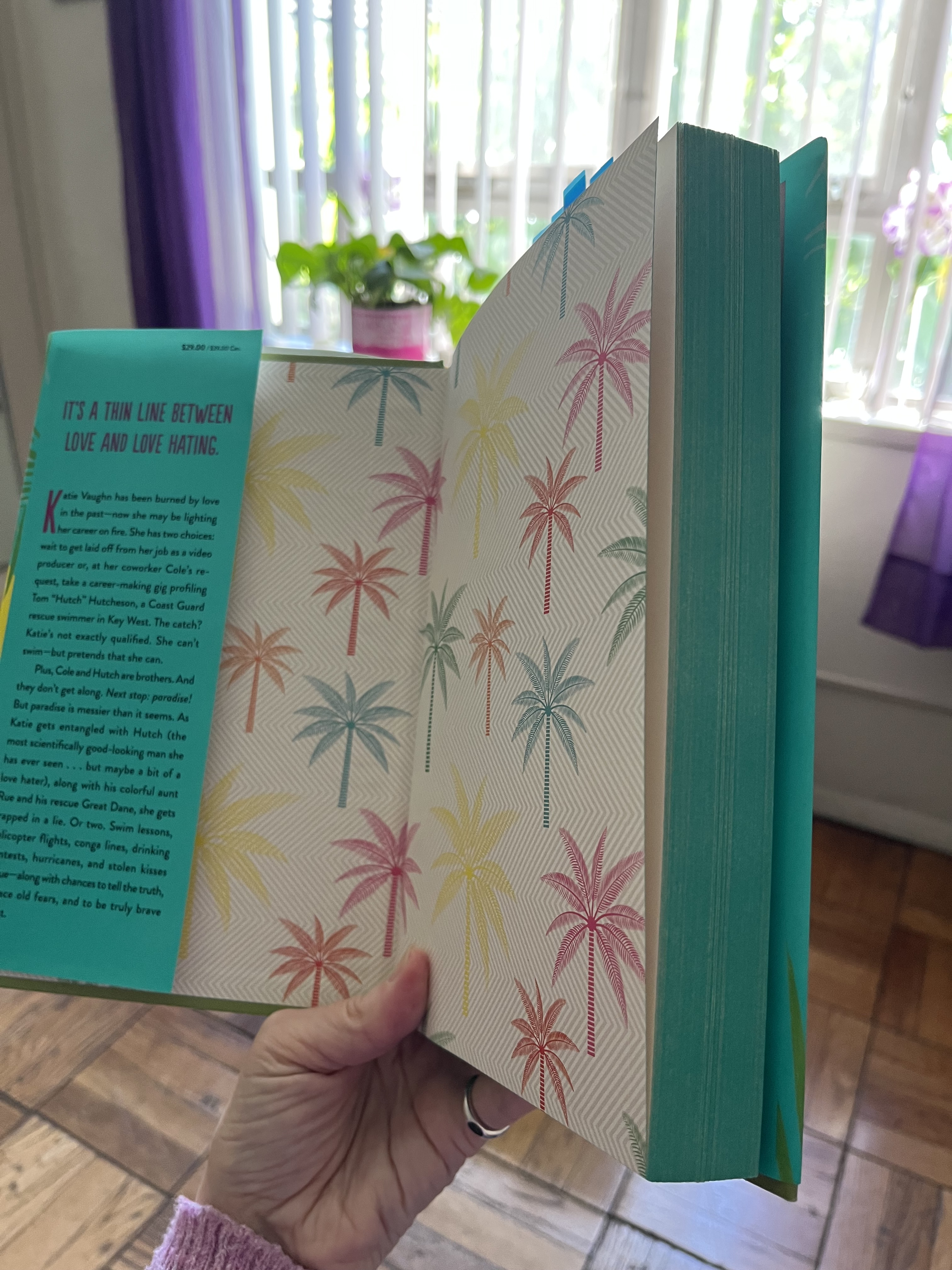
I have heard Katherine Center describe her own books as somewhat of a crossover of genres — women’s fiction and a rom-com. Readers will absolutely get their HEA (happily ever after) at the end of the story. But until we get there, readers will spend about 300 pages with characters that seem like real people. Characters we root for. Characters that are relatable. Characters that face challenges, that may get knocked down, but will always get back up.

(Side note – I’m not a fan of the “women’s fiction” label. I don’t remember hearing or seeing anything called “men’s fiction.”)

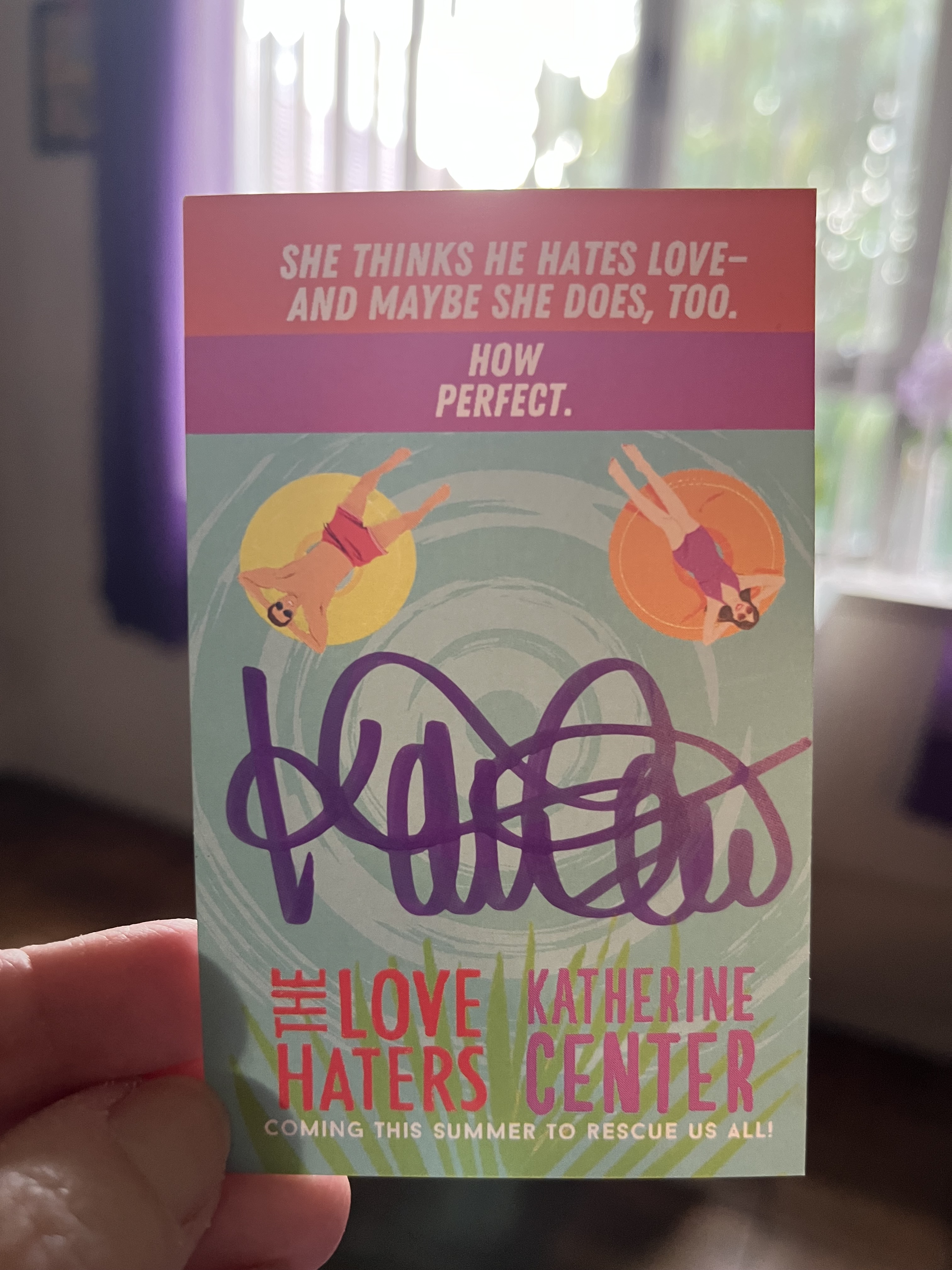
I finished reading Katherine Center’s 2025 novel, The Love Haters, and I loved it. Let me put it this way — I finished reading, and thought about starting the book all over again. (I didn’t.) But it’s like when you hear a favorite song, and once it stops, you just want to play it again. That’s how good this book was.

The book is so pretty!

Here are some of my favorite passages, some of the passages that made me pause and take note:

“She paged through to the right spot and started rereading: ‘The main strategy is just to notice what your partner is getting right.’ She peered at me, thinking. ‘Maybe you can just work on noticing what your body is getting right. Things you like about it. You do have some of those, right?’
“Things I liked about my body? What an odd thought.” 

“‘Don’t be one of those women who insists on thinking she’s ugly,’ she said.
“‘I don’t think I’m ugly,’ I stated. Then, much quieter and possibly hoping not even to be heard, I followed that with: ‘But other people might?’
“Beanie was incredulous. ‘What?!’
“I wasn’t passing her feminist muster.”
(This conversation between our main character, Katie, and her cousin and best friend, Beanie, goes on for a few pages. Honestly, their whole conversation was so very relatable, but you really just have to read it yourself. It starts on page 47.)

“If I’m really honest … if I truly think about it… I think it was just the idea that he — or, honestly, anybody — might see me the way my stepmother had. That he might encounter me out in the open, so exposed, with so little left to the imagination… and find me…unappealing. 
Or any of a whole tasting plate of other words starting with un: Unattractive. Uninviting. Unsalvageable. Unpleasant. Unacceptable. Unloveable.
This was it. This was the phobia.
Being exposed, in plain daylight, with nowhere to hide — and then being … rejected. By anyone. Even a stranger.”

“The helicopters really were shiny — and so much bigger than when you see them motoring across the sky in the distance. The hangar really was spotlessly clean. And the rotors really were enormous — almost prehistoric in scale. I felt an actual, honest-to-god feeling of awe as I beheld them in that hangar.
“It was unexpectedly moving.
“It felt like a shrine to all the best parts of humanity.” 

“‘No one’s born fearless,’ Rue said. ‘You have to earn it.’ Then she added, gesturing at the swimsuit dangling from my hand, ‘Every time you have to be brave, you get to be a little braver next time. That’s what life is for.’
“‘I don’t think I want to be brave,’ I said.
“‘I know.’ Her face was all sympathy. ‘That’s why you keep hiding.’
“What can I say? She had me.
“‘But I’ll tell you a secret,’ she said. ‘It doesn’t matter what anybody thinks if you’re having fun. And all the fun is in color.’
“I tried that idea on for size.
“‘My wish for you,’ Rue went on, ‘is a vibrant, bright, glorious life. That’s why I keep bringing you these vibrant, bright, glorious swimsuits.’” 

“And then she would insist, very gently, that I wasn’t stuck inside of my body. It wasn’t some prison my soul was caged in. The two things were — and only ever had been — one thing. I was it, and it was me. We were the same.
“It was a simple truth: I couldn’t abandon myself.
“And as much as that was a curse, it was also a blessing.” 

“He paused, just inches away now, and took in the sight of me. ‘It’s just a fact. It’s just reality. You’re just … You’re like a human hot-fudge sundae or something.’” 


“I just suddenly understood in a whole new, sun-breaking-through-the-clouds way that even if we do eternally need and long and want to be seen … maybe the most important eyes doing the looking are our own.”

“‘You’re not not forgettable,’ Hutch said then, like I was being obtuse. ‘You’re unforgettable.’
“I held my breath at that.
“Hutch went on. ‘You’re a TV jingle you never wanted to learn, but can’t erase. You’re a puzzle that can’t be solved — or a question that can’t be answered — or a dream you wake up from that feels like it really happened. But it didn’t happen. And it can’t happen. Because that’s not how dreams work.’” 

“But that didn’t change the fact that I was in love with him.
“The way I was missing him. The way I couldn’t stop longing for him. The way my thoughts, and my heart, and my entire body were completely capsized by everything that had just happened … there was no other explanation. Based on misery alone, it just had to be love.”

“We’re here to be alive. To keep going. To find all kinds of ways to thrive anyway. We’re here to feel it all. To love and cry and love some more.
“We’re here to rescue ourselves — and everybody else — in every way that we can.”

And from the Author’s Note at the end of the book:

“What I’m saying is, we can train our own eyes to look with kindness, and pay attention to what’s beautiful, and focus on what’s right instead of what’s wrong.
“That’s how you fall in love — and stay in love — with anyone, including yourself: see the best in that person and enjoy the hell out of it as often as you can.” 

Friends, have you read The Love Haters? Or, any of Katherine Center’s novels? By the way, her 2026 novel, The Shippers, sounds completely delightful and will be published in May.

Please note: I am including a link to buy the book that I’m highlighting this week. If you use my link, I do make a small commission on your purchase at no additional cost to you. I am working with Bookshop.org which also sends a portion of the profit to support local, independent bookstores.

Sharing

Many people live with invisible illness(es). Many people look "fine" on the outside.

Last week, an acquaintance asked me about my chronic illness. We had recently started following each other on Instagram, and a few days after she started liking my posts, we bumped into each other in person. 

(Side note – You do follow me on Instagram. Right? I hope you do!
@wendykennar
You follow me, and then I will follow you back. Let’s support each other!)

Back to last week. 

J told me she had seen some of my posts. 

“You talk about pain, but what is it? What do you have?” she asked.

“It’s an autoimmune disease,” I began.

“Which one?” she asked. 

So I told J about my UCTD (Undifferentiated Connective Tissue Disease). I told her some days, and some parts of days, are much worse than others. I told her it was difficult to diagnose. 

“And that makes it hard to treat,” she said.

I looked at her. “Exactly,” I said.

“My sister has chronic fatigue syndrome,” J told me. 

“Oh my goodness, that’s awful,” I said. And it is. (If you don’t know about CFS, you can click here to read an article from the Mayo Clinic.)

“When my sister is in a flare, she says her bones hurt,” J said.

“But I would have never known you had anything. I couldn’t tell,” she said.

“That’s the way it works, right? I’m sure it’s the same for your sister,” I said. “I’m sure most of the time no one would suspect she lives with a condition that sometimes makes it impossible to leave her bed.”

J seemed surprised when I told her I own a wheelchair and use it from time to time. She seemed shocked when I told her I first became ill when my now-almost-eighteen-year-old son was two years old. But how would she have known? I don’t just go up to people and start talking about my autoimmune disease. And as those of you living with invisible illnesses know too well, spoonies have a lot of practice looking “fine,” as we’re out in the world, doing our best to go about our days and live our lives the best we can. 

Now here’s the part I’m most proud of, I didn’t end the conversation there. Friends, I then did something I don’t ordinarily do. I shared something else, something super important to me.

“I’m actually writing a book about living with an invisible illness,” I told J.

J nodded. “To explain about your experience?” 

“Yes, and more than that, to help others see that you can’t always tell what someone is going through simply by looking at them. Being sick has taught me that everyone is dealing with something. Everyone lives with some sort of pain.”

It might not seem like a lot, but for me, that was a big step. I’m not great at self-promotion, of talking about myself, my writing, and my writing goals. But I’m trying to improve on that and get more comfortable talking and sharing about my writing. After all, my writing is a huge part of who I am and what I do. And the truth is I don’t just want to write. And I don’t just want to be published. I also, most definitely, want to be read.

How about you, friends? Do you find it difficult to talk with others about your creative work? How do you go about sharing your writing (or whatever it is that you create)?

The Eight Heartbreaks of Hanukkah

The last novel I read in 2025 was The Eight Heartbreaks of Hanukkah by Jean Meltzer. If you have been reading my blog for a while, you may remember I have written about each of Jean Meltzer’s four previous novels. (Click here to read my post about Ms. Meltzer’s fourth novel, Magical Meet Cute. That post includes links to my posts on each of Ms. Meltzer’s other novels.)

The Eight Heartbreaks of Hanukkah definitely has A Christmas Carol-feeling to it. And, it’s a rom-com. But, it’s so much more. 

Ms. Meltzer has a wonderful way of writing fun-to-read novels that also include serious, heavy topics. In fact, the letter to the reader at the beginning of the book acts as a gentle warning:

“This book contains depictions of chronic illness and disability, including migraines, as well as discussions on divorce, grief, infertility, pregnancy loss, termination for medical reasons, abortion, and fetal anomalies.”

I applaud Ms. Meltzer and the mindful way she goes about making sure her books offer diverse representation. Our main character, Evelyn Schwartz, is a Jewish woman who lives with chronic migraines. And, Evelyn’s sister-in-law (her husband’s sister) lives with Ehlers-Danlos Syndrome (EDS). Near the end of the letter to the reader, she wrote: “I always say that there is no greater honor as an author than being a voice for the voiceless.”

This week I’m sharing some of my favorite passages from The Eight Heartbreaks of Hanukkah:

“‘But that’s the funny thing about mistakes, right?’ she asked him directly. ‘Without them, we don’t grow. So you have to grow through it. All the good. All the bad. The blunder years. The heartbreaks. Because otherwise, how do you learn, how you do you change, how do you find the people and things worth your time … or not?’”

“And he was so patient. He didn’t tell her that she was being hysterical. He didn’t ask her to bottle it up so they could get back to the wedding ceremony and all the guests that were waiting. He let her cry. Somehow, he found a way to be both her rock and her security blanket, until finally, she found the wherewithal to go back inside.” 

“He reached over and took her hand. Grief was such a powerful force. It twisted your mind, filled you with sorrow. It made you desperate to believe that your memories could be turned back into reality. But there couldn’t be grief without love.” 

“He raised one eyebrow at his sister. ‘How did you get so wise?’
“She smirked. ‘Lifelong disability and pain, and because every cloud has a silver lining. My silver lining is you, being your big sister. Bossing you around, telling you what to do, sharing my knowledge as an elder. It’s hard to be this wise and beautiful.’”

“‘And maybe that’s my takeaway for this Hanukkah. For this entire experience. The world is filled with heartbreaks. We lose the people we love, we make mistakes, we hurt each other… sometimes we even do unforgivable things. But despite all the pain and grief of life, there can still be miracles. Magic can happen. Ghosts can show up, enemies can make amends —‘
“‘And two people who have fallen apart can fall in love again.’” 

“They returned to kissing. Their hands tore at each other, hungry and passionate, as they made their way to the bedroom. And it felt right. He felt right. Like past, present and future merging together — there was hope beyond the grand finale.
“For love, it turned out, was the greatest miracle of all.”

And from the author’s note at the back of the book: “I wrote this story because I have always written books where things that are not seen are made visible.”

Please note: I am including a link to buy the book that I’m highlighting this week. If you use my link, I do make a small commission on your purchase at no additional cost to you. I am working with Bookshop.org which also sends a portion of the profit to support local, independent bookstores.


My Year in Books

I didn’t achieve my Goodreads Reading Challenge for 2025. 

Actually, I didn’t achieve my Goodreads Reading Challenge for 2024, either. When I realized how far off the mark I was (in terms of the number of books I had hoped to read and the number of books I actually read), I lowered my goal for 2025. Lowered it a lot. 

The goal for 2025 was to read 24 books. And I missed it by 3 books.

I admit – on December 31st, I did think of going into my almost-eighteen-year-old son’s closet and finding some of our favorite picture books from when he was a little guy. I could have easily read three more books. I know I would have liked reading those books.

I could have read the 24 books and achieved my goal. But that felt like cheating. 

All this made me pause and wonder if I should bother signing up for the 2026 Goodreads Reading Challenge. Why did I voluntarily sign up for the Goodreads challenge each year? What did I hope to gain from it? 

Part of me really likes the end-of-the-year statistics, and the fact that I don’t have to keep track of the numbers. Goodreads does that for me. 

For example, in 2025:

– I read over 5,000 pages. 

– The shortest book was Kelly Esparza’s A Spoonie’s Guide to Self-Acceptance

– The longest book was Jean Meltzer’s Magical Meet Cute.

– I reviewed more books, recognizing me as a Top 15% Reviewer.

– My top genres included romance and memoir.

And I realized something. With or without the Goodreads Reading Challenge, I would continue to buy and read books. I would enjoy talking with friends about books. I would continue to blog about the books I read. 

Because that’s who I am. I’m a reader. 

Which is also the reason why I didn’t achieve my goal. I read much more than the books listed on Goodreads. I have three magazine subscriptions (Writer’s Digest, Poets & Writers, and Real Simple. My mom and I share the Real Simple). I have subscribed to many blogs and Substacks, and do my best to read and like and comment. And I actually read the books; I don’t listen to audio books. 

So this year, I have once again set my goal for 24 books. 

And whether or not I achieve my goal isn’t the point. For me, it’s the feeling of being in community with other booklovers. It’s the opportunity to discover new books and new authors. It’s the excitement that comes from finally reading a book I’ve been eagerly anticipating. And, it’s the belief that every book I read brings me a little bit closer to achieving my ultimate goal — being the author of my own book and getting my book into the hands of readers. 

Please note: I am including a link to buy the books mentioned this week. If you use my link, I do make a small commission on your purchase at no additional cost to you. I am working with Bookshop.org which also sends a portion of the profit to support local, independent bookstores.