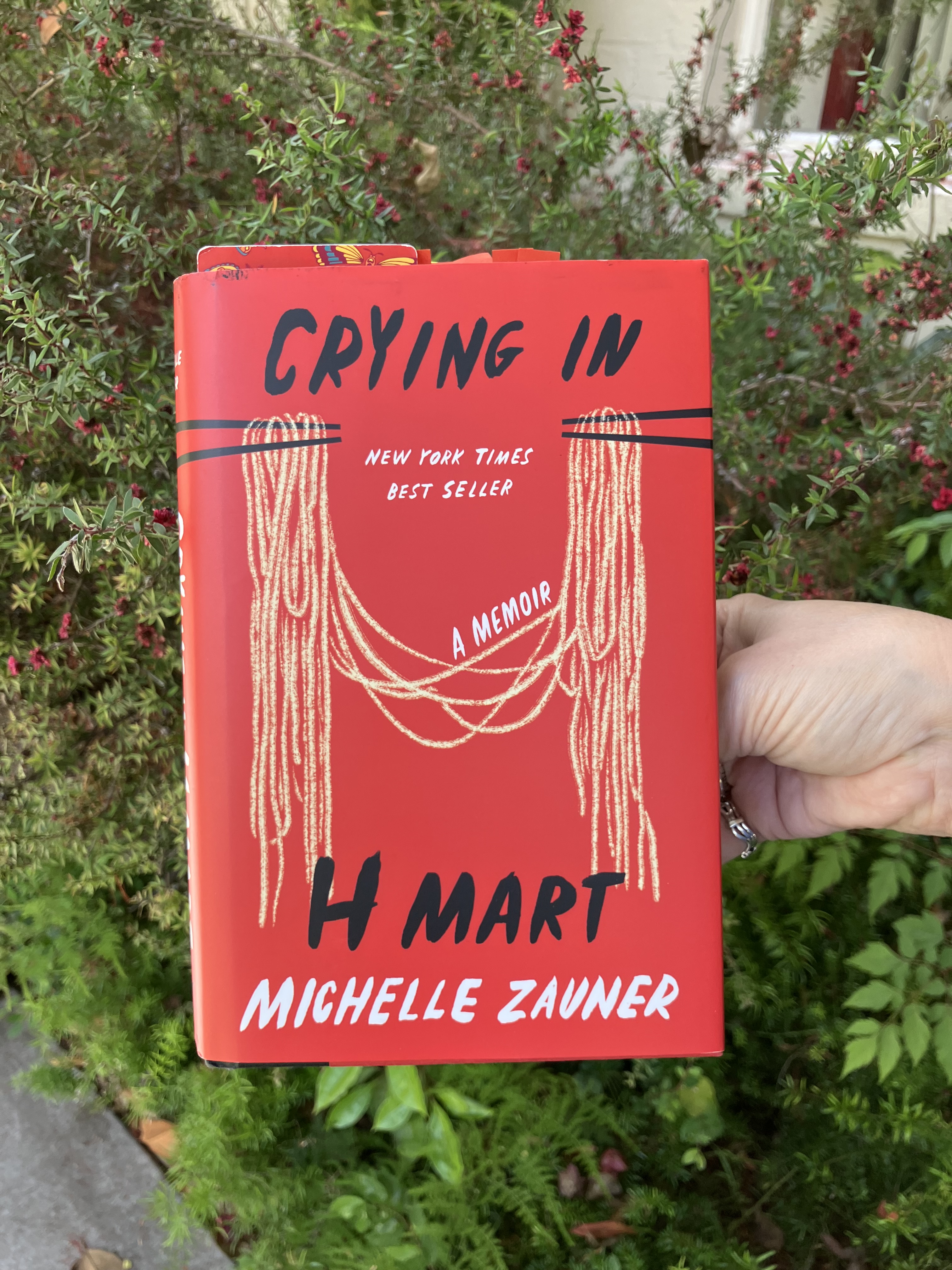
Crying in H Mart

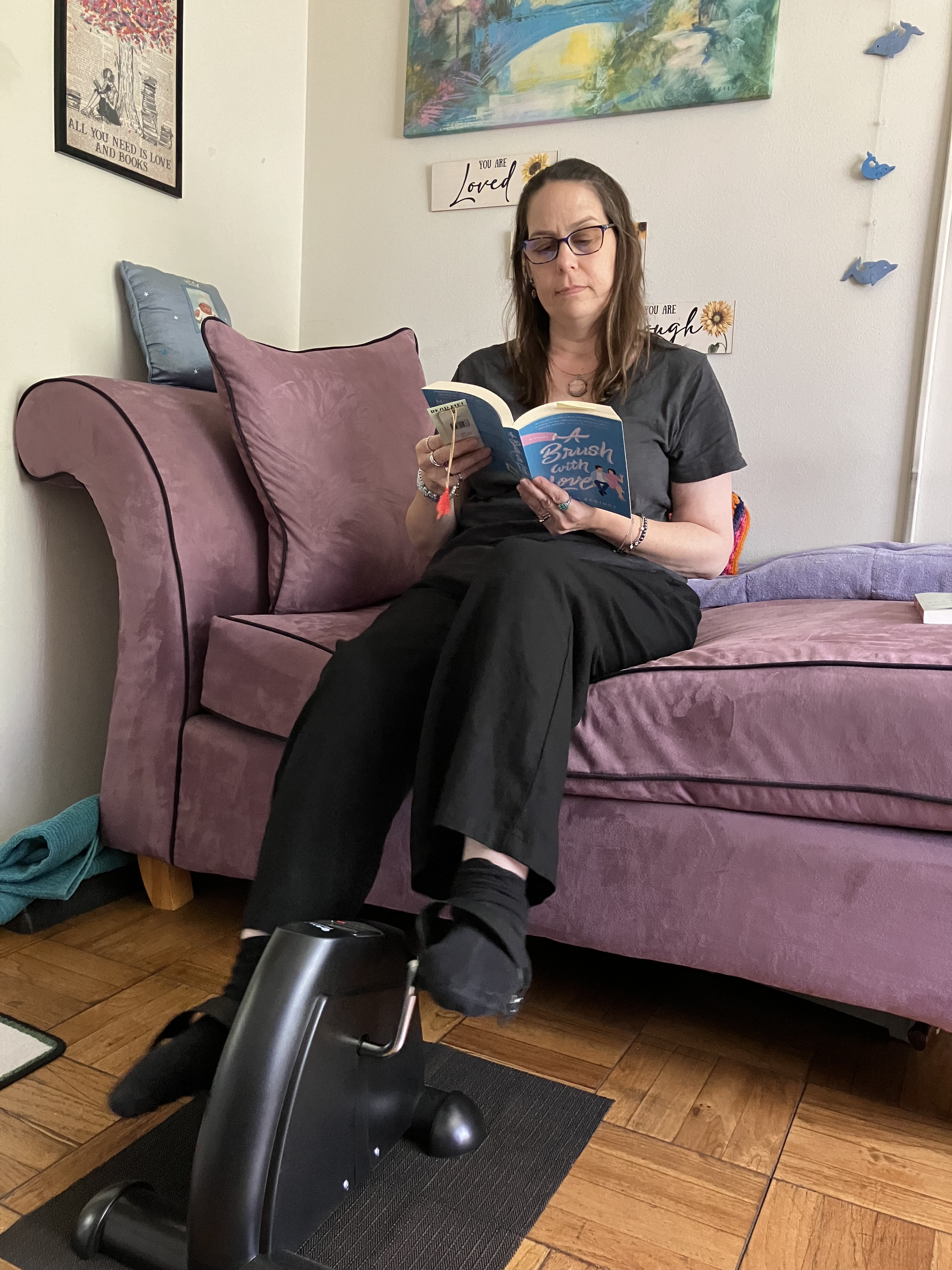
I picked up my copy of Crying in H Mart from a Little Free Library in my neighborhood. I had heard of the book, I knew it was a best seller, and I knew the author was a musician. But I didn’t know much more than that. 

Yet I wanted to read Crying in H Mart by Michelle Zauner for two reasons:

1. As a reader, I believe everyone has a story worth sharing.

2. As a writer, I’m always curious to see how other writers structure their memoirs. 

Here’s what you should know about me:

I am not an adventurous eater. I have a pretty sensitive stomach so most, if not all, the food mentioned in this memoir was unfamiliar to me. 

And here’s what you should know about the book:

It’s beautiful. Quite simply it is a tender love letter from a daughter in honor of her mother. 

Here are just a few of my favorite passages:

“Ever since my mom died, I cry in H Mart.”

“Food was how my mother expressed her love. No matter how critical or cruel she could seem — constantly pushing me to meet her intractable expectations — I could always feel her affection radiating from the lunches she packed and the meals she prepared for me just the way I liked them. I can hardly speak Korean, but in H Mart it feels like I’m fluent.”

“I remember these things clearly because that was how my mother loved you, not through white lies and constant verbal affirmation, but in subtle observations of what brought you joy, pocketed away to make you feel comforted and cared for without even realizing it.”

“The cowboy boots arrived in one of these packages after my parents had vacationed in Mexico. When I slipped them on I discovered they’d already been broken in. My mother had worn them around the house for a week, smoothing the hard edges in two pairs of socks for an hour every day, molding the flat sole with the bottom of her feet, wearing in the stiffness, breaking the tough leather to spare me all discomfort.”

“I wondered if I should try to explain how important it was to me. That cooking my mother’s food had come to represent an absolute role reversal, a role I was meant to fill. That food was an unspoken language between us, that it had come to symbolize our return to each other, our bonding, our common ground.”

“I talked about how love was an action, an instinct, a response roused by unplanned moments and small gestures, an inconvenience in someone else’s favor.”

“She was my champion, she was my archive. She had taken the utmost care to preserve the evidence of my existence and growth, capturing me in images, saving all my documents and possessions. She had all knowledge of my being memorized. The time I was born, my unborn cravings, the first book I read. The formation of every characteristic. Every ailment and little victory. She observed me with unparalleled interest, inexhaustible devotion.”

“The culture we shared was active, effervescent in my gut and in my genes, and I had to seize it, foster it so it did not die in me. So that I could pass it on someday. The lessons she imparted, the proof of her life lived on in me, in my every move and deed. I was what she left behind. If I could not be with my mother, I would be her.”

Readers, have you read Crying in H Mart? What did you think of it?

Please note: I am including a link to buy the book that I’m highlighting this week. If you use my link, I do make a small commission on your purchase at no additional cost to you. I am working with Bookshop.org which also sends a portion of the profit to support local, independent bookstores.

The Case for Loving

Today, June 12th, is Loving Day. 

“Loving Day is the anniversary of a historic court decision for interracial marriage. Every year on June 12th, it’s a global day of visibility, education, and community.” (Taken from lovingday.org)

I’ve written about Loving Day before, because of its direct impact on my family — my African American husband and our mixed-race son. (You can click here to read a post I wrote in 2020.)  

And I continue to write about Loving Day because it’s so very important to remember that the rights and laws we currently have weren’t always our rights and laws. And, as we’ve seen, laws can be changed; revoked even. So I don’t take Loving Day for granted. 

This year, I wanted to highlight a wonderful children’s book — The Case for Loving: The Fight for Interracial Marriage by Selina Alko, illustrated by Sean Qualls and Selina Alko. (Fun fact — the author and illustrator are themselves an interracial couple.)

The charming book tells the story of Richard and Mildred Loving — how they fell in love, how they married (in Washington, D.C.), how they were arrested for living together in Virginia (where interracial marriage was not legal), how they wanted to leave their home in Washington, D.C. and legally live in Virginia with their three children, and how their court case made it all the way to the United States Supreme Court. 

And, what it all boiled down to was expressed in this brief, heartfelt message from Richard Loving which was read to the Supreme Court justices: “Tell the Court I love my wife, and it is just unfair that I can’t live with her in Virginia.” 

On June 12, 1967, the Supreme Court ruled unanimously in favor of the Lovings and interracial marriage. 

1967. 

Only 57 years ago.

Please note: I am including a link to buy the book that I’m highlighting this week. If you use my link, I do make a small commission on your purchase at no additional cost to you. I am working with Bookshop.org which also sends a portion of the profit to support local, independent bookstores.

Book Birthday: The Things We Don’t Say

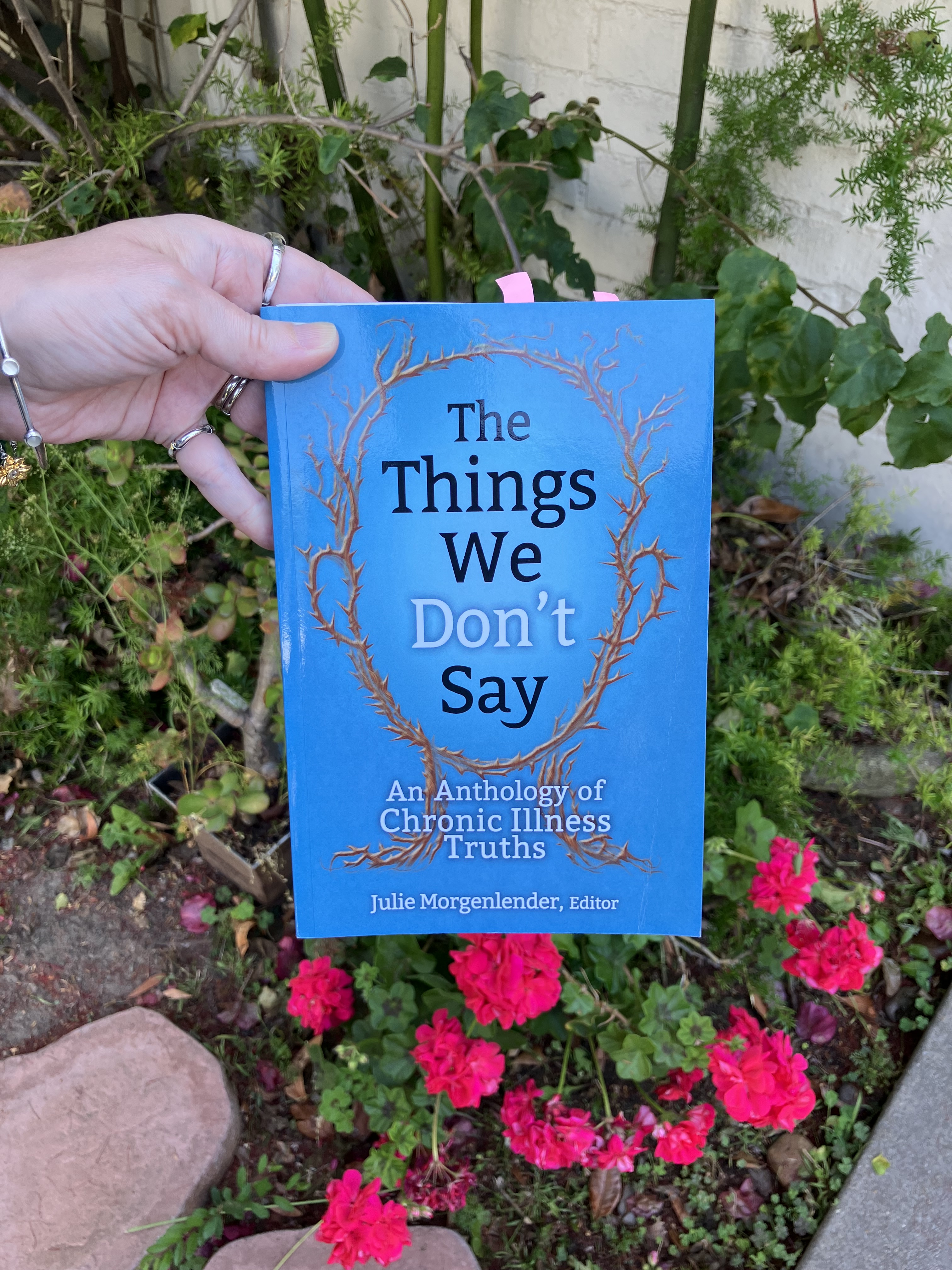
The Things We Don’t Say: An Anthology of Chronic Illness Truths is celebrating its four-year book birthday this month.

This anthology is unlike any other book I have found — and I’m not just saying that because one of my personal essays is included in this collection. (My essay is called “Chronic Contradictions.”)

I’m saying that because it’s true. 

From the back of the book:

“Spanning different ages, ethnicities, genders, sexual orientations, and diagnoses, forty-two authors from around the world open up in fifty true stories about their chronic illnesses and their search for answers, poor treatment by doctors, strained relationships with loved ones, self-doubt, and more.” 

This is the book to turn to when you’re searching for connection. Because though the medical details may vary, many of the emotions and experiences written about are shared by many in the chronic illness world.

This is the book to turn to when you’re trying to help someone else learn a bit about what your chronic illness life is like. This is the book you hand to someone and say, “Here. Please read this story. This is what I mean. This is what it feels like for me. This is what I have been trying to explain to you.”

Readers, have you discovered any other chronic illness-related books that you find helpful and/or resonate with you? Please share! 


Please note: I am including a link to buy the book that I’m highlighting this week. If you use my link, I do make a small commission on your purchase at no additional cost to you. I am working with Bookshop.org which also sends a portion of the profit to support local, independent bookstores.

Happy Place

Last week I finished reading Emily Henry’s Happy Place. If you’re an Emily Henry fan, then you know Happy Place was last year’s book. (Emily Henry’s newest novel is called Funny Story.)

Generally, I don’t read books immediately upon publication. I like to read books on my own timetable, and enjoy (or not) a book without feeling like I was influenced by any of the surrounding buzz.

Emily Henry’s Happy Place was a delightful read. Like all fine novels, it did allow me to temporarily escape my life and spend some time with other people in other places dealing with other things.

Which is one of the reasons I read. I read to take a break and get away from my life and learn about someone else’s life. And lately, my life has been — challenging. 

I hesitate to write that word, challenging. I do not want to come across as a whiny, complaining, ungrateful woman. Because I know I am very lucky. I know I have many blessings in my life. I am grateful — every minute of every day. 

But the truth is, I can be fortunate and still struggling at the same time.  

And while I won’t go into the struggles in this post, I will share one of my favorite passages from Happy Place:

“ ‘What if I’m bad at it?’ I ask. ‘Being a parent.’
He sweeps my hair back from my neck. ‘You won’t be.’
‘You don’t know that,’ I say.
‘I do,’ he says.
‘How?’ I say.
‘Because you’re good at loving,’ he says. ‘And that’s all you have to do.’ ”

Readers, have you read any of Emily Henry’s novels? Do you have a favorite? So far, my favorite is Book Lovers, which I wrote about in this post from November 2022. 

Please note: I am including a link to buy the book that I’m highlighting this week. If you use my link, I do make a small commission on your purchase at no additional cost to you. I am working with Bookshop.org which also sends a portion of the profit to support local, independent bookstores.

Stick-To-It-Ness

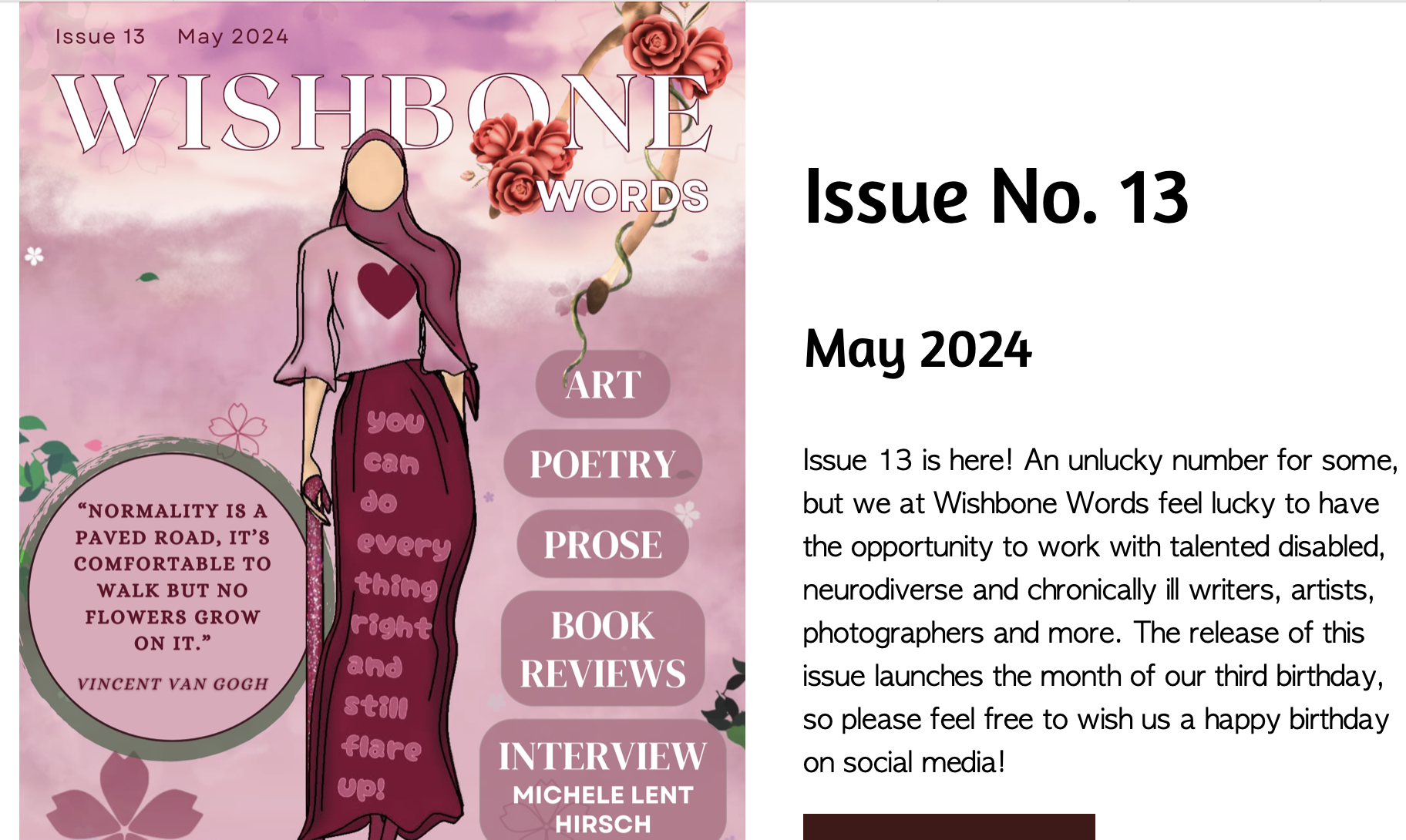
Image credit: Wishbone Words

“I am no longer an educator, and haven’t been a kindergarten teacher in many years. For the last seven years of my career I taught fourth and fifth graders. I no longer think of perseverance in quite the same way as I once did. However, more than ever, I feel like my daily life requires a lot of perseverance. I’m not relying on perseverance because I’m learning a new skill or am faced with one specific event that requires more ‘stick-to-it-ness.’ It is not at all like the period of time when my eighteen-year-old self was learning to drive a stick shift — without popping the clutch or grinding the gears or stalling and having the line of cars behind me start honking when I didn’t immediately get going on a green light. Back then, each practice session ended with me in tears. I remember looking over at my mom in the passenger seat, telling her it was hopeless and we should just stop now, because I would never master driving a stick shift. I was convinced there was something fundamentally wrong with me, since my parents could drive a manual transmission, and I obviously couldn’t. My mom patiently reminded me that driving a stick shift wasn’t easy, and I would definitely learn how, if I kept at it. It was a skill which required time and patience and lots of practice. Perseverance. She was right, as moms tend to be. 
“But that was then.”

This excerpt was taken from my recently published personal essay, Stick-To-It-Ness, which has to do with daily perseverance as it pertains to living with a chronic illness. However, a high level of stick-to-it-ness is also required when you’re writing for publication. This personal essay was rejected by two other online literary journals before finding a home at Wishbone Words, Issue 13

You can click here to find out more information about Wishbone Words

The Power of Little Words

For my birthday (a couple of months ago), one of my closest friends gave me four bracelets. 

Not just any bracelets. 

Bracelets from Little Words Project

I didn’t initially realize the connection between Taylor Swift, Swifties, and friendship bracelets. So while my right wrist may look like I’m part of a trend, that’s not the reason for my bracelets.

My friend knew things have been hard for me lately. Actually, things have been hard for a while now. She also knew I’m quick to offer encouragement and words of praise to others, less quick to show myself the same support.  

That’s where the bracelets come into play. They are a daily reminder — of who I am and how I choose to live my life.

J chose four words for me. 

Teacher. I taught for twelve years. I’ve been retired for eleven years now. And I still miss teaching. (A portion of the proceeds from this bracelet go to AdoptAClassroom.org)

Breathe. Because sometimes I need that reminder to slow down and take a deep breath. 

Resilience. When you’re saddled with a chronic illness, there isn’t much choice. You have to demonstrate a combination of toughness, adaptability, and strength. 

And my favorite word — Badass

“I know it’s not usually a word you use, but you are a badass,” she said.

She’s right — I wouldn’t ordinarily think to describe myself as a badass. I am generally inclined to think of myself in other terms — such as polite, punctual, organized, neat. If you’ve been reading my blog for a while, you may remember a post I wrote last year about  how difficult it was for me to think of three adjectives to describe myself. (In case you missed it or have forgotten it, you can click here to read the post.)

But it means so much to me that J sees me in this way. She not only sees my spirit, she celebrates my spirit. And she wants me to do the same. 

Which is why you’ll find me wearing these four bracelets each day on my right wrist.

Readers, do any of you wear friendship bracelets? What words are on your bracelets? Or, if you don’t wear them, take a look at the Little Words Project website. What words would you choose for yourself?

Chronically Parenting

I don’t listen to many podcasts, but I do make a point to listen to Jean Meltzer’s monthly podcast, Chronically Fabulous. (I wrote about her podcast back in January. If you missed that blog post, you can read it here.)

Her third episode featured special guest, Heidi Shertok. Like Jean, Heidi is also a Jewish author, writing rom-coms, and living with chronic illness. Their conversation focused on parenting when you’re chronically ill. 

Jean, Heidi, and I all have different perspectives based on our different life experiences when it comes to parenting. Jean and her husband made the decision not to have children. Heidi entered into marriage and parenthood as a chronically ill woman. And I become ill when my son was two years old. 

There were several moments when I paused the podcast so I could jot down a note, because I knew I would want to write about their conversation and share it with you, readers. Because finding your community is so important, especially when your body doesn’t behave the way you’d like it to. And when I come across something — a podcast, a book, a line in an article — that allows me to feel seen and understood, it’s something I want to share with you as well. 

With that in mind, here are just a few of the highlights from their podcast conversation: 

– Jean and Heidi spoke of the idea of “masking.” I’ve always referred to it as putting on my game face, others might say it’s like having your poker face on and not letting your true emotions out. It’s the idea that on the surface no one can tell how you’re really feeling inside. You keep your pain, your discomfort, your worry out of sight. You present as healthy — because, at least for me, sometimes it’s just easier. It’s easier not to have to explain why I can’t sit on a tall bar stool, for example. (It’s really painful for me.)

– Something Heidi said really stood out to me. She said she believed her kids were lucky, growing up with a mom who is chronically ill. Her kids have learned/are learning there are all sorts of “normals” within families. There is not one right way for a family to be. Likewise, I hope that by growing up with a mom who has an invisible disability, my son has learned that you often can’t tell what someone is going through just by looking at them; that many people are out and about in the world, dealing with pain we can’t see. 

– Heidi also shared something her rheumatologist told her when she was young: A lot of people are like most flowers, you can put them anywhere and they’ll thrive. While people like Jean, Heidi, and myself, and others with chronic illness, are like orchids; we can only thrive in very specific environments. I love that analogy. 

Dear readers, any podcast recommendations you’d like to share? I also sometimes listen to The Shit No One Tells You About Writing (such a great title!) or an episode of Moms Don’t Have Time to Read Books when I’m doing my daily physical therapy exercises/stretches at home.

Flowering

Image Credit: Coin-Operated Press

I am pleased to share more publication news with you!

My personal essay, Flowering, has been included in the Gardening Zine produced by Coin-Operated Press. 

Here’s a snippet:

“Gardening is a part of who I am. The person who will always save the slices of avocado in a salad to eat after the rest of the salad, believing the best part has been saved for last. The person who will always describe a body lotion in terms of a “flavor” rather than a “scent.” The person who will yell at Rosemary Clooney’s Betty in White Christmas, urging her to talk to Bob, before she leaves Vermont for New York.
“I don’t know where my love of plants and flowers came from. Growing up, flowers were only in our house when my dad bought them for my mom on special occasions. Small houseplants died off, one-by-one, and were replaced with artificial flowers. Maybe this love I have for gardens is a result of the years I spent working in a high-end flower shop during my last year of high school and first few years of college. Or maybe there is no explaining it, and I can enjoy gardening without figuring out how it all started.” 

Click here to be re-directed to Coin-Operated Press where you can purchase a copy of the Zine.

Everyone But Myself

It is absolutely appropriate to judge a book by its cover, especially when it comes to Julie Chavez’s memoir, Everyone But Myself

Between the title and the illustration on the front cover, you have a strong sense of what this book is about. This memoir is another example of an author writing the specifics of her life, and in doing so, making it universally appealing to others who “get it.”

In her note to the reader, Ms. Chavez writes: 

“Although the details vary, I’m not alone in this story. Many women ask the same questions I did: How do I respond to all the asks of the world without losing my sense of self — my interests, my desires, my dreams — in the process? How do I remain whole so that, underneath all the repetitive and the annoying and the boring, I can revel in the privilege and miracle of a perfectly messy life?”

Many moms, and I think women in general, experience this struggle; the need to care for others around us while not caring for ourselves. 

These are just a few of the passages that resonated with me:

“Since those early newlywed days I’d discarded heaps of useless advice and ideas, and I’d also learned the difference between distance and space. Distance grew from the accumulation of tiny resentments, the swallowed frustrations that are an inevitable part of coexistence between two imperfect humans. Space, on the other hand, was a necessity, creating room for our deepest needs: respite, rest, recovery.”

“I believed that I would be most fulfilled by being indispensable, that I was loved because I was needed. Protecting space for ourselves may be an issue for those around us, those who are accustomed to our endless availability. But it’s an act of self-care, of self-love, to say, ‘No, this space — this time — belongs to me.’ ”

“It was quiet. I found momentary respite from my world, from its loss and need and upheaval. It was just me, there with myself, the part of me that exists outside of my disparate pieces and roles and obligations and imagined obligations.
I’m enough, I thought. And I’m okay.
One step forward.”

“ ‘You’re handling a lot right now,’ Kim said. ‘I’m not surprised you’re feeling sad.’
These basic affirmations from Kim were invaluable. It was reassuring to hear her observations that my plate was indeed full, that hard things were justifiably hard, that what I was feeling or experiencing was normal. I’d done years of unappreciated work, and the person who appreciated my efforts least had been me. Kim was training me to see this invisible load, to count it as valid and worthy of attention and accommodation. She reminded me that it was normal to have bad days and normal to be an emotional, feeling person in a fucked-up world. Feelings weren’t an early warning sign I was an unbalanced nut. I was merely responding to the ups and downs of life.”

“The changes I had made were small but impactful. I asked for help slightly more often, and I said no far more often. I embraced rest and put some items on my to-do list purely because they brought me joy.”

“Even though I’d occasionally painted them as insatiable leeches, the people who loved me wanted me to take time for myself. They wanted me to balance my needs with theirs, to be well and whole. I was allowed to hand off responsibilities to my husband, my kids, and others, and I was even allowed to phone it in if that’s what was best for my overall balance and wellness.”

“Therapy with Kim helped me rewrite some of the stories I had grown accustomed to telling myself. She taught me that worrying didn’t necessarily make the future brighter, but it did make the present darker.”

“I was learning to ask myself the question I’d ask someone I love: What do you need? And then whatever answer arrived — be still, exercise, meditate, lie on the couch with a book, text Kim some depressed-looking bitmojis and ask if she has appointments available — I did it.”

Please note: I am including a link to buy the book that I’m highlighting this week. If you use my link, I do make a small commission on your purchase at no additional cost to you. I am working with Bookshop.org which also sends a portion of the profit to support local, independent bookstores.

My Rebellious Body

“You would think I would have this figured out by now. Figured out how to be me — a wife, a mom, a writer who only became a writer because I had to retire from my teaching career because of my invisible disability. But I haven’t figured it out. There is no manual, no cheat sheet, no YouTube video to watch to give me the summary I need, the way my son watches a YouTube video to review the section of The Odyssey he read for his English class.
“I’m making it up as I go along. Engaged in a fight, trying to rebel against this body of mine that is different now. Will always be different.”

The lines above are just a snippet from my recently published essay, When Your Body Rebels With Chronic Illness. You can click here to read the essay in its entirety. (Note: this piece was originally written a couple of years ago. I must point out that my son is now 16 years old.)