MomsLA.com has created a book that serves as the guide for families. It’s full of fun things to see and do, much like what you’ll read on the MomsLA website, but now in book form.
This book has it all, in an easy-to-read format. Maps, photos, illustrations, brief descriptions. It’s the perfect gift for visiting family members. Let them take a look at the book and mark some of the locations that they definitely want to visit with you.
And, it’s also a great resource for families. A reminder that part of what makes Los Angeles so special is the fact that it’s a big, complex city. A city home to a space shuttle and external tank (at the California Science Center) and an Air Force One you can walk through (at the Ronald Reagan Presidential Library and Museum).
I’m proud to write for MomsLA.com, and I’m proud to share that I contributed to this special book.
And I’m excited for families to check out this book and start making new memories all around LA.
There are some books that are true gifts to literature.
They are books that are perfect gifts for those who regard books as magical, powerful, delightful, important, and necessary.
In other words, these are the books for true book lovers.
Bibliophile: Diverse Spines by Jamise Harper and Jane Mount is such a gift. (In fact, I gifted a copy to a couple of my book-loving friends.)
This smallish book is really a beautiful work of art. Filled with delightful illustrations by Jane Mount, the book is a celebration of diverse stories.
“The authors, illustrators, designers, store owners, and bookstagrammers highlighted in this book are all Black, Indigenous, and people of color, most existing in spaces where they have been marginalized by a dominant white society.”
Whether you are looking to diversify your own reading list or you’re looking for recommendations for a particular genre this is the book for you.
If you’ll be traveling and are interested in visiting a bookstore while you’re away, this is the book for you.
If you’re a teacher and/or parent and are wanting to make sure your children see themselves represented in the books on their shelves, this is the book for you.
If you’re curious about an author’s writing space, this is the book for you.
If you’re looking to expand your want-to-read list, this is the book for you.
My readers who follow me on Instagram (@wendykennar) already know this. But for my readers who aren’t on Instagram, I have some publication news to share.
Though, I wish I didn’t have to write this particular essay.
I wish gun violence wasn’t a fact of life.
But wishes don’t change the facts.
You can click here to be redirected to Moms Don’t Have Time To and read my essay, “A Lesson I Didn’t Want to Teach.”
It’s not serious enough to be classified as a problem.
And, it’s really not a terrible situation to be in.
I am running out of shelf space.
This year, I have bought more books than I usually do. Because of the #22in22 initiative (if you’re not familiar with the initiative, you can click here to read an earlier blog post about it), I find myself not just visiting more bookstores, but shopping in these bookstores. Which means, I have a stack full of books that I have yet to read. And, I am running out of space for all these books.
I decided to spend some time trying to re-arrange my shelves. Was there another way, a more efficient way, to stack my books? Generally, I try to keep one author’s novels grouped together. For nonfiction, I try to group them by subject when possible.
On a bottom shelf I found a few books that I haven’t looked at in a long time. These were books I read quite a long time ago. Before adulthood. Before I moved out of my parents’ house when I was twenty-two. These are books that moved with me when my then-fiancé, now-husband moved in together. And when we moved from our one bedroom apartment to our current three-bedroom townhome, these books moved with me. But even more than that, these books were moved and unpacked and put on my bookcase.
Now the time has come to move these books to another location. They will be moved into a large plastic box I have in my closet, a box that has a few pieces of jewelry that were important to me when I was younger, a doll that had two names (Lovey and Jill), and a little scooper I made in my junior high school metal shop class.
I’m not ready to donate these books. But I am ready to claim their shelf space.
Readers, I’m curious. Do you have any books from your childhood that you’ve held on to? Please share!!
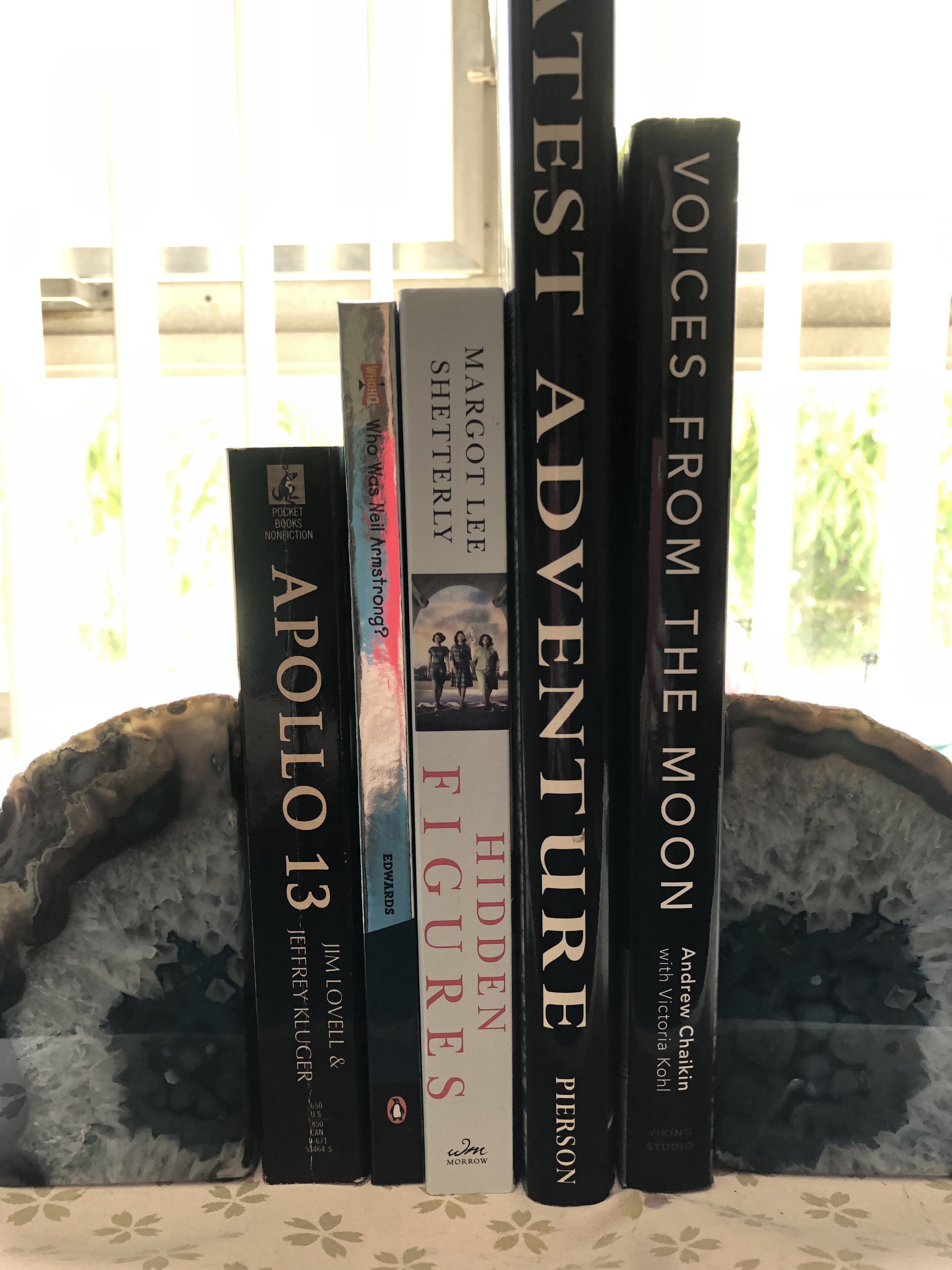
In our family, we’re big fans of space exploration, and books and movies about space exploration. My son and I can recite lines and lines of dialogue from the Ron Howard-directed film Apollo 13. (We know much more than the famous, “Houston, We have a problem.”)
When we watch Hidden Figures, we cheer as Kevin Costner’s character breaks down the “colored ladies room” sign. We applaud when he says, “Here at NASA, we all pee the same color.”
And today, we stop and think about the moon. About those who have traveled to, and walked on, the moon. Those who worked to make it possible for human beings to leave our planet and return safely home.
Because today is National Moon Day.
Today is the 53rd anniversary of the first manned landing on the moon — Apollo XI, with astronauts Neil Armstrong, Buzz Aldrin, and Michael Collins.
It is one of those defining moments in human history. Those that were old enough remember the significance of the time, and can recall details about where they were when Neil Armstrong spoke to the planet — “That’s one small step for [a] man, one giant leap for mankind.”
I’m not old enough. But I can tell you that Alan Shepard hit a golf ball on the moon (Apollo XIV).
Astronaut David Scott (Apollo XV) conducted a science experiment, demonstrating that a hammer and feather would fall and hit the surface of the moon at the same time.
And astronaut Charles Duke (Apollo XVI) left a photo of his family on the moon.
And today, in the photo above, I share with you just a few of our family’s moon-related books.
Readers — I would love to hear from you. Favorite space-related memory? Book? Movie? Please share!
I was not disappointed. My copy is full of sticky notes and many passages are marked with my highlighter. This book is really such a gift. And while we’re at it, Robin Roberts is really such a gift.
It’s the way Ms. Roberts writes, as if she’s sitting down giving you a pep talk. Here are just a few gems to share with you:
“Yet here’s what I believe: Optimism is a muscle that grows stronger with use.”
“I’d like to pass on to you the gem my parents once gave me: You already have everything you need to forge a new path for yourself. I know you’re fierce, because it takes chutzpah to consider a new course. And I’m betting that you’ve got hope that tomorrow can be better, ‘cause otherwise, you probably wouldn’t have picked up this little tome.”
“Confidence isn’t the absence of fear; it’s the presence of mind to move through the trembling.”
“During my dual showdowns with cancer, I brought my gratitude A game. I knew I had just two plays: I could allow the illness to destroy and define me, to permanently cripple my spirit. Or I could embrace the experience as a rebirth, as a butterfly struggling against the walls of its cocoon, and getting stronger as it does.”
“People often see the glass as half-empty or half-full. I simply see the glass.”
“Do you want it more than you fear it? It’s what I now ask myself whenever trepidation makes a house call.”
“We may not ever fully comprehend why catastrophe has befallen us, and that’s okay. Our job isn’t to comprehend it. It’s to redeem it for good.”
“My village — not an absence of fear — got me through the most harrowing two ordeals of my life-time. That is why I know this: Strength, the real kind, isn’t about braving the behemoths on our own. It’s about being willing to receive — to embrace the help, hope, and healing others want to give us. Vulnerability is the gateway to fortitude. An ever-deepening intimacy with those we love is the enduring treasure.”
“When I’m dealing with a situation I think is all-important, I put it through a litmus test: In a year or two, will this matter? Often it won’t, even in a few months. That awareness changes my perspective and re-anchors me in the present.”
“That’s part of what it means to be brighter by the day: to be mindful of every breath we’re given. Don’t rob yourself of that treasure.”
For me, July also marks the anniversary of “the day,” — the day I went into the hospital with a swollen left calf, unable to walk, unable to stand, without knowing that was only the beginning of my life with an invisible disability. (Twelve years ago this month.)
After I became ill and was finally diagnosed, I went looking — for help, for support, for community — in books. I didn’t find much.
Since then, however, my library has expanded and includes books that speak to my life with an invisible disability. Not necessarily because the author also has an autoimmune disease or chronic pain in her left leg. In fact, the specific details can vary widely, yet it’s the emotions we share. I read these books, and feel understood, and heard, and seen. And when you’re living with a medical condition that isn’t easily understood — by those closest to you and those treating you — that sense of community is huge.
So this week, I’d like to share just a few books in honor of Disability Pride Month and Chronic Disease Awareness Day.
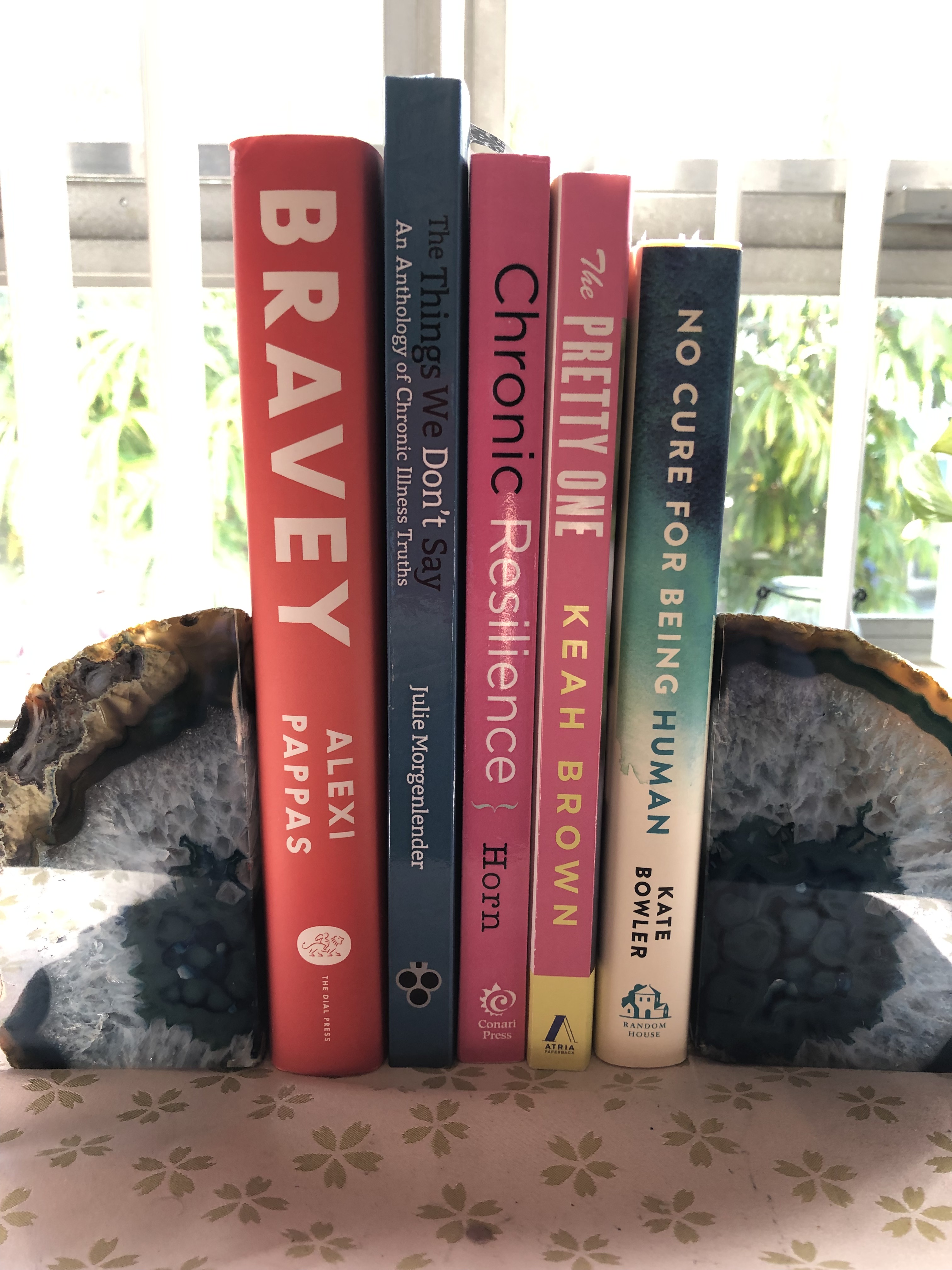
– Bravey by Alexi Pappas. The specifics are very different (she’s an Olympian after all!), but the emotions are similar. My copy is full of sticky notes. (You can check out my blog post, “Trying To Be a Bravey,” by clicking here.)
– The Things We Don’t Say: An Anthology of Chronic Illness Truths edited by Julie Morgenlender. I’m proud to say my essay, “Chronic Contradictions,” is included in this incredible collection. In this anthology “forty-two authors from around the world open up in fifty true stories about their chronic illnesses and their search for answers, poor treatment by doctors, strained relationships with loved ones, self-doubt, and more.” (You can read an earlier blog post written shortly after the anthology was published by clicking here.)
– Chronic Resilience by Danea Horn. I don’t remember how I discovered this book. I just know I felt so lucky to have found it. I have read it more than once, and even wrote the author a fan letter! I highly recommend it. (You can learn more about the book here.)
– The Pretty One by Keah Brown. I found this book at Target and was captivated by the author’s smile and joy that is so evident on the front cover. (I wrote a blog post about Ms. Brown’s book and several of my favorite passages. You can read it here.)
– No Cure For Being Human by Kate Bowler. Incredible writing. Beautiful, profound, and funny too. (This book I read fairly recently, back in April. You can read my blog post, “No Cure For Being Human,” by clicking here.)
Readers, any recommendations? I’d love to hear about books you have read that you think those of us with disabilities and/or chronic diseases would enjoy reading.
Why do you buy the books you do? (Notice how I just automatically assume you’re a book-buyer.)
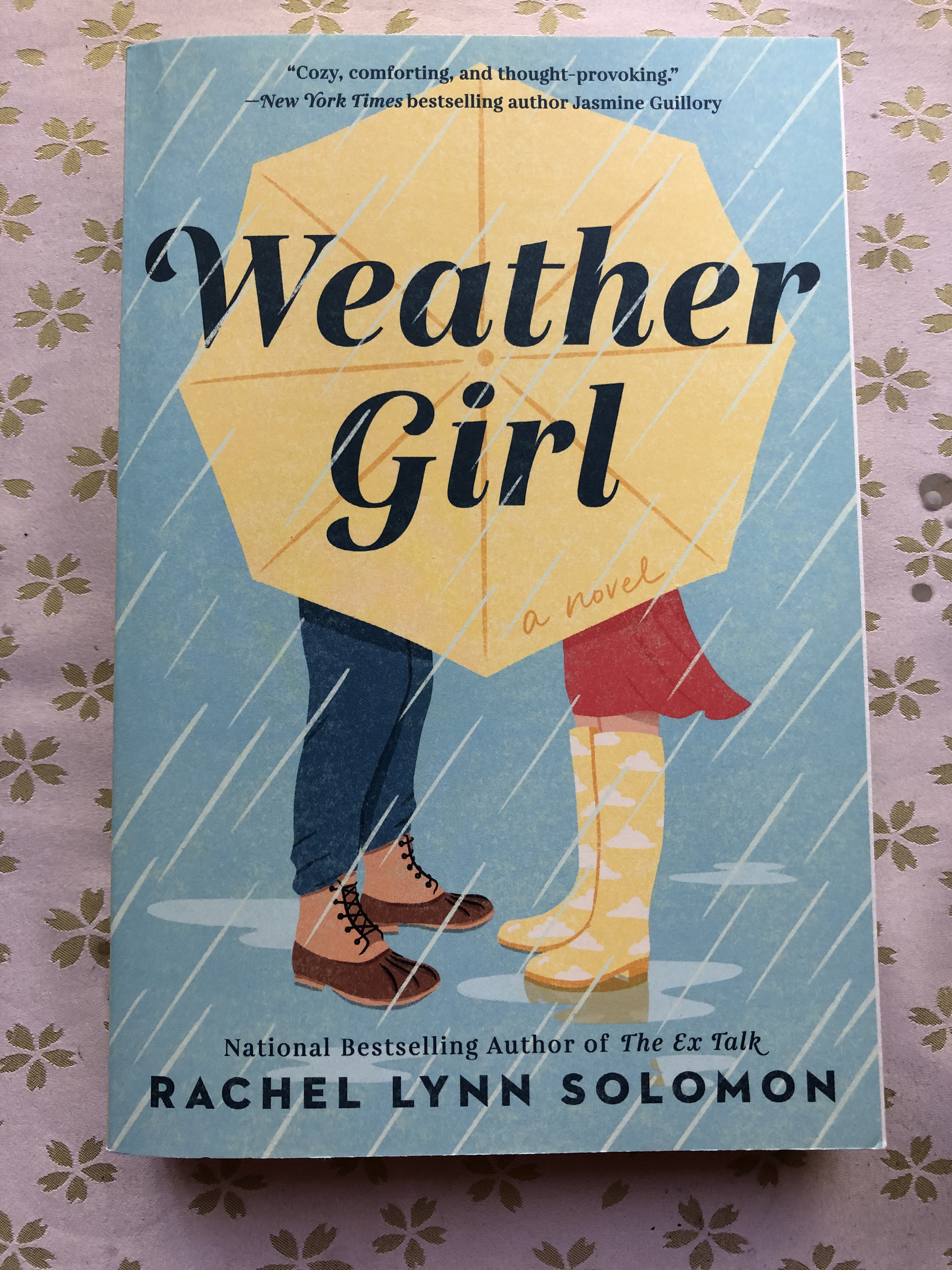
I just finished reading Emily Henry’s People We Meet on Vacation (so enjoyable, 4-stars on Goodreads). And now comes the hard part — deciding which book to read next.
I looked at my over-flowing books-to-read shelf and realized I buy books for different reasons.
Your turn readers. What books are on your shelf waiting to be read? What motivated you to buy them? Please share; I’m always looking to add titles to my “want-to-read” list.
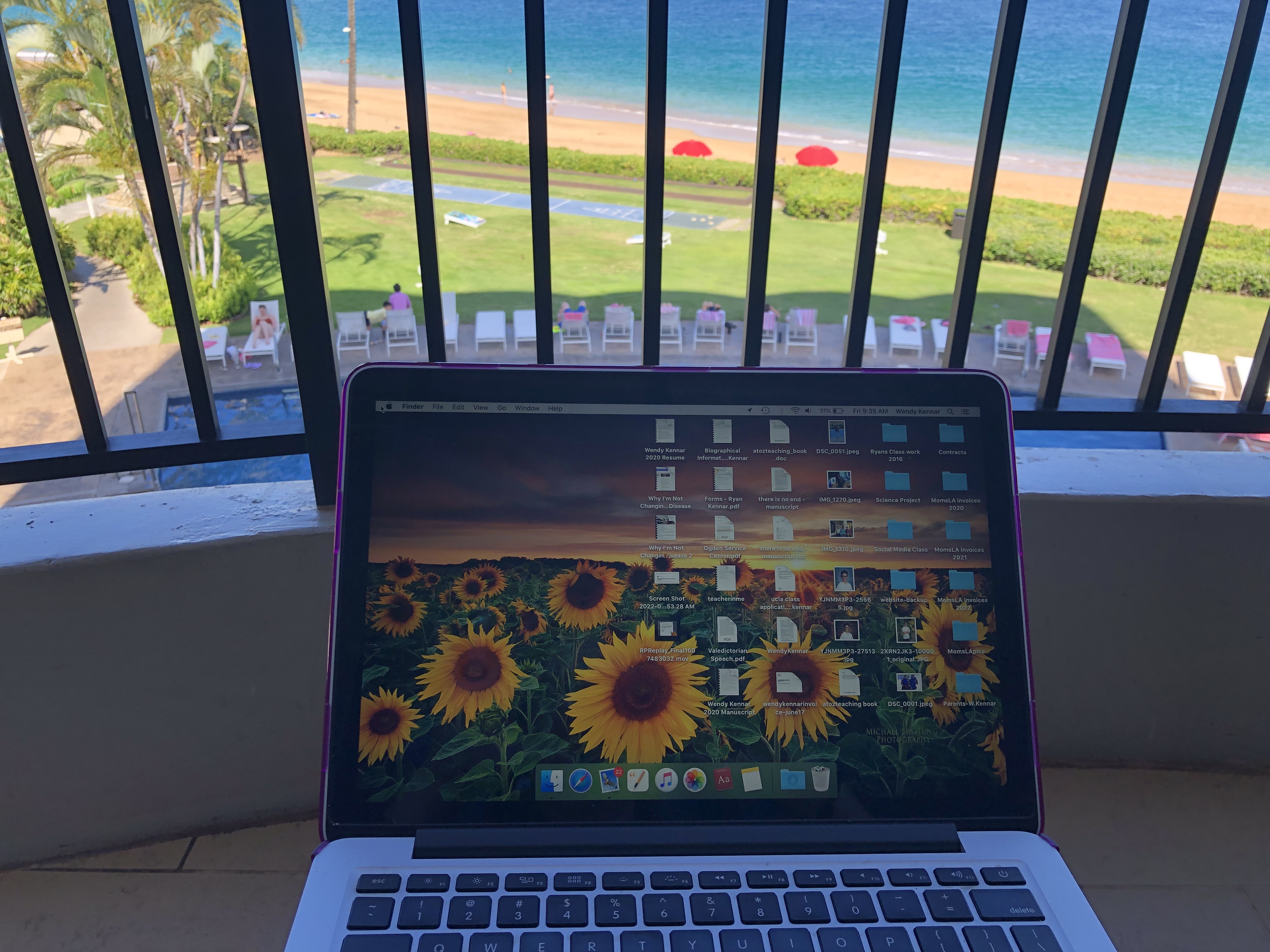
The view from our balcony. I admit – I didn’t get a whole lot of writing done.
For this weekly blog of mine, I generally write about one of three B’s in my life:
– Books (because a writer must also be a reader)
– Boys (mainly my fourteen-year-old son)
– Bodies (living with my autoimmune disease, an invisible disability).
Last week, it occurred to me just how much those three are often connected and inter-related.
Let me explain.
Last week at this time, my family and I were in Maui.
This was a big trip for us. The last time my husband and I were in Maui was for our honeymoon, twenty-three years ago. Our son had never flown before, and I hadn’t flown since before my son was born. Which means I hadn’t flown since my UCTD (undifferentiated connective tissue disease) diagnosis. Add in my worries about COVID, and you can understand why I went into this trip with a great deal of anxiety. At the same time, I was determined to experience the trip as fully as I could.
Which is where the B’s come into play.
In terms of books, I brought one book and one magazine with me. I didn’t read nearly as much as I thought I would. There were no days spent lounging by the pool. There was too much to see and do — including a visit to the Barnes and Noble in Maui.
When it comes to boys, my son was much more adventurous than my husband. During the planning stage of this trip, my son had told us he hoped we could go parasailing and ziplining in Maui. I had been parasailing once before, many years ago, on Catalina Island. That time, my husband was an observer, not a participant. And he opted for the same role this time around.
It was because of my son that I pushed my body as much as I did.
Parasailing? Me? Yes, definitely. The parasailing itself didn’t cause additional pain in my leg. The only pain and discomfort came from getting in and out of the boat. But, it was a small price to pay for the incredible experience, as my son and I rode tandem and admired Maui’s beauty from such a unique perspective.
Ziplining? Me? Yes, I think so. Neither one of us had ever gone ziplining before. We signed up for an eight-line zipline adventure that promised to be something neither one of us would forget. I worried that I wouldn’t pass the knee and ankle check that takes place before we’re loaded into the van and driven into the hills. (On my waiver, I did disclose the information about my illness, and I did pass the knee and ankle check. The woman who observed me and gave me the final clearance reminded me to just go slow and hold your son’s hand to help you.) The actual ziplining wasn’t nearly as hard on my body as the hiking and walking from one spot to another. And I admit, I did slip and fall during one of our walks — thankfully, no injuries or scrapes.
What an awe-inspiring experience we had. Views of the Pacific Ocean if we looked one way, views of the West Maui Mountains when we looked the other way.
I felt strong, something I don’t always feel.
Because on this same trip, I did something I had never done before. I used a wheelchair. A very good friend of mine had encouraged me to take advantage of the wheelchairs available at airports. Don’t waste your legs standing in line and walking through an airport, she said. And she was right. But it still didn’t make it any easier for me to ask for that accommodation. In fact, I waited for the day before our trip to submit the request.
We did a lot of walking during our trip. (Sand is so hard to walk on!) We did some hiking, too. There was so much to see (chickens and roosters in parking lots, waterfalls, flowers), so much to admire (sunsets, rainbows, puffy clouds), and so much to be grateful for (our trip, our safety, all that my body can still do).
And we each came home with one more book than we left with.
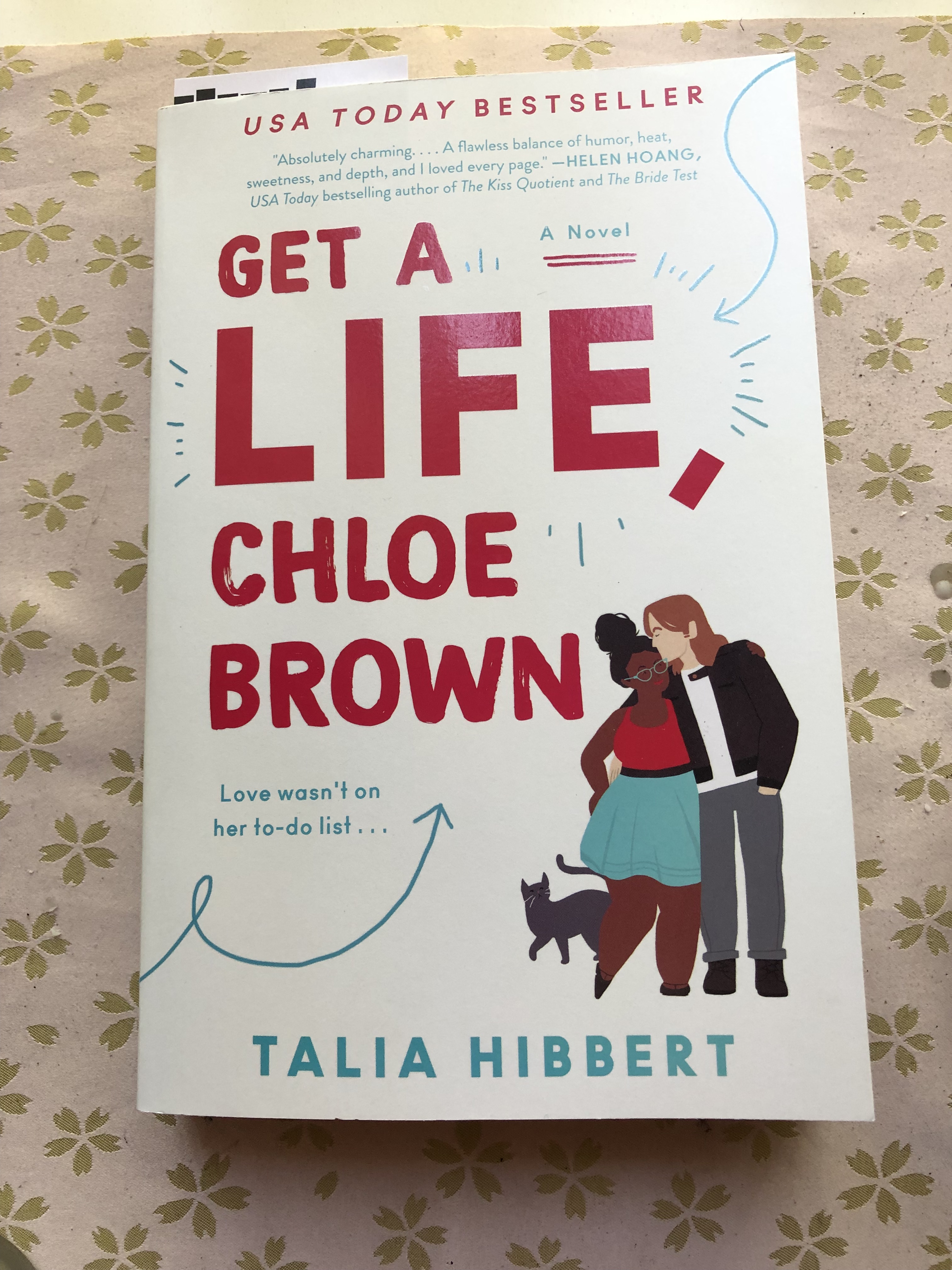
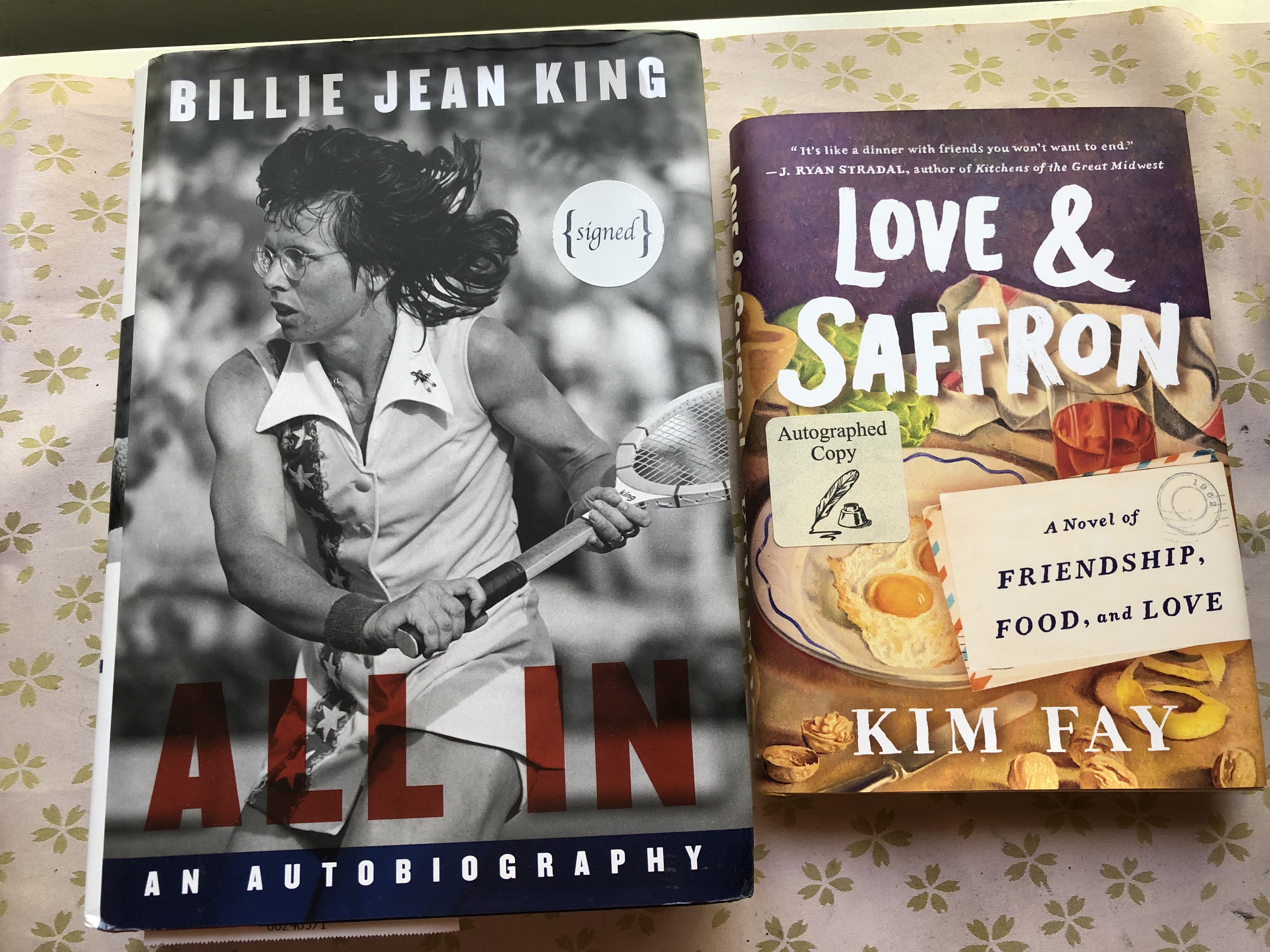
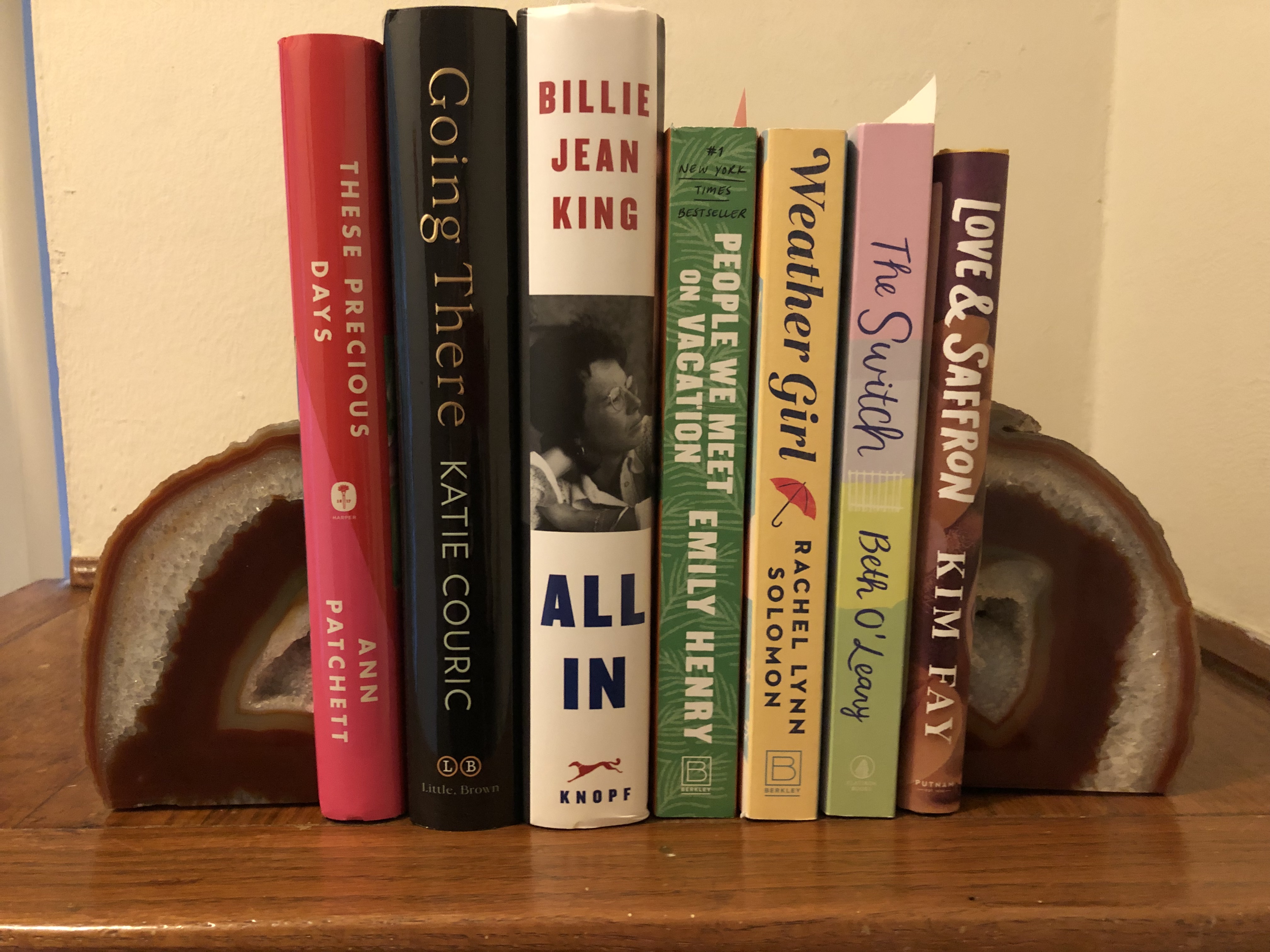
These are just a few of the books I have bought but haven’t yet read.
I have a few “bad” habits.
I use quotation marks around bad, because it’s a subjective term. My bad habits could be someone else’s “no-big-deal” habits. And they’re not bad-bad, they’re just things I could improve on.
1. I leave the printer on. Long after I’m done printing, I often forget to power it off.
2. I push through and keep to my schedule regardless of how I’m feeling. If Wednesday is my day to Swiffer the floors and vacuum the area rugs, I do it. Regardless of my pain level, I feel I must maintain my schedule.
3. I buy too many books. I have so many books on my shelf, waiting to be read. My “want-to-read” list on Goodreads numbers in the hundreds. Some of these books are written by authors whose other books I have enjoyed. Some are books I bought after listening to the author talk on a podcast or interview of some sort.
While this doesn’t mean I plan to stop buying books, it does mean I’m aware of the situation. And the lack of available shelf space.
How about you, readers? Any “bad” habits you want to share? Do you find yourself buying more books than you should?






 WendyKennar.com