Thinking Pink Means Reading Pink

It’s June 23rd which means it’s National Pink Day. A day to celebrate “all things pink.” 

Some might think of the color pink and think of baby girls or cotton candy. 

Some might think of the singer and songwriter.

And others might think of Elle Woods and Legally Blonde

I learned about National Pink Day and thought of books. 

Here are some of my favorite pink books.

Beyond the Diaper Bag created by Megan Bekkedahl and Melaina Lausen

This book has a special place in my heart. It was the first time one of my personal essays (“5 Things I Wish Every Parent Knew Before Sending their Child to Kindergarten”) was published in an anthology.

Swapping Lives by Jane Green

A novel I read years ago that takes you on the journey of “What if…” What if you could imagine a different life? What if you stepped into another woman’s life?

The Victoria’s Secret Catalog Never Stops Coming and Other Lessons I Learned From Breast Cancer by Jennie Nash

This book showed me in a big way that authors publish books that are collections of personal essays. I read this book and thought, “Yes, it can be done. Yes, I can write about my autoimmune disease.”

The Pretty One: On Life, Pop Culture, Disability, and Other Reasons to Fall in Love With Me by Keah Brown

Another book that has served as inspiration, giving me a nudge, encouraging me to write my story. 

In case you missed it, you can click here to read my earlier blog post, “Connecting With The Pretty One.”

The Authenticity Project by Clare Pooley

I checked this novel out of the library but enjoyed it so much I bought my own copy to add to my personal library collection.

Keep Moving: Notes on Loss, Creativity, and Change by Maggie Smith

I won an advance reader’s edition from a Goodreads Giveaway (the only time I have won from the many giveaways I have entered). You’ll find my copy is full of sticky notes marking the many encouraging statements. A book I’ll return to again and again.

Chronic Resilience by Danea Horn

I consider it an act of serendipity that I discovered this important book. It is a must-read for anyone living with a chronic illness. (I have read it more than once and emailed a fan letter/thank you note to the author!)

What about you readers? Any favorite pink books? 

Scrabble, Sweet Valley High, and Feminism

I’m always reading. 

I always have at least one magazine going and two books on my bedside table.

And though I’m always reading, I’m forever adding books to my “want-to-read” list. It means I’ll never run out of reading material. But it also means I sometimes read a book after a lot of the hoopla has fizzled out. 

Such was the case with Roxane Gay’s Bad Feminist. Published in 2014, it’s not in the news per se, but many of the topics written about are very much in the news. 

It wasn’t just what she had to say, but how she said it. In one book, Ms. Gay wrote essays on topics such as Scrabble, race, the Sweet Valley High series, rape, and feminism – just to name a few.

This week, I wanted to share some of the passages that stood out to me. 

From the introduction:

“I embrace the label of bad feminist because I am human. I am messy. I’m not trying to be an example. I am not trying to be perfect. I am not trying to say I have all the answers. I am not trying to say I’m right. I am just trying—to support what I believe in, trying to do some good in this world, trying to make some noise with my writing while also being myself: a woman who loves pink and likes to get freaky and sometimes dances her ass off to music she knows, she knows, is terrible for women and who sometimes plays dumb with repairmen because it’s just easier to let them feel macho than it is to stand on the high moral ground.”

From “Typical First Year Professor”:

“This is the dream, everyone says—a good job, tenure track. I have an office I don’t have to share with two or four people. My name is on the engraved panel just outside my door. My name is spelled correctly. I have my own printer. The luxury of this cannot be overstated. I randomly print out a document; I sign happily as the printer spits it out, warm. I have a phone with an extension, and when people call the number they are often looking for me.”

From “What We Hunger For”:

“All too often, representations of a woman’s strength overlook the cost of that strength, where it rises from, and how it is called upon when needed most.”

From “Beyond the Measure of Men”:
“If readers discount certain topics as unworthy of their attention, if readers are going to judge a book by its cover or feel excluded from a certain kind of book because the cover is, say, pink, the failure is with the reader, not the writer. To read narrowly and shallowly is to read from a place of ignorance, and women writers can’t fix that ignorance no matter what kind of books we write or how those books are marketed.”

From “Tragedy. Call. Compassion. Response.”:

“Every day, terrible things happen in the world. Every damn day too many people die or suffer for reasons that defy comprehension.

“All too often, suffering exists in a realm beyond vocabulary so we navigate that realm awkwardly, fumbling for the right words, hoping we can somehow approximate an understanding of matters that should never have to be understood by anyone in any place in the world.”

From “Bad Feminist: Take Two”:

“Bad feminism seems like the only way I can both embrace myself as a feminist and be myself, and so I write. I chatter away on Twitter about everything that makes me angry and all the small things that bring me joy. I write blog posts about the meals I cook as I try to take better care of myself, and with each new entry, I realize that I’m undestroying myself after years of allowing myself to stay damaged. The more I write, the more I put myself out into the world as a bad feminist but, I hope, a good woman—I am being open about who I am and who I was and where I have faltered and who I would like to become.”

Jewels from Cast Away: Poems for Our Time

I admit I’m not a big poetry reader. But there was something about Naomi Shihab Nye’s collection Cast Away: Poems for Our Time that called to me.

How wonderful it is to read the reminder that everyone can do something to help our planet. Everyone has the ability to go out into the world, and at the very least, pick up trash. And everywhere we look, there are stories to be found. 

This week I’d like to share just a few of the jewels in this collection:

From “Three Wet Report Cards on Camden Street”:

“feeling great sadness

for the hard work of teachers

filling in so many little boxes

dreary evaluating and judging

when what teachers love best

is that spark of discovery

that great question

the shy person

finally speaking from the stage”

From “Central School”:

“On top of the can right there, a hand-lettered dictionary,

flipped open to the L page, and every

most important word

of life lined up handwritten — Love, Learn, Lose, Laugh

and thrown away. How could anyone

throw that away? A neat little dictionary —

I took it. Thought about second grade being the 

best grade, how the world opened wide in second grade,

and we stood in dignity reciting poems to one another,

Loving Language, and our teacher Mrs. Lane told us,

Don’t worry if you make a mistake. We had Smile Day.”

And my favorite, from “Nothing”:

“Nothing a child

ever does

is trash.

It is

practice.”

Lessons Learned

“Now, my bandaged leg was tender and sore, and walking was more like a slow, laborious shuffle.

‘I know it’s hard now, but it will get better. This will pass,’ Ryan said. His tone was soft. Soothing.

I bit my lip, took a breath, and smiled.

Those were all the same words I have spoken to Ryan each time he’s been sick. Reminders that he’s not alone. Reminders that I’ll see him through it. Reminders that the discomfort (whether it was a high fever, a bout of vomiting, or a hard coughing) would pass and wouldn’t last forever.”

The passage above is taken from my personal essay, “Lessons Learned,” a reminder that our children are always watching, always listening, always learning from the adults in their lives. I’m proud to say my essay was recently published at MUTHA Magazine. Click here to read the essay in its entirety.

Still My Hands

(One of my most favorite bulletin boards. Just one student’s handprints wouldn’t have been nearly as spectacular. But working together, every student’s handprints creates a beautiful rainbow!)

I’m pleased to share that my essay “Still My Hands” has been published in Issue V of ang(st): the feminist body zine.

Here’s a snippet of my personal essay:

“My hands will never again staple and design a bulletin board display. My hands will never write-out desk name tags or “happy birthday” certificates. My hands will no longer grade weekly spelling tests. Those days are memories of another time of my life, another identity.”

You can click here to be re-directed to ang(st) and read the essay in its entirety.

Why I Read

I bought myself a present. The print you see in the above picture created by one of my favorite novelists, Katherine Center.

I love this quote, because I agree whole-heartedly.

There are so many reasons to read. And those are the same reasons I write.

This week, I thought I’d take inspiration from Ms. Center and share a book I have read for each of these statements.

Read for Fun.

This one is easy. I recently finished Abbi Waxman’s The Bookish Life of Nina Hill. The pages flew by as I read this fun, delightful novel. And now I want to read more of Abbi Waxman’s books.

Read for Pleasure.

Beach Read by Emily Henry was pure pleasure. Just one of those novels I disappeared into and stayed up later than I probably should have just to read one more chapter.

Read for Comfort.

A disclaimer – one of my essays is published in The Things We Don’t Say: An Anthology of Chronic Illness Truths. What most strikes me about this valuable anthology is the universality of the feelings written about. The medical conditions may be different, but the emotions are the same. And it is so comforting to know there are others out there who “get it.”

Read for Wisdom.

Anne Lamott’s Bird by Bird may be one of the most popular books about writing. It’s a book I have read multiple times, and each time I find some new nugget, something that strikes my fancy and warrants a sticky note. 

Read for Insight.

Michelle Obama’s Becoming. Honest, moving, inspiring. And what makes it even more special is that one of my best friends gave me this book about one of the best role models out there. 

Read for Hope.

I discovered Danea Horn’s Chronic Resilience: 10 Sanity-Saving Strategies for Women Coping with Stress of Illness in what can only be described as an act of serendipity. I have read this important book more than once. It is a book that I highly recommend to anyone living with a chronic illness.

Read for Adventure.

Scott Kelly’s memoir, Endurance: A Year in Space, A Lifetime of Discovery is a true tale of adventure. It’s highly unlikely I’ll travel into space, let alone live onboard the International Space Station for one year. Yet, by reading Mr. Kelly’s memoir I could get a sense of what it would be like to be that far away from planet Earth.

Read for Laughs.

Matilda by Roald Dahl has a special place in my heart. I always read it to my fourth graders – a little bit after lunch each day. Once we finished the novel, we’d watch the Danny DeVito film. (A touching side note – my students thought I resembled Miss Honey. I took it as a sweet compliment.) And I’m so glad my son enjoys it too. We’ve read this book many times. And we laugh at all the same parts.

Read for Possibilities.

Kicking in the Wall: A Year of Writing Exercises, Prompts, and Quotes to Help You Break Through Your Blocks and Reach Your Writing Goals by Barbara Abercrombie should be on every writer’s desk. So many great prompts to use for 5-minute writing exercises. And I never know when I start writing which of those prompts, which of those “exercises,” will actually be the seed for a whole new essay.

Read for Joy.

There is a new edition out, with a beautiful cover, for Katherine Center’s Everyone is Beautiful. It was the first novel I read by Ms. Center. It was one of the few books I can say had me hooked from the first sentence. And I knew after reading this book, I would read everything and anything else this author wrote. 

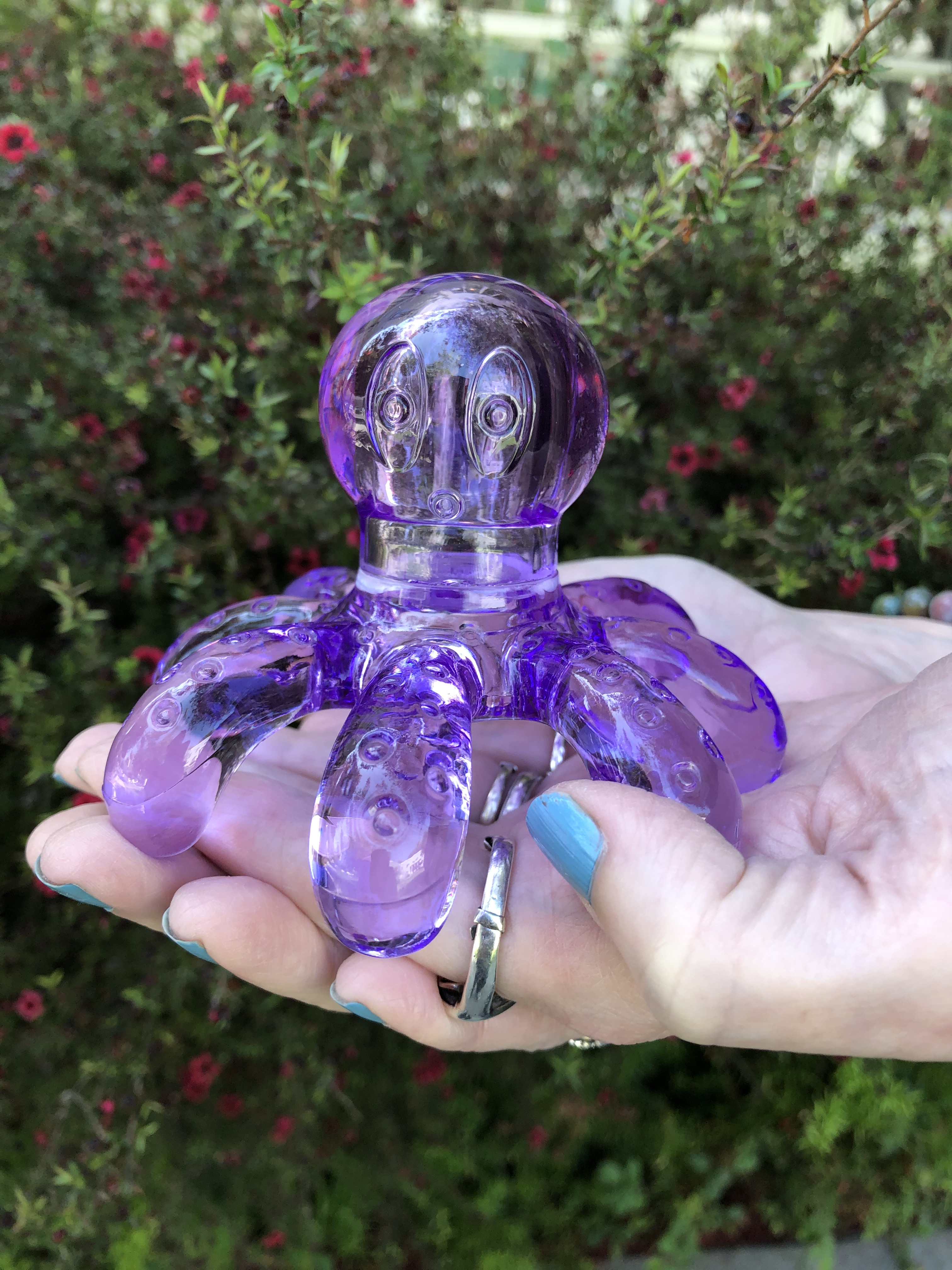
The Octopus in My Life

I’m pleased to share The Mighty has published one of my personal essays, “How My Autoimmune Disease Is Like an Octopus.” 

I wrote this piece in response to one of The Mighty’s monthly writing prompts. “What’s something related to your health condition you had to learn the ‘hard way’?”

Here’s an excerpt from my essay:

“No one told me this would be all-encompassing. That having an autoimmune disease was like having an octopus in my life, tentacles stretching out and touching one area of my life after another.” 

You can click here to read the essay in its entirety. 

Trying To Be a “Bravey”

A couple of confessions.

First, I had no knowledge of Alexi Pappas until recently.

Second, I don’t remember how I first learned about Alexi Pappas and her memoir Bravey: Chasing Dreams, Befriending Pain, and Other Big Ideas

But I’m so glad I did.

I borrowed a copy from the library, but it’s full of so many sticky notes that I had to order my own copy. And then not only will my copy have sticky notes, but I’ll go ahead and highlight passages. 

Alexi and I are very different. She’s an Olympian, for crying out loud. (And a filmmaker, an actress, and a writer.) Yet, her words resonated with me and touched me so strongly. 

This week I’d like to share with you some of my favorite passages.

“It was the first time I used the word bravey, and it stuck. It became a label for a mini-movement, a self-identifier for those who are willing to chase their dreams even though it can be intimidating and scary. It celebrates the choice to pursue a goal and even relishes the pain that comes with effort. There is nobility to it; it’s something to be celebrated.” 

“Imagination, at the very least, brings us joy; at the very most, it empowers us to suspend disbelief and chase the impossible. Imagining things into existence is a superpower.”

“Asking for help is a superpower anyone can have but only some people use. It is brave to ask for help.”

“You have to believe you are deserving of good surprises in life. You set yourself up for it. You walk with your eyes open enough to catch the eye of the person who will invite you in. Maybe they won’t but maybe they will. Luck can be cultivated.”

Supposed to was another phrase I couldn’t let go of — I was supposed to do this and I was supposed to do that — so I kept doing things that helped me appear normal to the outside world, but none of which would help me heal myself.” 

“That’s what being a Bravey is — you are making a conscious choice to tell yourself what you’d like to be until it becomes part of you. You choose to replace “can’t” with “maybe” by acknowledging your feelings but focusing on your actions. Your actions encompass everything from what you do with your time, to who you surround yourself with, to the words you feed your mind. To know you can do this for yourself is the most powerful thing in the world.” 

“You have to take care of yourself first. You are your own most precious resource. Everything you are in this world hinges on you facing yourself before you face the world.” 

Why Invisibility Is Not a Superpower for Me

(I think teachers are superheroes. This is me, in my fifth grade classroom, on my last day of teaching. March 2013)

Today, April 28th, is National Superhero Day.

When you hear the word “superhero” you usually think of either fictional characters (Wonder Woman, Spiderman) or real-life individuals (firefighters, nurses, doctors).

We believe our superheroes (both real and fictional) have superpowers. 

Along those lines, many people consider invisibility as a coveted superpower.

But I don’t.

In fact, there are days when I believe things might be easier for me if my “invisible” disability was a bit more visible.

Two years ago The Mighty published my personal essay “Why ‘Invisibility’ Is Not a Superpower When It Comes to Illness.” 

Today, on National Superhero Day, I’d like to share it with you along with a reminder from my essay:

“The truth is, there is no age or way to ‘look’ disabled. So remember, we all deserve kindness and patience, regardless of how healthy we may look on the outside.”

Click here to read my essay in its entirety.

Wendy, Who Doesn’t Fit in One Box

This past weekend I re-read a book that has sat on my shelf for a while. A book I haven’t picked up in quite some time. But a book I felt I needed to read again.

The book?

Fran Drescher’s Being Wendy

I admit, when the book was published back in 2011, it first caught my eye because of the title. There are only a few claims to fame for fellow Wendy’s:  my name is said to have been invented by J. M. Barrie for his “frendy Wendy” character in Peter Pan, and I’ve got a hamburger fast food chain that shares my name.

But I re-read the book, because I needed to be reminded that I don’t have to fit into just one box, that one single thing doesn’t define me.

(In case you’re not familiar with the book, Being Wendy is the story of Wendy, a young girl who doesn’t want to choose to wear one box for the rest of her life. In her hometown, the rule is : “The Boxville way is to choose a box for the rest of your days.”  She doesn’t want to just be a teacher, just be a police officer, just be any one thing.  Her ideas and her dreams are too far-reaching, and one box just won’t work for her.)

Lately, it’s easy to lose sight of that. 

I have been dealing with a multitude of tests and consultations with doctors, and in my experience, doctors don’t always take the time to see their patients as complete people. 

And I don’t want to just fit into my “chronic illness” box.

I need to remind myself that there are so many other parts of me, so many other aspects of my personality that have nothing at all to do with the persistent pain in my left leg.

I’m a reader.

I’m a writer.

I’m a sunflowers-over-roses type of woman.

I’m a silver-over-gold type of woman.

I’m a singing-along-to-Abba-while-I-cook-dinner type of woman.

I’m a never-learned-to-whistle type of woman.

I’m a jewelry-wearer.

I’m a candle-burner.

I’m a chocolate-eater.

I’m an apple-juice-with-breakfast type of woman.

I’m a daily-to-do-list writer.

I’m a believer in good omens and signs.

I’m a pen pal.

I’m a former florist.

I’m a current home gardener.

And the list could go on. Which makes me smile.

I’m not just a woman with an autoimmune disease. 

Regardless of what the tests show or don’t show, I’m so much more.