4 Things Everyone Should Know About Living with Chronic Illness(es)

June 2025 - Oahu. The smile is real. And so was the pain.

Some weeks I know exactly what I want to write for my weekly blog post.

Some weeks I have several ideas for my weekly blog post, and it’s just a matter of deciding which one to choose.

And other weeks, I have no idea what to write for my weekly blog post. I thought that was going to be the case for this week’s post.

But I was wrong. 

Because all of a sudden, on Monday evening, the idea for this post came to me. I could see the post, in a sense. I just had to get it down. 

Barbara Abercrombie, who I have written about before, used to tell our classes that writers don’t just wait for “The Muse” to show up. If you do that, you’re waiting most of the time, and writing almost none of the time. But, she did say, that if you put in the work, if you regularly wrote, if you dedicated yourself to a writing practice, every so often The Muse shows up and gifts you a piece of writing. 

This post is that gift. Here I present:

4 Things Everyone Should Know About Living with Chronic Illness(es):

  1. Crying doesn’t always mean the pain is extreme. Sometimes, I cry out of frustration. Exhaustion. Sadness. Fear. Discouragement. Weariness. 
  2. Not crying doesn’t mean the pain isn’t extreme. Sometimes, crying isn’t an option. Standing in line at Trader Joe’s, it’s best if I can hold the tears back until I get into my car, for at least a bit of privacy. Tears out in public lead to questions. And while those questions may all be well-meaning and may come with offers to help, I just don’t always have the bandwidth to start explaining my specific situation, my pain, to strangers.
  3. Chronic illness is not the same as an illness. Yes, everyone has a story — of a bad flu, a broken bone that didn’t heal properly, an unforeseen side effect after a “routine” procedure. But none of that is the same as living with a chronic illness. (And, just to be clear — I’m not saying one is “worse” than the other. I’m saying one is different than the other.) Living with chronic illness involves a different type of “wear and tear” on your body that most people aren’t experiencing. A different type of tiredness. Think of it this way — me telling you I spent time practicing my three-point shooting is much different than Caitlin Clark telling you she spent time practicing her three-point shooting. 
  4. There is no easy fix. Someone lives with a chronic illness for that very reason — it doesn’t eventually “go away.” Chronic illness patients aren’t being difficult. Or stubborn for not trying the thing that worked and helped you/your relative/your coworker. These chronic illnesses are lifelong conditions because they aren’t curable. No amount of green smoothies, yoga, or vegan-only foods will magically change that. 

Note — several years ago I wrote a similar post, 4 Reasons Why Chronic Pain Sucks. Everything I wrote then is still true. Again, that’s the “chronic” part of it. 

Spoonie friends, what would you add to my list? What do you think more people should know about living with a Chronic Illness?

Five-Minute Writing Exercises

This week’s blog post is related to the week-long project I started on Instagram. If you’re not on Instagram or just haven’t checked it for a while, let me briefly explain.

Life has gotten busy and full, and one of the things I have let slip is my daily five-minute writing practice. (I’ve written about my five-minute writing exercises before. Here’s a link to one such post.)

Since the new school year starts on Thursday, August 14th (at least, schools in the Los Angeles Unified School District begin then, other schools in other districts may have different start dates), I thought this week would be the perfect time for me to begin doing my five-minute writing exercises again. 

Except, I needed some help, some way to be held accountable so I wouldn’t brush it off when I felt too tired or felt like I had “more important” things to do. So here’s the plan — Monday, August 11th through Friday, August 15th I am posting a reel a day on my Instagram account. In that reel, I read aloud a writing prompt — either one from Kicking in the Wall by Barbara Abercrombie or Rupi Kaur’s Writing Prompts – Self Love

And me, being a former teacher, decided to keep track of my progress by placing a sticker on the calendar for each day I completed my five-minute writing exercise. 

Today, I am sharing with you what I wrote in response to Tuesday’s prompt — Write about a name that creeps into your heart. The name of someone or something you love — an animal, a place, weather, a song

Growing up, my mom’s family called her Honey. In a family of five children, she was the only girl. They called her Honey, even into adulthood, but everything I know about my mom’s childhood doesn’t match with the way they treated her. It doesn’t seem like she was ever treated like a Honey. In the stories she tells and the memories she shares it feels as if her years at home were missing a sweetness and tenderness and love, both explicitly expressed and implicitly felt. 

My mom, now 80 years old, has always spoken fondly of her maternal grandmother. A woman who wore lots of jewelry (like me). A woman who, when visiting California from New York, would ask my mom to polish her nails for her. A woman who called my mom Honeycakes.

Honeycakes. I love that name. It sounds like a delightful dessert. Like something you eat with your fingers and when you’re done eating, you lick your fingers clean, one-by-one, because you’re trying to savor every little bit of the sweetness. It warms my heart,  knowing my mom’s grandma spent time with my mom — hugging, being affectionate, letting my mom know she was a special girl.  

After 50 years of marriage, my 79-year-old dad, still calls my mom Honey. The red heart tattoo on his right arm has the name Honey written inside. 

My mom is Honey

And because it’s my mom’s name, I don’t call my husband Honey

He’s Honeypie

Readers, please let me know if you’re completing these five-minute writing exercises. I’d love to cheer you on!

Please note: I am including a link to buy the book that I’m highlighting this week. If you use my link, I do make a small commission on your purchase at no additional cost to you. I am working with Bookshop.org which also sends a portion of the profit to support local, independent bookstores.


Book Lovers Day

This is elementary-school-me holding the certificate I earned for all my reading during the library's Summer Reading Club.

Saturday, August 9th is Book Lovers Day.

I am a book lover, but I don’t think of Book Lovers Day as a special day just for me. Instead, I think of Book Lovers Day kind of like Earth Day. We should respect, care for, learn about, and protect our planet every day of every month of every year. Earth Day is one big extra-celebratory day when a whole lot of people focus on the same thing — our Earth.


Just like Book Lovers Day. Readers, book lovers, writers, booksellers — in one way or another, we all respect, care for, learn about, and protect our books every day of every month of every year. At the same time, it can be fun to organize a special day when people come together and talk about books, celebrate books, give books, buy books, and read books.


I have always been a book lover, even when I didn’t have the words for it. Growing up, I participated in our public library’s annual summer reading program. I visited the library each week, filling up my canvas tote bag, dutifully writing down the titles of the books I read on the library’s record sheet.


I grew up reading about Jessica and Elizabeth Wakefield. (If you don’t recognize those names, then I guess you didn’t grow up reading Sweet Valley High.) I saved my money to buy big, heavy, hardcover books about NASA and America’s Space Program

When I was in high school, I spent some of my lunches and after-school time volunteering in our school’s library. I liked books, and I knew our school library was understaffed and underfunded. (And, let’s be honest, I also knew that volunteering would look good on my college applications.)


And when I was a college student, I worked in a public library for a few years. I enjoyed seeing how all our different departments (including Circulation, Support Services, Reference) contributed to the end result — the book on the shelf. I remember the days of card catalogs, and if you don’t know what a card catalog is then yes, if you were wondering, chances are I’m much older than you are. (And you can click here to learn more about a library’s card catalog.)

As an elementary school teacher, I made sure each of my classrooms had a colorful, cozy, well-stocked library. Colorful as in big blue and pink storage bins from Ikea. Cozy as in pillows and stuffed animals. And well-stocked meaning fiction and nonfiction. Chapter books and picture books. An old set of encyclopedias. Guinness World Records books. A set of Little House on the Prairie books. Diary of a Wimpy Kid books. Books by Roald Dahl and Kate DiCamillo.

September 2010. I had to move classrooms so I started the school year with an incomplete library corner - we had to wait a bit for our new rug.


And as a parent, I started building my son’s library before he was born, filling the shelves with books that celebrate diverse families (Todd Parr’s The Family Book, Shades of Black by Sandra L. Pinkney, Sesame Street’s We’re Different, We’re the Same). Books were a part of my son’s childhood — in the diaper bag, in the car, read at night, read during bath time, and read at a restaurant while waiting for his chicken nuggets and fries. Books were given as gifts for every birthday and every holiday. Our son knew there was always money for books — whether they were bought at a bookstore, or Target, or through the Scholastic order form sent home by his second grade teacher.

My son at age 6, during one of our weekly visits to the library.


Nowadays, I go into an independent bookstore knowing I won’t leave without buying at least one book. I have run out of shelf space and started a pile of yet-to-be-read-books on the floor near one of my smaller bookcases. I regularly add titles to my list of want-to-read books. And, I continue to research publishing paths for my memoir-in-essays.

I did all that, I do all that, because I’m a Book Lover.

Every day.

Please note: I am including a link to buy the book that I’m highlighting this week. If you use my link, I do make a small commission on your purchase at no additional cost to you. I am working with Bookshop.org which also sends a portion of the profit to support local, independent bookstores.


Suddenly Silent and Still

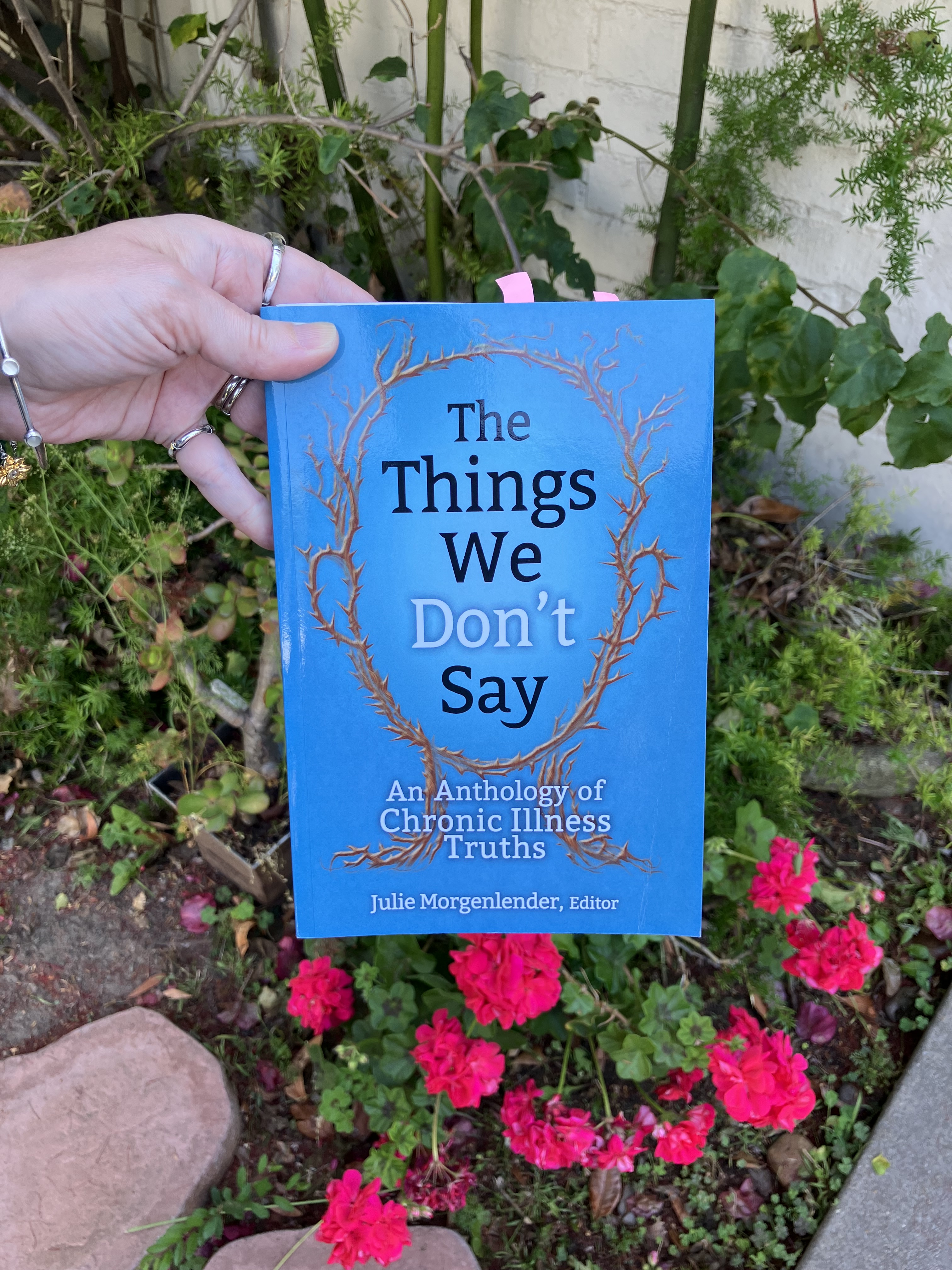
I recently finished reading Suddenly Silent and Still: Finding Joy and Meaning Through Illness, a memoir written by Nin Mok. From the back cover: “In a life-changing instant, Nin is thrown into chaos by the onset of sudden hearing loss and violent vertigo.” 

Because Nin and I are Instagram friends, reading this book felt even more like a conversation between the two of us. This is not just a memoir written by some unknown author. This is the story of another woman, another mother, whose life was forever changed by a sudden illness.
 
My copy of Nin’s book is full of sticky notes. Because though our medical conditions vary, though our life circumstances differ, many of the emotions she wrote about really resonated with me. 
This week I’m pleased to share some of the excerpts that most touched me:

“I have no idea why I was certain my turn would come at the end of my life. I imagined being old and frail before discovering I had an incurable disease. I would then be afforded a moment of introspection before being shown the exit, like a happy-go-lucky partygoer who leaves when the music and fun are over. Never once did I imagine that I would have to stick around after the celebration for the long and arduous clean-up.”

“Jet and Jade were five and three when I got ill. They don’t remember their healthy mother, the one who chased them through the parks, raced them to the car, and sang aloud, albeit out of tune. They just know this mother. The one who struggled to make it through the day. Jet and Jade constantly needing my help and attention made my recovery more challenging, but at the same time, they made my recovery possible.”

“And what about all the other vital organs that I had only one of, such as the heart, liver, and brain? What if they suddenly failed too? My once safe world now felt fraught with unavoidable threats.”

“Why me? What did I do to deserve this?”

“My family relied on me as a co-breadwinner to keep a roof over our heads. This was a matter of survival. I was also our home’s central processor, who organised and coordinated our activities. Lives would fall into disarray if I remained incapacitated.” 

“It was this attitude that made me feel insecure about writing this memoir. I questioned whether my suffering was big enough, whether my misfortune was dramatic enough to warrant a book. Ridiculous, really.”

“Trauma has no size. Rather, trauma is like light, capable of filling the entire room regardless of its wattage.”

“I now lived in a world that was no longer made for me; it was made for the able. I no longer felt normal here.”

“The life I had planned, was looking forward to and counting on, was upended for real.” 

“Returning to work would have rubbed the comparison in my face. By keeping every facet of my life exactly as before, I would know for certain that my life had got worse. I would lead the same life, but now as a disabled person. Returning to work would make the downhill trajectory obvious.” 

“Young people were supposed to recover from illness, not remain ill indefinitely. Worse, I couldn’t rest as one might expect a sick person to. I was not retired; my children had not left home. I couldn’t curl up with a good book all day. I still had to put food on the table and my children through school, all while being sick.” 

“I could see the date creeping in from a distance. It marked the unhappy anniversary of my downfall. That date took the life I loved, chewed it up and spat back out something unrecognisable. It was the day I took a tumble and never stood back upright. That dreaded date will forever be remembered.”

“I no longer compared myself to the previous Nin, nor did I keep measuring up to her. I only cared about where I was now, and where I wanted to be, not where the former me wanted to be.”

“I went from feeling unlucky that this happened to me to feeling lucky that only this happened to me.”

Please note: I am including a link to buy the book that I’m highlighting this week. If you use my link, I do make a small commission on your purchase at no additional cost to you. I am working with Bookshop.org which also sends a portion of the profit to support local, independent bookstores.


Diamond Head

This picture was taken when I finally felt strong enough to begin the trek back down. I admitted defeat. I looked awful, and I felt awful. But also, I was so very grateful. Things (mainly, me) could have been so much worse.

The topic of this week’s blog post involves our June trip to Oahu. In case you missed any of my earlier posts about our trip, I’m including the titles here. Click on the titles and you’ll be taken directly to that post.

Defining Disability

The Love Simulation

I Am Who I Am

When we began researching our family trip to Oahu, a visit to Diamond Head was one of the “must see’s” that showed up on list after list.

“Hawaii’s most recognized landmark is known for its historic hiking trail, stunning coastal views, and military history.”

“The 0.8 mile hike from trailhead to the summit is steep and strenuous, gaining 560 feet as it ascends from the crater floor.”

It didn’t take a lot of reading to realize a visit to Diamond Head isn’t easy for anyone, even someone in the best of health. Visiting Diamond Head required a “strenuous hike,” two words that don’t automatically come to mind when thinking of “things Wendy should do while on vacation.” 

My husband was the first to say we should skip it. Our seventeen-year-old son said he’d like to see it if possible. And, I said, “Of course we’ll go.”

When I told one of my closest friends about our upcoming trip and asked if she had any recommendations, she searched her phone, looking through the photos she had taken when last on Oahu. 

“There’s Diamond Head, but you’re not doing that,” she said.

“We already have reservations,” I said.

“Wendy…” she said. You could hear the rest of the unspoken sentence in just that one word. Wendy, what in the hell are you thinking? 

As I had explained to my husband and son, I wanted to see and do as much as I physically could. The truth is during the last couple of years my physical health has deteriorated. I am not as physically strong as I was. I own, and occasionally use, a wheelchair. Which is why, when it came to this trip, I wanted to see and do as much as possible, “while I still kind of can,” I told my family. 

We had reservations for Friday, June 13th. Maybe that was a sign.

I definitely should have paid more attention to the ambulance and helicopter we saw in the grassy field adjacent to the parking lot. 

“Maybe it’s for some sort of training exercise,” I said as I locked our rental car and double-checked my handicap placard hung from the rearview mirror. 

It wasn’t. 

Later in our visit, we heard the helicopter had been used for a rescue. 

We had our hats, our sunscreen, our bug spray, and water. We were ready. 

“Just take your time,” my husband said. 

I started off walking slowly, my usual speed. 

We stopped periodically to wipe the perspiration from our faces and to take sips of water. At times there was a handrail to hold onto. At times there was a bit of shade. Other times there were neither of those things. 

My husband repeatedly reminded me we could stop and turn back at any point. 

“Nope. I want to go as far as I can,” I said. Stubbornly, or stupidly, depending on your perspective.

The truth is I was worried and scared. About the steepness and the stairs I knew were soon to come. I didn’t know if my legs were strong enough. I worried this one outing would negatively impact the rest of our trip. (Remember it was Friday, June 13th. We weren’t flying back home until the following week, on Thursday, June 19th.)

Ultimately, it wasn’t my legs that forced made me stop; it was heat exhaustion.

I’ve always been sensitive to the heat. (Ask my dad to tell you about the infamous Dodger game we attended many years ago.)

But this time, it all kind of happened at once. I was over-heating. Dizzy. Nauseous. 

We found a spot, a ledge where I could plop. My husband dug in his backpack, producing a towel from the hotel. It felt like a magic trick. I was having a hard time concentrating, and my mind couldn’t make sense of how the towel had just appeared right when I needed it. (My husband had smartly packed the towel earlier that morning, without me knowing, without making a big deal out of it.) I turned my head, certain I was about to vomit, and trying my best to be as quiet and private as I could. 

Another woman sat nearby on the same rocky ledge. She was chatty, telling others who paused for a drink of water or to take a picture that she had a bad ankle. 

“I’m pretty proud I made it this far,” she said. 

Her husband had gone on ahead and would take pictures from the summit. She appeared so calm. So friendly, too, asking how I was doing and offering me anti-nausea pills. 

Why couldn’t I accept my physical limitations like this woman had? Why, instead, did I feel like I was letting down my son? Why did I feel weak and inept? Why did I feel like a failure? 

I was so quick to discount all I had done, how far I had gotten. (We stopped near a sign that read Audio Tour 9.) 

I have been living with this illness for fifteen years, and I still haven’t figured it all out, and I’m not sure I ever will. 

When am I persistent and determined

And when am I foolish and stupid to try and push through?

On the way back down the trail, we once again came across the woman with the bad ankle. 

“You’re looking a lot better,” she said. I thanked her for her kindness. 

I didn’t tell her I aspired to be more like her — accepting of her body’s limitations, content with her effort, satisfied with her experience. 

Diamond Head – best enjoyed from afar

I Am Who I Am

My husband took this photo, a quick, "Honey, look over here." And the result is this photo, one of my husband's favorites of me.

In early June, a week or so before we left Los Angeles for Honolulu, I spoke to my therapist about how self-conscious I felt about my 49-year-old body and how it looks in a bathing suit. 

“I’ve gained weight, and I don’t know if it’s because of the Prednisone or menopause, or both,” I said. 

“My bathing suit bottom doesn’t fit.”

“I need to buy new shirts.”

And on it went like that.

And, my therapist, being the kind, thoughtful, smart person that she is, said something so incredibly spot-on that it’s now become an internal mantra. 

“You are who you are,” she said.

When she said it, I knew it was a great phrase. But I didn’t realize during our Zoom session the impact of those five little words and how often those words would play on a repeating loop in my head. I relied on those words not just when we were in Oahu, and I looked at my bathing-suit-wearing-self in the bathroom mirror. 

Back home, I find those words to be a comfort, something I can carry with me and have available any time, and every time, I need it. 

Sometimes I softly repeat the words, I am who I am.

Other times I silently mouth the words, watching myself in the mirror. I am who I am.

On the one hand, it’s a super simple piece of advice, and yet it felt like something brand new, something I had never thought of before. Wise words I had been gifted. 

I am who I am.

Why waste my limited time and energy thinking negatively about how I look? Or how I don’t look? 

If a magic wand did exist, if I could swirl it around and abracadabra change my weight or the way my body looked, I wouldn’t use it.

The truth is I would much rather use that magic wand to alleviate my pain. Living with an invisible disability has taught me that I am so much more than my chronic illness. Likewise, I am so much more than numbers on a scale.

I am who I am. 

Dear Readers, do you have a mantra or phrase you use to help overcome difficult situations and/or help you get through a rough patch? If you’re comfortable doing so, please share in the comments.

The Love Simulation

When it came time for our family to start packing for our summer trip — a week in Oahu — there was one item in particular I had to give serious thought to: which book did I want to bring with me on vacation?

I had finished reading a novel two days before our trip. Which meant I had to make sure the book I packed, the book that would take up valuable carry-on space, would be a book that would grab my attention and not let go until the last page. A book that would distract me and keep me entertained while flying. A book that would keep me company as I looked up from the page every now and again, to gaze out at the endless Pacific Ocean, marveling at the many shades of blue. 

I couldn’t just randomly grab a book from my stack of not-yet-read books. Generally I alternate between fiction (lately rom-coms) and nonfiction (usually a memoir). I had just finished a novel; however, I broke my own rule and decided I needed a romantic comedy with me on the trip. A feel good story with a guaranteed happy ending. A book that wasn’t a question mark in any way. I didn’t want to take a chance and hope I would like this new book. I wanted a book I was certain to enjoy.

From the dozens of unread books I have at home, I chose The Love Simulation by Etta Easton. (You may remember I wrote about how much I enjoyed Ms. Easton’s debut novel, The Kiss Countdown. In case you missed it, you can click here to read that blog post.)

The Love Simulation was everything I hoped it would be. 

During our trip, we visited a spacious Barnes and Noble, and of course, I couldn’t leave without purchasing a book. While I roamed around the store and picked up several different titles, I decided to maintain the romance theme. I purchased Heidi Shertok’s Unorthodox Love. Though now that we’re home, I’m in the middle of reading a memoir, so Ms. Shertok’s rom-com will need to wait a bit. But I like knowing it’s here. As an added bonus, I felt quite proud to be supporting an African-American author and a Jewish author.  

Now my question for you, dear readers — what’s your decision-making process like when it comes time to pack a book for a trip? Do you bring physical books or e-books? Or, do you not read books at all and instead opt for magazines? I’d love to know. Feel free to share in the comments. 

Please note: I am including a link to buy the book that I’m highlighting this week. If you use my link, I do make a small commission on your purchase at no additional cost to you. I am working with Bookshop.org which also sends a portion of the profit to support local, independent bookstores.

Blank

Many readers are familiar with Zibby Owens and her many roles in the book world, including: her independent bookstore in Santa Monica, California (Zibby’s Bookshop), her podcast (“Totally Booked with Zibby,” formerly known as “Moms Don’t Have Time to Read Books”), founder and CEO of Zibby Media – which includes her publishing house (Zibby Books), children’s book author (Princess Charming, published in 2022), anthology editor (Moms Don’t Have Time to Have Kids: A Timeless Anthology and Moms Don’t Have Time To: A Quarantine Anthology), and memoirist (Bookends: A Memoir of Love, Loss, and Literature). 

And with the publication of Blank in 2024, we add novelist to the list.

I found myself quickly turning pages, not at all able to predict how things were (or weren’t) going to work out for our protagonist Pippa Jones. Plus, I was delighted to find many real life, book-related references throughout the novel, including the mention of the memoir My What-If Year (a memoir written by Alisha Fernandez Miranda, which was the first book published by Zibby Books) as well as a nod to real-life “Goodreads.com,” named “FabulousReads.com” in the novel.

(By the way, are we friends on Goodreads?)

The novel has a lot going on, tackling a range of topics including the publishing industry, female friendships, marriage and adultery, social media, and anti-Semitism. 

Honestly, my favorite parts were those that were clearly written as a celebration and tribute to the magic of books. Allow me to share a few passages:

“Publishing a blank novel would be a commentary on the literary world. I could say that I was addressing the reader’s almost nonexistent attention span. To keep the reader’s attention, they’d have to be able to read the words in, well, no time. To read this book, they wouldn’t have to do anything.”

“Imagine someone just came up with the idea of reading. Like, ‘Hey, let’s launch a product with no pictures, just words and letters. To enjoy it, you have to sit in one place and stare at it for hours, and then the whole story will slowly unfold just to you inside your brain. It might take you months to find out what happens in the end. It’s a completely solitary endeavor and you can’t do anything else at the same time. Oh, and you need to purchase it up front, hoping you’ll like it. But if you don’t, there’s no refund. Sorry! And there are literally millions of other products that look basically identical — some are great and some are terrible, and there’s almost no way to know ahead of time. Good luck. Go spend thirty dollars.’” 

“That’s what books are supposed to do:  connect readers to authors. Readers to each other. That’s why book clubs are so popular! It’s like that mural on Montana: ‘Stories are best when shared.’” (This is a nod to the mural outside of Zibby’s Bookshop, located on Montana Avenue in Santa Monica, California.)

This photo was taken back in January 2024

Friends — one more thing to share this week. If you didn’t see my Instagram post from a few days ago, I made some changes to the home page of my website. I’d love to know what you think. And, if you know of a reader, writer, and/or someone living with a chronic illness who might enjoy my weekly content, please let them know about my blog. 

Please note: I am including a link to buy the book that I’m highlighting this week. If you use my link, I do make a small commission on your purchase at no additional cost to you. I am working with Bookshop.org which also sends a portion of the profit to support local, independent bookstores.


Defining Disability

The work in my Mastermind program continues. 

Part of our tasks has been to think about what we write and why. (I wrote a bit about this in a May blog post. Click here if you missed it.)

This week, however, I am sharing two photos with you as another example of what I write and why.

The photo shows my seventeen-year-old son and me parasailing, a week-and-a-half-ago during our family trip to Oahu. We calmly dangled 1000 feet above the Pacific Ocean. We talked and marveled at the incredible view below us and around us, noticing the quiet and the sense of peace we felt being that high up.

On that day, in those moments, my body was physically strong enough to climb aboard the boat, maneuver into the harnesses, and smile and wave at those down on the boat looking up at us. 

Yet back at the hotel, my backpack held my blue disabled parking placard. And when I left Los Angeles and arrived in Honolulu I received wheelchair assistance at both airports. (I also had wheelchair assistance at both airports for our return flight.)

Both situations are true. 

I may fit the more narrow, stereotypical idea of a disabled woman when someone sees me sitting in a wheelchair at the airport. 

But, I’m still a disabled woman, even when I’m gliding through the air, with a multi-colored parachute open behind us. 

And that is why I write — to demonstrate there is no definitive, one-and-done definition of disability.

Friends, I’m curious. Have any of you gone parasailing? Where? What was your experience like? Please feel free to share in the comments!

Lucy Sings on Lucy Street

You may remember I have written about Robin Roberts before. In case you missed it, you can read my post about Brighter By the Day by clicking here.

Click here to read this post featuring From the Heart.

And click here to read my post about Everybody’s Got Something.

I’m definitely a fan. 

This week’s post features Lucy Sings on Lucy Street by Lawrence Roberts and Sally-Ann Roberts (siblings of Robin Roberts), with an epilogue by Robin Roberts. 

Not only is this a charming children’s book with delightful illustrations by Jestenia Southerland, it’s the story of how I came to own this book that makes it even more special to me. 

A friend of mine surprised me by ordering this picture book and having it sent to my address. She and I both admire Robin Roberts and find inspiration in the words she has written. It’s a natural extension, then, that we would both want to support a children’s book written by two of Robin’s siblings and inspired by their beloved mother, Lucimarian “Lucy” Tolliver. 

My friend knew that. And she didn’t just tell me about the book, she bought me a copy and completely surprised me by having it delivered to my home. 

At its heart, the book has a timeless, ageless message:

“Life is filled with ups and downs.

No matter what,

keep a song in your heart.

Keep singing.” 

In the book, Lucy’s family is experiencing tough times and struggling during the Depression. But through it all, Lucy finds comfort in her family, her singing, and her good friend, Wanda.

Friends. How lucky Lucy was to have Wanda as her good friend.

And how lucky I am to have Nina F. as my good friend. (There are two Nina’s in my life, so I’m using the teacher technique to differentiate between the two special Nina’s I know.)

Please note: I am including a link to buy the book that I’m highlighting this week. If you use my link, I do make a small commission on your purchase at no additional cost to you. I am working with Bookshop.org which also sends a portion of the profit to support local, independent bookstores.