Connecting With ‘The Pretty One’

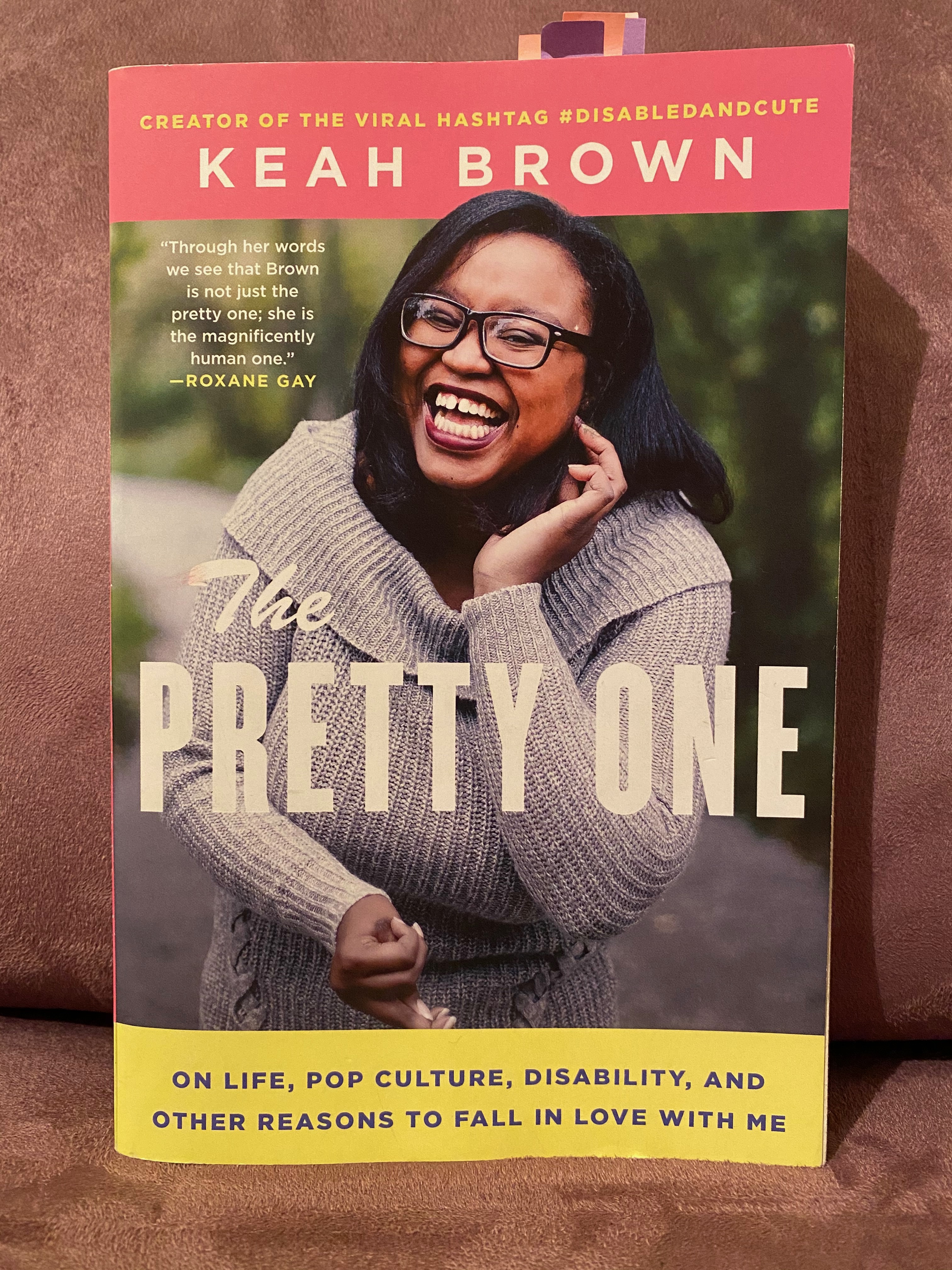
The latest book on my “just read” list is Keah Brown’s The Pretty One. 

I first saw the book at Target and was immediately intrigued by the author’s smile and subtitle – “On Life, Pop Culture, Disability, and Other Reasons To Fall In Love With Me.”

Keah Brown and I are different.

She is in her twenties; I am in my forties.

She is black; I am white.

Her disability is visible; mine is invisible.

However, her book proves a very common theme – the more specific you can get in your writing, the more you’ll find it relates to so many different people. You don’t have to be like Keah Brown to read this book. In fact, maybe it’s better if you’re not. Because then you’re forced to go along with Ms. Brown for this ride; to get a sense of what it is like when most of the movies you enjoy watching don’t feature a character that looks like you. (Although, like Ms. Brown and her sister, many of my friends did refer to my younger sister as the “pretty one.”)

Here are a few takeaways I’d like to share with you this week:

“The loss of control is where the true manifestation of my anxiety begins: the fact that you’re put under and you have no idea what is being done to your body, but you lead with the hope that it is the right thing, as strangers cut into your body in an effort to make it better. The reality is that I frequently cut myself open in the figurative sense when I share bits of myself with readers and audiences, but the idea of being cut open in real life will never not worry me despite the many experiences I have had.” 

“The pain is still there when it wants to be. The pain is one of the factors of disability that I cannot control. All I can do is try my best to take back the narrative about what living with disabilities is like.”  

“I like that my journey has not been easy, because then I would not have my stories to tell. Getting to that place of thought was hard, but so much of my life makes sense in these terms.”

“Imagine if we gave ourselves the same sort of love, attention, and understanding we give the people we love. If we allowed our vulnerability to fuel us to be better people, to say and do more, to feel in and navigate a world that champions tears as much as it does strength, to see tears and crying as signs of strength, even.” 

“I have always believed it is imperative that we learn from the experiences and histories of other people to better understand each other and ourselves.”


Just Because You Can’t See It, Doesn’t Make It Less Real

You don’t see the wind. But you know it’s there when you hear the wind chime.

“The battles that count aren’t the ones for gold medals. 

The struggles within yourself – 

the invisible, inevitable battles inside all of us – 

that’s where it’s at.”

– Jesse Owens

I had an experience that made me think of this quote. 

Many times over the years I’ve been told I don’t look sick.

And I don’t feel sick. 

I think of sick as throwing up, coughing, fever. I’m not sick. (Thankfully).

I am uncomfortable. In pain. 

And the worst part is when the pain just randomly hits out of nowhere. Sometimes the pain makes sense. I spend 30 minutes pulling weeds and gardening, my legs hurt. My son and I go shopping at Target (such a huge store), and I’m hurting.

But a couple of weeks ago, my husband and I went out to lunch. I was ok. We were walking to our car in the adjoining parking lot, and all of a sudden I clutched my husband’s hand. An intense pain gripped my left thigh. We found a ledge to sit down on. And while I tried to take deep breaths, I quietly cried behind my sunglasses.

I cried because of the pain.

And, I cried because I was out with my husband, celebrating his birthday, and I couldn’t even walk to our car. 

The pain subsided enough for me to get up and keep walking. But for the rest of the day my thigh hurt. The kind of lingering hurt you get after you’ve clumsily walked into the corner of a table or something. 

Except I hadn’t walked into anything. I had simply walked.

And some days, it’s harder than others.

Maybe Daring to Be Different Isn’t Always a Good Thing

Painting your hand is just one way to show support of Rare Disease Day

Saturday, February 29th is Rare Disease Day. “The main objective of Rare Disease Day is to raise awareness among the general public and decision-makers about rare diseases and their impact on patients’ lives.” 

I became ill in July 2010 but wasn’t diagnosed with Undifferentiated Connective Tissue Disease until November 2011. When my rheumatologist finally put a name to my symptoms, he told me UCTD is rare and that if I wanted to walk around and call it “the Kennar,” I could.  

At the time, I joked with my doctor, telling him I had always “dared to be different,” so why should this be any different.

But since that morning, I’ve changed my mind. 

I don’t want a rare condition most people have never heard of. I’d much rather live with a more common, even ordinary, chronic medical condition.

A disease doctors understand and can easily treat.  

Maybe even a disease with its own awareness month or magnetic ribbon I can attach to my car.  

My Ongoing Quest For Heroism

It hurt to get up on that fence, but I was determined to do it and have this special, silly moment with my son.

“Above all, be the heroine of your life, not the victim.”

– Nora Ephron


I am trying very hard to be the heroine of my life. 

In the beginning of this medical odyssey (which began almost ten years ago), no one knew what was going on inside my body. Which meant no one knew how to help. 

I did everything every doctor suggested. Went to every appointment. Met with every specialist I was sent to. Did every test doctors recommended. 

For my readers who don’t know, I first became ill in July 2010. I didn’t receive my diagnosis until November 2011. During that time, I met with a neurologist, geneticist, rheumatologist, vascular surgeon, and ophthalmologist (did you know certain cancers reveal themselves through your eyes?).

Back then, I automatically said yes to everything. My body felt out of my control. I was scared. My son was  two years old when I became sick. I needed answers, and I needed help.

Now, almost ten years later, I know I’m dealing with a chronic illness, and nothing fatal (thank goodness), and I’m not so quick to readily agree to a doctor’s “recommendation.” I probe for further information. I email my doctor and ask for clarification on something he said during my appointment. And I ask a lot of questions. 

Why are you recommending this procedure?

What are you looking for?

What are the side-effects?

I didn’t “do” anything to get sick. And there’s really nothing I can do to make it go completely away.

In that sense, I am a victim. 

But, I can exercise some control over how I choose to live with my autoimmune disease. Which means asking questions, taking my time to make a decision about a procedure, and gathering as much information as I can.

And in that sense, I am a heroine.

It’s My Illness, Not Me

Sometimes we all need reminders. (I found this message on a sidewalk last month.)


It happened again. 

A doctor told me I’m weird.

I’ve written about this before. Back in the fall of 2018 and again in the summer of 2019.

The Mighty published my personal essay “The Hard Realties I’ve Faced After My Doctor Told Me, ‘You’re Just Weird.’

Now it’s winter 2020.

And apparently, from a medical standpoint, I’m still weird.

Here’s the thing. I’ve said it before, I’ve written it before, and I’ll write it again – I’m okay with being weird. I know a lot of people think it’s weird I like to eat leftover Thanksgiving turkey cold and dipped in ketchup. Maybe it’s weird that I always have to sleep with blankets covering me. Some might find the nine rings I wear to be weird.

Weird can be good. Weird can be unique. And special. And celebrated. It tells the world I don’t need to be like everyone else.

Except – when it comes to medicine.

I’m going through a rough time right now. Actually, for the last several months. My rheumatologist referred me to a neurologist in his office. I’ve had two different (unpleasant) tests/procedures. 

One test revealed “muscles abnormalities.” Abnormalities – just a fancy word for weird.

The other test supported the findings of the first test.

But when my rheumatologist walked into the exam room the other day for my follow-up, he told me he had met with the neurologist, reviewed the findings, and in his words, “She says you’re weird.”

“I’ve heard that before,” I replied.

But inside I didn’t say that. In my imagination, a whole other scenario played out. I got off the exam table and started screaming at everyone. 

“Don’t call me weird,” I hollered, enunciating each word.

“Tell me you don’t know what to do. Tell me you don’t know how to help me. But do not f – – -ing call me weird. It’s not me that’s weird. It’s this disease.”

I had images of me standing outside on Wilshire Boulevard, using a baseball bat to whack the street signs. 

The police officers would come. I would admit all my wrongdoing. Take full responsibility. And tell the officers that I was just overcome with emotion. I had been called weird once too many.

Because when my doctor told me I was weird, I knew we didn’t have any more answers. I knew I wasn’t going home with a new treatment plan. 

I live with pain. Each and every day. 

Pain isn’t weird. Pain is exhausting. Pain is depressing. Pain is want-to-pull-the-hair-out-of-my-head upsetting. But it’s not weird.

Finding Parts of Myself on the Page

There were so many parts of Mary Laura Philpott’s collection of essays, I Miss You When I Blink, that felt like she wasn’t writing about her life, but mine.

That’s part of what makes a good book. You get lost in the story. Whether it’s fiction or non-fiction. Whether it’s based in the past or the present, or even the future.

And I got lost in this story. I saw myself on page after page. At times it was unsettling. At times it was reassuring.

“When you internalize what you believe to be someone else’s opinion of you, it becomes your opinion of you.” 

“If you’re twenty-three and twenty-one and you tell me you’ve just gotten engaged, I will tell you that you’re insane and too young, because when I look at twenty-one- and twenty-three-year-olds now, they look like babies. But at the time, when I was twenty-one, I could not foresee any reason not to marry him. I pictured the timeline of my life ahead of me – inasmuch as a twenty-one-year-old can look at her future life, which is to say in hazy, imaginary terms – and saw no circumstance in which I’d want not to be married to him.”

(Side note to my readers – when my husband and I were married, he had just turned 23, I was a few weeks shy of turning 23.)

“I felt like vapor in need of a shape to contain me. Who was I if I wasn’t that person busy with a hundred tasks and a dozen phone calls to return every day? Who was I if no one needed me to make their lunch anymore? And what good was I – what quantifiable measurement could be there of my worth – without these value systems to calculate it?
These questions didn’t excite me. They terrified me.”

“That’s one of the strange things about life: Even when we know how much worse it could be, everyday pains are still pains.”

“But one person’s more-sad doesn’t cancel out another person’s less-sad. The fact that an earthquake took out a whole city block doesn’t make it hurt less when you trip and snap your ankle.”

“You wish you could take a break from carrying everything. It’s all so heavy. You are so fucking tired.”

“What I can say is that my early forties are ticking by at an alarming rate. The idea of making my days count makes me feel like I’m not wasting them.”

“Children hold you accountable on their own. They keep a tally, and they remind you. There’s no dodging these little accountability officers. They report for duty – and report on my duties – every day.”

“But maybe the trick isn’t sticking everything out. The trick is quitting the right thing at the right time. The trick is understanding that saying, ‘No, thank you’ to something you’re expected to accept isn’t failure. It’s a whole other level of success.”

Why I Feel Guilty About My Autoimmune Disease

I live with an invisible disability. A chronic medical condition causing chronic pain. An autoimmune disease called Undifferentiated Connective Tissue Disease. My rheumatologist described it as having overlapping symptoms of lupus, myositis, and rheumatoid arthritis.

On any given day, at any given time, I feel exhausted. Depressed. Angry. Confused. Vulnerable. Fatigued. Pissed. Worn-down. Less-than. Weak.

The emotions fluctuate on my day – my activity, my energy, my pain. 

But there is one underlying emotion that’s always there. One emotion that serves as the shaky foundation for all the rest. 


That is the beginning of my most recently published personal essay. Click here to be-directed to The Mighty to read “What It’s Like To Feel Constant Guilt With an Invisible Disability.”

Mister Rogers Taught Me

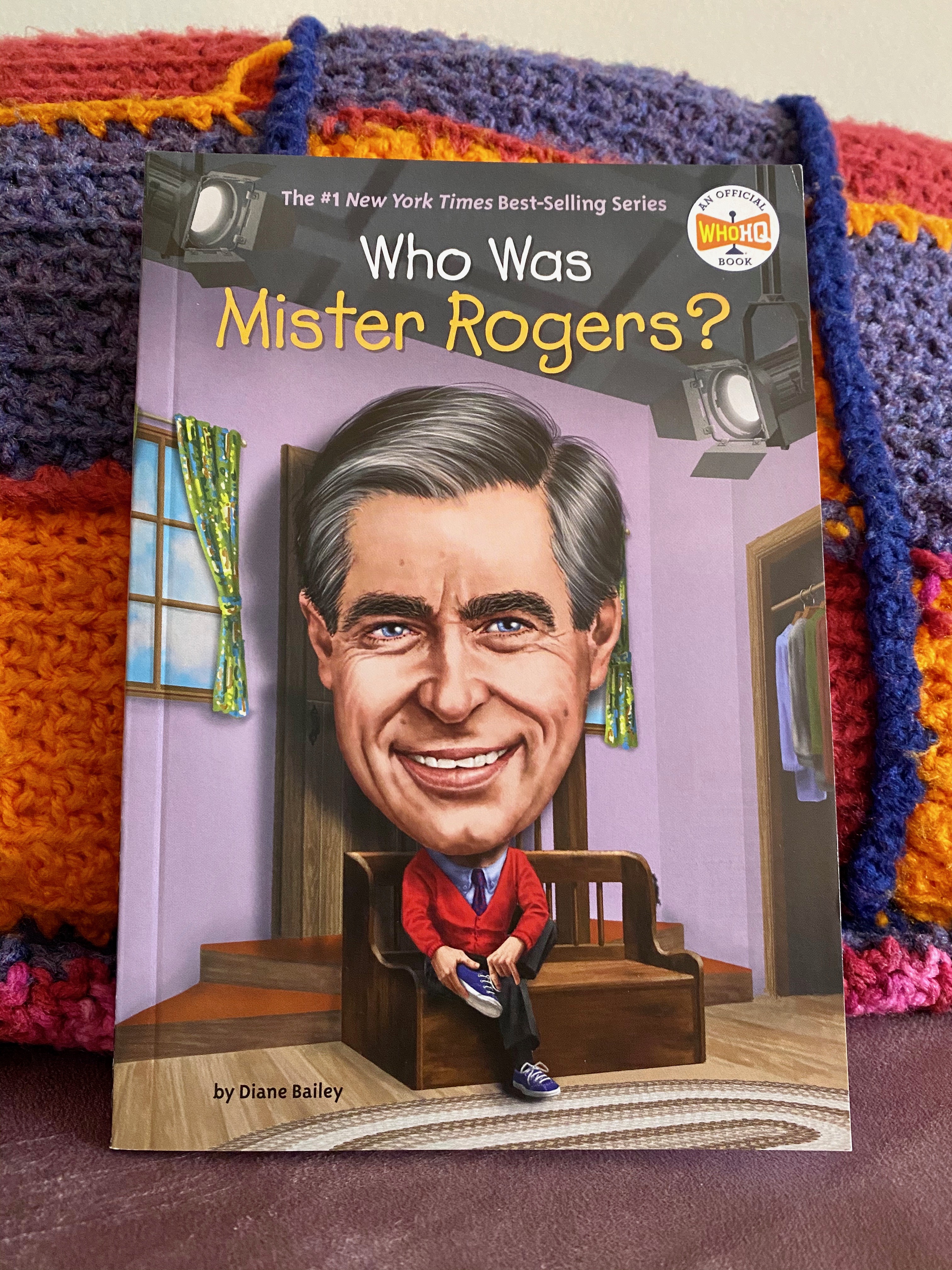
One of the first books my son and I read this year was Who Was Mister Rogers? We read it over the course of several nights at bedtime. Ryan didn’t know much about Mister Rogers. And, I think Mister Rogers only made his way onto Ryan’s radar because of the recent Tom Hanks movie. (We haven’t seen the movie, just the posters and billboards advertising it.)

Because Ryan is a big Tom Hanks fan, due to movies like Toy Story 1-4, Apollo 13, and the documentary film Magnificent Desolation, Ryan became curious to learn more about Mister Rogers.

I grew up watching Mister Rogers. But I didn’t realize what an impact Mister Rogers had on me until Ryan and I read this introductory biography. 

Now, I can acknowledge just how much of my teaching style was influenced by Mister Rogers. 

I always told my kids I loved them. (I referred to my students as “my kids”.)

I told my kids they were special. 

And each year, I acknowledged every student in my class with a customized achievement certificate. Because let’s be honest, not all kids are going to be strong mathematicians or excellent spellers. But every child has a special skill, quality, talent that deserves to be recognized. 

I recognized my kids for their neat penmanship, for reading aloud in a clear voice, for being a responsible line leader. 

As Ryan and I read, “Mister Rogers taught kids an important lesson, that everyone is special in their own way.” 


Chronic? Yes, Unfortunately.

“Chronic congestion.”

No, she wasn’t talking about the 405. 

The physical therapist was talking about my left calf. My calf is, was, the primary source of pain related to my autoimmune disease. For the last few months, the pain has traveled and now extends up into my thigh.

But apparently, what I refer to as a hard knot, or tightness, in my leg, my physical therapist calls “chronic congestion.”

She held my leg up, my foot pointing toward the ceiling as she rubbed and massaged and gave a basic summary of my case to another physical therapist. “She’s got chronic congestion all in here.”

It is chronic. I’ll give her that. My condition began in 2010 when I woke up with a swollen left calf, unable to stand or bear weight or walk for days. I was hospitalized and treated for cellulitis, a bacterial infection doctors believed was the cause of my swollen, red calf. 

But even after my calf regained its normal appearance, even after I could walk and drive and climb stairs, my legs were never the same.

About a year and a half after my hospitalization, I was diagnosed with a rare autoimmune disease called Undifferentiated Connective Tissue Disease (UCTD). It has overlapping symptoms of lupus, rheumatoid arthritis, and myositis without it being any of those diseases. It’s a medical hodgepodge in a sense, and a whole lot fancier way for doctors to say they don’t really know what’s wrong with my legs or what is causing it.

Whatever you call it, it means each day I experience varying levels of pain, fatigue, weakness in my legs with my left leg always worse.

So I completely agree with the chronic part of her statement.

But “congestion”?

I hear congestion, and I think of a stuffy nose. 

Or I think L.A. traffic and planning a visit to the Aquarium of the Pacific on a Sunday, a day the 405 is generally less congested.

It’s been weeks since the physical therapist used that term, and I can’t stop thinking about it – “chronic congestion.” 

It bothers me. 

Because, what can we do about chronic congestion?

City planners haven’t figured it out when it comes to southern California’s freeways.

And, as of right now, doctors and physical therapists haven’t figured it out when it comes to my legs.


Hoping For Courage

What is going on inside these legs?

Without going into details, I have a medical test/procedure scheduled later this week. 

Here’s what you should know:

I’m living with my autoimmune disease for almost 10 years now. In that time, I’ve already experienced this particular test twice. Each time the results were inconclusive. 

The test is being done a third time mainly for comparison purposes. It’s been a few years since the last test, and doctors are interested in seeing if any changes show up this time around. There are some concerns that my left leg may be worsening. If so, this test may give some clues about what’s going on in my leg.

Aside from the fact that I don’t want to have this test in the first place, I’m not sure what to think about this test and its possible results.

Here’s the dilemma:

Do I want the test to reveal something? To pinpoint a reason why my leg pain is increasing and my leg strength is decreasing? Would this perhaps give doctors a lead, a clue, in terms of more effective treatment? 

But what if my leg does test worse? What would that mean? 

Or, do I want this test to be like every other test I take – indeterminate? Within the boundaries of normal-enough? 

Which is reassuring I guess, but on the other hand it also means it provides doctors (and me) no answers, no explanations, no reasons why I feel the way I feel.

In reality the only thing I can realistically hope for is courage. Courage during the test. And courage after the test. In whatever form I may need it.