Reach for the Stars

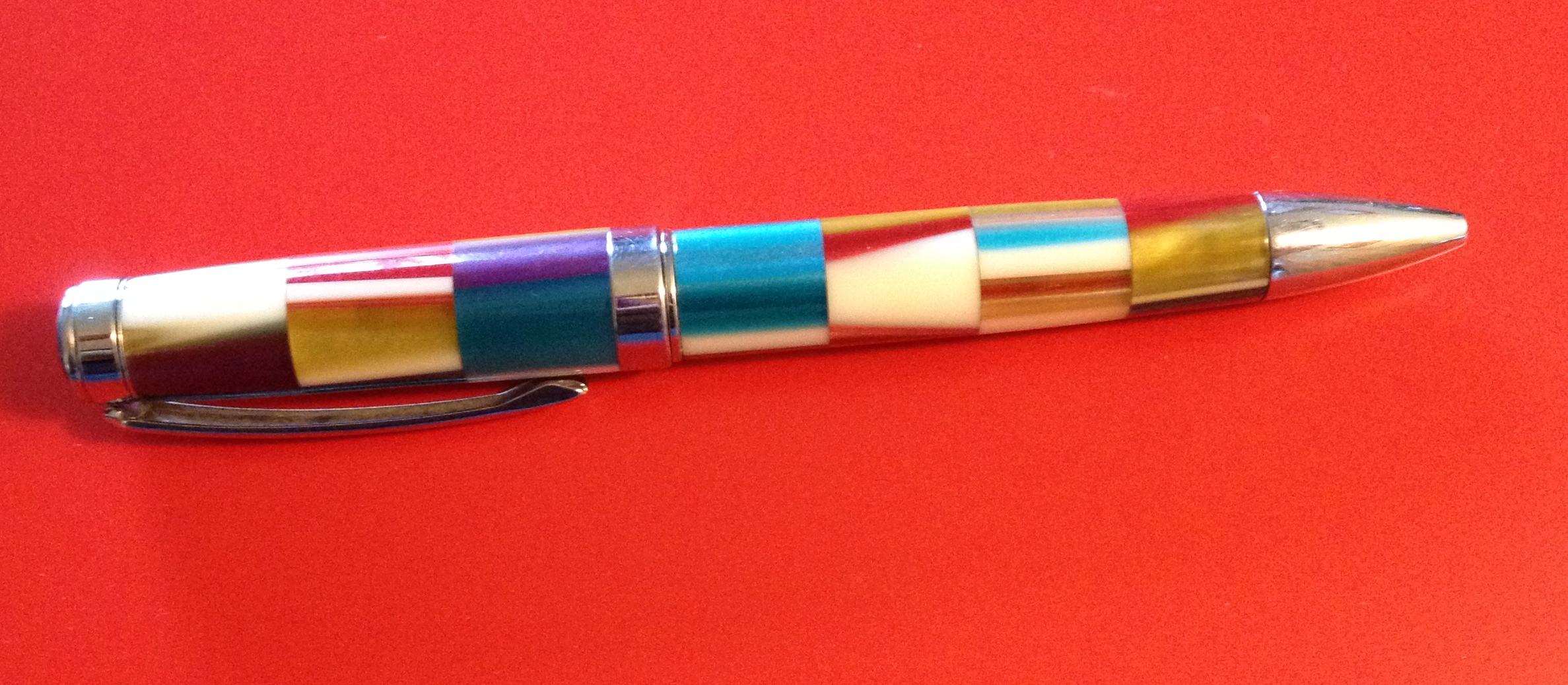
Challenger patches (photo by Wendy Kennar)

It happened 30 years ago tomorrow.  I was nine years old and in the fourth-grade. 

The space shuttle Challenger launched from the Kennedy Space Center with a most famous astronaut on board — Christa McAuliffe, the first teacher in space.

Our class was supposed to have been in the auditorium to watch the shuttle launch.  But, noisy boys had made us late.  And by the time we got downstairs, it had already happened.

As we made our way into the auditorium, a kindergarten teacher was running in from the other door.  She was yelling, “It blew up.”  I was confused and didn’t understand her outburst.  And then, I’m embarrassed to admit, that my first thought was confusion about her concern.  In my mind, she didn’t know any of the astronauts, so why was she so emotional?

Surprisingly, it was this accident that sparked my interest in space.  I became intrigued, curious, passionate, and not fearful.  Even though I had seen the worst, had seen how lives could be lost, I wanted to be an astronaut.

Christa McAuliffe had showed me I could.  She was a “regular person.”  A teacher.  A mom.  Someone who was a good person and liked learning.  That was me. 

I wanted to do what she wanted to do.  I wanted to go into space and share what I learned with others.  I wanted to share a message of peace and hope and beauty and wonder with those back on Earth.

I saw space flight as an opportunity for humans to get a “do-over.”  To try and do things right, to fix the wrongs and mistakes that had been made on Earth. 

Looking back, I’m honestly quite surprised that I wanted to be an astronaut for as long as I did.  (It was my goal until high school, when I volunteered in an elementary school classroom and had a special connection with the kids I helped.  Then I became passionate about teaching). 

Christa McAuliffe used to say, “I touch the future.  I teach.”  And I did that for twelve years. 

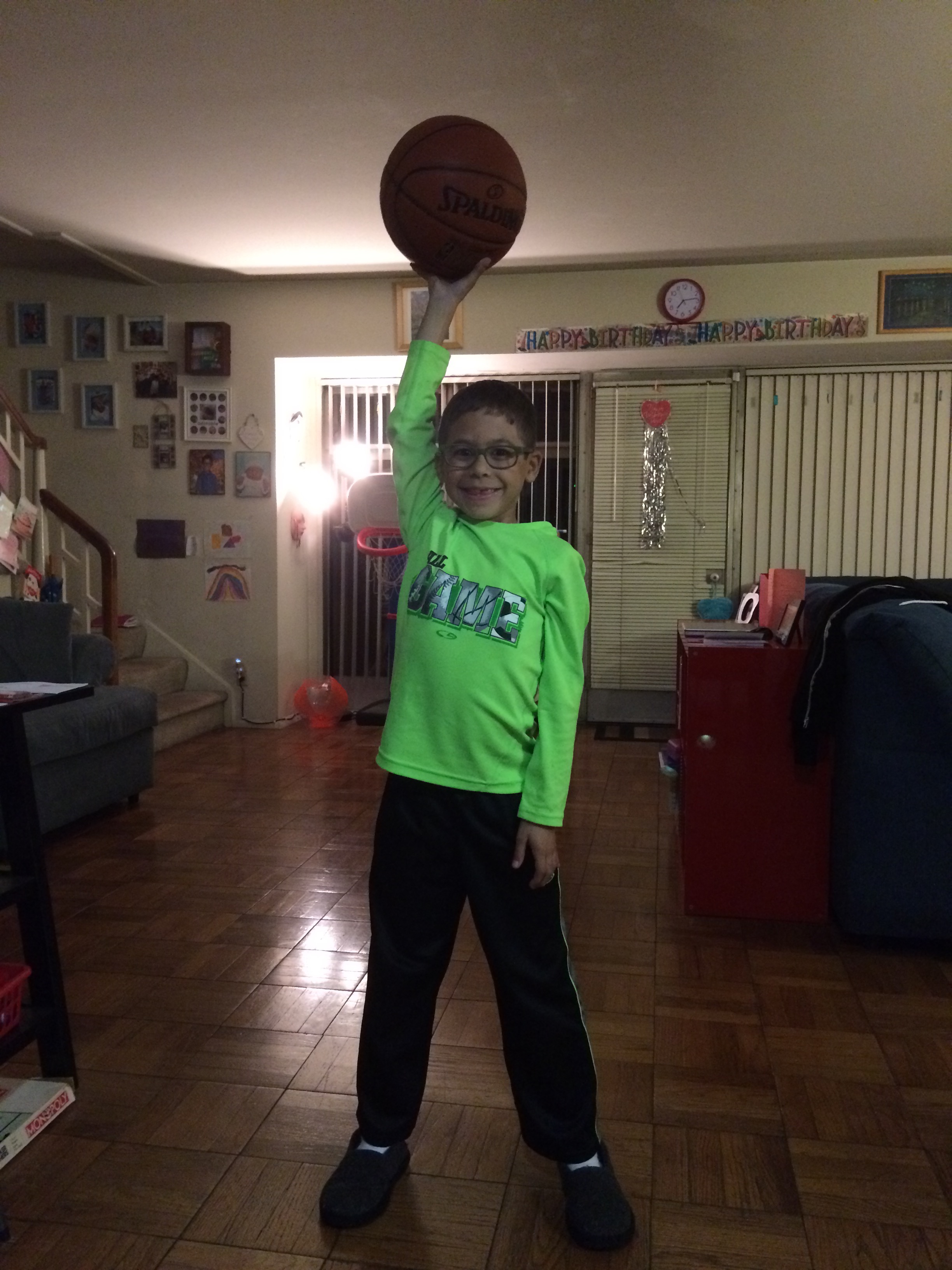
But now it’s my son’s turn to dream.  To tell me he wants to walk on the Moon.  That he wants to do a Michael Jackson-style moonwalk on the Moon.  And I tell him to go for it.  I tell him that he can do whatever he wants to do.  I tell him I believe in him. 

Because that was Christa’s other message — “Reach for the stars.”


7 Lessons I’m Learning From the Ocean

Cambria (photo by Wendy Kennar)

This week, I’m pleased to share that one of my personal essays has recently been published online at Breath and Shadow.  On our trip to Cambria last year, I was inspired by what I saw and what I felt and the result is my personal essay, “Seven Lessons I’m Learning From the Ocean.”  Here’s the link:

http://www.abilitymaine.org/breath/win16e.html

5 Reasons Why The Space Shuttle is So Special To Me

family picture with Endeavour

Last week, my family went to the California Science Center to see the space shuttle Endeavour and to wander through the exhibit, Journey to Space. It was one of the things my son wanted to do during his winter vacation, and even though it involved a lot of walking and standing for me (which translates into a lot of pain), I was happy to go.  I’m just as captivated by the space shuttle as my son.  (In fact, I wrote about one of our visits to Endeavour on my previous blog.  Here’s the link in case you missed it:  http://wendykennar.blogspot.com/2014/04/awestruck.html)

This time, I was no less awestruck than I was then.  In fact, I just keep thinking about why I have such a powerful, spiritual, reverential experience when I visit the space shuttle.  And, here’s what I’ve come up with.

  1. It is still benefitting us.  Things we commonly use today were invented, or refined, for human spaceflight. (Velcro).  Things we rely on today are possible because of our trips into space. (GPS – Global Positioning System).  Things we have come to regularly expect are achievable because we have ventured into space. (Detailed and specific weather predictions).
  2. It shows us that cooperation is powerful.  The space shuttle was not the result of one person’s master plan. It required feedback and input from a variety of individuals and corporations.  It couldn’t have been designed, and constructed, had not all the involved parties figured out some way of working together to create something bigger than any one of them.
  3. It speaks to our innate curiosity.  Human beings have a desire to explore, to learn, to see what they have not seen before.  Human space flight, in my opinion, has been the way we have attempted to better understand our planet and our place within a much larger context. 
  4. It represents the best of humankind.  The space shuttle represents the best qualities of our species.  Our intelligence, our creativity, our ingenuity, our determination, our persistence, our inventiveness, our hunger for knowledge.
  5. It’s hopeful.  Because the space shuttle is a physical representation of the best of humankind, I see it as a symbol of possibility and hope.  Sometimes it seems as if some of the inhabitants on our planet are setting us up for doom, despair, and destruction.  (It’s the reason why I can’t watch the nightly news before bed).  But then I see the space shuttle.  And I see goodness.  I see positivity.  I see possibility.


Tales From a Shy, Quiet Girl

kindergarten picture Wendy Kennar

My Kindergarten School Photo

“Be regular and orderly in your life,

so that you may be violent and original in your work.”

– Gustave Flaubert

I first read that quote during my November writing retreat in Lake Arrowhead.  I have found myself coming back to that quote, re-reading it, and recognizing that it directly applies to my life.

I’m the girl who has always been described as “quiet.”  In fact, I used to be so shy and quiet, that my kindergarten teacher, Mrs. Wilson, asked my mom if I ever spoke at home.  For a while, I didn’t speak at all in my kindergarten class.  I was listening, I was watching, I was learning.  I just wasn’t speaking.

Obviously that changed since I was a graduation speaker at my elementary school, junior high school, and high school graduations. (In fact, Fairfax High School held their ceremony at the Greek Theatre). I was a teacher for twelve years, a career that required me to get up in front of a group and speak.  Every day.

Yet, I still consider myself a relatively shy and quiet person.  I don’t usually start conversations with random strangers.  I don’t always know how to extend beyond small talk a conversation with someone I’ve just met.

And I am most definitely a person who likes order and routine.  One day a week, I pay my bills.  One day a week, I go grocery shopping.  Each day, I write myself a list of things to do.

But, in my writing, I’m more uninhibited.  I’m more candid about what’s happening in my life. 

Last year, I wrote about the effects chronic pain has on my sex life.

http://www.xojane.com/sex/sex-drugs-and-rheumatology

Last year, I wrote about my mixed-race family.

http://www.brainchildmag.com/2015/10/just-supporting-a-detail-that-my-son-is-of-mixed-race/

Last year, I wrote about envying my son and my mom and the passion with which they live their lives.

http://mamalode.com/story/detail/a-life-of-passion

Last year, I wrote about parenting while living with an “invisible disability.”

http://muthamagazine.com/2015/11/the-a-word-wendy-kennar-on-parenting-with-an-invisible-disability/

Those are just a few of my published personal essays from last year.  Not too shabby for a shy, quiet girl.  Makes me smile and wonder what I’ll write about this year.


Same List, Different Year

resolution list (photo by Wendy Kennar)

It’s that time of year when everyone seems to be talking about their resolutions; the list of promises and goals they’re hoping to achieve in the year ahead.

As I was going through some old papers recently, I came across a list of resolutions I had written for the year 2000.  I had organized my list into two parts — “Resolutions for 2000” and “Things To Do in 2000.”  Here’s what you should know about me back then:  In 2000, I was 24 years old, had been married for one year, was working part time at the Beverly Hills Public Library, and was still an undergraduate at California State University Northridge. 

Here’s what you should know about me going into 2016:  I’ll be turning 40.  I’ll be celebrating my 17th wedding anniversary.  I’ll be the mother of an eight-year-old son.  I’ll be working towards furthering my freelance writing career.  And, I’ll be doing all that while living with, and trying to manage, my autoimmune disease.

Although my life circumstances have changed, the list of resolutions I wrote on the verge of 2000 seems just as relevant for 2016.

Reward myself more.

Improve my self image, be less self-critical.

Continue my writing.

When I first found this paper, I wondered what it said about me that, 16 years later, the same list of resolutions still applies to my life.  And upon reflection, I think it just speaks of my consistency of character and values.  My resolutions are more like life-long pursuits rather than short-term goals.  As such, they are things I can’t ever really check off a list as “done.”  Instead, they are goals and objectives that are always “in-progress,” in one way or another.

Those are among my resolutions for 2016.  I’d love to hear about yours in the comments section.

And to all my readers, I send my sincerest wishes for a joyous and safe new year!

The Simplicity of Christmas

Ryan's Christmas gift (photo by Wendy Kennar)

Last year, when Ryan was six-and-a-half, he made his first request from Santa.  He wanted a DVD, and was ecstatic when he woke up to find that in exchange for a glass of milk and a plate of cookies and carrots, he was left a copy of Frozen.  This year, Ryan has asked for three items (two basketball-related, one a book).

For my son, the holidays are relatively simple.  He does what he’s supposed to do, he continues to be a good listener, he tries his best at school, and he earns a spot on the “nice list.” 

And a spot on the nice list means he wakes up Christmas morning to find the special items he requested wrapped and waiting for him under the tree. 

I love the simplicity of Christmas for Ryan.  The direct cause-and-effect relationship that makes so much sense.  Because it seems like so much in life (my autoimmune disease, random acts of violence) make no sense and have no logic associated with them.

But on Christmas morning, regardless of what is happening around the world or in my body, I will wake up knowing that my son is happy and healthy, and has been justly rewarded for another year of niceness.

More Than Meets the Eye

handicapped spot (photo by Wendy Kennar)

I don’t consider myself a particularly loud, out-spoken person.  I have my opinions, of course, but generally find it easier to write them than to say them. 

Lately, several people in my life have been encouraging me to obtain a disabled person placard to use when I’m out and about and parking far away.  I strongly resist it, and though I know all these people mean well and are just trying to look after my own well-being, I just can’t make myself get one of those placards.  So I did what I usually do — I wrote about it.  The essay was published online at Role Reboot; here’s the link: 

http://rolereboot.org/life/details/2015-12-why-i-dont-hang-a-disabled-person-placard-in-my-car/

And I’m hoping that after reading this piece, you may think twice before prematurely judging someone who parked in a handicapped spot even though he/she doesn’t “look” handicapped.

Holiday Wishes

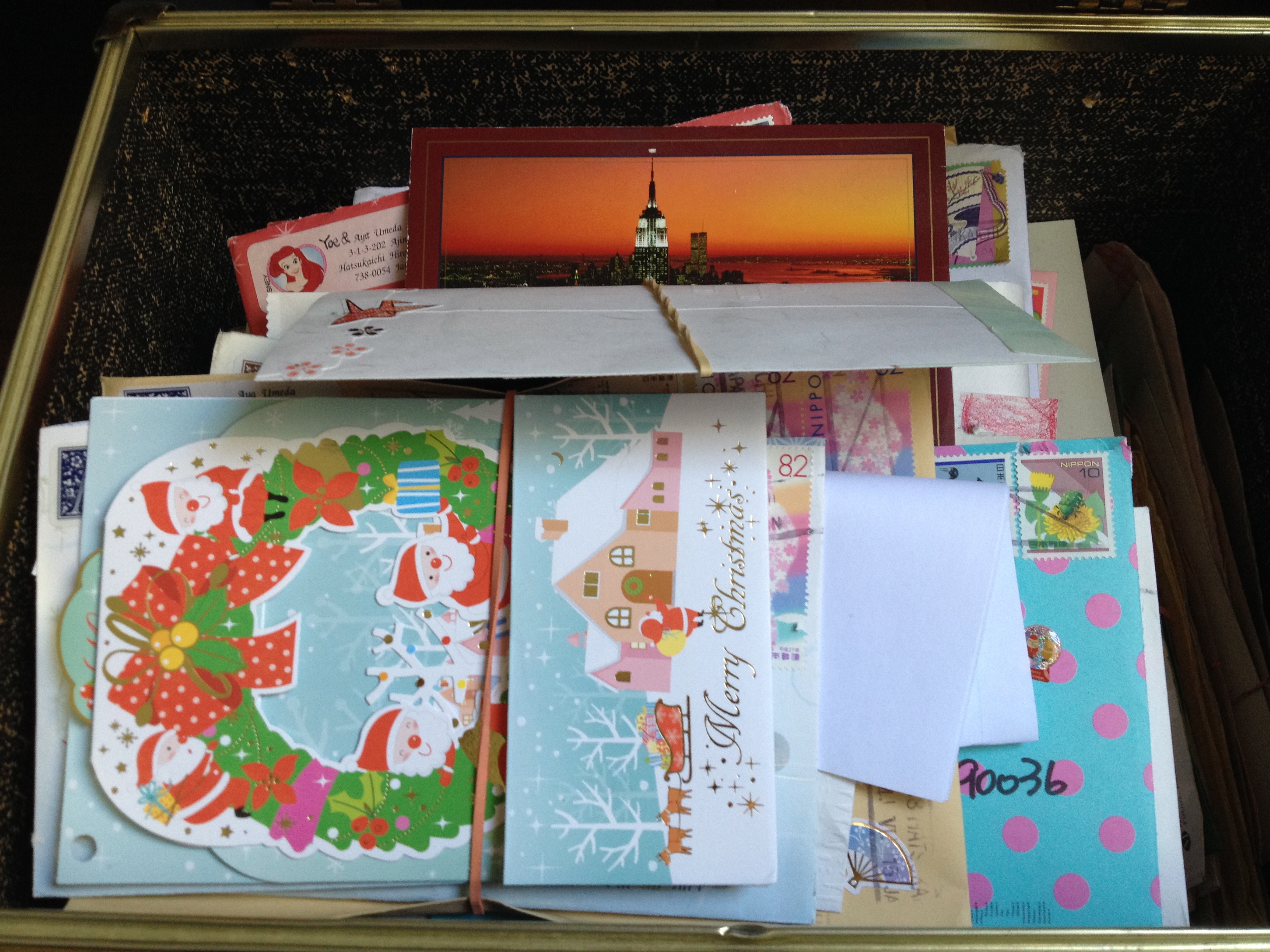
holiday cards (photo by Wendy Kennar)

This holiday season I’m doing something I haven’t done since 2007.  I’m sending out regular holiday cards. 

Since my son was born in 2008, our holiday cards have featured a photo.  Not those generic ones that other families mail out; those super-glossy ones that leave no space for a personal hand-written message.  Instead, I used to send out cards that had an insert for a 4×6 photo.  Most years the picture featured my son.  A few years it was a family photo.  And inside each card, I wrote a specific message to each recipient.

This year, though, is different.  I’m mailing out regular holiday cards, for several reasons.

First, I got to wondering what happened to the cards after the holidays.  I know many of the ones we’ve received wind up in the trash.  And the thought of my son’s picture in someone’s recycling bin made me really sad.

Secondly, not using a photo means I save myself several steps (and some money).  I don’t have to select a specific photo to be used in our cards.  I don’t have to order the photos from Walgreens and then go pick them up.  And, I don’t have to worry about fitting the photo inside the insert of the card.

Third, the people closest to me already know what my son looks like.  If they haven’t seen him in person, they’ve seen pictures of him (either when we meet, or through email). 

I’m still writing messages inside each card.  I’m still decorating the envelopes with holiday stickers.  And I’m still sending wishes for a happy holiday season.

And really, that’s all that matters.

Holidays, Through the Eyes of My Son

menorah (photo by Wendy Kennar)

  Because I’m a writer, I’m constantly taking down notes.  Writing down things that I want to remember, things that I want to write about, things that resonated with me in some way.

  I recently found one such note I wrote back on May 11th of this year.  We were talking about the winter holidays during our family dinnertime.  My son was asking why Hanukkah is spelled so many different ways, and I explained to him that it’s really a Hebrew word that we’re translating into English so there are variations.  (He then told me that his preferred spelling was “Hanukkah.”)

  We were comparing and contrasting the holidays, talking about what they have in common and what makes each holiday unique.  And Ryan surprised me with what he said.  He asked me to spell Kwanzaa, and he counted out the letters on his fingers.  7.  Then he asked me to spell Hanukkah, and he counted out the letters on his fingers.  8.  And my seven-year-old son came to the conclusion that Kwanzaa lasts for seven nights because it has seven letters, and Hanukkah lasts for eight nights because it has eight letters.

  I loved the simplicity of that explanation.  Especially because there’s so much about holidays and religion that I don’t understand at all.  For instance, why does Christmas occur each year on December 25th, but Easter varies, and sometimes falls in March and other years during April?  Why does the start of Hanukkah vary so widely?  (Remember the year it started during Thanksgiving week?  In our house, we were eating turkey and latkes).

  At any rate, as the days seem to get more frenzied, parking lots more crowded, and lines longer, try to keep in mind that it really is about the simple things — being with your family and loved ones and enjoying the moment.

A Job I Didn’t Want

thanksgiving sign (photo by Wendy Kennar)

Every Friday morning I volunteer in my son’s second grade classroom.  For the most part, it’s an hour to an hour-and-a-half of paperwork.  I help his teacher by stapling together homework packets for the coming week.  I cut patterns.  I staple language arts packets.  I put papers inside sheet protectors.  I rip out pages from math books.  It’s not particularly challenging work, but it can be time-consuming for a teacher, and I’m happy to help.  I’m in a corner of the room, doing my work, while my son is at his desk doing his work.

Last week, Ryan’s teacher also asked me to “check” the homework packets the students had just turned in.  She told me not to worry about checking if each question was correct or not.  I was mainly checking to see if the worksheets were complete.  And I get it, — homework isn’t supposed to be the primary way a child learns a skill or demonstrates mastery of that skill.  Hopefully, a child has completed homework under an adult’s supervision (or at the very least, an older sibling), so any errors or misunderstandings have already been caught, explained, and corrected.

But last week the kids were also supposed to write a paragraph about what they were thankful for.  This paragraph was to include a topic sentence, at least three supporting-detail sentences, and a concluding paragraph.  Ryan wrote about being thankful for our planet Earth. 

Asking a second-grader to write a paragraph is a big deal because it’s a relatively new skill.  And a teacher shouldn’t just be reading for structure but for content.  What a child chooses to write about can really provide glimpses into their personalities.  And with twenty-four children in the class, it isn’t always easy to get to know your students the way you’d like to.  Those paragraphs should have been checked and edited and not just given a cursory once-over by me.  

Almost a week later, I’m still bothered by the fact that I most likely will be the only set of eyes looking at those paragraphs.  It made me very uncomfortable that my son’s teacher (a woman who I think is a fine teacher) so carelessly passed over this important task to me, a parent volunteer (who just happens to be a former teacher).