March 1, 2013. My last day as a public school teacher.
“ ‘Can you still teach?’ ”
‘Kind of,’ I answered.
‘You either can or you can’t. We can’t continue with this process if you can still teach.’
It was November 2012, and I didn’t know how to respond to the CalSTRS (California State Teachers‘ Retirement System) representative sitting across from my husband and me.
‘Can you still teach?’
There was a part of me that could still teach, that still wanted to teach. I’d only been teaching for twelve years. I wasn’t supposed to be looking into retirement this soon.
But this wouldn’t be a traditional retirement. This would be a ‘retirement due to a disability.’
Could I still teach? ”
The words above are taken from “Could I?, Should I?, Would I?” a personal essay that was recently published as part of Amsterdam Quarterly’s twenty-ninth issue “Choices.”
You can click here to read more about the story behind my decision to retire from my teaching career back in 2013.
A young child might think a non-green tree is weird.
Let me set the scene.
A virtual appointment with a neurologist, a man I have never met before. This was a doctor my rheumatologist and my neurologist both hold in high regard and wanted me to meet with. For a second opinion, for a different perspective, for a new set of eyes to look at me, my medical history, my test results.
He asked questions, I answered. He looked at my legs over a screen. He asked me to stand and sit and squat and tip toe and balance on one foot. Some things I could do, some I couldn’t.
And after all that, this doctor looked at me across a screen and said, “It’s strange.” (In all fairness, this doctor did refer to my symptoms and labs as strange rather than me.)
I momentarily bit my lip and replied, “I’ve heard worse. Usually I hear the word ‘weird.’ “
This doctor chuckled and said, “Weird works.”
And then I finally did it. I finally had an answer for a doctor in the moment.
“No, weird doesn’t work,” I began. “Because nobody knows what to do with weird. No one knows how to treat weird. No one knows how to help weird.”
A thirty-minute initial consultation with no answers. The doctor needs more time to review my medical history. I need to contact him after an upcoming ultrasound, and then we’ll set up an in-person visit for him to look at and touch my leg.
In the meanwhile, I’m left feeling despondent.
And still with pain in my leg.
You can click here to read “The Hard Realities I’ve Faced After My Doctor Told Me, ‘You’re Just Weird’ “ back in 2018.
You can’t find all answers in books. Ryan (age 4) and I at the public library.
“How did you get it?”
My son has asked me that question many times during the ten years I’ve been living with my autoimmune disease.
It doesn’t get any easier to answer, because there really is no answer.
And like most things in my life, things that are hard to understand, things that are hard to make sense of, I try to sort them out by writing about them.
Click here to read my personal essay, “Questions without Answers” recently published at ChronicallyLit.com.
I’ve wanted to add this impressive book to my library since I first read about it and then saw it in my local Barnes and Noble.
But – the book was $50. It was big and heavy. It took up a lot of space.
All that was true. And still true.
Except for the $50. I found the book on sale, and being the bargain-shopper I am, bought myself a well-deserved present.
But then Mr. Souza’s book arrived, protectively wrapped in cellophane, and I hesitated to open it.
I didn’t want to devour the book all at once. I wanted to savor it, the way my husband and I used to leisurely share a chocolate soufflé at our favorite French restaurant.
So that’s what I did.
Over the course of the last few months, I’ve looked at a few pages at a time. Many were images I had never seen before. Many were images that just made me thankful this man and his family were living in the White House when my son was born. In fact, my twelve-year-old son and I looked at most of the book together.
This is a book that will remain in our family for generations to come.
This is a book of proof – we, as a country, are capable of “this” – opportunity, diversity, acceptance, respect, greatness.
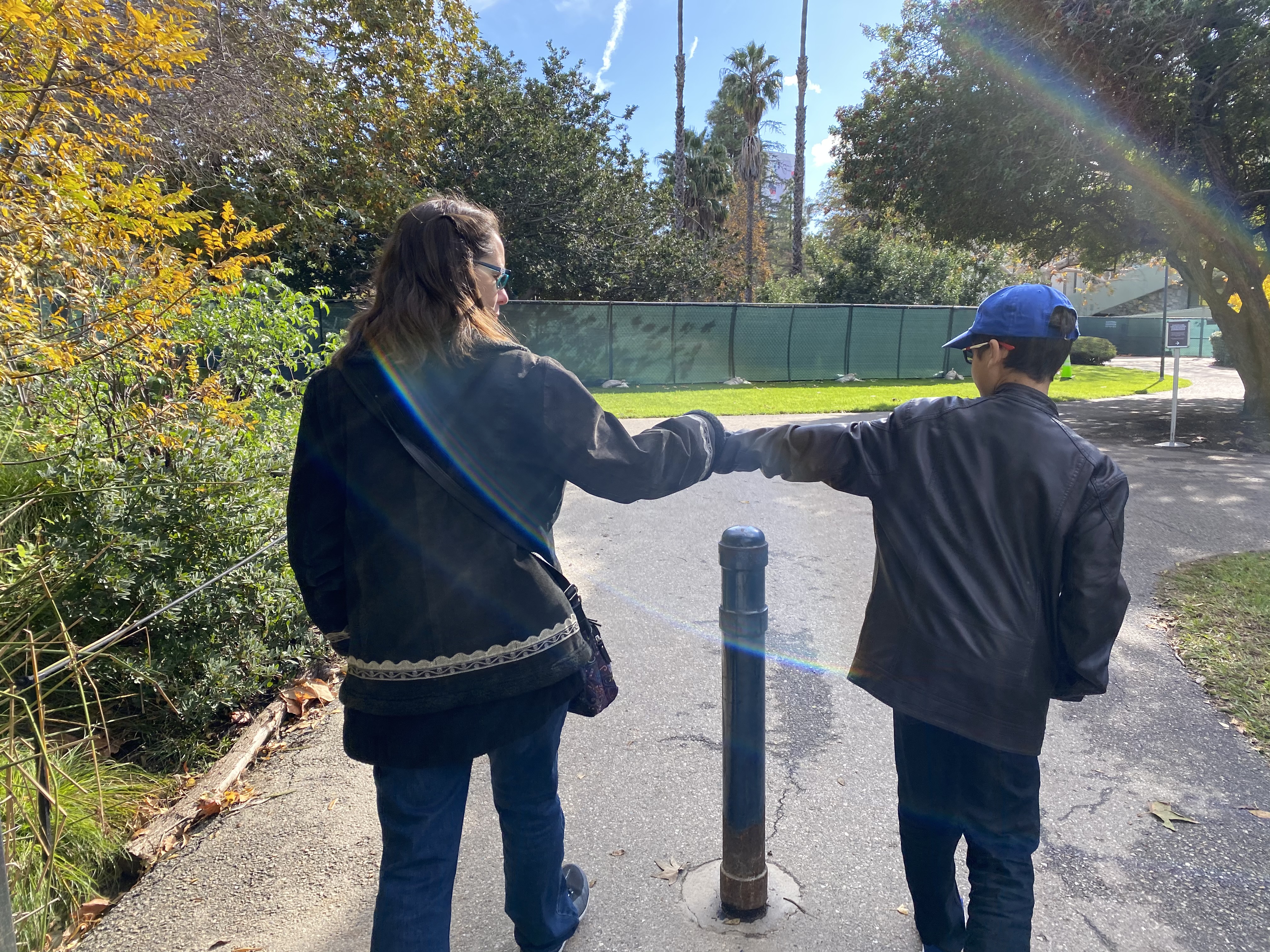
I don’t let pain stop me from enjoying walks with my son. LaBrea Tar Pits
“I had spent close to two hours, sitting outside at my favorite coffee shop, writing. It was my idea of a perfect morning. As I walked the block-and-a-half to my car, I had a nagging feeling I had forgotten something. I paused on the sidewalk and checked my bag. Keys, glasses, wallet, laptop, file of papers. Everything was there, but still I felt something was missing. I took a few more steps, and abruptly stopped on the sidewalk.
I knew what it was.
Pain was missing.
I wasn’t hurting.
It was a jarring feeling. The absence of pain. But instead of feeling euphoric, I felt intensely sad.
I walked to the car in shock.
This is what it feels like not to be in pain. This is how other people usually feel. This is how I used to feel.
I had forgotten what it felt like not to be in pain.”
The passage above is taken from my recently published personal essay, A Painful Reminder. By clicking here, you can read the entire essay online in issue 81 of Kaleidoscope: A Season of Hope.
Thank you for serving as an inspiration and a role model.
May we make you proud.
(Written and first published on this blog in May 2019)
It began like this:
I heard some things.I read some things.I liked those things.I learned some more.And now I, like countless others, proudly declare my admiration and respect for Supreme Court Justice Ruth Bader Ginsburg.
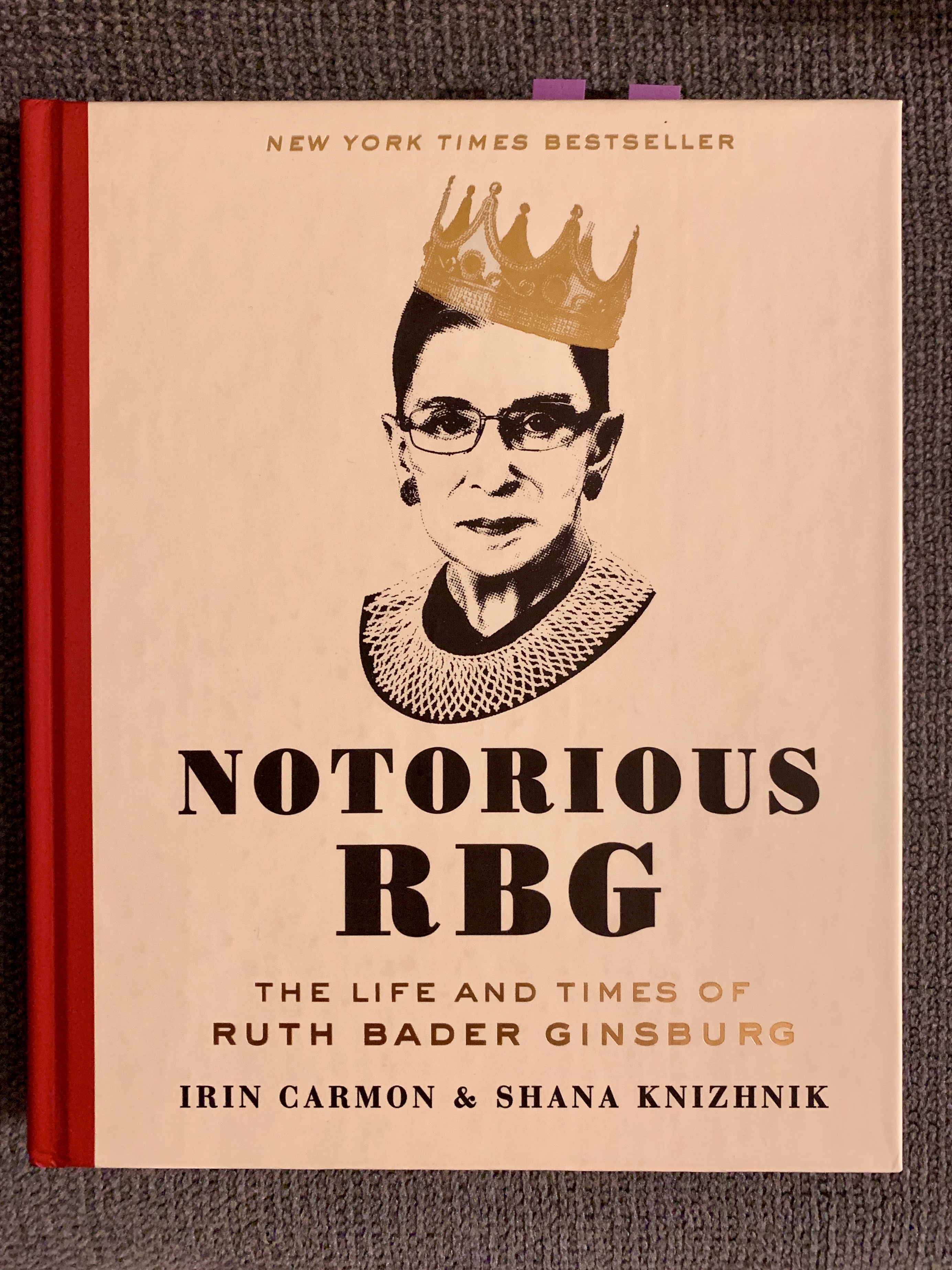
Back in March, my husband and I visited the Skirball Cultural Center to see the exhibition Notorious RBG: The Life and Times of Ruth Bader Ginsburg.I was in awe of all this remarkable woman has accomplished, and I was astounded by all that I didn’t know.
We then watched the RBG documentary, and my interest continued to grow.
You can read the book, watch the film, and learn the facts.But here are a few things that are staying with me:
This woman doesn’t stop.No matter what.Two bouts with cancer.The death of her husband.She still keeps going, keeps fighting.Going to work, fighting for equality.
Looks can be deceiving.Upon first glance, you may think RBG is just a small little woman.Don’t be fooled.She’s powerful in mind, body, and spirit.(The woman works out with a personal trainer twice a week.)
Theirs was a beautiful marriage, a union of true partners.(RBG’s husband, Marty, passed away in 2010. They were married for 56 years and knew each other for 60.)
RBG always sees the bigger picture:“I think gender discrimination is bad for everyone, it’s bad for men, it’s bad for children.Having the opportunity to be part of that change is tremendously satisfying.Think of how the Constitution begins.‘We the people of the united States in order to form a perfect union.’But we’re still striving for that more perfect union.And one of the perfections is for the ‘we the people’ to include an ever enlarged group.”
One of my favorite fiction authors is Katherine Center. I eagerly await her books. But then a funny thing happens. Once I buy her newest book, I hesitate to start reading it. Because once I start reading, it’s hard to stop. And if I read too quickly, I’ll finish the book too quickly.
Ms. Center’s latest novel, What You Wish For,was no different. It made me smile. It made me laugh. It made me cry. It made me bite my lip. And it made me look up George Michael’s “Freedom! ‘90,” and play the sample on the iTunes store. (page 234, if you’re curious)
This week, allow me to share some of my favorite passages with you:
“Joy is an antidote to fear. To anger. To boredom. To sorrow.” “But you just can’t decide to feel joyful.” “True. But you can decide to do something joyful. You can hug somebody. Or crank up the radio. Or watch a funny movie. Or tickle somebody. Or lip-synch your favorite song. Or buy the person behind you at Starbucks a coffee. Or wear a flower hat to work.”
You really have to read the description of the school library (page 107) to become fully enchanted, but meanwhile I’ll share this bit with you:
“I wanted to make sure that if kids felt an impulse at any moment to pop by the library, there’d be nothing to stop them. It was the best way I knew to turn them into readers: to catch those little sparks when they happened and turn them into flames.”
“I’m not happy because it comes easily to me. I bite and scratch and claw my way toward happiness every day.” “It’s a choice. A choice to value the good things that matter. A choice to rise above everything that could pull you down. A choice to look misery right in the eyes … and then give it the finger.” “It’s a deliberate kind of joy. It’s a conscious kind of joy. It’s joy on purpose.” “I’m telling you. I know all about darkness. That’s why I am so hell-bent, every damn day, on looking for the light.”
“Life doesn’t ever give you what you want just the way you want it. Life doesn’t ever make things easy. How dare you demand that happiness should be yours without any sacrifice – without any courage? What an incredibly spoiled idea – that anything should come easy? Love makes you better because it’s hard. Taking risks makes you better because it’s terrifying. That’s how it works. You’ll never get anything that matters without earning it. And even what you get, you won’t get to keep. Joy is fleeting. Nothing lasts. That’s exactly what courage is. Knowing all that going in – and going in anyway.”
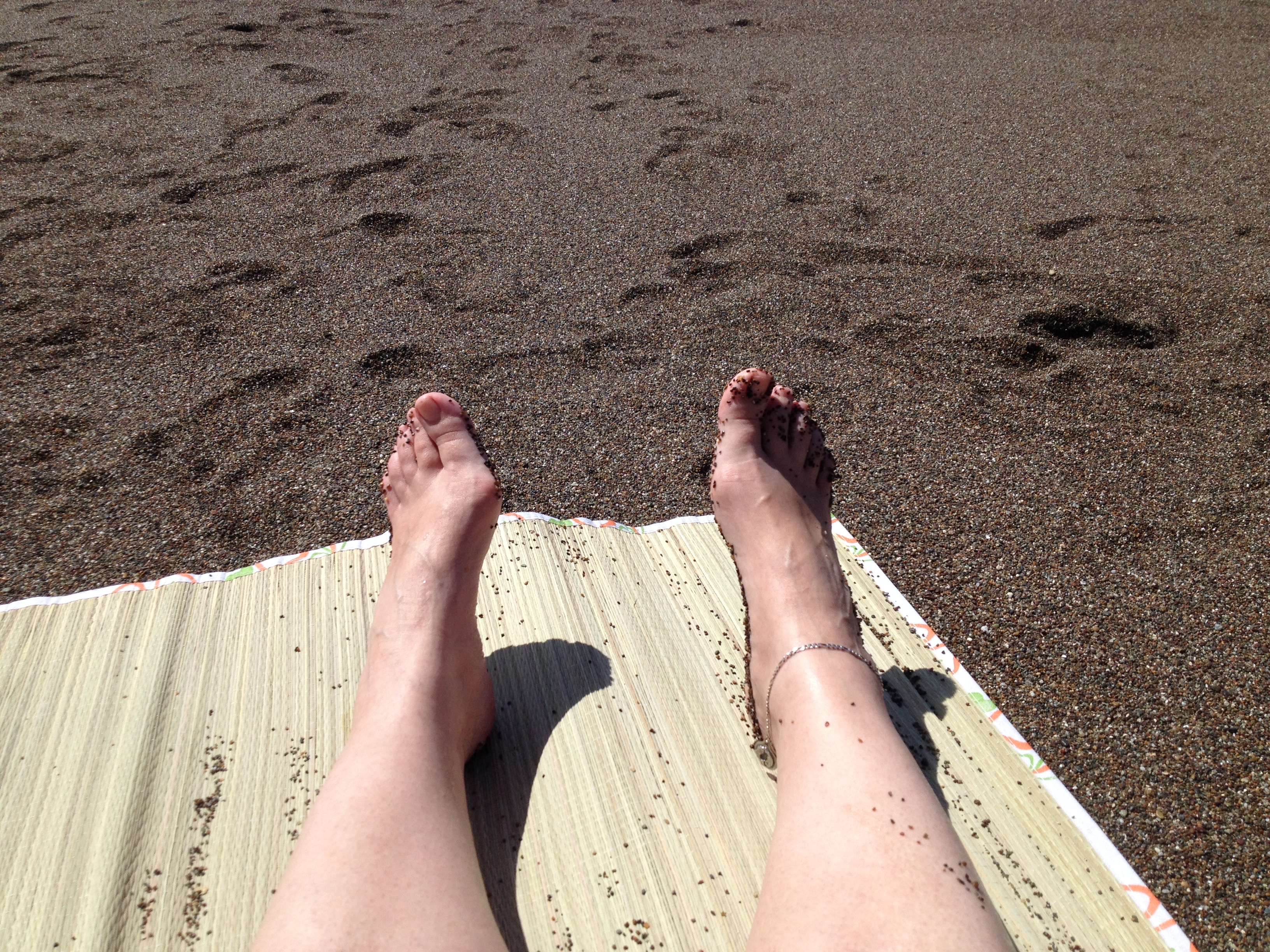
Sometimes it’s hard to look at my legs with gratitude for all they can still do.
September is Pain Awareness Month, a “time when various organizations work to raise public awareness of issues in the area of pain and pain management.”
Have you ever seen that 1-10 pain scale? The one doctors show you, with a range of facial expressions?
I don’t like that scale. And I don’t like being asked to rate my pain.
I remember a visit to a pain management doctor. During the intake, the nurse asked me to rate my pain, right then in that moment. I refused.
I’m usually a very compliant patient, obedient and direction-following.
But, let’s face it. After 10 years of living with my autoimmune disease, I’ve gotten really good at pushing through the pain. I have to. As a result, my pain scale most likely doesn’t look the same as yours. What I now consider a 6, my husband would probably classify as a 10.
Here’s what I can tell you about my pain. It fluctuates. And not just day-to-day. Sometimes hour-to-hour, even minute-to-minute.
In the interest of pain awareness, I thought I’d share just a bit of what my pain is like.
– Sometimes, my left calf is tight. That tight feeling you get before, during, and after a muscle cramp. Except my tightness lingers. For hours.
–Sometimes I don’t have pain. I have a general heaviness. My now twelve-year-old son and I used to play “squish” when he was younger. It was a wrestling-type game that happened either on the floor or on my bed. We’d tickle, but generally he would end up “squishing” me – pinning me with his body. That’s how I feel. Like I’m walking around, cooking dinner, watering my plants, and I have an invisible child strapped across my legs, weighing me down.
–Sometimes I have a throbbing pain. You know that pain you get when you’ve bumped into the sharp corner of a table? You can’t see a bruise, but the area is sore and sensitive and just hurts.
–Sometimes I just hurt. Like I’ve been pricked with needles (and I have been, so I know what it feels like). My calf is sensitive, and I have to roll up my pants so the fabric doesn’t touch my skin.
–Sometimes the pain is rocking-back-and-forth, pulling-at-my-hair kind of pain. Sometimes it just randomly hits. Sometimes I know it’s coming. My calf muscle may begin twitching. On certain occasions, I can even see it moving. It makes me think of when I was pregnant, and my husband and I would joyously watch my stomach move when our son would turn or stretch. There is nothing joyous about this though.
–Sometimes my leg feels twisted somehow. As if someone took my muscle and twisted it, the way you wring out a washcloth. And simple things, like bending to pull something off the bottom shelf of the fridge, or bending down to pick up the mail off the floor, or standing on my toes to reach the colander from the shelf in the kitchen, aren’t so simple for me to do.
And I could go on.
I don’t want pity. Don’t feel sorry for me.
Feel compassion and kindness and patience for everyone you encounter. Because you never really know someone else’s pain.
The first thing most people do when they have any sort of medical-related question is head to Google.
We Google symptoms and try to self-diagnosis. We search for causes and treatments.
Then you get a diagnosis and head back to Google. What does the diagnosis mean? How are others living with this particular illness? What adjustments are needed? What does the day-to-day look like?
That’s what I did, back in November 2011, when I received my autoimmune disease diagnosis.
Except Google didn’t have a lot of resources available. My autoimmune condition is rare, and there wasn’t a whole lot of available information out there.
Click here to be re-directed to TheMighty.com to read my recently published essay, “The Article I Wish I’d Read After My Undifferentiated Connective Tissue Disease Diagnosis.”
Will Rogers Park – one of our summer “field trips”
Each summer since 2007, our family visits the Aquarium of the Pacific. (In fact, this yearly tradition began the day I took my home pregnancy test and learned I was expecting!)
“But this hasn’t been a typical summer. We had to alter the ‘what’ and ‘where’ of our days, yet I’m proud to say, we’re still acting as tourists in our city. We’re just exploring, observing, and visiting outdoor spaces this time.”
The paragraph above is from my recently published personal essay, “Our End-of-Summer L.A. Field Trips” which was recently published at L.A. Parent. You can read it here.
And no, we didn’t visit the Aquarium this year. (Though the Aquarium does now offer outdoor admission.)