A Small, Attainable Luxury

I’ve written before about one of my favorite not-at-home writing spots. (If you missed it, you can click here to read my post, “A Bit of Serendipity.”)

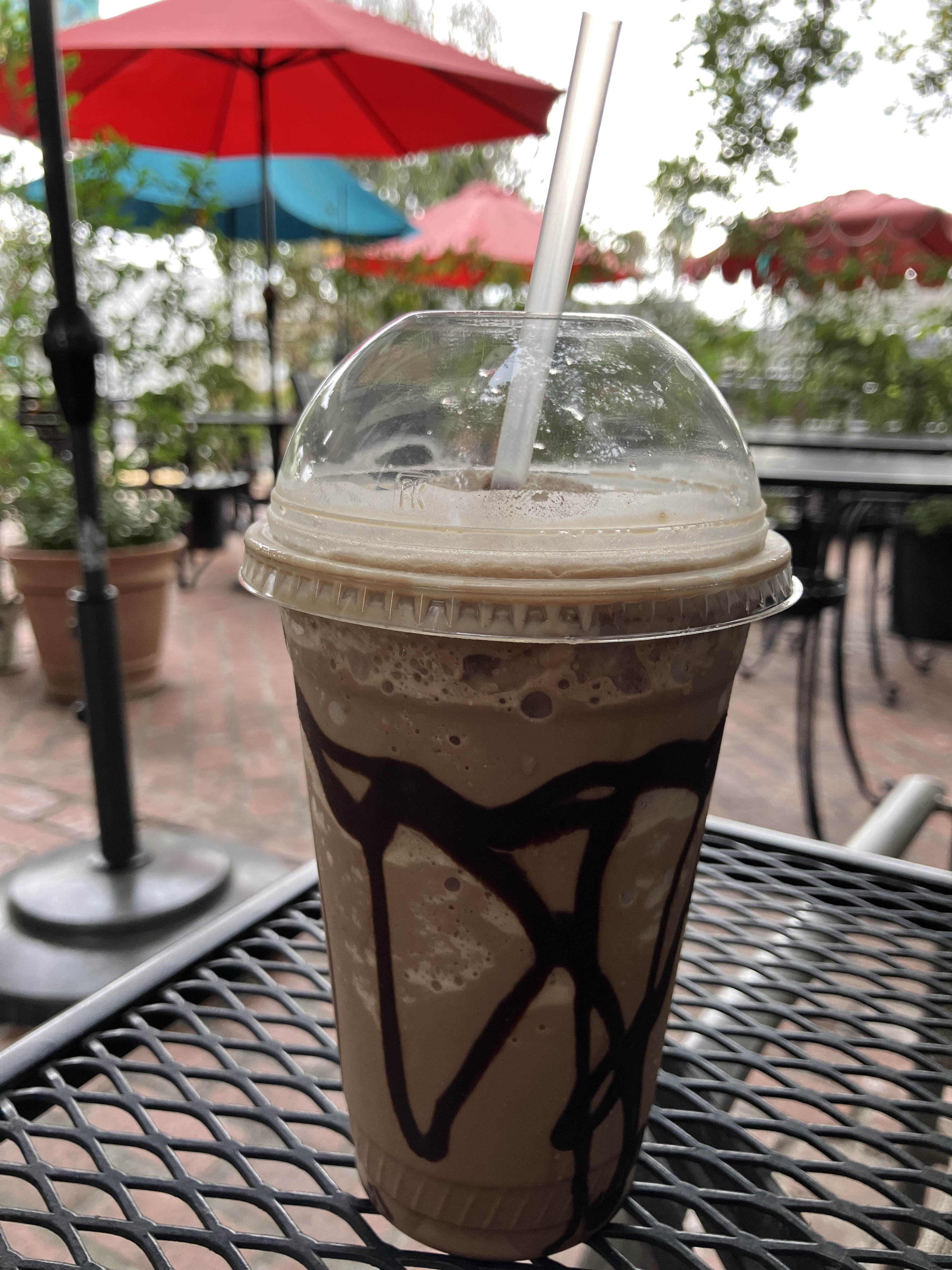
This week, I have a confession to make regarding this cafe: It is here, that I order the most expensive blended mochas I have ever had. 

I’m not sure why these drinks are so expensive, or why they cost more than their counterparts at Starbucks, Coffee Bean, or my local neighborhood indie coffee spot. The price of the beverage is high enough that it initially gave me reason to pause and wonder if I should keep spending my time, and my money, here. 

And the answer is yes

Yes, I most definitely should keep spending my time and money here at this cafe. 

Here’s why:

First off, I enjoy the blended mocha. I like that I can drink it slowly, throughout my writing time, and savor the yumminess. I like the chocolate swirls on the inside of the cup. It makes the drink look fancy, and not like your standard blended mocha. 

I appreciate the “writing cocoon” I create for myself at this cafe. Unlike my local neighborhood cafe, I don’t run into neighbors here. I don’t spend any of my writing time chit-chatting with others. I come here to read and write, and that’s what I do. Distractions are minimal and are generally limited to occasional loud talkers. 

I’m productive at this cafe. I set up my writing space, and I get to work. And by the time I pack up to go home, I am so pleased with my output. 
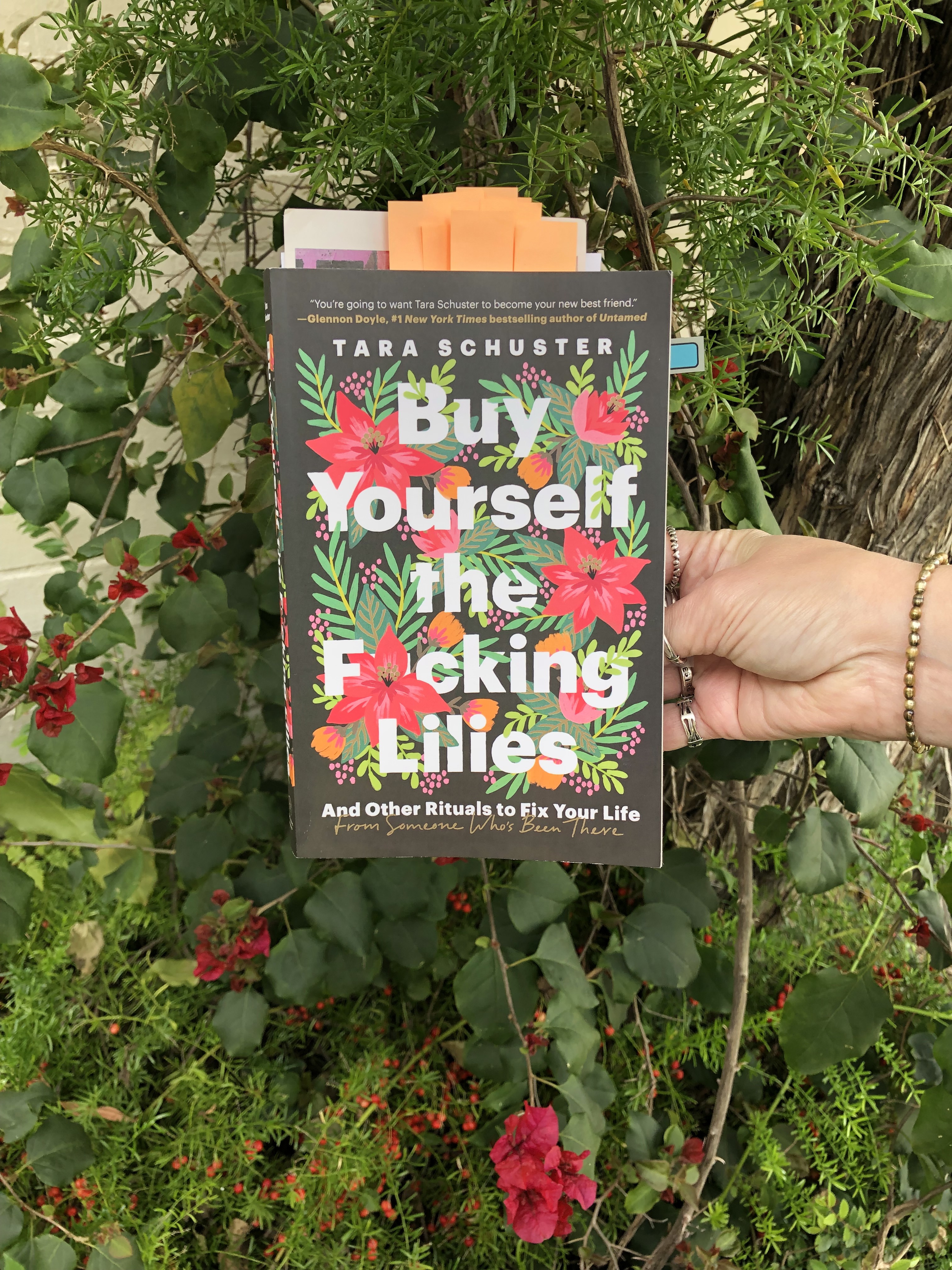
And, there’s something else. Something I read in Tara Schuster’s Buy Yourself the F*cking Lilies

Buy the fucking lilies.  You are worth seven-dollar lilies. You are worth the thing that instantly makes your life better. I’ve heard people talk about their favorite exercise class this way. I’ve heard people talk about an order of guacamole with their tacos this way. I’ve heard people talk about the ten-dollar, ten-minute massage at the nail salon this way. That small, pleasurable thing that makes you feel like you are treating yourself — do not deprive yourself of this. Buy the fucking lilies, take the class, order the guac, get the massage.”

“Above all else: You are worth the lilies. The small, attainable luxury of lilies is not something to stress about, it is not something to deny yourself, it is something to make plans for and embrace. Small things that make you happy ARE a part of taking care of yourself.”

“Seven-dollar lilies won’t ruin you and they won’t make you poor; they will make you stronger. You are stronger when you treat yourself well.”

Readers, what are your “lilies”? In addition to blended mochas, I would add flowers (usually from Trader Joe’s), candles, and books as other “small things” that make me happy. I’d love to know what your “small, attainable luxuries” are. Feel free to share in the comments. 

Please note: I am including a link to buy the book that I’m highlighting this week. If you use my link, I do make a small commission on your purchase at no additional cost to you. I am working with Bookshop.org which also sends a portion of the profit to support local, independent bookstores.

Everyone But Myself

It is absolutely appropriate to judge a book by its cover, especially when it comes to Julie Chavez’s memoir, Everyone But Myself

Between the title and the illustration on the front cover, you have a strong sense of what this book is about. This memoir is another example of an author writing the specifics of her life, and in doing so, making it universally appealing to others who “get it.”

In her note to the reader, Ms. Chavez writes: 

“Although the details vary, I’m not alone in this story. Many women ask the same questions I did: How do I respond to all the asks of the world without losing my sense of self — my interests, my desires, my dreams — in the process? How do I remain whole so that, underneath all the repetitive and the annoying and the boring, I can revel in the privilege and miracle of a perfectly messy life?”

Many moms, and I think women in general, experience this struggle; the need to care for others around us while not caring for ourselves. 

These are just a few of the passages that resonated with me:

“Since those early newlywed days I’d discarded heaps of useless advice and ideas, and I’d also learned the difference between distance and space. Distance grew from the accumulation of tiny resentments, the swallowed frustrations that are an inevitable part of coexistence between two imperfect humans. Space, on the other hand, was a necessity, creating room for our deepest needs: respite, rest, recovery.”

“I believed that I would be most fulfilled by being indispensable, that I was loved because I was needed. Protecting space for ourselves may be an issue for those around us, those who are accustomed to our endless availability. But it’s an act of self-care, of self-love, to say, ‘No, this space — this time — belongs to me.’ ”

“It was quiet. I found momentary respite from my world, from its loss and need and upheaval. It was just me, there with myself, the part of me that exists outside of my disparate pieces and roles and obligations and imagined obligations.
I’m enough, I thought. And I’m okay.
One step forward.”

“ ‘You’re handling a lot right now,’ Kim said. ‘I’m not surprised you’re feeling sad.’
These basic affirmations from Kim were invaluable. It was reassuring to hear her observations that my plate was indeed full, that hard things were justifiably hard, that what I was feeling or experiencing was normal. I’d done years of unappreciated work, and the person who appreciated my efforts least had been me. Kim was training me to see this invisible load, to count it as valid and worthy of attention and accommodation. She reminded me that it was normal to have bad days and normal to be an emotional, feeling person in a fucked-up world. Feelings weren’t an early warning sign I was an unbalanced nut. I was merely responding to the ups and downs of life.”

“The changes I had made were small but impactful. I asked for help slightly more often, and I said no far more often. I embraced rest and put some items on my to-do list purely because they brought me joy.”

“Even though I’d occasionally painted them as insatiable leeches, the people who loved me wanted me to take time for myself. They wanted me to balance my needs with theirs, to be well and whole. I was allowed to hand off responsibilities to my husband, my kids, and others, and I was even allowed to phone it in if that’s what was best for my overall balance and wellness.”

“Therapy with Kim helped me rewrite some of the stories I had grown accustomed to telling myself. She taught me that worrying didn’t necessarily make the future brighter, but it did make the present darker.”

“I was learning to ask myself the question I’d ask someone I love: What do you need? And then whatever answer arrived — be still, exercise, meditate, lie on the couch with a book, text Kim some depressed-looking bitmojis and ask if she has appointments available — I did it.”

Please note: I am including a link to buy the book that I’m highlighting this week. If you use my link, I do make a small commission on your purchase at no additional cost to you. I am working with Bookshop.org which also sends a portion of the profit to support local, independent bookstores.

Stories About Self-Care and Balance

I am happy and proud to share that my story, “ An Unexpected Gift,” has been published in Chicken Soup for the Soul: 101 Stories About Self-Care and Balance

I’m the first to admit that I’m not the best at self-care or putting myself and my needs on the top of my to-do list. 

I hope reading these stories will help you (and me) learn to regularly carve out “me time.”

Under Self-Attack


Time spent by the ocean is always good for my soul.

I have a question for you, dear readers.  How would you define “self-care?”  

For some, it means a bit of pampering, such as taking the time to get a pedicure or massage.  For others, it means doing something just for you, something that makes you feel good, whether it’s sitting down with a cup of hot chocolate and a good book or going for a walk.

But what about people like me?  People who struggle with invisible disabilities?  People for whom “self care” means something entirely different?

Click here to be redirected to The Mighty to read my recently published personal essay, “With Autoimmune Disease, There Are More ‘Self-’ Practices Than Just Self-Care.”