It’s My Illness, Not Me

Sometimes we all need reminders. (I found this message on a sidewalk last month.)


It happened again. 

A doctor told me I’m weird.

I’ve written about this before. Back in the fall of 2018 and again in the summer of 2019.

The Mighty published my personal essay “The Hard Realties I’ve Faced After My Doctor Told Me, ‘You’re Just Weird.’

Now it’s winter 2020.

And apparently, from a medical standpoint, I’m still weird.

Here’s the thing. I’ve said it before, I’ve written it before, and I’ll write it again – I’m okay with being weird. I know a lot of people think it’s weird I like to eat leftover Thanksgiving turkey cold and dipped in ketchup. Maybe it’s weird that I always have to sleep with blankets covering me. Some might find the nine rings I wear to be weird.

Weird can be good. Weird can be unique. And special. And celebrated. It tells the world I don’t need to be like everyone else.

Except – when it comes to medicine.

I’m going through a rough time right now. Actually, for the last several months. My rheumatologist referred me to a neurologist in his office. I’ve had two different (unpleasant) tests/procedures. 

One test revealed “muscles abnormalities.” Abnormalities – just a fancy word for weird.

The other test supported the findings of the first test.

But when my rheumatologist walked into the exam room the other day for my follow-up, he told me he had met with the neurologist, reviewed the findings, and in his words, “She says you’re weird.”

“I’ve heard that before,” I replied.

But inside I didn’t say that. In my imagination, a whole other scenario played out. I got off the exam table and started screaming at everyone. 

“Don’t call me weird,” I hollered, enunciating each word.

“Tell me you don’t know what to do. Tell me you don’t know how to help me. But do not f – – -ing call me weird. It’s not me that’s weird. It’s this disease.”

I had images of me standing outside on Wilshire Boulevard, using a baseball bat to whack the street signs. 

The police officers would come. I would admit all my wrongdoing. Take full responsibility. And tell the officers that I was just overcome with emotion. I had been called weird once too many.

Because when my doctor told me I was weird, I knew we didn’t have any more answers. I knew I wasn’t going home with a new treatment plan. 

I live with pain. Each and every day. 

Pain isn’t weird. Pain is exhausting. Pain is depressing. Pain is want-to-pull-the-hair-out-of-my-head upsetting. But it’s not weird.

Finding Parts of Myself on the Page

There were so many parts of Mary Laura Philpott’s collection of essays, I Miss You When I Blink, that felt like she wasn’t writing about her life, but mine.

That’s part of what makes a good book. You get lost in the story. Whether it’s fiction or non-fiction. Whether it’s based in the past or the present, or even the future.

And I got lost in this story. I saw myself on page after page. At times it was unsettling. At times it was reassuring.

“When you internalize what you believe to be someone else’s opinion of you, it becomes your opinion of you.” 

“If you’re twenty-three and twenty-one and you tell me you’ve just gotten engaged, I will tell you that you’re insane and too young, because when I look at twenty-one- and twenty-three-year-olds now, they look like babies. But at the time, when I was twenty-one, I could not foresee any reason not to marry him. I pictured the timeline of my life ahead of me – inasmuch as a twenty-one-year-old can look at her future life, which is to say in hazy, imaginary terms – and saw no circumstance in which I’d want not to be married to him.”

(Side note to my readers – when my husband and I were married, he had just turned 23, I was a few weeks shy of turning 23.)

“I felt like vapor in need of a shape to contain me. Who was I if I wasn’t that person busy with a hundred tasks and a dozen phone calls to return every day? Who was I if no one needed me to make their lunch anymore? And what good was I – what quantifiable measurement could be there of my worth – without these value systems to calculate it?
These questions didn’t excite me. They terrified me.”

“That’s one of the strange things about life: Even when we know how much worse it could be, everyday pains are still pains.”

“But one person’s more-sad doesn’t cancel out another person’s less-sad. The fact that an earthquake took out a whole city block doesn’t make it hurt less when you trip and snap your ankle.”

“You wish you could take a break from carrying everything. It’s all so heavy. You are so fucking tired.”

“What I can say is that my early forties are ticking by at an alarming rate. The idea of making my days count makes me feel like I’m not wasting them.”

“Children hold you accountable on their own. They keep a tally, and they remind you. There’s no dodging these little accountability officers. They report for duty – and report on my duties – every day.”

“But maybe the trick isn’t sticking everything out. The trick is quitting the right thing at the right time. The trick is understanding that saying, ‘No, thank you’ to something you’re expected to accept isn’t failure. It’s a whole other level of success.”

Why I Feel Guilty About My Autoimmune Disease

I live with an invisible disability. A chronic medical condition causing chronic pain. An autoimmune disease called Undifferentiated Connective Tissue Disease. My rheumatologist described it as having overlapping symptoms of lupus, myositis, and rheumatoid arthritis.

On any given day, at any given time, I feel exhausted. Depressed. Angry. Confused. Vulnerable. Fatigued. Pissed. Worn-down. Less-than. Weak.

The emotions fluctuate on my day – my activity, my energy, my pain. 

But there is one underlying emotion that’s always there. One emotion that serves as the shaky foundation for all the rest. 


That is the beginning of my most recently published personal essay. Click here to be-directed to The Mighty to read “What It’s Like To Feel Constant Guilt With an Invisible Disability.”

Mister Rogers Taught Me

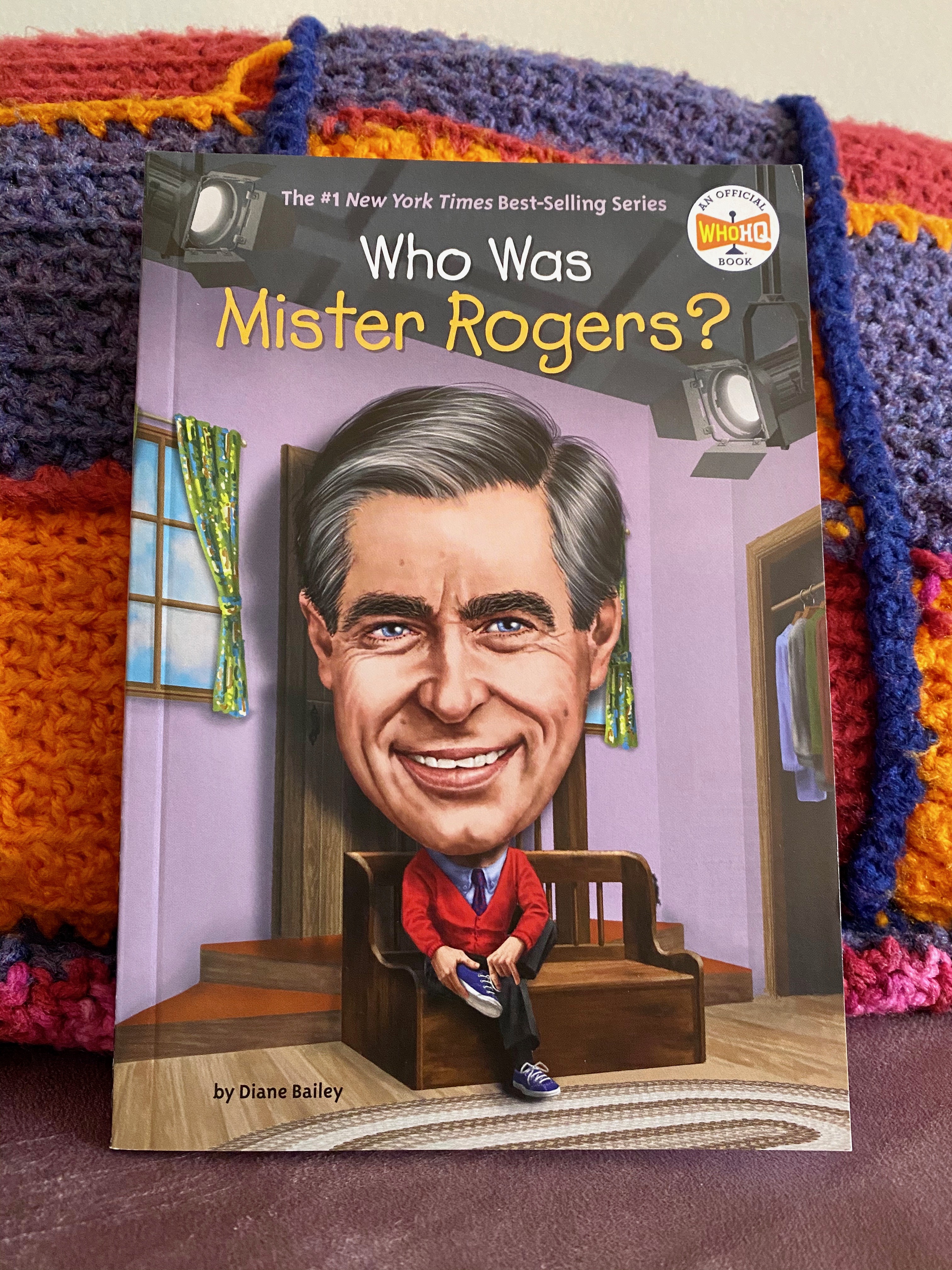
One of the first books my son and I read this year was Who Was Mister Rogers? We read it over the course of several nights at bedtime. Ryan didn’t know much about Mister Rogers. And, I think Mister Rogers only made his way onto Ryan’s radar because of the recent Tom Hanks movie. (We haven’t seen the movie, just the posters and billboards advertising it.)

Because Ryan is a big Tom Hanks fan, due to movies like Toy Story 1-4, Apollo 13, and the documentary film Magnificent Desolation, Ryan became curious to learn more about Mister Rogers.

I grew up watching Mister Rogers. But I didn’t realize what an impact Mister Rogers had on me until Ryan and I read this introductory biography. 

Now, I can acknowledge just how much of my teaching style was influenced by Mister Rogers. 

I always told my kids I loved them. (I referred to my students as “my kids”.)

I told my kids they were special. 

And each year, I acknowledged every student in my class with a customized achievement certificate. Because let’s be honest, not all kids are going to be strong mathematicians or excellent spellers. But every child has a special skill, quality, talent that deserves to be recognized. 

I recognized my kids for their neat penmanship, for reading aloud in a clear voice, for being a responsible line leader. 

As Ryan and I read, “Mister Rogers taught kids an important lesson, that everyone is special in their own way.” 


Chronic? Yes, Unfortunately.

“Chronic congestion.”

No, she wasn’t talking about the 405. 

The physical therapist was talking about my left calf. My calf is, was, the primary source of pain related to my autoimmune disease. For the last few months, the pain has traveled and now extends up into my thigh.

But apparently, what I refer to as a hard knot, or tightness, in my leg, my physical therapist calls “chronic congestion.”

She held my leg up, my foot pointing toward the ceiling as she rubbed and massaged and gave a basic summary of my case to another physical therapist. “She’s got chronic congestion all in here.”

It is chronic. I’ll give her that. My condition began in 2010 when I woke up with a swollen left calf, unable to stand or bear weight or walk for days. I was hospitalized and treated for cellulitis, a bacterial infection doctors believed was the cause of my swollen, red calf. 

But even after my calf regained its normal appearance, even after I could walk and drive and climb stairs, my legs were never the same.

About a year and a half after my hospitalization, I was diagnosed with a rare autoimmune disease called Undifferentiated Connective Tissue Disease (UCTD). It has overlapping symptoms of lupus, rheumatoid arthritis, and myositis without it being any of those diseases. It’s a medical hodgepodge in a sense, and a whole lot fancier way for doctors to say they don’t really know what’s wrong with my legs or what is causing it.

Whatever you call it, it means each day I experience varying levels of pain, fatigue, weakness in my legs with my left leg always worse.

So I completely agree with the chronic part of her statement.

But “congestion”?

I hear congestion, and I think of a stuffy nose. 

Or I think L.A. traffic and planning a visit to the Aquarium of the Pacific on a Sunday, a day the 405 is generally less congested.

It’s been weeks since the physical therapist used that term, and I can’t stop thinking about it – “chronic congestion.” 

It bothers me. 

Because, what can we do about chronic congestion?

City planners haven’t figured it out when it comes to southern California’s freeways.

And, as of right now, doctors and physical therapists haven’t figured it out when it comes to my legs.


Hoping For Courage

What is going on inside these legs?

Without going into details, I have a medical test/procedure scheduled later this week. 

Here’s what you should know:

I’m living with my autoimmune disease for almost 10 years now. In that time, I’ve already experienced this particular test twice. Each time the results were inconclusive. 

The test is being done a third time mainly for comparison purposes. It’s been a few years since the last test, and doctors are interested in seeing if any changes show up this time around. There are some concerns that my left leg may be worsening. If so, this test may give some clues about what’s going on in my leg.

Aside from the fact that I don’t want to have this test in the first place, I’m not sure what to think about this test and its possible results.

Here’s the dilemma:

Do I want the test to reveal something? To pinpoint a reason why my leg pain is increasing and my leg strength is decreasing? Would this perhaps give doctors a lead, a clue, in terms of more effective treatment? 

But what if my leg does test worse? What would that mean? 

Or, do I want this test to be like every other test I take – indeterminate? Within the boundaries of normal-enough? 

Which is reassuring I guess, but on the other hand it also means it provides doctors (and me) no answers, no explanations, no reasons why I feel the way I feel.

In reality the only thing I can realistically hope for is courage. Courage during the test. And courage after the test. In whatever form I may need it.


A Promise To Myself

Today is generally the day when many people state their new year’s resolutions. Grand plans for dreams, goals, and aspirations.

I’m not going to do that.

Instead, I’m going to state my intention to continue working on my memoir. I’m going to promise myself that I will not give up on sharing my story. 

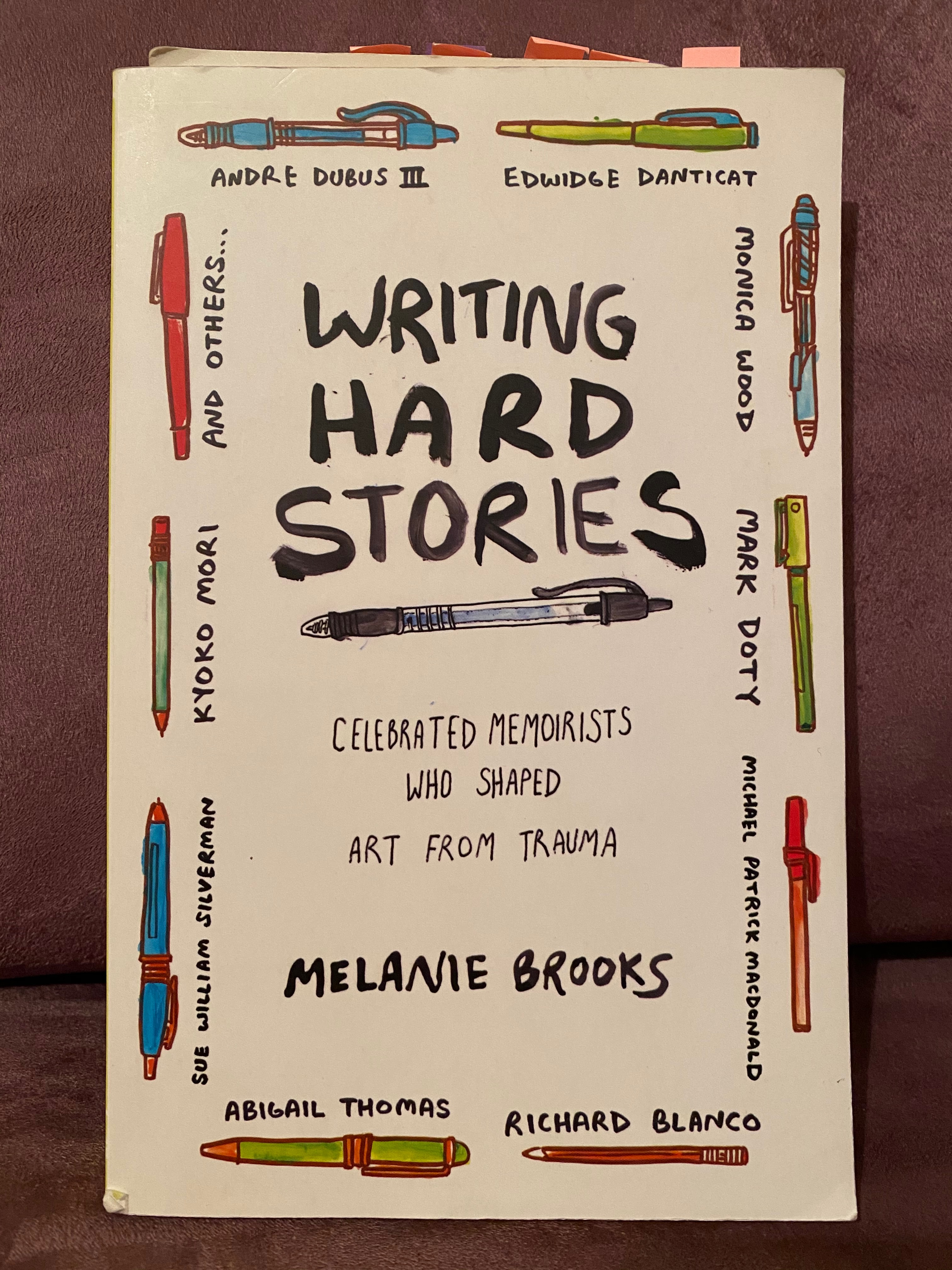
For my fellow writers out there, I highly recommend Writing Hard Stories: Celebrated Memoirists Who Shaped Art From Trauma by Melanie Brooks. This collection is such an inspiration, providing insight into how different writers took something hard/terrible/horrific and used it to create something beautiful/meaningful/relevant.

Here are a few passages I’d like to share with you:

“The reason I write memoir is to be able to see the experience itself in a new way. I hardly know what I think until I write. The therapy is one way of sort of processing things. But it’s only in writing about some of these things that we discover and understand the metaphors of our experience that give our life meaning. Writing is a way to organize your life, give it a frame, give it a structure, so that you can really see what it was that happened.” – Sue William Silverman

“I was a writer, and then this big thing happened in my family. And the way that I tend to try to understand things is through stories – both things that I write and things that I read. That’s the deepest way I know of expressing something inexpressible.” – Joan Wickersham

“You take what you’ve been through, and if you are a writer, you have to write about it.” – Suszanne Strempek Shea

“It really becomes memoir, though, when you open up space for others to enter – when it becomes about more than you, or your family, or your own personal feelings.” – Edwidge Danticat

“Don’t forget, it’s scarier not to do it than to do it.” – Abigail Thomas


5 Wacky Christmas “Facts”


I don’t know which my son enjoys more – reading National Geographic’s Weird But True books or listening to my reaction to what we read.

Let me begin by saying, I believe all reading is good. Whether my son is reading a biography about Barack Obama, the latest edition of the Diary of a Wimpy Kid series, or a joke book, he’s an enthusiastic, eager reader. Reading is not a chore in our home. Ryan recognizes books for the true wonders they are.

So our bedtime reading varies. (Currently, we are re-reading a family favorite – Roald Dahl’s Matilda.)

But last week, each night before bed, we read some “weird but true” Christmas-related facts. Maybe it’s due to all my critical-thinking classes. Maybe it’s because I’ve been taught to not always accept things at face value, but to try and dig deeper and ask questions. 

In any event, I have a really hard time readily accepting some of these statements as “fact.”

Although, this time around with this particular book, I found Ryan asking some follow-up questions as well. So maybe it’s not just me.

So on this Christmas day, I’d like to share a few of these questionable “weird but true” statements with you. Enjoy!

Wishing my readers a happy, cozy, festive holiday!

“The world’s biggest Christmas bauble ornament is wider than a garage door and as heavy as a buffalo.”  (And I’d like to know who built such an ornament? Where is it?)

“The world’s largest Christmas pudding weighed more than a hippo.”  (I’d like to know what one does with the world’s largest Christmas pudding. How and where was it made?)

“The world’s largest Christmas stocking measures as long as four school buses lined up end to end.”  (Where is this stocking? Is it hung up each year?)

“The world’s largest wreath was wider than a soccer field and heavier than two elephants.”  (What do you do with such a heavy wreath? How was it made? Where is it now?)

“The largest cup of hot chocolate ever made could have filled 20 bathtubs.”  (We love hot chocolate, but there’s a limit. Who would think to make enough hot chocolate to fill multiple bathtubs? What was done with all that hot chocolate?)


It’s Complicated – Working with an Autoimmune Disease

When I went to my local library and typed in “autoimmune disease” in the keyword search (I miss card catalogs, by the way), a dozen books were listed.

12 books. And one of them had to do with pet health.

That’s how I discovered Women, Work, and Autoimmune Disease written by Rosalind Joffe and Joan Friedlander.

Both authors live with autoimmune diseases. They’ve been there – dealing with the uncertainties that come with living with an autoimmune disease, the unpredictability, the sheer will it sometimes takes just to get through the day.

But, there were many times I came close to not finishing the book. 

It was written in an overly simplistic, just-keep-going and make-some-changes kind of way. And that doesn’t work for everyone. 

For my readers who don’t know, I was an elementary school teacher, before retiring due to a disability. I taught for 12 years. I had planned on teaching for many more. But teaching doesn’t provide many opportunities for flexible work hours or workplace modifications (topics discussed in this book). 

However, even though I didn’t particularly like this book, I did find passages that caused me to pause for a moment and think, “Exactly.” 

This week I’d like to share these passages with you.

“Autoimmune diseases are fickle, and what might adversely impact your symptoms one day might not affect you the next.”

“It takes determination to look at deceasing possibilities and refuse to crumble. It takes courage to face the loss of what you could do and see opportunity in its place.” 

“Grief is an emotion that is often overlooked when talking about chronic illness, but it is critical to any discussion about living with AD – with translates into learning to live with loss. That’s not to say that there aren’t gains here, too. But loss is inevitable, even at the basic level of not being able to do or feel as you once did.”

“The truth is that no one knows what’s around the corner, but living with chronic illness means that unpredictable health is more likely.”

“On the days when you feel your worst, you can look fine. You don’t sport the red nose of a cold or the cast of a broken wrist to support your case. Because you look the same as you do on your good days, you wonder if people understand the symptoms that they cannot see.”

“It’s undeniably true: your illness has changed the way you view your world and your life. It has quite literally transformed your physical capabilities – at least for the short term – and has most likely altered your perception of yourself.”


Planting the Seed

A sweet “kiss” – Ryan is 7 months old in this photo.

I never know what topic will come up during dinner with my son. 

Ryan is a curious boy. And he knows that I will listen with respect to whatever he has to say and whatever he asks. 

One evening we talked about former presidents of the United States.

Another evening, our conversation was primarily basketball-related (we’re Los Angeles Clippers fans).

And one evening, my eleven-year-old asked me a question I wasn’t prepared for:

“How old do you think I’ll be when I have my first kiss?”

I’ve said it before – Ryan is one of my greatest sources of inspiration. Many personal essays have been written as a result of something Ryan said or did. This question had the same effect. 

You can click here to be re-directed to Mothers Always Write to read my most recently published personal essay, “Planting the Seed.”