Wow, No Thank You.

The older I get, the more I realize how lucky I was to grow up and see myself represented in many of the books I read and movies I watched. (Though the Wakefield twins of Sweet Valley High were blondes and not brunettes.)

On the surface, you might not think author Samantha Irby and I share much in common. She is a Black woman living with her wife in the midwest. Plus, she curses a lot more in her writing than I do. 

Yet, Samantha Irby is a member of the club I belong to. The club, in fact, many people belong to — the chronic illness club. Ms. Irby lives with Crohn’s Disease.  

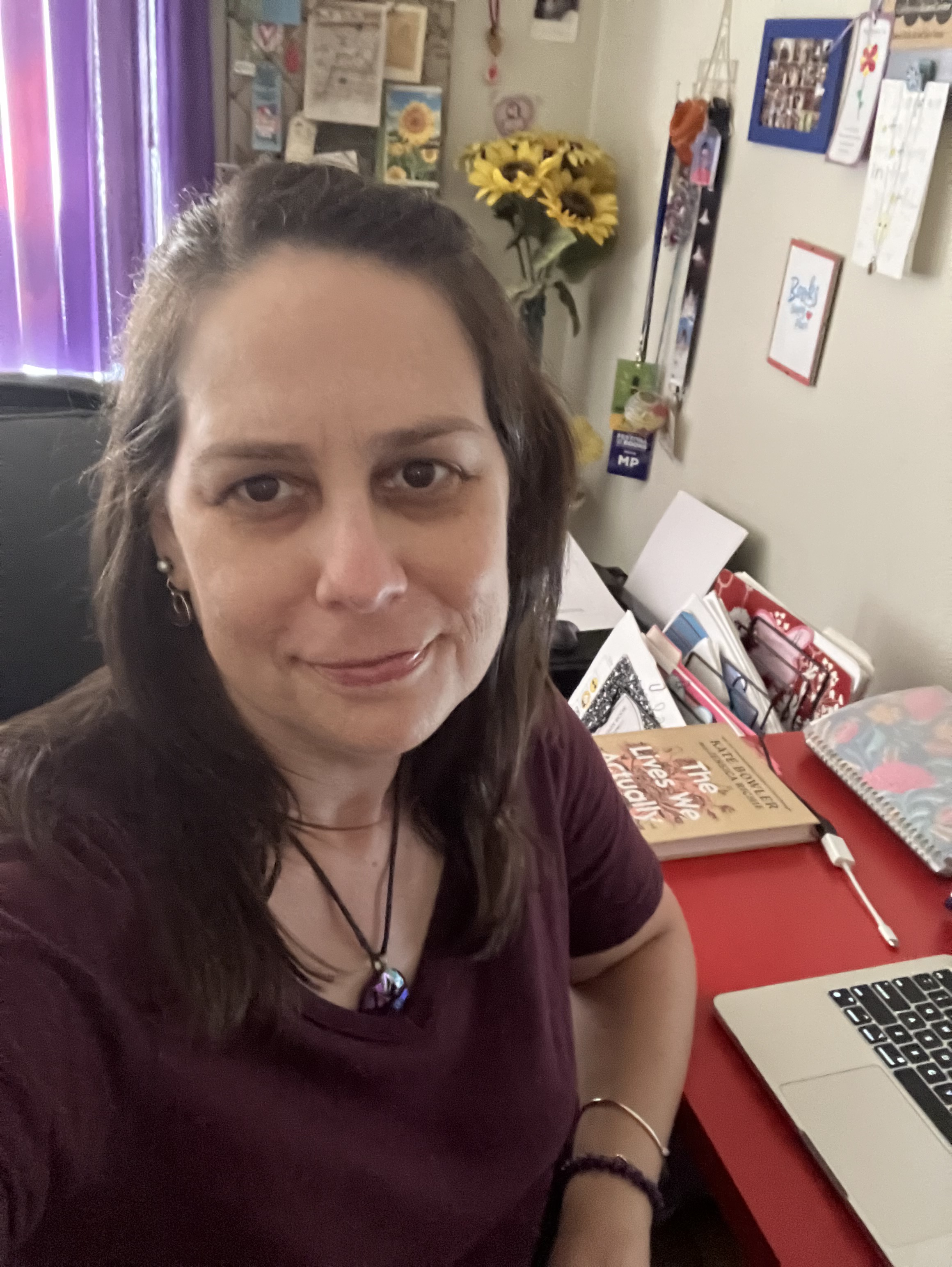
I recently finished reading my first Samantha Irby book, her essay collection titled Wow, No Thank You. And you’ll notice from the photo that my copy is full of sticky notes. 

Here are just a few of the passages that stood out to me, resonated with me, and/or made me laugh out loud:

Mixtapes were the love language of my youth. If you got one from me, that shit was as serious as a marriage proposal. Maybe because they were so time-consuming to make? I had a painstaking process I went through before I put a mix together.” (Side note – when we were dating, I made my now-husband a mixtape. I agree – it was a big deal to make a tape for someone else.)

“… and I guess what I’m actually saying is that, sure, I move this body around every day but I’m not actually in charge of it, and I have no idea and no control over anything that happens within it.”

Pretty much, the entire chapter titled “hung up” could have sticky notes on each page. Ms. Irby’s observations and comments about the “five-hundred dollar computer in my pocket” were so entertaining and so spot-on.

I also found the entire chapter titled “body negativity” to be amusing and fun to read. 

The chapter starts with: 

“I have been stuck with a smelly, actively decaying body that I never asked for and am constantly on the receiving end of confusing, overwhelming messages for how to properly care for and feed it.”

And there’s this passage:  

“Your neck is supposed to be firm and long, but I thought that was only asked of penises. Why does my neck have to do anything other than hold up my head? I do not, and will never, use any specific treatments for my neck. I cannot be bothered to care about my neck. Of all the things I have to check off this endless list, ‘neck maintenance’ is not going to be one of them.”

“I don’t treat my Crohn’s like it’s an albatross around my neck, like I’m laboring under the weight of this oppressive disease.”

“It’s a serious topic that can be dealt with in a really funny way while also repping for the chronically ill and constantly medicated, like me.”

“… it would mean a lot to me to put chronic illness in people’s faces, especially the silent kind that you might not even know a person is struggling through. I bet if you met me on the street, you wouldn’t automatically think ‘sick,’ but if you looked at my CT scans you would, and I want to represent for all my people taking twelve pills a day with bald joints and intestines lined with scar tissue.”

Readers, have you read any of Samantha Irby’s books? I’d love to know what you thought of them. 

Please note: I am including a link to buy the book that I’m highlighting this week. If you use my link, I do make a small commission on your purchase at no additional cost to you. I am working with Bookshop.org which also sends a portion of the profit to support local, independent bookstores.

A Bit of Serendipity

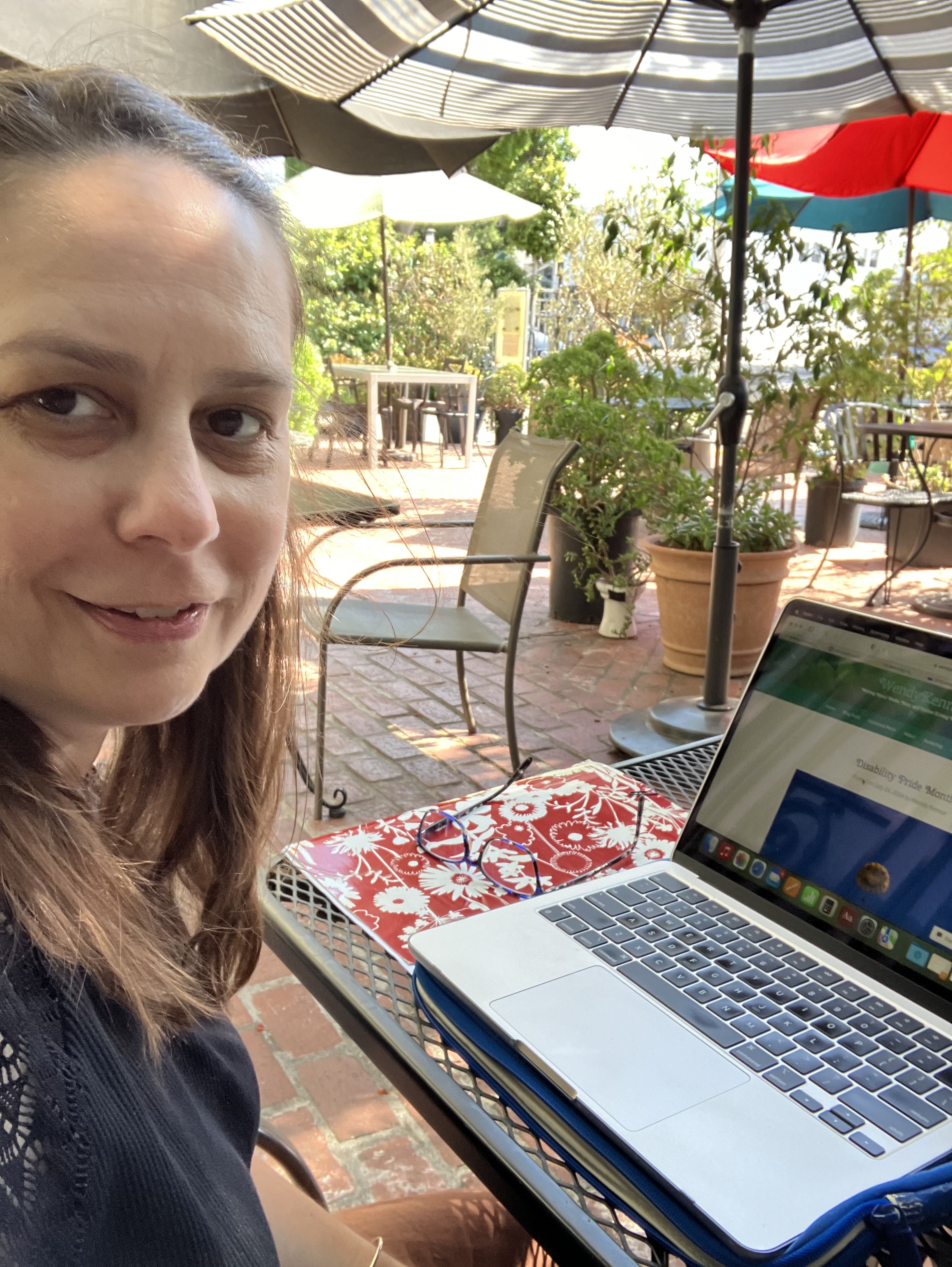
I took this photo during last week's writing session.

Last week I spent time at one of my favorite not-at-home writing spaces; a cafe serving a yummy ice blended mocha, and providing many tables and chairs on a large patio with plenty of shade. 

This week, I wanted to share something that happened during last week’s visit.

Two women sat at a table close enough to me that I could overhear bits and pieces of their conversation without even trying. It felt serendipitous that of all the available tables, these two women sat near me. After all, I was sitting off to the side, near a wall, trying to distance myself from any loud chatter and distractions. 

Within a few minutes, I learned the two women were middle school science teachers. I heard them talking about sixth grade, about sedimentary rocks and fossils, about a project requiring a long roll of adding machine paper. (And I admit to feeling old when one of the teachers had no idea what adding machine paper even was.)

These two teachers spent their own time lesson planning. These were “off-the-clock” conversations. Because that’s what teachers who are passionate about teaching do. Your teacher brain is never really off, and teachers don’t actually get “the whole summer off,” as many non-teachers believe. Teachers are always working in some shape or form. It brought back memories of my own lesson planning days and the blended mochas my closest teacher friend and I used to enjoy while brainstorming and planning for our fourth graders. (I’m thinking of you, Nance!)

As if that wasn’t enough, after a bit of quiet individual work time, the two teachers began chatting again. I heard different phrases this time — it’s so lonely, I look fine on the outside, many people don’t get it.  

I learned that one of the teachers lives with an invisible illness. The other teacher’s partner lives with an invisible illness and was asking questions about how to best support a chronically ill loved one. 

I momentarily sat there in shock. 

What were the odds? 

Not only were these two women teachers, they were also among the target audience for my memoir! (My target audience includes those living with chronic illness, especially invisible illnesses, both physical and mental, as well as friends and families of those living with chronic illness.)

That day at that cafe, I had spent a portion of my writing time researching literary agents to query my memoir-in-essays. 

And then these two women entered the outer edges of the writing cocoon I create for myself at this cafe. 

I took it as a sign.

Disability Pride Month

Parasailing in Maui with my son, June 2022

July is Disability Pride Month. The designation coincides with the anniversary of the Americans with Disabilities Act (ADA) being signed into law, thirty-four years ago. 

In prior years, I’ve written about Disability Pride Month. (You can click here to read my post “There Is No Shame” from July 2021, and click here to read “Disability Pride Month Reading” from July 2022.)

This year, however, I’m having a really hard time putting into words how I feel about this month and how it impacts me. Partly because within the last couple of years, my physical abilities have decreased, and my dis-abilities — things I can no longer do or only do with extreme pain — have increased. 

I live with an autoimmune disease that most people have never heard of, that most healthcare providers don’t fully understand. A chronic illness that has no cure. And it is this part of my identity that is the catalyst for my currently-querying memoir-in-essays. 

One day, when you pick up my memoir in your local independent bookstore or public library or multi-floor Barnes and Noble and begin reading it, you will find that my disability identity is only a part of my story. I’m so much more than my body and how it can and cannot function. 

I am Wendy Kennar.

I am a white woman married to an African-American man. 

I am the mother of a mixed-race son.

I am a college graduate, the first in my family.

I am a ketchup-using tomato-disliker.

I am a morning apple juice drinker.

I am a night shower-er.

I am a handwritten list maker.

I am an envelope decorator. (Which means I am someone who still mails cards and letters the old fashioned way, with a stamp on the envelope.)

I am a save-the-avocado-for-last salad eater.

I am a chocolate ice cream only consumer (except if I’m eating a Vanilla Soft Serve ice cream at McDonald’s, which is the only thing I eat from McDonald’s.)

I am a daughter. A pen pal. A friend. A neighbor. 

I am a Los Angeles native.

I am generally a no-crust-for-me pizza-eater.

I am a woman who has never spent any time in the snow. 

I am a woman who owns more pairs of earrings than shoes. 

I am a curious person, who wonders about all sorts of things. (Why do you walk a red carpet at awards shows? Why red? Why not blue? Or purple?)

I am adventurous. (I have gone parasailing twice, ridden in a hot air balloon twice, and gone zip lining once.) 

I am a disabled woman. 

But that’s not all I am. 

There’s A Lot On My Mind

I have a bit of a confession to make, my friends.

This week’s blog post has been a hard one for me to write. And I think it’s because of the date. 

This week is an “anniversary” for me. It was during this week back in 2010, when I woke up unable to get out of bed. I couldn’t stand up. I couldn’t walk. My left calf was swollen like an about-to-burst water balloon and bright red, like my then-two-year-old son’s stuffed Elmo doll.

That day marked both an end and a beginning. I just didn’t know it at the time.

So I’m a bit emotional, and I have all sorts of things going through my head this week. Thoughts about where I am currently — in terms of my physical pain and limitations, but also in terms of my spirit and emotional well-being. 

It’s because I have all these thoughts swirling around, like a soft serve ice cream that mixes chocolate and vanilla into one delicious, twisty dessert, that I initially wasn’t sure what I wanted to write about this week. 

But I think this reflection is fitting for this week:

A few days ago I finished listening to Jessica Fein’s podcast, “I Don’t Know How You Do It.” Her guest was bestselling author Jean Meltzer, someone I happen to just love — for her books and her passion and her message. 

(In case you’ve missed them, you’ll find links to my earlier Jean Meltzer-related posts here.)

On this podcast, Jean explained the twists and turns her life has taken, the many ways she has had to completely reinvent herself. 

There were a couple of things Jean said that I haven’t been able to stop thinking about. Maybe they’ll be helpful to you, too:

–  One: Jean talked about the years she spent ignoring her illness. Her determination to continue on, pretending as if she wasn’t ill. Until she couldn’t. Until she became so ill, she was housebound. In all honesty, I have heard Jean speak of this before, but this time I really heard her. And it scared me. Because one of the things I’m actively working on is truly acknowledging my own illness and physical limitations. I often do try to push through and act stoically. What if I’m headed on the same path? What if you only get a certain number of “passes” to act as if you aren’t chronically ill, and then your body comes to a full and complete stop? (Which is actually what happened to me back in 2010. I wasn’t physically ill at that time, but I was going through an incredibly hard time emotionally. I kept trying to push through, until I literally couldn’t. That swollen left calf kept me hospitalized for four days, and my leg was never again the same.)

– Two: Jean also spoke of her decision to live a joyful life. If her body would no longer allow her to do all she wanted, if her body made it necessary for her to re-invent herself and give up her career, then she was going to do everything she could to seek out joy in this new life of hers. Lately, I have been more aware that I tend to spend some of my days as if the prime objective is to cross off as many items on my to-do list as I can. And while these are not necessarily unpleasant (water the plants, sweep the patio, do my physical therapy stretches), they’re not necessarily joyful either. I often give myself one task to do after the other, without giving myself the time and grace to simply sit and read, for example. 

So that’s my self-appointed homework: being more honest about what my body can and cannot do and to actively seek out and infuse my days with joy. 

Thank you, friends, for reading. I realize this week’s post was a bit longer. Thank you for being with me on this journey. 

P.T.

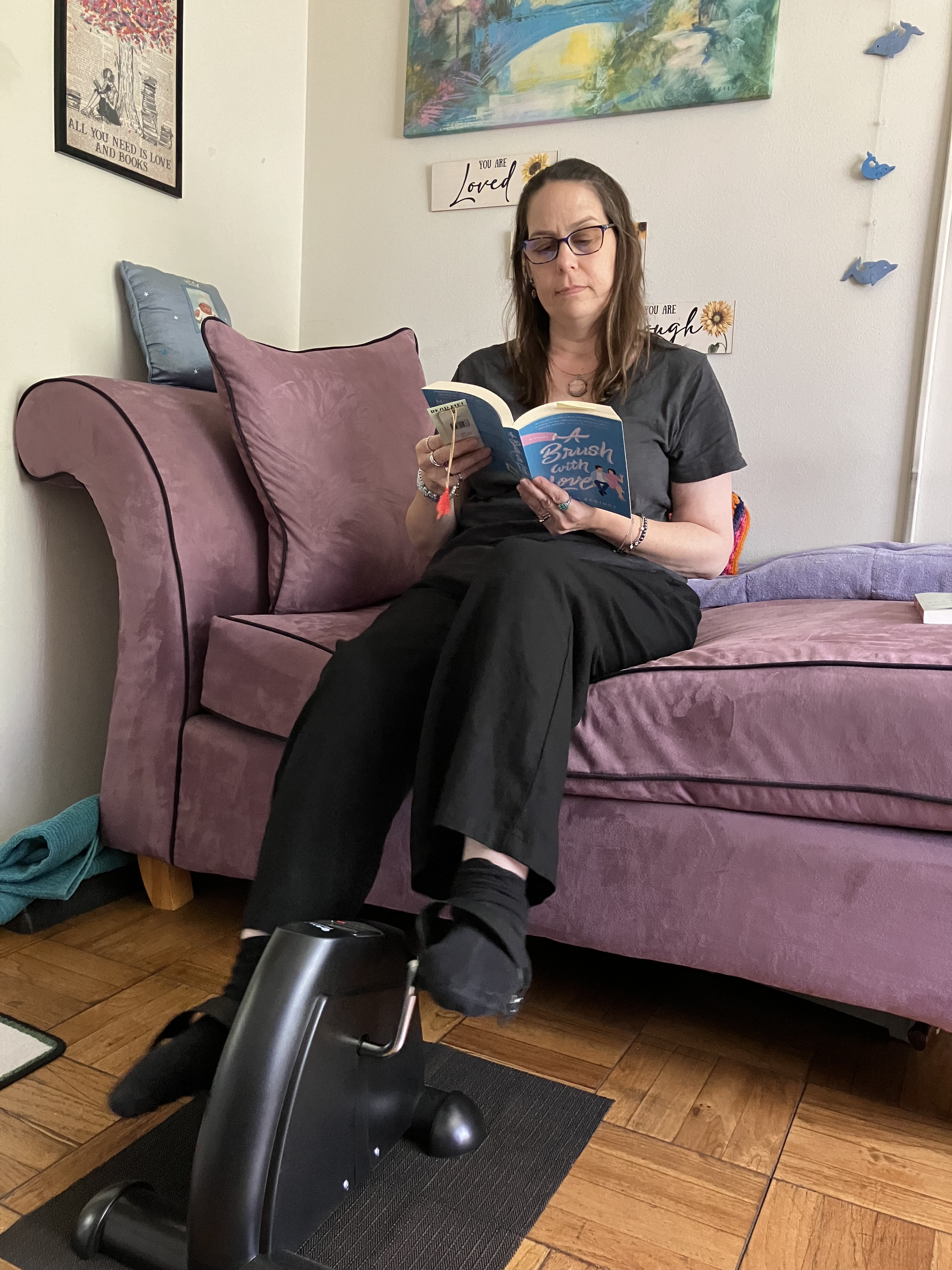
I call this my pedal machine. My physical therapist encouraged me to try it, since we usually start our sessions with me on an exercise bike. I started pedaling for 5 minutes each day, and have slowly increased my time. I'm now up to 10 minutes daily! Generally, I use the time to read.

I have lived with chronic illness and chronic pain for almost fourteen years. 

During this time, I have tried physical therapy. Many times. 

It never worked out for me. For instance:

–   One of my first attempts at physical therapy ended shortly after it started. The physical therapist told me he would no longer work with me, because, “There’s no point. Nothing we do can help you.”


–  Another therapist, in a different location, always made me feel as if I couldn’t do much, and what I could do wasn’t anywhere close to being enough. I left our sessions feeling worse than I started. Worse in terms of higher pain levels and worse in terms of self-confidence.

–  There was the physical therapy group with a close-to-my-home location. I quit that one, after having four appointments with three different therapists, each one giving me some contradictory information.

Based on my previous experiences, you can understand my hesitation when my rheumatologist didn’t just suggest physical therapy, he strongly encouraged it.

This time I’m pleased to say my physical-therapy-is-not-beneficial streak is now over. 

I finally am working with a physical therapist who speaks kindly and smiles. A physical therapist who celebrates my effort, who acknowledges just how hard some stretches are for me, who encourages me to try, who modifies as needed. 

Plus, during last week’s physical therapy session, my therapist did something no other therapist has done before — he made me laugh.

Now, most people know PT is shorthand for Physical Therapy. 

But there’s another meaning for that acronym. 

Let me give you a bit of context — my therapist had demonstrated a new stretch, something that would work my quadriceps. It hurt when I tried it, so we modified it, with me not stretching quite as hard or quite as much. 

That’s when my physical therapist told me one of his patients invented a different meaning for PT: Pleasant Torture.

It was so unexpected, I couldn’t help but laugh out loud.

I have never thought of PT like that before. 

While it’s not torture, physical therapy is hard work. Each time I leave, I am tired and worn out. The following day I’m usually sore. 

Yet even with all of that, overall, the process, this time, is pleasant.

Readers, do you have any physical therapy experiences you want to share? Have you been fortunate to work with someone who makes the process pleasant? I hope so!

Book Birthday: The Things We Don’t Say

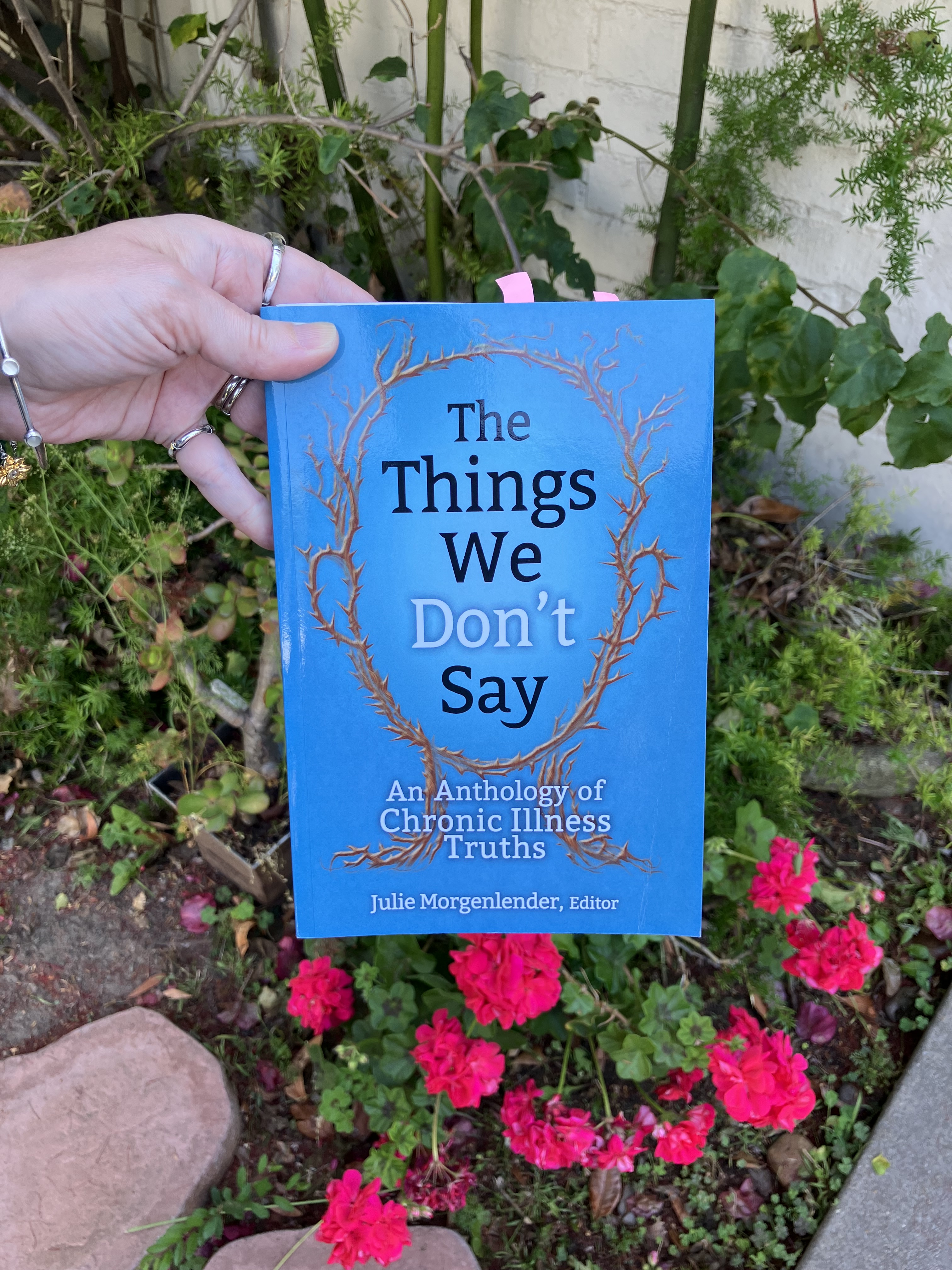
The Things We Don’t Say: An Anthology of Chronic Illness Truths is celebrating its four-year book birthday this month.

This anthology is unlike any other book I have found — and I’m not just saying that because one of my personal essays is included in this collection. (My essay is called “Chronic Contradictions.”)

I’m saying that because it’s true. 

From the back of the book:

“Spanning different ages, ethnicities, genders, sexual orientations, and diagnoses, forty-two authors from around the world open up in fifty true stories about their chronic illnesses and their search for answers, poor treatment by doctors, strained relationships with loved ones, self-doubt, and more.” 

This is the book to turn to when you’re searching for connection. Because though the medical details may vary, many of the emotions and experiences written about are shared by many in the chronic illness world.

This is the book to turn to when you’re trying to help someone else learn a bit about what your chronic illness life is like. This is the book you hand to someone and say, “Here. Please read this story. This is what I mean. This is what it feels like for me. This is what I have been trying to explain to you.”

Readers, have you discovered any other chronic illness-related books that you find helpful and/or resonate with you? Please share! 


Please note: I am including a link to buy the book that I’m highlighting this week. If you use my link, I do make a small commission on your purchase at no additional cost to you. I am working with Bookshop.org which also sends a portion of the profit to support local, independent bookstores.

Stick-To-It-Ness

Image credit: Wishbone Words

“I am no longer an educator, and haven’t been a kindergarten teacher in many years. For the last seven years of my career I taught fourth and fifth graders. I no longer think of perseverance in quite the same way as I once did. However, more than ever, I feel like my daily life requires a lot of perseverance. I’m not relying on perseverance because I’m learning a new skill or am faced with one specific event that requires more ‘stick-to-it-ness.’ It is not at all like the period of time when my eighteen-year-old self was learning to drive a stick shift — without popping the clutch or grinding the gears or stalling and having the line of cars behind me start honking when I didn’t immediately get going on a green light. Back then, each practice session ended with me in tears. I remember looking over at my mom in the passenger seat, telling her it was hopeless and we should just stop now, because I would never master driving a stick shift. I was convinced there was something fundamentally wrong with me, since my parents could drive a manual transmission, and I obviously couldn’t. My mom patiently reminded me that driving a stick shift wasn’t easy, and I would definitely learn how, if I kept at it. It was a skill which required time and patience and lots of practice. Perseverance. She was right, as moms tend to be. 
“But that was then.”

This excerpt was taken from my recently published personal essay, Stick-To-It-Ness, which has to do with daily perseverance as it pertains to living with a chronic illness. However, a high level of stick-to-it-ness is also required when you’re writing for publication. This personal essay was rejected by two other online literary journals before finding a home at Wishbone Words, Issue 13

You can click here to find out more information about Wishbone Words

The Power of Little Words

For my birthday (a couple of months ago), one of my closest friends gave me four bracelets. 

Not just any bracelets. 

Bracelets from Little Words Project

I didn’t initially realize the connection between Taylor Swift, Swifties, and friendship bracelets. So while my right wrist may look like I’m part of a trend, that’s not the reason for my bracelets.

My friend knew things have been hard for me lately. Actually, things have been hard for a while now. She also knew I’m quick to offer encouragement and words of praise to others, less quick to show myself the same support.  

That’s where the bracelets come into play. They are a daily reminder — of who I am and how I choose to live my life.

J chose four words for me. 

Teacher. I taught for twelve years. I’ve been retired for eleven years now. And I still miss teaching. (A portion of the proceeds from this bracelet go to AdoptAClassroom.org)

Breathe. Because sometimes I need that reminder to slow down and take a deep breath. 

Resilience. When you’re saddled with a chronic illness, there isn’t much choice. You have to demonstrate a combination of toughness, adaptability, and strength. 

And my favorite word — Badass

“I know it’s not usually a word you use, but you are a badass,” she said.

She’s right — I wouldn’t ordinarily think to describe myself as a badass. I am generally inclined to think of myself in other terms — such as polite, punctual, organized, neat. If you’ve been reading my blog for a while, you may remember a post I wrote last year about  how difficult it was for me to think of three adjectives to describe myself. (In case you missed it or have forgotten it, you can click here to read the post.)

But it means so much to me that J sees me in this way. She not only sees my spirit, she celebrates my spirit. And she wants me to do the same. 

Which is why you’ll find me wearing these four bracelets each day on my right wrist.

Readers, do any of you wear friendship bracelets? What words are on your bracelets? Or, if you don’t wear them, take a look at the Little Words Project website. What words would you choose for yourself?

Chronically Parenting

I don’t listen to many podcasts, but I do make a point to listen to Jean Meltzer’s monthly podcast, Chronically Fabulous. (I wrote about her podcast back in January. If you missed that blog post, you can read it here.)

Her third episode featured special guest, Heidi Shertok. Like Jean, Heidi is also a Jewish author, writing rom-coms, and living with chronic illness. Their conversation focused on parenting when you’re chronically ill. 

Jean, Heidi, and I all have different perspectives based on our different life experiences when it comes to parenting. Jean and her husband made the decision not to have children. Heidi entered into marriage and parenthood as a chronically ill woman. And I become ill when my son was two years old. 

There were several moments when I paused the podcast so I could jot down a note, because I knew I would want to write about their conversation and share it with you, readers. Because finding your community is so important, especially when your body doesn’t behave the way you’d like it to. And when I come across something — a podcast, a book, a line in an article — that allows me to feel seen and understood, it’s something I want to share with you as well. 

With that in mind, here are just a few of the highlights from their podcast conversation: 

– Jean and Heidi spoke of the idea of “masking.” I’ve always referred to it as putting on my game face, others might say it’s like having your poker face on and not letting your true emotions out. It’s the idea that on the surface no one can tell how you’re really feeling inside. You keep your pain, your discomfort, your worry out of sight. You present as healthy — because, at least for me, sometimes it’s just easier. It’s easier not to have to explain why I can’t sit on a tall bar stool, for example. (It’s really painful for me.)

– Something Heidi said really stood out to me. She said she believed her kids were lucky, growing up with a mom who is chronically ill. Her kids have learned/are learning there are all sorts of “normals” within families. There is not one right way for a family to be. Likewise, I hope that by growing up with a mom who has an invisible disability, my son has learned that you often can’t tell what someone is going through just by looking at them; that many people are out and about in the world, dealing with pain we can’t see. 

– Heidi also shared something her rheumatologist told her when she was young: A lot of people are like most flowers, you can put them anywhere and they’ll thrive. While people like Jean, Heidi, and myself, and others with chronic illness, are like orchids; we can only thrive in very specific environments. I love that analogy. 

Dear readers, any podcast recommendations you’d like to share? I also sometimes listen to The Shit No One Tells You About Writing (such a great title!) or an episode of Moms Don’t Have Time to Read Books when I’m doing my daily physical therapy exercises/stretches at home.

Flowering

Image Credit: Coin-Operated Press

I am pleased to share more publication news with you!

My personal essay, Flowering, has been included in the Gardening Zine produced by Coin-Operated Press. 

Here’s a snippet:

“Gardening is a part of who I am. The person who will always save the slices of avocado in a salad to eat after the rest of the salad, believing the best part has been saved for last. The person who will always describe a body lotion in terms of a “flavor” rather than a “scent.” The person who will yell at Rosemary Clooney’s Betty in White Christmas, urging her to talk to Bob, before she leaves Vermont for New York.
“I don’t know where my love of plants and flowers came from. Growing up, flowers were only in our house when my dad bought them for my mom on special occasions. Small houseplants died off, one-by-one, and were replaced with artificial flowers. Maybe this love I have for gardens is a result of the years I spent working in a high-end flower shop during my last year of high school and first few years of college. Or maybe there is no explaining it, and I can enjoy gardening without figuring out how it all started.” 

Click here to be re-directed to Coin-Operated Press where you can purchase a copy of the Zine.