I Am Tired.

Eleven years ago, my personal essay “Do What You Need To Do” was published in the anthology Lessons From My Parents:100 Shared Moments that Changed Our Lives. I wrote about the example my parents set for me, the idea that sometimes you just have to suck it up, do the hard thing, keep going. 

That’s largely how I have lived my life. Doing the hard thing whenever I have to in order to achieve my goal — whether it was commuting on public buses for most of my college years (a roundtrip commute that took 3.5-4 hours a day, on six buses a day) or working as a kindergarten teacher during the day with an emergency teaching credential and taking online classes at night to earn my full teaching credential. 

It’s pretty much how I go about my day. Things need to be done. I just need to do them. 

Except, I’ve come to the slow realization that I just don’t think I can keep doing that. 

Because — I am so tired. 

I am tired of waking up each morning, feeling unrested. Sticking my feet into my slippers as the alarm goes off, wondering how I’m going to do it. How I’m going to wake up, get dressed, make my son his breakfast, take him to school, and function throughout the day.

I am tired of not reading as much as I’d like to each day. Which as I write that sentence, I realize it’s not completely accurate. I do read a lot each day. I read emails and text messages, newsletters and first drafts. I just don’t always take a half hour and sit and read my book. Sometimes it’s because I’m in pain, and I can’t get comfortable to sit for an extended period of time and lose myself in the words on the page. Sometimes it’s because I feel there’s too much work that needs to be done for me to take a break and read. When I read in bed shortly before I turn off my bedside lamp for sleep, I inevitably start to doze, and the paperback book slips from my fingers and startles me as it falls against me. (One of the reasons why I generally prefer paperbacks to hardcovers.)

I am tired of looking at myself in the mirror and not fully recognizing the woman looking back. I take stock of the physical changes — hair loss, weight gain, swollen ankles — and realize I have no idea which of my ailments is contributing to each symptom. For example, the hair loss I’m noticing could be due to one of my medications, or my longer hair, or menopause. 

I am tired of clicking on my inbox and feeling so far behind in reading my emails. How did I become someone with three hundred unread emails? Seemingly overnight, I have multiple Substack notifications, emails asking for donations for Unicef, Save the Children, and Make-a-Wish Foundation, and emails regarding the latest sale at Bath and Body Works. I want to support other writers and read their newsletters, I want to contribute  funds to worthwhile organizations, and I want to buy candles when they’re on sale. But it’s so much. 

I am tired of feeling like I’ll never catch up. The list I keep of podcasts I want to listen to (Moms Don’t Have Time to Read Books with Zibby (Owens), Kate Bowler’s Everything Happens, Write-Minded with Brooke Warner) just keeps growing. I listen to one episode over the course of a couple of days while I do my physical therapy stretches and exercises, but in that time, I have added another two podcasts to the list. I sit on the floor in my writing room, looking at all the un-read books I have, just waiting for me, and realize this cubby of mine is almost completely out of space. And yet, I came home with another novel I picked up at the Little Free Library I passed yesterday.

I am tired of waiting. Waiting in line at CVS, waiting on hold to speak to a representative regarding my medical insurance, waiting to speak with someone in my doctor’s office to schedule my next appointment. 

I am tired of the bottles of pills on my kitchen counter. Lining up the bottles based on when I take them — breakfast, lunch, and/or dinner. Keeping track of refills, making sure I have enough to get me through the next several days until the law says CVS can refill my pain medication. Tilting my head back so the large calcium supplement, the most recent addition to my daily pills, will slip down. 

I am tired of heating pads and ice packs. I am tired of propping my left leg up on a pillow. 

I am tired of being in pain. Every. Single. Day.

I am tired. 

Friends, I know it’s not just me. I know many of you reading this post have your own laundry list of illnesses, daily stressors, work-related tasks that you’re tired of also. 

What do you do when it continues to build and you feel like you’re standing in quicksand and being swallowed up by it all? 

Please note: I am including a link to buy the book that I’m highlighting this week. If you use my link, I do make a small commission on your purchase at no additional cost to you. I am working with Bookshop.org which also sends a portion of the profit to support local, independent bookstores.
The F Word

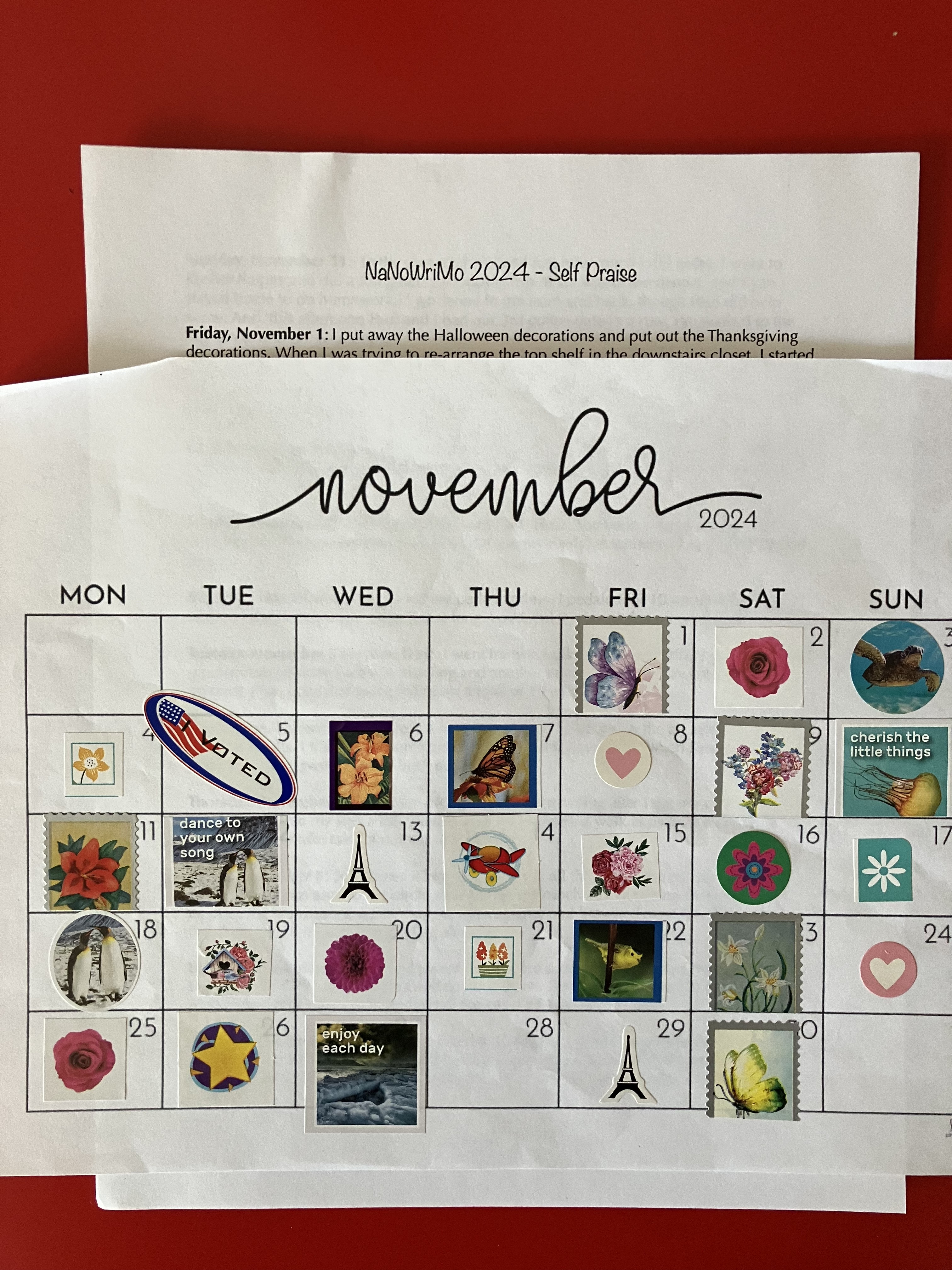
I took this picture a few days ago, late afternoon, after doing some of my physical therapy stretches on the bed.

I don’t usually have a problem falling asleep. 

Quite the opposite, actually.

As soon as I turn off the lamp on my bedside table, after another unsuccessful attempt to read a few pages before bedtime (I tend to either drop the book and lose my place or read a bit but then the next day have no memory of what I had read), I fall asleep. 

Usually, I wake up at least a couple of times each night. Though lately, I have experienced a few nights when I only woke up once. And there were even a few nights that I slept straight through. 

Yet, regardless of how many wake-ups I have each night, I am not waking up feeling rested. 

Again, it’s quite the opposite.

I wake up feeling drained. I’m not recharged and ready to take on the day at all. But, I don’t have a choice. The alarm goes off, and it’s time to get going. I need to get up and get dressed and get the show on the road, because my son needs to get to school. I have work to do. Which means I’m forced to function on a blend of automatic pilot and a fight-through, keep-going-no-matter-what, high level of perseverance.

Plus, I have also noticed this unrested feeling isn’t just happening during the week, when wake-ups are earlier and days are busier. Even on a random Sunday, when we have nothing planned and no alarm waking anyone up, I don’t naturally wake up feeling oh-so-rested. 

Doctors don’t often ask about my sleep; however, during my last several follow-up appointments, I have mentioned it to them. I do my best to describe the overall slowness I often feel upon waking. The way my eyelids feel heavy. The feeling of starting the day at a deficit. And because my labs are coming back pretty consistent, because there are no red flag markers, no medical professional seems overly concerned about my tiredness. 

The other day, when I stood in front of the mirror and stared at the dark circles under my eyes, I had an aha moment. 

It seems so obvious, now, but it really didn’t occur to me that this extreme tiredness, this fatigue, is a part of life with chronic pain. This is not unique to me and my UCTD (undifferentiated connective tissue disease). In fact, in terms of my inflammation markers, my numbers have been down. My autoimmune disease is somewhat stabilized, you might say. Which means my medications are working and doing what they’re supposed to do. And yet, I feel awful — every single day.

Because this is not tiredness that goes away with a couple of nights of eight hours of sleep. 

Because this is fatigue, a whole different level of extreme tiredness. 

I don’t usually talk about my exhaustion, and I certainly haven’t written about it. But, I know how important it is to share our authentic experiences, to connect with others who, unfortunately, “get it,” and understand exactly the situation I’m describing.

The other night at dinner, after it was my turn to share some of the highlights from my day, my husband commented that I had gotten a lot done. 

“You’re right,” I said. “Imagine what I could do if I felt rested?”

My Word For the Year – An Update

Photos allow us to choose what we share. What you don't see in this photo is my wheelchair. It was the first time I had visited The Huntington Library, Art Museum, and Botanical Gardens using my wheelchair.

Back in January, I wrote a blog post about my word for the year — Share. (If you missed it, you can click here to read the post.) 

2024 certainly isn’t wrapping up just yet, though 2025 calendars keep arriving in the mail. However, we are about three-quarters of the way through the year, and it occurred to me that now would be a good time for a check-in of sorts.

In terms of my writing, I absolutely do share. I consistently write this weekly blog. I regularly write personal essays and submit them for publication. I began querying literary agents in March and continue to do so, searching for that one yes from the right person who will serve as an advocate for my memoir-in-essays and assist me in the publication of my first book. 

When it comes to other areas of my life, my sharing is less consistent. Oftentimes, I revert back to predictable patterns of behavior of holding my tongue and trying not to make things more difficult/complicated/unsettling for those around me. I admit I don’t always honestly, and completely, share how I’m feeling — physically or emotionally. 

Like many people who live with chronic illness and chronic pain, I have learned how to fake it. I know how to downplay my pain so as not to make those around me uncomfortable. I know how to present as a person fully in control of a situation, even though most of the time my body feels very much out of my control. 

Because let’s face it. I don’t often have good news to share when it comes to my pain level or energy level. And I realize it’s frustrating for my loved ones to know I’m uncomfortable (which is putting it mildly, again me not completely sharing) yet there’s not a whole lot they can do to make it better. 

I think that’s one of the reasons I’m a writer. Generally speaking, I have always found it so much easier to share through my writing than through conversations. 

So I continue to write and am grateful I can share here and on my Instagram account, which I have found has an incredibly supportive chronic illness community. Thank you, readers, for being on this journey with me. 

How are you doing, dear readers, with your words for the year? Feel free to share in the comments. 

Book Birthday: The Things We Don’t Say

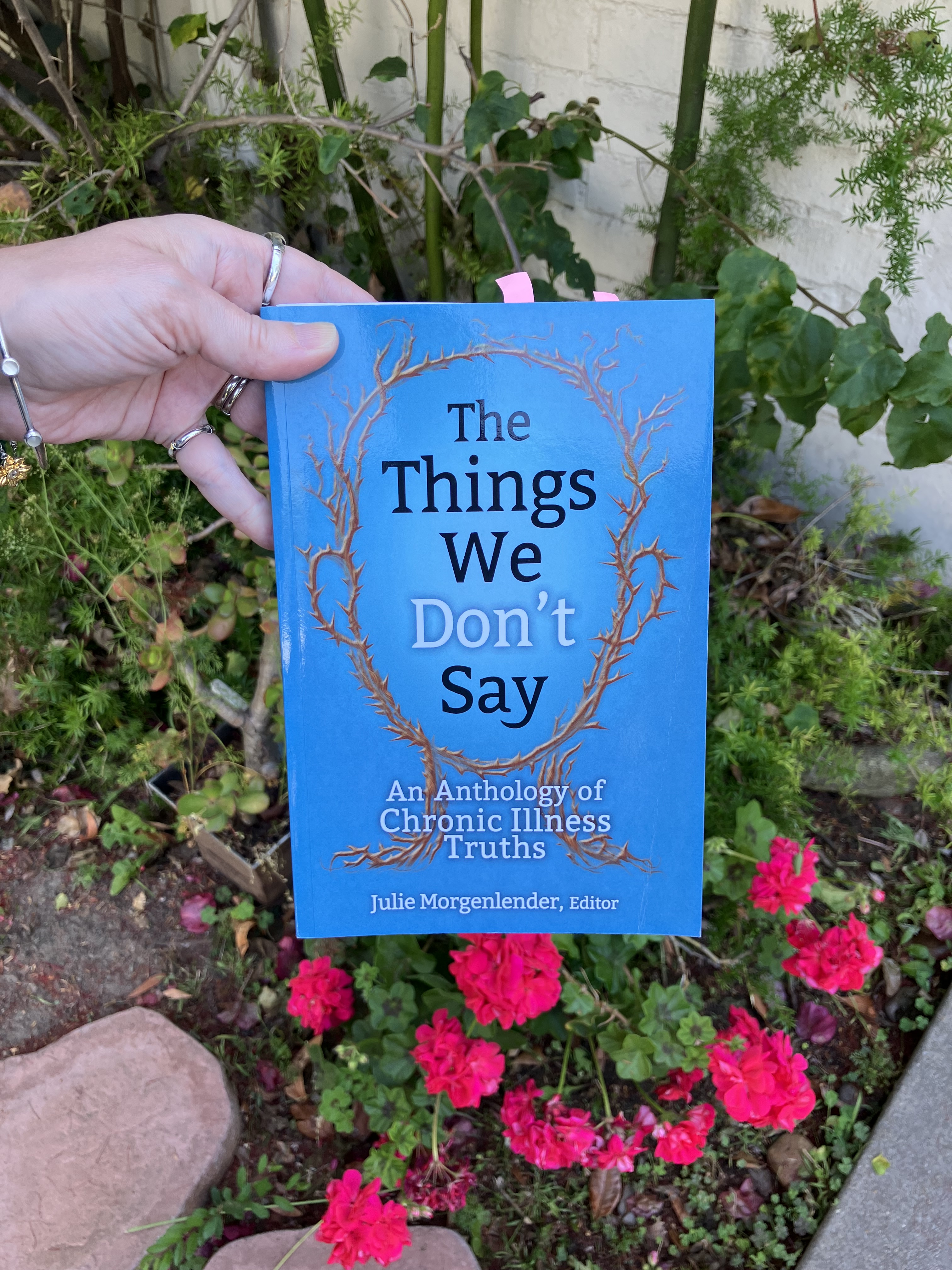
The Things We Don’t Say: An Anthology of Chronic Illness Truths is celebrating its four-year book birthday this month.

This anthology is unlike any other book I have found — and I’m not just saying that because one of my personal essays is included in this collection. (My essay is called “Chronic Contradictions.”)

I’m saying that because it’s true. 

From the back of the book:

“Spanning different ages, ethnicities, genders, sexual orientations, and diagnoses, forty-two authors from around the world open up in fifty true stories about their chronic illnesses and their search for answers, poor treatment by doctors, strained relationships with loved ones, self-doubt, and more.” 

This is the book to turn to when you’re searching for connection. Because though the medical details may vary, many of the emotions and experiences written about are shared by many in the chronic illness world.

This is the book to turn to when you’re trying to help someone else learn a bit about what your chronic illness life is like. This is the book you hand to someone and say, “Here. Please read this story. This is what I mean. This is what it feels like for me. This is what I have been trying to explain to you.”

Readers, have you discovered any other chronic illness-related books that you find helpful and/or resonate with you? Please share! 


Please note: I am including a link to buy the book that I’m highlighting this week. If you use my link, I do make a small commission on your purchase at no additional cost to you. I am working with Bookshop.org which also sends a portion of the profit to support local, independent bookstores.

Stick-To-It-Ness

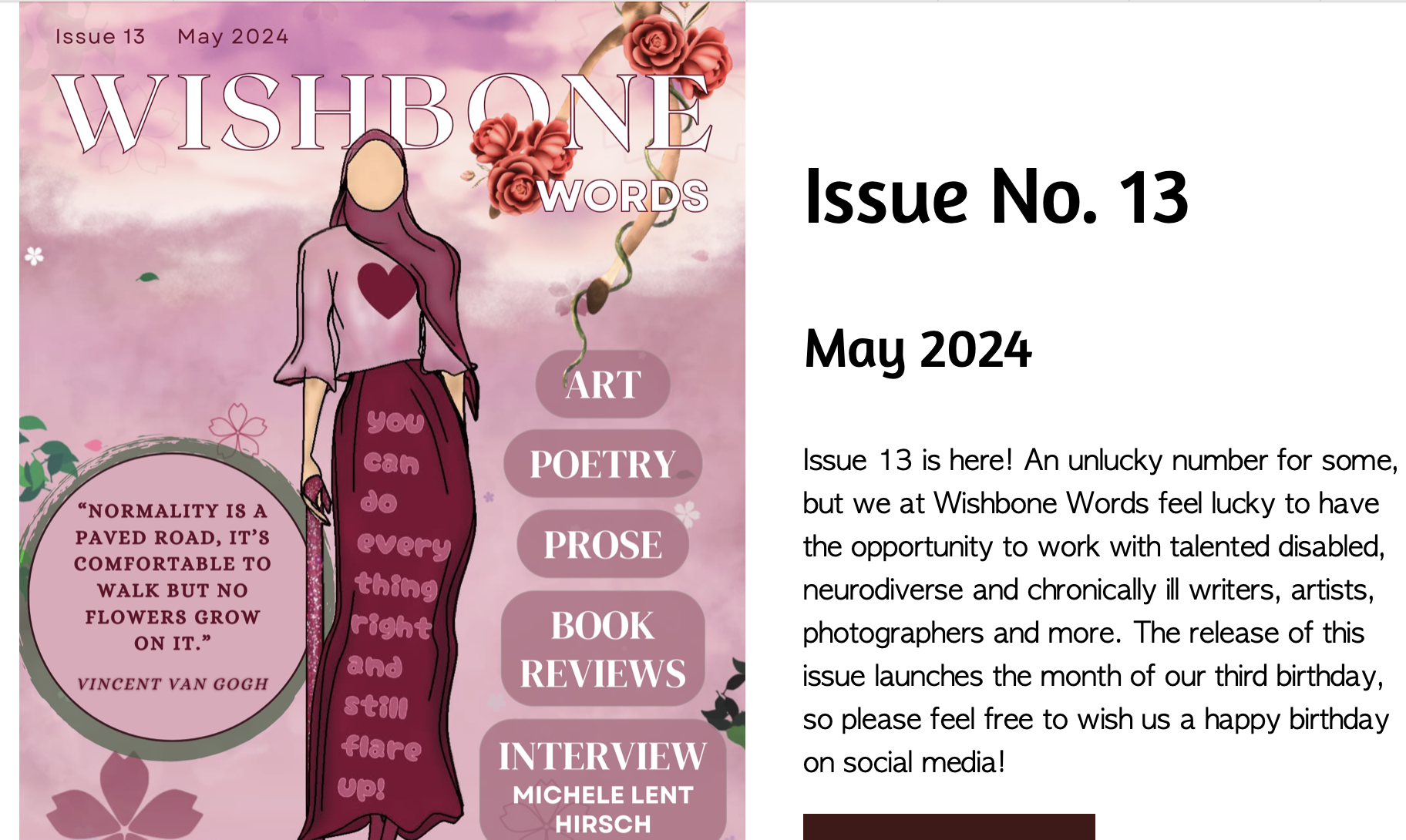
Image credit: Wishbone Words

“I am no longer an educator, and haven’t been a kindergarten teacher in many years. For the last seven years of my career I taught fourth and fifth graders. I no longer think of perseverance in quite the same way as I once did. However, more than ever, I feel like my daily life requires a lot of perseverance. I’m not relying on perseverance because I’m learning a new skill or am faced with one specific event that requires more ‘stick-to-it-ness.’ It is not at all like the period of time when my eighteen-year-old self was learning to drive a stick shift — without popping the clutch or grinding the gears or stalling and having the line of cars behind me start honking when I didn’t immediately get going on a green light. Back then, each practice session ended with me in tears. I remember looking over at my mom in the passenger seat, telling her it was hopeless and we should just stop now, because I would never master driving a stick shift. I was convinced there was something fundamentally wrong with me, since my parents could drive a manual transmission, and I obviously couldn’t. My mom patiently reminded me that driving a stick shift wasn’t easy, and I would definitely learn how, if I kept at it. It was a skill which required time and patience and lots of practice. Perseverance. She was right, as moms tend to be. 
“But that was then.”

This excerpt was taken from my recently published personal essay, Stick-To-It-Ness, which has to do with daily perseverance as it pertains to living with a chronic illness. However, a high level of stick-to-it-ness is also required when you’re writing for publication. This personal essay was rejected by two other online literary journals before finding a home at Wishbone Words, Issue 13

You can click here to find out more information about Wishbone Words

The Power of Little Words

For my birthday (a couple of months ago), one of my closest friends gave me four bracelets. 

Not just any bracelets. 

Bracelets from Little Words Project

I didn’t initially realize the connection between Taylor Swift, Swifties, and friendship bracelets. So while my right wrist may look like I’m part of a trend, that’s not the reason for my bracelets.

My friend knew things have been hard for me lately. Actually, things have been hard for a while now. She also knew I’m quick to offer encouragement and words of praise to others, less quick to show myself the same support.  

That’s where the bracelets come into play. They are a daily reminder — of who I am and how I choose to live my life.

J chose four words for me. 

Teacher. I taught for twelve years. I’ve been retired for eleven years now. And I still miss teaching. (A portion of the proceeds from this bracelet go to AdoptAClassroom.org)

Breathe. Because sometimes I need that reminder to slow down and take a deep breath. 

Resilience. When you’re saddled with a chronic illness, there isn’t much choice. You have to demonstrate a combination of toughness, adaptability, and strength. 

And my favorite word — Badass

“I know it’s not usually a word you use, but you are a badass,” she said.

She’s right — I wouldn’t ordinarily think to describe myself as a badass. I am generally inclined to think of myself in other terms — such as polite, punctual, organized, neat. If you’ve been reading my blog for a while, you may remember a post I wrote last year about  how difficult it was for me to think of three adjectives to describe myself. (In case you missed it or have forgotten it, you can click here to read the post.)

But it means so much to me that J sees me in this way. She not only sees my spirit, she celebrates my spirit. And she wants me to do the same. 

Which is why you’ll find me wearing these four bracelets each day on my right wrist.

Readers, do any of you wear friendship bracelets? What words are on your bracelets? Or, if you don’t wear them, take a look at the Little Words Project website. What words would you choose for yourself?

Chronically Parenting

I don’t listen to many podcasts, but I do make a point to listen to Jean Meltzer’s monthly podcast, Chronically Fabulous. (I wrote about her podcast back in January. If you missed that blog post, you can read it here.)

Her third episode featured special guest, Heidi Shertok. Like Jean, Heidi is also a Jewish author, writing rom-coms, and living with chronic illness. Their conversation focused on parenting when you’re chronically ill. 

Jean, Heidi, and I all have different perspectives based on our different life experiences when it comes to parenting. Jean and her husband made the decision not to have children. Heidi entered into marriage and parenthood as a chronically ill woman. And I become ill when my son was two years old. 

There were several moments when I paused the podcast so I could jot down a note, because I knew I would want to write about their conversation and share it with you, readers. Because finding your community is so important, especially when your body doesn’t behave the way you’d like it to. And when I come across something — a podcast, a book, a line in an article — that allows me to feel seen and understood, it’s something I want to share with you as well. 

With that in mind, here are just a few of the highlights from their podcast conversation: 

– Jean and Heidi spoke of the idea of “masking.” I’ve always referred to it as putting on my game face, others might say it’s like having your poker face on and not letting your true emotions out. It’s the idea that on the surface no one can tell how you’re really feeling inside. You keep your pain, your discomfort, your worry out of sight. You present as healthy — because, at least for me, sometimes it’s just easier. It’s easier not to have to explain why I can’t sit on a tall bar stool, for example. (It’s really painful for me.)

– Something Heidi said really stood out to me. She said she believed her kids were lucky, growing up with a mom who is chronically ill. Her kids have learned/are learning there are all sorts of “normals” within families. There is not one right way for a family to be. Likewise, I hope that by growing up with a mom who has an invisible disability, my son has learned that you often can’t tell what someone is going through just by looking at them; that many people are out and about in the world, dealing with pain we can’t see. 

– Heidi also shared something her rheumatologist told her when she was young: A lot of people are like most flowers, you can put them anywhere and they’ll thrive. While people like Jean, Heidi, and myself, and others with chronic illness, are like orchids; we can only thrive in very specific environments. I love that analogy. 

Dear readers, any podcast recommendations you’d like to share? I also sometimes listen to The Shit No One Tells You About Writing (such a great title!) or an episode of Moms Don’t Have Time to Read Books when I’m doing my daily physical therapy exercises/stretches at home.

There Is No Magic Wand

Image Credit: Yoocan Do Anything

Back in January, I wrote about my word for 2024: Share.

(If you missed it, you can click here to read the post.)

And so far, I have done quite a lot of sharing — here on this weekly blog, on Instagram where I mostly share about books and my writing-related life, and in the personal essays which have been published in anthologies and journals, both in print and online.

This week, I am pleased to share my personal essay, There is No Magic Wand, has been published by Yoocan Do Anything

Here is a snippet:

I would stop by CVS on my way home and pick up the prescriptions my doctor had called in. I felt confident these new pills would fix the problem because that’s what medication had always done up until that point in my life. 
“I could not have known that when it comes to a chronic illness, such as my autoimmune disease, there is no such thing as ‘fixing the problem.’ There was no pretend magic wand I could wave and make things all better, like I did with my then-three-year-old son when he bumped into a corner of the coffee table. No one could kiss my left calf and make the hurt be ‘all-gone,’ like a Mommy’s kisses often do for their little ones.”

Click here to read the essay in its entirety.

Yes, And

Last week was a time of big emotions. A lot happened in my world and with it came a lot of mixed feelings.

My mom celebrated her 79th birthday on the same day my son celebrated his 16th birthday.

A former kindergarten student, a child I taught during my first year of teaching, looked me up online, found my website, and reached out with an email that made me cry. She wrote, “I wanted to thank you for being a great teacher and setting a solid foundation for my education.” Did I mention she’s now a teacher?

We had a family outing to The Huntington Library, Art Museum, and Botanical Gardens. A place we hadn’t visited since March 2020, a week before the world shut down because of the coronavirus. Only this time we visited with me in my wheelchair.

Our former next door neighbor, now 89 years old, remembered my son’s sixteenth birthday and called to offer birthday wishes. 

So, it’s been a lot. 

Something I have learned, through the work with my therapist and my years living with my autoimmune disease, is that it’s possible to feel two very different emotions at the same time. In fact, when you live with chronic illness, it happens quite a lot. At least to me.

I am currently reading The Lives We Actually Have: 100 Blessings for Imperfect Days by Kate Bowler and Jessica Richie. I try to read one blessing a day, though, I admit I sometimes forget and miss a day (or two).

This week, I’d like to share a bit of Kate Bowler’s blessing, “For Stretching Your Heart,” which I think explains these mixed emotions so well:

Yes, I have so much to be thankful for,
and this hasn’t turned out like I thought it would.
Yes, I feel moments of joy,
and I have lost more than I could live without.
Yes, I want to make the most of today,
and my body keeps breaking.
Yes, I am hopeful, and this is daunting.
Yes, I am trying to be brave, and I feel so afraid.”

Because the truth is — yes, things could be worse, and things could be better.

Please note: I am including a link to buy the book that I’m highlighting this week. If you use my link, I do make a small commission on your purchase at no additional cost to you. I am working with Bookshop.org which also sends a portion of the profit to support local, independent bookstores.

Chronic Illness, Chronic Pain, and Gold Stars

I am pleased to share that my personal essay, “Chronic Illness, Chronic Pain, and Gold Stars,” has been published in a new anthology, Chronic Poetics. “The book contains artwork, essays and poetry written entirely by people who have experience of chronic pain and chronic illness.” Each piece of writing has been “arranged and visually interpreted,” making it possible to create an anthology that tells a “visual story as well as a literary one.”

I’d like to share two excerpts from a section near the end of my essay:

“I wish someone had handed me a manual of some sort. My car came with one. The new little handheld vacuum I recently bought came with one. (I don’t remember the last time my trunk looked so clean.) But no one told me how to navigate living with a chronic illness. No one pointed out that a chronic illness is one thing. A chronic illness causing chronic pain is something else.”

“There are moments I want to cry. Moments I want to scream. Moments I want to throw things and break things. Because this is hard. And it’s tiring. And it often doesn’t feel like it gets any easier or any better.” 

You can find more information about the anthology here.

The visual interpretation of my personal essay.