Wendy and the So-So, Not Great, Very Painful Day


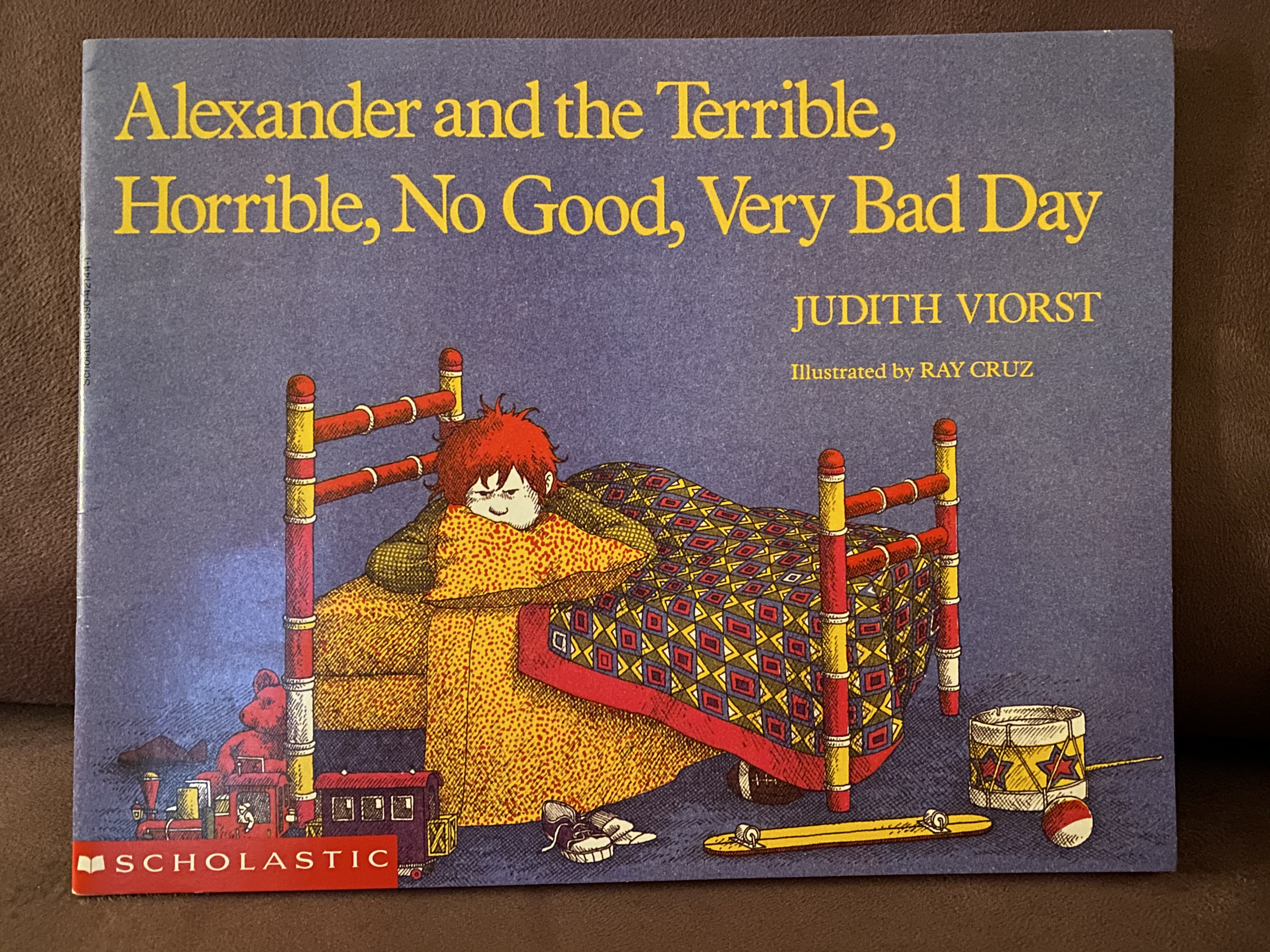
Do you remember the children’s book Alexander and the Terrible, Horrible, No Good, Very Bad Day by Judith Viorst?

It’s such a fun read. 

And even though my son is twelve now, it still sits on his bookcase. (So does The Cat in the Hat. Some books are timeless classics, after all.)

Alexander is having a tough day. It started when he woke up with gum in his hair. Throughout his day, one bad thing after another keeps happening to poor Alexander. He’s convinced life would be better if he moved to Australia.

His mother reminds him that “some days are like that. Even in Australia.”

Lately, I’ve been borrowing Alexander’s words, telling my family that I’m moving to Australia. Here’s why:

– I woke up before my husband’s alarm, after a fitful night’s sleep. My calf felt tight and it hurt just to lie in bed, just to have my calf resting against the mattress.

– I kept dropping things on the floor as I prepared breakfast. The chocolate chips for my son’s Eggo Waffle. My Cheerios.

– I couldn’t decide what to wear. All my usual jeans felt as if they had transformed into Skinny Jeans overnight. They seemed to grip my leg, like plastic wrap covering a plate of leftovers. 

– I went for a neighborhood walk with my son. I felt okay when we left the house. Somewhere, somehow while we were out, the pain came back. It didn’t creep back in either. It barged in. I limped home.

– I went upstairs to get my book, and as I did my knees creaked and groaned. It was painful to listen to and painful to climb the stairs.

– I went to sit out on our patio, to enjoy the sunshine and the colorful sight of my blooming plants, only to discover one of the neighbor’s dogs had pooped on my patio.

– I watered my plants after reading and somehow spilled water onto my feet instead.

– I spent time in the kitchen, boiling water for pasta, hand washing my son’s favorite popcorn bowl, and had to lean against the kitchen counter. My thigh began to hurt. Hurt like someone or something had hit it. Hard.

– I gingerly touched my leg, trying to find out why it felt different. The back of my left knee was puffy, swollen, and tender.

– I dealt with the pain all day long. 

– It wasn’t a terrible, horrible, no good, very bad day.

– But it wasn’t a wonderful, fantastic, great, very good day either. 

But I think even in Australia my leg would hurt, my socks would get wet if water spilled on them, and I’d be annoyed and disgusted to find dog poop on my patio.


Reasons To Still Be Happy

Sometimes I need to read to escape. 

Not for information. Not for facts. But to step into a world other than my own.

Sometimes I read for hope. 

For reassurance. 

For that soothing feeling you get when you drink a really good mug-full of hot chocolate on a cold day.

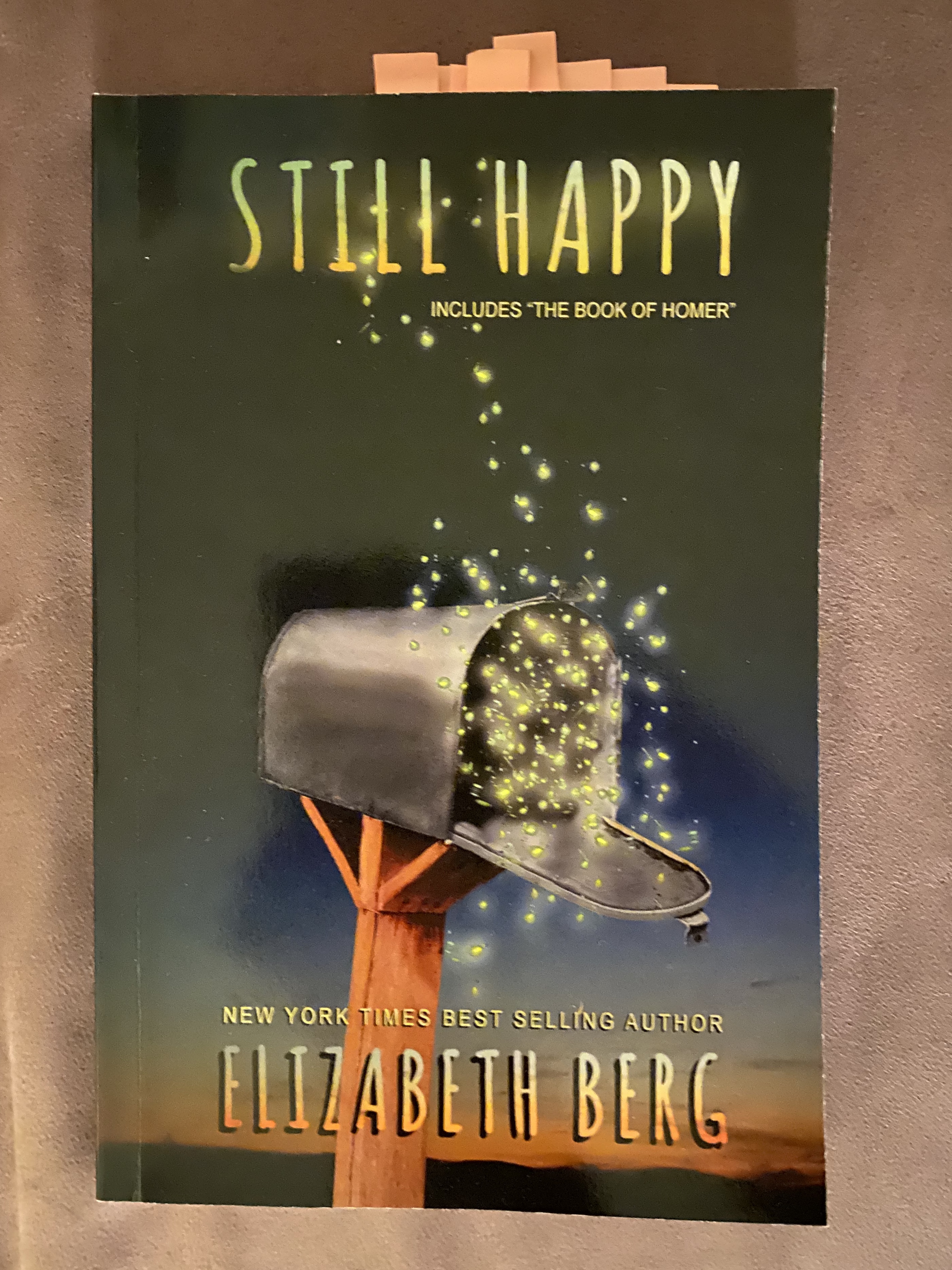
That’s how I felt when I read Elizabeth Berg’s Still Happy.

The book is a collection of Ms. Berg’s Facebook posts, and since I am not on Facebook, this book was the only way for me to read her delightful observations. (By the way, if you’re curious you can click here to read my article “Why I’m Not on Facebook” on Role Reboot.)

This week I’d like to share some delightful passages with you.

“I want to be a responsible citizen. I don’t want to bury my head in the sand. I want to work hard to try to make a better world not just for our beautiful children and grandchildren but for our beautiful old people and our beautiful selves. We live in such hard times. We need to take care of ourselves so that we can take care of others. Therefore the onus is as much on us to seek out and bask in little pleasures (or big ones), to relish or become demonstrations of love and content, to celebrate nature’s beauty and humanity’s worth – as it is to read the newspaper and write our congress people and vote in November.”

“I write because I need to. I write to get things from the inside, out. But I publish to try to connect.”

“I believe there are times in our lives that are little emergencies, when we see that the balance has shifted too far in one direction or the other, and parts of ourselves need more care and feeding than we’ve been willing to give.”

“I feel that we are living in times that assault us every day. I feel that the national mood is dark and despairing. But I also still believe that most people are basically good. We get lost sometimes, we get confused, we get combative, but at heart we are basically good.” 

“I have to hope that the biggest part of human nature is ever on the side of life and love, and that any day now, we will see the evidence of that. It will never be perfect, I know, but surely we can do better than this.” 

Note to my readers – Elizabeth Berg published this book in 2017, but many of her passages sound as if they are written for our current trying times. 


An Expression of ‘Me-Ness’

One of my bad habits is collecting paper – articles, advertisements, clippings. I cut them out, sometimes tear them out, and stash them away – in folders, in a wicker basket on the shelf under my coffee table, in an accordion folder. 

One of my projects in recent weeks has been to sort through these papers, to re-read the articles and decide if I want to keep them or recycle them.

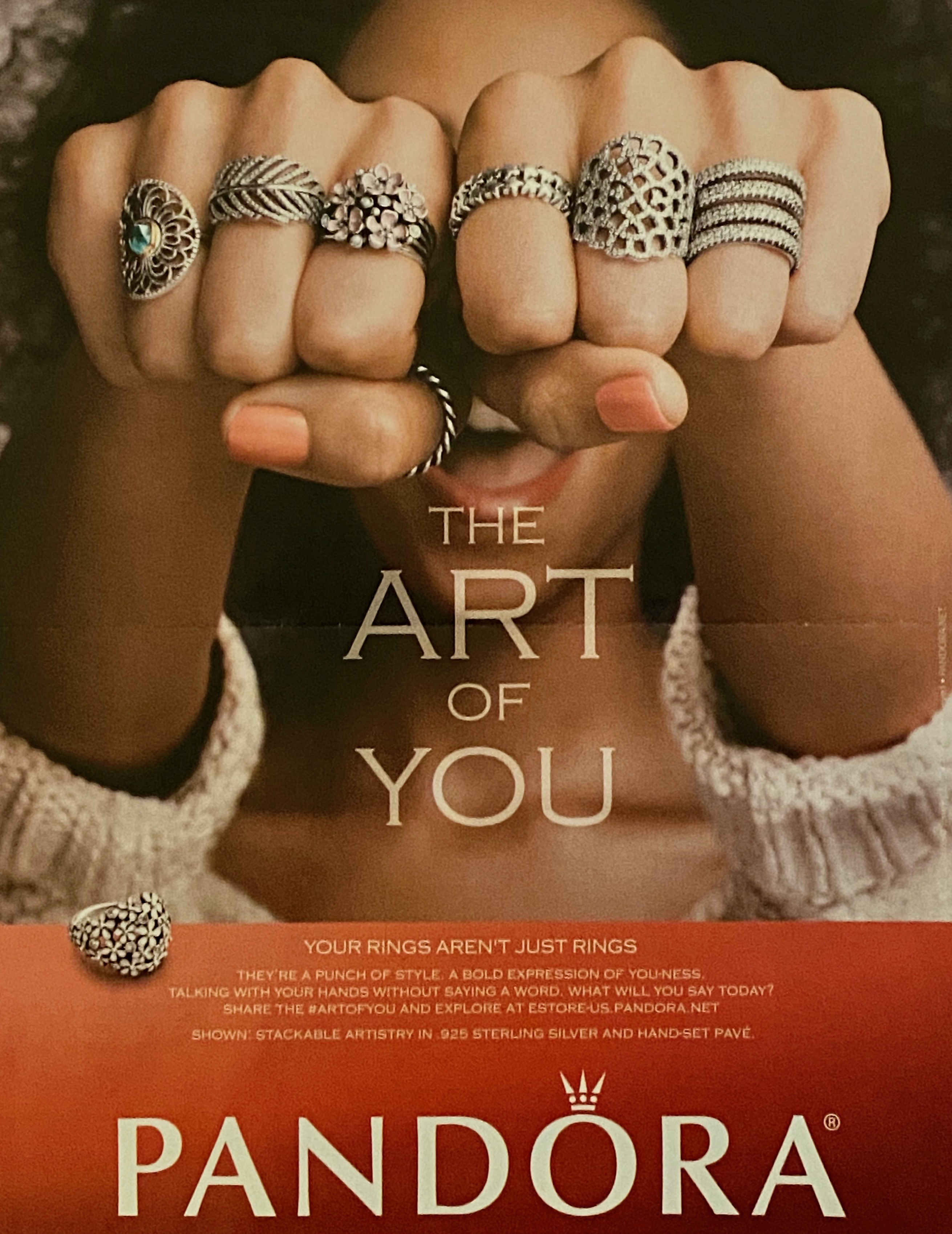
That’s how I came upon this ad for Pandora jewelry.

On eight of my ten fingers, I wear nine rings. And while only one of my rings is a Pandora ring, I love the ad. 

Because my rings are an extension of my personality. 

To quote the ad: 

“Your rings aren’t just rings. They’re a punch of style. A bold expression of you-ness.”

Which is why it was devastating when I could no longer wear my rings. 

You can click here to read a personal essay (“How My Identity Has Been Affected by the Changes in My Hands Due to Illness”) I wrote a few years ago. My autoimmune disease may manifest itself as pain and weakness in my legs, but that doesn’t mean my hands, and my rings, haven’t also been affected. 

Readers, I’m curious. Do you wear any jewelry that you consider to be an “expression of you-ness”? Feel free to share in the comments section.


A Title for the Times

The problem with being a reader with an insatiable appetite is that I read so much I don’t always remember books I’ve read in the past.

During this shutdown, I’ve been doing the book-version of shopping from my closet. I’m re-reading and re-discovering books I already own and have read in years past. 

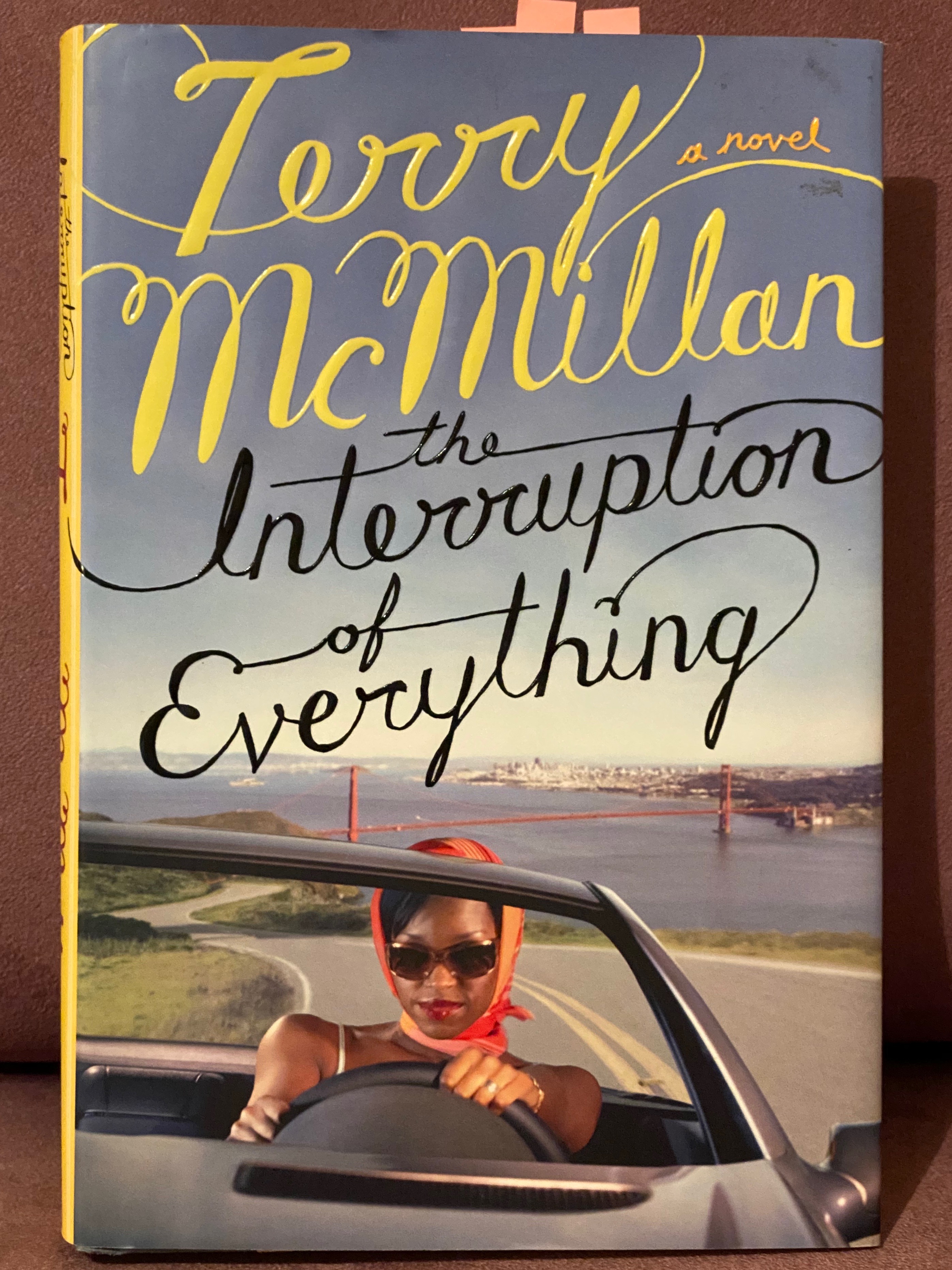
My latest “re-read-but-it-felt-like-a-new-read-because-I-read-it-so-long-ago-I-didn’t-remember-it” was Terry McMillan’s The Interruption of Everything. (In my defense, the book was published in 2005.)

Because without even reading the book’s jacket copy, the title was perfect for life right now.

While the protagonist, Marilyn, is the same age as me (44), her kids are in college. My son will be starting the 7th grade this fall.

But how perfect is this paragraph when it comes to describing moms?

“Being a lifetime wife and mother has afforded me the luxury of having multiple and even simultaneous careers: I’ve been a chauffeur. A chef. An interior decorator. A landscape architect, as well as a gardener. I’ve been a painter. A furniture restorer. A personal shopper. A veterinarian’s assistant and sometimes the veterinarian. I’ve been an accountant, a banker, and on occasion, a broker. I’ve been a beautician. A map. A psychic. Santa Claus. The Tooth Fairy. The T.V. Guide. A movie reviewer. An angel. God. A nurse and a nursemaid. A psychiatrist and psychologist. Evangelist.”

And then there’s this paragraph, about acknowledging the need for change:

“It has taken me a long time to recognize that I’ve never put myself first, I’m always on the bottom of my things to do list and I keep getting carried over to the next day/month/year. But not this time. I think I finally get it. You don’t have to give up everything to own your life. And you don’t have to give everything you own to fuel someone else’s.”

That’s the part I’m working on.


Unplanned, Unexpected Lessons

On Friday the 13th (March 13th), the world changed as we knew it.

My son came home from middle school thinking he’d spend the next two weeks at home because of the district-wide shutdown.

Two weeks turned into almost three months.

In that time, my sixth-grade son and I worked through his assignments. We read. We discussed. We learned. 

Click here to be redirected to Motherwell Magazine to read my recently published essay, “7 Unexpected Things I Taught My Kid During Homeschooling.”


In Loving Celebration


Friday, June 12th is Loving Day. The name comes from Loving v. Virginia (1967), the Supreme Court decision which “declared all laws against interracial marriage unconstitutional in the United States.”

1967. That was only 53 years ago. 

(By the way, if you haven’t already, be sure to check out the 2016, Oscar-nominated film Loving.  The movie is based on the real life story of Richard and Mildred Loving whose own interracial marriage and legal battles ultimately made it possible for my husband and I to marry.)

My husband and I married in 1999. We were lucky; race wasn’t an issue for us. My parents were entirely accepting of my husband-to-be; I think because they had dealt with their own difficulties prior to marrying. When they married, in 1975, their different religious backgrounds weren’t readily accepted by their parents. (45 years later, they remain happily married.)

But even though it was 1999, and we were on the verge of a new millennium, I had the hardest time finding a wedding cake topper featuring a mixed-race couple. My mom and I visited shop after shop with no luck. Salespeople couldn’t make any suggestions about where we might locate such a cake topper. And don’t forget – this was in 1999. The internet was not what it is now. 

I’ve always been disappointed that I had to settle for the closest thing I could find — a cake topper that featured a white woman with blond hair (I’m brunette) and a dark-skinned groom.

Hopefully, other brides no longer have that issue. 

And hopefully, times are changing.

I think about the famous African-American individuals we learn about in school. The familiar names – Rosa Parks, Jesse Owens, Jackie Robinson, just to list a few. I think about the names that Hollywood has taught us – for example, Katherine G. Johnson, Dorothy Vaughan, and Mary Jackson (from Hidden Figures) and Mr. and Mrs. Loving.

Why aren’t those names taught? 

And what other names remain unknown to most of us?


My Confessions as The Mother of a Biracial Son


This is our family.

The events this past week, this past month, these past months, years, and decades directly impact our family.

And, like I often do, I had to sit down and write about it.

Click here to be redirected to Motherwell Magazine’s Facebook page to read “My Confessions as The Mother of a Biracial Son.”

Let’s continue the conversation. 


Taking It Day By Day

When someone asks how we’re doing, I answer, “We’re taking it day by day.”

But what I really want to say is, “We’re taking it bird by bird.”

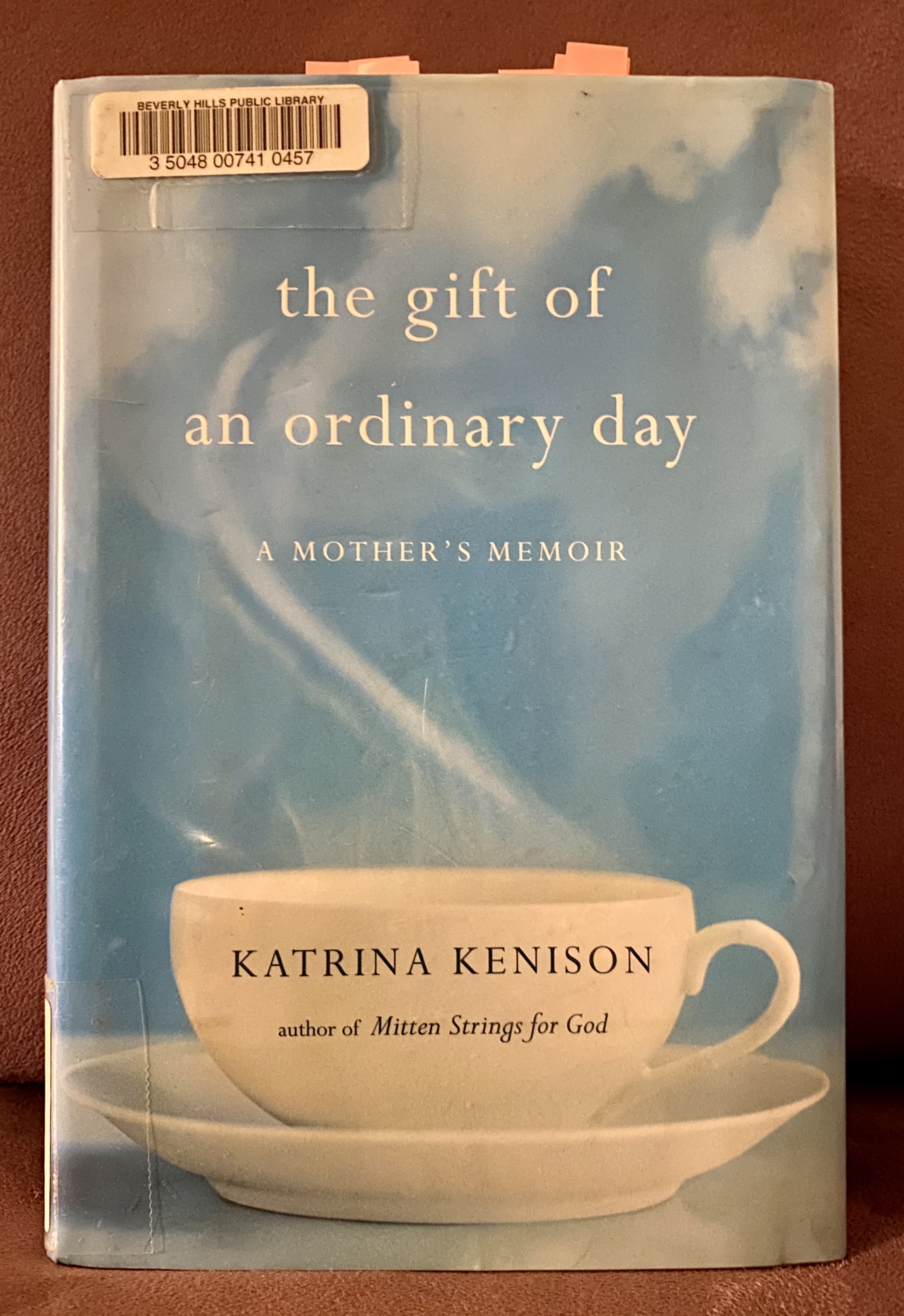
My second answer is a reference to what is considered a classic writing book, Anne Lamott’s Bird By Bird: Some Instructions on Writing and Life. 

I’ve read this book in the past, but now seemed like a perfect time to take it off my bookshelf and re-read it.

While it’s especially valuable for writers, I do believe much of the book can be applied to readers and artists in general.

During these challenging, scary, unchartered times here are some words from Bird By Bird that I hope help get you through your day-by-day.

“Hope begins in the dark, the stubborn hope that if you just show up and try to do the right thing, the dawn will come. You wait and watch and work; you don’t give up.”

“If you are a writer, or want to be a writer, this is how you spend your days – listening, observing, storing things away, making your isolation pay off.”

– “I honestly think in order to be a writer, you have to learn to be reverent. If not, why are you writing? Why are you here? Let’s think of reverence as awe, as presence in and openness to the world.” 

– “My deepest belief is that to live as if we’re dying can set us free. Dying people teach you to pay attention and to forgive and not to sweat the small things.”

– “To live as if we are dying gives us a chance to experience some real presence. Time is so full for people who are dying in a conscious way, full in the way that life is for children.” 

– “Don’t be afraid of your material or your past. Be afraid of wasting any more time obsessing about how you look and how people see you. Be afraid of not getting your writing done.” 

– “Writing and reading decrease our sense of isolation. They deepen and widen and expand our sense of life: they feed the soul.”

In Pursuit of ‘Stubborn Gladness’

One view of our back patio garden.

More and more, I find myself in a conscious pursuit of happiness. And calm. And simple moments of joy.

Like most people, I find it too easy to become overwhelmed and frightened by the news.

When I was a teacher, my students had “independent time.” During that time they completed “must do’s,” and when those were done, they could choose something from the “may do” list. 

I know my days should not only be filled with “must do’s” such as homeschooling my sixth grade son, cleaning the house, paying the bills, and cooking the meals. 

I know that it is just as important to incorporate “may do’s” into my day – things that fill me with happiness, things I do for the simple pleasure it brings me.

And I’m lucky. There are plenty of things that bring me joy at home. 

I read. Books and magazines. Non-fiction and fiction. 

I tend to my garden – both the back patio and front porch. I sweep the jacaranda flowers, pull weeds, and water my plants. My son and I go outside every day for a neighborhood walk and sometimes a bike ride.

But, these things that take me outside of the house and bring me joy also bring me additional pain.

Since this pandemic shutdown, my pain has been consistently worse. Sometimes it’s immediate. From the moment I wake up in the morning, often after a fitful night’s sleep, my legs feel heavy. Each step makes me feel like I have invisible weights strapped around my lower legs. Sometimes the pain gradually increases as the day goes on, until one trip back up the stairs leaves my knees creaking loudly and me gripping the banister, taking each step very slowly, very cautiously. Sometimes, I may be reading on my patio, swatting away a fly, and my jeans suddenly feel very tight and restrictive around my left calf. And all I can think of is David Schwimmer’s character, Ross, struggling with his leather pants in a Friends episode. Except when it happened to him, it was funny. When it happens to me, it means it’s time for me to go inside and roll up my pants so my calf doesn’t feel the fabric against it. 

And sometimes, my pain wasn’t too bad until I squatted down to pull weeds or on the way back home after a mile-long walk with my son. 

Yet, I continue doing these things. When so many other simple pleasures have been taken – browsing my local bookstore, enjoying French Crepes at the Farmers Market – I continue to do these things that make me happy in the name of “stubborn gladness.” 

(In case you missed it, click here to read an earlier blog post, “Announcing My Motto For Life” which explains the term “stubborn gladness.”) 

And you, dear readers? How do you find joy and moments of pleasure during these challenging times? Feel free to share in the comments section. 


10 Ways Our Family is Dealing with the Shutdown

During one of our daily neighborhood walks, my twelve-year-old son said out loud what most of us have been thinking.

“This is hard.”

It is hard. It’s hard when the world, as he’s always known it, is so vastly different. It’s hard when he can’t hug and kiss his grandparents. When he can’t go to school (and this is a boy who loves school). 

We talked about it. About how sometimes it’s easier than others. Sometimes it doesn’t even seem so bad. We’re all sleeping in a bit later than we would be if the world was back to normal. 

And other times, it just feels like too much. Too many unanswered questions. Too many fears.

I’m a list person. So I thought one way to help would be to make a list of the ways in which our family is doing good, the ways we’re helping and contributing. Because we have it easy. We’re not frontline workers. We are able to pay our bills each month and continue to put food on the table. 

And the best part of the list is realizing that there are so many ways each of us can help. 

1. Follow the guidelines.  We keep our distance when we’re out walking or biking in the neighborhood, and we’re washing our hands more than we ever did before.

2. Shopping only when needed.  I used to go to the market weekly. It was something my son and I did each Saturday. But now, venturing into the market feels like I’m entering a battle zone. I’m armed with my hand sanitizer and mask. I try not to browse. I check my list, get in, and get out as quickly as possible. And I’m stocking up so we don’t have to go out each week.

3. Thanking others.  I don’t always get to the door quickly enough to offer our mail carrier or delivery person a bottle of water. But after we hear the mail drop through the slot or a box bang against our front door, we yell out “thank you.” I hope the delivery person hears us. I hope it makes them smile.

4. Support local spots.  We visit one of our favorite cafes each week. We purchase lunch and bring it back home. It saves me from preparing a meal, but more than that, it provides some monetary support to a small business.

5. Make a monetary donation.  We learned through our favorite cafe (see #4 above) that there was a way to help not only the cafe but our frontline workers as well. Restaurants are preparing meals that are then delivered to local doctors and nurses. It’s a win-win for everyone, and a cause our family felt good about donating to.

6.  Shop online.  I don’t think I’ve ever done this much online shopping before. I like to browse. To wander in my local Barnes and Noble (click here to read my blog post “Who Else Misses Libraries and Bookstores?”). To go to Target not just with a list of things I need but with an eye open for a surprise, an unexpected treasure that would make a great gift for a family member or friend. Instead, we’re being responsible, buying online the things we need, and once in a while, a few items we want. (I recently ordered former President Barack Obama’s memoir Dreams from My Father, a book that has been on my want-to-read list for several years now.)

7.  Purchase With a Cause.  Originally we were wearing the masks that were included in our emergency backpacks. They got the job done, but they were rather scratchy and plain looking. We’ve since upgraded to “Los Angeles Clippers Face Coverings.” Not only are we protecting ourselves and others while showing our team spirit, all proceeds are donated to Feeding America. 

8.  8:00 pm Cheering.  Each night at 8:00 pm, our family either opens the front door or stands near one of our windows and starts cheering. My son whoops and hollers like he’s at a Clippers game. My husband and I clap our hands. When we pause, we hear others clapping and shouting and horns honking. It’s one small way to show our appreciation to our frontline workers and one way to feel connected with our community.

9.  Cleaning Out Closets.  We’ve spent some of this time at home going through my son’s closet and bookcases. We have a full bag of gently used clothing, books, and games ready to donate to Baby2Baby as soon as they’re taking donations again. It’s nice to know that the items that my son enjoyed will soon make another child happy.

10.  Express Gratitude.  It won’t change anything to start listing all the reasons why we’re unhappy about this shutdown. Instead, it’s important to remember that we’re lucky. My husband is employed. My son is completing his sixth grade year. We’re together. We’re safe. We’re healthy.

And right now, we can’t ask for more than that.

Readers, what are you doing during the shutdown? What helps you get through the difficult days? Feel free to share in the comments section.