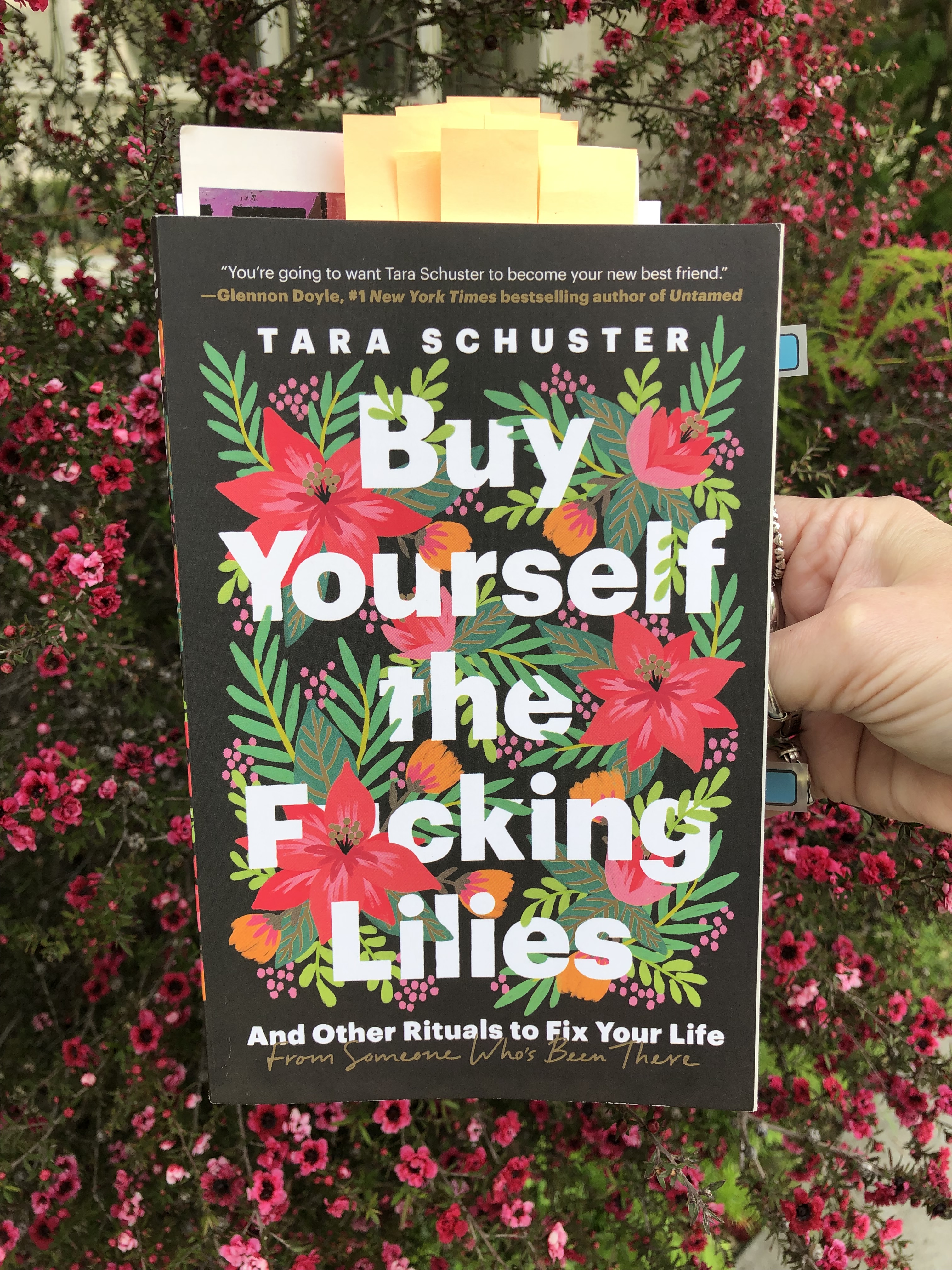
Braided

I am not a baker. Meaning, I’m not a multiple-ingredients, multi-step-recipe kind of baker.

I’m more a Ghirardelli-Dark-Chocolate-Brownie-Mix (which only requires three ingredients) type of baker. 

However, I was so intrigued by the premise of Braided: A Journey of a Thousand Challahs by Beth Ricanati, MD. (And I was tickled to learn that before her challah-baking, Ms. Ricanati counted her brownies, made from a Ghirardelli brownie mix, as her specialty.)

Here’s part of the description from the back cover:

What if you could bake bread once a week, every week? And what if the act of making bread — mixing and kneading, watching and waiting — could heal your sense of being overwhelmed? It can. This is the surprise that physician-mother Beth Ricanati learned when she started baking challah: that simply stopping and baking bread was the best medicine she could prescribe for women in a fast-paced world.”

And here are some of the passages I marked while reading:

“Actions always speak louder than words: our children absorb and learn by watching us, not necessarily listening to us.”

“This was a big lesson for me. It took making challah again and again to realize that when something goes wrong, it is not always because I did something wrong. ‘Sorry’ used to be one of my favorite words. A guy friend of mine bet me in high school that I couldn’t stop saying sorry. ‘Sorry,’ I replied. Alas, reflexively, I still want to blame myself first, to assume that I must have done something wrong.”

“Waiting for the yeast to proof exercises more than patience. Waiting also exercises humility. It’s the greatest of all character traits, according to the Talmud. Humility supplants the ego, pushes away the tendency for self-centeredness. With humility comes the ability to have empathy.” 

“We can’t always be happy. Sometimes happiness is taken from us. Sometimes terrible things really do go bump in the night. While painting challah with a red-tipped brush may seem childish, may seem frivolous, I look forward to this with almost too much glee. In fact, whenever possible, I insist on doing this step myself, instead of handing it over to a child or a friend or anyone else. I want the reminder. I want the physical reminder that when we have the choice to be happy, we have to grab it. We have to take it and own and cherish it. It is not always ours to choose.”

“I found in making challah that the magic for me is in the process of making challah. No ends-justify-the-means here. What happened as I went through the eleven steps each Friday in this challah recipe is where I really learned to be present. To slow down for a moment each week. To appreciate the here and now. To reconnect with women. I found through these eleven steps that challah is the ultimate soul food for me.
“It was here all the time, I just didn’t see it. I was so concerned with doing the right thing all the time, being the right person at the right time, that I had unknowingly lost the enjoyment, the fabulousness of the here and now.”

Please note: I am including a link to buy the book that I’m highlighting this week. If you use my link, I do make a small commission on your purchase at no additional cost to you. I am working with Bookshop.org which also sends a portion of the profit to support local, independent bookstores.

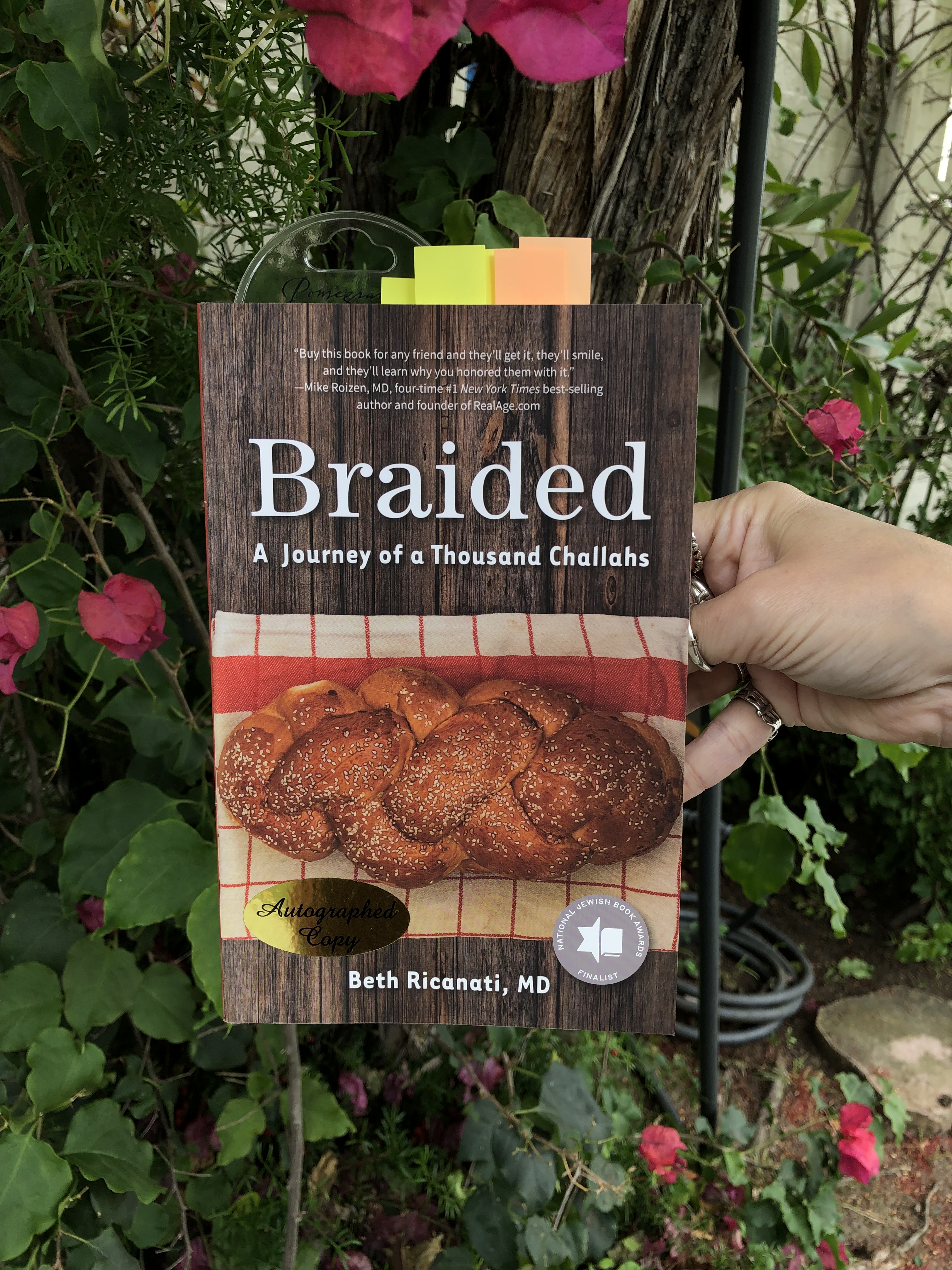
My What If Year

Do you ever think about other careers you might have had? Other choices you might have made? Other paths you might have taken?

And what if you had the chance to put much of your current-daily-real-life on pause and try out one of those unchosen careers? Would you take the chance to explore?

Alisha Fernandez Miranda did! And she wrote a memoir about it called My What If Year

From the back cover of the book:  “Delightfully irreverent, My What If Year recounts the adventures of a successful, Latina CEO and mother of twins who — on the cusp of turning forty — takes a break from her job for one year to explore the dream careers she never pursued. Alisha’s hilarious internship adventure takes her to Broadway, the London art scene, a posh Scottish hotel, and the workout world.”

Such a fun read! Here are a few of my favorite passages:

During her first internship, Ms. Miranda writes:  “How long had it been since I had been happy? For so long I thought the pursuit of happiness had been what was guiding me, but now I wasn’t so sure.” 

“I had no regrets, but it dawned on me that maybe my internship adventure, was, in a way, about revisiting that time of my life, a time when all the pages ahead were blank and unwritten.”

“Leaning into my strengths let me ignore my weaknesses. Yes, it allowed me to achieve and find success in the things I was good at. But I was starting to question whether I needed to be spending more time nurturing those tiny seeds of things I was terrible at — serving dinner, for example — to see if maybe they might blossom into something more, given some effort and some mistakes. Maybe it didn’t matter if it was ‘the best’ if I was doing something I loved. I didn’t even know what being the best meant anymore in this new world.”

“Truthfully, I was looking forward to seeing everyone. I was no longer as afraid of being subsumed in these other identities and knew that the core of who I was, or whoever I was figuring out I wanted to be, at least, was strong enough to stand on its own. In fact, the heft of my obligations no longer seemed overpowering; I had started to feel comforted by them, like a weighted blanket that kept me grounded.”

“ ‘Joy’ — such a simple, small word that holds so much complexity. It’s more than happiness. It’s ebullience. It’s celebration. A party all day, every day, where everyone is invited. People think joy is elusive, and they’re right; its impermanence is what makes it all the more important to cultivate, nurture, and appreciate it whenever it comes your way.” 

“But as I aged, I came to know that nothing is guaranteed. If you wanted to enjoy as much of life as possible, you had to put some intentionality behind seeking joy. You had to pay attention. If you didn’t it was likely to slip through your fingers.” 

“I didn’t want to have to keep taking side paths and then retracing my steps back to the main road. I wanted the detours to be the main road. Over the past few months, I had finally gotten, for brief moments in time, the chance to be the versions of myself I had seen in the shadows of my memories. I loved the chance to step into their shoes, but I didn’t want to be any of them, really. I wanted to be original me, but with the freedom to take the pieces from each and carry them with me as I continued on ahead.”

“One of the things I appreciated most about being an intern was the ability to not feel overwhelmed by my mental load. Making space meant that, all of a sudden, my brain had more room to think about other things and to consider other possibilities. Ideas for new projects sprang up like daffodils in the springtime. There was a lot in there that had been obscured by the constant to-do lists. My internships had given me a chance to see those things clearly.”

“I didn’t know much about what the next chapter of my life would hold, but I knew I needed to embody the spirit of being an intern in whatever I did: be adaptable; learn to fail; be okay with not being the best; let go of the plan sometimes; and above all, listen, learn, and find joy in every day.” 

Please note: I am including a link to buy the book that I’m highlighting this week. If you use my link, I do make a small commission on your purchase at no additional cost to you. I am working with Bookshop.org which also sends a portion of the profit to support local, independent bookstores.
(I apologize if any part of this week’s blog format looks strange. There may be a number or letter randomly showing up. Please, let’s just pretend it’s not there.)


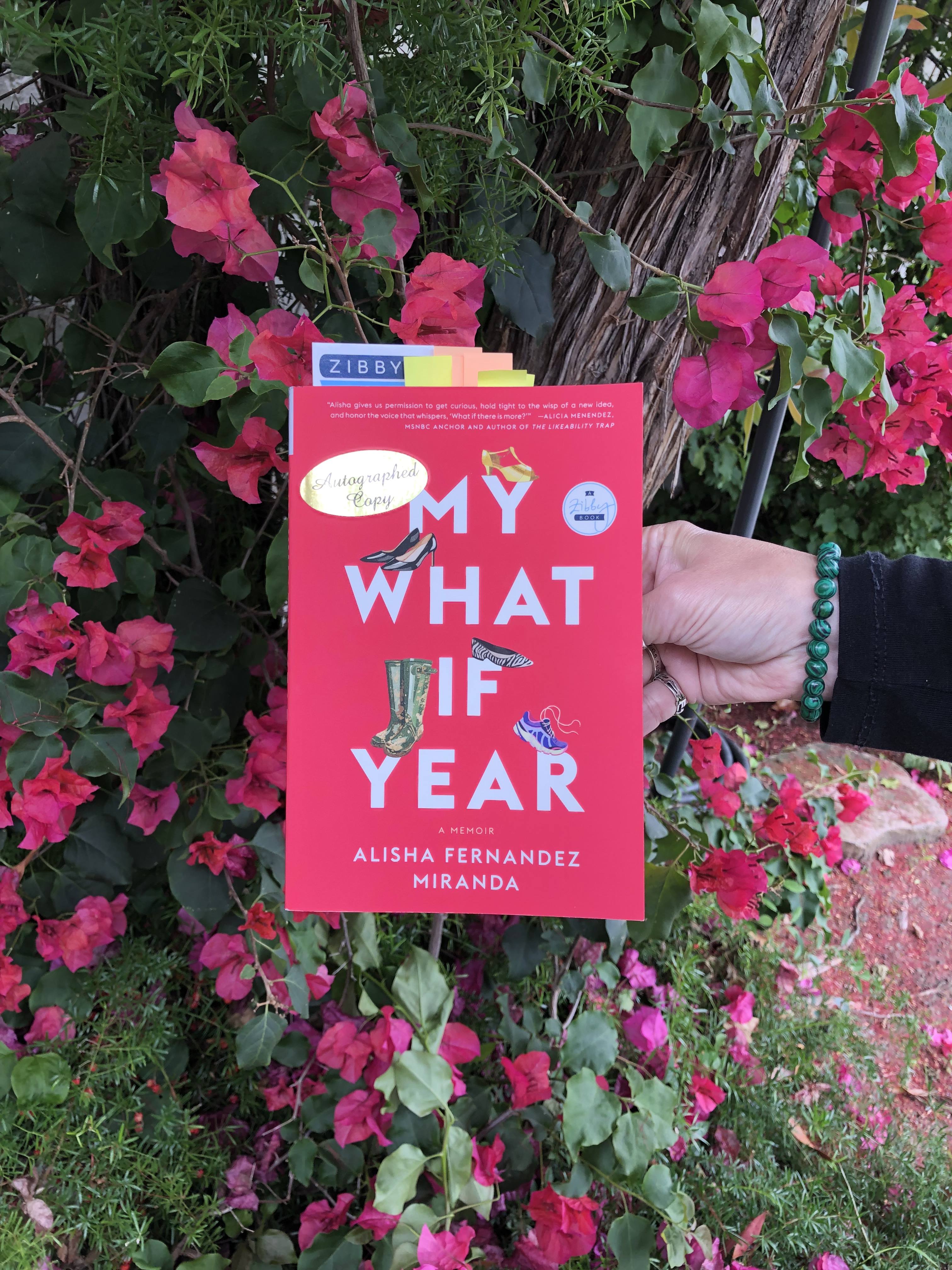
Buy Yourself the F*cking Lilies

Sometimes you come across a book that you didn’t realize you needed to read until you’re in the middle of reading it, and you notice you’re running low on sticky notes because so many pages need to be marked.

That was my experience reading Buy Yourself the F*cking Lilies: And Other Rituals to Fix Your Life From Someone Who’s Been There by Tara Schuster.

Ms. Schuster’s book is another wonderful example of how writing the specific actually makes it universal. Ms. Schuster and I had extremely different childhoods. Our adult life experiences are quite different as well. I’m older than she is, married, and the mother of a fifteen-year-old son. Yet, I found so much to love in this book. So much that spoke to me. So much that said, “Wendy try this. Wendy, you need to do this. Wendy, pay attention to this part.” 

Here are just some of the passages that I found to be deserving of sticky notes:

“What you are about to read is a guide to healing your traumas, big and small, in the pursuit of creating a life you will adore and be proud of. You don’t need to have had a mess-wreck-disaster childhood like mine for these tools to work for you. These lessons in self-care will be useful even if you had super-stellar parents who nurtured the shit out of you. This book is for anyone who simply needs to take better care of themselves — anyone who wants to lead a life they choose, embrace, and fucking love.”

But I decided it was time to stop comparing my pain to others’, time to quit telling myself that I shouldn’t feel this way, and time to start focusing on how I actually did feel, because that was real.” 

“Buy the fucking lilies. You are worth seven-dollar lilies. You are worth the thing that instantly makes your life better. I’ve heard people talk about their favorite exercise class this way. I’ve heard people talk about an order of guacamole with their tacos this way. I’ve heard people talk about the ten-dollar, ten-minute massage at the nail salon this way. That small, pleasurable thing that makes you feel like you are treating yourself — do not deprive yourself of this. Buy the fucking lilies, take the class, order the guac, get the massage.”

“Above all else: You are worth the lilies. The small, attainable luxury of lilies is not something to stress about, it is not something to deny yourself, it is something to make plans for and embrace. Small things that make you happy ARE a part of taking care of yourself. If you can’t put your money where your mouth is and say, ‘I am worth the lilies,’ or ‘I am worth six-dollar beef jerky’ or ‘I am worth the almond butter that makes me actually look forward to the morning,’ then why are you working so hard at your job anyway? Seven-dollar lilies won’t ruin you and they won’t make you poor; they will make you stronger. You are stronger when you treat yourself well. What are your lilies? Please go buy them today. If you feel weird about it at all, just blame me and then enjoy the fuck out of your flowers.” 

“What feeds your well? What’s the thing you love to do that makes your heart glad? Is it flower arranging? Is it people-watching at a café? Is it reading a book in a park without knowing what time it is? Is it going back to that dance class you used to love but for some reason stopped taking? What makes you so happy that it gives you rest and ease and feels so damn good that it sets your soul on fire with inspiration? These things that inspire us are often the easiest to lose sight of. We give them up because there is just so much ‘to do’ in a day. We are ‘very busy,’ after all. But you do not gain strength from denying yourself pleasure and being so serious about your life. Instead, keep your well full, and be astonished at the power, the motivation, the brilliance that you will inevitably find in the rest of your life.”

“What I have learned is that you are stronger when you give yourself incredible kindness.” 

Many more pages are marked with a peach-colored sticky note. In fact, Buy Yourself the F*cking Lilies inspired one of my April blog posts. (In case you missed it, you can read it by clicking here.)

There is just so much goodness in this book. Reading this book feels very much like having a super close friend right next to you, helping you to see your own wonderful-ness. A super close friend who wants you to see the sparkly brilliance within yourself. To which I say, “Thank you, Ms. Schuster. I’m working on it.” 

One additional note, Ms. Schuster has written a second book titled, Glow in the F*cking Dark: Simple Practices to Heal Your Soul From Someone Who Learned the Hard Way. You can bet it’s on my wish list!

Please note: I am including a link to buy the book that I’m highlighting this week. If you use my link, I do make a small commission on your purchase at no additional cost to you. I am working with Bookshop.org which also sends a portion of the profit to support local, independent bookstores.
Describe Yourself — Easier Said than Done, At Least for Me

The other night at dinner, I asked my fifteen-year-old son a question.

What three adjectives would you use to describe yourself?

I was inspired to ask, because I’m reading Tara Schuster’s book Buy Yourself the F*cking Lilies: And Other Rituals to Fix Your Life, From Someone Who’s Been There and earlier that day had read the chapter titled “If You Can Play Nice with Others, Play Nice with Yourself: Do One King Thing for Yourself on the Daily.” (By the way, I’m loving this book; more to come on this book in a future blog post or two.)

In the first paragraph of that chapter, Ms. Schuster tests her readers:

How nice are you to yourself? Don’t know? Let’s try a test. Right now, write down ten things you like about yourself. Go ahead and use the margins of the book.” 

I didn’t write in the margins of the book, though plenty of pages are marked with sticky notes and yellow highlighter. But I did pause in my reading and try to mentally list ten things I like about myself. It’s a hard thing to do.

So at dinner that night, I decided to try out an easier version on my son. 

What three adjectives would you use to describe yourself?

Of course, he first wanted to know why I was asking, and I told him I was just curious, based on something I had read in my book.

My high school-freshman-son took a few seconds before replying.

“Creative. Unique. Likable.” 

It was quick and easy for him. And I love the three adjectives he chose! It just made me feel like that was one of those moments when my husband and I each earned a little pat on the back, an acknowledgement from the universe that we’re doing a good job as parents. 

I’ve been trying to think of my three adjectives. It’s definitely harder for me to do, than it was for my son. 

So far I’ve got, “neat, kind, punctual.” 

Another time I came up with, “passionate, friendly, literary.”

How about you, dear readers? Feel free to share your three adjectives in the comments.

Everything Happens For a Reason

Back in April 2022, I wrote a blog post about Kate Bowler’s book No Cure For Being Human (And Other Truths I Need to Hear). If you missed it, you can click here to read it. 

I recently finished reading Ms. Bowler’s other book Everything Happens For a Reason (And Other Lies I’ve Loved)

(Just so you know – this book was published in 2018, before No Cure For Being Human.) 

I am in awe of Ms. Bowler — the way she blends truth and humor, tenderness and rawness. 

Let me share just some of the passages that earned sticky notes in my copy:

“I have had two perfect moments in my life. The first was running down the aisle with Toban on our wedding day, and we burst through the church doors and stood, breathless, alone as husband and wife, gazing at each other like complete idiots. And the other was when they put Zach in my arms for the first time and we looked at each other like it was a conspiracy of mutual adoration. These are my Impossible Thoughts. These are my Can’t-Live-Withouts. I cannot picture a world where I am not theirs. Where I am simply gone.”

“When we arrived at the hospital, a day into hard labor that wouldn’t progress, the doctor looked me up and down and suggested that we return home again.
“ ‘You don’t have the look of someone in labor,’ she said matter-of-factly.
“  ‘Yeah, well, you’re going to want to check me. I am, unfortunately, amazing at being miserable.’”

“Infertility and disability should have taught me how to surrender, taught me how little I can control the conditions of my own happiness. Instead, that helplessness has only thickened my resolve to salvage what I can from the wreckage.”

“If I never nap. If I never complain. If I stifle my sharp intake of breath when I feel the pain. If I hide the reality, then maybe I’m not sick. So I continue to work full days. I get up at 6:30 am every day — no matter what — so I won’t miss a moment with my son. When I stop taking the medication that minimizes the numb feeling in my hands and feet, because I want to feel every shred of what is happening to me, my friends practically stage an intervention. When will I realize that surrender is not weakness?”

“But most everyone I meet is dying to make me certain. They want me to know, without a doubt, that there is a hidden logic to this seeming chaos. Even when I was still in the hospital, a neighbor came to the door and told my husband that everything happens for a reason.
“ ‘I’d love to hear it,’ he replied.
“ ‘Pardon?’ she said, startled.
“ ‘The reason my wife is dying,’ he said in that sweet and sour way he has, effectively ending the conversation as the neighbor stammered something and handed him a casserole.”

“There is no life in general. Each day has been a collection of trivial details — little intimacies and jokes and screw-ups and realizations. My problems can’t be solved by those formulas — those clichés — when my life was never generic to begin with. God may be universal, but I am not.”

What do I want to give them? I have taken the notebook back out and scribbled a couple of words.
Compassion.
That one is for Zach. I have always wanted to raise a boy who loves the underdog, who stops for snails, who wants to know why the man outside the car window says he will work for food. I want to raise a tough softy. He will know the pain of the world but all will be better for it. He will be brave in the face of heartbreak.”

And Appendix I, titled “Absolutely Never Say This to People Experiencing Terrible Times: A Short List,” is quite wonderful all on its own. Here are a few gems:

“ ‘Well, at least…’
“Whoa. Hold up there. Were you about to make a comparison? At least it’s not … what? Stage V cancer? Don’t minimize.”

“ ‘God needed an angel.’
“This one takes the cake because (a) it makes God look sadistic and needy and (b) angels are, according to Christian tradition, created from scratch. Not dead people looking for a cameo in Ghost. You see how confusing it is when we just pretend that the deceased return to help you find your car keys or make pottery?”

Write On, Sisters!

Write On, Sisters!: Voice, Courage, and Claiming Your Place at the Table by Brooke Warner is more than a writing book. It’s also a look into the uneven playing field that women encounter in most careers and fields. It’s a close-up look at the ways in which women often hold themselves back, and not just when it comes to writing. 

I’ll be honest — the first half of the book has a lot of statistics and was rather slow reading for me. But the second half of the book has quite a few nuggets that were worthy of my sticky notes.

Here are a few:

“Writing is self-expression, and as such, when we write we give voice to what we think, what we care about, and who we are. When we read a book —or even a post —we take a walk inside the innermost recesses of the author’s mind, welcomed into a place so private that the words we read on the page may be words the author has never uttered aloud. How powerful — and intimate — is that?”

“To put your voice out into the world is to both believe and demand that what you have to say matters. We are our best selves when we assert our independence and self-reliance, our strength and toughness. The very qualities our culture values least in women are the ones women need to succeed.”

“… you don’t need to heed warnings from the jaded that failure is imminent or inevitable. It is. The work is in getting back up on the horse, rising from the fall, and the way you handle the fall.”

“Few events are more life-changing and soul-affirming than offering up your work in the form of a published book. The act of creating a story, honing your words into a message that matters to readers, or honoring your truth by recording your experience in memoir form is a way of telling the world, I am here. I have something to say. I have something to impart. I want to share with you a story, a message, a truth. You are passing feelings from one human heart to another.”

Bomb Shelter

I don’t think I can say enough good things about Mary Laura Philpott’s memoir Bomb Shelter: Love, Time, and Other Explosives

Back in February of 2020, I had written a blog post about her first collection of essays, I Miss You When I Blink. (In case you missed it, you can read that blog post by clicking here.) In that post, I wrote: “And I got lost in this story. I saw myself on page after page.”

I feel the same way about Bomb Shelter. It’s not just what Ms. Philpott is writing, but how she’s writing it — the words she has chosen to express herself. 

My copy is full of sticky notes and marked passages. I’ll share a few of my favorites:

“Every joy, every loved one, every little thing I got attached to, every purpose I held dear — each one was another stick of dynamite, strapped to the rest.
“The longer I lived, the more I loved, the larger this combustible bundle grew. I walked around constantly in awe of my good fortune and also aware that it could all blow up in an instant, flipping me head over heels into the air, vaporizing everything.”

“The nursery song I sang to my baby — ‘never let you go’ — had been a lie. But it wasn’t a cruel lie. It was a hopeful one. It was a lie to me as much as to him. It was a loving work of fiction to let myself enjoy those warm, snuggly evenings without thinking about the fact that one of those times would be the last time.”

Everybody has something. That’s one of the things John and I began saying to the kids. We meant it as a way of normalizing what our son was going through — like, hey, nobody’s without some medical adventure. Having a body means taking care of yourself in all the usual ways, plus whatever extra way might be required by your particular thing. You go to the doctor. You take your medicine. You do what needs doing, so you can go on with your life.”

“If I can scrape up some evidence of a thing made beautifully or a gesture made kindly, then I can believe, for a few seconds, that this world is careful and kind. And if I can believe that, I can believe it is safe to let the people I love walk around out there. It’s my own attempt at foresparkling, seeking out hints of good, even planting them myself, so I can believe there’s more good to come. It might all be superstition, just mental magic, but why not try?
“So I say yes for things that offer some pleasure. Yes for people who choose to be friendly. Yes for any glimmer of light through all the darkness. I mean that yes. I need it. Seriously.”

“It’s a glass-half-empty, glass-half-full kind of thing: Better to believe the world is at least half-full of decent intentions than to focus on how it’s also half-full of assholes.”

“It’s goofy, I guess, to think of myself as a still-growing child, but it’s also thrilling to remember that although it has been my job for so many years to help my children grow up, I am still growing up, too. I am becoming someone, still and always. I enjoy setting my own timing for a reset every year. It helps me look at life less like one ending after another and more like a series of starts.”

“It’s true: There will always be threats lurking under the water where we play, danger hiding in the attic and rolling down the street on heavy wheels, unexpected explosions in our brains and our hearts and the sky. There will always be bombs, and we will never be able to save everyone we care about. To know that and to try anyway is to be fully alive. The closest thing to shelter we can offer one another is love, as deep and wide and in as many forms as we can give it.”

Monthly Book Highlights of 2022

As we approach the last week-and-a-half of 2022, I find myself reflecting on the year and thinking about the books I have read. As of this post, I have read 50 books this year, though that is short of my Goodreads Reading Challenge of 57 I had optimistically set back in January. 

This week, rather than focus on the books I didn’t read, I’m going to highlight one book from each month of 2022.

January

The first book I finished this year was Claire Cook’s Life Glows On. I felt like I was starting the year on the right foot, reading about creativity — the ways we demonstrate creativity, the reasons why we need to dedicate time and energy to creative endeavors.

February

During the shortest month of the year, I read Moms Don’t Have Time to Have Kids: A Timeless Anthology edited by Zibby Owens. As I wrote in my blog post: “I found myself relating to so many of the authors. The specifics may differ (where we live, how many kids we have, the ages of our kids) but the emotions are universal.”

March

In March, I read First Lady Dr. Jill Biden’s memoir Where the Light Enters: Building a Family, Discovering Myself. I loved reading about Dr. Biden’s passion for teaching, because I know that passion.

April

I picked up Just Haven’t Met You Yet by Sophie Cousens because I wanted a fun, entertaining read. This novel was that, and more. (Which reminds me, I still haven’t read her other novels.)

May

Jane Goodall’s The Book of Hope: A Survival Guide for Trying Times was a powerful book with a powerful message.

June

We’re a basketball family. And while our team will always be the L.A. Clippers, we respect and appreciate many players on many different teams. The “Greek Freak,” aka Giannis Antetokounmpo of the Milwaukee Bucks is one such player, and why I was interested in reading Giannis.

July

Brighter By the Day: Waking Up to New Hopes and Dreams is the third book I have read by Robin Roberts. The book feels like a pep talk Robin Roberts is sharing with you, simply because she believes in you and just wants the best for you.

August

Weather Girl by Rachel Lynn Solomon is much more than a rom-com. Plus, there’s that exciting feeling knowing an author you have recently discovered has written other books you have yet to read.

September

Jean Meltzer’s Mr. Perfect on Paper was such a great read. I love that Ms. Meltzer writes books featuring a protagonist who is not only Jewish, but who also lives with an invisible chronic illness. (Be sure to also check out her first novel, The Matzah Ball, perfect for reading during Hanukkah.)

October

Love and Saffron by Kim Fay was a story told through the letters two women write to each other during the 1960s. I was instantly intrigued because I have a pen pal. We have been exchanging letters for almost thirty years!

November

Book Lovers by Emily Henry is a special book, for a couple of reasons. First, I bought it during our family trip to Maui. And secondly, it earned five stars on my Goodreads review. 

December

Jasmine Guillory’s Royal Holiday was an entertaining holiday romance. It was a fun escape to be able to open the book and slip into this other world.

Readers, feel free to share some of your favorite books that you read during 2022!

Going There

I’ve had Katie Couric’s memoir, Going There, on my to-be-read shelf for quite a while. It’s a heavy hardcover book, though now a paperback version is available. 

I knew of Katie — her first husband’s premature death and her resulting advocacy on behalf of cancer and early screenings. I knew of her time on the morning show Today, and her historic role as the anchor of the CBS Evening News

The book goes there.

But it goes much deeper than what I already knew. 

It gives readers a chance to see things from another vantage point. What is it like to witness a historic event, 9/11 for instance, and then have to report on it while simultaneously trying to process the horror and make sure your loved ones are safe? 

Katie Couric goes there, too.

There are so many moving passages, so many “wow” scenes. But some of the parts that most touched me were somewhat unexpected.

“I called the reporter at the Washington Post who’d edited my father’s obituary. ‘I wanted to let you know my mom died, and I’d love to have an obituary for her,’ I said.
“‘Well what did she do?’ he asked. ‘Tell me about her.’
“The question caught me by surprise.
“‘She did everything,’ I replied. ‘Raised four kids, who all went on to be very successful people. She was the heart and soul of our family. She was ahead of her time, volunteering at Planned Parenthood. She worked at Lord and Taylor in the gift department; she arranged flowers for weddings.’
“I’ll never forget the sound of silence on the other end.
“That’s when it really hit me, how undervalued mothers are in our society, especially the full-time kind. I was incensed that somehow my mom’s accomplishments, her amazing life, were deemed not worth writing about.”

“When all is said and done, though, I am my mother’s daughter, becoming more like her by the minute: when I neatly peel a pear and present the girls with the tidy slices on a china plate, or when I fix them lunch and declare, ‘A sandwich always tastes better when someone else makes it for you.’ Or when one of my children feels slighted or wounded, and I rear up like a Kodiak bear on its hind legs, ready to maul whoever’s crossed her. My mom may be gone, but her essence is very much alive in me.”

“Sometimes I’ll post a video in Instagram of me showing off my garden’s bounty — makeup-free, bedhead, still in my pajamas.
“Once someone commented, ‘Wow, she got old.’
“And all I could think was Aren’t I lucky?”

“Everyone has a story. I encourage all of you to preserve yours so that it can be cherished by those you love for years — even generations— to come.”

Julie and Julia

A few days ago, I was blindsided by the news.

Julie Powell had passed away.

I admit — my knowledge about Ms. Powell was largely limited to what I had read in her memoir, Julie and Julia: My Year of Cooking Dangerously, and what I had seen in the movie adaptation starring Meryl Streep and Amy Adams. 

I remember leaving the movie theater with my husband, and trying to decide what to go eat. (There really is no choice —  after watching the movie, you have to go eat.) I also remember my husband telling me I should start a blog, too.

At that time, my husband knew I enjoyed writing. He knew I wanted to write more. But he also knew that between my teaching career and our young son, there wasn’t a whole lot of extra time left for my writing.

But, because he knows me so well, my husband also knew that if I had a deadline, a self-imposed assignment, I would do what I needed to do to complete my assignment. 

That was the start of my first blog. A blog I called “Wendy’s Weekly Words.” A blog I published on Wednesdays to keep the W-theme going. A blog that was all over the place in terms of what I wrote about. 

Still, it got me to prioritize my writing time which got me writing on a regular basis. It led me to my current blog; the blog you’re reading now, which exists on my own website. 

And it all started from a movie that only existed because of the book that came before it.

And that’s the full-circle of this — words have power. The power to lift and inspire and encourage. 

The power to see a story unfold on-screen and think, maybe I could do that too

Julie Powell’s story did that for me. 

Rest in peace.